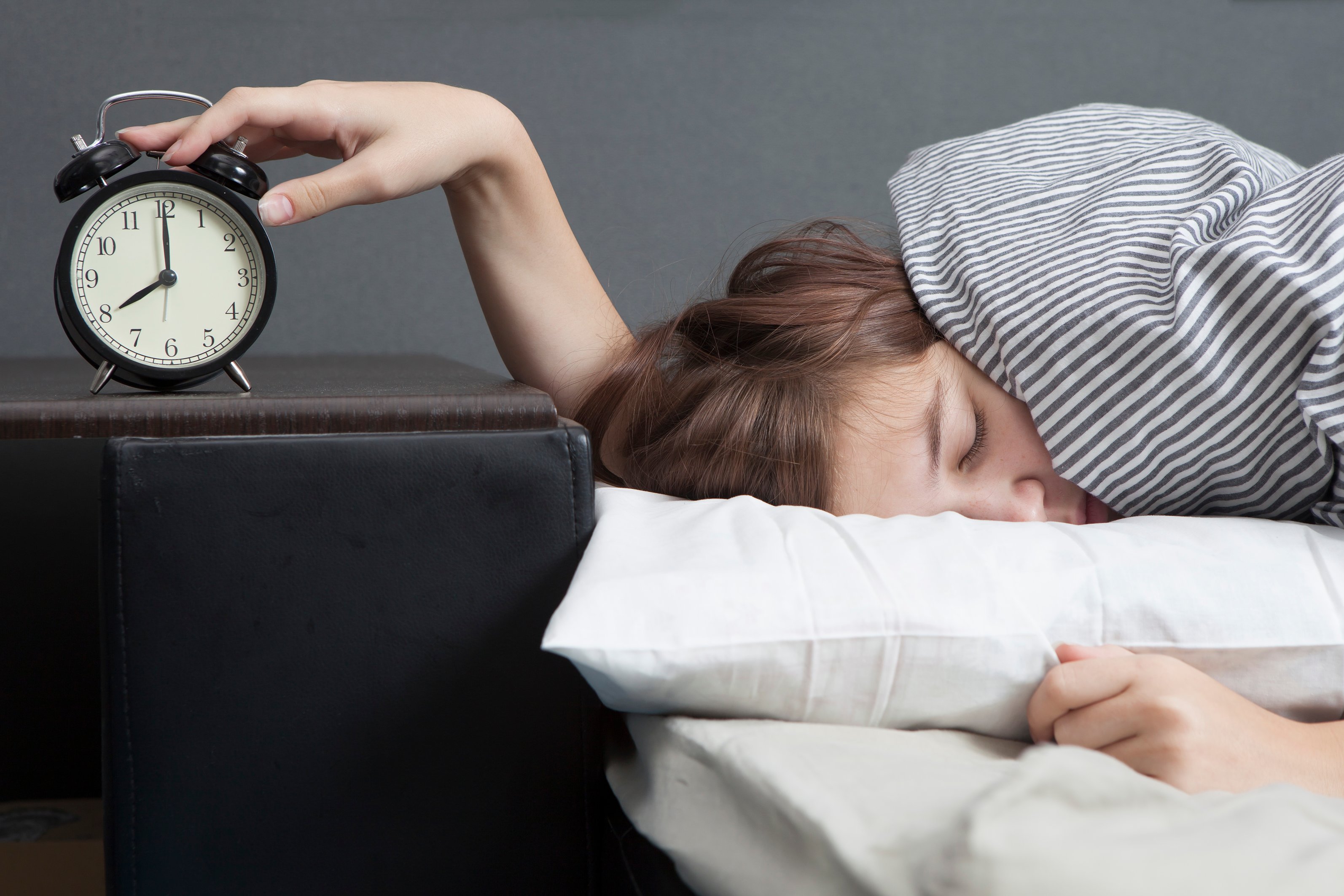
Sleep rhythm: why regularity is just as important as the duration of sleep

Your sleep rhythm describes how regularly you go to bed and get up. Changing bedtimes during the week and at the weekend throw your internal clock out of sync and can lead to you feeling tired despite getting enough sleep. Find out why consistent sleep patterns are important for your recovery and how you can stabilise your sleep rhythm with a 7-step plan.
Sleep rhythm – key points at a glance:
- Your sleep rhythm describes your natural sleep–wake cycle.
- It’s controlled by your internal clock, or circadian rhythm.
- Light, your daily routine and your chronotype influence when you feel tired.
- Regular bedtimes support recovery and rest.
- Changing bedtimes can lead to what’s known as ‘social jet lag’.
- It’s not just how long you sleep, but also how regularly you sleep that supports recovery.

What is a sleep rhythm?
Your sleep rhythm describes your body’s natural sleep-wake cycle. It’s controlled by your internal clock — known as the circadian rhythm — and influences when you feel tired, when you wake up and how rested you feel.
Various processes take place simultaneously in the background: the body regulates hormones such as melatonin and cortisol, controls your body temperature and organises sleep into recurring sleep cycles. A sleep cycle usually lasts around 90 to 110 min and consists of different sleep phases – including the falling-asleep stage, light sleep, deep sleep (or core sleep) and REM sleep.
Sleep duration vs. sleep pattern
Sleep duration describes how many hours you sleep in total. For adults, around seven to nine h per night is generally considered a guideline. Sleep rhythm, on the other hand, describes when you sleep and how consistent your bedtimes and wake-up times are.
Recent research shows that it’s not only the quantity of sleep that’s crucial for your recovery, but also the regularity of your sleep.

What influences your sleep rhythm?
Your sleep rhythm isn’t determined by chance. Various internal and external factors influence when you get tired, fall asleep and wake up again. Your body clock, light and your individual chronotype are particularly important in this regard.
Your internal clock regulates your sleep–wake cycle
Your internal clock operates on an approximate 24-h cycle — the circadian rhythm. Among other things, it regulates:
- Tiredness and alertness
- Body temperature
- hormonal balance
- Metabolism
- Energy levels
This means your body automatically prepares itself for activity or recovery at certain times of the day. To keep this rhythm stable, your system needs signals that are as regular as possible.
Light has a greater influence on your tiredness than the time of day
Daylight signals to your body that it’s time to be active whilst darkness promotes the release of melatonin and prepares you for sleep.
However, modern lighting habits can disrupt this natural rhythm.
In particular,
- a lack of daylight during the day
- bright indoor lighting in the evening and
- screen time shortly before bed
can push back the natural time for sleep (Swaminathan et al., 2017; Skeldon et al., 2017).
Your chronotype influences when you feel tired
Not everyone gets tired at the same time, and your chronotype – whether you’re more active early in the day or later in the evening – plays a part.
Colloquially, people often refer to:
- Larks: tend to wake up early and get tired early
- Owls: tend to be active later in the day and get tired later
Genetic factors play just as much a part in this as age and lifestyle (Landvreugd et al., 2025).
Problems oftenarise when your chronotype doesn’t fit everyday life – for example, when you have to start work very early. This is precisely what can lead to so-called ‘social jet lag’ (Caliandro et al., 2021; Landvreugd et al., 2025).



Sleep rhythm out of sync? Typical signs
A disrupted sleep pattern often makes itself felt not just at night. Many people first notice during the day that something isn’t quite right – for example, through persistent tiredness, a lack of energy or the feeling of not having achieved proper recovery despite having slept.
It’s also typical for the body to seem to wake up or feel tired at the ‘wrong time’. In the evening, you’re exhausted but still find it hard to fall asleep. In the morning, on the other hand, you can barely get out of bed, even though the alarm’s gone off several times.
Possible signs may include:
- severe tiredness during the day
- lumps in energy levels in the morning or afternoon
- difficulty falling asleep or sleeping through the night
- problems concentrating
- inner restlessness in the evening
- Increased irritability or reduced resilience
Not all of these symptoms automatically indicate a disrupted sleep pattern; the key factor is how much they affect your everyday life. If you're experiencing persistently irregular sleep, ongoing fatigue or significant sleep problems, seek medical advice.
Possible triggers for an irregular sleep pattern
- personal or work-related stress
- too much caffeine or alcohol especially in the evening
- physical or mental strain
- side effects of certain medicines
- Shift work or long-haul travel involving a time difference
- long or late naps
- Bright light at night
- Using a smartphone, tablet or laptop before sleeping
- a disrupted melatonin balance


Irregular sleep: what happens in the body
Constantly changing bedtimes and wake-up times can strain your body and make sleep less restorative, even if you sleep for long enough. This can disrupt stress regulation, metabolism, concentration and recovery.
Various studies on the Sleep Regularity Index (SRI) — a scientific measure that assesses the consistency and regularity of an individual’s sleep–wake cycle (Lunsford-Avery et al., 2018) — demonstrate the long-term effects of irregular sleep.
In studies, people with a particularly low SRI showed, amongst other things:
- higher stress levels
- greater daytime sleepiness
- more frequent depressive symptoms
- an increased risk of cardiovascular disease and metabolic problems (Lunsford-Avery et al., 2018; Schruers et al., 2025)
In some cases, this association was stronger than that between sleep duration alone and cardiovascular risks (Lunsford-Avery et al., 2018).
Studies on shift work also show that permanently disrupted sleep patterns can be linked to greater physical and mental strain. According to the German Society for Pain Medicine, serious health problems occur roughly twice as frequently in people working rotating shifts as in those who do not work shifts (German Society for Pain Medicine, n.d.).
Sleep patterns affect more than just tiredness
An irregular sleep pattern can affect various areas simultaneously:
- Energy and concentration
- Stress regulation
- Cardiovascular system
- metabolism
- immune system
- Mental health
- Physical recovery

05 Social jet lag caused by irregular sleep

Social jetlag occurs when your internal clock no longer aligns properly with your everyday life. A typical example is:
- During the week your alarm goes off early.
- At the weekend you go to bed later and sleep in longer.
At the weekend your internal clock often shifts backwards, yet on Mondays you’re expected to be up and about early again. This can feel like a slight time difference and trigger that typical Monday tiredness.
Social jet lag is widespread in industrialised countries: around two-thirds of the working or student population regularly experience a discrepancy between their biological clock and their social schedule (Caliandro et al., 2021).
It particularly affects people with a late chronotype whose internal clocks run later but often clash with standard working hours (Wittmann et al., 2006).
Bright light in the evening, screen light and a lack of daylight can also contribute to tiredness setting in later and the sleep–wake cycle shifting further back (Swaminathan et al., 2017; Skeldon et al., 2017).
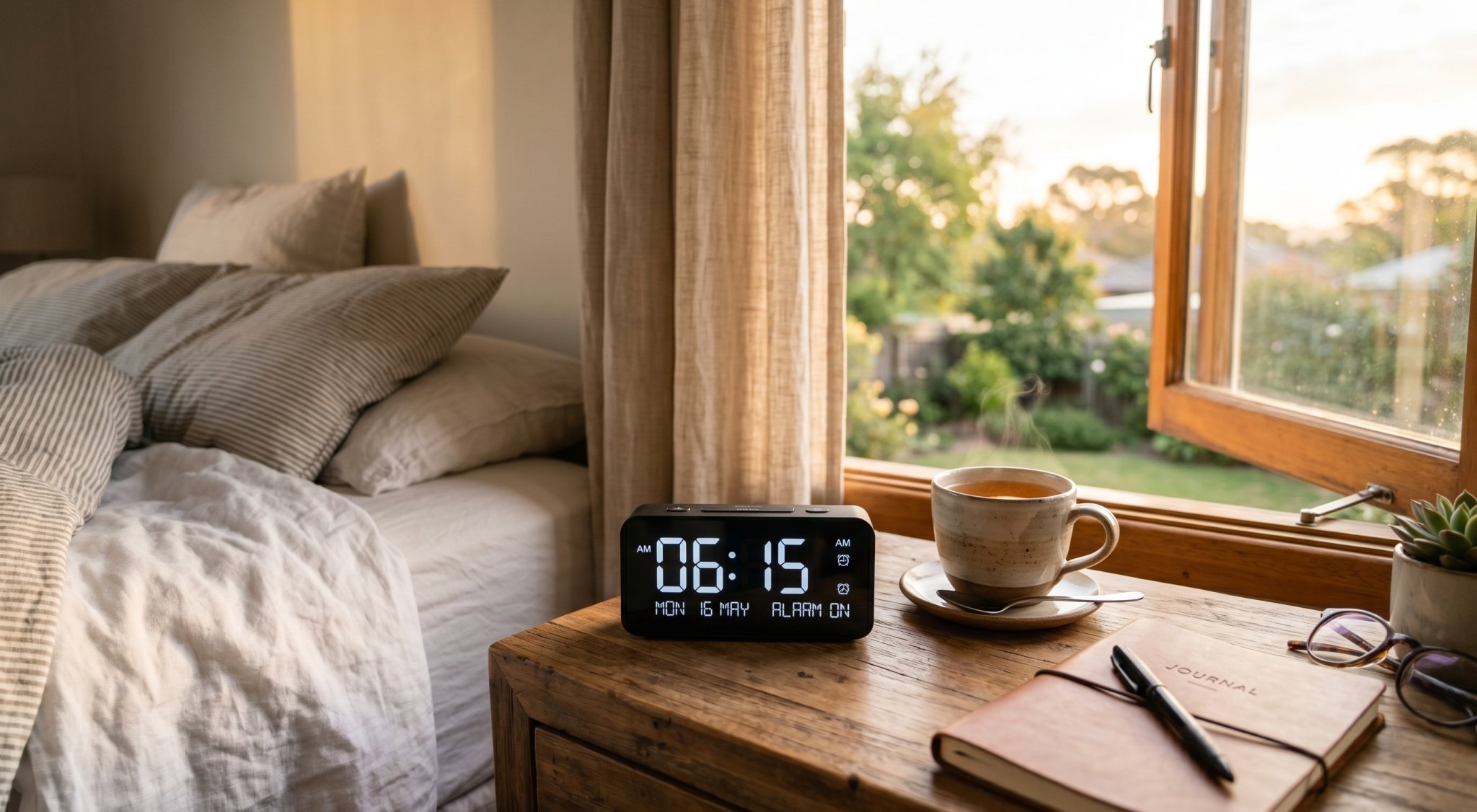

Stabilise your sleep rhythm
Restoring a disrupted sleep rhythm doesn't usually require radical changes; often, even small adjustments to your everyday life can help.
Fixed times help your body clock
Have you ever tried to compensate for sleep problems by having the odd long night’s sleep or sleeping in? For your body clock, something else is much more important: keeping your bedtimes and wake-up times as consistent as possible.
It’s particularly helpful to:
- Get up at roughly the same time every day
- avoid large differences between weekdays and weekends
- Avoid constantly pushing your bedtime back.
- Your wake-up time, in particular, acts as an anchor for your sleep rhythm.
Light and routines regulate sleep
Daylight helps your body distinguish between activity and recovery, yet bright light in the evening can disrupt your natural rhythm.
That’s why these habits can help:
- Get some daylight as soon as possible in the morning
- reduce screen time in the evening
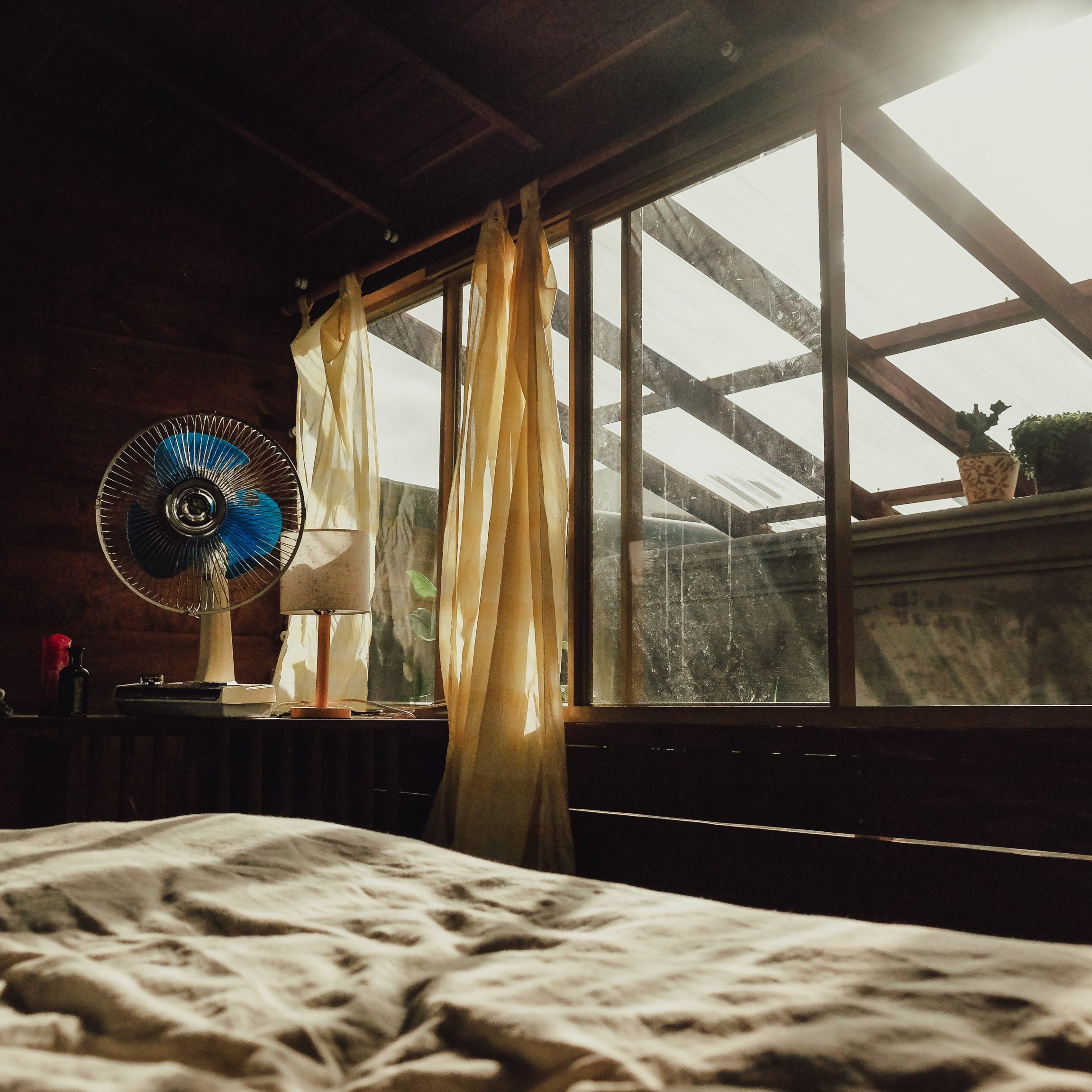
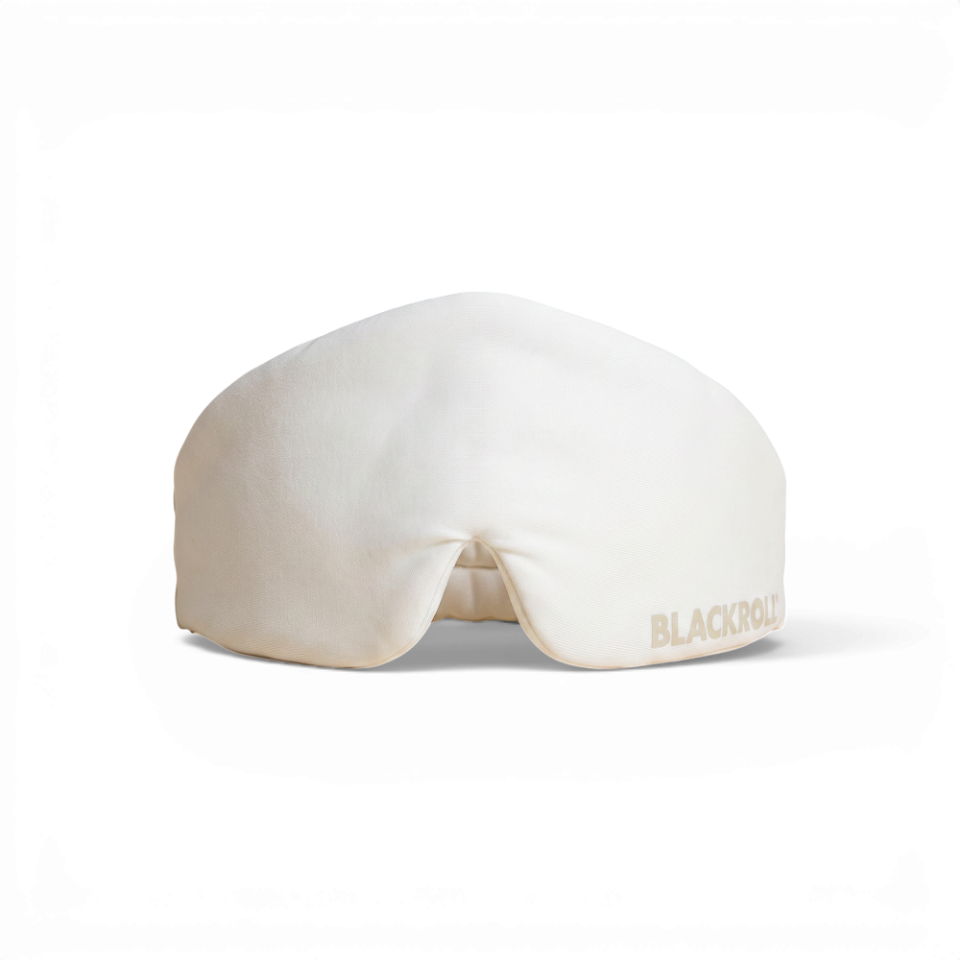
- Wear a sleep mask during the summer months
- Incorporate regular exercise into your everyday life
- Avoid caffeine and alcohol late in the evening
- Establish a calm evening routine
Even small recurring routines can signal to your nervous system that night is beginning.

Your sleeping environment matters too
It’s not just times and routines that influence your sleep pattern, but also your surroundings. A sleep environment that remains as consistent as possible can help your body wind down more easily.
This includes, for example:
- Temperatures between 16°C and 18°C in the bedroom
- minimal light and noise
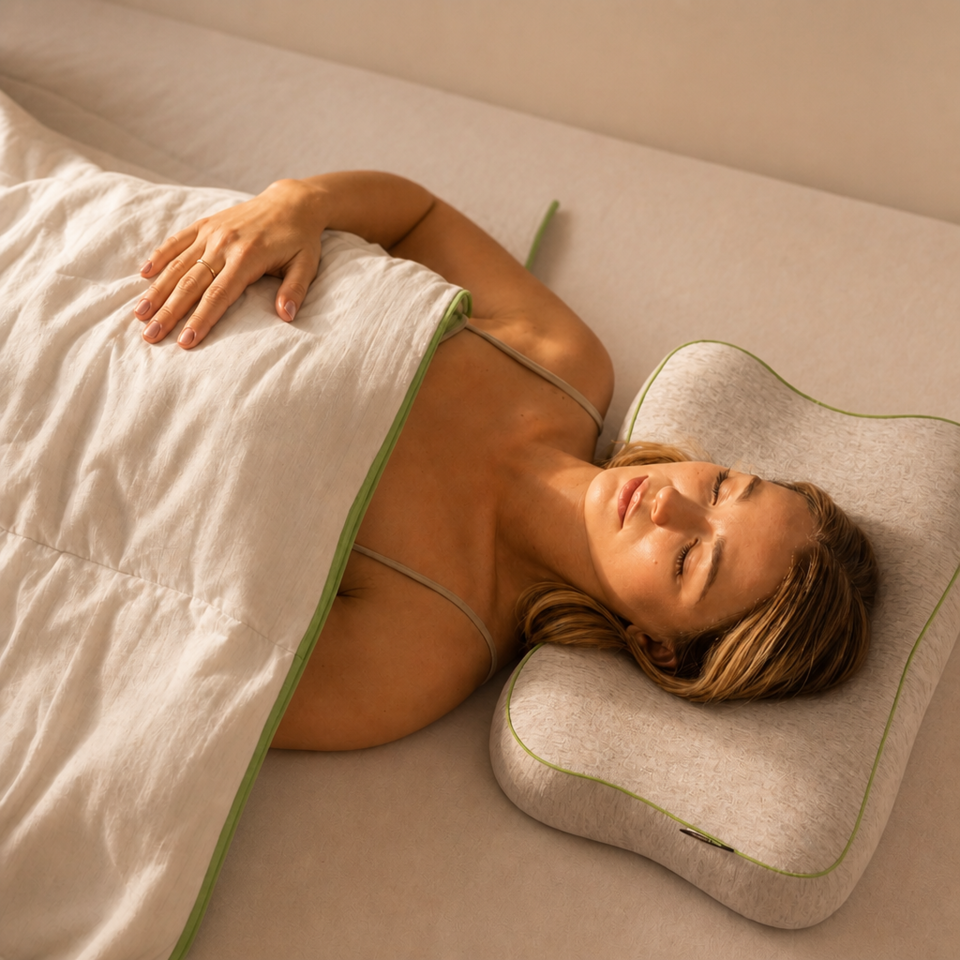
- a familiar sleep position, e.g. using an ergonomic pillow such as the RECOVERY PILLOW
- a consistent sleeping experience
Find more sleep hygiene tips here for restful sleep.
For restful sleep


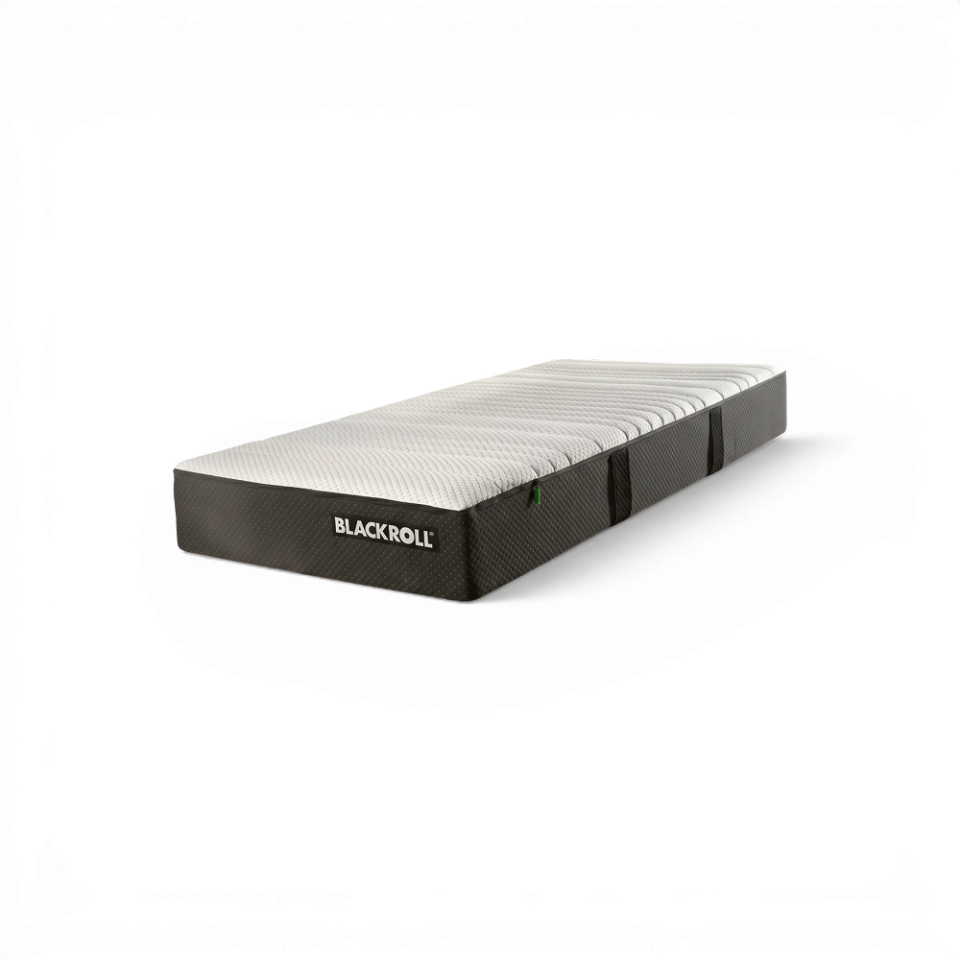

Recovery Base 2.0
Available in multiple variants
Sleep coaching can provide further guidance.
If you want to improve your sleep in the long term, it can help to gain a better understanding of your own habits, for example through sleep coaching. Together with sleep experts, you’ll analyse your behavioural and thought patterns, stressors and your life situation.
Together we’ll create practical strategies to help you establish a stable sleep pattern.
Key factors for a stable sleep pattern
- Get up at roughly the same time every day
- soak up daylight in the morning
- reduce light in the evening
- Don’t keep changing your bedtime
- Ensure a consistent sleeping environment
- Keep evening routines as regular as possible.


Your sleep coaching with sleep experts
07 7-step plan for a regular sleep pattern
Step | Focus | Implementation |
|---|---|---|
1 | Optimise your sleeping environment | Make changes that will help you sleep better. For example: adjust the temperature in your bedroom and get yourself a sleep mask and/or an ergonomic pillow. |
2 | A fixed wake-up time | Set a fixed wake-up time and stick to it as much as possible, even at the weekend, with a maximum variation of 60–90 min. |
3 | Spend more time in daylight | Spend 10–15 min outside in the morning — natural light helps your body clock regulate itself. |
4 | Less light in the evening | Cut down on screen time and bright light about an hour before going to bed. |
5 | Incorporate exercise to improve mobility | Plan one or two walks during the day. |
6 | Cut down on caffeine | Avoid coffee or energy drinks after 2pm. |
7 | Establish an evening routine | Start an evening routine, for example one of these four breathing exercises before falling asleep. |
It’s not about controlling your everyday life perfectly – even small, regular cues help your body find a more stable rhythm more easily.


Conclusion: Good recovery requires regularity
When it comes to sleep, many people focus first and foremost on duration. For your body, however, something else is often just as crucial: a sleep pattern that is as regular as possible.
Good recovery comes not only from sleeping for many hours but above all from consistent and reliable routines. This is exactly what your body clock relies on.
That doesn’t mean every late night is immediately a problem. What matters more is the overall picture: how consistent are your bedtimes and wake-up times in everyday life? How often does your body have to readjust?
Even small changes can help:
- Get up at roughly the same time each morning
- Don’t shift your bedtimes completely at the weekend
- reduce lighting in the evening
- Create a consistent sleeping environment.
Ultimately, it’s not about perfect routines or strict rules, but about giving your body more guidance.
FAQ
It’s not just the amount of sleep you get that affects how rested you feel. An irregular sleep pattern can also mean that your sleep is less restorative.
If your bedtimes and wake-up times vary significantly, your body clock has to constantly readjust. This can affect the quality of your sleep, your energy levels and your recovery – even if you’re getting enough hours of sleep overall.
A sleep pattern describes the natural alternation between being awake and asleep. It’s primarily controlled by your internal clock — the so-called circadian rhythm. A sleep pattern that’s as regular as possible helps your body to better regulate sleep, energy and recovery.
Social jet lag occurs when your biological sleep rhythm doesn’t match your everyday life – for example, by getting up early during the week and going to bed much later at the weekend. For the body, this change feels similar to a mild case of jet lag. Your internal clock has to constantly readjust.
Up to a point, yes. Getting more sleep can help reduce tiredness and exhaustion in the short term. However, sleeping in doesn’t fully compensate for a consistently irregular sleep pattern. For long-term recovery, regularity is usually more important than the odd long night’s sleep. You can find a detailed answer in the Guide on Sleep Debt.
Yes. Keeping to as consistent a wake-up time as possible is one of the most important steps towards a more stable sleep pattern. Your body relies heavily on when your day begins. Regular wake-up times are therefore often more helpful than trying to fall asleep ‘perfectly’ every evening.
Make small, steady shifts. Keep your wake-up time consistent, even on days off. Let morning daylight, less evening screen light and regular bedtimes support your rhythm. Consistency matters more than perfection.
You don’t have to stick to exactly the same bedtimes at the weekend as during the week. However, it helps to avoid major differences. If you go to bed several hours later and sleep in for a long time, your internal clock will have to readjust on Mondays. Keep your bedtimes and wake-up times as similar as possible — with a maximum difference of 60–90 min — and don’t completely change your routines.
Your sleeping environment also influences how well your body can wind down. An environment that is as quiet and consistent as possible helps the nervous system to switch to rest mode more easily. This includes minimal light and noise, a comfortable temperature — ideally between 16°C and 19°C — as well as a familiar sleep position and a consistent feeling when lying down.
Most adults need around seven to nine h of sleep per night, yet it’s not just the duration that matters – a regular sleep pattern is equally important.
Some people can get by on six hours’ sleep in the short term. In the long term, however, most adults need more sleep to ensure proper recovery and maintain their performance. Sleep duration alone, however, says nothing about how well you’ve recovered. Your sleep pattern is also important.
Yes, changing bedtimes can make it harder to fall asleep and stay asleep. If your sleep pattern is constantly shifting, your body clock has to keep readjusting itself. Factors such as screen light late at night, stress or significant differences between the working week and the weekend can also contribute to more restless sleep or cause you to wake up more frequently during the night.
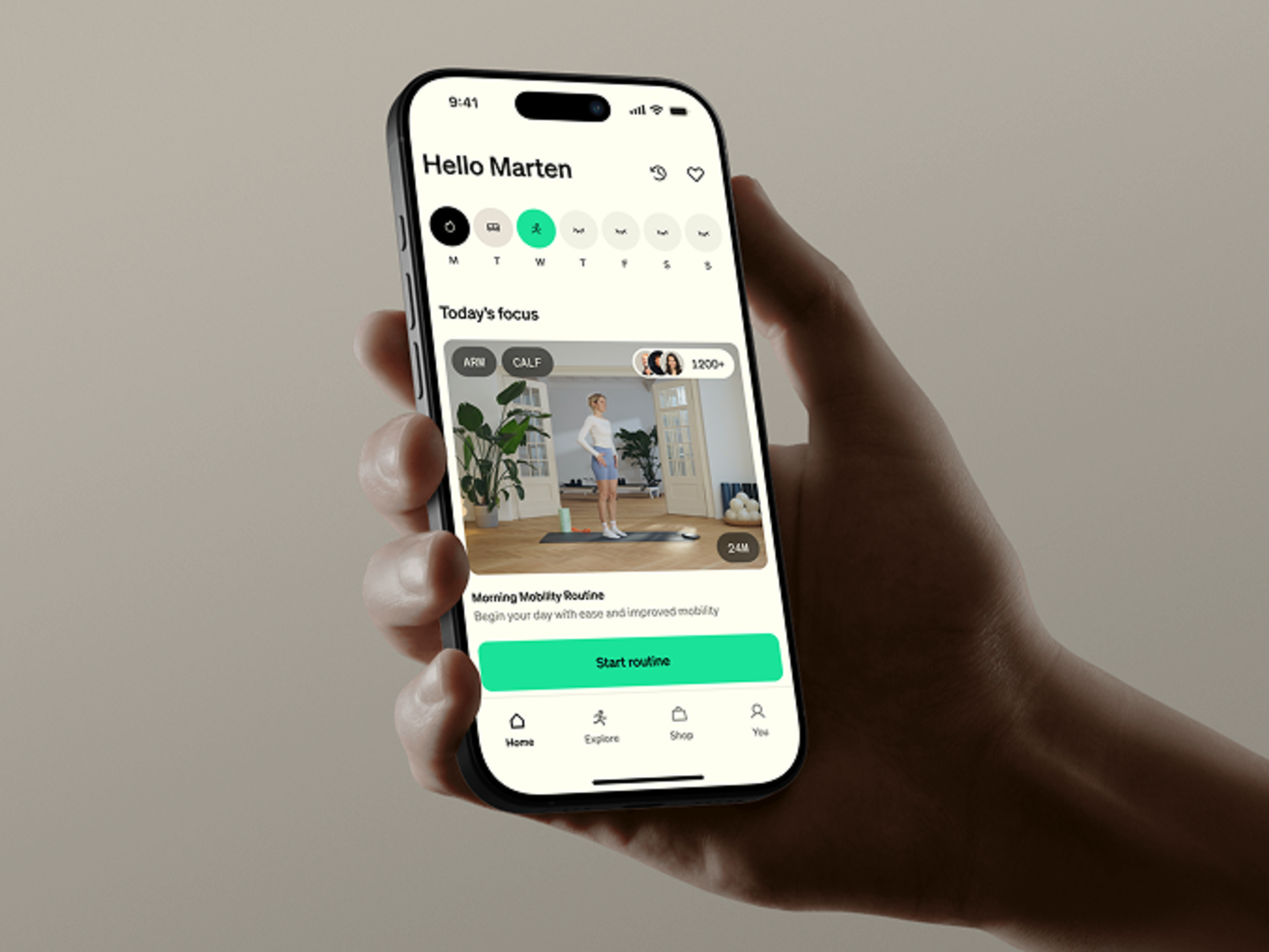
All exercises in our App
Download our free app to find more than 500 exercises and configure your own workouts, track your trainings and progress. Save your favorite routines and exercises and learn how to recover, train your flexibility and strength as well as your athletic capabilities.
You might also find this interesting




Sources:
Swaminathan, K.; Klerman, E. B.; Phillips, A. J. K. (2017): Are Individual Differences in Sleep and Circadian Timing Amplified by Use of Artificial Light Sources?
https://pubmed.ncbi.nlm.nih.gov/28367676/
Skeldon, A. C.; Phillips, A. J. K.; Dijk, D.-J. (2017): The effects of self-selected light-dark cycles and social constraints on human sleep and circadian timing.
https://www.nature.com/articles/srep45158
Caliandro, R.; Streng, A. A.; van Kerkhof, L. W. M. et al. (2021): Social Jetlag and Related Risks for Human Health: A Timely Review.
https://pmc.ncbi.nlm.nih.gov/articles/PMC8707256/
Deutsche Gesellschaft für Schmerzmedizin (o. J.): Wie Schlaf Schmerz verstärkt und was gegen Social Jetlag hilft.
https://www.dgschmerzmedizin.de/news/dgs-pressemitteilungen/detail/news/wie-schlaf-schmerz-verstaerkt-und-was-gegen-social-jetlag-hilft/
Landvreugd, A.; Nivard, M.; Bartels, M. (2025): Between the biological and social clock: Exploring the association between social jetlag and wellbeing.
https://www.sciencedirect.com/science/article/pii/S0191886925000169
Wittmann, M.; Dinich, J.; Merrow, M.; Roenneberg, T. (2006): Social jetlag: misalignment of biological and social time.
https://pubmed.ncbi.nlm.nih.gov/16687322/
Lunsford-Avery, J. R.; Engelhard, M. M.; Navar, A. M.; Kollins, S. H. (2018): Validation of the Sleep Regularity Index in Older Adults and Associations with Cardiometabolic Risk.
https://pubmed.ncbi.nlm.nih.gov/30242174/
Schruers, K. B.; Weightman, M.; Guttesen, A. á V.; Robinson, B.; Johansen-Berg, H.; Fleming, M. K. (2025): Sleep regularity index as a novel indicator of sleep disturbance in stroke survivors: a secondary data analysis.
https://www.nature.com/articles/s41598-025-01332-4