The comprehensive breathing guide for greater calm, focus and recovery

Your breathing changes constantly — depending on whether you’re stressed, relaxed, focused or physically active — and with the right techniques you can influence this response. Not every technique suits every situation, so we’ve grouped exercises you can use straight away, depending on what your body needs at any moment. This guide explains how breathing techniques work, which exercises suit different situations and how you can easily integrate them into your everyday life.
Key points at a glance
- Your breathing reacts directly to stress, tension, movement and the state of your nervous system.
- They can support relaxation, focus, sleep and physical performance.
- Not every breathing technique is suitable for every situation – what matters is what your body needs at that moment.
- A calm rhythm and a prolonged exhalation can help to wind your system down.
- Breathing exercises should feel calm and effortless; greater control or deeper breathing isn’t automatically better.
- Even short, regular breathing exercises can help you become more aware of your own breathing and regulate it.
Quick start
Quick guide: What do you need right now?
Choose the option that best describes your current situation:
- Reducingstress
Your breathing's rapid or irregular. - Performance and energy
Stay alert, clear-headed and resilient. - Fall asleep more easily
Your body's tired but your mind's still active. - Improve your breathing
Your breathing may feel shallow or restricted.
Your breathing is constantly changing so if you know what your body needs at any given moment you can use breathing techniques in a more targeted way and you’ll develop greater confidence in your ability to regulate yourself.
If you’re not quite sure what you need
Sometimes it’s not immediately clear which breathing technique is right for you at that moment. In that case, you don’t need to think about it for long; instead, you can quickly test what your body responds well to. It’s not the theory that matters, but the effect after one or two minutes.
Test 1: Do you feel calmer when you breathe out for longer?
Breathe in calmly for 60–90 s and breathe out a little longer — for example, four seconds in and six to eight seconds out. Breathe gently and without straining.
Check in with yourself briefly afterwards. Is your breathing becoming calmer and more even? Is your inner restlessness easing a little?
If so, your system probably needs regulation above all else. In that case, calming techniques such as prolonged exhalation, box breathing or the 4-7-8 method are well suited.
Test 2: Does your mind become clearer when your breathing settles into a steady rhythm?
For about 1 min breathe in for four seconds, hold for four seconds, breathe out for four seconds and hold again for four seconds.
Then notice the effect. Do you feel clearer, more alert and more organised without becoming more restless?
If so, your body probably needs focus and stability more than anything else. In that case, box breathing or controlled nasal breathing are often the better choice.
Test 3: Does it become easier when you intervene less?
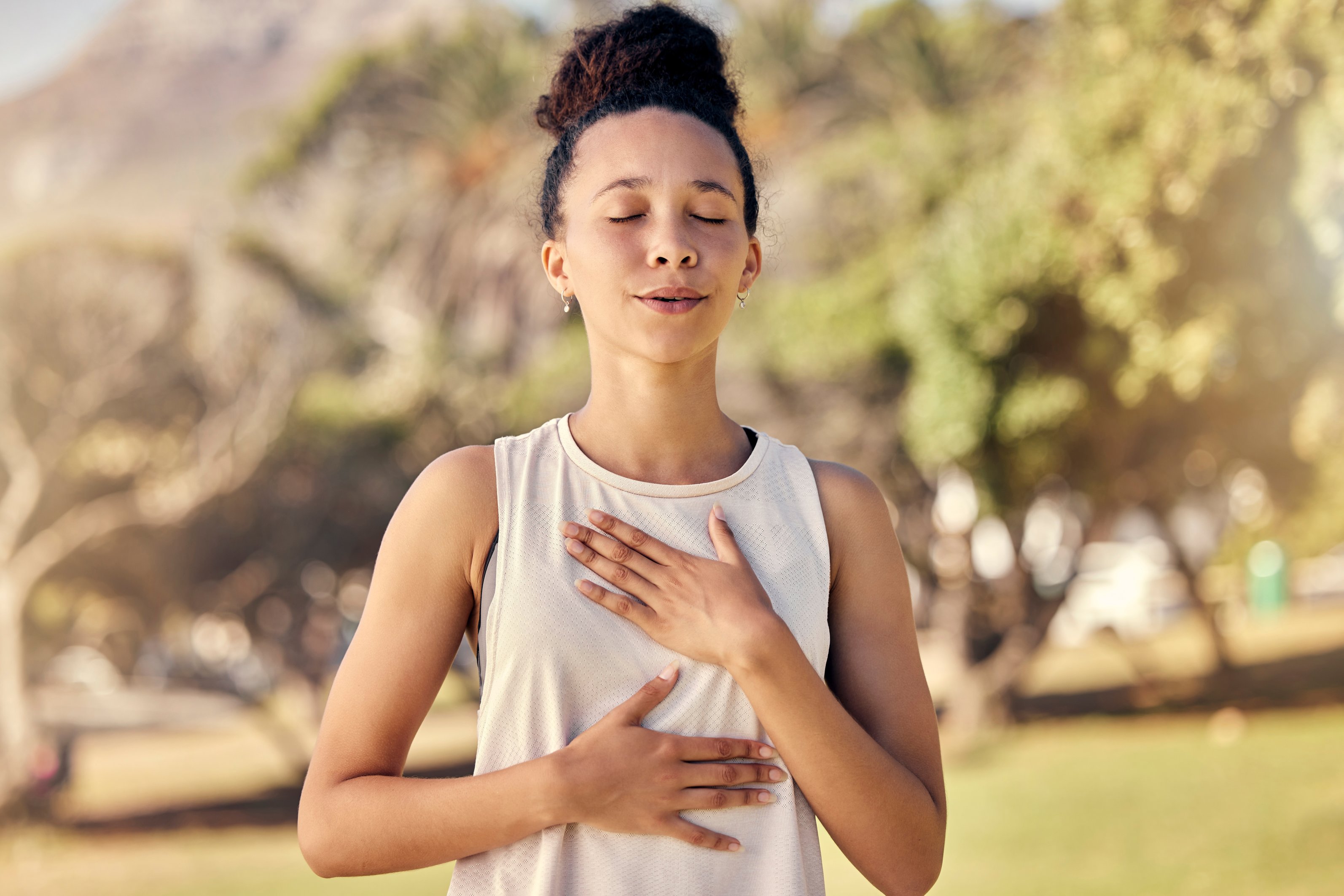
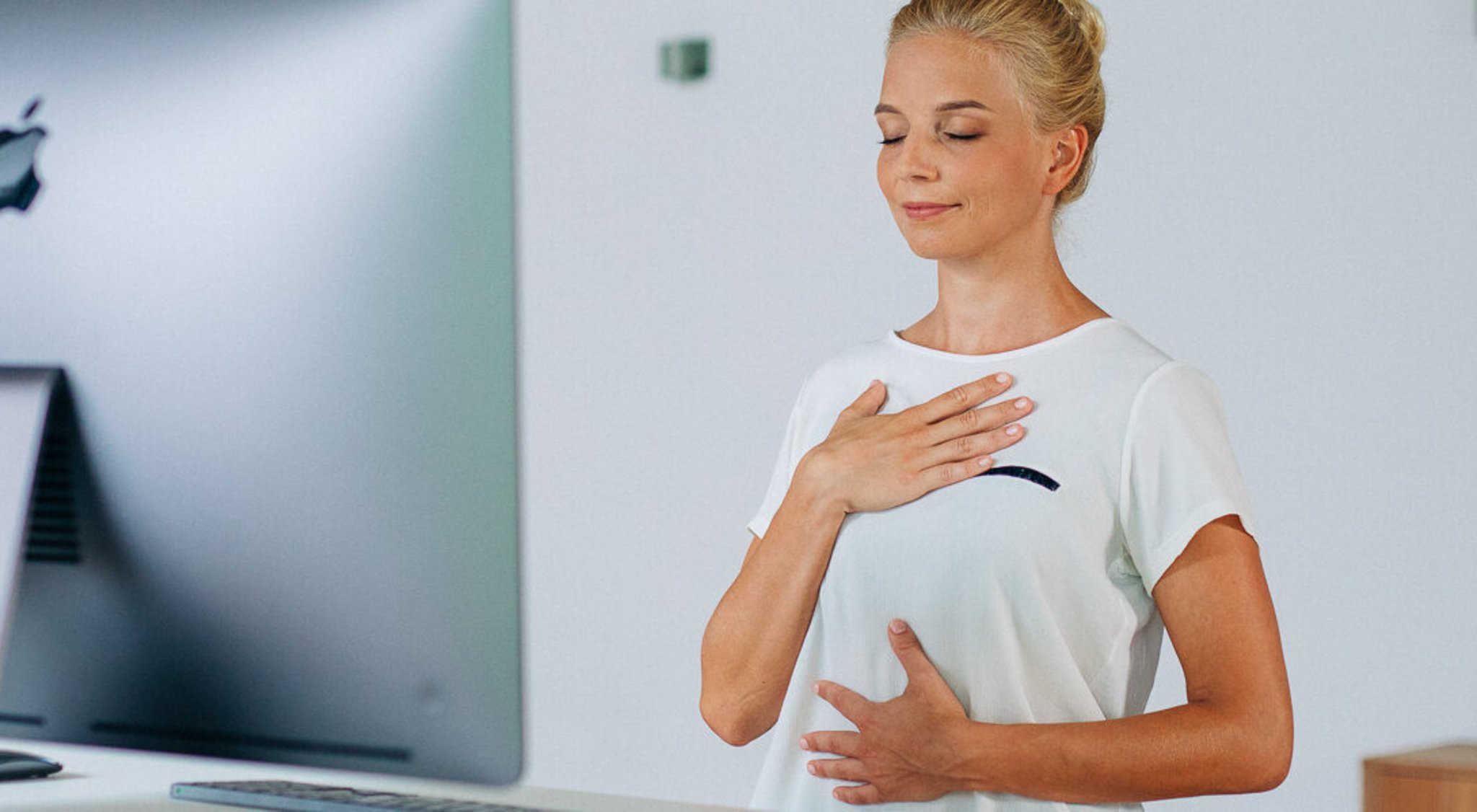
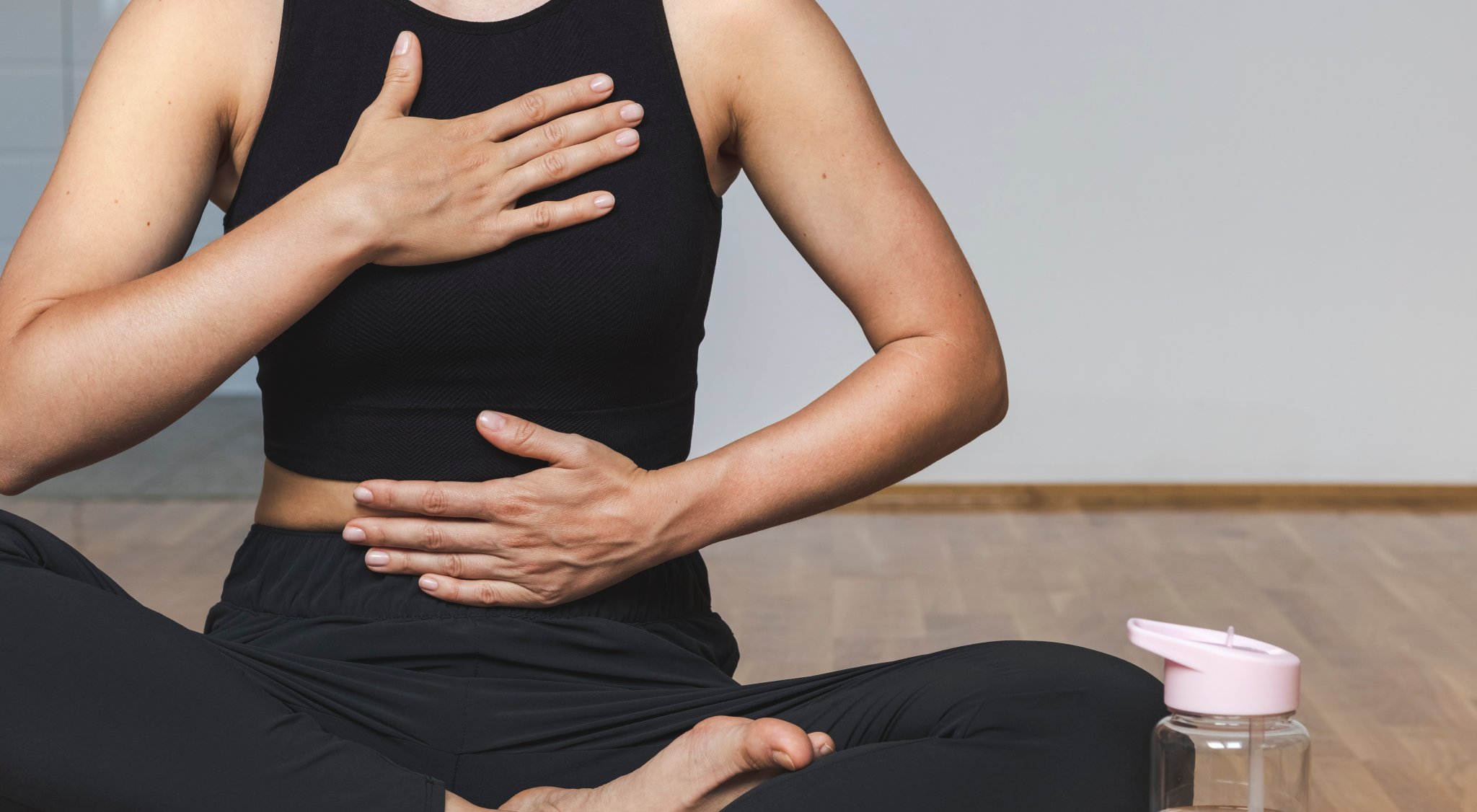
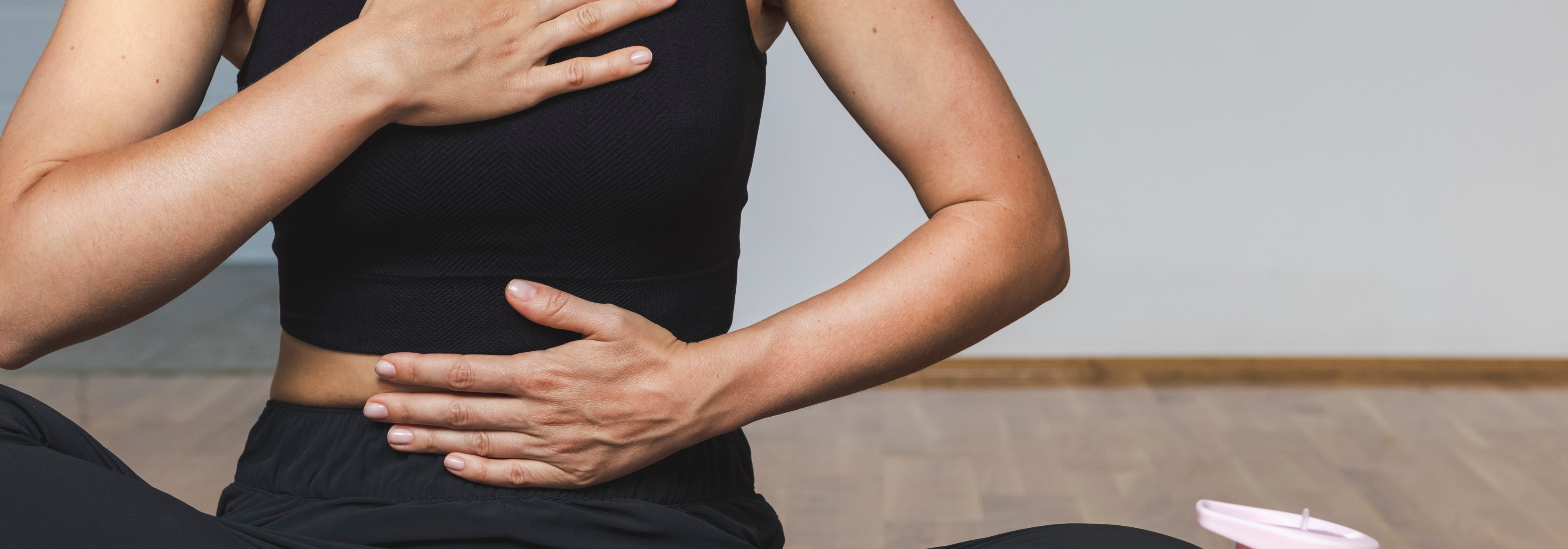
Place one hand on your chest and one on your stomach. Continue breathing normally for 60 to 90 s without deepening or correcting your breath. Consciously allow your shoulders, jaw and stomach to relax slightly.
Then ask yourself: does your breathing feel freer? Do you feel a sense of relief rather than control?
If so, you probably don’t need more technique, but less pressure. In that case, exercises focusing on the diaphragm, chest and mobility will help.
How to tell if an exercise is right for you
A suitable breathing exercise doesn’t make your breath bigger, but lighter. Your mind becomes calmer and your body feels slightly less tense.
If, after one or two minutes, an exercise leaves you feeling strained or more restless, it’s probably not right for you at that moment.
The simplest rule for getting started
If in doubt, start with the gentlest variant; it's usually a calm, prolonged exhalation. If your body responds well, stick with it or add a second technique later.
It’s not the most intense exercise that’s right for you, but the one that makes your breathing calmer, more even and easier.


Understanding your breath
Most of the time it happens automatically, reacting to stress, movement, thoughts, lack of sleep and physical tension even before you intervene. When things get hectic it often speeds up, as inner tension rises it usually becomes shallower and when your system calms down your breathing also becomes calmer and more even.
That's precisely why breathing is more than just taking in air; it's one of the most direct ways to access your nervous system.
The main factors that are affected are:
- Rate
- Rhythm
- Depth
- and the length of the exhalation
These factors influence how your body feels: more energised or calm, more tense or balanced.
Two key systems are at work in the background:
- The sympathetic nervous system puts you into a state of arousal and readiness to perform.
- The parasympathetic nervous system promotes calm, recovery and restoration.
Your breath is the link between the two. Rapid, shallow breathing tends to signal activity to the body while calm, steady breathing tends to convey a sense of security.
To understand how your breathing is working right now, don’t analyse it too much. Pay attention to three things: is your breathing fast or slow, is it higher up or deeper in your body and does the exhalation feel short or calmly prolonged? This is exactly how you’ll get an initial sense of what your body needs at that moment.

What breathing techniques do to the body
Breathing techniques consciously alter your breathing, thereby sending a new signal to your body. Depending on how you breathe, you can either maintain tension or specifically support the body’s natural regulation.
A steady rhythm and a slightly longer exhalation often help you noticeably wind down. Your body lets go of internal arousal more easily, breathing evens out and thoughts settle faster. That's why we use breathing techniques to reduce stress, improve focus or make it easier to relax in the evening.
These effects aren’t merely subjective; they’re reflected in measurable parameters such as heart rate variability, which is regarded as a marker of the nervous system’s ability to regulate itself. Studies show that targeted breathing exercises can influence this regulation and measurably alter stress responses.
However, the real value lies not just in the short-term effect. If you work on your breathing regularly, you’re not just changing individual moments, but also the way your body as a whole reacts to stress. You’ll usually find your way back to calm and control more quickly and develop a clearer sense of what really helps you in stressful moments.
Your breath isn’t simply a reaction to your state; it’s a tool you can use to guide it.
Quick guide
Which technique is suitable for when?
Use breathing exercises effectively with this simple guide.
State | Typical breathing pattern | Helpful focus | Suitable technique |
|---|---|---|---|
Stress / restlessness | fast, shallow, frantic | Slow the rhythm and lengthen the exhalation. | extended exhalation, box breathing, 4-7-8 |
Focus / Clarity | restless, distracted | steady breathing | Box breathing, nasal breathing |
Drift off to sleep | Body tired, mind active | significantly slower breathing | 4-7-8, prolonged exhalation |
Improving breathing | Shallow, constricted, blocked | You’ll feel less pressure and enjoy greater mobility. | Focus on your diaphragm and breathe calmly through your nose. |
Performance / exertion | When you push harder, breathing may feel laboured | stable, efficient breathing | Nasal breathing, CO₂ tolerance training |
It’s not the ‘best’ technique that matters, but the one that suits your current condition.
Why breathing exercises sometimes don’t work
Many people recognise the pattern: you sit down, trying to breathe more calmly and consciously, only to realise after a short while that exactly the opposite is happening. Instead of relaxation, you feel restless; your breathing suddenly feels strained and the thought quickly pops into your head that you’re doing something wrong. In most cases, however, the problem lies not in the method itself but in how it’s practised.
Typical reasons:
- You're controlling your breathing too much
- breathing in too deeply
- breathing too quickly
- tension in the body persists
As soon as the breath is actively controlled, it often loses its natural rhythm. It's controlled, deepened, accelerated — all with the intention of improving something. However, it's precisely this approach that can cause the body to remain in a state of mild arousal. Conscious, deep breathing in particular is often overrated. What feels like ‘more calm’ can, physiologically speaking, border on hyperventilation and thus subtly keep the system under tension. At the same time, the rest of the body is often not brought along with it. The shoulders remain tense, the abdomen resists and the jaw is clenched.
You’re trying to calm the body while it’s still resisting, and that rarely works because breathing and tension travel together.
That’s why breathing techniques sometimes don’t work as you might expect. The breath is controlled too tightly, the inhalation is too intense and the pace too fast while tension remains in the body. With this combination, the exercise isn’t perceived as a source of relief but as an additional stimulus.
The crucial difference lies in how gently you apply it. Calm breathing doesn't come from more effort, but from less. As the pressure eases, the breath begins to settle, very gently, almost imperceptibly, and it's at this moment that your body finds its way back to itself.


The body plays along
Why breathing can feel blocked
Breathing isn’t just about breathing; it’s always about movement too.
The body is always involved. That’s precisely why breathing sometimes feels blocked, even though you’re actually doing ‘everything right’. Breathing isn’t just about breathing; it’s always about movement too.
At the centre of it all is the diaphragm, your most important breathing muscle, situated between the chest and the abdomen. It doesn’t work in isolation but in conjunction with the ribs, the thoracic spine and the surrounding tissue. When tension builds or mobility’s lost, your breath shifts: it stays in the chest, grows shallower, more erratic and often feels strained even though you’re trying to deepen it.
Many people react by trying to take in even more air, breathe in even deeper or control their breathing even more consciously. What feels logical often leads to greater tension in the body. The breath becomes deeper but not freer.
What works better in such moments is almost the opposite. Do less, not more. Don’t force your breath, but calm it. Shift your focus away from ‘creating depth’ towards ‘allowing space to emerge’.
As soon as the chest, ribs and surrounding tissue are allowed to move more freely again, your breathing often changes of its own accord. It becomes calmer, more even and, above all, easier – without you having to actively intervene. It’s precisely this feeling of ‘it’s happening on its own again’ that’s usually the first sign the body is releasing its tension.
This is precisely where breathing techniques come in. They don't make your breath stronger or force it into a specific pattern; instead they help your body reconnect with its natural rhythm.
They intervene where tension, pace and patterns have become entrenched and help you, step by step, to restore calm and mobility to your breathing. Instead of controlling your breath, you learn to accompany it — and it’s precisely through this that what was previously impossible often becomes possible: a calm, steady breath that feels effortless once more.


Breathing techniques for stress relief and recovery
When your body's under tension your breathing often becomes faster, shallower and more erratic, keeping your system in a state of arousal.
Try the following techniques to move from stress back to calm:
One of the best-known methods is the 4–7–8 breathing technique.
Breathe in for 4, hold for 7 and breathe out for 8.
This rhythm slows your breathing and supports the activity of the parasympathetic nervous system.
You'll often feel the effect quickly: your body relaxes and your thoughts settle.
That’s why it’s often used to help you drop off.
If you feel dizzy, pause. If symptoms persist, seek medical advice.
Box breathing (four-part breathing) works slightly differently.
Here, all the breathing phases are the same length: breathe in, hold, breathe out, hold.
This steady rhythm can help stabilise your nervous system, bringing structure to a system that was previously unsettled. You’ll often find that your focus improves and your breathing becomes more even. The technique is also used in performance contexts because it regulates the body quickly.
Resonance breathing continues this.
Here you breathe consciously, slowly and evenly at a rate of about five to six breaths per minute.
At this rate your breathing and heartbeat begin to synchronise, which has a positive effect on heart rate variability (HRV) — a marker of how well your body can switch between activity and recovery.
Over time this practice helps maintain balance in your nervous system.
One underestimated method ishumming as you breathe out; the vibrations stimulate the vagus nerve, a key component of the parasympathetic nervous system, and your exhalation automatically becomes longer so your breathing becomes calmer without you having to actively intervene.


Breathing techniques for sport and high performance (CO₂ tolerance and breathing efficiency)
During exercise your breathing also changes, but with a different aim. Here the focus is less on relaxation and more on remaining stable and efficient.
Nasal breathing regulates airflow so your breath stays calm and controlled even as intensity rises. Mouth breathing tends to produce rapid shallow breaths that can limit endurance and control.
Another important factor is your CO₂ tolerance. Carbon dioxide influences how effectively oxygen can be delivered to the body (the Bohr effect). Many people breathe too quickly and too deeply all the time. This reduces CO₂ tolerance and makes breathing less efficient.
Methods such as the Buteyko Method address precisely this issue. The approach is deliberately minimalist: breathing less rather than more. The aim is to calm the breathing and increase efficiency, even under exertion. The focus is on calm nasal breathing and reduced respiratory rate.
More intensive methods, such as the Wim Hof Method, take a different approach. They work with targeted breathing stimuli that briefly put the body under stress. This principle is known as hormesis — a controlled stimulus that can trigger adaptive processes. While this can have positive effects, it’s not suitable for beginners. It’s important to distinguish clearly between these approaches, particularly with regard to safety.
CO₂ tables are sometimes used for targeted training. This involves taking breathing pauses or consciously reducing your breathing in order to gradually improve your breath control and resilience. This is not a topic for beginners, but rather the next step if you wish to train your breathing in a targeted manner.
If you feel dizzy, take a break and, if symptoms persist, seek medical advice.
How your breathing works at the moment – where are you at the moment?
Before you make any changes, take a quick look at your current state. Breathing techniques work best when they’re in tune with what your body is doing right now. Often, a few simple observations are enough to get a sense of this. Start by asking yourself where your breathing is actually taking place.
A simple self-check: chest vs abdominal breathing
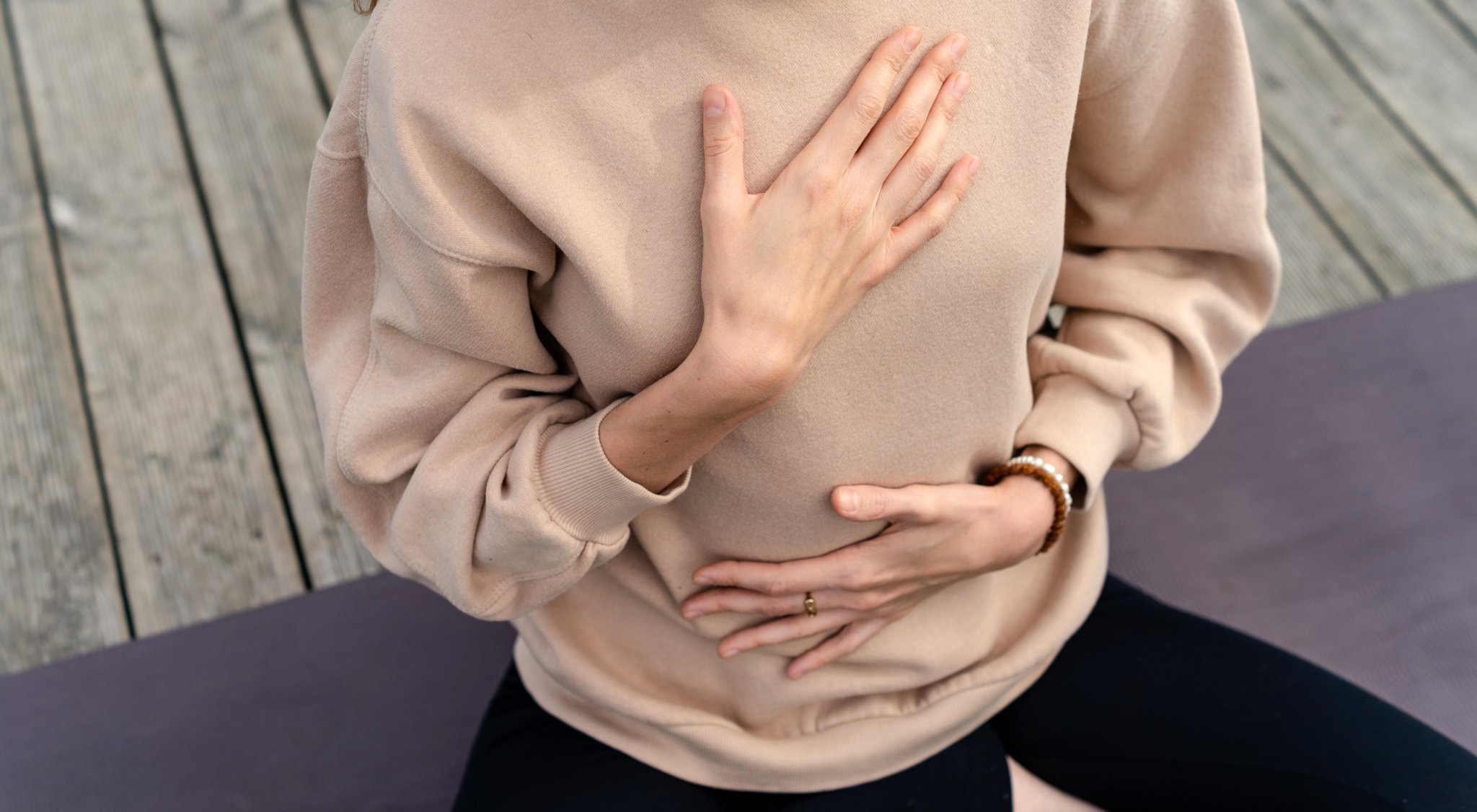
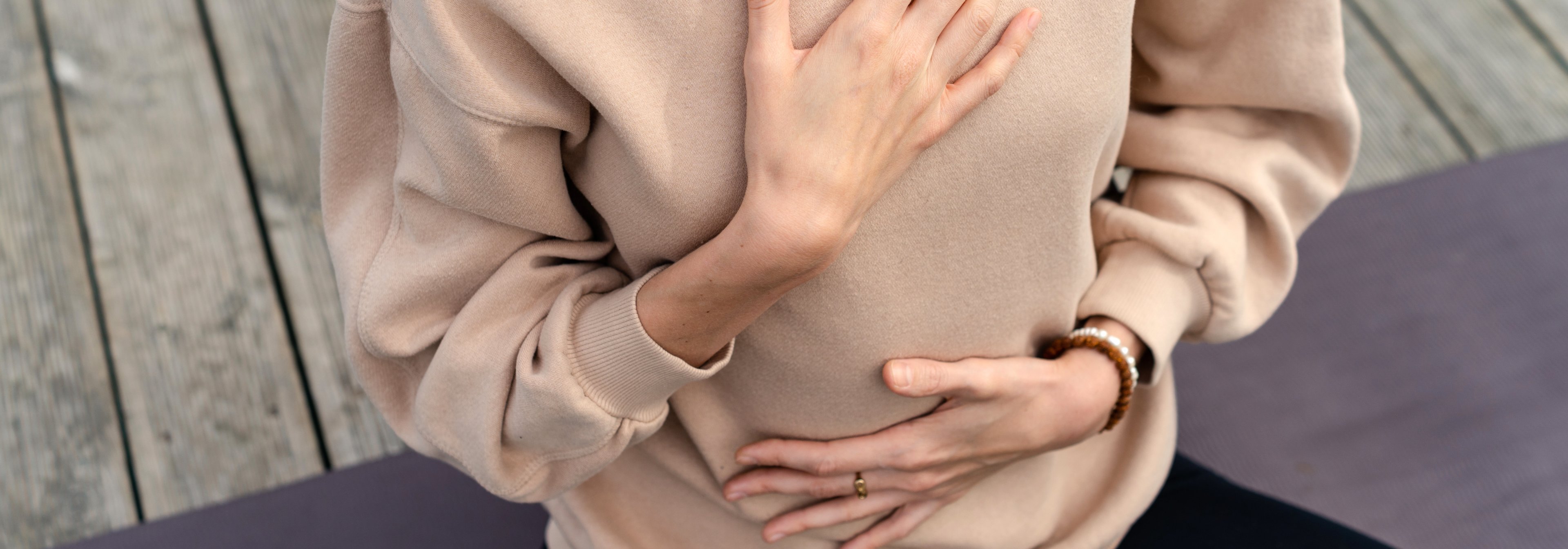
Sit or lie in a relaxed position, place one hand on your chest and the other on your stomach, then breathe normally. If your chest rises most, your breath stays upper; if your stomach moves visibly, your diaphragm — your most important breathing muscle — is working.
Under stress breathing often shifts upwards; it's a normal reaction but over time it uses more energy and keeps your system tense. As well as the location the speed of your breathing also matters.
Breathing rate check: what your breaths per minute reveal about your stress levels
Count your breaths per minute for a moment; one breath is one in and one out. In everyday life many people breathe at a rate well above 12 bpm, often without realising it. Rapid breathing is usually accompanied by activity in the nervous system. The body tends to remain in a state of tension and readiness to react. If your breathing becomes calmer and more even, this is often reflected in your body too: greater stability, less inner restlessness. If you want to take a closer look, you can also assess your breathing in terms of its efficiency.
How efficiently is your breathing working?
The BOLT test is a straightforward breathing check. BOLT stands for Body Oxygen Level Test and it’s not a performance test; it simply shows how calm your respiratory system is at that moment.
Here’s how it works: breathe in and out normally, hold your breath briefly after exhaling and end the pause the moment you feel the first distinct urge to breathe in. What’s more important is how calm this brief pause feels. If it remains relaxed, your breathing is usually fairly calm and controlled. If you feel the need to breathe in again very quickly, your system is often rather restless or tense.
You don’t need exact figures; the test simply shows how your breathing is working at the moment and whether your body needs more rest, regulation or better breath control.
Common mistakes in breathing exercises
Many breathing exercises lose their effect not because they’re done incorrectly but because too much is happening: you breathe more deeply than is necessary, the pace increases unnoticed and your shoulders tense up. The body tends to tense up rather than relax. This often creates the impression that you need to breathe ‘correctly’ or optimise something. But this is precisely what frequently causes restlessness in the system. A good guideline is simple: your breath should feel calm and steady. As soon as it feels strained, you’ve usually already gone a step too far.
When to take a break
If you feel dizzy, if pressure builds up in your chest or if your restlessness increases, don’t push on – pause. Let your breath flow naturally without trying to control it; your system will usually calm down on its own. If the sensation persists or recurs, take a closer look and, if necessary, seek medical advice.
How often breathing exercises are beneficial
You don’t need long sessions to feel the effect. Often, one or two min, once or twice a day, is enough. The key factor isn’t intensity, it’s repetition. The body responds more strongly to regular, short bursts than to single, longer sessions.
A simple way to get started
Begin with a calm, prolonged exhalation and stick with it for a few days. If this makes your breathing feel more stable, add a second technique, such as a steady rhythm like that used in boxing breathing. Later on, add a slower variant in the evening if your body feels tired but your mind is still active. You don’t need a fixed plan. Simply notice what’s changing and go with the flow.
Frequently asked questions about breathing techniques
The question of which technique is best often comes up. In practice, it’s less about ‘the one right method’ and more about whether it suits your current state.
If you feel dizzy during an exercise, it’s usually because your breathing has become too deep or too fast – ease off the intensity and find a calmer rhythm.
You may notice a change after just a short time, often as a subtle sense of greater calm or clarity rather than a dramatic effect.
Conclusion
Your breath responds to what’s happening inside you, so you can influence it – not through control or perfection but through simple prompts that suit the moment you’re in. Once you’ve taken this on board, your breath will become something that supports you quite naturally in your everyday life.
FAQ
For stress and restlessness, use prolonged exhalation, box breathing or the 4–7–8 technique. Focus on a slower rhythm and a longer exhalation.
If your body's tired but your mind is still active, try the 4–7–8 breathing technique or a prolonged exhalation. Both slow your breathing.
If, after one or two minutes, the exercise feels tiring or makes you more restless, it’s probably not right for you at that moment. Let your breathing return to normal without consciously controlling it.
It’s usually because your breathing has become too deep or too fast. Ease off the intensity and find a calmer rhythm.
One to two min, once or twice a day, is often enough. The key factor isn't intensity, it's repetition.
For focus and clarity, use box breathing or controlled nasal breathing. With box breathing, make each phase of the breath the same length: inhale, hold, exhale, hold.

Sources
Kox, M., van Eijk, L. T., Zwaag, J., van den Wildenberg, J., Sweep, F. C. G. J., van der Hoeven, J. G. and Pickkers, P. (2014). Voluntary activation of the sympathetic nervous system and attenuation of the innate immune response in humans. Proceedings of the National Academy of Sciences of the United States of America, 111(20), 7379–7384. https://doi.org/10.1073/pnas.1322174111