
Nasal vs mouth breathing: differences, consequences and a plan for switching

In everyday life, at rest and during sleep, nasal breathing is usually the more sensible basis. It filters, humidifies and warms the air and supports calmer breathing. Mouth breathing is normal during intense exertion or when the nose is blocked. It becomes a problem mainly when it occurs regularly at rest, during sleep or during light exertion.
Key takeaways
- Nasal breathing is usually the more sensible default in everyday life, at rest and during sleep. It filters, humidifies and warms the air and supports calmer breathing.
- Mouth breathing can make sense during hard physical exertion or when your nose is temporarily blocked. It isn’t a problem in itself.
- Mouth breathing becomes noticeable above all when it happens regularly at rest, during sleep or even with light exertion. A dry mouth, snoring, restless sleep and quickly feeling worn out may point to it.
- The cause isn’t always just habit. Restricted nasal airflow, stress, a stiff ribcage or tense, shallow breathing can all play a part.
- During exercise, nasal breathing should be possible at low and moderate intensity in particular. During intense intervals or sprints, it’s fine for mouth breathing to join in.
- Switching should happen gradually: first at rest, then when walking and later during easy workouts. Nasal breathing shouldn’t be forced.
- If you have persistently restricted nasal breathing, heavy snoring, pauses in breathing during sleep, marked daytime tiredness or shortness of breath with little exertion, it’s sensible to see a doctor.


Quick check – how does your breathing show up in everyday life?
You often don’t notice that something isn’t going well from the breathing itself, but from the little things around it.
- Do you wake up in the morning with a dry mouth or an irritated throat?
- Is your nose often restricted in everyday life even though you aren’t ill?
- Does your mouth open almost automatically when you’re stressed?
- Do you quickly feel rushed during light exertion?
- Or does your breathing stay calm and unremarkable even at rest?
Whether nasal or mouth breathing is more sensible depends not only on the breathing itself but also on when it happens. In everyday life, during sleep and during exercise, the same thing doesn’t always make sense.
The following overview helps you to work it out quickly.
Nasal vs mouth breathing: what applies in which situation:
Situation | Nasal breathing | Mouth breathing | Typically sensible | Warning signs |
|---|---|---|---|---|
Everyday life / rest | Usually calmer, more controlled, humidifies and filters the air | Often faster and drier, more common with stress or out of habit | clearly nasal | Open mouth at rest, frequent sighing, dry mouth |
Sleep | Usually the better basis for calm breathing | Can go hand in hand with a dry mouth, snoring and restless sleep | preferably nasal | Dry mouth in the morning, scratchy throat, snoring, exhaustion |
Easy exercise | Good tool for controlling pace and recovery | Can be a sign that the intensity is already too high | predominantly nasal | Only mouth breathing possible even at an easy pace |
Moderate exertion | Often still partly possible | Can become sensible depending on the situation | nasal for as long as it is possible to stay in control | Hectic gasping for air, early restlessness |
High intensity / sprint | Often no longer sufficient | Physiologically often normal and sensible | Mouth breathing is allowed to help | A problem mainly if even the lower intensity levels are no longer possible with nasal breathing |


What the difference really is
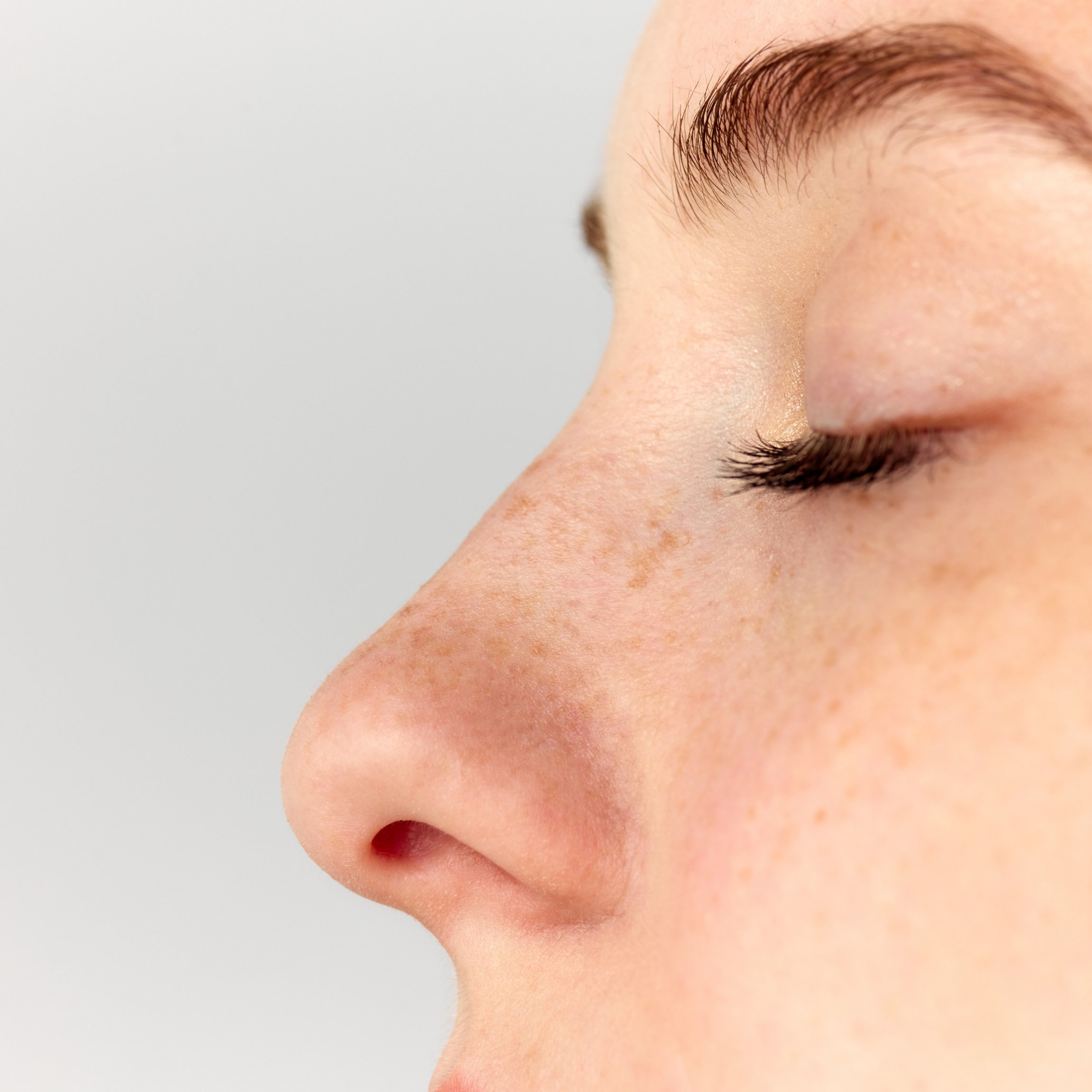
Nasal breathing: the calmer default
The nose is more than just another way in for air. It prepares the air before it travels deeper into the body: it filters, humidifies and warms it. That’s one of its most important jobs. The nose is also part of the local defences. Mucus and tiny hairs called cilia help to catch particles, dust and germs before they get deeper into the airways.
Another point many people don’t know about: nitric oxide is produced in the nose and sinuses. This substance is involved in regulating the airways and is considered one of the reasons why nasal breathing is physiologically more than just a habit. Humming while you breathe out (the humming hack) is particularly interesting here: a well-known study by Weitzberg and Lundberg from 2002 showed that around 15 times more nasal nitric oxide was released this way than with calm exhalation.
The airflow is different too. Air usually enters the body more slowly and in a more controlled way through the nose. For many people, this helps them to breathe more calmly and not get flustered straight away.
Mouth breathing: the fast route
When your body suddenly needs a lot of oxygen, the mouth can help out in the short term. This is the case, for example, during hard exertion, when sprinting or when your nose isn’t clear at that moment. In situations like these, the point isn’t to breathe dogmatically through your nose only, but to make sure your breathing suits the situation.
The difference usually only becomes relevant when mouth breathing isn’t just occasional but becomes a regular pattern. That is, when your mouth is often open even at rest, when snoring is noticeable at night or when your breathing quickly becomes unsettled even with light exertion. So the problem usually isn’t the single moment when the mouth helps out, but rather the state in which it permanently takes on tasks that would usually be better handled by the nose in everyday life.


Possible consequences of mouth breathing
What matters, then, isn’t a single instance of mouth breathing but the pattern behind it. It usually only becomes noticeable when it turns into a habit. Typical signs then often appear, such as a dry mouth in the morning, snoring and restless sleep. (Maniaci et al. 2024)
Many people don’t notice it in their breathing itself, but sleep worse, wake up feeling less rested or have a dry feeling in the mouth and throat in the morning. Over time, this can also affect oral health, because saliva performs important protective functions and protects your teeth, mucous membranes and oral flora. (Maniaci et al. 2024; Pico-Orozco et al. 2020)
If you regularly breathe only through your mouth during sleep, snoring and sleep-related breathing problems can occur, so this should be taken seriously. (Maniaci et al. 2024)
It can show up during the day too: through rather shallow breathing caused by mouth breathing, or a feeling of being under tension more quickly.
There’s also one more point that is often underestimated: if mouth breathing continues over a long period, it is also linked with changes in jaw and facial development as well as misaligned teeth. This is particularly well studied in children and teenagers. (Zhao et al. 2021)


Why it often isn’t just habit
Many people think: I’ll just have to get used to breathing through my nose. It’s often not that simple. Sometimes the problem really is an irritated or narrowed nose. Often, though, there’s more behind it: a stiff ribcage, little movement in the ribs, a diaphragm that can’t work freely, or breathing that stays permanently high, fast and shallow.
In that case, the body doesn’t switch to mouth breathing out of habit alone. Calm nasal breathing is often simply not that easy physically. That’s why it’s worth looking not only at your nose but at how you breathe overall:
calm or hectic, deep or rather high in the chest, with a free exhale or rather under tension.


When to see a doctor? What you can test yourself and when a check-up makes sense
Not every case of mouth breathing needs to be checked medically straight away. Especially if it mainly shows up during stress, in everyday life or with too much exertion, it can make sense to observe your breathing more closely first and try some simple measures. At the same time, there are situations where finding the cause is more important than further self-experimentation.
Self-observation and first steps usually make sense if
- symptoms are fairly mild and only occur occasionally
- mouth breathing mainly shows up in moments of stress or mild restlessness
your nose is generally clear enough - there is no marked daytime tiredness, no heavy snoring and no noticeable shortness of breath
A medical check-up makes sense if
- your nose is permanently poorly clear even though you aren’t ill
- you regularly wake up with a dry mouth, a scratchy throat or exhaustion
- snoring happens often or others notice pauses in your breathing
- you become noticeably short of breath even with light exertion
- symptoms don’t improve despite observation and first measures
These simple questions can help you work it out:
Does mouth breathing only happen occasionally, mainly during stress, rushing or higher exertion?
Then self-observation is usually the best place to start: how do you breathe at rest, in everyday life, at night and during easy exertion?
Does mouth breathing happen regularly at rest or during sleep?
Then you should take a closer look. A dry mouth in the morning, snoring, a scratchy throat or unrefreshing sleep in particular are signs you shouldn’t simply brush aside.
Is your nose permanently restricted, or does breathing feel physically hard?
Then finding the cause is often more sensible than breathing exercises alone. Depending on the pattern, an ENT or sleep medicine assessment may be the next step.
Are there clear warning signs such as marked daytime tiredness, pauses in breathing during sleep or noticeable shortness of breath even with little exertion?
Then a medical assessment should take priority.
The aim isn’t to turn every symptom into a problem straight away. It’s about recognising the difference between patterns or habits that you can observe yourself at first and signs where a check-up makes sense.
06 Everyday life: what makes sense
In everyday life, nasal breathing is almost always the more sensible default. When walking, working, reading, cooking or during rest periods, there is usually no good reason to breathe through your mouth all the time.
Nasal breathing usually suits a state in which the body isn’t constantly under tension. It is often calmer, steadier and less hectic.
If you often sit with your mouth open during the day, sigh a lot or take audible breaths quickly, it’s worth taking that seriously. Not because breathing has to be perfect, but because it shows quite honestly how your system is working at the moment.



Sleep: what to look out for
During sleep, it often becomes clearer whether breathing and recovery work well together. What matters here usually isn’t a single noticeable night but what repeats over several nights. If sleep and breathing don’t go well together, it’s worth taking a closer look.
What you can check tonight:
- Is your nose clear enough before bed?
- Is there anything in your evening routine that tends to make breathing worse, for example late restlessness, dry air or an unfavourable sleeping environment?
- Does it get worse when you lie on your back?
- Are there signs of snoring or restless sleep?
- And does your sleeping position feel calm and right overall, especially around the head, neck and shoulders?
Even these points often help you work out whether the issue is more to do with nasal airflow, the room, your position or something deeper.
If your nose doesn’t feel completely blocked in the evening but still seems narrow, nasal strips can be a simple aid for some people. They can make nasal breathing feel easier and, where the nose is narrow, may also reduce snoring a little. But they are more of an aid than a solution.
You should be careful, however, about taping your mouth shut during sleep. Mouth taping is recommended again and again as a trend, but it isn’t a general recommendation. Especially with a blocked nose, snoring or possible sleep-related breathing problems, it makes more sense to find the cause first rather than just mechanically restricting your breathing at night.
Note:
If you want to tackle your sleep problem in a more structured way rather than just observing it, a well-founded online sleep course can be worthwhile. It isn’t just about individual tips, but about sleep routines, stress, rumination, light, exercise and other factors that can influence your night.
A course like this can be a useful addition to your evening routine.

Discover the online course for better sleep


Sport: when the nose leads
In sport, nasal breathing makes the most sense during easy to moderate exertion. It can help you judge intensity, calm and how well you’re tolerating the load. As long as you can breathe calmly through your nose, your pace is often still in a range your body can control well. That’s exactly why nasal breathing can be helpful in training for pace awareness, managing effort and keeping your breathing calm.
The easier the exertion, the more likely nasal breathing should be easily possible. The more intense it gets, the more normal it is for mouth breathing to join in. So what matters isn’t any single way of breathing but whether it suits the situation.
The following step model makes it easier to judge in which ranges nasal breathing is easily possible and from when mouth breathing can normally join in.
Level 1: rest / very light exertion
- Examples: walking, mobility work, easy cycling, warm-up
- Aim: entirely nasal
- Guide: your breathing stays calm, controlled and without breathlessness
Level 2: easy exertion
- Examples: easy jogging, zone 2 training, relaxed endurance training
- Aim: mostly nasal
- Guide: if you can only breathe through your mouth, your pace is often already too high
Level 3: moderate exertion
- Examples: brisk steady effort, longer climbs, more intensive base-level intervals
- Aim: stay in control for as long as possible
- Guide: nasal breathing may partly shift to mouth breathing
Level 4: high exertion
- Examples: intense intervals, final sprint, peak moments in competition
- Aim: performance before dogma
- Guide: mouth breathing is often normal here
A clear progression also makes sense
first, reliable nasal breathing at rest
then when walking
then in easy workouts
only after that, work on it deliberately at moderate exertion
Important: don’t force it. If nasal breathing is only possible with tension, rushing or raised shoulders, that isn’t a sensible progression.
Would you like to improve your breathing in everyday life in a targeted way?
Then get the 14-day practice plan as a practical download version – for ticking off, observing and keeping going.
Would you like to improve your breathing in everyday life in a targeted way?
Then get the 14-day practice plan as a practical download version – for ticking off, observing and keeping going.

More calm, more balance, less stress.
Stress-Less Challenge

What can help you in everyday life
Before you change anything, it’s worth spending a few days really noticing how you breathe: while working, walking, waiting, reading or in bed in the evening. Is your mouth often open? Is your breathing audible? Does it sit rather high in the chest? Does your exhale break off quickly? Or does your breath stay fairly unremarkable in calm moments?
BOLT test (Body Oxygen Level Test) as additional guidance
The BOLT test is a simple breathing self-check. It isn’t a medical diagnostic test, but it can help you understand your own breathing pattern better. You breathe in and out completely normally, without preparing or deliberately breathing more deeply. After a normal exhale, you pinch your nose shut and notice when the first clear urge to breathe comes. Values under 20 seconds are considered a sign of an unfavourable breathing pattern, 25–30 seconds functional and 40 seconds and above a sign of efficient breathing. What matters isn’t holding out for as long as possible but noticing the first real urge to breathe.
More interesting than a single value is how it develops over several days.
The test gives additional guidance – but it doesn’t replace a diagnosis or an assessment based on symptoms, sleep or exertion.
It’s also important not to underestimate the physical side of breathing. If your chest constantly feels tight, your shoulders quickly rise or your ribs barely move, breathing technique alone often isn’t enough. Calm breathing is therefore not just a question of habit but also of mobility, tension in the body and the conditions under which breathing is easy in the first place.
Anyone who looks at their own breathing this way usually isn’t just searching for the one right technique any more. It’s more about recognising connections: what happens at rest, what happens at night, what happens under exertion, and what does the body need for breathing to become calmer and more stable again? That is often where the real progress lies. Not in perfect breathing, but in a better understanding of what disrupts it and what supports it.
Nasal breathing isn’t a miracle technique. For most people, though, it is the more sensible basic pattern at rest, in everyday life and during sleep. In sport it can be a helpful tool, as long as the intensity suits it.
Mouth breathing isn’t wrong across the board. It can make sense in certain situations, such as during hard exertion or when your nose is temporarily blocked. It becomes noticeable above all when it happens regularly at rest, at night or even with light exertion.
That’s exactly why a closer, more mindful look is worthwhile. Breathing is often not a minor detail but quite an honest indicator of how well rest, sleep, exertion and physical mobility work together. What matters isn’t avoiding every instance of mouth breathing but putting the context in the right perspective and not oversimplifying the causes too quickly.
If mouth breathing happens regularly, it may point to habit, stress, restricted nasal airflow, unfavourable sleep patterns or a mechanical barrier to breathing. Anyone who understands this better usually no longer looks at the nose or mouth alone, but at the whole interplay behind it. That is often where the most important step lies in the end: not simply wanting to breathe differently, but improving the conditions under which calm, stable breathing becomes possible again.

You might also like







All exercises in our App
Download our free app to find more than 500 exercises and configure your own workouts, track your trainings and progress. Save your favorite routines and exercises and learn how to recover, train your flexibility and strength as well as your athletic capabilities.
Sources
Weitzberg E, Lundberg JON. (2002). Humming greatly increases nasal nitric oxide. American Journal of Respiratory and Critical Care Medicine, 166(2), 144–145. https://doi.org/10.1164/rccm.200202-138BC
Maniaci, A., Lavalle, S., Anzalone, R., Lo Giudice, A., Cocuzza, S., Parisi, F. M., Torrisi, F., Iannella, G., Sireci, F., Fadda, G., Lentini, M., Masiello, E. and La Via, L. (2024). Oral health implications of obstructive sleep apnoea: a literature review. Biomedicines, 12(7), 1382. https://doi.org/10.3390/biomedicines12071382
Pico-Orozco, J., Carrasco-Llatas, M., Silvestre, F.-J. and Silvestre-Rangil, J. (2020). Xerostomia in patients with sleep apnoea-hypopnoea syndrome: A prospective case-control study. Journal of Clinical and Experimental Dentistry, 12(8), e708–e712. https://doi.org/10.4317/jced.56593
Zhao, Z., Zheng, L., Huang, X., Li, C., Liu, J. and Hu, Y. (2021). Effects of mouth breathing on facial skeletal development in children: A systematic review and meta-analysis. BMC Oral Health, 21, 108. https://doi.org/10.1186/s12903-021-01458-7
Kowalski, T., Rebis, K., Wilk, A., Klusiewicz, A., Wiecha, S. and Paleczny, B. (2024). The Body Oxygen Level Test (BOLT) is not associated with exercise performance in highly-trained individuals. Frontiers in Physiology, 15, 1430837. https://doi.org/10.3389/fphys.2024.1430837