
Somatic training: gentle exercises for self-regulation

Somatic training is a form of bodywork that focuses on slow, conscious movements and the awareness of one’s own bodily signals. The method can help you become more aware of movement patterns and tension and cope better with stress.
Key points at a glance
- Somatic training centres on conscious body awareness.
- It’s not about performance; it’s about greater self-regulation and less internal tension.
- Many exercises involve breathing, micro-movements and mindfulness.
- These techniques help you recognise the body’s stress responses at an early stage.
- Particularly popular are body scans, breathing exercises, somatic yoga and shaking exercises.
- Just a few minutes a day can help you develop greater calm and body awareness.
What is somatic training?
‘Somatic’ means being consciously aware of your own body. The term is derived from the Greek word ‘soma’ and roughly translates as ‘body’ or ‘physical’. The focus is on how your own body actually feels – independently of emotional or psychological processes.
Somatic approaches focus on internal bodily signals such as:
- muscle tension
- Pain
- Breathing
- Posture
- sense of movement
In other words: rather than training the body ‘from the outside’, the aim is to explore and become aware of it from within.
What is somatic training?
It 's not a traditional workout but a form of conscious self-regulation through body awareness. The aim is to recognise stress responses at an early stage – before they become entrenched – through techniques such as breathing exercises, gentle movement or body scans.
Unlike many fitness programmes, it’s not about higher, faster or more intense. Instead, the focus is on questions such as:
- How does my body feel today?
- Which part of my body feels best?
- Where am I holding tension or where do I feel pain?
- Which postures feel comfortable and which feel uncomfortable?
Somatic exercises are usually performed slowly, in a controlled manner and with great attention. This can improve body awareness and help the nervous system shift more easily into a more regulated state.
Many modern forms of somatic training combine elements from:
- breathing work
- mobility
- mindfulness
- Yoga
- meditation
- Gentle movement

So-called ‘somatic workouts’ have become a trend in recent years, particularly on social media. You often see gentle movements or shaking exercises there that can trigger emotional reactions such as crying or trembling.
Many modern somatic approaches draw on Somatic Experiencing® (SE) , developed by biophysicist and psychologist Dr Peter A Levine.
The underlying idea is that stress and traumatic experiences can be stored not only mentally but also physically.
Somatic training and the nervous system
Somatic training isn’t about pushing you to the limit; instead, the exercises help you notice the body’s subtlest stress responses and consciously regulate the nervous system so you can spot when you’re out of balance, where stress shows up in the body and where you’re holding onto unnecessary tension.


Aims and effects of somatic bodywork
Above all, somatic bodywork helps you become more aware of your own body and regulate your nervous system more effectively. The exercises often seem unspectacular, but that's precisely the point:
- Rather than pushing the body, the aim is to recognise tension and automatic patterns in the first place – ideally before more severe symptoms appear.
Often you don’t even realise how tense you actually are until your neck starts to ache, you can no longer think clearly due to exhaustion or you can barely sleep.
Here’s a concise overview of the key benefits:
Less stress and inner tension
Through slow movements, mindful breathing and body awareness, the nervous system can more easily shift back towards a state of calm and safety.
Many people report, for example, that afterwards they experience:
- deeper breathing
- less inner restlessness
- a feeling of ‘winding down’
- greater physical relaxation
In some cases, researchers also discuss links with lower cortisol levels — in other words, less physical stress (Salamon, 2026).

Greater body awareness and self-regulation
In everyday life, many people tend to function ‘from the head’ and are barely aware of their body’s signals. This is precisely where somatic bodywork comes in.
Become more aware of:
- how you breathe
- where you hold tension
- how stress feels in your body
- when you feel safe or relaxed
This heightened body awareness is known as interoception (Kuhfuß et al., 2021; Nicholson et al., 2025). Over time, your nervous system learns to react less automatically to stress and to return more easily to a state of safety and relaxation.
Improving mobility
Somatic exercises don't focus on maximising strength, speed or intensity as many sports do. Instead, perform movements slowly and, above all, consciously.
It often marks the first time you notice where you're tensing up unnecessarily.
This can help:
- Relieve tension
- become more mobile
- improve posture
For example, a recent study showed improvements in spinal mobility following a ten-week somatic movement programme (Salamon, 2026; Lara et al., 2025).

Gain a better understanding of emotional reactions
You may have seen videos on social media in which people start to shake or cry whilst doing somatic exercises. Such reactions can be part of the body’s stress regulation.
The idea behind this is that stress and distressing experiences manifest themselves not only in endless spirals of thought but often physically too — for example through muscle tension, shallow breathing or a racing heart (Kuhfuß et al., 2021).
Somatic exercises are designed to help you become more aware of such patterns of tension and gradually let them go.

What somatic training can do for the body
By cultivating conscious body awareness, these practices can influence various physiological processes. Potential effects:
- reduced muscle tension and tension
- calmer breathing
- greater mobility and body awareness
- better stress management
- greater inner calm and, at the same time, greater alertness
- You'll feel more connected to yourself again.


Who can benefit from somatic training
It ’s especially helpful if you often feel stressed, tense or constantly ‘on edge’. In everyday life, many people no longer notice how much tension they’re carrying in their bodies – until painful tension, constant inner restlessness or exhaustion set in.
This is exactly where somatic bodywork comes in: it helps you become more aware of your body’s signals and recognise sooner what is – or isn’t – doing you any good.
Somatic exercises can be helpful, for example, if you:
- are experiencing a lot of stress or inner restlessness
- you often feel tense
- frequently suffer from headaches
- struggle to switch off
- struggle to drop off or stay asleep
- feel physically ‘cut off’
- you're constantly on the go and on autopilot
- rarely really relax in everyday life
- Want to reconnect with your body?
Even if you already practise yoga, mobility exercises, breathing exercises or meditation, somatic elements can be a useful addition. This is because it’s less about doing something ‘correctly’ — and more about noticing how movements or a particular posture actually feel in your body.
The good news is that many somatic exercises require neither a high level of fitness nor sporting experience; they're usually performed slowly and gently and can be adapted to suit you.
Remember, somatic training isn’t a substitute for therapy; if you’re dealing with severe psychological stress or traumatic experiences, please practise these exercises under the guidance of trained professionals.
Why somatic exercises are beneficial for many people
Somatic exercises work without the pressure to perform or complicated movement sequences. Rather than ‘higher, faster, more intense’, the focus is on becoming more aware of your own body. This is precisely why many people quickly feel calmer, more secure and less overwhelmed when doing them, compared to traditional workouts or relaxation techniques. Even small movements and conscious breathing can help to relieve tension and wind down more easily.


Somatic training in everyday life
Somatic training doesn’t have to be a ritual lasting hours. Often, just a few minutes are enough to become more aware of your own body and to calm the nervous system down a little. Many exercises can therefore be easily integrated into everyday life – in the morning to ground yourself, during the day when feeling under stress, or in the evening to wind down.
Incidentally, the terms ‘training’ or ‘bodywork’ can be misleading. It’s not actually sport. Rather, it’s about tuning into your inner self and ‘letting your body move’.
How often you practise is less important than doing so regularly; even short sessions of five to ten min can help strengthen body awareness and self-regulation.
Typical features of many somatic methods include:
- slow movements
- conscious breathing
- small micro-movements
- body awareness without review
- the conscious awareness of tension and relaxation
Here we’ll show you six different somatic approaches as examples:
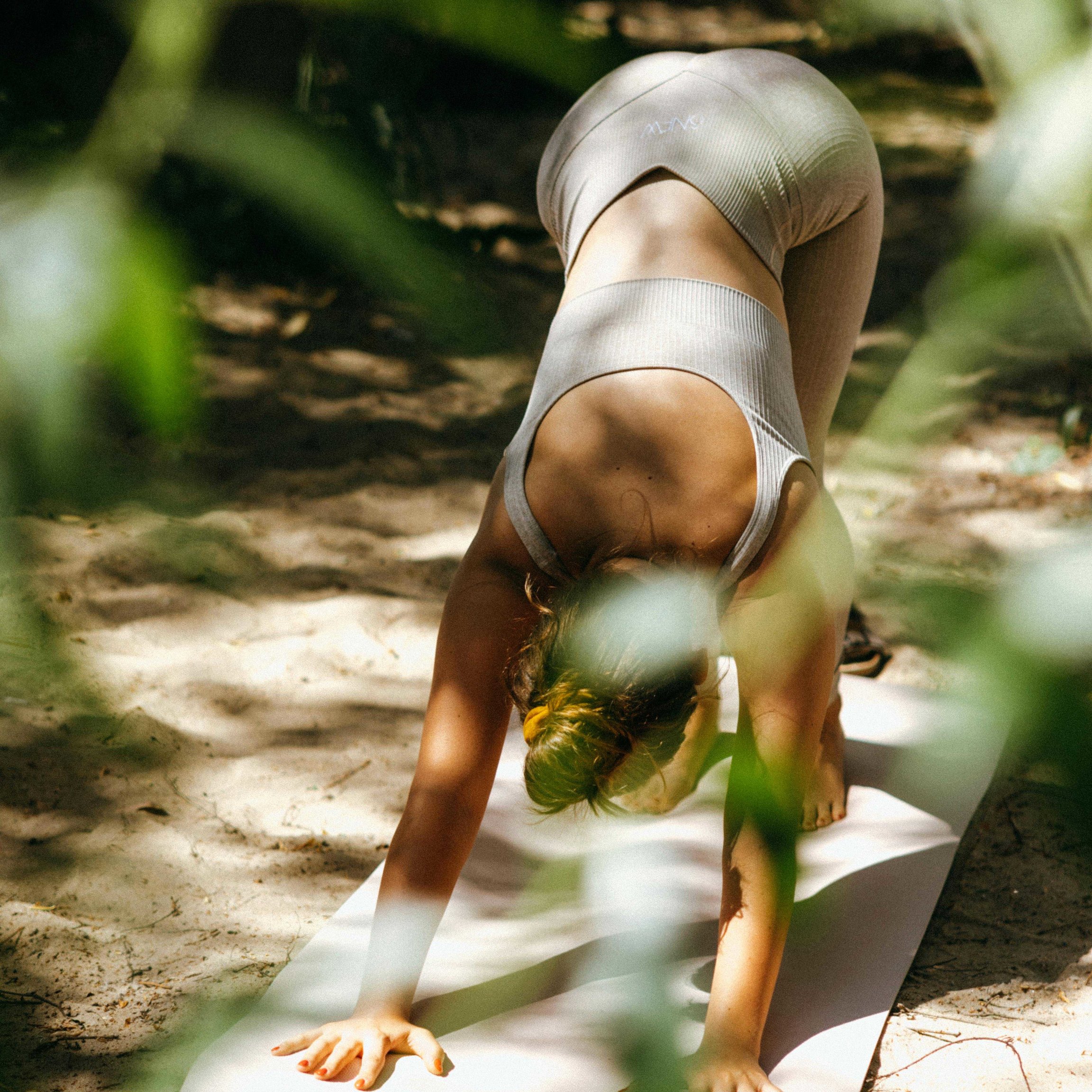
Somatic Yoga
Somatic yoga combines mindful movement with body awareness. Unlike in many traditional yoga classes, the focus here is less on specific poses and controlled movement and more on consciously sensing the body.
Move each limb with deliberate slowness so you can notice where you're holding tension.
Somatic Yoga is particularly suitable for:
- reducing stress
- for tension
- as a calm counterbalance to everyday life
- if you’re looking for gentle movement
Try performing our fascia yoga exercises extra slowly whilst regularly checking in with your body. What do you notice?


Awareness and release of tension with fascia yoga
Start practising myofascial yoga now.Somatic shaking
You'll move your body through small rhythmic actions that encourage natural release. Somatic shaking is a simple technique that guides you to shake specific areas in a controlled way.
You may recognise trembling or shaking as a natural reaction to stress or excitement; somatic shaking deliberately draws on this mechanism.
Try a simple standing exercise to begin:
- Stand with your feet hip-width apart.
- Relax your shoulders and jaw.
- Start gently, shaking your arms, legs or your whole body slightly.
- Continue to breathe calmly as you do so.
- After a few minutes, notice how your body feels.
It’s not the intensity that matters, but rather a relaxed and natural sense of movement.
Somatic shaking can be particularly soothing:
- after stressful days
- when you’re feeling restless
- when you feel ‘stuck’
- to physically release tension

Breathing exercises
Somatic training doesn't always involve movement and breathing is one of the most direct ways to access the nervous system. Conscious breathing exercises can help you become more aware of your body, reduce stress responses and calm yourself down.
Depending on the technique, breathing exercises can feel energising or calming. Many people use them:
- when feeling stressed or anxious
- to help you drop off
- before an important event
- Use them to wind down consciously.
Ready to try? We've got simple exercises to help you manage stress and anxiety and to support better sleep.

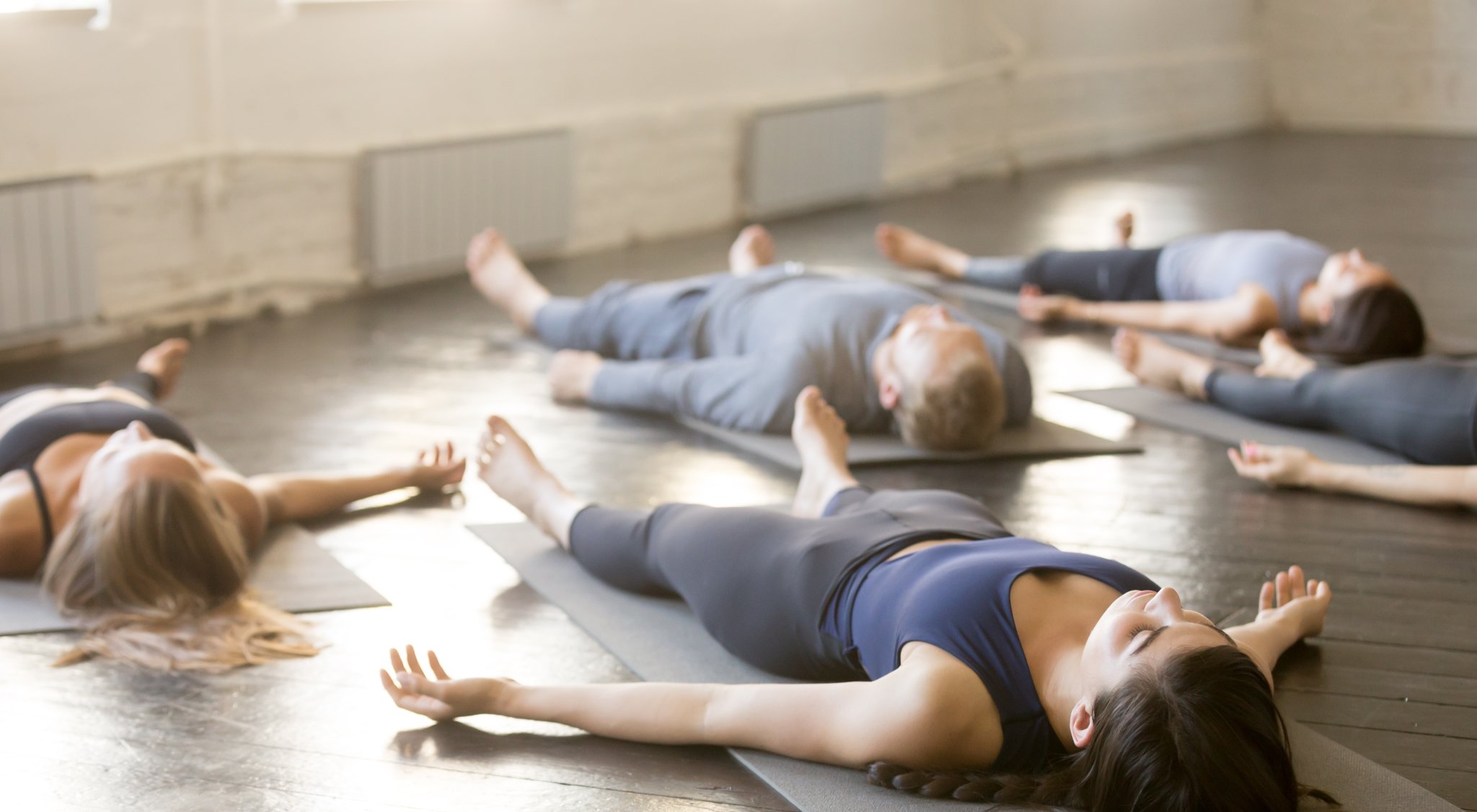
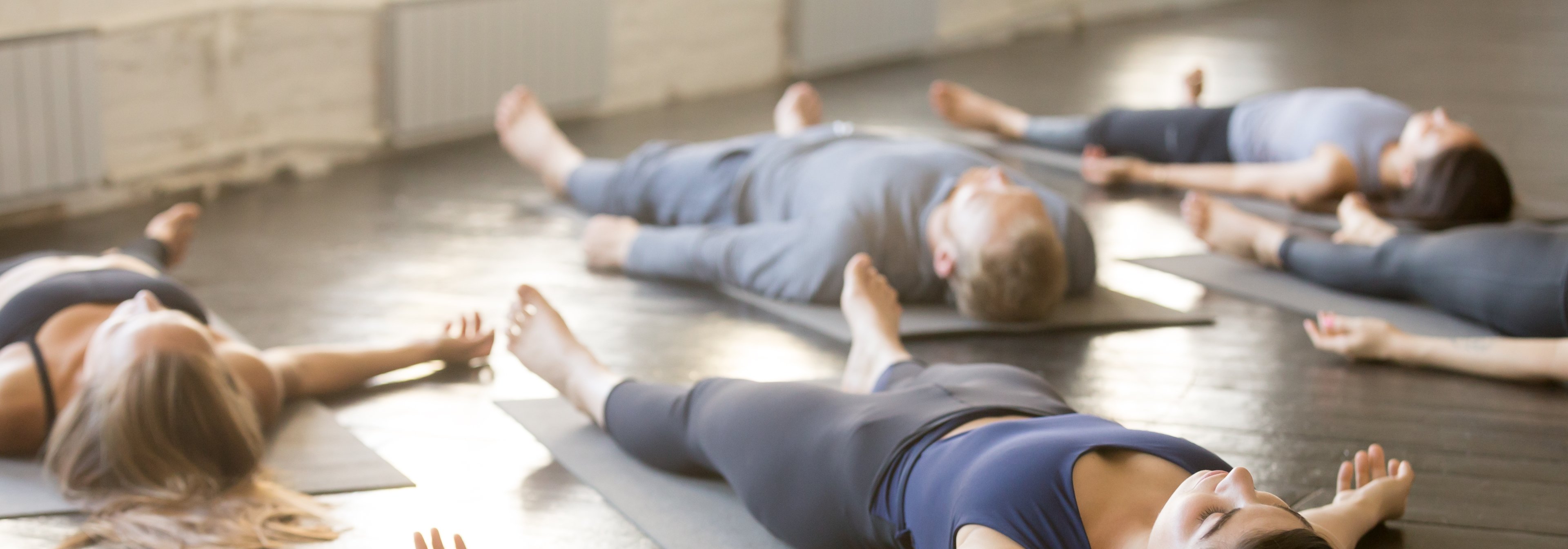
Body scan as a somatic exercise
Lie down, focus on each body part in turn and notice any sensations without judgement. Bodyscanning helps you recognise tension, restlessness or other emotions early.
The body scan is particularly suitable:
- for stress
- to help you drop off
- as a mindfulness exercise
- if you want to develop a greater sense of your body again
Progressive muscle relaxation as a form of somatic bodywork
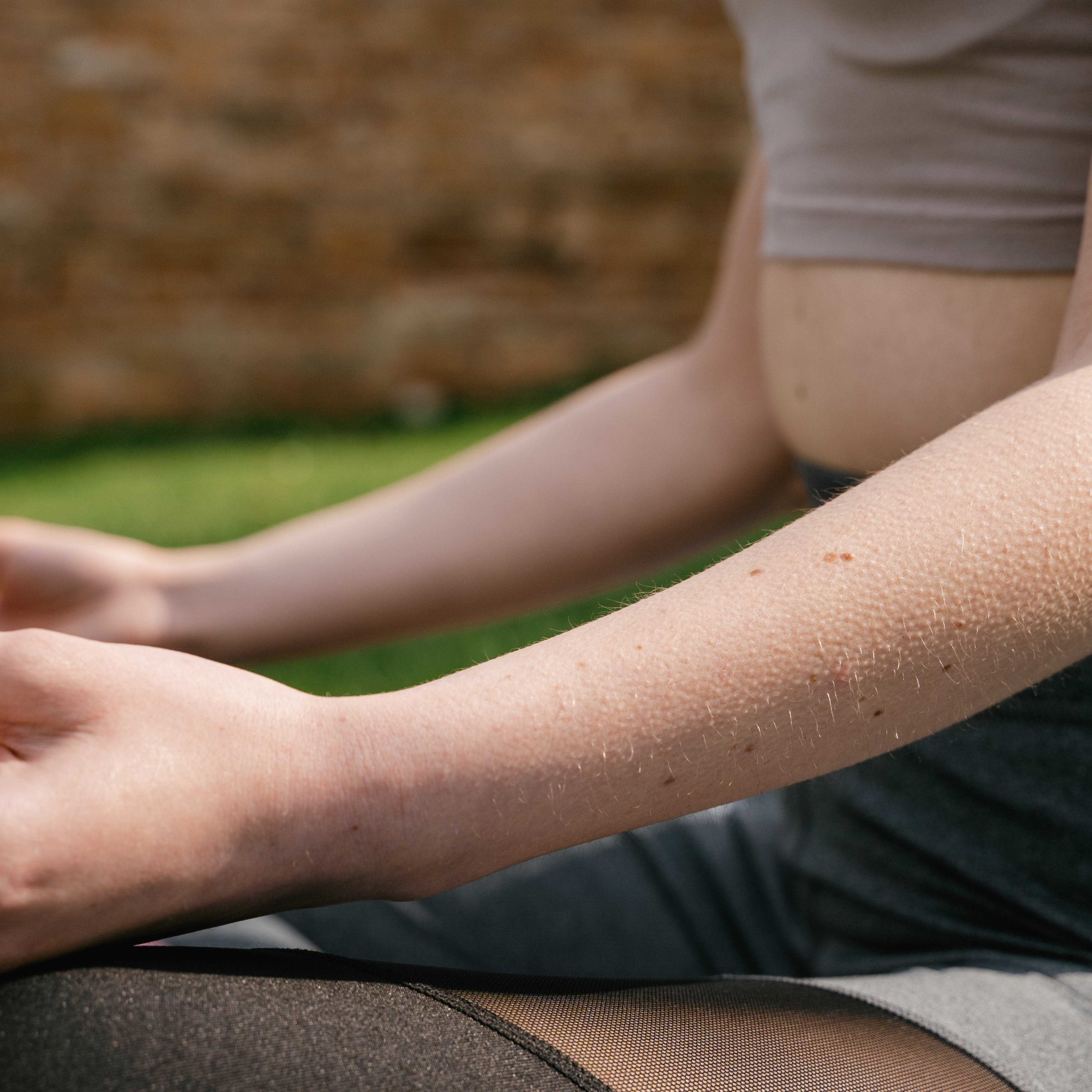
Progressive muscle relaxation (PMR) combines the conscious tensing and relaxation of different muscle groups, helping you recognise how much tension you carry in everyday life.
It can help you:
- reduce physical tension
- wind down more effectively
- become more aware of stress
- feel more of the relaxation
For many people, this method provides a gentle introduction to somatic exercises. Discover five simple PMR exercises here.


Reduce tension with progressive muscle relaxation
Get started nowSomatic Experiencing® (SE)
It’s a body-oriented approach to stress and trauma regulation developed by Dr Peter A Levine that’s based on the idea that distressing experiences can be stored not only mentally but also physically (Somatic Experiencing Deutschland e V, n d).
We focus on bodily sensations such as muscle tension, breathing and specific physical stress responses. The aim is to gradually guide your nervous system back towards a state of safety and regulation.
In sessions with a trained SE practitioner, you'll focus on:
- consciously notice bodily signals (‘tracking’)
- approach stress only in small steps (‘titration’)
- alternate between tension and relaxation (‘pendulation’)
- Allow physical stress responses such as trembling or deep exhalation (‘discharge’).
SE can be particularly beneficial:
- in cases of chronic stress
- following traumatic experiences
- in cases of severe inner tension
- if you often feel ‘on high alert’.


Somatic exercise to get you started
Start with a simple sequence of movements. Aim to feel rather than perform perfectly. Notice what’s happening in your body as you move.
It's especially helpful first thing in the morning or whenever you feel tense or stiff.

Exercise: gentle micro-movements whilst lying down
- Lie face down on your bed or a mat. Turn your head to one side, arms bent and resting beside your head.
- Draw one leg, slightly bent, sideways towards your upper body.
- Then slowly push your knee a few cm forwards and back — very gently and without using any force.
- As you do this, notice how the movement travels through your body: perhaps into your pelvis, back, ribs or shoulders.
- At the end, lie still for a moment and notice whether anything has changed – for example, your tension, breathing or mobility.
Repeat the sequence with the other leg.
Keep each movement slow enough for you to feel every phase.
Somatic micro-movements are performed deliberately slowly, allowing your brain to perceive each phase more accurately and recognise automatic tension patterns more easily. Many people find such exercises calming, regulating and surprisingly intense — even though they don’t look like much.


Conclusion: Regulating the nervous system through gentle bodywork
Somatic training shows that regulation doesn’t require performance, discipline or intense workouts. Often, small, conscious movements are enough to rebuild a stronger connection with your own body and recognise stress responses at an early stage.
This is precisely where the strength of somatic exercises lies: they can help you step out of the constant state of ‘functioning’ or ‘autopilot mode’ and become more aware of what your body actually needs.
Whether it’s breathing exercises, body scans, gentle mobility work or micro-movements — the important thing is that the somatic exercises feel safe, comfortable and tailored to you.

More mobility in everyday life with fascia training – up to 100% reimbursement from health insurance providers
Frequently asked questions about somatic training
We find that when you're dealing with persistent tension, it helps to engage the body as well as the mind. Somatic exercises therefore focus on breathing, slow movements and body awareness. The aim is to restore a sense of security and calm to the nervous system. Even just a few minutes a day can help you recognise tension sooner and wind down more consciously.
Somatic training combines movement with conscious body awareness, focusing on breathing, sensations of tension and other internal bodily signals rather than performance or fitness. The exercises are designed to help you become more aware of the nervous system’s stress responses. Many people find somatic exercises calming and regulating.
The best-known somatic exercises include breathing exercises, body scans, gentle mobility movements, somatic yoga and conscious shaking. Unlike traditional workouts, the focus is less on intensity and more on consciously feeling the movements. Many exercises can be incorporated into your everyday life for five to ten min a day.
Somatic training overlaps to some extent with yoga or meditation but places a particularly strong emphasis on body awareness and self-regulation. While meditation often works on a mental level and yoga can sometimes be performance-oriented, somatic training focuses on sensing, perceiving and regulating the nervous system.
Somatic exercises often work best in short, regular sessions. Use them in the morning to ground yourself, during the day when you’re feeling stressed or in the evening to wind down. Try breathing exercises, a body scan or Yoga and mobility routines with a foam roller.






Sources
Salamon, M. (2026, January 23). What are somatic workouts? Harvard Health Publishing. https://www.harvardhealth.org/exercise-and-fitness/what-are-somatic-workouts
Kuhfuß, M., Maldei, T., Hetmanek, A., & Baumann, N. (2021). Somatic experiencing: Effectiveness and key factors of a body-oriented trauma therapy: A scoping literature review. European Journal of Psychotraumatology, 12(1), 1929023. https://doi.org/10.1080/20008198.2021.1929023
Nicholson, W. C., Sapp, M., Karas, E. M., Duva, I. M., & Grabbe, L. (2025). The body can balance the score: Using a somatic self-care intervention to support well-being and promote healing. Healthcare, 13(11), 1258. https://doi.org/10.3390/healthcare13111258
Lara, D. K., Hamel, K. A., & Anderson, D. I. (2025). Somatic movement intervention among older adults to improve body awareness and spine mobility: A pilot study. Journal of Bodywork and Movement Therapies, 42, 319–330. https://doi.org/10.1016/j.jbmt.2024.12.025
Somatic-Experiencing Deutschland e. V. (o. D.). Somatic. Abgerufen am 19. November 2026, von https://www.somatic-experiencing.de/