
Dizziness: causes, types, symptoms and what helps

It can strike suddenly — when you stand up, during stressful moments or without any obvious trigger. You might feel everything's spinning, swaying or simply unstable. A one-off episode is usually harmless, but recurring dizziness can be unsettling, have various causes and disrupt everyday life.
Key points at a glance
- It's not a condition in its own right but a symptom that arises when the interaction between your inner ear, eyes, muscles and brain is disrupted.
- There are various forms, such as positional vertigo, rotational vertigo, unsteadiness or stress-related vertigo – these differ in terms of cause, duration and intensity.
- Common triggers include circulatory problems, inner ear disorders, migraines, stress, dehydration or side effects of medication.
- Treatment depends on the cause and ranges from medical therapy and targeted exercises to physiotherapy, stress reduction and simple everyday tips.
- If your dizziness is severe, comes on suddenly or keeps coming back, see your doctor to rule out serious causes.


What is vertigo?
It's a disturbance of perception and balance: you feel as though your surroundings are spinning or swaying or that your body's no longer stable in space. From a medical perspective, vertigo occurs when the complex interaction between the inner ear, eyes, muscles and brain no longer functions smoothly. These systems normally provide the brain with reliable information about position, movement and posture. If the signals are contradictory or disrupted, the balance required for vertigo is thrown off course.
It’s important to note that vertigo isn’t a condition in its own right, but a symptom. It indicates that something in the body has become unbalanced — for example, the circulatory system, the vestibular system in the inner ear or the brain’s processing of sensory input. This is why vertigo can feel very different from person to person and have many causes.
It’s very common and can affect people of any age. It’s particularly prevalent in older people, as several factors – such as fluctuations in blood pressure, declining muscle strength or medication – come into play. However, younger people also experience bouts of dizziness, for example due to stress, dehydration or after sitting for long periods. Regardless of age, dizziness can be a significant burden: it restricts freedom of movement, causes uncertainty in everyday life and often leads to a fear of falling or further episodes of dizziness. This makes it all the more important to take dizziness seriously and to understand its specific causes.

Types of dizziness and typical symptoms
It can feel very different from one person to another. Depending on the cause, triggers and the body system affected, various types of dizziness are distinguished, which differ significantly in terms of duration, intensity and accompanying symptoms.
- Positional vertigo
It usually occurs when you turn over in bed, lie down or move your head in other ways. It’s caused by small deposits in the inner ear that irritate the vestibular system, depending on the direction of movement. The dizziness typically lasts only a few seconds but can be very intense. - Circulatory vertigo
It's triggered by fluctuations in blood pressure or a temporary reduction in blood flow to the brain and typically involves dizziness when you stand or sit up, often accompanied by light-headedness or a feeling that the world's going black. - Rotational vertigo
You feel as though your surroundings are spinning. It’s often caused by a disorder in the inner ear’s vestibular system. Rotatory vertigo frequently occurs in episodes. - Unsteady dizziness
You feel unsteady when walking or standing, as if the ground were swaying. It frequently occurs in older people, following infections or due to neurological causes. - Vertigo associated with migraine
Also known as vestibular migraine, it can strike with or without a headache and is often accompanied by nausea and sensitivity to light or sound. The type of dizziness can vary. - Stress-related dizziness
It's linked to psychological tension, anxiety or feeling overwhelmed and tends to be diffuse, persistent and worse in stressful situations. - Dizziness caused by temporomandibular joint disorder
Because of the direct link between the temporomandibular joints and the vestibular system in the inner ear, temporomandibular joint dysfunction (CMD, craniomandibular dysfunction) can trigger various forms of vertigo. - You may feel light-headed.
It’s not the classic sensation of spinning or swaying but rather a ‘cotton-wool-in-the-head’ feeling, often triggered by exhaustion, lack of sleep or dehydration.
Accurately identifying the type of vertigo is important so you can take the correct measures. As the various forms differ in their causes and treatment approaches, a clear distinction helps to diagnose vertigo precisely and treat it effectively.


Causes of dizziness
They range from harmless triggers to conditions that need treatment and several factors often act together, which can make classification tricky.
The most common causes of dizziness include:
- Circulatory problems and fluctuations in blood pressure
An unstable circulation is one of the most common causes of dizziness. Particularly in cases of low blood pressure or when you stand up quickly, temporary dizziness caused by circulatory issues can occur as the brain isn't receiving sufficient blood flow. - Disorders of the inner ear
The inner ear houses the vestibular system. Inflammation, circulatory problems or deposits can disrupt signal processing and lead to vertigo or unsteadiness. - Migraines and neurological causes
In certain forms of migraine, dizziness is the main symptom. Neurological disorders or disturbances in the brain’s processing of sensory input can also affect balance. - Medicines as triggers
Some medicines, such as blood pressure-lowering drugs, sedatives or certain painkillers, can cause dizziness as a side effect — particularly when first taken or when the dose is changed. - Dehydration and fatigue
Insufficient fluid intake, lack of sleep or physical exhaustion can strain your circulatory system and trigger dizziness, especially in hot weather or during intense exercise. - Psychological causes
Stress, anxiety or persistent inner tension can indirectly affect the vestibular system. This stress-related dizziness often manifests as persistent unsteadiness or light-headedness.
Because dizziness can have many causes, monitor triggers and accompanying symptoms so you can seek the appropriate treatment.


Treatment for dizziness
We'll tailor your care to the underlying cause, focusing on treating the trigger rather than simply suppressing the sensation. We often combine several measures for better, faster relief.
- Medical treatment options
Depending on the cause, medically supervised repositioning manoeuvres, stabilisation of circulation or treatment of inner ear disorders or temporomandibular joint disorders may be necessary. - Drug therapy
We'll prescribe medication only when necessary, for example for certain inner ear disorders, migraine or severe dizziness accompanied by nausea, and we don't advise long-term use. - Home remedies for dizziness
Drink plenty of fluids, stand up slowly, get some fresh air and take regular exercise to stabilise your circulation and ease mild dizziness. Short rest periods also help during acute bouts of dizziness. - Physiotherapy and balance training
Specialised exercises train the vestibular system, improve coordination and can reduce dizziness in the long term — particularly in cases of positional or age-related dizziness. - Psychotherapeutic approaches for stress-related dizziness
If stress or anxiety triggers your dizziness, practise relaxation techniques, breathing exercises or consider psychotherapeutic support. - Neurology and neuro-focused exercises
Disorders in sensory processing in specific areas of the brain can be improved through highly specific stimulation and exercises. This provides the nervous system with additional information from various sensory organs, which can lead to a greater sense of security and thus a reduction in dizziness.
Should you see a doctor if you're dizzy?
See a doctor if your dizziness appears suddenly, is very severe or happens regularly, worsens over time or is accompanied by other symptoms such as paralysis, speech difficulties or visual disturbances.


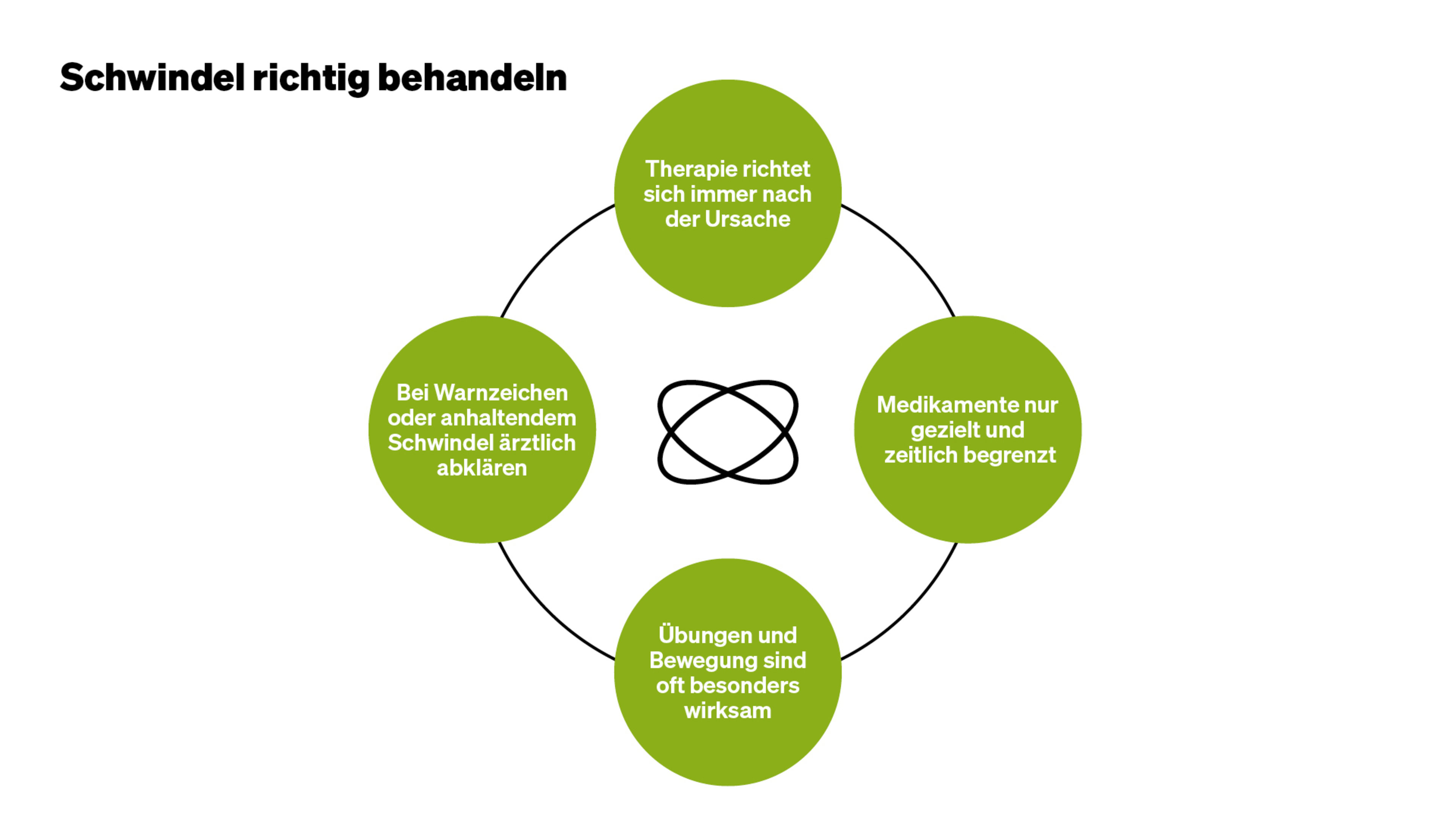
Treating dizziness properly


Exercises for vertigo
Perform the exercises regularly to improve balance and build confidence in everyday life. We’ve designed the programme to train your vestibular system, improve coordination between your eyes, vestibular system and muscles and help your brain process conflicting stimuli more effectively. Technical information: the exercises are based on established vestibular rehabilitation principles and can reduce symptoms over time.
1. Standing balance exercise
Aim: improve balance and body stability
How to do it:
- Stand upright with your feet hip-width apart.
- Slowly shift your weight onto one leg.
- Lift the other foot slightly off the ground.
- Hold the position for 10–20 s.
- Then switch sides.
If you're just starting out, hold onto a wall or the back of a chair.
2. Gentle head movements
Aim: to train the vestibular system and stimulate sensory processing
How to do it:
- Sit upright on a chair.
- Slowly turn your head to the right, then back to the centre.
- Then turn it to the left.
- Repeat the movement 5–10 times.
- Then slowly move your head up and down.
Keep the movements pain-free and smooth.
3. Circulation exercise whilst standing
Aim: To stabilise circulation and prevent dizziness when standing up
How to do it:
- Stand up straight.
- Slowly lift both heels so you're standing on your tiptoes.
- Lower your heels back down in a controlled manner.
- Repeat 10–15 times.
Alternative: slowly move from a sitting to a standing position several times.
4. Standing eye exercise
Aim: To improve sensory processing in cases of vertigo caused by eye problems
How to do it:
- Stand upright and keep your head straight throughout.
- Look straight up then back down. Next, look diagonally upwards to the right at a 45° angle then back down. Continue horizontally to the right then back, and so on, until you've completed the full circle in 45° steps.
- Repeat in the opposite direction.
- Complete 2 sets in each direction.
Perform the exercises daily or several times a week. If you experience severe discomfort or feel unsteady whilst doing them, stop the exercise and consult a doctor to determine the cause.
Helpful products for dizziness


Ball 08
Available in multiple variants







Learn more about breathing exercises: breathe away stress and anxiety
Breathing Exercises: Breathe Away Stress and Anxiety

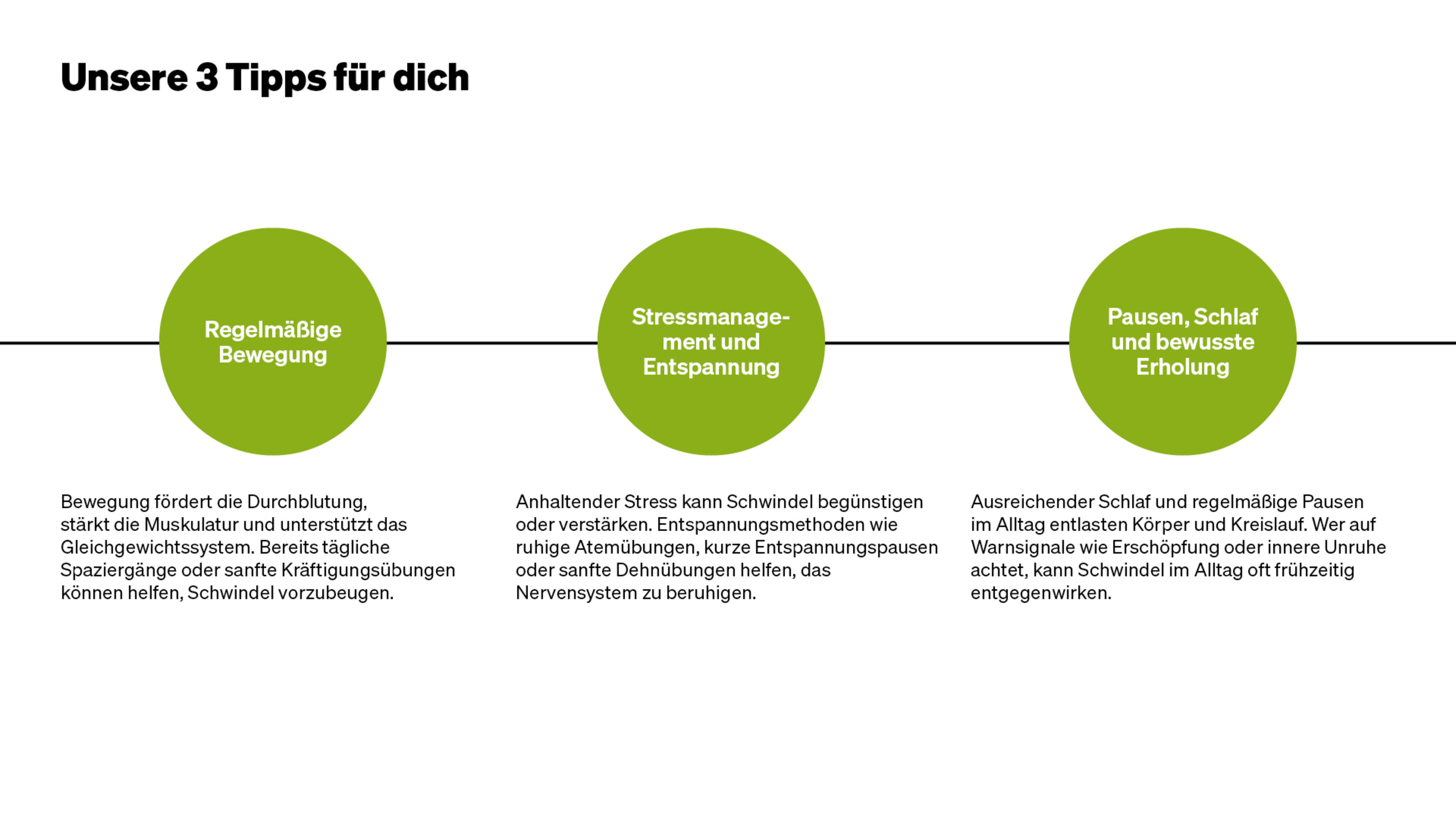
Preventing dizziness – tips for everyday life
Many forms of dizziness can be managed through simple everyday measures. Stabilise your body as a whole, reduce stress and strengthen balance in the long term. These small steps can be particularly helpful for dizziness caused by stress or recurring dizziness in everyday life.

Additional exercises for tinnitus and dizziness
View exercises for dizziness and tinnitusFAQ — Frequently asked questions about dizziness
Sit or lie down as soon as possible, avoid sudden movements and breathe calmly. Focus your gaze on a fixed point. If the dizziness persists or recurs, seek medical advice.
No, dizziness is often harmless and temporary, for example due to circulatory problems or stress. In rare cases, however, it may indicate serious underlying causes, particularly if other symptoms are present.
Perform stabilising balance exercises, gentle head movements and exercises to stabilise circulation to train your balance and reduce dizziness. Do them regularly and in a controlled manner.
Dizziness is one of the most common complaints and can affect people of any age, though it becomes more frequent with age.
See a doctor if dizziness strikes suddenly, is very severe or happens regularly, or if it's accompanied by symptoms such as paralysis, speech difficulties or visual disturbances.
Yes, prolonged stress or inner tension can affect the vestibular system and exacerbate or trigger dizziness.