
Sleep-promoting foods: nutrition for better sleep – which foods really help?

Foods rich in tryptophan, magnesium, potassium and natural melatonin support the processes that regulate your sleep–wake cycle. Light evening meals such as fruit, nuts, porridge and dairy products can fit neatly into your routine and help you to wind down. Caffeine, alcohol, sugar and heavy meals, however, can disrupt sleep so it's best to enjoy them earlier in the day.
Key points at a glance
- Certain foods can promote sleep by supporting the production of serotonin and melatonin.
- Nutrients such as tryptophan, magnesium, potassium and natural melatonin play a key role in this.
- Foods such as bananas, kiwis, nuts, porridge, dairy products and cherries can make it easier to fall asleep and sleep through the night.
- Heavy, greasy meals, large amounts of sugar, caffeine and alcohol disrupt sleep, so avoid them in the evening.
- Establish a calm evening routine with light meals, herbal teas and relaxing rituals to support sustainable sleep quality.


Quick fixes for better sleep – things you can do straight away
If you’re already dreading the thought of lying wide awake in bed in a few hours’ time, try these simple tips for a peaceful night’s sleep straight away:
A banana as an evening snack — it provides tryptophan and magnesium, nutrients that may help you unwind and support the production of serotonin, a precursor to the sleep hormone melatonin.
Chamomile tea as a night-time drink — this traditional home remedy has a calming and relaxing effect.
An early dinner – Eat a light meal two to three hours before you go to sleep so that your digestive system isn’t working too hard and your body can switch to rest mode
Nuts as a bedtime treat – almonds or walnuts contain melatonin and act as a natural sleep aid. Almonds are also a good source of magnesium. Walnuts, in addition, provide omega-3 fatty acids, which have anti-inflammatory effects and can help to counteract stress responses.
A kiwi for dessert — according to a 2011 study, eating two kiwis before bed could significantly reduce the time it takes to fall asleep.

Sleep better, live healthier — with our sleep course. Up to 100% refund.
Discover the online sleep course now

An overview of sleep-promoting foods
Eat a handful of almonds and you’ll drift off to sleep – of course, it’s not quite that simple. But with a carefully chosen selection of foods, you can help your body switch into rest mode. Here’s an overview of the most proven sleep-promoting foods:

Foods rich in tryptophan
Tryptophan is an amino acid that the body converts into serotonin and later into melatonin — the hormones that are crucial for falling asleep and sleeping through the night.
- Almonds and walnuts supply tryptophan, healthy fats and magnesium, which may help prevent muscle cramps.
- Milk and yoghurt are also classic sources of tryptophan.
- Honey can help the brain absorb tryptophan more easily, so the popular warm milk with honey before bed is a sensible idea as it helps the body relax, particularly as part of a bedtime ritual.

Magnesium and potassium
Both minerals help your nervous system relax and support muscle recovery.
- Oatmeal provides complex carbohydrates and magnesium.
- Wholemeal products (such as bread or rice) help stabilise blood sugar levels and support tryptophan absorption.
- Potatoes and sweet potatoes provide potassium and complex carbohydrates, which can promote neuromuscular relaxation.
- Green vegetables such as spinach, Swiss chard or broccoli supply both vitamins and magnesium.
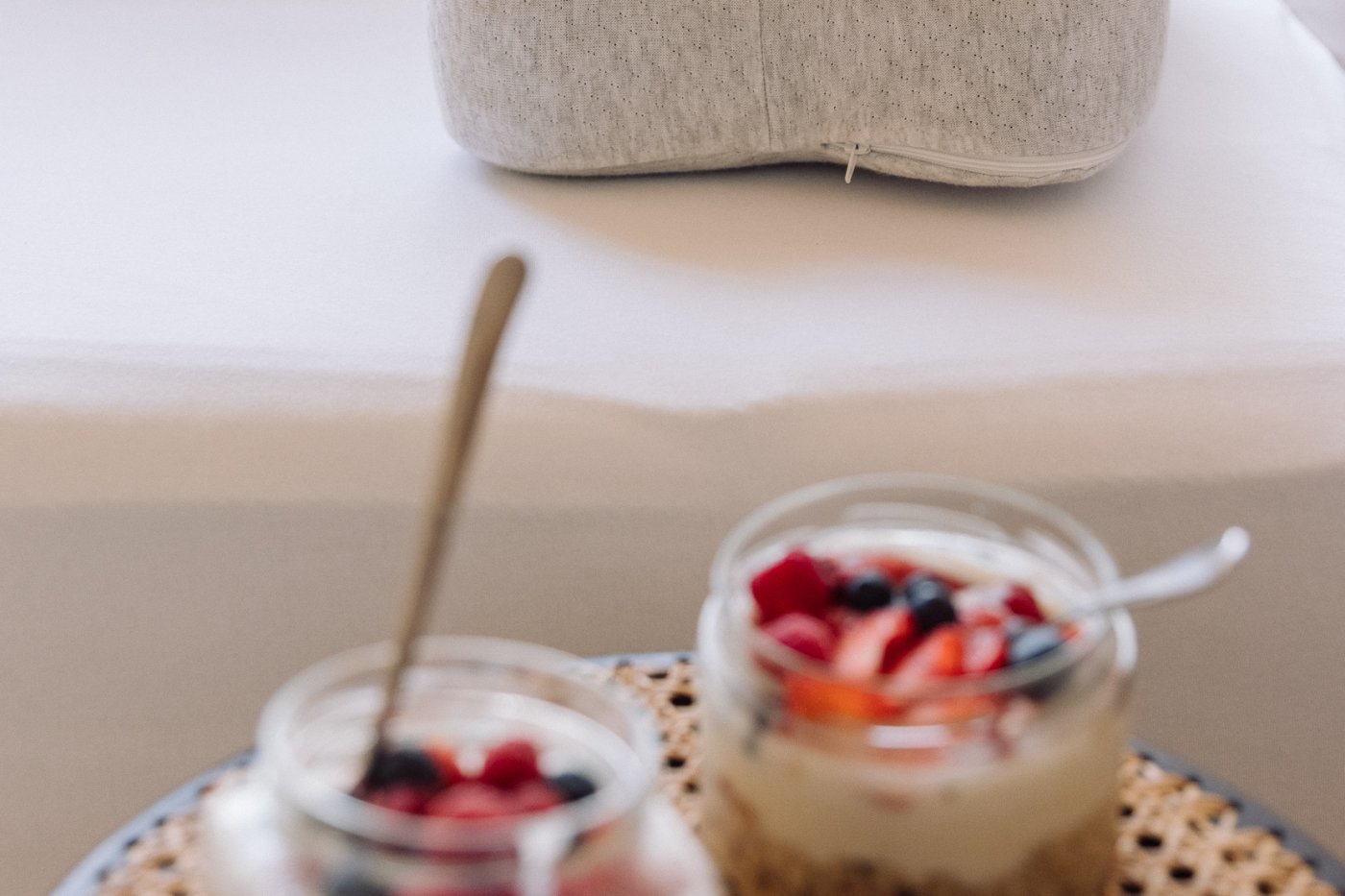
Nutrient-rich fruits
- Grapes and cherries provide melatonin, which may help improve sleep quality, and cherry juice has recently enjoyed a social media buzz.
- Bananas supply tryptophan, magnesium and potassium, which promote muscle and nerve relaxation and help regulate blood pressure.
- Kiwis may also support better sleep when you enjoy them regularly because they provide serotonin (a melatonin precursor), antioxidants, fibre, potassium and magnesium.

Herbs and Teas
The plant compounds in tea can soothe the nervous system, making it a calming drink in the evening.
- Chamomile is known for its relaxing effect.
- Lavender can be used both as a tea and as an essential oil on the Recovery Pillow.
- Valerian has a calming effect without making you feel too tired.
Include them in your evening routine to support calm nerves and a restful night.
Carbohydrates in the evening: a good idea for restful sleep?
Some people swear by protein-rich meals in the evening whilst others deliberately opt for carbohydrate-rich dishes. Both can be beneficial. A small portion of complex carbohydrates, such as porridge, wholemeal pasta or potatoes, can promote the production of serotonin by facilitating the absorption of the amino acid tryptophan and thus help you to fall asleep. Heavy greasy meals, on the other hand, put a strain on digestion and make the body restless. The best solution: a balanced meal containing some complex carbohydrates.
Leona Rudolph, health psychologist and sleep health expert



These foods disrupt your sleep
Not everything that tastes good is good for your sleep. Certain foods and drinks can make it take longer to fall asleep and contribute to sleep disturbances. If you want to improve your sleep, bear the following points in mind:
Caffeine and energy drinks
C affeine stimulates the central nervous system and keeps you awake — often for much longer than expected. Many energy drinks combine caffeine with sugar and cause spikes in blood sugar levels. Avoid them for at least 6 h before bed if you want to choose foods that promote good sleep.
Alcohol
You may recognise this from a night out: although alcohol can feel relaxing at first, it can later disrupt your sleep cycle and sleep architecture, leaving you with less restful sleep and more frequent night-time awakenings.
Spicy and fatty foods
Fatty fast food and spicy food can lead to heartburn and cause digestive problems, so they're best avoided before bed.
Sugary snacks
Soft drinks, chocolate and the like send your blood sugar levels soaring and are more likely to give you a buzz than help you wind down. A better choice if you fancy something sweet in the evening: fresh kiwi, a spoonful of nut butter or one of the other snacks mentioned above.


Diet and Sleep – What Does the Science Say?
Many studies suggest that some foods can have a positive effect on sleep whilst others disrupt it. There are now numerous studies on this topic. The positive effects of tryptophan, magnesium and melatonin on sleep quality have been well researched.
A 2019 study (Sánchez-Villegas et al.) suggests that a diet comprising nutrient-rich, easily digestible foods (wholemeal products, fruit, vegetables and nuts) could reduce the time taken to fall asleep and improve sleep quality. This seems plausible, as these foods are rich in the nutrients mentioned above.


Nutrition as part of your evening routine — how to incorporate the tips
Ready for a new evening routine? Pick a few of the following habits for a relaxing evening and complement them with sleep-promoting foods. Afterwards, you can snuggle up, wonderfully relaxed, in our BLACKROLL® all-season blanket, which adapts to your body temperature.
Light meals
In the evening, eat light meals that don’t strain your stomach. Try wholemeal bread and hummus, yoghurt with walnuts and honey or a colourful bowl with broccoli, sweet potato, tuna and quinoa. Remember, protein is easy to digest but too much salad in the evening can cause digestive problems for some people.
Caffeine-free drinks
Avoid coffee, black and green tea or energy drinks for at least 4–6 h before bed so your body can break down the caffeine and you can drop off more easily.
Herbal tea for relaxation
Chamomile, lavender or passionflower tea have a calming effect and are ideal additions to your evening routine. A little honey adds sweetness and may also help you feel sleepy.
Incorporate gentle rituals
Establish your own personal routine: a warm drink, a few minutes of mindful breathing or a short meditation will help you fall asleep. These rituals signal to your body: it’s time to relax. Soothing for the nervous system and relaxing for the muscles: fascia yoga with the BLACKROLL foam roller.

For a relaxed sleep
Recovery Blanket All Year

So, what was that about sleep-promoting foods again? Here you’ll find answers to the most important questions.
FAQ on diet and sleep
Thanks to their content of tryptophan, magnesium and melatonin, cherries, bananas, almonds, porridge, walnuts, cow’s milk and kiwis are foods that promote sleep. Their nutrients support the production of serotonin and melatonin, which help you fall asleep and improve your sleep quality.
Avoid strongly spiced or greasy foods in the evening, especially if you have a sensitive digestive system. Sugary snacks, coffee, energy drinks and alcoholic beverages can also disrupt sleep.
Yes, there’s some truth in that. Cow’s milk contains tryptophan, a precursor to serotonin and melatonin — both of which play an important role in restful sleep. A glass of warm milk in the evening can help you fall asleep, especially when combined with honey.
No, diet alone can't cure sleep disorders, but choosing foods that promote good sleep can help you fall asleep and sleep through the night.


Conclusion: sleep-promoting foods
While a balanced diet can’t resolve sleep disorders, it can improve the quality of your sleep. Foods such as bananas, almonds, walnuts, dairy products and cherries supply nutrients including tryptophan, magnesium and melatonin, which support the body’s sleep–wake cycle and may help you nod off more easily.
Incorporate these foods into your evening routine and pair them with regular exercise and relaxation techniques. You can learn how to sleep better, step by step, in our certified online prevention course.
More interesting items




Sources and studies
Lin, H. H., Tsai, P. S., Fang, S. C., & Liu, J. F. (2011). Effect of kiwifruit consumption on sleep quality in adults with sleep problems. Asia Pacific Journal of Clinical Nutrition, 20(2), 169–174.
Jahangard, L., Hedayati, M., Abbasalipourkabir, R., Haghighi, M., Ahmadpanah, M., Faryadras, M., Mikoteit, T., Sadeghi Bahmani, D., & Brand, S. (2019). Omega-3-polyunsatured fatty acids (O3PUFAs), compared to placebo, reduced symptoms of occupational burnout and lowered morning cortisol secretion. Psychoneuroendocrinology, 109, 104384. https://doi.org/10.1016/j.psyneuen.2019.104384