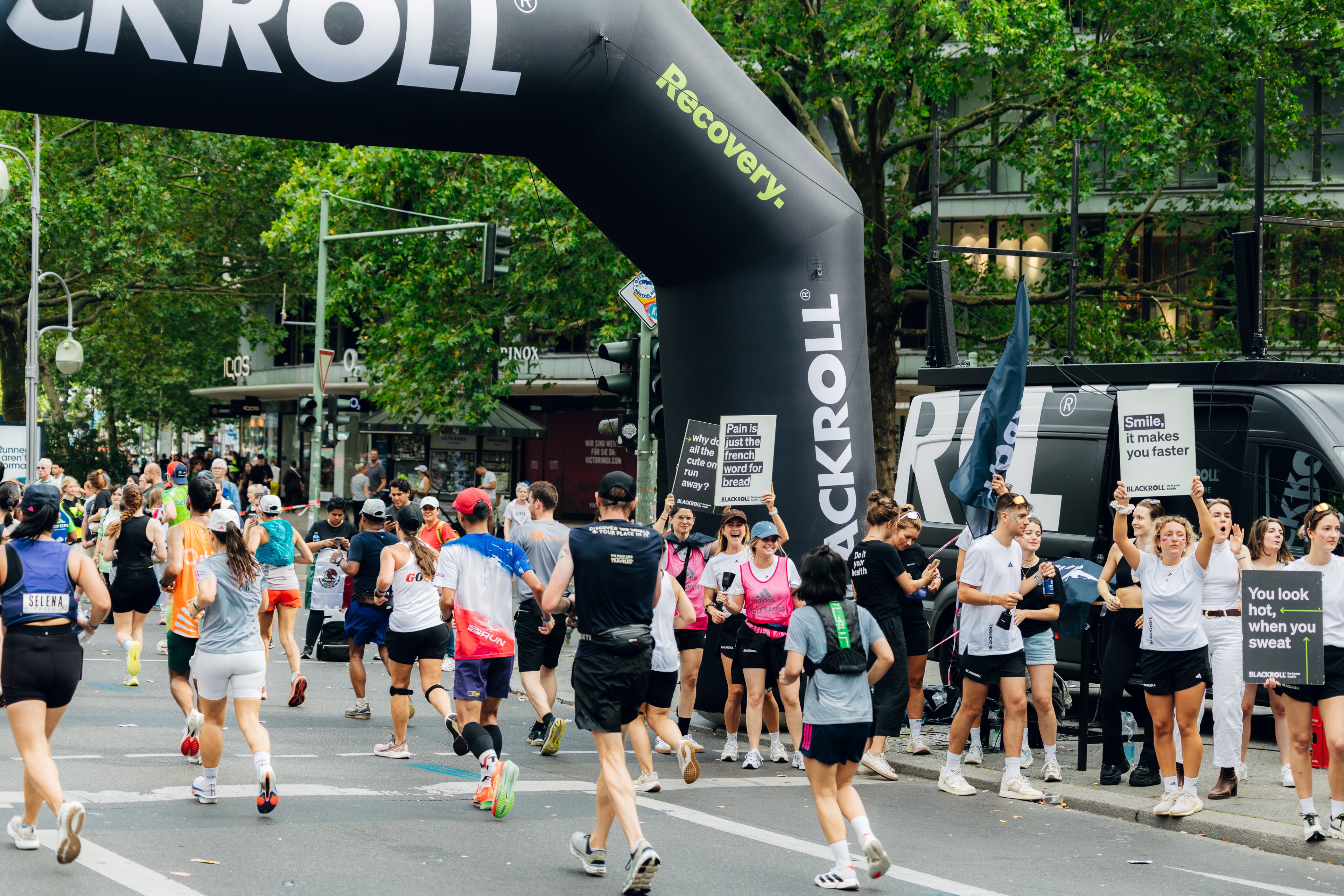
Marathon Guide 2026: All Races in Germany and European Capitals
New Year, new goals —and for many, that means finally running their first marathon. The turn of the year is the perfect time to set yourself a athletic challenge. Running is booming for good reason: the sport is straightforward, requires hardly any equipment, and can be practiced practically anywhere. Whether in a city park, in the countryside, or in a European metropolis—the 42.195 kilometers of the ultimate running challenge attract more and more athletes to the starting line every year, from amateurs to professionals.
This growing interest is reflected in the steadily expanding range of events on offer. More and more marathons are being organized—from small regional races to major city events. To help you find the right race for your goals, we’ve taken a closer look at the marathon scene in Germany and European capitals for 2026.
The Big 2026 German Marathon Price Check
It’s not just your heart rate that often hits triple digits during a marathon—entry fees can also skyrocket quickly. In recent years, many recreational runners have felt significant price increases. Races that used to be a given are now barely affordable for some. So it’s time to take a closer look at entry fees for the new year and see where you can really save money with early-bird offers.
We took a closer look at 110 marathons in Germany. The BMW Berlin Marathon—the famous race through the capital that spans about a century of German history—is the most expensive in the country at €205; there’s no early-bird discount, but a “social ticket” is available for €50. Second place goes to the Munich Marathon by Brooks, with an entry fee of €145 and €115 for early birds. Close behind is the Mainova Frankfurt Marathon at €136.
The Wellen Marathon in Lower Saxony is the cheapest paid marathon in Germany at just €15 and, at the same time, one of the most traditional: For over 50 years, this cross-country race has wound its way through the countryside around Beverstedt.
The North-South Marathon in Erzhausen (Hesse) is completely free, though it’s not a traditional race: The 42.2 km course, with 600 meters of elevation gain, winds through the Odenwald to the Felsenmeer. It’s a private training run with no refreshments or course support. So anyone who enters must organize everything themselves—but in return, they get a pure nature experience completely free of charge.
Good news: if you book early, you can save a lot of money in Germany. For example, you can save up to 45 € at the Werderseelauf in Bremen and the Stadtwerke Lübeck Marathon. A total of 86 out of 110 marathons offer an early-bird discount.
So it’s not just worth it to be fast on the course—on average, a race entry costs €63, but early birds pay only €47. That’s a savings of €17, just by registering early.
And when are the races? September is the most popular month, and Sunday is the most popular day. So: pull out your calendar, book early, and lace up your running shoes!
The Fastest Female Runners in Germany
Of course, the registration fee isn’t the main focus when running a marathon. For most runners, one thing matters above all else on the course: the time. Many set a clear goal before the start, whether it’s a personal best or simply finishing the race. On average, marathon times in Germany are around four hours, but they vary significantly depending on the course and location. We’ve analyzed these average times in a separate report.
Things get exciting when we look at the top finishers. Here, it becomes clear just how much passion, training, and speed go into Germany’s biggest marathons—and who made history on the run in 2025.
The fastest man in our analysis is Sebastian Sawe from Kenya at the BMW Berlin Marathon with an impressive time of 02:02:16 hours, which corresponds to a speed of 20.7 km/h—faster than some people on a bicycle. He missed the world record (02:00:35 hours) by just 1:41 minutes and ran the fastest marathon time of 2025.
The next fastest times were recorded at the Hamburg Haspa Marathon (02:03:46), the Mainova Frankfurt Marathon (02:06:16), and the ADAC Marathon Hannover (02:06:29), all under the magical 02:07 mark. For the women, the podium looks different: Here, the fastest time was set at the Hamburg Haspa Marathon. Edesa Workenesh ran 02:17:55 hours (03:16 min/km, 18.4 km/h) there—world-class. Second place goes to Frankfurt (02:19:34), third place to Berlin (02:21:05). On average, the women’s winners cross the finish line in 03:13:05 hours, while the men do so in 02:46:38 hours.
Fun Fact: At the 2025 Berlin Marathon, not only was the year’s best time set, but the half marathon also set a record for the number of participants and came close to the course record.
An Overview of Germany’s Participant Numbers
The BMW Berlin Marathon is not only the most expensive but also the largest marathon in the country: 48,134 runners took part in the last event. In second place is the Mainova Frankfurt Marathon with 15,456 participants, followed by the Hamburg Haspa Marathon in third place with 11,683—a significant gap behind its Berlin counterpart.
Interesting fact: With the Spreewald Marathon (6,066 participants), a rural race makes it into the top 5, with natural scenery taking precedence over big-city flair.
At the other end of the spectrum: the Clara-Park Leipzig Winter Marathon with just 7 participants—Germany’s most intimate marathon. Close behind are the Drebber Run (8 participants) and the previously mentioned North-South Marathon (16 participants).
Incidentally, the median is 186 participants—so most German marathons tend to be small and local. Those looking to avoid mass events therefore have plenty of options.
Running with a View: A Price Comparison of Europe’s Capital City Marathons
If Germany has become too small for you, Europe’s capital cities offer the next running challenge: from the start at the Eiffel Tower to the finish at Big Ben, every race has its own story and atmosphere. A look at Europe’s capital cities shows that running here is a true experience—past landmarks, through historic streets, and with spine-tingling moments around every corner. But the adventure comes at a price.
The most expensive marathon takes place in London—a hefty €257 entry fee, without the early-bird discount. Berlin follows closely behind at €205. At the other end of the spectrum is Zagreb: If you book early there, you can run for as little as €27; the regular price is €45, making it the most affordable capital city marathon in Europe.
It pays to register early! At the Swedbank Tallinn Marathon in Estonia, you can save up to 90 €, and at the Athens Marathon The Authentic and the Rock ’n’ Roll Madrid Marathon, 80 € each.
On average, a race entry in Europe’s capital cities costs €129; with an early-bird discount, it’s just €78—that’s an average savings of €51, simply by booking ahead. But for top events like the London Marathon, spots are often allocated by lottery a year in advance—so early birds need not only planning but also a bit of luck.
Bottom line: Running through Europe’s major cities means breathtaking scenery, a special atmosphere, and—if you plan smart—enough savings for a celebratory feast after crossing the finish line.
Europe’s Largest Marathons: The Streets Are Buzzing
The London Marathon is Europe’s largest running event: 56,640 participants transform the city into a massive running arena once a year. Close behind is the Paris Marathon, with 55,499 runners celebrating spring as they pass the Eiffel Tower and the Champs-Élysées.
At the other end of the spectrum are the smaller capitals: In Zagreb and Bucharest, around 1,300 runners take the starting line in each city, while Sofia brings up the rear with about 1,000 participants.
Conclusion: From mega-marathons to family-friendly runs, Europe’s cities offer the right race for everyone.
Just shy of the world record: A race through Europe’s major cities
When the starting guns go off in Europe’s capitals, pure movement and enthusiasm take over.
The fastest women’s race in 2025 took place in London: Tigst Assefa of Ethiopia ran an incredible 02:15:50 there—that’s 18.6 km/h over 42.195 kilometers. With this, the 29-year-old set a new world record for women-only races and improved the previous record held by Peres Jepchirchir (2:16:16 from 2024) by 26 seconds. The London course is steeped in history: many record-breaking times have been set here.
History was also made in the men’s race: Sabastian Sawe of Kenya dominated the Berlin Marathon in September 2025 with a time of 02:02:16, setting the world’s best time of the year and missing the world record (02:00:35) by just 1:41 minutes.
Quite different, but no less appealing, is the ING Night Marathon Luxembourg. Here, it’s not about records, but about the atmosphere. The race starts at 7 p.m., and runners race into the twilight, through narrow old-town alleys, past 65 music hotspots, and through the Pétrusse Valley illuminated by lanterns. The winning times (women: 03:12:32, men: 02:29:04) are slower than elsewhere, but the experience is one of a kind.
What did we do?
For this analysis, we researched nearly 110 marathons in Germany and compared entry fees (including early-bird rates), dates, locations, course records, and participant numbers. We also took a closer look at 25 European capital city marathons—from Paris to London to Athens. Here, too, we recorded and compared entry fees, course records, and participant numbers.
The data was carefully researched, but we do not claim it to be exhaustive. BLACKROLL® does not guarantee the accuracy of the information. Some events for 2026 had not yet been finalized at the time of our research.