
The Most Important Hormones for Athletic Performance and Recovery in Men and Women
Our athletic performance is influenced by many factors: calorie needs, body weight, gender, age, weather, and proper nutrition. But there’s another, often underestimated factor—our hormones. This isn’t just about the female menstrual cycle and its hormonal fluctuations, but also about the effects of hormones on male athletes: growth hormones, testosterone, estrogens, cortisol, and adrenaline—all of these messenger substances play a key role in athletic performance and recovery for both men and women.
Whether you’re a runner, a strength athlete, or a handball player—your hormones have a major impact on your athletic performance. They affect not only your health but also how well you perform in training and competition. In this article, we’ll show you how you can specifically support your hormone production to boost your performance and optimize your recovery.


What are hormones, and what role do they play in the body?
Hormones are small but powerful messenger substances produced in specific glands—such as the thyroid, the adrenal glands, the pancreas, and also the ovaries or testicles.
They travel through the bloodstream to their destination in the body—like little mail carriers delivering an important message.
There, they regulate key processes such as:
- your energy balance
- water balance
- growth, metabolism
- and even your reproduction
Hormones & Training—A Powerful Team
When you exercise, you apply specific stimuli. Your body adapts—becoming stronger, more resilient, and fitter. This principle is called supercompensation.
Hormones help in several ways:
- They promote muscle growth through increased protein synthesis
- They improve how your body processes glucose in the cells—that is, how effectively it provides energy
This is the foundation for real progress—whether you’re working on endurance, strength, or flexibility.
Men, Women, and Hormones—Same Players, Different Distribution
Men and women have the same hormones—just in different amounts:
- Women have more estrogen, which, for example, regulates the menstrual cycle and fertility.
- Men have more testosterone, which supports muscle growth and physical performance.
These differences influence how bodies look, how they function—and how they respond to stress, sleep, or exercise.


Hormonal Imbalance: What Factors Affect Balance?
Your hormonal system is like a well-rehearsed orchestra:
Each hormone has its place and its role—and everything runs smoothly only when everything is in sync.
Some hormones work hand in hand, such as testosterone and estrogen, both of which support muscle growth.
Others quickly come into conflict, such as the stress hormone cortisol:
If there’s too much of it in play, it slows down your recovery—and can even promote muscle loss.
To stay in balance, your body must precisely regulate hormone production—always at the right time, in the right place.
But what throws the system out of balance?
There are many contributing factors, for example:
- Chronic stress
- Infections or chronic illnesses
- Medications such as the birth control pill
- Poor sleep
- Lack of exercise or poor diet
The result:
Sleep problems
Mood swings
Lack of motivation
Weight gain
Reduced performance during training
That’s why it’s worth asking:
What’s disrupting my hormonal balance—and what can I actively do to restore it?
The answer often lies in small but lasting changes to your daily routine:
More exercise, intentional breaks, good sleep, a balanced diet—and sometimes just a little more calm.


Common hormonal imbalances: External factors and our solutions
Stress: Both acute and chronic stress are the most common culprits behind hormonal imbalances. Stress leads to increased release of cortisol, an important stress hormone that regulates, among other things, inflammatory responses and our body’s fat metabolism. However, if cortisol levels remain persistently elevated, the production of other important hormones such as insulin, estrogen, or testosterone can be impaired. This can lead to sleep disturbances, reduced energy, or even fertility issues.
The solution: During acute periods of stress, breathing exercises, mindfulness training, physical activity, intentional breaks, or muscle relaxation can provide quick relief. Breathing exercises can help lower cortisol levels and activate the parasympathetic nervous system, which promotes relaxation. Perform the breathing exercise for about 5 minutes.
Nutrition: Too much sugar, caffeinated beverages, and nutrient deficiencies—such as insufficient magnesium, vitamin B, or omega-3 fatty acids—can raise cortisol levels. Ready-made meals, fast food, irregular eating habits, and fluctuating blood sugar levels can also place additional stress on the body.
The solution: A balanced diet with sufficient macronutrients, vitamins, and minerals can positively influence hormone production. During periods of acute stress, drink more soothing teas (such as chamomile) or water with lemon; stabilize your blood sugar levels with complex carbohydrates like whole-grain products; and make sure you’re getting enough nutrients such as magnesium (spinach and avocado), B vitamins (eggs), vitamin C (red bell peppers, broccoli), or omega-3 fatty acids (salmon or flaxseed).
More interesting articles



Sleep Deprivation: Not getting enough sleep can reduce insulin sensitivity, which can lead to poorer blood sugar regulation. It can also disrupt the balance of hormones such as leptin and ghrelin, which are responsible for regulating appetite. Cortisol levels rise, which weakens our immune system and can impair cognitive performance. Growth and repair processes in the body—such as muscle recovery—are also regulated during sleep; not getting enough sleep can lead to poorer physical performance and a higher risk of injury.
The solution: In addition to good sleep hygiene and consistent bedtimes, make sure you have the right sleep comfort: the right mattress and pillows help minimize back pain and tension, provide adequate support for your spine, and optimize your restorative recovery.
Medications: Certain medications can affect our hormonal balance. These include hormonal contraceptives, steroids, and antidepressants. Taking them can throw your hormonal balance off, which can lead to mood swings, weight gain, acne, or a loss of libido.
The solution: We recommend regular check-ups with your doctor to monitor your hormone levels and, if necessary, adjust the dosage of any medications you’re taking. When it comes to birth control, you may also want to consider non-hormonal methods such as condoms or the copper IUD. Here, too, regular relaxation exercises, meditation, and breathing techniques—as well as physical activity and sleep—can help keep your hormone levels in balance.


A Closer Look at the Most Important Hormones for Male and Female Athletes
We now have a general understanding of what hormones are and how they can become imbalanced. To ensure an optimal hormonal response, it’s crucial to find a good balance between training, nutrition, and recovery. The various hormones circulate in the blood and regulate themselves through a feedback mechanism to maintain the correct levels for efficient function. This finely tuned mechanism plays a key role, especially in sports. This is because the hormonal responses triggered during and after training contribute significantly to our success and performance. But which hormones influence our athletic performance the most, and how can we use this knowledge to our advantage?
Overview of some of the most important hormones that influence our athletic performance:
- Testosterone
- Estrogen
- Growth hormone (GH)
- Insulin
- Cortisol
- Adrenaline and norepinephrine
- Thyroid hormones
When you think of testosterone, muscle building probably comes to mind. And when you think of estrogen? Maybe your menstrual cycle or pregnancy. But both hormones are present in men and women—just in different amounts. And both are important for your performance, recovery, and health.
Testosterone—More Than Just Muscle and Machismo
Testosterone is responsible for:
- Muscle growth and strength
- better recovery after workouts
- increased protein synthesis (i.e., muscle repair)
- the release of growth hormones
Men have significantly higher levels (approx. 300–1,000 ng/dl), while women have significantly lower levels (approx. 15–70 ng/dl)—but testosterone also plays an important role in women: It strengthens muscles and bones and supports overall well-being.
Important to know:
Stress, lack of sleep, and a poor diet can lower testosterone levels. A healthy lifestyle helps stabilize them naturally.
Estrogen—the Underestimated Performance Booster
Estrogen can do a lot—especially for women:
- It improves fat metabolism, which is ideal for endurance performance
- It protects the joints and keeps them flexible
- It has a positive effect on fluid balance
Estrogen levels are highest during the first half of the menstrual cycle—especially around ovulation. Many women feel fitter, more flexible, and more energetic during this time.
Levels:
- Women: between 50 and 750 pg/ml (depending on the phase of the cycle)
- Men: 20 to 50 pg/ml
Did you know?
During menstruation , estrogen levels in women are at their lowest—and thus most similar to those in men.
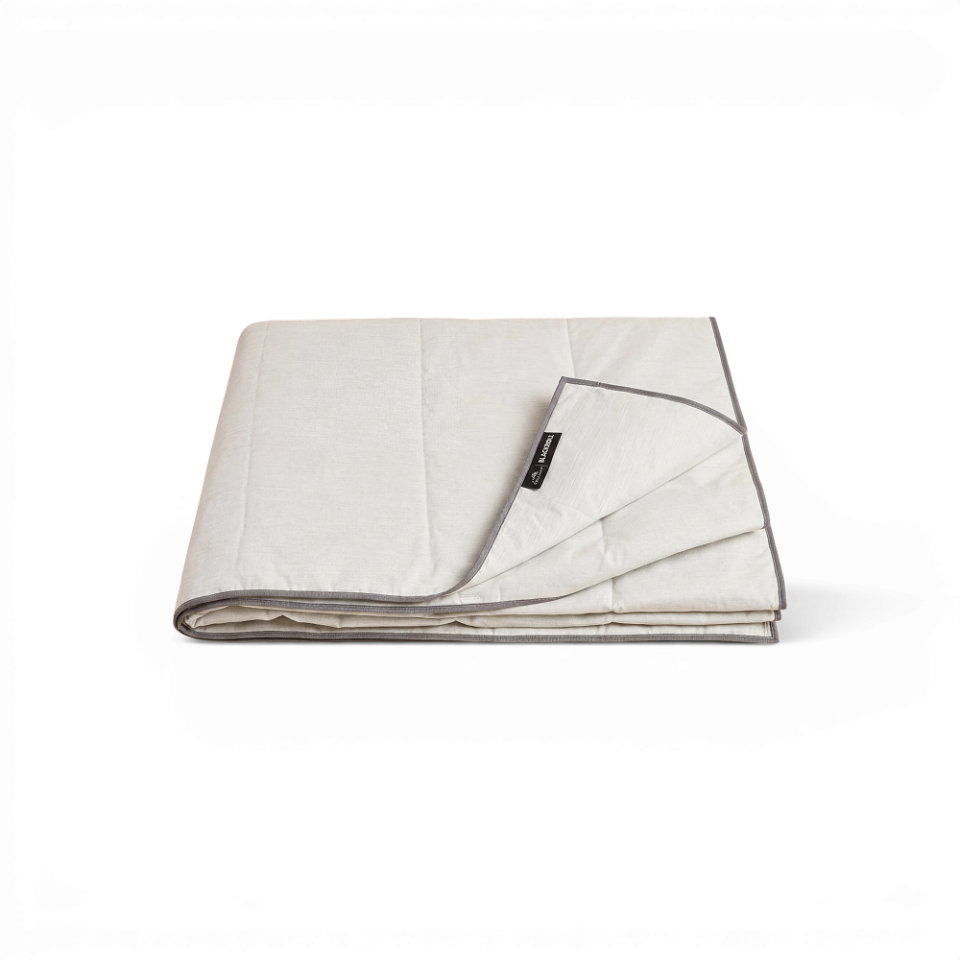

Recovery Blanket Summer
Available in multiple variants
If you take your training seriously, you should also give your recovery the same attention. After all, recovery doesn’t just happen through rest—it’s also regulated by hormones.
Two particularly important players on the “Recovery” team are growth hormone (HGH) and insulin.
Both work behind the scenes while you sleep or recover—ensuring that your muscles grow, your body repairs itself, and you get back in shape faster.
Here’s how to use HGH for your recovery:
When you go to bed after a workout with heavy legs and treat yourself to 7–9 hours of good sleep, your body kicks off its repair program during the night:
HGH is released—and your muscles recover.
But: Natural production begins to decline around age 30.
What helps boost HGH release?
- Regular exercise
- Strength training
- Good sleep
- Enough protein in your diet
- Less alcohol! (It reduces HGH production by up to 70%!)
And what does insulin do?
Insulin ensures that all the important nutrients reach your muscles after a workout. It transports:
- Glucose (sugar)
- Amino acids (from proteins)
… directly into your muscle cells—exactly what they need to recover and get stronger again.
Important: Your body is especially receptive after a workout.
The first 30 minutes afterward are the best time for:
- a serving of protein
- some carbohydrates
This supports:
- muscle growth,
- replenishing your energy stores,
- and makes your recovery really efficient.
Bottom line:
Good sleep + a well-planned post-workout meal plan = better recovery and improved performance. Harness the power of your hormones—your body will thank you!
Cortisol, Adrenaline, and Norepinephrine: The Key Stress Hormones
Cortisol, adrenaline, and norepinephrine are what are known as stress hormones. They help your body react quickly in stressful situations—which is important both in sports and in everyday life.
Cortisol—Your Body’s Internal Energy Manager
Cortisol supports you when your body is under pressure.
It:
- regulates your energy balance,
- helps fight inflammation,
- ensures that you remain capable of taking action in stressful situations.
But: Too much cortisol—for example, due to chronic stress or overly intense training—can hinder your recovery and muscle growth.
Chronic stress often builds up slowly. And it goes away just as slowly.
That’s why there are no miracle cures here—instead:
- Regular exercise,
- good sleep,
- mindfulness,
- relaxation exercises, and breathing techniques.
Even small changes, like getting up earlier or building in some buffer time in your schedule, can help make your day more relaxed.
Adrenaline and norepinephrine—your boosters for peak performance
These two hormones switch you into power mode in the blink of an eye:
- your heart beats faster,
- blood flow to your muscles increases,
- you’re wide awake and focused.
So they’re perfect when you want to give it your all in sports—for example, at the start of a sprint or on the final climb up a mountain.
But the same rule applies here: Too much of it over the long term isn’t good. If your body is constantly under high stress, it can lead to sleep problems, inner restlessness, or even high blood pressure.
So: Reduce stress—boost performance. Yoga, meditation, deep breathing, or simply taking a break with music and tea can work wonders.
Thyroid Hormones—Underestimated, but Crucial
Your thyroid gland also has a major influence on your performance.
Its hormones (T3 and T4) regulate:
- your metabolism,
- your energy production,
- your nervous system,
- your sleep,
- your mental strength.
If any of these get out of balance, you’ll feel exhausted more quickly, less resilient, or not quite at your best mentally.
What helps?
- A balanced diet,
- exercise,
- and, if necessary, medical treatment.
Regular checkups with your doctor can help address these issues early on.
Your Hormonal Cycle—How It Affects Your Performance
Hormonal fluctuations occur in both women and men—but they manifest differently.
Women: Performance Changes Over the Course of the Month
Women go through a cycle approximately every 28 days that consists of two main phases:
- The follicular phase begins with menstruation. During this phase, estrogen levels rise slowly—many women feel energetic, motivated, and more productive.
- The luteal phase begins after ovulation. Now, progesterone is the dominant hormone. Many women report having less energy, being more irritable, or having a lower stress tolerance during this time.
Around ovulation—that is, between the two phases—many women feel particularly strong, both physically and mentally.
If you know your cycle, you can better tailor your workouts and daily routine to your needs. You can find more on this in our blog post about cycle-based training.
Men: Fluctuations in the Daily Rhythm
Men also experience hormonal fluctuations—but on a daily cycle. Testosterone levels are highest in the morning and decline throughout the day.
This can affect mood as well as physical and mental performance.
Many men notice that their workouts go better in the morning than in the evening. Of course, this isn’t the same for everyone—but it’s worth paying attention to.


Conclusion: When your hormones are in balance, things just go better
Hormones control many important processes in the body:
They help build muscle, influence our metabolism, and determine how well we adapt to training. Your recovery, energy, and mental strength also depend heavily on whether your hormones are in balance.
When everything is in balance, your body feels resilient, motivated, and capable of peak performance.
But: Stress, lack of sleep, menstrual cycle fluctuations, or thyroid issues can throw that balance off.
As a result, you might find yourself constantly tired, struggling with your workouts, or gaining or losing weight for no apparent reason.
So here’s our tip:
If you notice any physical or mental changes—take them seriously. A hormone checkup with your doctor can provide clarity.
It’s also worth developing a basic understanding of your hormonal balance.
After all, when you understand what’s happening inside your own body, you can take more targeted action—with greater mindfulness, better training, and conscious recovery.
Bring your body into balance—for more energy, better recovery, and a positive body image.