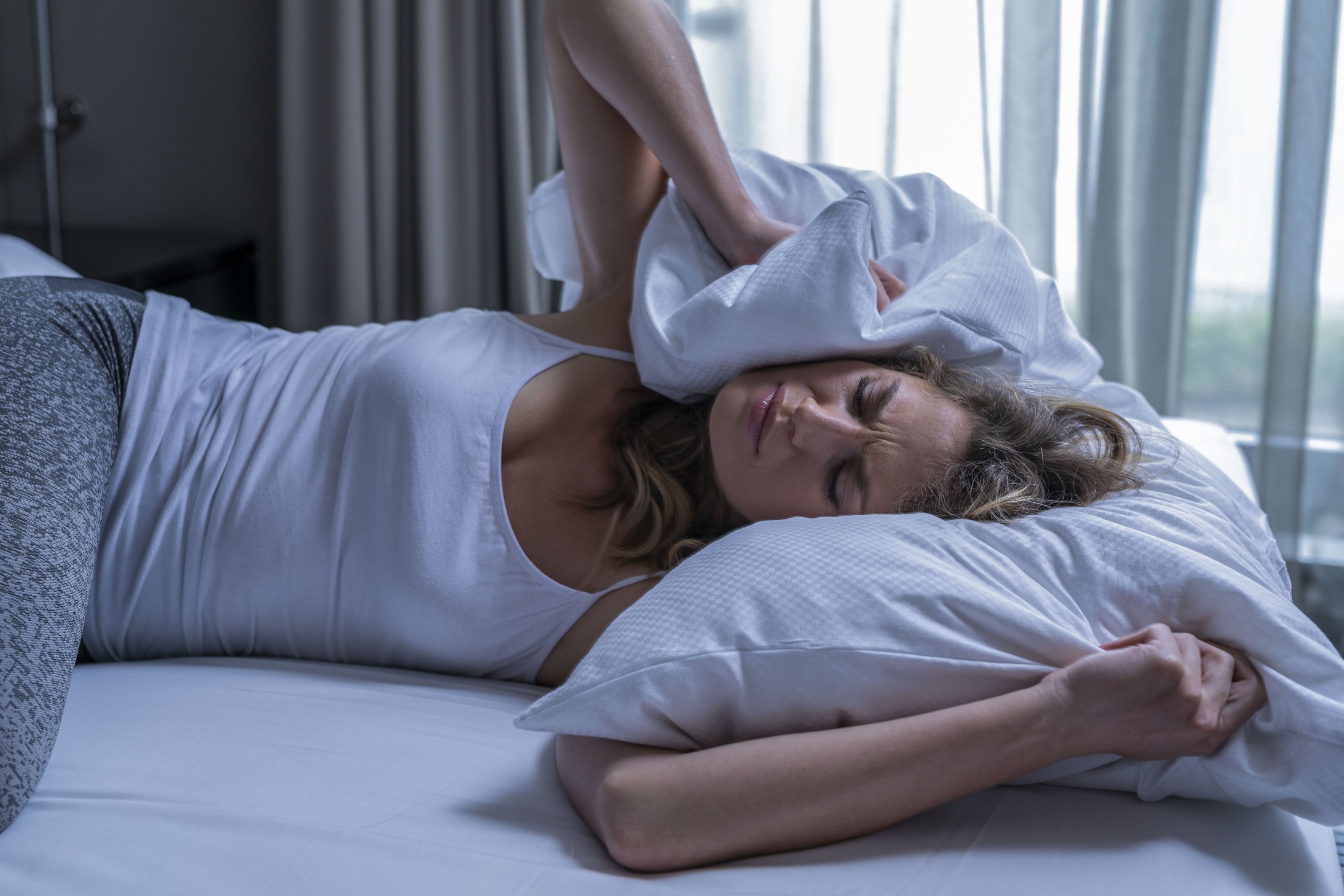
What are the causes, symptoms, and consequences of insomnia?

Did you sleep well last night? And yet, you still woke up between 25 and 35 times last night. These periods of wakefulness last up to 3 minutes. But we usually forget about them by the next morning. If you wake up at night and notice this, it’s not unusual. The best thing to do is simply roll over. That’s the best way to fall right back asleep.
Insomnia – Difficulty Falling Asleep, Staying Asleep, and Waking Up
“Insomnia” is the umbrella term for all sleep disorders that manifest as unwanted sleeplessness. Insomnia is one of the six main categories of sleep disorders and is the most common sleep disorder in society. In Western industrialized nations, about 10 percent of the population suffers from chronic, or recurrent, insomnia.
People with insomnia experience difficulty falling asleep, staying asleep, waking up too early, or poor sleep quality. Often, several of these disturbances occur in combination. Sleep medicine specialists diagnose a sleep disorder when these symptoms occur at least three times a week over the course of a month. Those affected find it difficult to fall asleep within the “normal” time frame—about 15 minutes—and/or lie awake for several hours at night without being able to fall back asleep. In addition, despite poor sleep at night, they wake up very early in the morning and are unable to sleep in.
To determine whether insomnia is present, various methods—such as structured interviews or questionnaires—can be used.
Causes of Insomnia
The reasons for trouble falling asleep can vary widely. Sometimes external factors make it difficult to fall asleep (e.g., poor lighting in the bedroom or noise). These can usually be easily resolved. Often, however, it is worries and problems that prevent us from finding peace of mind. Once we’re caught in a “thought spiral,” it’s hard to break free. The causes of trouble staying asleep can also be very multifaceted. Sometimes they stem from complex issues, and other times from easily explainable factors that can be quickly addressed. These include, for example, the urge to urinate at night, which can be reduced primarily by avoiding drinking anything in the last 1.5 hours before bedtime and completely emptying your bladder one last time just before falling asleep. However, it’s important in this context to drink enough fluids throughout the day so that you reach the recommended daily intake of at least 1.5 liters.
Insomnia often occurs alongside another medical condition, but it can also present as a standalone disorder. In such cases, it is referred to as non-organic insomnia.
Many of those affected are “afraid” of their own bed or of falling asleep. The bed is intended for sleep and sexual activity. Those affected associate their bed with negative aspects such as anxious rumination and “mulling over problems.” The fear of not being able to make the most of the next day due to insufficient sleep at night leads them to try to force themselves to sleep. However, healthy sleep and relaxation are interdependent. Without relaxation, falling asleep and staying asleep is difficult or impossible—a vicious cycle.
Consequences of Insomnia
Insufficient sleep duration or poor sleep quality negatively impact performance and daily activities. People who suffer from insomnia struggle with various problems. These include a reduced quality of life and impaired functioning in both personal and professional settings. Nighttime insomnia is characterized by increased daytime sleepiness, cognitive impairments, and mood swings. Daytime sleepiness can be particularly dangerous when those affected have significant responsibilities, such as driving or operating complex machinery.
Strategies to counteract insomnia include, for example, cognitive behavioral therapy—which consists of psychotherapeutic elements as well as relaxation techniques (autogenic training -> LINK!), sleep hygiene (-> LINK!), and stimulus control.
Stimulus control aims to reestablish a mental connection (association) between the bed and sleep. This is because if the bed is used for activities other than sleeping for an extended period (e.g., worrying), the body does not respond to the sight of the bed with drowsiness, but rather with restlessness or, in the worst case, anxiety. Therefore, we’d like to share the following tips with you:
- Use your bed only for sleeping and intimacy.
- Don’t go to bed until you’re really tired.
- If you can’t fall back asleep after ten to 15 minutes, get out of bed.
In addition, the following tips may be helpful:
- Don’t worry about the time during the night. Trust your alarm clock—it will wake you up reliably. If you wake up again during the night, stay in bed for a while; don’t look at the clock and don’t put pressure on yourself.
- If you find yourself thinking about unfinished work tasks, try to approach them with a “problem-solving” mindset rather than a “worrying” one.
- Try to fall back asleep, for example, by doing relaxation or breathing exercises.
- Keeping a pen and paper next to your bed can help you jot down a thought so you can address it later.
- Avoid looking at your smartphone or other devices. Messages, emails, or even just the light from the screen can keep you awake. The blue light spectrum emitted by modern LED screens inhibits the production of the sleep hormone melatonin, which signals our body to fall asleep.