Don’t Give Up Now! Overcoming Crises—Chris Ebenbichler
Some people grow from the challenges and setbacks that life throws at them and develop greater strength as a result. After a serious sports accident, Chris Ebenbichler not only endured a long and difficult journey but also exceeded all expectations and prognoses. Today, he passes on his knowledge to young athletes. In a moving conversation, he told us in this profile story about his long journey out of his personal crisis. Learn how his rehabilitation period shaped him, what mistakes most people make during crises, and what coping strategies he recommends.
A TragicTurn of Events After a Ski Accident
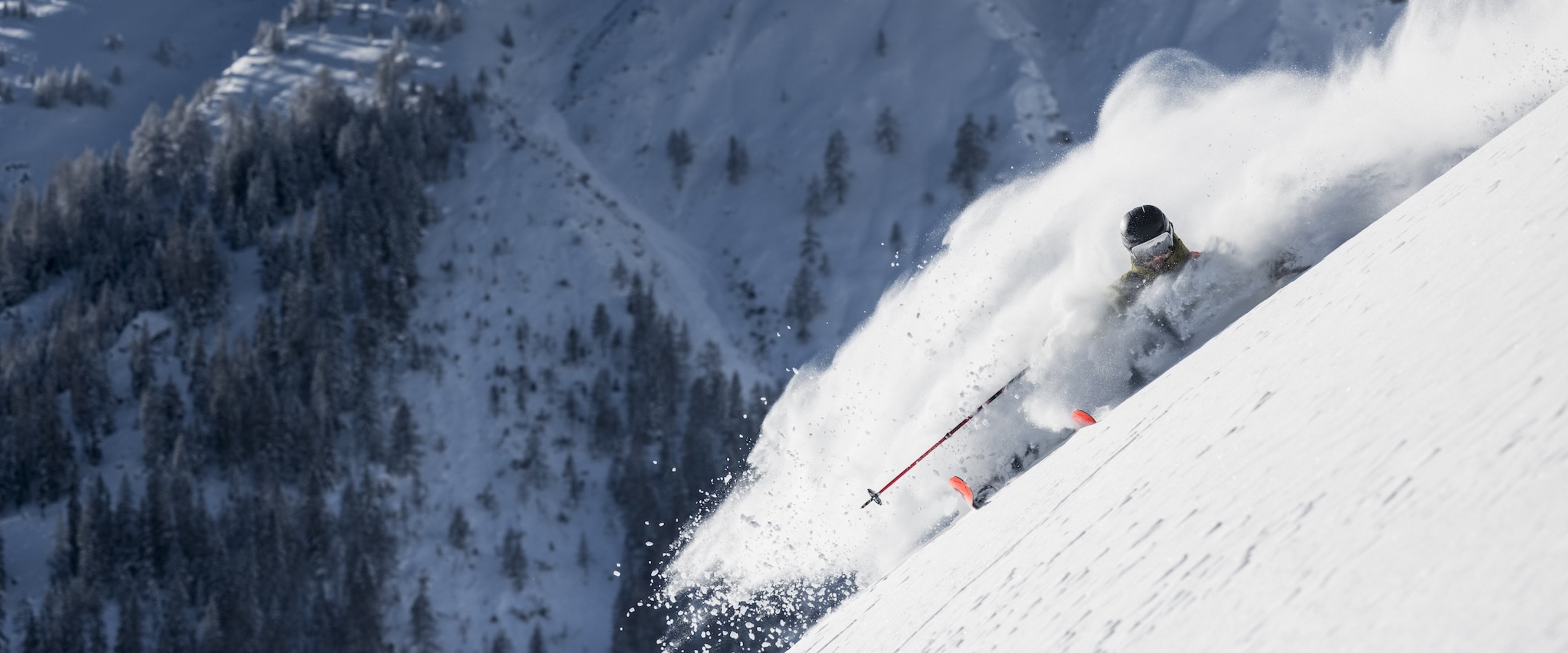
As a professional ski crosser, Chris was constantly racing through the mountains; in 2010, he was on the verge of competing in the Vancouver Olympics. Forced to change course by an injury, he had to take a different path, but remained a passionate outdoor athlete who continued to seek out challenges in the snow-covered mountains. This was also the case years later, in 2021, when he set out on a ski tour and began his ascent to the summit. On the descent, Chris hurtled down the slope at high speed, veered off course, and crashed full force into a tree. He was taken to the hospital with excruciating pain and a shattered lower leg. He narrowly managed to save his leg, but the doctors were certain he would never walk properly again—let alone ski.
“At first, I was extremely depressed, both physically and mentally. My world had fallen apart, and I thought I was worthless.”
Chris is left alone with his thoughts; his life has been turned upside down in an instant. Years of rehabilitation follow, including eight more surgeries. The grueling mental work—which he endures with the help of sports psychologists and his family—allows him to regain hope. “My father was a key support person back then. He really helped me develop a different perspective on my situation. He was the one who encouraged me in those first few weeks to write everything down and document how I was feeling and just how bad it all was. He encouraged me to notice even the small improvements that helped me and made me feel just a little bit better.”
1,000 days later, with a lot of hard work and patience, Chris achieves the impossible and is back on a mountain on skis. Out of the crisis and back to the summit.


A New Beginning
After rehab, Chris decided to share his experiences with others. Thanks to his personal journey, he’s not only able to empathize with other athletes during their tough times but, above all, to pass on his knowledge of coping strategies. What’s important is a new perspective on problems: “When dealing with injuries, poor results, or difficult phases of a season, I help elite athletes develop their own strategies and work their way out of a slump step by step.”
Work at the Tyrol Olympic Center
Chris pursues his goal of getting injured athletes back on track every day alongside several coaches at the Tyrol Olympic Center in Innsbruck. “We support nearly 120 athletes, whom we divide among just under 20 staff members. For athletes aged 18 and older, we provide support with our expertise in various fields, including physical therapy, sports science, specialized strength and athletic training, psychology, nutrition science, performance diagnostics, and medical diagnostics. All of this is part of an athlete’s life. The atmosphere at the Olympic Center in Innsbruck is great, and it’s a lot of fun to work with everyone there.”


Chris knows that much of his athletes’ personal development takes place during these years of support. This makes having consistent mentors all the more important during this phase. Each athlete is assigned a primary coach who is responsible for individual coordination and planning and who seeks out the necessary support in the various areas. Chris currently coaches 14 athletes as their primary coach. In his daily interactions, one thing is especially important to him:
“In everything I say and do, I try to treat the person I’m interacting with empathetically and to guide them as best I can on their journey.”
This also involves dealing with personal crises and injuries, during which he helps his athletes see a path forward after setbacks. “In rehab, you often see the progress and improvements more clearly than in a normal training process at the top level. Here, the steps are usually smaller and more subtle. That’s why you often come out of rehab stronger—because you’ve seen what hard work and discipline can achieve and how you can improve again.”
Support from BLACKROLL® at the Olympic Center in Innsbruck
BLACKROLL® products also support daily athletic and strength training. “We specifically use the MULTI and SUPER BAND for mobility exercises during warm-ups. With the foam rollers in various firmness levels and sizes, as well as the BALL, we specifically address muscle tension before and after training sessions.”

Daily Performance Thanks to Routines and Structure in Everyday Life
In addition to his duties as a coach at the Tyrol Olympic Center, the sports scientist is also a lecturer at the University of Innsbruck. There, he teaches in the areas of training planning and periodization, as well as specific strength training. He is also an author who has written his own book, goes on tours, and appears as a guest on various TV shows and podcasts. With his concept of crisis management, he is a speaker and has founded his own company. Every day is carefully structured.

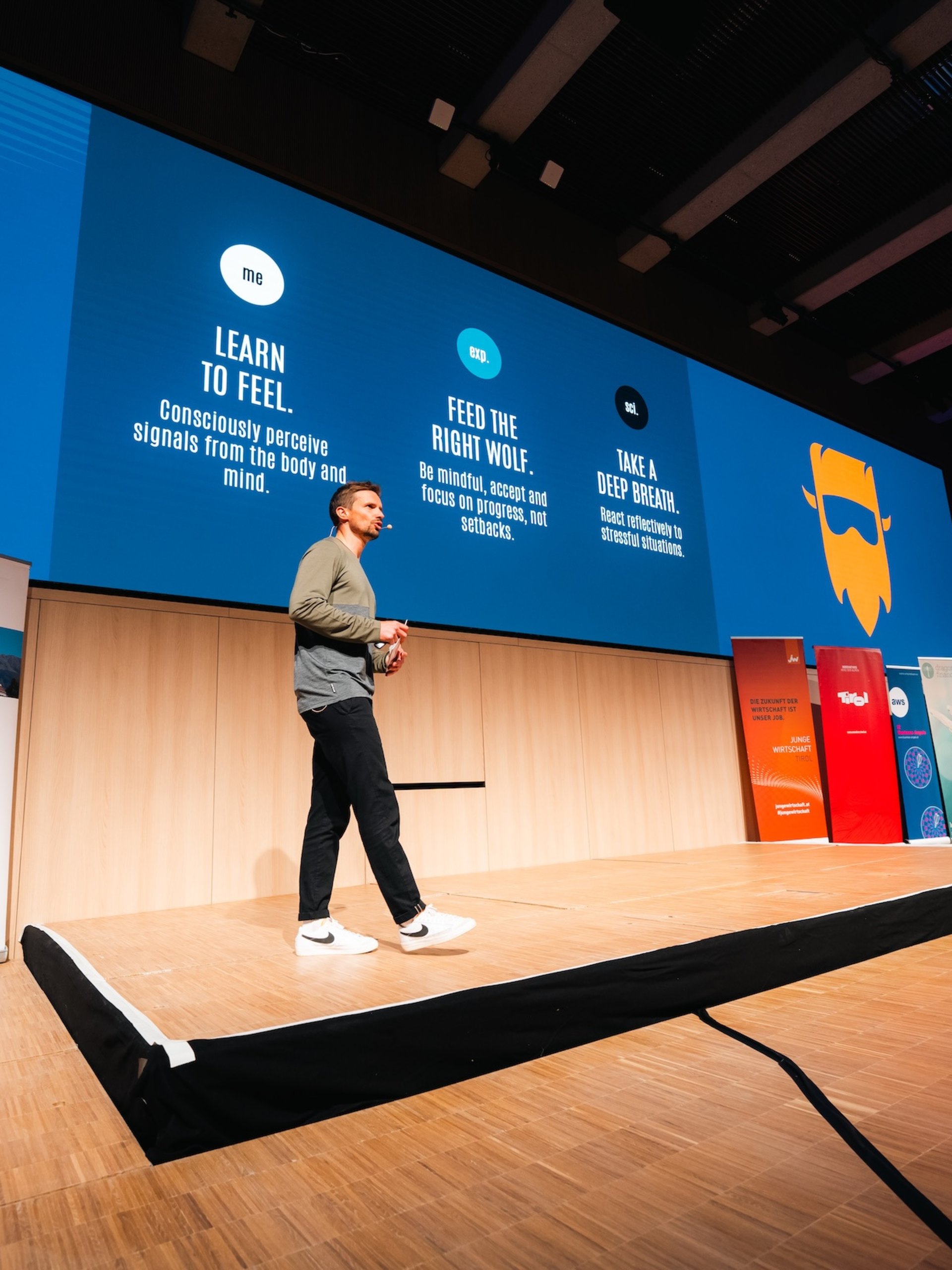
“With all these different tasks, one thing is extremely important to me: a great rhythm that’s tailored to me. Sleep is the be-all and end-all for me; I always go to bed at 10 p.m. and get up at 6 a.m. Always. If I ever go to bed late after evening events like lectures, I notice it right away the next day.”
Eating habits also play a central role. “Five days a week, I try not to eat anything after 4 p.m. and practice intermittent fasting. My own strength and athletic training plan also plays a major role. Here, rhythm and simple basics are especially important to me week after week.”
Where does this drive for routines come from?
“I had a very good coach at the ski high school who was a competitive athlete himself and even won an Olympic medal. He taught us very early on how important self-efficacy is for a successful training process. You’re responsible for yourself.” The students were involved in planning their training and learned early on to take an active role. “Our school schedules and study times were taken into account, and care was also taken to ensure enough breaks and time for friends. That stuck with me, and I’ve carried it over into my own work to this day.” Chris works systematically: He consistently writes down everything that needs to be done—to clear his head and make sure he doesn’t forget anything.
He organizes his tasks by urgency and importance. Unimportant items are pushed to the back of the list or deliberately crossed off. This keeps the focus on what’s essential.
This structured approach significantly reduces stress because he doesn’t have to keep everything in his head all the time.
From To-Do List to Top Performance
For Chris, one thing is clear: Many people feel overwhelmed in their daily lives because tasks aren’t clearly prioritized—and as a result, they fall by the wayside. With a planned note-taking system and a clearly documented workflow, he takes this mental load off his shoulders. This same structure is also central to his collaboration with his athletes—especially when preparing for major events like the Olympic Games. “I want everyone to provide a clear list of all the facts and tasks that need to be completed by Day X—the day of the competition. In the end, everything has to be checked off. No one should look back and think: ‘If only I had…’” For Chris, the event is the focal point. To ensure athletes can be fully focused and present on the decisive day, structure and clarity are needed in the run-up. Preparation must be so precise that, at the moment of performance, no questions remain unanswered—only the focus on the performance itself.
No routines without exceptions: Breaks, too—such as on vacation, when he simply lives in the moment—are important for maintaining balance. No meetings. No to-do lists. Everything reset to zero.
Crisis Management
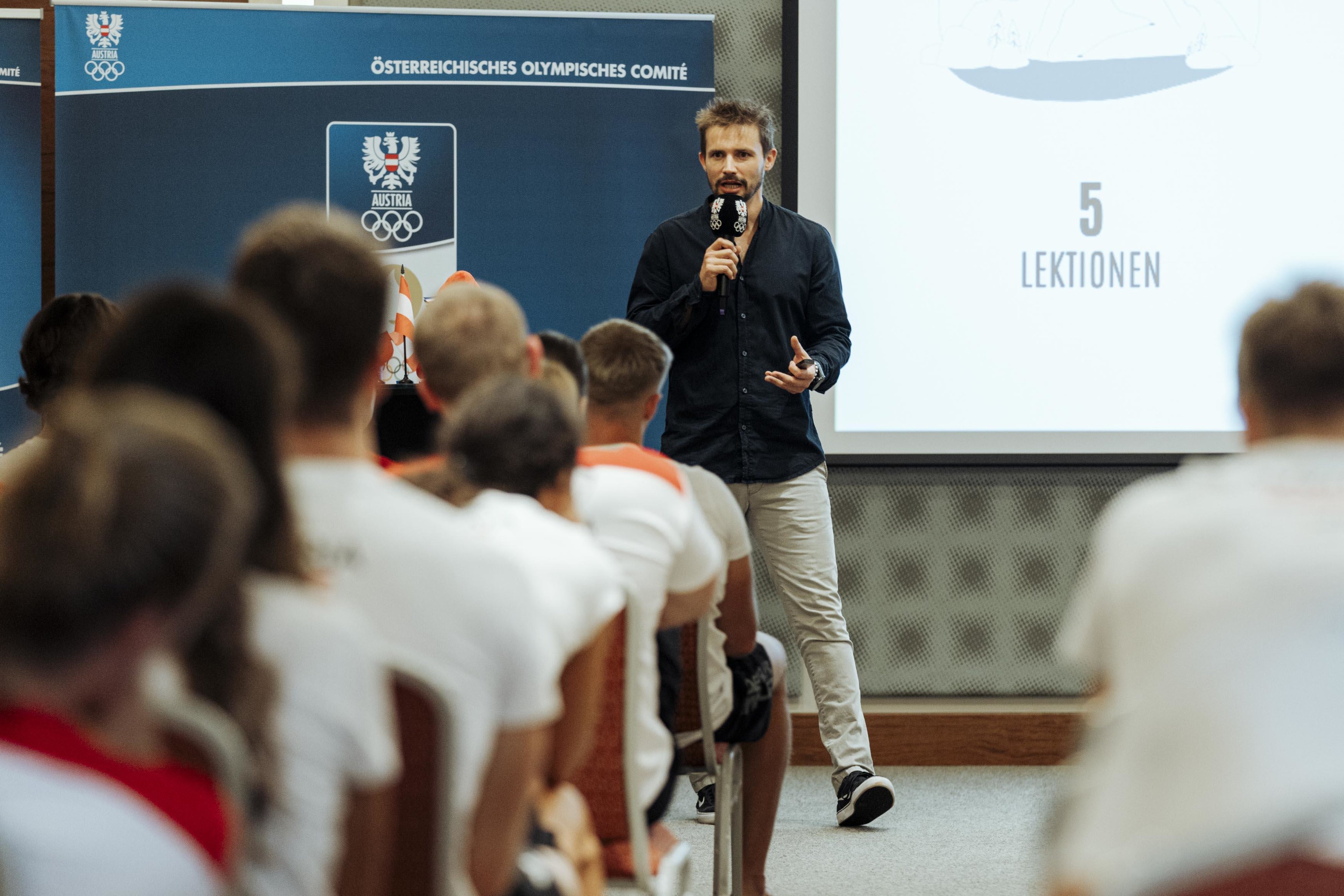
Setbacks like an injury or a sudden career change can happen to anyone and usually completely reshape one’s life. For Chris, the key here is to quickly move beyond the victim mentality. “Taking action improves the situation. It’s about emotional acceptance: I feel sad, so I start doing something uplifting that’s good for me. The worst-case scenario for me at this point would be to do nothing and just give in to my situation, to stay stuck.
If I’m not satisfied with something, then I have to get moving. After all, I’m not a tree! (laughs).”
However, situations can also arise that require radical acceptance, such as Chris’s skiing accident. Only by accepting one’s own (physical) limitations does one create the space to realign one’s life and develop a vision for the future. “I realize it will never be the same as it used to be. So I have to find a different path. I have to think about what I could do.”
Chris’s mobility was completely restricted after his sports accident, but he was able to draw on his mental resilience. He began to reflect. The first step for him: writing down everything that was going through his mind. “Maybe someday I can inspire people to work their way out of a difficult situation and set themselves free. It’s perfectly okay to say, ‘Everything is just incredibly stupid right now.’ But it’s very important to then get moving and move forward step by step.”
Common Mistakes
Above all, it should be clear that this is only possible through small steps. Chris knows:
“The biggest mistake most people make is wanting to take steps that are too big, too fast, in a certain direction.”
Taking a few conscious breaths in the morning after waking up to start the day better than yesterday, or reading the first few pages of a new book. For him, these are small but crucial examples of slowly getting back on track.
“As a competitive athlete, I used to be either in the future—focused on my goals and what I was training for—or in the past, reflecting on my journey so far, my successes, and my defeats. But in doing so, I lost something crucial: presence in the moment. I was rarely truly in the here and now. I first had to relearn that, actively practice it, and consciously integrate it into my daily life.”
Being grounded in the here and now is also a major part of his training with athletes. If their focus isn’t there at a given moment, the training can be continued later in the day. For Chris, it’s important to focus on small daily progress while developing a more positive attitude toward the current situation.
Overcoming Life Crises in 5 Steps
The idea to write the book*When Your World Falls Apart: Overcoming Life Crises in 5 Steps* about his journey out of crisis was a gradual process. Through many conversations, Chris Ebenbichler realized that people were interested in his story—especially in how he managed to turn his hopeless situation around. “I hadn’t planned to write a book. At first, I wanted to write down for my athletes what had helped me during my darkest days—so they’d have a guide to follow. It was meant to be relatable and practical. In the end, this book came out of it.” A work that isn’t just aimed at competitive athletes.
In it, Chris makes it clear “that there’s no ‘quick fix’ that improves everything at the push of a button.
Change takes time—in sports just as much as in everyday life.
You have to get started, stick with it, and embrace the process. Many people believe they have to be perfect right away. But it’s precisely this pressure that often holds them back more than it helps. Instead, it’s about moving forward in small steps, embracing new insights, and learning from them. That’s exactly what motivates—because you can feel the progress.
I often tell younger athletes in particular: Don’t let it stress you out. No champion has ever fallen from the sky. Development requires patience, energy, and a clear commitment over the long term—in training, at work, and in life.”
Chris has impressively followed this path and strives to be a role model for what a person can achieve with hard work, discipline, and willpower.
Image credits
Image 1 (Header) ©Max Draeger; Image 2 ©Philipp Ausserhofer; Image 3 ©Max Draeger; Images 4, 5, 6 ©Olympiazentrum Tirol; Image 7 ©Philipp Ausserhofer; Images 8, 9 ©Janine Brugger; Image 10 ©Olympic Team Austria