
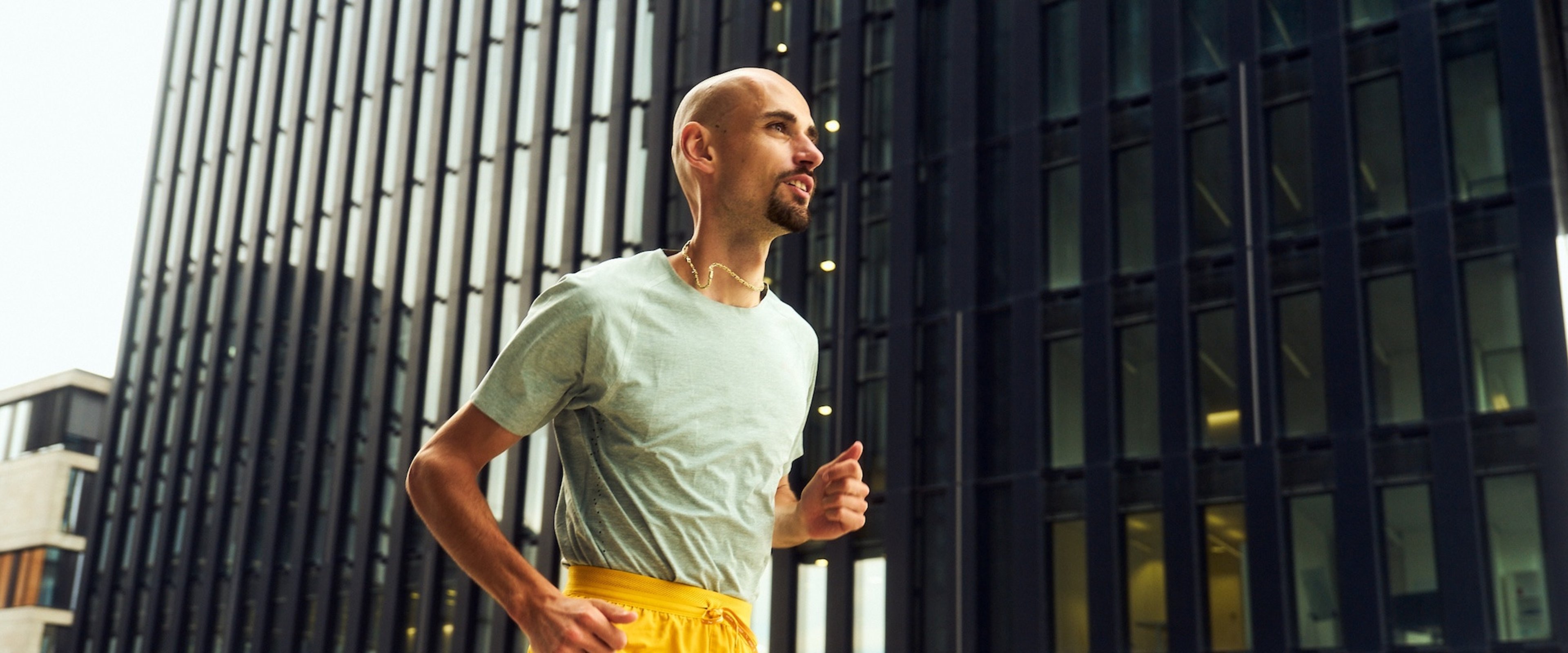
On the Run - Hendrik Pfeiffer
Hendrik Pfeiffer is one of Germany’s fastest long-distance runners. In this profile, find out what drives him and how he balances training camps in Kenya with a packed race schedule. What recovery routines does he use to ensure he’s at peak performance at the starting line and to get even faster? And what do his successes actually mean to him?
When thousands of runners lace up their shoes in Berlin on September 21 this year, they’ll be aiming for one thing above all else: speed. Germany’s fastest long-distance runner, Hendrik Pfeiffer, will also be competing in the BMW Berlin Marathon. The atmosphere is already electric at the starting line, where the tension in the air grows with every passing minute until the big “BANG!” rings out. Then everything else fades away, and runners try to find their own rhythm as quickly as possible and break away into a good running group. Hoping for the right legs. Hoping for the right weather conditions. Countless runners are carried through the streets of downtown Berlin by the euphoria of Germany’s biggest running event. Leading the way: the top runners, who are practically flying down the course. Right in the middle: Hendrik Pfeiffer. He’s been preparing for this race for a long time.
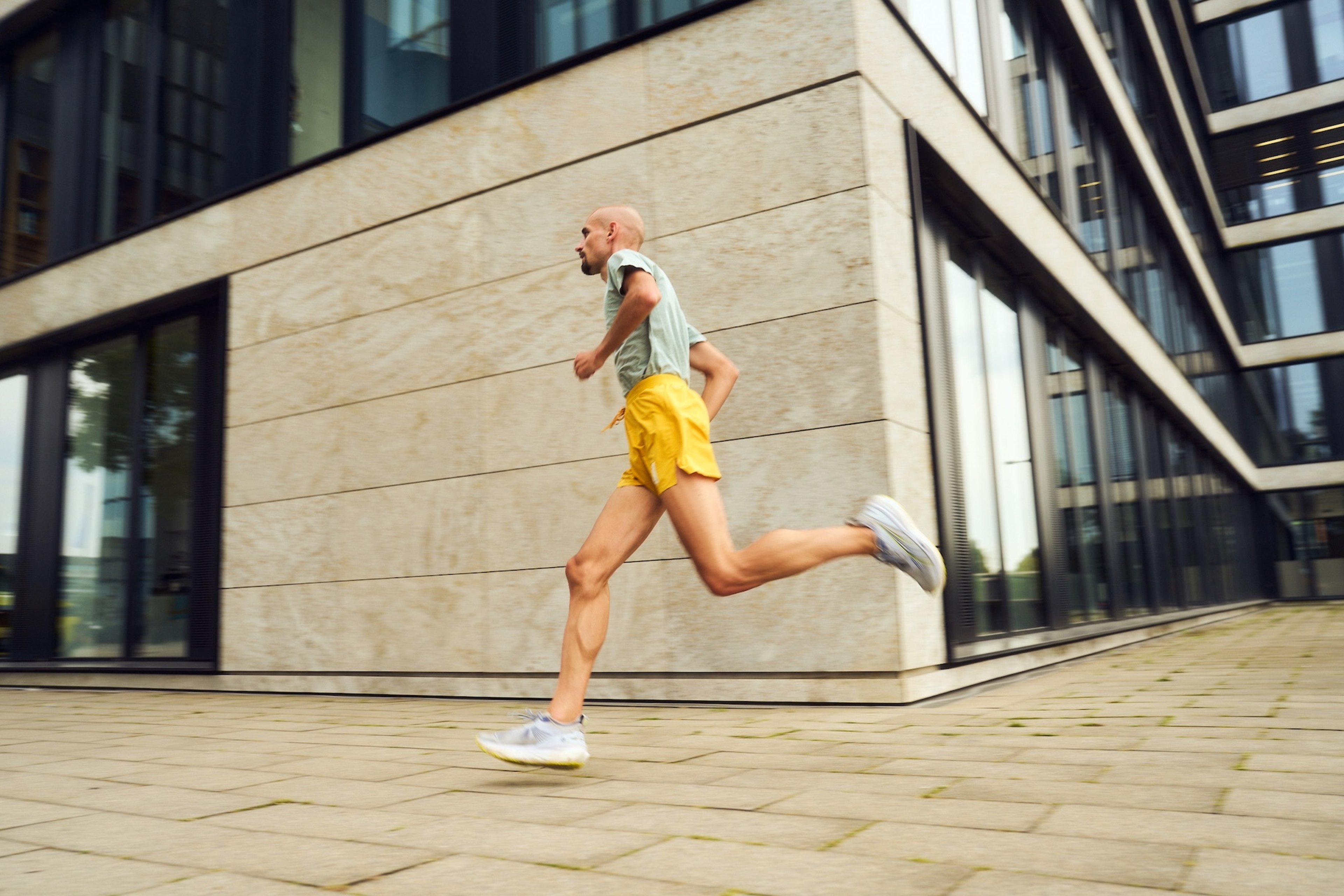
Current Form
For Hendrik to be at the starting line in Berlin, he first needs to be in top form. Until then, he’s currently participating in preparatory races. Even though he knows there’s still a long way to go: “With every week you add in the lead-up to a big race, you try to raise your level. Of course, fatigue sets in, so you have to manage your energy very carefully.” The magic word? Timing. Being in good shape is essential, but you shouldn’t peak too early.
Hendrik has a clear goal for the race in the capital: to beat his personal best of 2 hours, 7 minutes for the first time.
“A lot of things have to come together on that day. Of course, I hope the weather cooperates, but I’ll do everything in my power. I’ve never had such a smooth preparation period as I have now.”
To get into the best shape of his life, he’s made a few adjustments.
Since 2014, Hendrik has been documenting his training plans and performance data, allowing him to look back and analyze each training cycle. “That’s how I find room to improve—where I could have run even faster—or where a recovery phase would have been useful, which I hadn’t planned for earlier,” says the 32-year-old. His goal is to consistently run 200 to 220 kilometers each week—and to reduce that volume only during competition weeks. When everything comes together, that’s the ideal preparation for Hendrik.
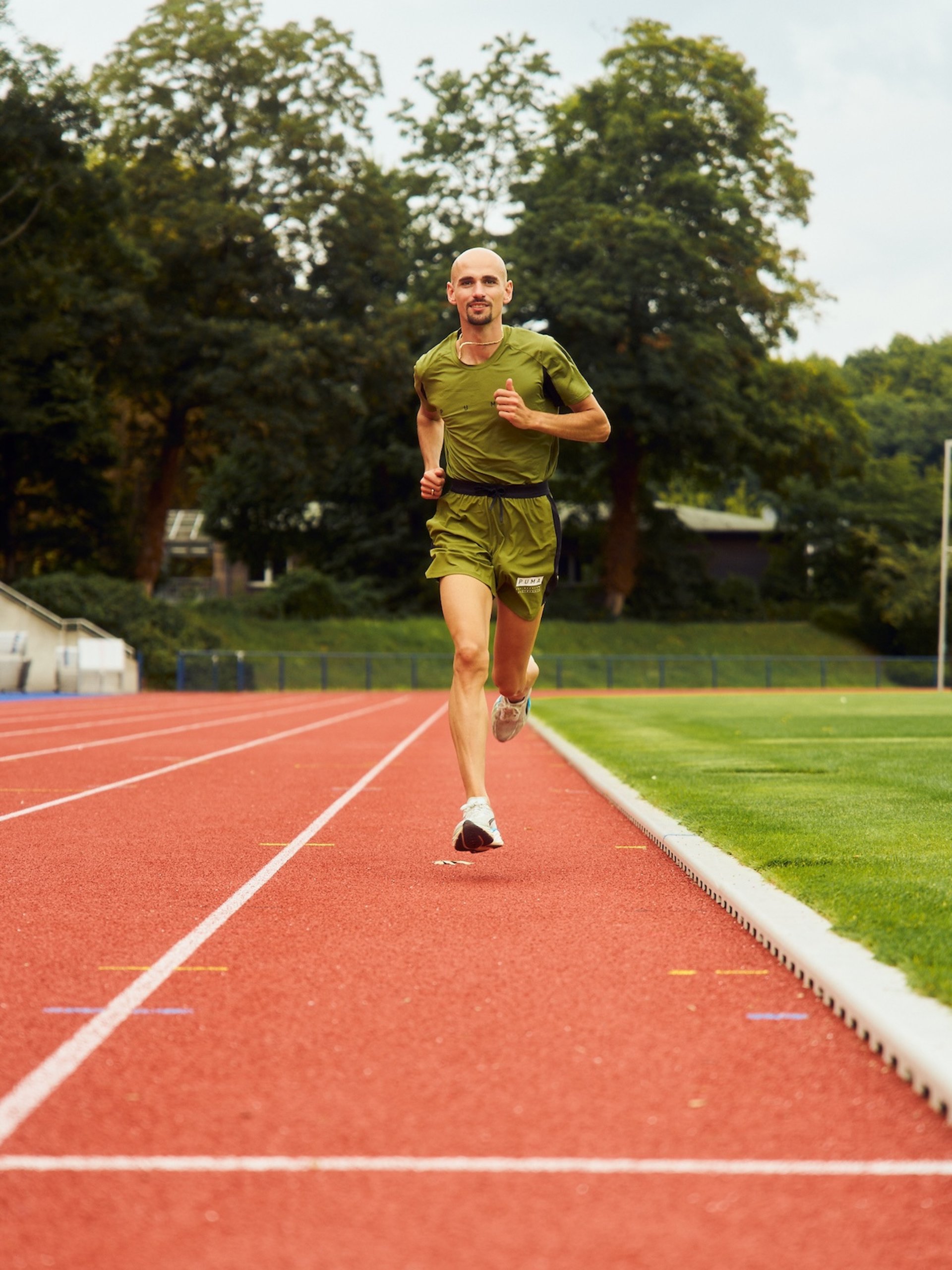
Training Planning
There are many options when it comes to training planning. Newer training methods, such as working with thresholds or double thresholds, are becoming increasingly popular. This means doing tempo runs twice a day—which are moderate on their own but allow for significantly more kilometers overall than a single hard tempo session. Especially in the early preparation phase, this allows you to shift your threshold pace so that you can start at a higher level later on during the specific marathon training sessions.
“I can tell now that my base endurance is significantly better—this allows me to handle completely different volumes and intensities.”
Teamwork makes the dream work.
Even though he runs the marathon alone, Hendrik has a small team around him. His wife, Esther, is a key member of this dream team; she’s also an avid runner who focuses on half marathons and 10-kilometer races. “We support each other whenever we can. Sometimes we stagger our interval runs so the other person can join in. We also have a coach, Timo, who trains both of us.”
The Pfeiffers are serious about their running—it’s not just Hendrik who’s fast. “Esther has a lot of potential. She ran her first marathon on a whim—without optimal preparation—and still became the German champion,” Hendrik notes.
She’s also already clocked the sixth-fastest German time ever over the long distance in Berlin—a clear indication of her potential over long distances.
Short Commutes—Maximum Efficiency
Another factor in Hendrik’s growing professionalism was the move to Düsseldorf. Here, the coach is now on-site and thus much more present during daily training. In addition, the coach has permission to ride a bike on the nearby track. “During tempo sessions, the coach can ride right next to me and even act as a pacemaker—with a music player leading the way. Mentally, that makes a huge difference.” Internationally, these methods have long been established, but in Germany they’re often difficult to implement due to rigid rules set by clubs and associations.
“Small changes that make a big difference for us.”
A for Adventure
Hendrik values his sense of balance, which he sees as another key to his success.
“I also want to experience things and see the world. If the sport opens these doors for me, I think it’s more important to take advantage of that than to always train strictly by the book. The mental component is extremely crucial in our discipline for being able to perform at our best. In some ways, it’s more important than any single speed session.”
That’s why he combines long trips with local city runs, where the experience itself is his top priority.
“In October, for example, I have a race coming up in Taiwan, and probably another one in Cape Town. I’ve also run in Singapore and Colombia—places you’d never get to visit in everyday life. That’s a driving force that isn’t just measured in personal bests, but also in experiences and impressions from all over the world.”
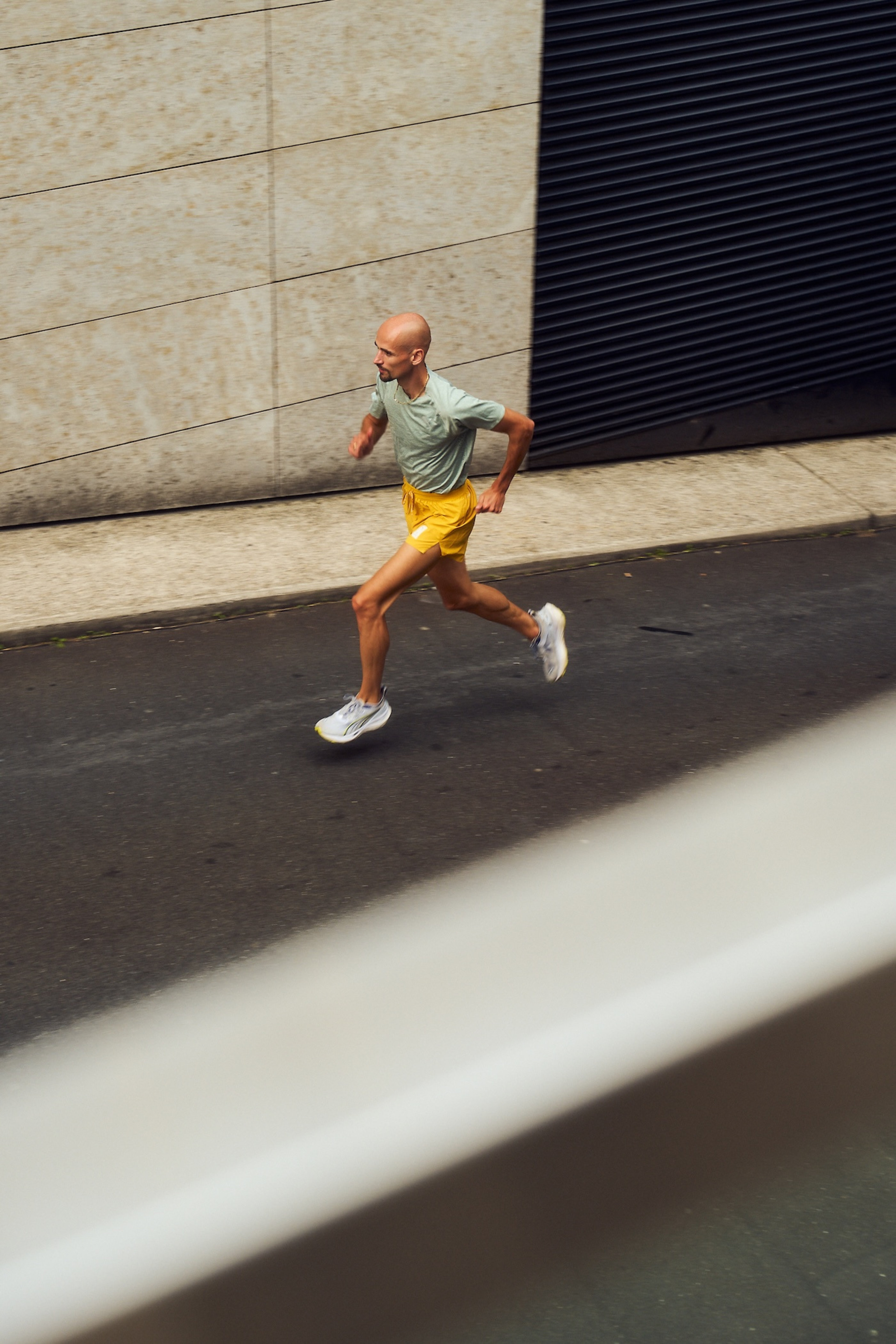
But Hendrik also reflects: “That doesn’t mean you don’t have to give it your all to achieve your goal afterward—otherwise, you wouldn’t stand a chance.”
So he also breaks new ground to set different goals and challenge himself, and tries his hand at other running disciplines like trail running: “Many of the events I run are important primarily for the mental aspect. I keep setting myself adventures that I’m really eager to tackle. That was the case with trail running, because I couldn’t predict how I’d fare as a road runner in great shape but without off-road technique. Downhill running has also appealed to me for a long time.
I define success not only as pure performance, but also as an experience.”
To that end, he seeks out races outside the major marathons that match the level of the Major Series on the road—for example, in the Golden Trail Series, which takes place not on flat, paved roads but on unpaved trails in the mountains. “I wanted to race against the best and see how I’d fare, even at the risk of finishing way in the back.”
Common Goals and Shared Experiences
Amid all the pressure and expectations to run close to his personal best in every race, Hendrik has found a balance and, at the same time, a source of support. His personal life is important to him. “For me, these are shared experiences and trips with Esther that I look forward to—for example, the half marathon in Bogotá in 2024. Then there’s the reward afterward: going out to eat together after long runs. We actively use this as a way to keep our minds fresh—especially in a long-distance sport like the marathon, which is extremely exhausting. It’s particularly important during intense training periods, like the one leading up to Berlin.”
Recovery
Just as important as hard training is proper recovery. Hendrik has noticed a tangible difference since he started consistently making sure to get at least eight—or rather, nine—hours of sleep. To be fully prepared even when traveling, Hendrik relies on the practical sleep tools from BLACKROLL®.
“Esther and I often run into the problem on competition trips that there’s only one blanket available at the hotel. Poor sleep affects performance in competition—and that’s where BLACKROLL® really shines. Always having your own blanket and pillow with you makes for a more restful sleep.”
To pass the time between training sessions or during competitions, Hendrik quickly sets up his own little retreat. Here, he benefits from the AIRLOUNGER. “It sets up in a flash and pairs perfectly with the COMPRESSION BOOTS and the RECOVERY PILLOW —just lie down, put on the BOOTS, and lean back. It’s the perfect way to recover, and I always have it in my bag.”
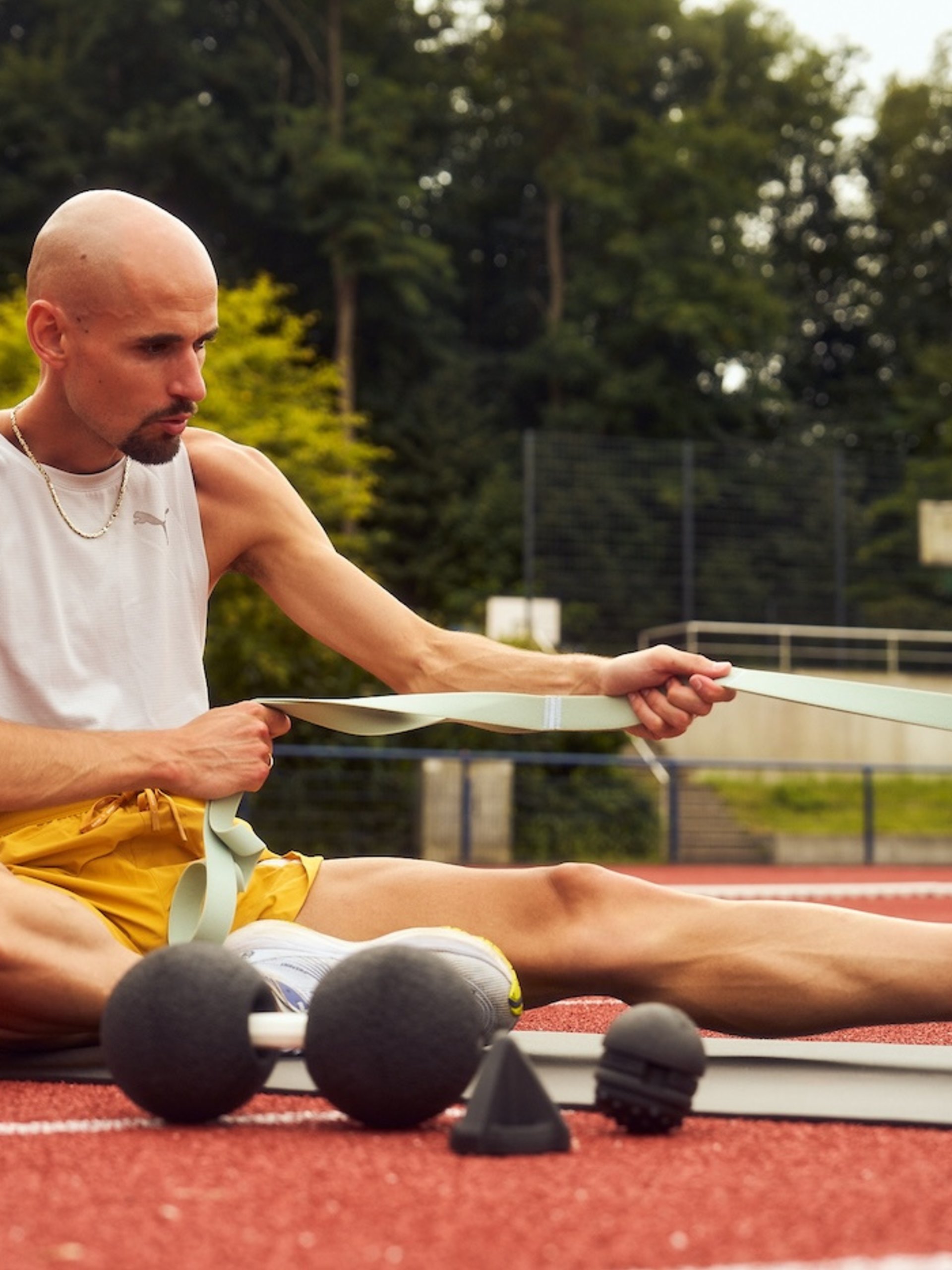
Active recovery also plays a role in Hendrik’s daily life and while traveling. The DUOBALL helps relieve back tension after sitting for long periods, and he uses the various bands for quick stretches. For muscle relaxation and activation, he relies on the FASCIAL ROLLER and the FASCIA GUN.
“When you invest so much time—whether as a pro or an amateur—you shouldn’t skimp on the wrong things. You might buy other products three times a year, but the high-quality BLACKROLL® products last for several years.”

Optimal Recovery

Active Regeneration

Fascia Gun in Use
Nutrition in Running
For Hendrik, nutrition is another important component. He makes sure to eat three balanced meals a day. “If you just snack on junk food in between and aren’t hungry for your third meal in the evening, you haven’t followed the rule. If you still have an appetite for that third meal in the evening, it suggests you haven’t gone too far off track in between—assuming you’re in an intensive training phase with a corresponding amount of exercise,” Hendrik explains.
Important: Due to his extensive training, the 32-year-old burns an enormous number of calories and faces the challenge of not falling into a calorie deficit.
“Especially at the training camp in Kenya, where there are almost exclusively basic foods, you tend to lose weight too easily. My personal rule is: As long as you’re eating three main meals—sensible and healthy ones—you can hardly go wrong with what you eat in between.”
A big no-no: training on an empty stomach. The goal is to deplete your energy stores as little as possible so you can recover faster and perform well in the next session.
During the race itself, nutrition starts immediately—not just when you’re hungry or thirsty. Hendrik relies on gels and specially mixed drinks. After the race, he turns to recovery shakes. It’s important to use only what you’ve tested in training during a race. Because of the sudden strain, stomach tolerance is especially important.
Hendrik invests an enormous amount of time and passion into his daily training. How does he stay so motivated?
What drives you, Hendrik?
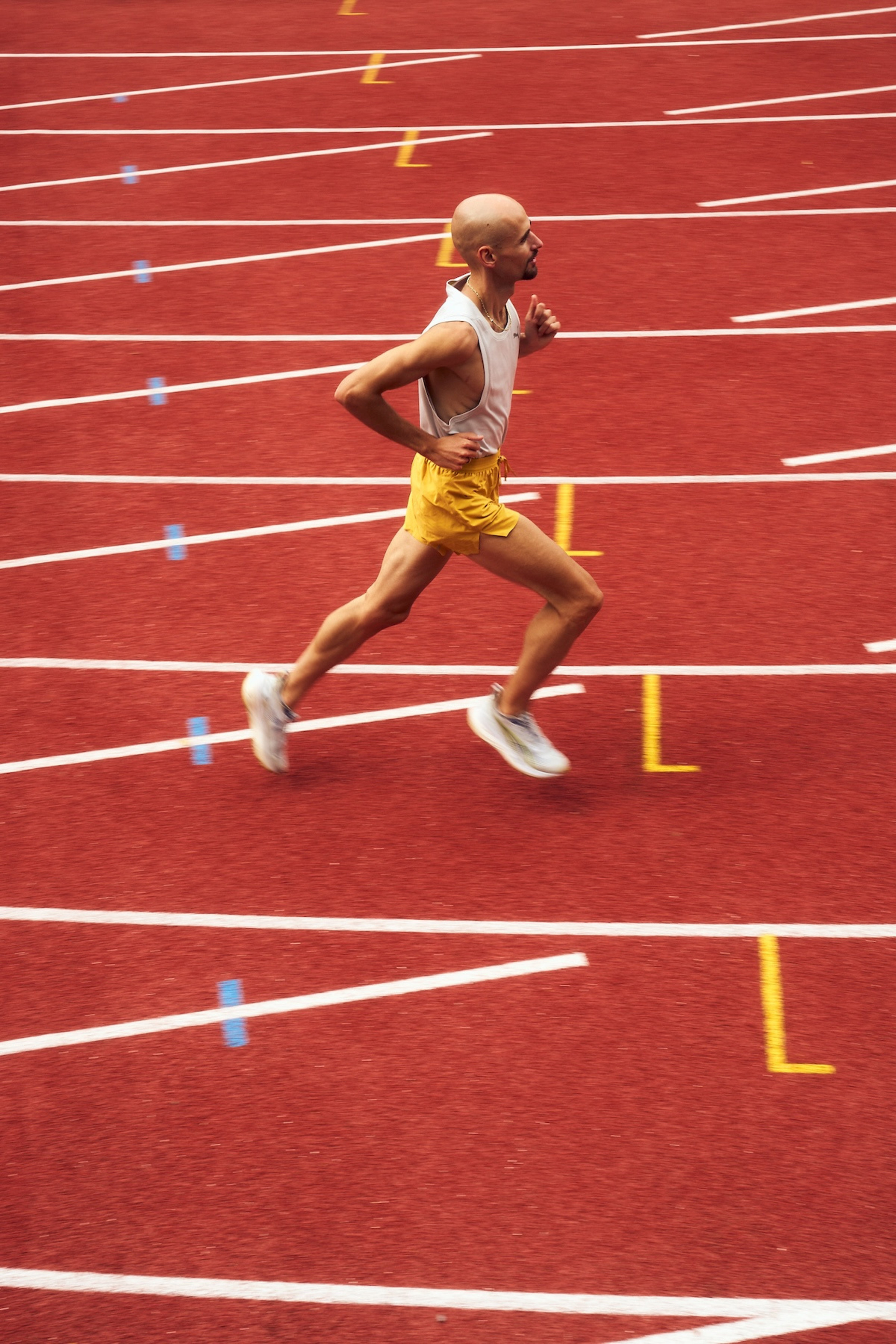
“Ambition definitely drives me. If I weren’t competing at the top level, I wouldn’t be able to put this much energy into it every day—you basically sacrifice a large part of your normal life for it. That’s why success is absolutely essential to staying motivated.”
He knows that competitive sports are less fun if you can’t reach your full potential. Hendrik always needs to feel like he’s giving it his all—that’s what keeps him motivated.
Sharing Knowledge
“Everything I do, I try to do in a way that’s focused on a specific goal. I don’t just mean in terms of sports—I also see it as my responsibility, as a state-sponsored athlete, to motivate people and pass something on to them. That’s why I’ve also built up my media presence, for example with the podcast, where listeners get inspiration for their training. Passing on this knowledge is also a form of success for me.”
At his club in Düsseldorf, he tries to pass on as much of his experience as possible to children and teenagers.
The Path to Becoming a Marathon Runner
As a youth soccer player, Hendrik realized back then that he needed to improve his running to keep up with his teammates, so he decided to start track and field training on the side. “When I first joined the track and field club, I quickly realized that I much preferred the atmosphere there to that of the local soccer club. I also noticed that in running, you have much more control over your own destiny. If you put in the work, it pays off immediately—visibly, within a specific time frame.”
As a runner, Hendrik was able to make some improvements and quickly and effectively master the fundamentals of running training, but even today he isn’t among the fastest runners in the world.
“I’m still not a fast sprinter—my strength clearly lies in endurance! (laughs).”
He’s making rapid progress and sticking with the sport, even if an international professional career isn’t on the horizon just yet. His first goals: to compete in a state championship or win a city race. “But I made it onto the national team pretty quickly, and things really took off when I set the German U23 record in the half marathon. That’s when I realized I had great prospects on the road as well and wanted to give it another serious try.”
The Allure of the Marathon
For Hendrik, it’s the combination of the course and the atmosphere that gives marathons that special something. His favorite courses also include German marathons: “Boston is number one for me—that was pretty extreme, especially when it comes to the frenetic atmosphere in the city. New York and Berlin tie for second place: New York because of the city and the enthusiasm of the people, Berlin because of the home-field advantage in a major metropolis. London was the fourth-coolest race for me, also because of the city and the atmosphere.”
The Pursuit of Personal Bests
Hendrik knows that to win a race in the end, the right mix has to be there—and competitive sports are incredibly time-driven. That’s why it’s often important to find a fast course, which limits your options. Because of the time standards he has to meet, courses like New York are completely out of the question for him, since they’re very hilly and offer no chance of a top time from the start. “That’s a big problem because we’re not really free to choose our courses. I normally wouldn’t be able to run the Singapore Marathon either—it’s way too hot and there’s no chance of meeting a qualifying standard.
Since you only get a few chances a year, almost everything is focused on Valencia, Berlin, and maybe Seville in the spring—those are basically the only courses that allow for the incredible times required by the conditions set by the associations and officials.
That’s unsatisfying because I’d like to try out even more and different races.”
Outlook
Hendrik is determined to repeat the highlight of his career so far in the future.
“Competing in the Olympics is the crowning achievement of a career, and I’m glad I’ve already had the chance to experience it. That takes some of the pressure off. But of course, I want to go back there again!”
His goal is to maintain the level he’s achieved and establish himself among the world’s fastest runners. Hendrik is here to stay. At the same time, he never loses sight of the bigger picture: “I also want to continue participating in exotic races that take place a bit off the beaten path—like in Bogotá, Colombia. But the races in Asia also really appeal to me. This year, for example , there’s still an event coming up in Taipei.” The distance of the races plays a secondary role for Hendrik. It’s precisely these adventure trips that he’s determined to keep doing.
Away from international events, he and his team are continuing to expand their Düsseldorf facility, and he takes his important role in the German track and field scene very seriously. And then there’s one more major goal he’s training toward together with his wife, Esther:
“In the back of my mind, I have a vision of us competing together as a married couple in the same event at the 2028 Olympic Games. Going to LA together—that would be something truly special!”
One thing is certain: No distance is too long for Hendrik Pfeiffer when it comes to achieving his goals.