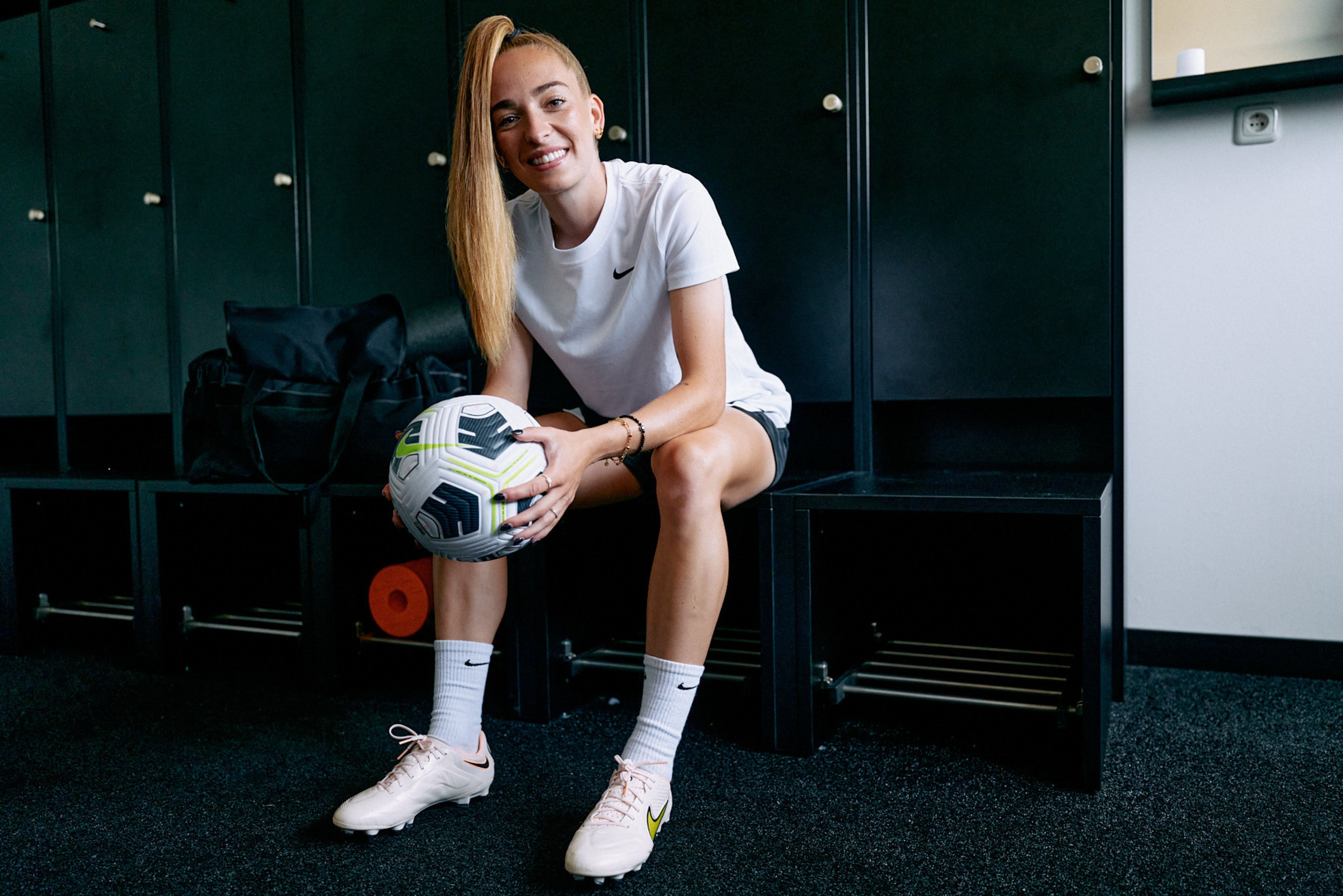
"Soccer is soccer, and that's how it'll stay!"
Men and women are equal before the law. But there are many everyday situations in which women are still disadvantaged or even discriminated against. International Women’s Day, celebrated worldwide on March 8, aims to draw attention to gender-based inequalities.
BLACKROLL® is also committed to equality, which is why we spoke with professional soccer player Sophia Kleinherne about this topic. The center back is a consistent advocate for equal opportunities for women in soccer.
We speak with Sophia on a gray Saturday morning. She’s currently on her way to practice on foot—as she is on just about every day off from a game. Today she’s wearing a wool hat instead of her trademark high ponytail on the right side.
BLACKROLL®: Hi Sophia, first of all, congratulations on qualifying for the Olympic Games in Paris! But today we’re focusing on a different topic: International Women’s Day. Our first question: What can women do better than men?
Sophia grins and pauses to think; answering the question isn’t easy for her.
Most things can’t really be generalized, but what we can perhaps say is that women are more attentive, more sensitive, and more emotional—they simply have a better sense of other people.
BLACKROLL®: And in terms of soccer, how do these qualities help you on the field?
Sophia: We’ve had a few midweek games lately, so you spend a lot of time with the team, and it’s important to know how the others on the team are doing. To be successful, we have to get along well with the people around us. In our team, for example, it’s no secret if someone is having a hard time. Recognizing that ultimately helps us succeed together.
BLACKROLL®: Have you ever had bad experiences with prejudice against you as an athlete? What stereotypes do you have to deal with?
Sophia: There are probably some people who view traits like being attentive, sensitive, and emotional in a negative light… When I think back a few years, we female soccer players were still often ridiculed, and I frequently had to justify why I played soccer. At times, it was even uncomfortable for me to say that I was a soccer player.
Now, though, we’re given a platform, and we can inspire our fans. We can silence the critics who watch our games. That’s a development we’re very proud of.
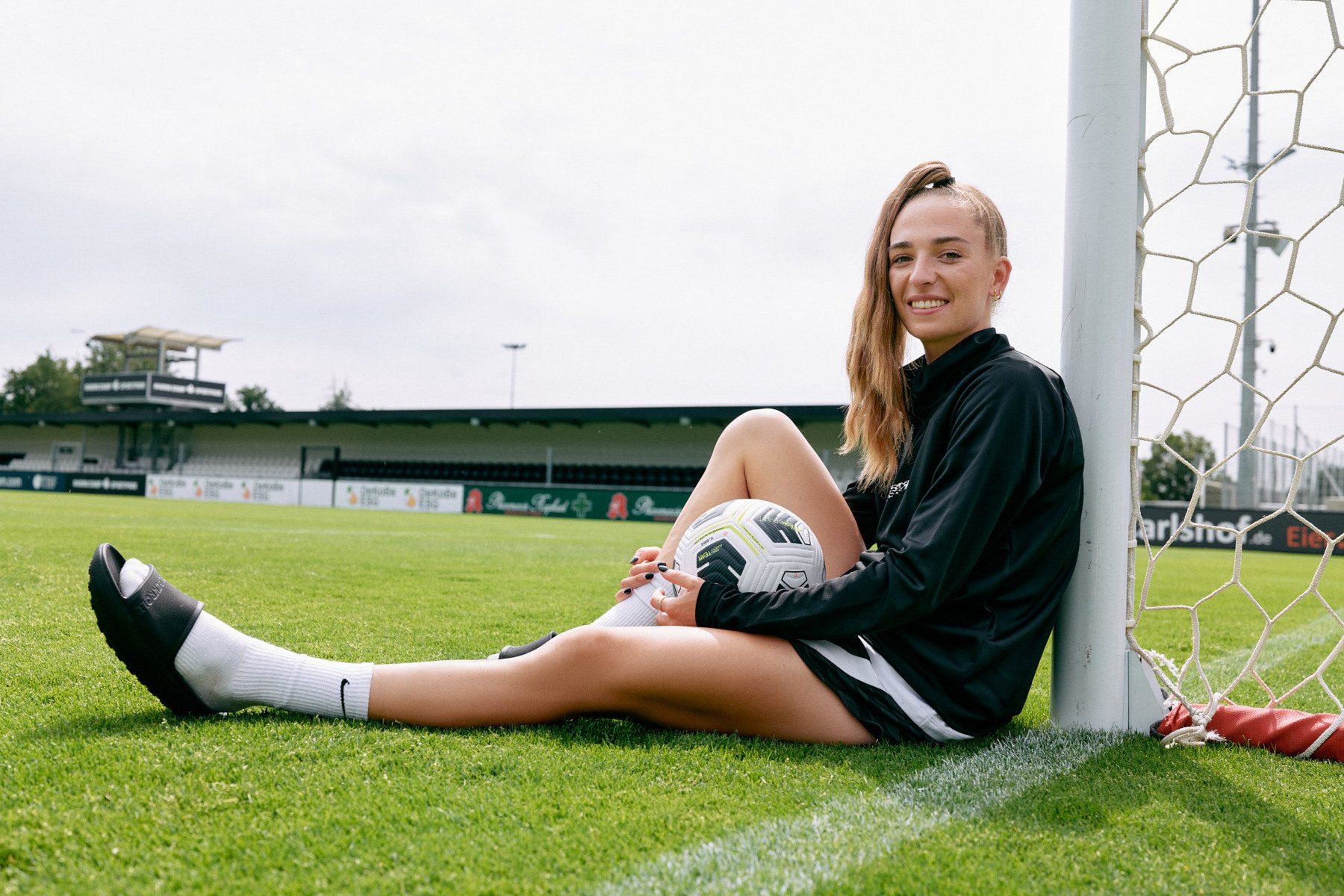
BLACKROLL®: In our last video interview, you said that as a center back, you’re the last line of defense. How important is equality to you, and how important is gender equality?
Sophia: Equality is very important to me and a major concern.
But, for example, I really don’t like the constant comparisons to our male colleagues, and I’m not demanding equal pay either. That’s unrealistic. We should, however, have the same training conditions, because ultimately we invest just as much as they do and bring the same passion to the field.
In Frankfurt, we already have top-notch conditions, but there’s a huge gap in the Bundesliga, both in terms of training facilities and salaries. While we in Frankfurt can focus on our sport seven days a week and have access to a weight room, sauna, and cold plunge pool, there are Bundesliga teams that train on poor-quality municipal fields and whose players have to work full-time on the side. It shouldn’t be that way.
There are certainly some positive aspects to the gender debate, and in some ways it helps women gain more respect and recognition. However, I think the demand to change all terms to include women is an overreaction. And when I say something like I’m the “last man,” I’m not taking myself too seriously.
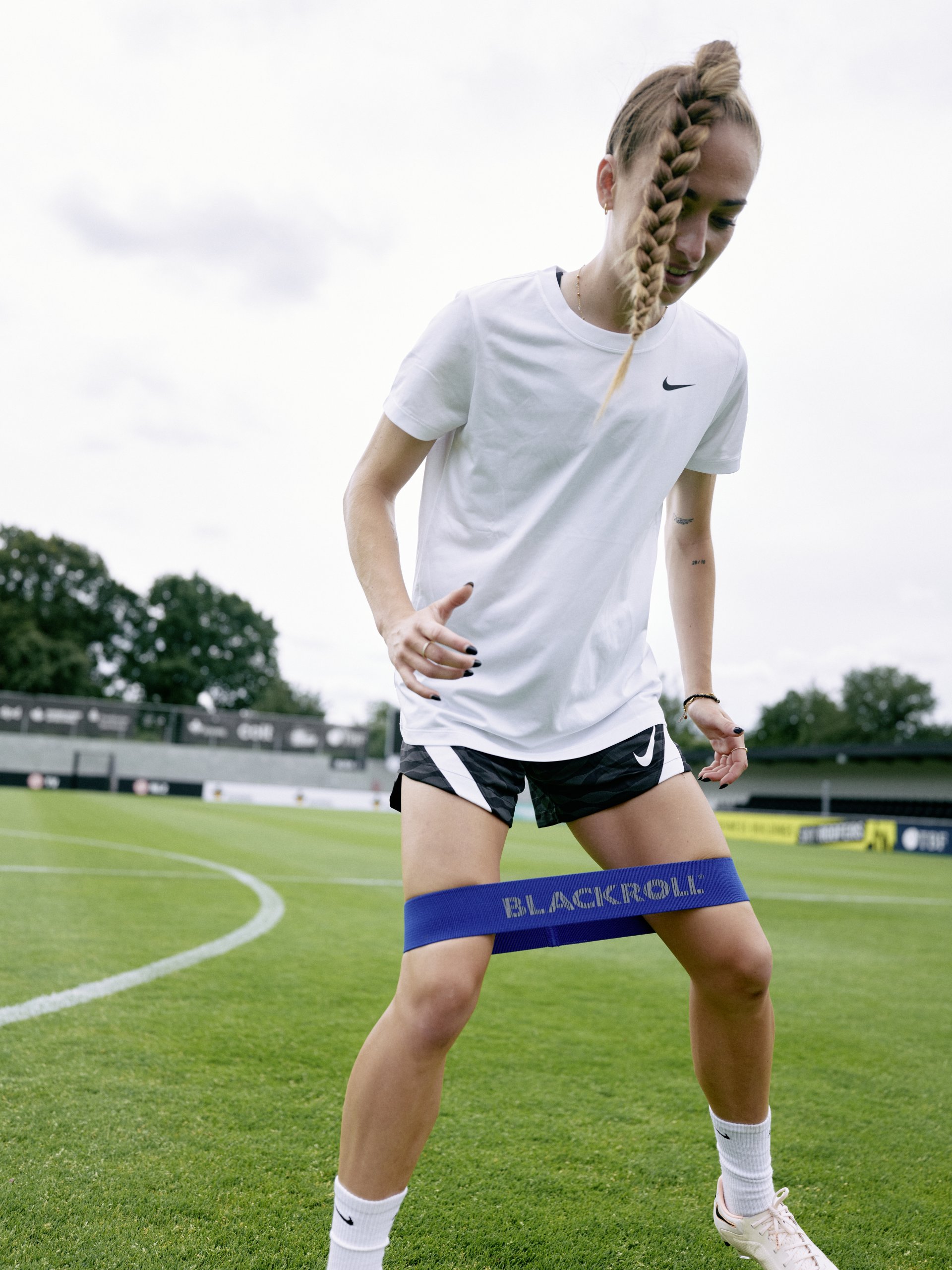
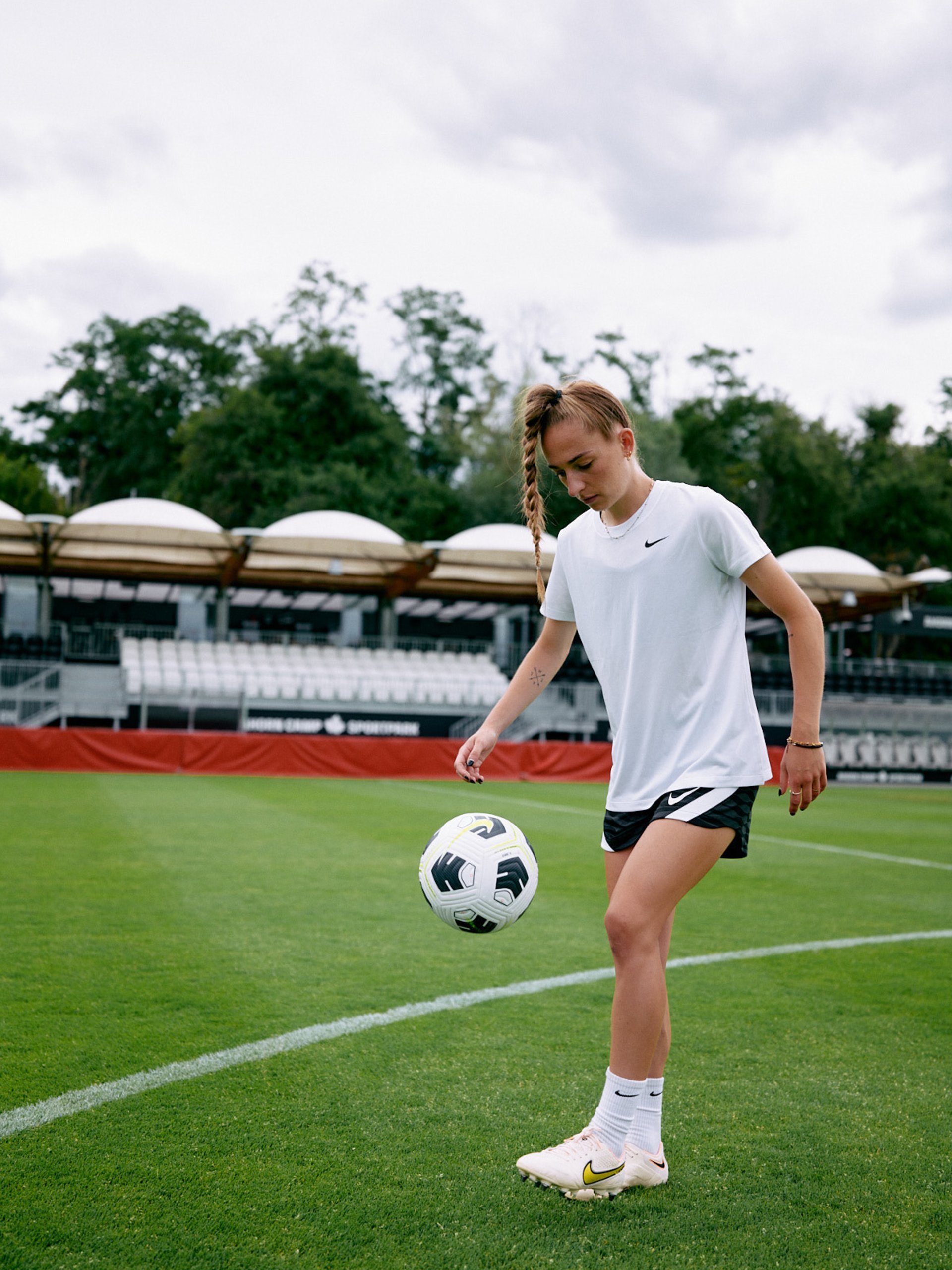
BLACKROLL®: What do you think would need to change to create equal conditions in the Bundesliga and, for example, to establish a base salary for female Bundesliga players?
Sophia: Of course, that’s not so simple and can’t be changed overnight. Fundamentally, though, it requires the will of those in charge. They need to take us players and women’s soccer seriously and make an initial investment. But I’m convinced that we can repay that trust.
As professional female soccer players, we have to keep standing up for our demands, bringing attention to the problem, and speaking out loudly. Then, hopefully, in the future, some of the girls won’t have to work full-time jobs alongside their sports careers.
BLACKROLL®: Pay in sports is, of course, always dependent on sponsors, who typically allocate their budgets based on reach and visibility. What are the three main reasons, in your opinion, why more people should watch women’s soccer?
Sophia: There are many reasons, and the progress women’s soccer has made is tremendous. We have many top-tier matches at the international level that are fast-paced, athletic, and exciting. Scores like 10–0 just don’t happen anymore. On top of that, we’re very approachable and honest both on and off the field. I think that’s what makes women’s soccer particularly appealing.
Ultimately, I have to say: soccer is soccer, and that’s how it will stay. No one should be thinking about whether there’s a men’s or women’s team on the field.
We’re pausing the interview for a moment because Sophia has arrived at the training facility and needs to have some blood drawn for a CK test. Creatine kinase is an enzyme involved in energy metabolism and indicates how the body reacts to training or the physical demands of a game. This shows us just how professional women’s soccer has become.
BLACKROLL®: Thank you so much for giving us this glimpse into your daily training routine. As we all know, part of training is recovery—and that includes getting a good night’s sleep with sweet dreams. These are central themes for BLACKROLL®. If you could have one dream come true, what would it be?
Sophia smiles and then says firmly, with a twinkle in her eyes: “That we win at the Olympic Games!” Of course, the center back isn’t referring to just any game, but the final. The gold medal is the goal.

BLACKROLL®: We’re keeping our fingers crossed for you! You’re already an established professional athlete yourself. What advice would you give to young female athletes who are just starting out on their journey toward professional sports?
Sophia: That they should be brave and stay that way. The path to professional sports isn’t always straightforward, so it’s really important not to lose sight of the fun along the way. It’s important to weather the lows and appreciate the highs, and to be proud of what you’ve worked hard to achieve.
Challenges foster growth, but you mustn’t forget the person behind the athlete and need to give them plenty of attention.
BLACKROLL®: Dear Sophia, thank you very much for this candid and inspiring interview.