Tour de France 2026: how Soudal Quick-Step recovers in silence
'Most people never see what stands behind success.'
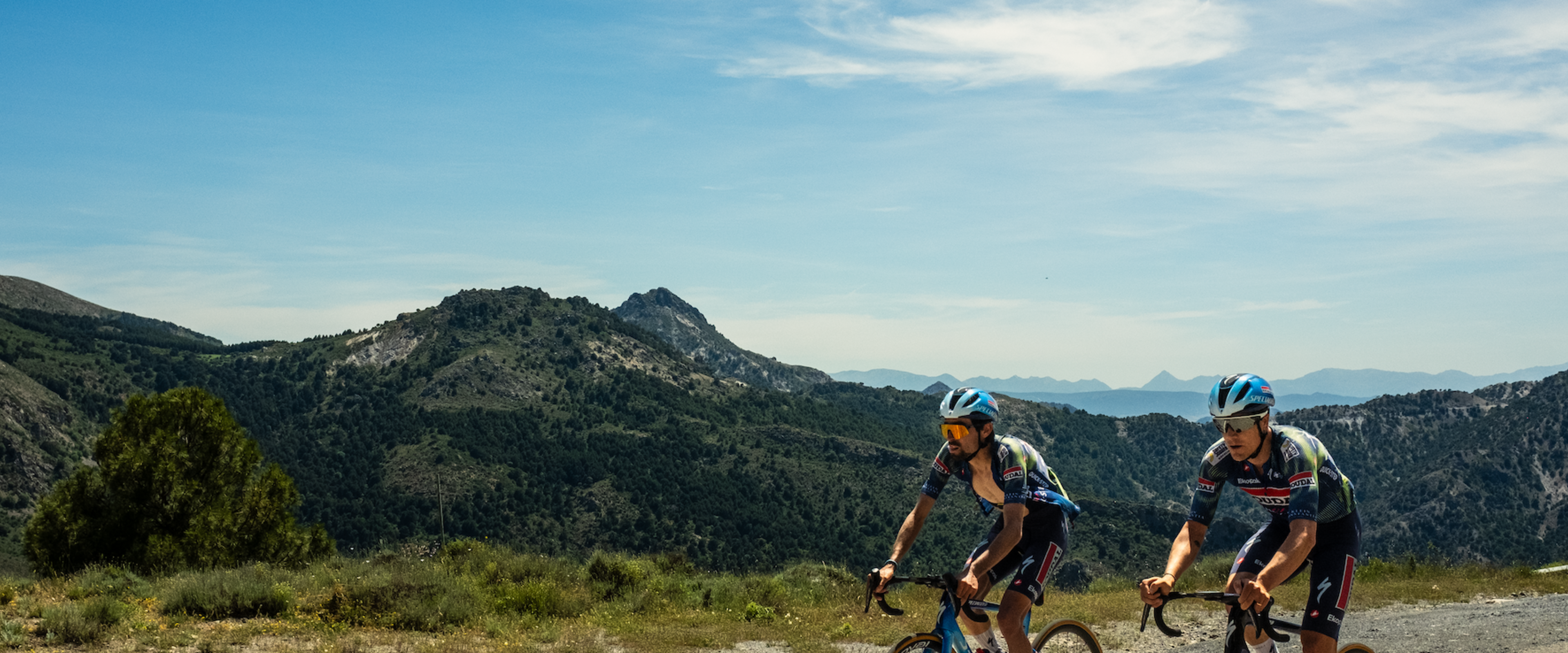
While millions of people follow the Tour de France 2026, the most important part of the story begins long before the Grand Départ.
Not in front of cheering fans. Not in front of TV cameras. But on a high plateau in Spain's Sierra Nevada.
Where there's little more than tarmac, mountains and thin air.
We joined the Soudal Quick-Step cycling team – the Wolfpack – to see it for ourselves.
'The higher we climb, the quieter it gets.'
We're sitting in the team car.
Ahead of us, the peloton disappears into the mountains.
With every kilometre, the road narrows. With every metre of altitude, the silence deepens.
Eventually, there's nothing left up here. No cafés. No spectators. No houses.
Just perfectly surfaced roads, mountains and thin air. It's this very emptiness that makes the Sierra Nevada one of the most important training locations in international road cycling. Up here, only the next climb matters.
With every minute our camera team gains in altitude, the pressure builds in our ears. The air noticeably thins. While we feel the altitude, the riders ahead of us seem unaffected, pedalling on regardless. The roads around the training camp sit above 2,000 metres. Rising above them is Mulhacén – at 3,482 metres, the highest mountain on mainland Spain.
Up here, nothing distracts from what matters.
'What looks controlled on TV feels uncompromising up close.'
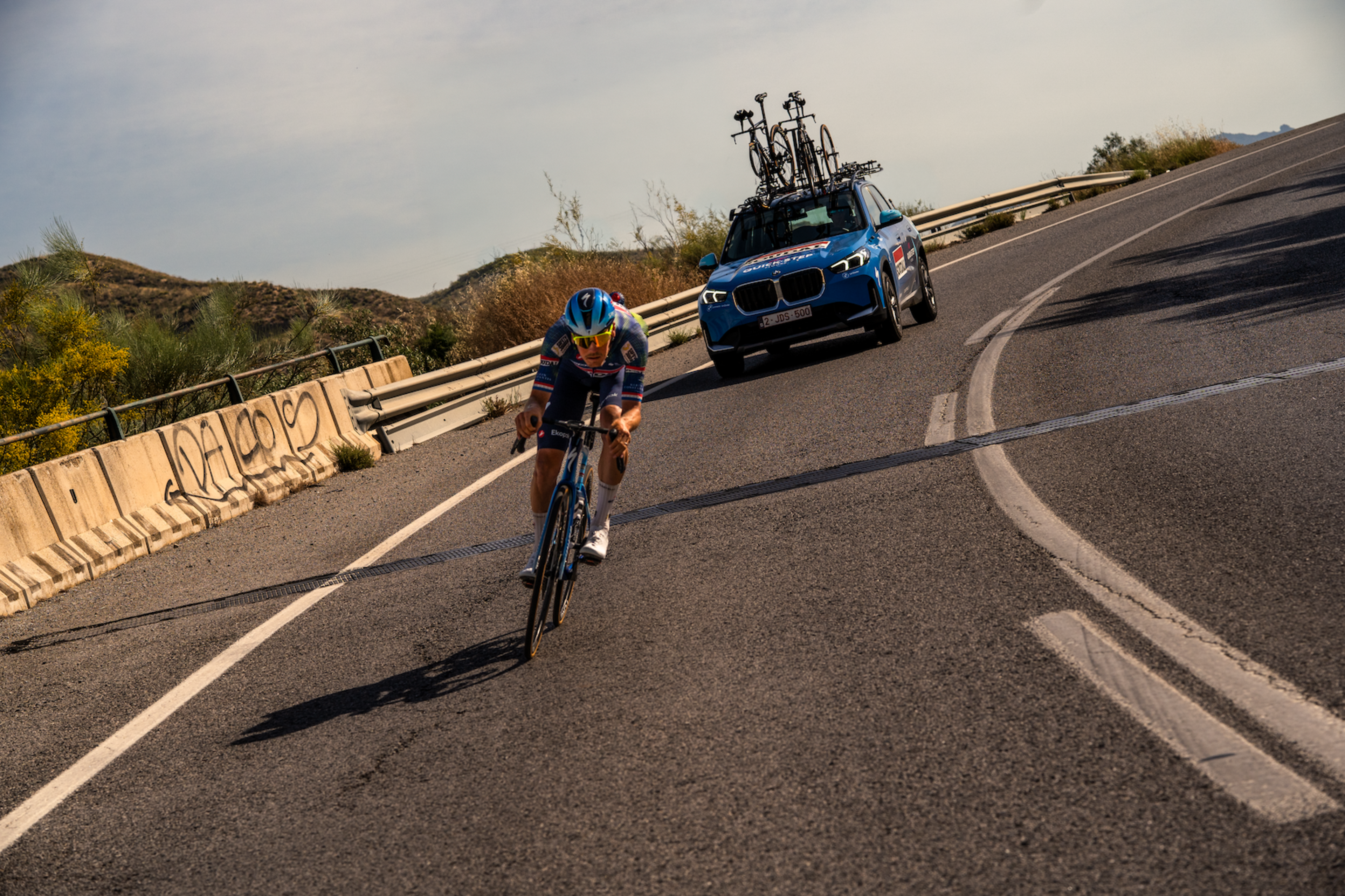
The most striking moment doesn't happen going uphill. It happens coming down.
As the road opens out, the riders accelerate within seconds to a speed we can barely register from the car.
Centimetres from the barrier. Corner after corner.
From the car, we try to make sense of how effortlessly the Wolfpack moves through these mountains. Every rider knows their line. Every rider trusts the next.
Recovery in the Wolfpack's daily routine
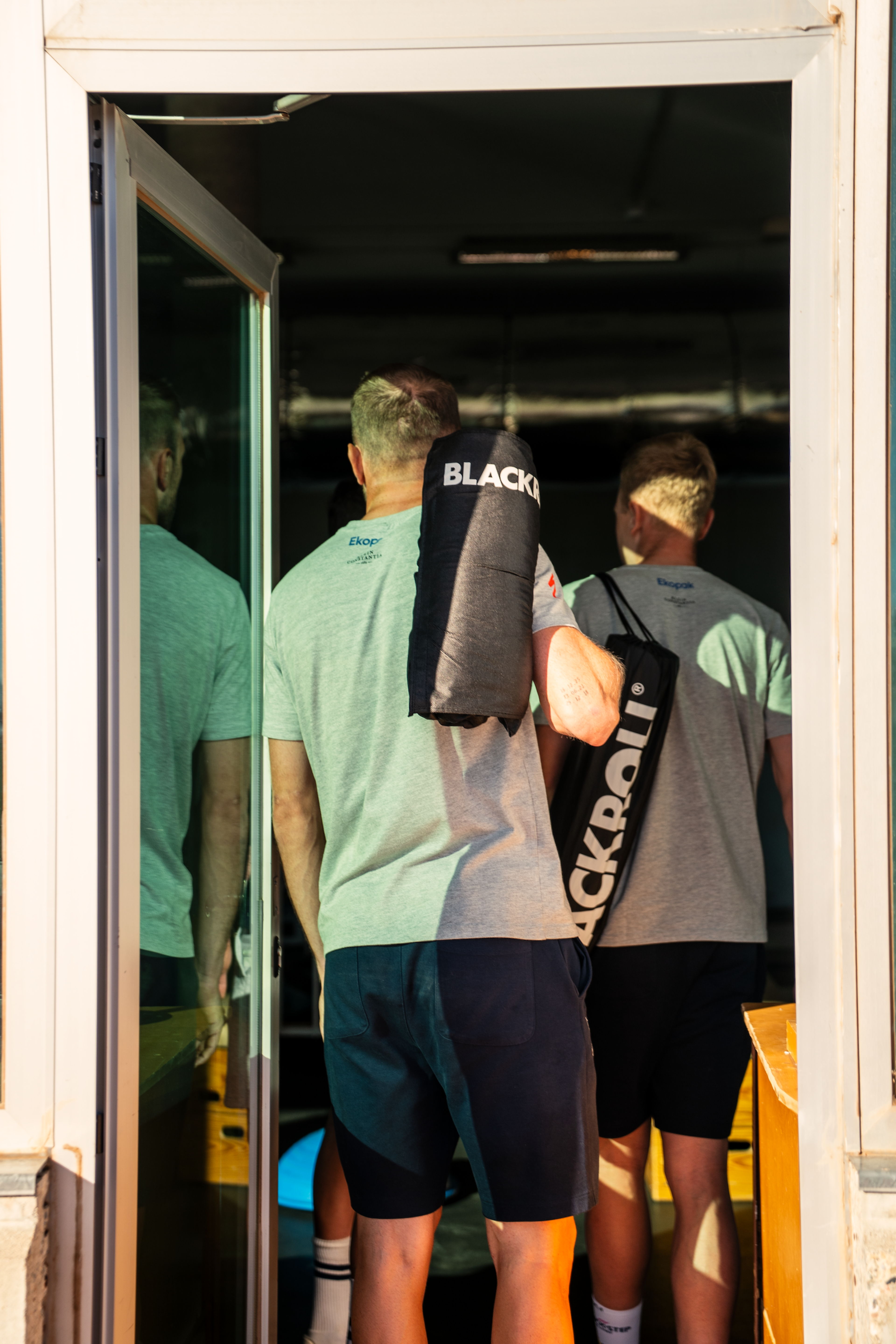
- No time wasted in the team bus: post-ride recovery routine begins straight after intense sessions – often before the bikes are even packed away, the riders are already sitting in the team bus with the COMPRESSION BOOTS.
- Recovery despite changing hotels: during the Tour de France, riders change hotels countless times within a few weeks. Routines such as the RECOVERY PILLOW help them sleep well consistently, even on the road.
- Keep your eye on the routines: peak performance isn't built in the race alone, but in preparation, recovery and the many small routines in between.
- The invisible percentage points: this is exactly where the partnership between BLACKROLL and Soudal Quick-Step comes in – in the moments hardly anyone sees, but that make all the difference.
'The more you train, the more you get used to the suffering.'
Months full of pain in the legs. Pain in the back. Crashes. Sunburn. Days when the body would rather rest. And yet, the next morning, they're back on the bike.
The riders put it best themselves: 'Wanting to keep pushing yourself is just part of it. Maybe you even have to learn to enjoy the suffering at some point. But then there are these moments – when you take a climb three seconds faster, or win a sprint.'
These are the moments that drive us. They're the reason we keep pushing our limits.
For the riders, it's a particular kind of pride. Being able to give absolute maximum effort at the decisive moment often matters even more than the result itself.
After a few days in the Sierra Nevada, we head home. The memory cards are full, and the impressions stay with us for days. First, we take it all in.
It becomes clear to us: every Tour de France story begins right here. In the altitude training camps, where the foundation is laid for the moments that will later take centre stage.
Between the tarmac. Above 2,000 metres. Soaked jerseys. And the many routines that demand discipline every single day. The ones that, in the end, make the difference between standing on top and not.
Built in Silence.