Altitude Training: How Your Body Adapts to High Altitudes

Altitude training is targeted training at elevations of approximately 1,800 m or higher to improve oxygen uptake. The body adapts over the course of one to three weeks: breathing rate and heart rate increase, and the hormone erythropoietin (EPO) stimulates the production of new red blood cells.
Anyone traveling to Mexico City for the 2026 World Cup should ideally arrive a little earlier to acclimatize—the Estadio Azteca is located at 2,240 m—unacclimatized travelers and teams can quickly feel the effects of the altitude in Mexico City—especially during physical exertion, and sometimes even while sleeping or in their subjective perception of exertion.
What you’ll learn in this article:
- Why even fit people suddenly find themselves out of breath in Mexico City: Altitude affects sleep, heart rate, and exertion more quickly than many realize.
- Anna West explains why the first few nights at altitude are often fragmented—and why that’s exactly where acclimatization begins.
- Mexico City is located at 2,240 meters: According to studies, running performance in soccer can drop measurably there.
- Altitude training isn’t just about “less oxygen”—it involves complex adaptations in sleep, breathing, and blood production.
- Why sleep at high altitudes becomes a crucial recovery factor: less deep sleep, more periods of wakefulness, and a slower adaptation process.
What is altitude training?
Altitude training is the deliberate exposure of the body to altitudes of approximately 2,000 m or higher in order to trigger physiological adaptations—such as increased EPO production and a rise in hemoglobin levels—due to the reduced partial pressure of oxygen.
The first measurable effects occur at altitudes of 1,500 m or higher, and significant, scientifically relevant adaptations have been documented at altitudes between 2,000 and 2,500 m.
Altitude training should not be confused with pure altitude therapy (medical treatments in hypoxia chambers) or classic acclimatization—the unintentional adaptation to altitude that occurs, for example, when you travel on vacation.
How the body reacts to a specific altitude depends heavily on the altitude level:
Altitude | Description | Effects |
< 1,500 m | Lowlands | Effects barely measurable |
1,500 to 2,500 m | Moderate altitude | EPO levels rise, sleep architecture changes |
2,500 to 4,000 m | High altitude | Performance decreases significantly; risk of AMS increases |
> 4,000 m | Extreme altitude | Acute acclimatization is absolutely necessary |
At 2,240 m, Mexico City lies in the upper range of moderate altitude—that is, precisely in the zone where the effects become measurable without altitude sickness becoming the dominant risk.




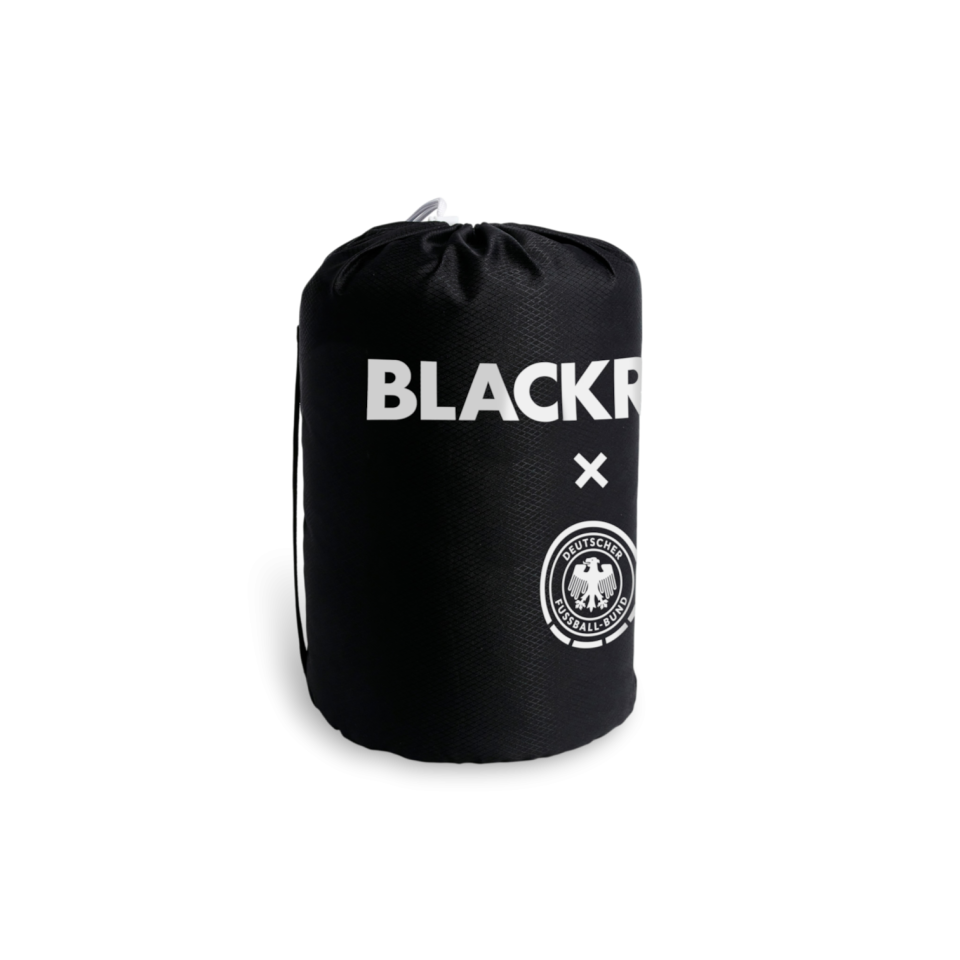
Recovery Blanket All Year - DFB
Available in multiple variants
How does your body react to altitude?
Your body reacts to altitude in three time frames: acutely within minutes, in the medium term over days, and in the long term over weeks.
These phased adaptations determine how quickly you acclimate to altitude—and when traditional altitude training actually begins to have an effect.
Acute Response (Hours):
- Respiratory rate and depth increase immediately to compensate for the lower partial pressure of oxygen.
- Your heart rate increases—both at rest and during exercise.
- You excrete more fluid through your kidneys.
Medium term (days):
- Plasma volume initially decreases, which relatively increases the hemoglobin concentration.
- The release of erythropoietin increases—the hormone that triggers the production of new red blood cells.
- Ventilatory adaptation—that is, the increased respiratory rate—stabilizes after about ten days (Mallet et al. 2023).
Long term (weeks):
- The number of red blood cells—and thus hemoglobin mass—increases measurably. In studies involving several weeks of high-altitude exposure, both higher hemoglobin levels and improved endurance performance have been documented after two to three weeks (Hauser et al. 2025).
- With prolonged acclimatization, oxygen transport and tissue perfusion improve through hematological and ventilatory adaptations.


How does altitude affect your sleep?
At high altitudes, sleep is one of the first things to be affected—and one of the most critical factors for acclimatization.
Even at moderate altitudes (1,500 to 2,500 m), sleep architecture changes measurably: less deep sleep, more periods of wakefulness, and frequent nocturnal drops in oxygen levels. In one study, the proportion of deep sleep decreased slightly at an altitude of 1,630 m and more significantly at 2,590 m (Latshang et al. 2013). An accompanying EEG analysis showed that deep-sleep-related brain activity was reduced by about 15% at 2,590 m (Stadelmann et al. 2018).
A distinctive feature of high altitude is periodic breathing: pauses in breathing alternate with phases of rapid breathing. Anyone traveling from lowland areas to high altitudes is almost always affected by this—and it persists even after acclimatization, while sleep architecture recovers to some extent (Bloch 2015).
“Acclimatization happens during sleep. When you sleep at high altitudes, your sleep becomes fragmented: less deep sleep, less REM sleep, and more periods of wakefulness—especially during the first 2 to 3 nights.”
Anna West, Sleep and Recovery Expert

Important: Sleep architecture and breathing patterns recover at different rates. Among young elite soccer players who trained at 3,600 m, REM sleep was reduced on the first night but normalized after two weeks—while the pronounced breathing disturbances persisted throughout the two weeks (Roach et al. 2013).
In the context of Mexico City, this means that the first two to three nights are the most critical from a sleep perspective. Subjective sleep quality and daytime performance, however, remain largely unchanged at 2,590 m—the impairments are real but not dramatic (Latshang et al. 2013).


What does Mexico City mean for the 2026 World Cup?
The Estadio Azteca is located at 2,240 m—making Mexico City by far the highest venue of the 2026 World Cup and presenting a measurable disadvantage for non-acclimatized teams.
At this altitude, the partial pressure of oxygen is significantly reduced. Studies have shown that during soccer matches at moderate altitudes starting at 1,000 m, the total distance covered is 5 to 9% lower in the first few hours to days (Draper et al. 2022). At 2,240 m, the effect is likely toward the upper end of this range.
Specific recommendations for athletes:
- At least two weeks of pre-acclimatization on site, if the competition schedule allows (Khodaee et al. 2016).
- Increased hydration —water loss through respiration increases significantly at high altitudes.
- No alcohol for the first 48 hours—fluid loss is already elevated.
- Adjust training load: lower volume, more recovery during the first three to five days.
“In Mexico City, three factors come into play at the same time: altitude, jet lag, and sometimes heat. If you ignore these, you’ll hit a wall instead of working around it.”
Anna West, Sleep and Recovery Expert
The interplay of altitude and travel also applies to fans—albeit in a more relaxed way. Spectators traveling to the World Cup can benefit from the 2026 World Cup Travel Playbook, which brings together tips on travel preparation and hydration for sports.
What training methods are used in high-altitude training?
Three methods have become established in traditional high-altitude training: Live-High-Train-Low, Live-High-Train-High, and Intermittent Hypoxic Training.
Which method is suitable for whom depends on the sport, the phase of the season, and logistical considerations.
- Live-High-Train-Low (LHTL): You live at a moderate altitude (1,250 to 3,000 m) but train at a lower altitude (0 to 1,200 m). In practice, this combination is considered the gold standard for endurance athletes. A Bayesian network meta-analysis of 59 RCTs shows that LHTL, combined with training at low altitude, most strongly promotes an increase in VO2max (Wang et al. 2023). Typical protocols: two to three weeks with more than 12 hours of daily altitude exposure (Burtscher et al. 2023).
- Live-High-Train-High (LHTH): You live and train at altitude. A systematic review of 13 RCTs identifies LHTH and interventions lasting three weeks as particularly effective for hemoglobin mass and endurance performance (Hauser et al. 2025).
- Intermittent Hypoxic Training (IHT) and Live-Low-Train-High (LLTH): You live at sea level and train specifically under hypoxic conditions—for example, using altitude tents, mask training, or in hypoxic chambers. A network meta-analysis of 56 studies shows that, in particular, long high-intensity interval training under hypoxic conditions and repeated-sprint training in hypoxia improve aerobic and anaerobic performance compared to normoxic training (Hu et al. 2024).
For professional and national teams, LHTL training camps and pre-acclimatization lasting two to three weeks prior to a competition at altitude are an established strategy.
Those who want to get started from home can use altitude tents—the effects become apparent after two to three weeks (Burtscher et al. 2023). As sleep’s role in professional sports demonstrates, the quality of recovery is at least as important as the hypoxia stimulus itself.
Is altitude training possible without mountains?
Those who do not have access to actual high-altitude locations can use simulated altitude and targeted breathing exercises —though the two approaches have different effects.
The best-documented methods are those that actually reduce the oxygen content of the air you breathe: altitude tents for sleeping, hypoxia chambers, or mask systems with oxygen-reduced air. They create a genuine hypoxic stimulus and can trigger adaptations similar to those experienced during a stay at high altitude (Burtscher et al. 2023).
In addition, you can specifically train your breathing. While breathing techniques do not create a sustained oxygen deficit like actual altitude does, they strengthen your respiratory muscles, improve breath control, and increase your tolerance for higherCO2 levels—skills that will benefit you at high altitudes and during physical exertion.
Common approaches include:
- Hypoxic-hypercapnic breathing training: controlled breath-holding phases that acclimate the body to higherCO2 concentrations
- Box Breathing: steady inhalation and exhalation with pauses, which trains breath control and relaxation
- Diaphragmatic breathing: conscious abdominal breathing that strengthens the respiratory muscles and improves respiratory efficiency
- Respiratory resistance training: training with devices that increase respiratory resistance, thereby challenging the respiratory muscles
What are the risks of high-altitude training?
The greatest risk associated with exposure to altitudes of 2,500 m or higher is acute mountain sickness (AMS).
It typically occurs six to twelve hours after arriving at high altitude and is more likely the faster you ascend.
Typical symptoms:
- Headache (the most common leading symptom)
- Nausea, loss of appetite
- Dizziness, sleep disturbances
- Fatigue that does not improve with rest
Important: Altitude sickness is not the same as normal exertion-related fatigue following a training session at high altitude. Anyone who continues to experience headaches and nausea despite taking a break should not continue the ascent and, if in doubt, should seek medical evaluation.
Rule of thumb for a safe ascent: Above 2,500 m, do not gain more than 600 to 1,200 meters in elevation per 24 hours (Khodaee et al. 2016). If you experience symptoms of AMS, do not gain any further elevation, and descend immediately if your condition worsens.
For Mexico City, at 2,240 m, the risk of AMS is low but not zero—especially for people with no experience at high altitudes. Anyone traveling there, whether as a professional or a fan, should avoid strenuous activity and alcohol during the first 48 hours and pay close attention to warning signs.
Exercise and sleep are key factors during this phase: Poor sleep slows acclimatization, and sleep disturbances are an early sign of AMS.
What should you watch out for as a recreational athlete or fan?
You don’t have to be a pro to feel the effects of altitude—but as a recreational athlete or fan, you also don’t need weeks of preparation.
Whether you’re on a ski vacation in the Alps, hiking in the high mountains, or traveling to Mexico City for the World Cup, you’ll benefit from a few simple rules.
For short trips (3 to 7 days) at moderate altitudes:
- Make sure to take it easy on the first day—no peak performance, no long strength training sessions.
- Drink more than you would at sea level—fluid needs increase significantly at higher altitudes.
- Expect to sleep poorly for the first two to three nights—this is normal and no cause for concern.
- Avoid alcohol and heavy meals for the first 48 hours.
What can you expect as a fan at the World Cup match in Mexico City? You’ll feel the altitude as soon as you leave the hotel: climbing stairs becomes more tiring, your breathing quickens, and your head may feel foggy when you first get up. This is normal and usually goes away after two to three days.
If you want to stay active, make sure to get good sleep—sleep quality is the most underrated factor in acute acclimatization.
Conclusion: Altitude training can be planned, but it’s not a sure thing
Altitude training works—but only if the altitude, duration, and training method are properly aligned. For professionals, the “Live-High-Train-Low” approach is worthwhile over two to three weeks; for recreational athletes and fans, thorough preparation with a focus on sleep and hydration is sufficient.
Anyone traveling to Mexico City for the 2026 World Cup should make a conscious effort to take it easy for the first 48 hours, drink plenty of fluids, and ensure high-quality sleep —for example, using BLACKROLL® RECOVERY PILLOWS to maintain stable sleep cycles while on the go.


FAQ – Frequently Asked Questions About Altitude Training
Short-term adaptation to moderate altitudes (2,000 m and above) takes 7 to 14 days. Initial effects, such as faster breathing and a higher heart rate, are noticeable immediately. The formation of new red blood cells via EPO, on the other hand, takes weeks to months (Mallet et al. 2023).
Scientifically significant adaptations occur at altitudes of approximately 2,000 m and above. Below 1,500 m, the effects are too minor to be measurable. However, initial changes in sleep and breathing have already been documented at altitudes between 1,500 and 2,000 m (Latshang et al. 2013).
During the first two to three nights at moderate altitudes (2,000 to 2,500 m), deep sleep is measurably reduced—at 2,590 m, deep-sleep-related brain activity decreased by about 15% in one study (Stadelmann et al. 2018). Sleep architecture returns to normal after about a week, while periodic breathing may persist longer.
No, but performance drops acutely and measurably. In soccer, a reduction in running distance per match of 5 to 9% has been documented in the first few days (Draper et al. 2022). Professional teams either arrive at least two weeks in advance or adjust their training load management to account for acute altitude exposure.
Yes, through altitude tents, mask training, or special altitude training camps. Lasting effects become apparent after two to three weeks of daily hypoxia exposure (Burtscher et al. 2023). For recreational athletes, however, the effort is rarely worth it—a few days of acclimatization on site are usually sufficient.
Ascend slowly (no more than 600 to 1,200 m per day above 2,500 m), drink plenty of fluids, avoid alcohol, and refrain from intense physical activity during the first 48 hours (Khodaee et al. 2016). If headaches, nausea, or dizziness persist, do not continue ascending—if in doubt, descend and seek medical evaluation.
Read more


Studies & Sources
Bloch, K. E. (2015). Sleep at high altitude: guesses and facts. Journal of Applied Physiology, 119(12), 1466–1480.
https://doi.org/10.1152/japplphysiol.00448.2015
Burtscher, J., Niedermeier, M., Hüfner, K., et al. (2023). The interplay of hypoxic and mental stress: Implications for anxiety and depressive disorders. Neuroscience & Biobehavioral Reviews, 138, 104718.
https://doi.org/10.1016/j.neubiorev.2023.105140
Draper, G., Wright, M., Ishida, A., et al. (2022). Do environmental temperatures and altitudes affect physical outputs of elite soccer athletes in match conditions? Science and Medicine in Soccer, 6(2), 113–128.
https://doi.org/10.1080/24733938.2021.2003909
Hauser, A., Schmitt, L., Troesch, S., et al. (2025). Live high, train high or live high, train low? Comparing altitude training models in elite endurance athletes — a systematic review and meta-analysis. European Journal of Applied Physiology.
https://doi.org/10.1007/s00421-024-05641-w
Hu, M., Lin, S., Wang, J., et al. (2024). The effect of live-low train-high in normobaric hypoxia on physical performance in athletes: A systematic review and Bayesian network meta-analysis. Frontiers in Physiology, 15, 1432954.
https://doi.org/10.3389/fphys.2024.1432954
Khodaee, M., Grothe, H., Seyfert, J., & VanBaak, K. (2016). Athletes at high altitude. Sports Health, 8(2), 126–132.
https://doi.org/10.1177/1941738116630947
Latshang, T. D., Lo Cascio, C. M., Stöwhas, A.-C., et al. (2013). Are nocturnal breathing, sleep, and cognitive performance impaired at moderate altitude (1,630–2,590 m)? Sleep, 36(12), 1969–1976.
https://doi.org/10.5665/sleep.3242
Mallet, R. T., Burtscher, J., Pialoux, V., et al. (2023). Molecular mechanisms of high-altitude acclimatization. International Journal of Molecular Sciences, 24(3), 2380.
https://doi.org/10.3390/ijms24032380
Roach, G. D., Schmidt, W. F., Aughey, R. J., et al. (2013). The sleep of elite athletes at sea level and high altitude: A comparison of sea-level natives and high-altitude natives (ISA3600). British Journal of Sports Medicine, 47(Suppl 1), i114–i120.
https://doi.org/10.1136/bjsports-2013-092843
Stadelmann, K., Latshang, T. D., Lo Cascio, C. M., et al. (2018). Quantitative changes in the sleep EEG at moderate altitude (1,630 m and 2,590 m). PLoS ONE, 13(7), e0200643.
https://doi.org/10.1371/journal.pone.0200643
Wang, R., Fukuda, D. H., Hoffman, J. R., et al. (2023). Effects of different altitude training models on athletes’ VO₂max: A Bayesian network meta-analysis. Frontiers in Physiology, 14, 1230053.