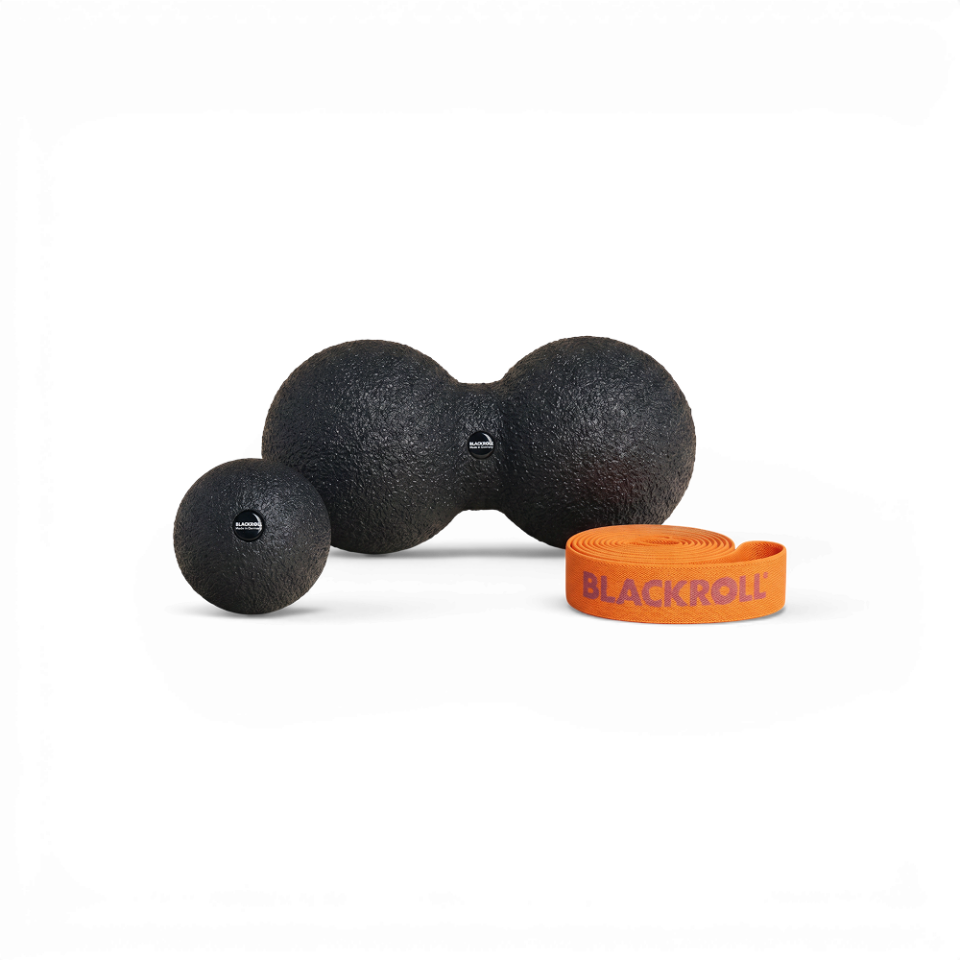
Relaxing the Neck Muscles
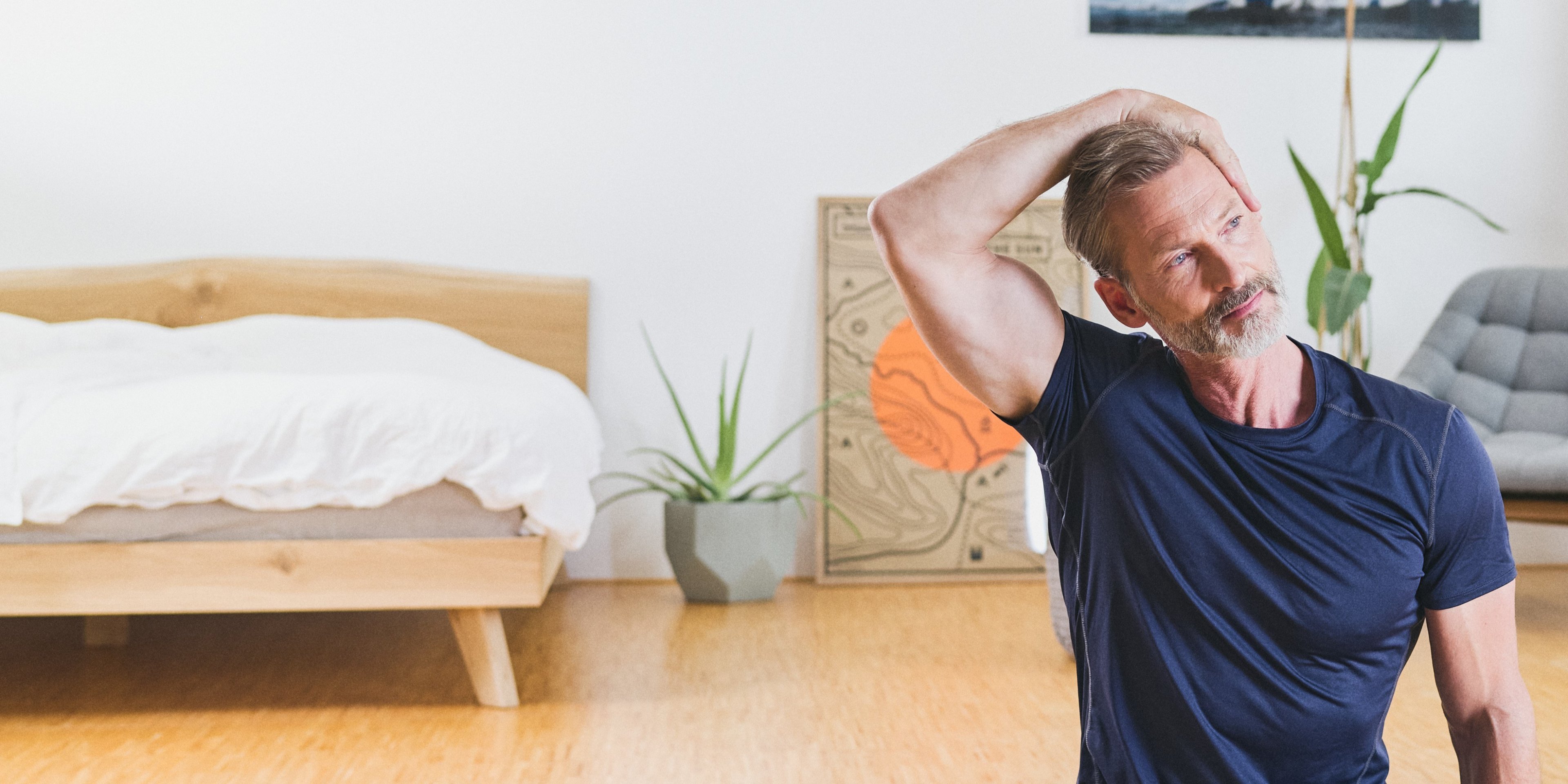
Exercises for a Relaxed Neck
Focus areas
- Nacken
Time
- 5 minutes
- 3 exercises
Exercises for the Neck Muscles – Relaxing the Neck
Due to today’s lifestyle, which often involves prolonged sitting at a desk and stressful situations, neck tension and functional shortening of the neck muscles aren’t all that uncommon. With targeted exercises for the neck muscles, you can relax yourself and your neck.
3 Exercises for Neck Tension:
In this video, Master Trainer Stefan shows you how to relieve tension in your neck in just a few minutes.
Exercises for Neck Pain:
If you have a little more time, you could try this slightly longer exercise routine to relieve your neck tension.
Releasing Trigger Points in the Neck:
Deep-seated tension can be best addressed with targeted trigger point massage. In this video, our master trainer Stefan explains how this deep-tissue massage works.
Exercisesfor “text neck” or “vulture neck”:
If a forward-head posture—commonly known as “vulture neck” or “text neck”—is causing your neck tension, you might want to try this routine.
Fascia Yoga for Neck Tension:
Fascia yoga is also ideal for relieving tension in your neck. A nice side effect is that it also helps reduce your stress levels.
Stretching Your Neck Muscles
In this YouTube video, our Master Trainer Stefan shows you the most effective way to stretch your neck muscles. Have fun following along.
Symptoms of Tight Neck Muscles
Tight neck muscles can cause unpleasant symptoms that may affect your daily well-being. The neck consists of various muscles that stabilize the head and support movement. When these muscles are tense, it can lead to limited mobility and various discomforts.
A common symptom of functionally shortened neck muscles is a stiff neck. If you’re affected by this, you may have difficulty turning your head or tilting it to the side. This can significantly impair your ability to change your field of vision or perform activities of daily living.
Other possible symptoms include a feeling of tension and pain in the neck and shoulder area. This pain can range from dull to sharp and may radiate into the head, potentially triggering headaches or migraines.
Tight neck muscles can also lead to poor posture. A forward-tilted head or a rounded back may develop, which can lead to further muscle imbalances and pain over time.
In addition to the symptoms already mentioned, shortened neck muscles can also lead to other problems that may impair your quality of life:
- Limited mobility: Tight neck muscles can make turning your head or tilting it to the side painful or difficult. This can limit you in activities such as checking your blind spot while driving and looking over your shoulder when crossing the street.
- Limited athletic performance: Athletic activities that require full range of motion in the neck may be affected. This is particularly true for sports such as swimming, tennis, golf, or yoga, where full neck movement is crucial.
- Cognitive impairment: Pain and discomfort caused by shortened neck muscles could negatively affect your concentration and mental clarity. Constant awareness of the pain distracts you and thus also affects your concentration.
- Sleep problems: Tense neck muscles can make lying down and resting uncomfortable. This can lead to sleep problems such as difficulty falling asleep, waking up during the night, or restless sleep.
- Stress and anxiety: Chronic neck pain can lead to psychological stress and anxiety. Constant tension can increase overall stress levels and negatively affect mental health.
Relaxing the Neck Muscles & Loosening the Lateral Neck Muscles
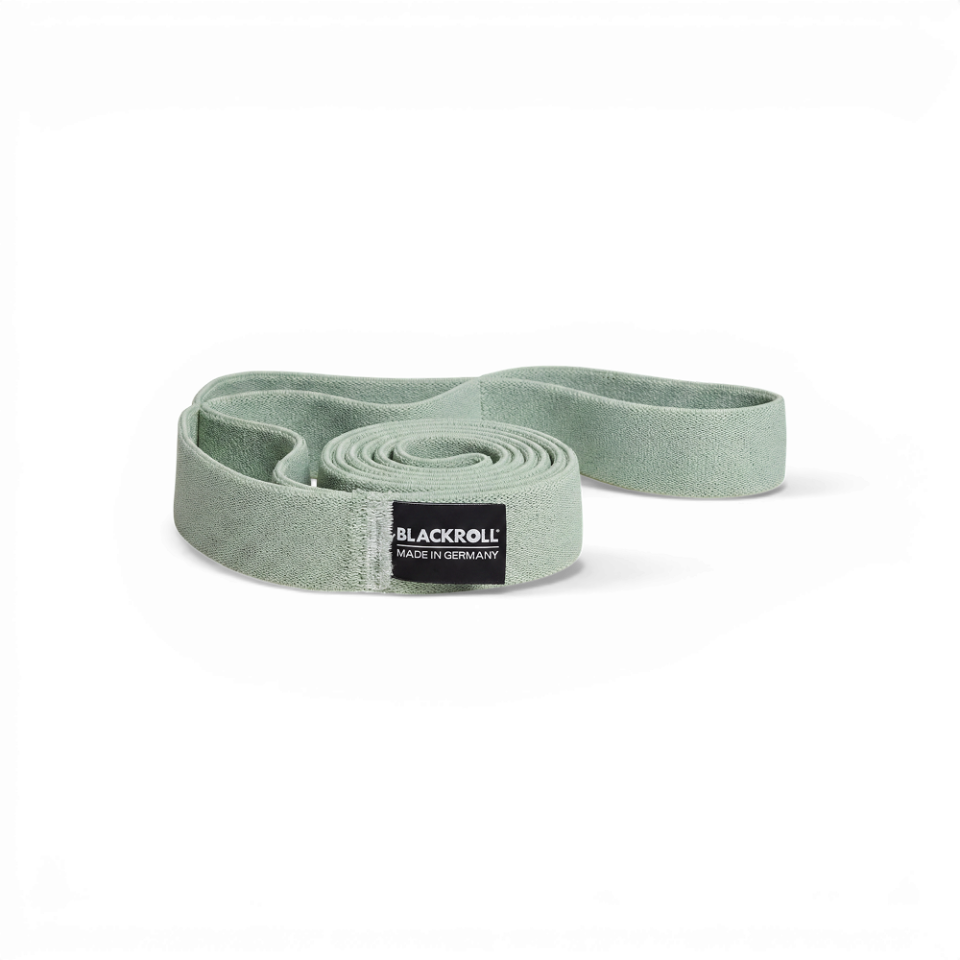
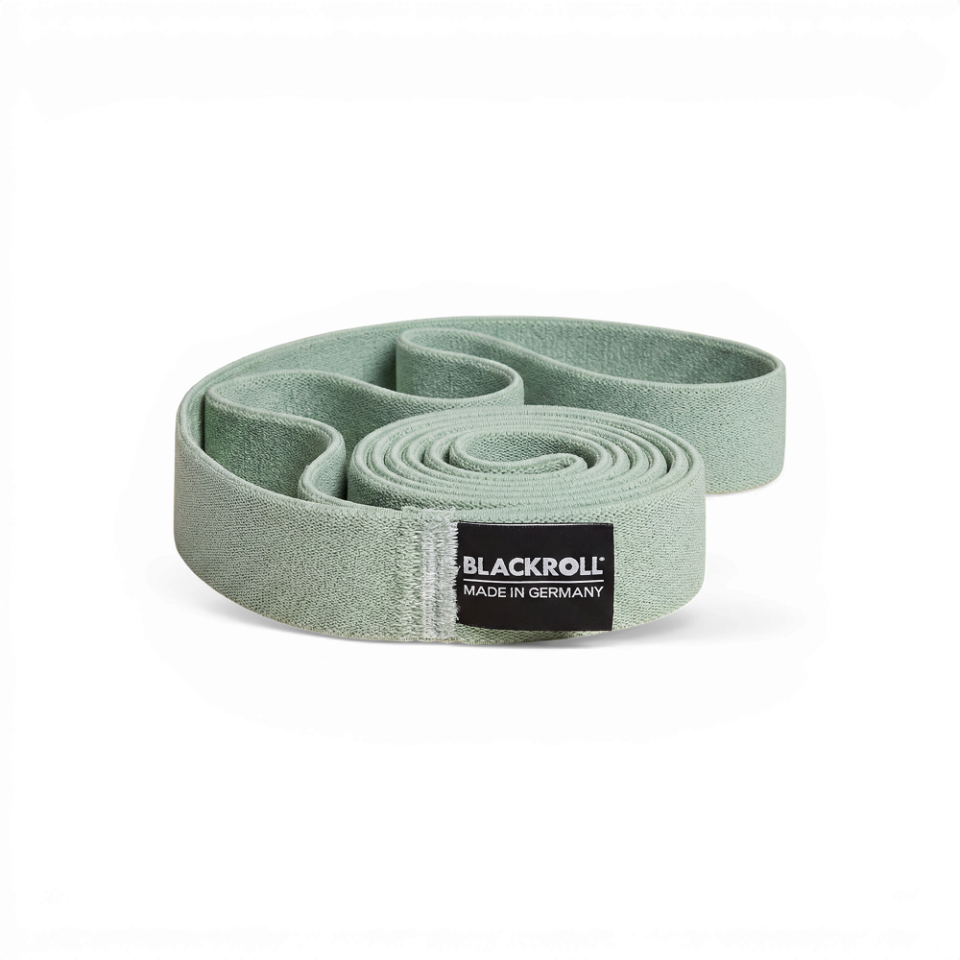
To relax the neck muscles, it can be helpful to loosen the lateral neck muscles as well. We’ve put together three effective exercises using the STRETCH BAND for this purpose.
Neck Lengthening Exercise
Place the STRETCH BAND around your neck. Lower your chin toward your chest. Try to push the band upward. Do not pull yourself too far into the stretch with the band. It serves as a tactile stimulus. Your neck muscles should remain engaged at all times.
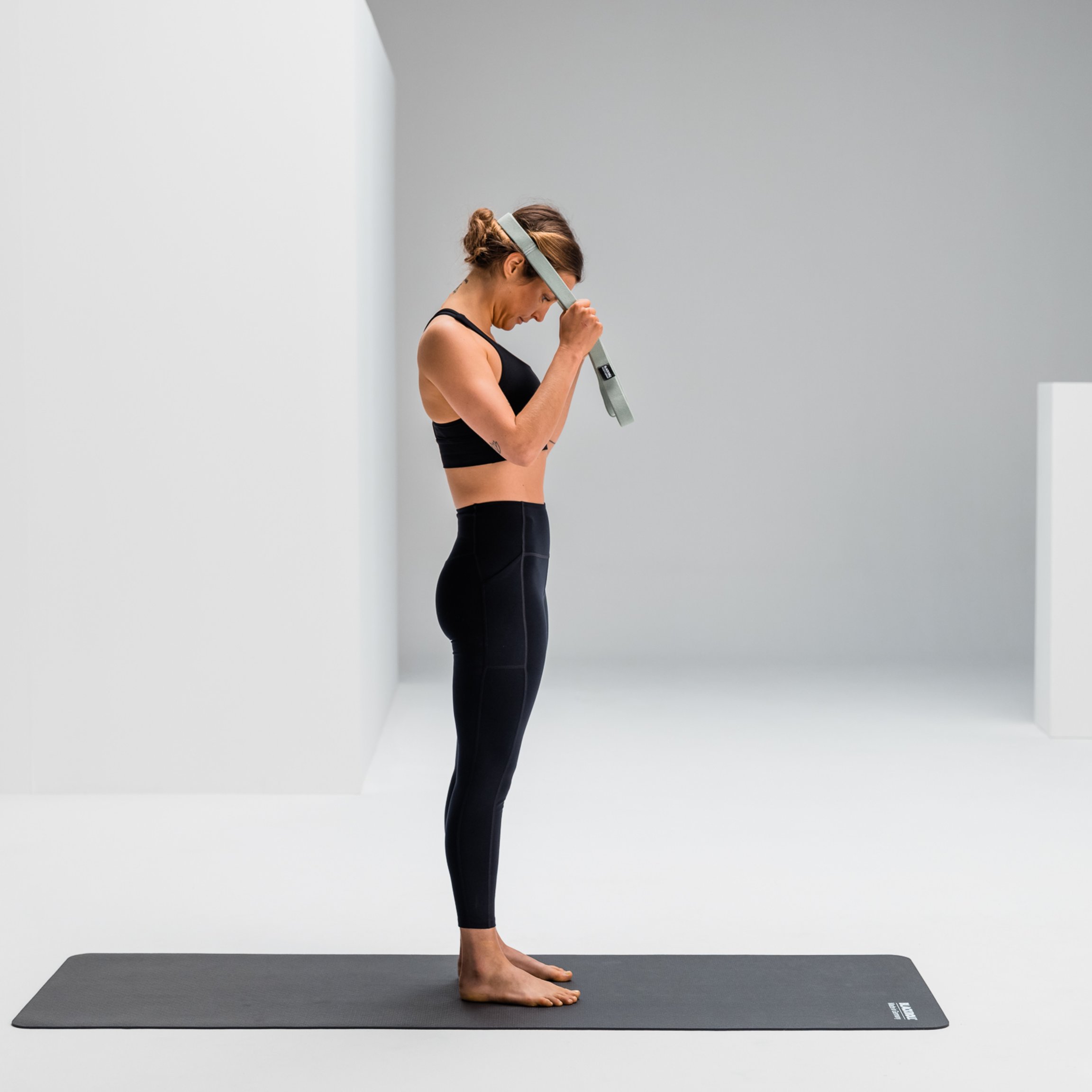
Side Neck Stretch
Place the STRETCH BAND on the side of your head so that it runs across your forehead. Tilt your head to the side and try to push the band upward. Do not use the band to pull yourself too far into the stretch. It serves as a tactile stimulus. Your neck muscles should remain engaged at all times.
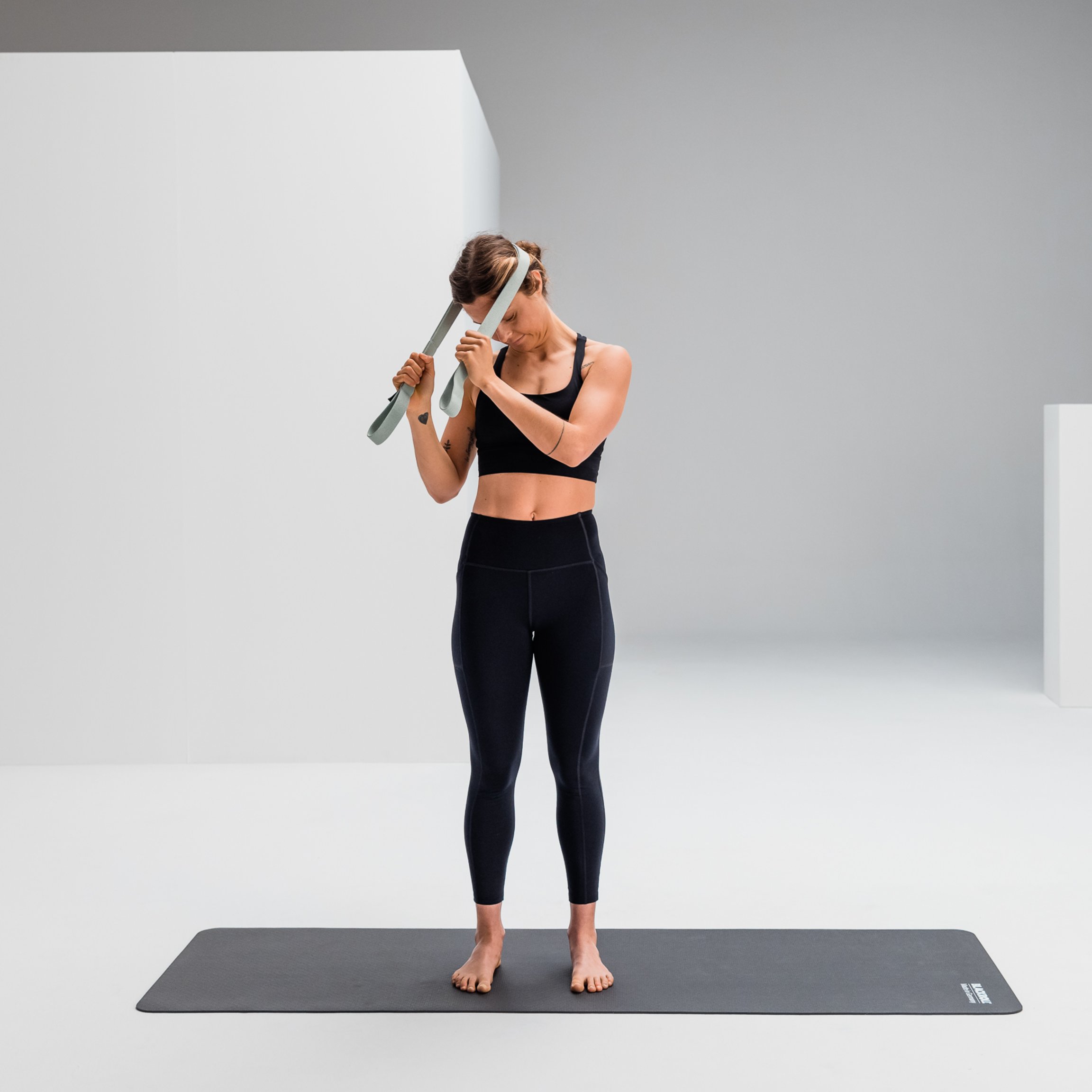
Rotation
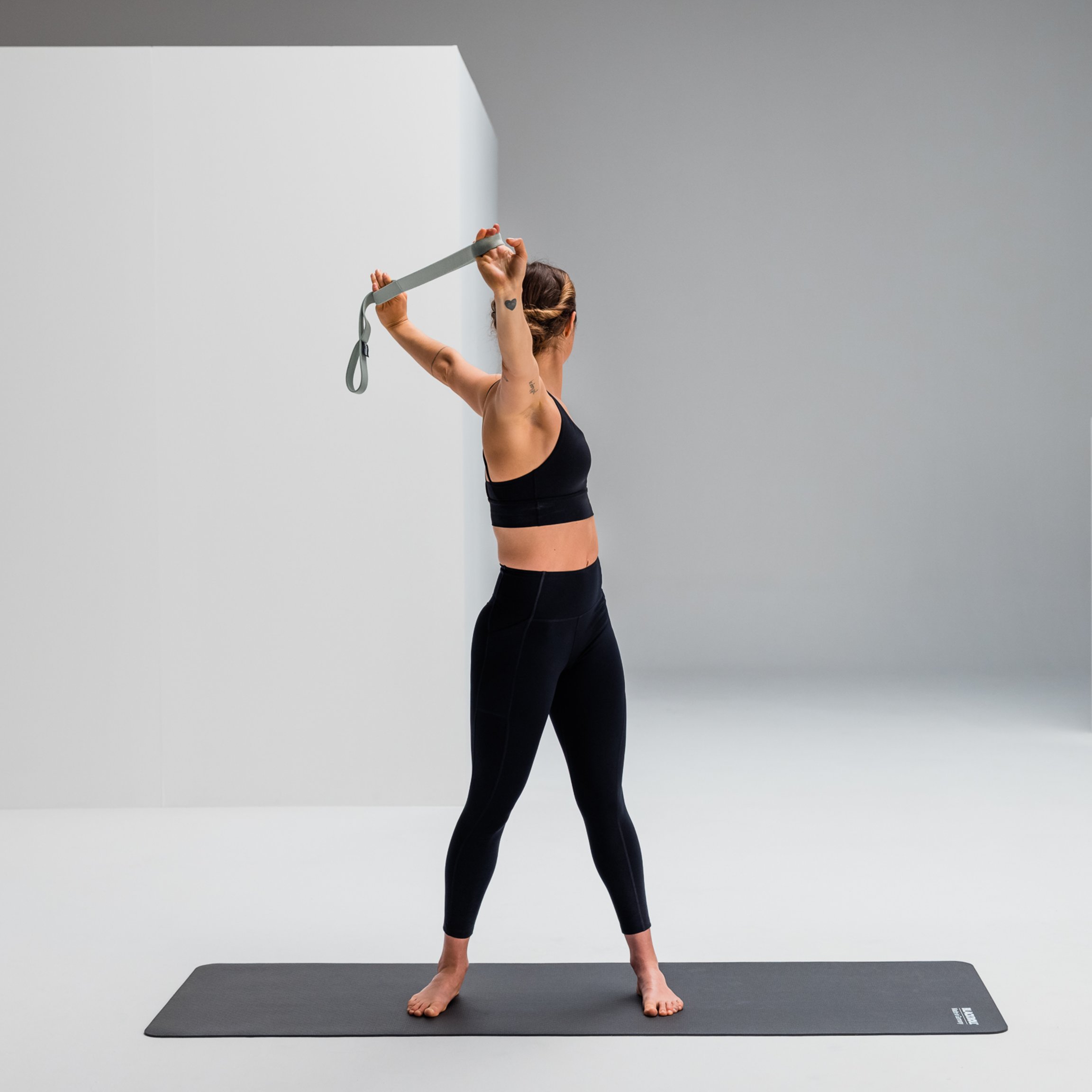
Stand with your feet shoulder-width apart. Grasp the STRETCH BAND with your fingertips. Bring it up to the back of your head. Rotate your upper body to one side. Your head should follow the movement. Hold the position and repeat on the other side.
Are your neck muscles tense? Here are some more tips for relaxing your neck muscles.
Are your neck muscles tense? This can be extremely uncomfortable and negatively affect your well-being. Here are a few more tips to help you relax your neck muscles:
- Mindful Posture: Pay attention to your posture, especially when sitting and standing. Avoid tilting your head too far forward. Keep your spine straight to prevent unnecessary strain on your neck muscles.
- Regular breaks: When doing sedentary work, it’s important to take regular breaks. Stand up every now and then, stretch, and gently circle your head and shoulders to loosen up your muscles.
- Heat therapy: A warm compress or a warm bath can help improve blood circulation and relax your muscles. The heat loosens the muscles and can relieve pain.
- Massage: Gentle massages of the neck muscles can increase blood flow and relieve tension. Be careful, however, not to apply too much pressure so as not to cause further irritation. A massage gun is ideal for this.
- Relaxation Techniques: Relaxation techniques such as meditation, progressive muscle relaxation, or yoga can not only relax the neck muscles but also reduce stress, which often contributes to tension.
- Ergonomics: Make sure your workspace is ergonomically designed. The screen should be at eye level.
- Good sleeping position: Make sure your sleeping position doesn’t strain your neck. Ideally, use an ergonomic pillow to support your neck.
Keep in mind that combining several of our tips may be most effective. Regularly caring for and relaxing your neck muscles can not only relieve acute discomfort but also help prevent long-term tension.
Tips for a Healthy Neck
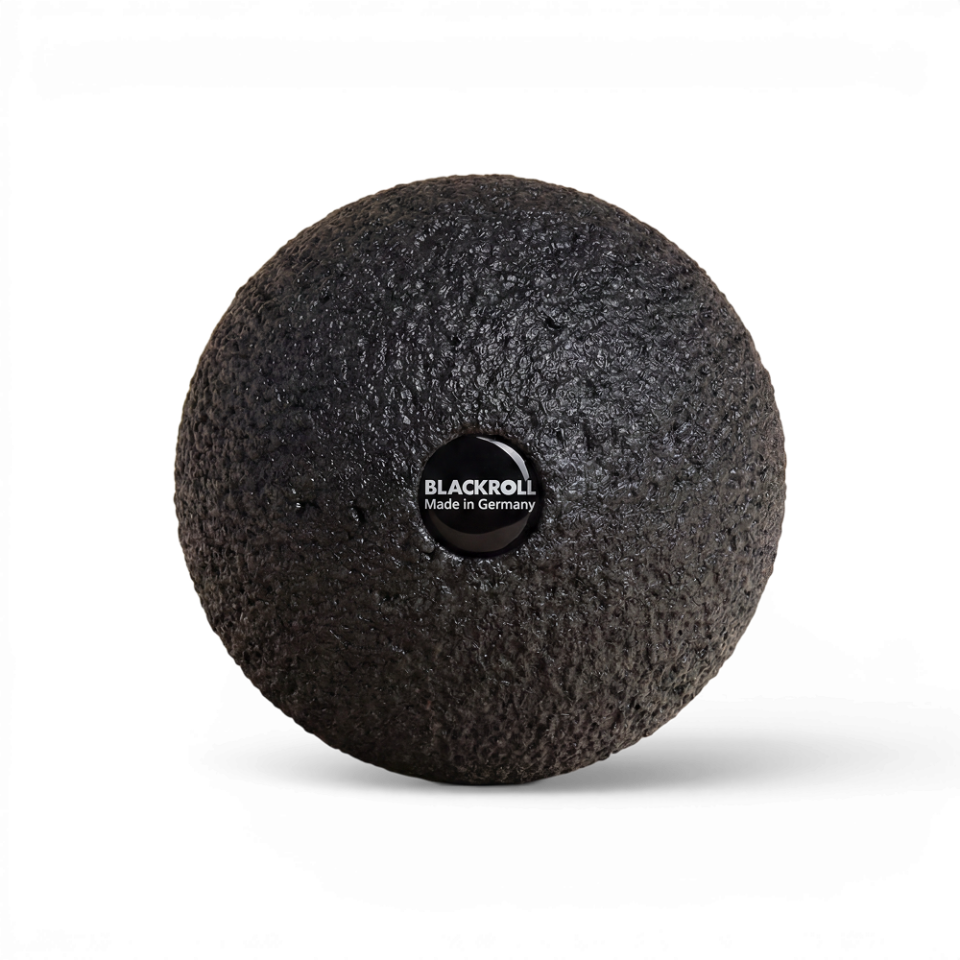
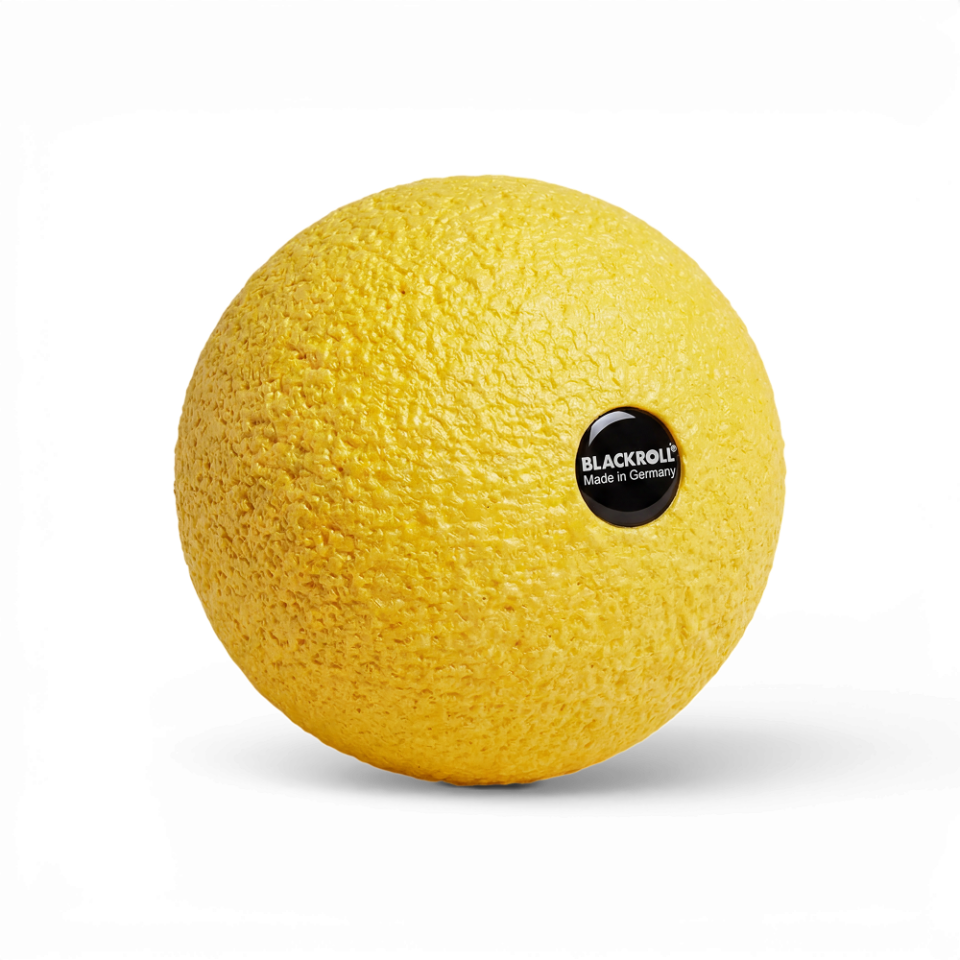
Ball 08
Available in multiple variants