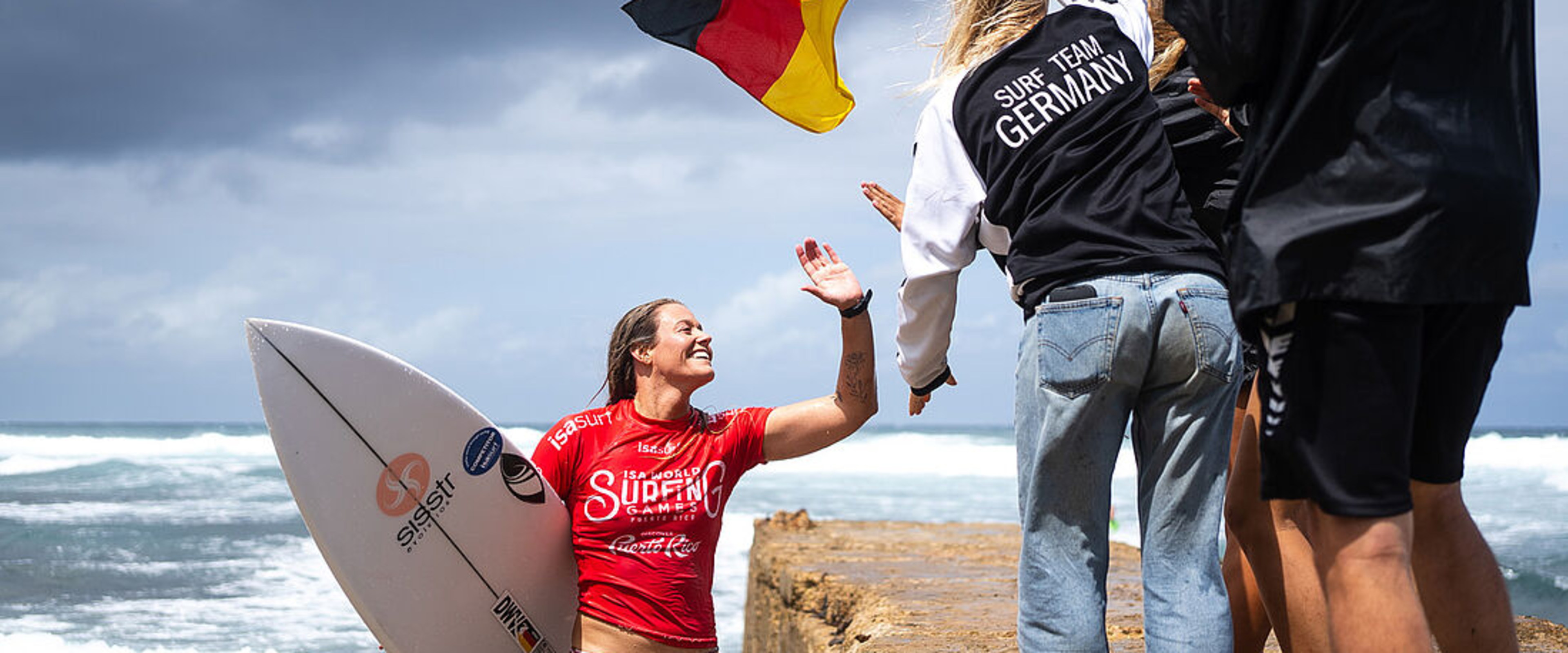
A Surfer's Dream Come True - Camila Kemp
Camilla Kemp will compete for Germany at the Olympic Games in Tahiti
This summer, the Olympic Games will take place in Paris. All the events? No. The surfers will gather in French Polynesia—more specifically, in Tahiti. There, they’ll find one of the world’s most famous and, at the same time, most dangerous waves: Teahupo‘o. Camilla Kemp has qualified for the Games and will have the chance to ride this unique wave for Germany.
We spoke with Camilla shortly before she left for training camp.
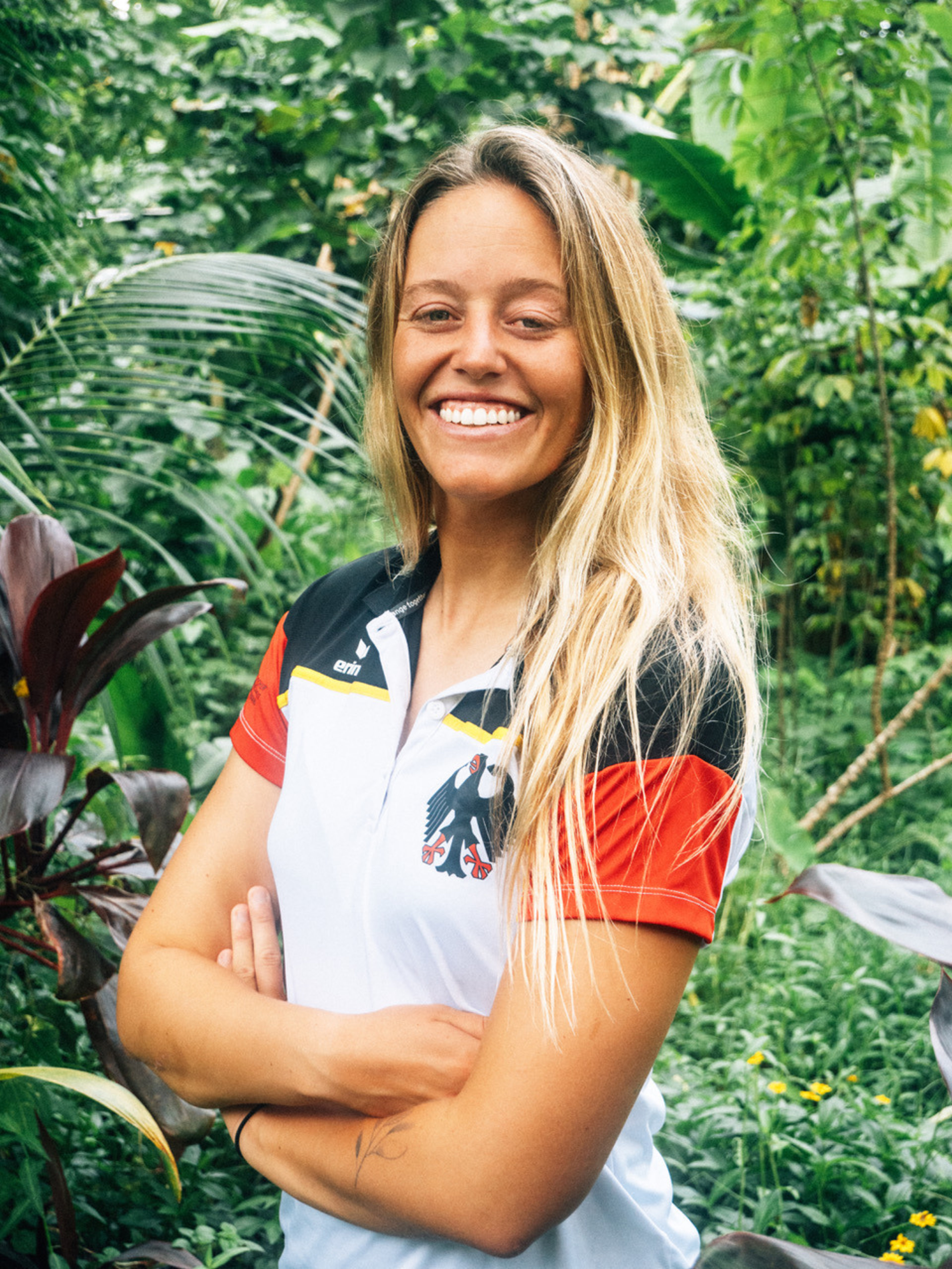
Camilla is sitting in front of her laptop. Her blonde hair shines; she looks fit, fresh, and lively.
BLR: Hi Camilla, it’s great that we were able to squeeze in an interview before the Summer Olympics . How are you doing?
Camilla: Thanks, I’m doing well. But of course, there’s a lot going on right now. It’s an exciting time, and also a little stressful. We’re in the thick of training for the Games.
BLR: Congratulations, of course, on qualifying! Teahupo‘o is a very special wave… Extremely powerful, hollow, up to 3.5 meters high, and just a few centimeters above a coral reef. How are you preparing now?
Camilla: Since the wave is so different from what we’re used to in our usual surf competitions, the training is very specific and tailored specifically to Teahupo‘o.We do a lot of strength training, especially for the upper body, to help with paddling. Explosive training with quick movements is super important so we can get into the wave as fast as possible during the competition. But our legs also need strength to withstand the energy. On top of that, we do cardio training and simulate situations where we’re pushed underwater without being able to catch our breath. Because that can happen to you at any moment on this wave.
BLR: That’s crazy! You were already in Tahiti a few weeks ago , and there’s a YouTube video by your teammate Tim Elter where you can see that you had a pretty wild wipeout there too!?
Camilla ( laughs): Yeah, Tim just edited that in to add a little drama. I think I really went through it all there: I was washed over the coral reef, hit the bottom headfirst, and spent some time underwater. But I feel like every fall makes me stronger and brings me closer to the next training day and my goal—the Olympics.
BLR: Aren’t you afraid?
Camilla: Yes, I do, butI think that in a lot of sports, you have to walk the line between fear and respect. It’s just important that this fear motivates me to show more commitment and take more risks. The competitive situation—especially at the Olympics—will definitely push me to my limits.
I’m also working with a mental coach here to prepare myself perfectly. Surfing is very mental— a lot of people don’t even realizethat . Breathing exercises help me get pumped up before a competition, or if I ever find myself overthinking things, they help me calm down again.
Here you’ll find breathing exercises from our Blackroll coach Stefan
Camilla Kemp grew up in Portugal and started surfing at age twelve, following in her brother’s footsteps. Her talent quickly became apparent; she outsurfed the other girls in competitions. But at that time, the sport was still a long way from being part of the Olympic Games. Surfing has only been an Olympic sport since Tokyo 2021. After switching federations in 2020—from Portugal to Germany—her Olympic dream began to take shape. Then in April, as Camilla likes to say, the pieces of the puzzle fell into place. She caught the perfect wave, was able to show what she could do, and qualified for Tahiti.
BLR: Competing in the Olympic Games is a dream for every athlete. People always say, “Just being there is everything.” But it’s probably not quite that simple, is it?
Camilla: Ithink I need to go into it with a bit of caution. The best female surfers in the world will be competing in Tahiti. There are only 24 women—and I’m already one of them. But I know that anything can happen in this sport. That’s why I want to keep doing exactly what I did during the Olympic qualifiers. It’s all about my performance, and I’ll definitely give it my all and aim for a medal. And if it’s gold, then that’s all the better. But for me, sports are always about my performance. Medals and trophies are just a bonus.
BLR: We’re definitely looking forward to watching your performance on TV, and of course we’re keeping our fingers crossed that everything falls into place and you can win a medal. You’ve already said in several interviews that it’s not just about you, though!?
Camilla: Exactly. I believe that Germany being represented in surfing at the Olympic Games is incredibly important for thesport of surfing in Germany. And I hope I can be an inspiration for girls in Germany who love surfing. Everyone has a fair chance to compete, not just if you’re from Australia, Hawaii, or Brazil. I believe that Tim Elter and I, as German surfers who’ve qualified for the Olympics, can draw a little more attention to our sport. And I think that’s cool.
BLR: You grew up in Portugal, and Tim grew up on Fuerteventura. What advice would you give to young female surfers in Germany? How should they get started?
Camilla: Well, at the beginning, you need time and perseverance to get the hang of it. It can be really difficult, so you just can’t give up. But over time, you’ll get that feel, the right timing, and then—from one moment to the next—everything becomes super natural. Surf pools, like the one that’s now in Munich, can of course be a big help.
To girls who arejust starting to getinto the world of competition, I’d say that the results aren’t that important at first. The most important thing is to have the right technique and to work on your surfing. The results are just a bonus.
BLR: So what does a typical “workday” look like for a pro surfer? What can up-and-coming athletes look forward to?
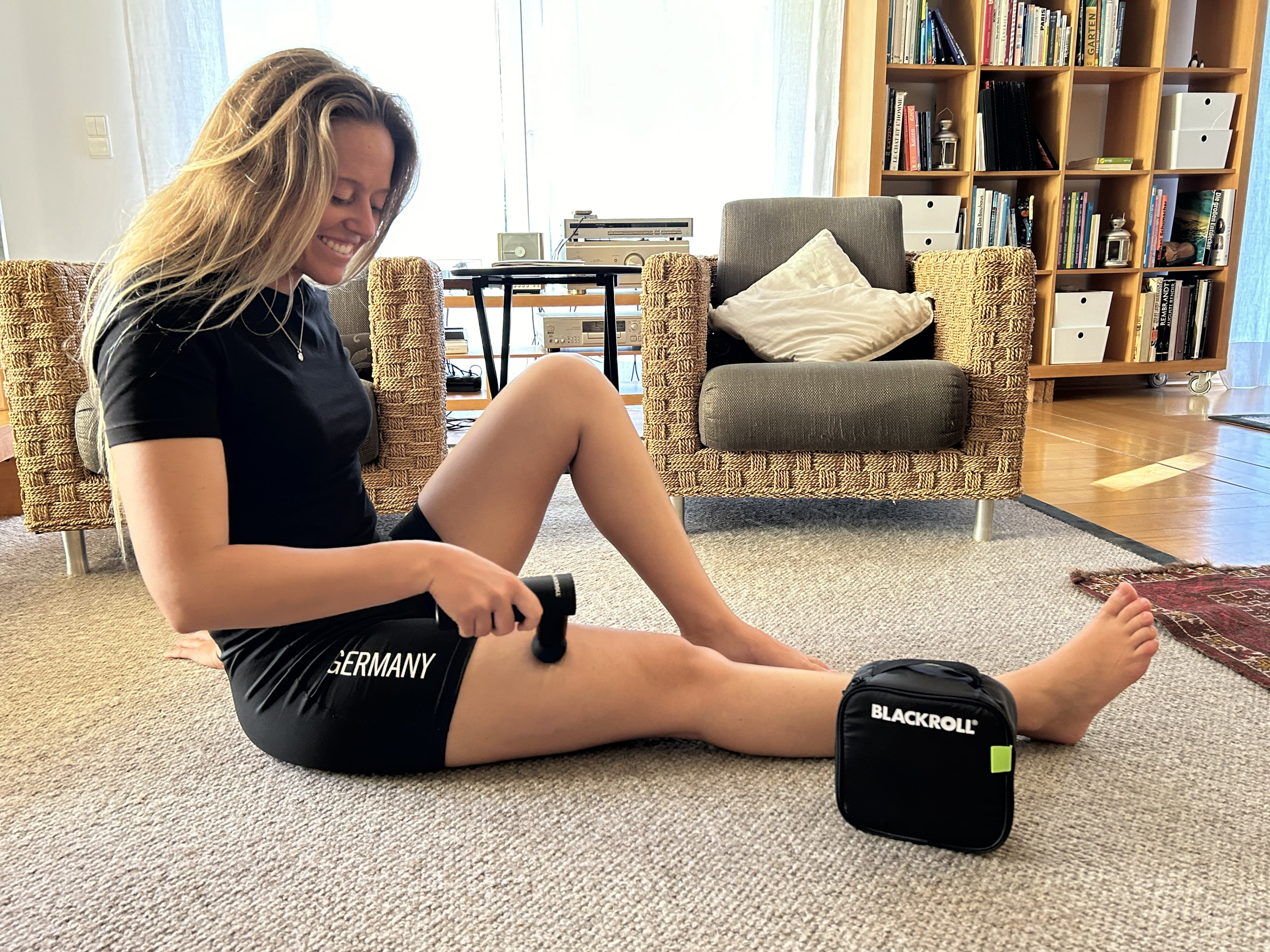
Camilla: After getting up, I do some warm-up exercises—like yoga or mobility training. I also use various BLACKROLL resistance bands for this. After that, I usually go straight to surfing. For about two to two and a half hours. After a lunch break, I head back into the water for a short session, during which I often simulate a competition. And then it’s back to the gym for fascia training with the Blackroll, fascia balls, and trigger tools. I use these, for example, to relieve tension.
BLR: That adds up to quite a few training hours a day! How important is recovery to you?
Camilla: In addition to my myofascial training, I make sure to eat a healthy diet and get enough sleep. After all, we surfers sometimes head out into the water very early in the morning. To make sure I can sleep well in Tahiti, I’ll definitely be bringing my Recovery Pillow with me.
BLR: From the bed back into the water: What’s the best thing about surfing for you?
Camilla: Actually , it’s the feeling that you never know exactly what the ocean is going to give you—that’s just cool. I never get tired of surfing; there’s always something new, and I have to keep challenging myself. It’s really addictive.
And then when that perfect moment comes—you’re standing in a tube, surfing out of it, pumped full of endorphins—it might sound like a cliché, but it really is the best feeling you can have.
BLR: We’ll give it a try ;) Thanks so much for the interview!


