Just Let Go—There’s Incredible Power in That
How recovery can impact performance—top sports industry executive Bernd Wahler shares personal insights from his own experiences.
With a smile, he says that he would have liked to become a professional soccer player, but a certain Hansi Müller was simply better at his position. Nevertheless, it’s hard to argue that Bernd Wahler doesn’t understand how to achieve goals, given that he spent many years in top management positions at Adidas and Nike in Germany and the U.S., founded his own sports marketing agency, and—as if that weren’t enough—also served as president of VfB Stuttgart. So there’s hardly a better person to talk to than this BLACKROLL® board member when it comes to discussing the impact of activation and recovery on personal performance.
Activation and recovery in everyday life have become an important topic—especially for people with stressful work lives. How do you deal with this?
Bernd Wahler: Activation and recovery are very often associated only with competitive sports. But I believe this is something that everyone can actually adopt and learn from competitive sports. Because when I activate myself—I do this every morning—I simply feel much better.
When I think of many managers who, in principle, also have to perform at a high level and whose entire day is scheduled just like a competitive athlete’s, then activation and recovery are absolutely essential.
“For example, about 22 years ago, I started taking a power nap every day at noon. I’d roll out my mat and just lie down on the floor in my office—consistently for a quarter of an hour, pretty much every day at noon.”
And it was remarkable how much my ability to concentrate and my performance improved, especially in the period after lunch between 1:00 and 3:00 p.m. With a recovery period like that, you’re much more active and focused in meetings—and, as a bonus, in a much better mood.
I can only recommend this to everyone, no matter what area they need to perform in—whether it’s in sports, at work, or even in their personal life. And that’s just one example. There are so many other things. Sleep is, of course, absolutely essential for recovery. I believe that the sooner you get used to it and establish a routine for falling asleep easily, the more productive and healthier your life will be.
Has the topic of targeted activation and recovery been misjudged for too long?
Bernd Wahler: I wouldn’t saymisjudged , but rather underestimated, since it simply wasn’t discussed. I mean, I studied sports more than 40 years ago, and even back then, activation and recovery were already topics of discussion—the theoretical background was well known. Nevertheless, we spent much more time thinking about how to improve performance. Regeneration was just taken for granted—everyone does it anyway. You go to sleep, wake up at some point, and that’s how you recover. But the fact that you can get so much more out of it—I think that was underestimated for a long time.

Through your many management roles in the sports sector, you have close contact with top athletes from all disciplines and a good overview of the entire industry. In your view, are there athletes who could have achieved more through conscious activation and recovery?
Bernd Wahler: I can only speculate, since I don’t have any studies on this to draw from.
“But I do believe that players like Boris Becker or Andre Agassi had to retire from tennis relatively early because, at some point, their bodies could no longer recover well enough to allow them to maintain top performance for much longer.”
And when you look at today’s tennis scene—where Roger Federer and, essentially, all the top players are over 30—that was unthinkable in the past. And I do believe that addressing the issue of recovery plays a major role in this.
It’s clear that, for example, professional soccer players are already performing at the highest level by age 17, but they’re also able to play for much longer. Manuel Neuer, for instance, is far from done, simply because he trains properly and because aspects like recovery are better integrated into his training regimen. This allows athletes to significantly extend their careers, and I think it also helps them live healthier lives after their careers end.
I mean, many athletes—especially tennis and handball players, in other words, in sports that place enormous physical demands on the body—had to end their active careers much earlier not too long ago, and afterward they were simply spent.
So a lot has changed in this area in recent years?
Bernd Wahler: Yes , things are changing right now. Companies like BLACKROLL® are also making an important contribution, because BLACKROLL® doesn’t just develop the products—it essentially develops the science behind them, the medical aspects, the physical therapy, and so on...
And, of course, the many trainers who, in their daily work, experience firsthand and know what tools to use and how to use them to recover much more effectively.
Do you have any idea how many BLACKROLL® products you have at home and which ones you use regularly?
Bernd Wahler: I think it would be easier to answer the question of which BLACKROLL® products I don’t have at home? I’d say I have almost all of them that are available. Maybe not in every version, but I do have a lot of them. And yes, unfortunately, I can use most of them (laughs).
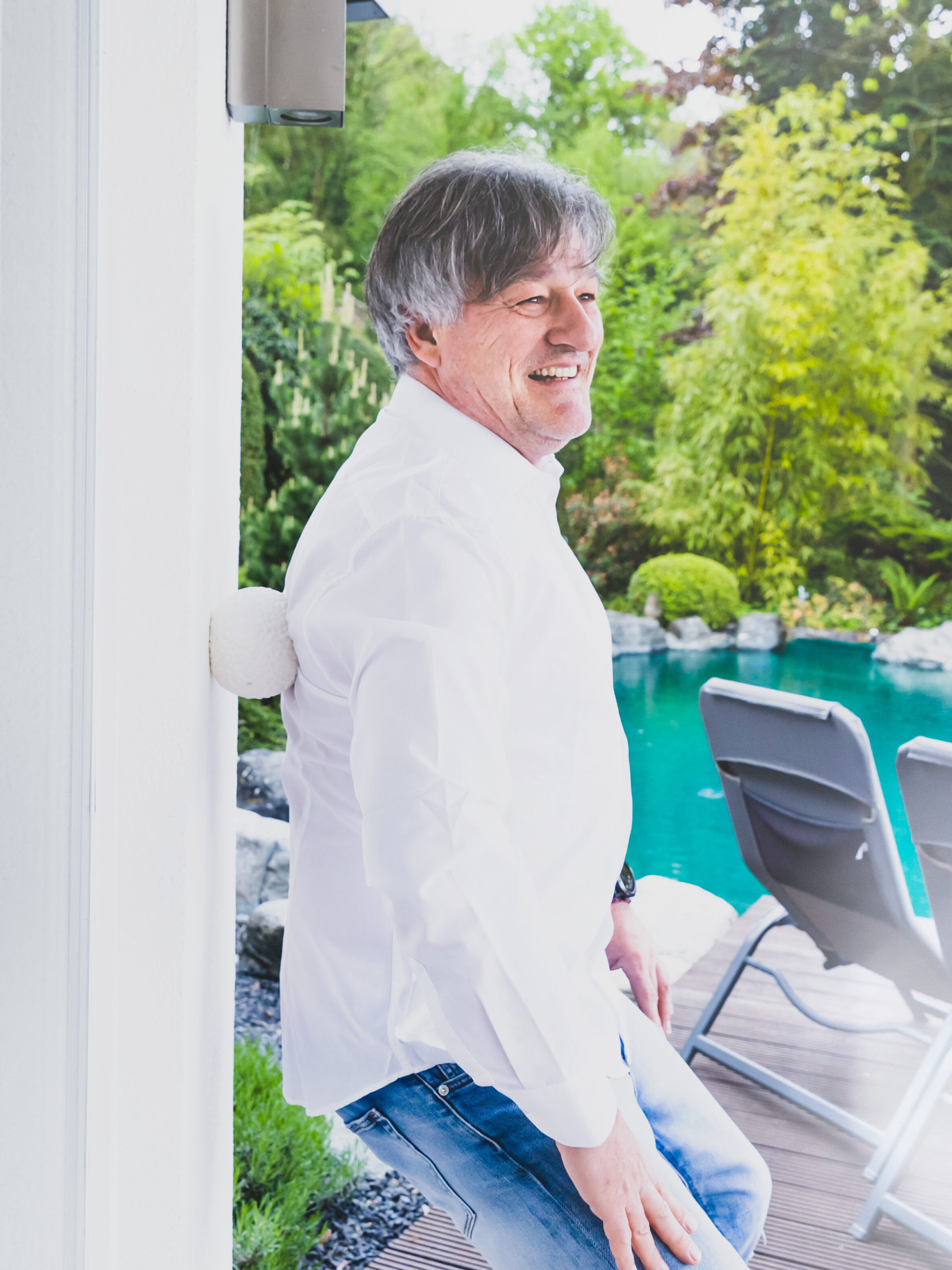
Yes, I even have the NEEDLEROLLER. It’s a roller with needles. It’s great for stimulating the skin. The BOOSTER and the rollers in all their different variations. The straps, which I actually use every day. So yes, I’d say I don’t just own most of the products—I actually use them.
Then you surely have a favorite BLACKROLL® product, too?
Bernd Wahler: Yes , definitely the RECOVERY PILLOW. A key factor for a good, restful night’s sleep is the right pillow, and you really do sleep sensationally on this ergonomic neck support pillow. Ever since I’ve had it, I’ve taken it with me on every trip. It works really well for that. I’ve recommended it to a lot of people and have received nothing but positive feedback. So it seems I’m not the only one who feels this pillow has a very positive effect on sleep quality.
What role will recovery play in the future?
Bernd Wahler: I think it will become even more important. That doesn’t mean other topics will lose importance, though. But I do believe that the topic of recovery as a whole will gain significantly in importance because it simply boosts performance.
In sports and at work, people are primarily interested in improving their performance. In everyday life, people want to feel better. Regenerating is usually a bit easier than pushing yourself to the absolute limit.
“Everyone benefits immediately from good recovery, so recovery will become more important in sports itself—including high-performance sports—as well as in daily life, at work, and wherever people are under pressure.”
At Adidas, for example, I’ve introduced walks for my direct reports over the past few years. Every Tuesday at 1:00 p.m. after lunch, I spend an hour in the woods with one employee at a time. This has been very well received.
And for me, it was incredibly great to have a conversation outside of my office. What I hadn’t considered at the time was the restorative effect.
The longer we did this, the more relaxing and restorative it became. When you simply go for an hour-long walk with someone you usually work with in a relatively businesslike and professional manner, and also ask: “Hey, how are you? How’s your wife? What are your kids up to?” Just getting out for an hour to do something different.
And now, some 10 years later, when I still talk to former colleagues and employees from time to time, it often comes up as a topic. Many have adopted the practice and do it now, too. And I believe that’s how it will be overall with the topic of regeneration—that you simply have to let go, and there’s incredible power in that.


