Three Things I Won’t Compromise On – Anna West on a Sleep Performance Coach’s Travel Essentials
Das erfährst du in dieser Story
- Welche drei Dinge Anna West auf Reisen niemals zu Hause lässt.
- Warum das eigene Kissen für viele Profis so wichtig geworden ist.
- Welche Hotel-Details Spitzenteams schon vor der Ankunft überprüfen.
- Wie ein ungewöhnlicher Hotelzimmer-Hack mit Sonnenbrille den Schlaf schützen kann.
Professional athletes spend up to 200 nights a year in hotels. Here are the three things Anna West never travels without—and why they’ll work for every fan heading to the 2026 World Cup, too.
Anna’s travel bag lies open on the hotel bed. She takes three things out and places them side by side on the blanket. Toothbrush. Pillow. Running shoes.
“I won’t compromise on these. Everything else—if I forget it, fine. But not these.”
She laughs. But she means it. Three items. That’s all it takes.
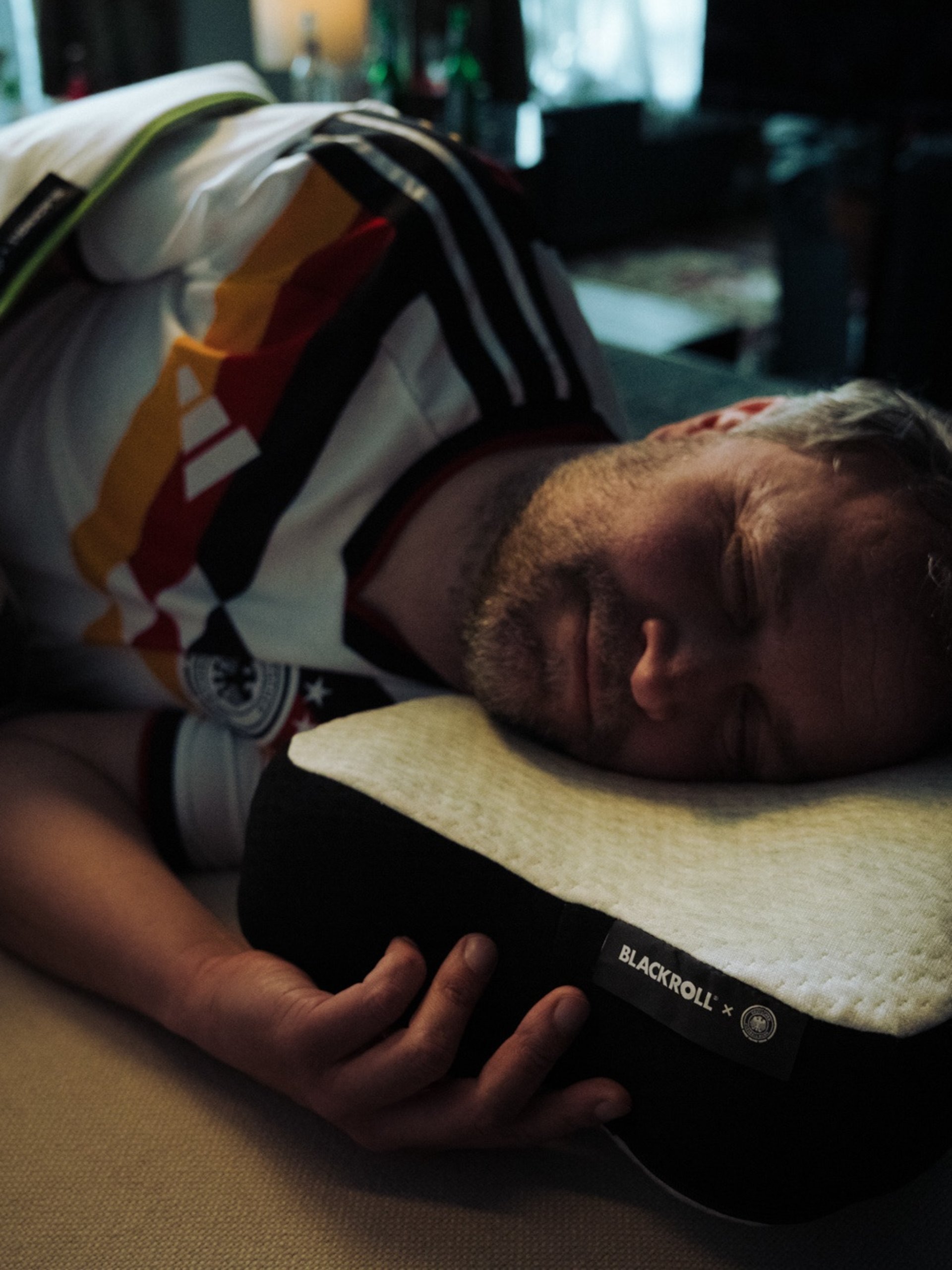
Hotel nights count differently
Anna West has been working with professional soccer players for years. She’s calculated something no one wants to believe: many of her players don’t sleep in their own beds for 200 nights a year. Training camps, away games, European competitions, the national team. Hotels become a second home.
“When you book a night at a hotel, you’re not just booking a night at a hotel. You’re booking a night’s sleep. You can stay at the most luxurious hotel—but if you’ve had three bad nights, your whole experience is ruined,” Anna explains.
This applies to professionals. It applies to business travelers. And it applies to fans flying to the U.S. for the 2026 World Cup.
The Pillow Becomes a Toothbrush
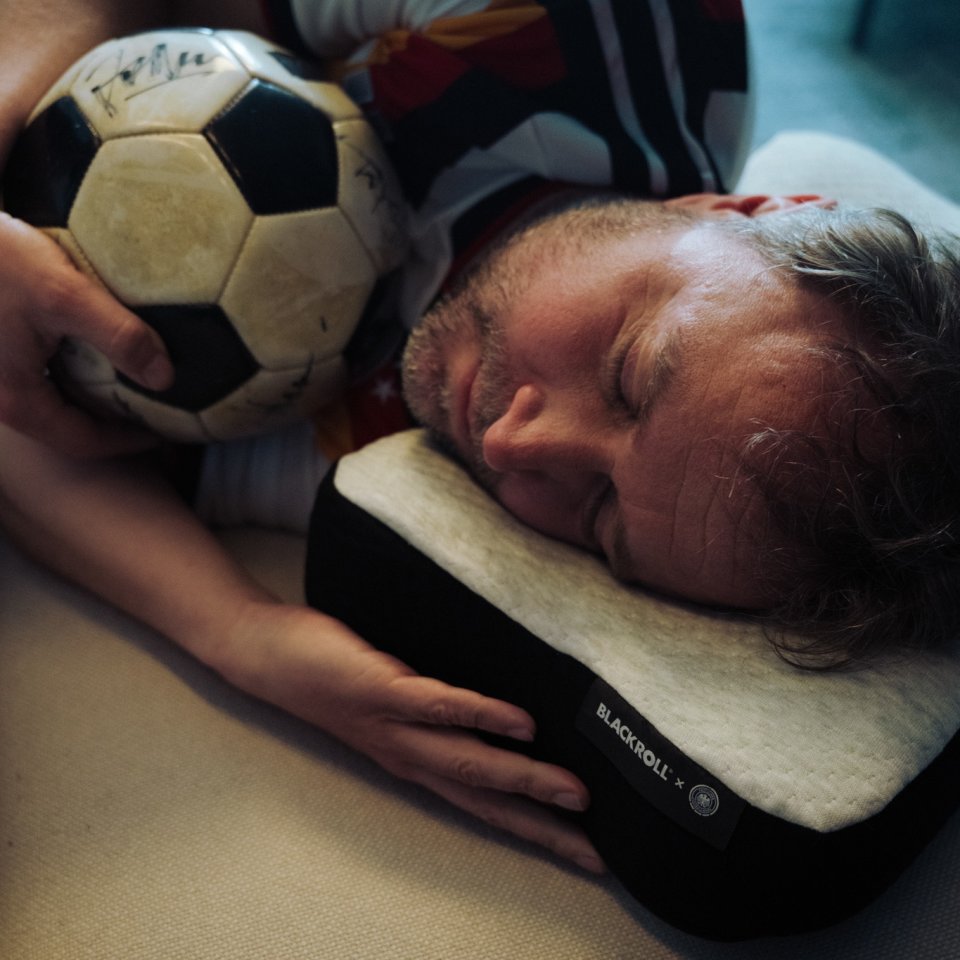
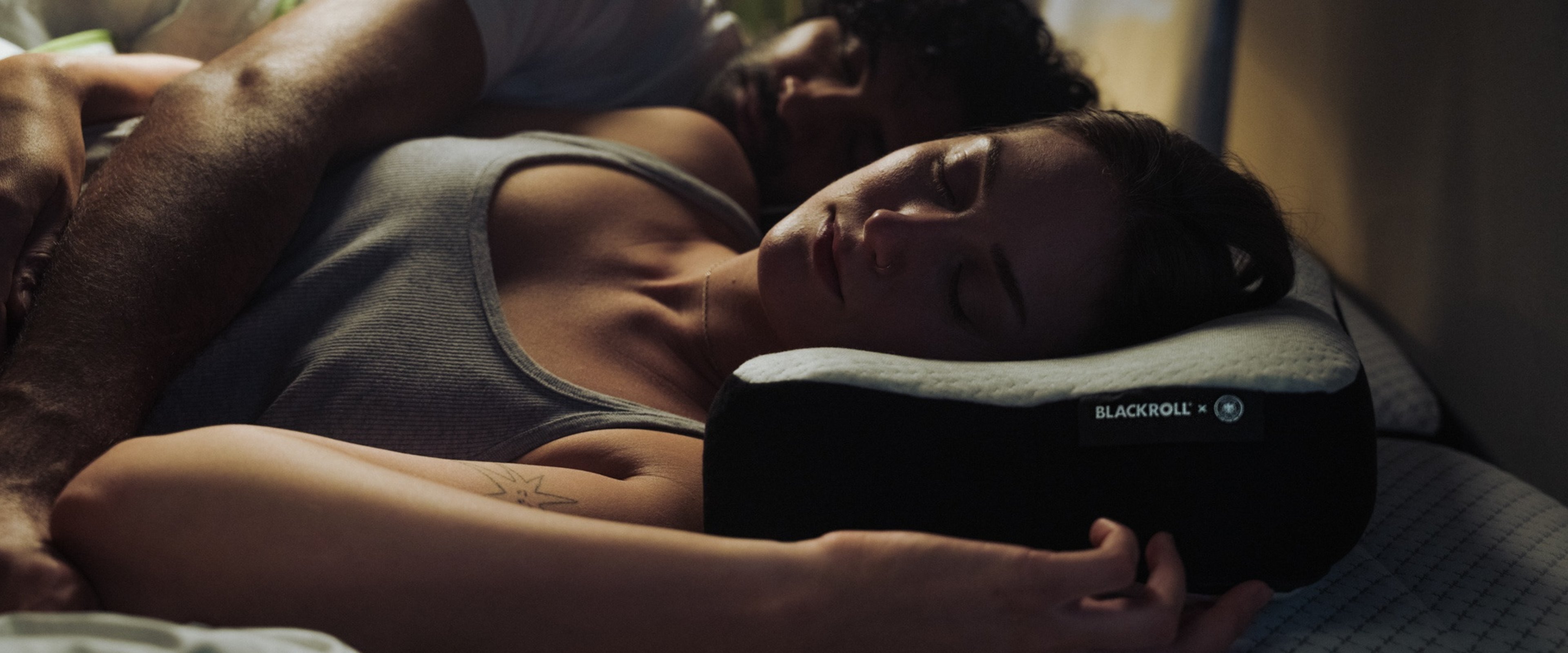
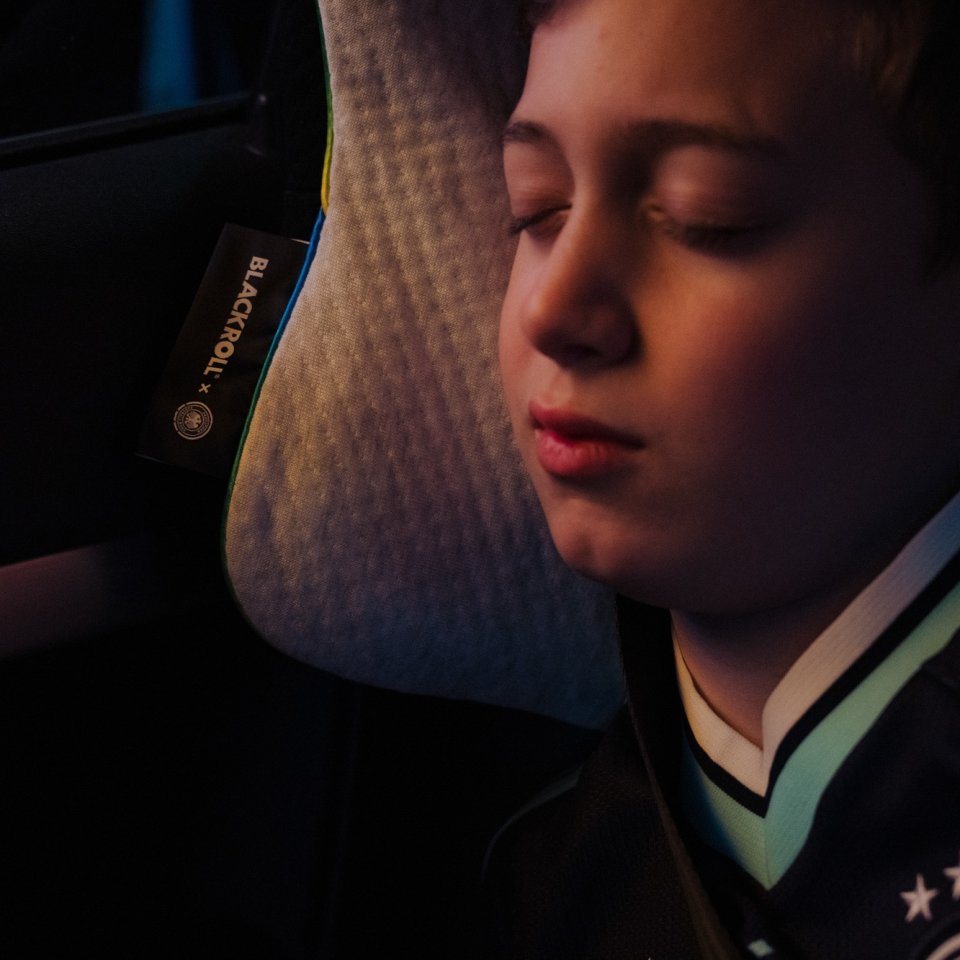
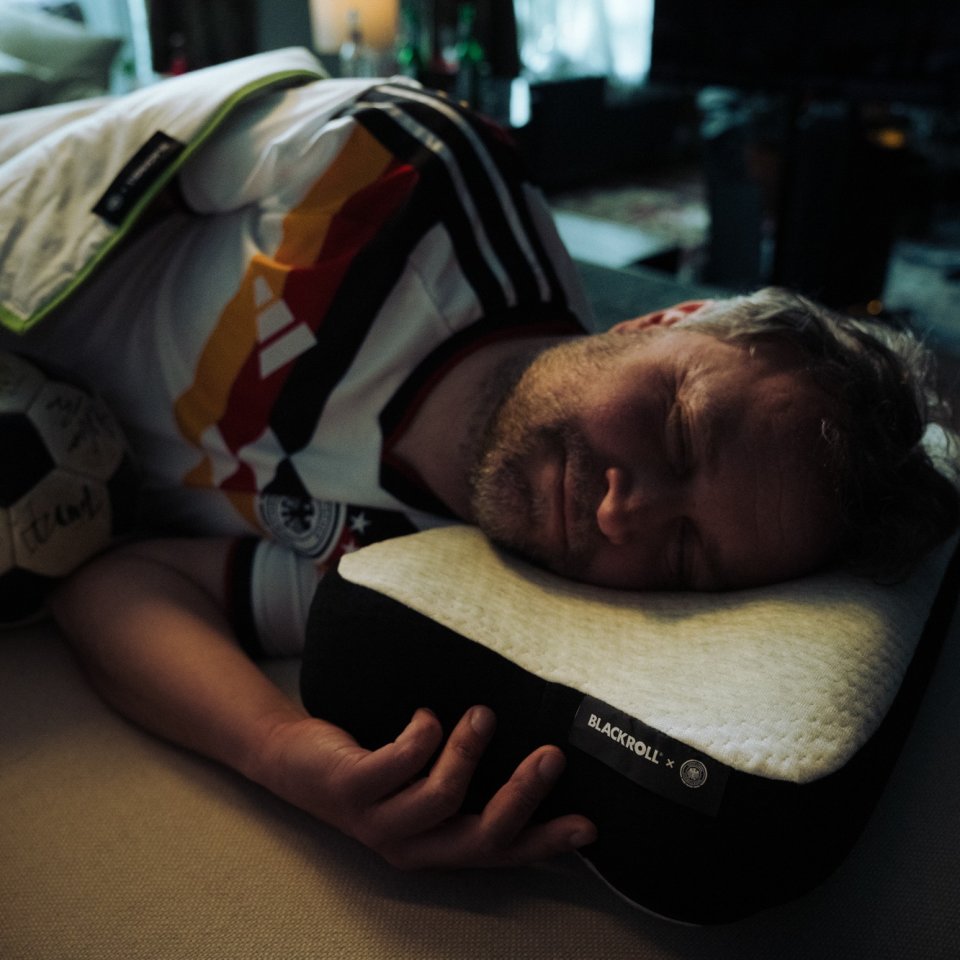
Anna picks up the pillow. It’s the BLACKROLL Recovery Pillow, the same one she has on her bed at home.
“If you ask someone if they’d go on vacation without a toothbrush—almost everyone says no. If they forget it, they go to the front desk or the pharmacy and buy a new one. Because it’s no fun without one. My pillow is exactly the same.”
What happens on the first night at a hotel? The brain activates an ancient, evolutionary program. One hemisphere stays more alert. Sleep researchers call this the “First Night Effect” and confirmed it in a 2016 study at Brown University. People who sleep in unfamiliar surroundings sleep more lightly, wake up more often, and don’t recover as deeply.
Your own pillow helps because it links scent, shape, and feel to the concept of “home.” It outsmarts the program. Not completely—but enough to make the difference between a 50% night and a 70% night.
But: no big deal if you forget it
Anna puts the pillow back in her bag and says something unexpected.
“If I forget it, that’s okay, too. We don’t want the players to be unable to sleep without their pillow. That would be like we’d systematically made them dependent on an item. Acceptance: I’ll manage anyway.”
Pillow = toothbrush, yes. But not a religious object. Anyone who’s forgotten it once and still managed to sleep has important proof: the system works even without the perfect companion.
Entdecke die DFB Sleep Produkte
What the pros check out at the hotel
Anyone who thinks pro teams just show up and go to their rooms has never looked behind the scenes. Anna talks about preparations that begin days before arrival.
“The savvy teams send a delegation to the hotel before the players arrive. They test every room. They insert the key card and see what happens: does everything light up? Can it be turned off? How loud is the air conditioner? Is there an outdoor area for the morning routine?”
Sounds excessive. It isn’t. Anyone who spends 200 nights a year in hotels knows: 30 seconds of full lighting upon entering is enough to disrupt the rise in melatonin. An air conditioner that’s too loud ruins the second half of the night. Stuffy air reduces REM sleep. A host of small details—which, together, make all the difference.
Anna also has her biggest hotel pet peeve ready, with a wry smile.
“Two spotlights directly above the bed. I see that in almost every luxury hotel. I get it—the bed becomes the centerpiece; it looks great on Instagram. But whoever sleeps in that bed wakes up the next morning feeling out of sorts and can’t figure out why. Dear hotel architects: Put the spotlights on the wall. Please.”

Schlaf als Leistungsträger: Experteneinblicke von Anna West für optimale Erholung im Profisport
Zum InterviewSunglasses in the Hotel Room
Anna has a tip she shares with her players for when they arrive at a hotel. It sounds absurd. It works.
“If you arrive late, take off your sunglasses before you walk in. Or pull your hood down low over your face. Sounds silly. But once you swipe your key card and the spotlights flare up, it’ll haunt you all night. This way, you avoid that first jarring sight.”
It’s an image that sticks with you: professional athletes wearing sunglasses in a hotel hallway at 11 p.m. Anna laughs as she tells the story. But once you’ve tried it, you’ll do it again.
What fans take away from this
Anna zips up her bag and looks up. Her takeaway for the 2026 World Cup is clear:
“Fans have the same biology. They don’t have a coaching staff checking their hotel rooms. But they have their own pillow, their own sleep mask, their own mental curtain. If you take that with you, you’ll fit right in in every World Cup city.”
Her four-point recommendation:
- Bringyour own pillow — the BLACKROLL Pillow Travel Bag makes it easy to transport
- Sleep mask for emergencies when the curtain doesn’t close completely – Sleep Mask Premium Comfort
- Fill upyour water bottle with electrolytes before the flight; drink consistently during the flight
- Packsunglasses in your carry-on—both for daylight after arrival and for the hotel room hack
One night matters more than a room
It’s gotten dark by now; the hotel room feels warm and quiet. Anna sits on the bed and rests her hand on the pillow.
No doubt about it: Anyone who sees hotel stays as opportunities to sleep—not just as a room with a breakfast voucher—will head to the 2026 World Cup with the right mindset. Three items in her luggage. A pair of sunglasses by the door. And the knowledge that even a forgotten routine isn’t a big deal.
Anna’s complete sleep setup for travel, game days, and difficult nights—inthein-depth interview with Anna West.