The Chinese Organ Clock Explained Simply

It’s the middle of the night—and suddenly, sleep is out of the question. We toss and turn, get up, drink water, go to the bathroom, listen to a podcast, or read a book. Until we fall back asleep.
A wide variety of factors can be responsible for this nighttime disruption of rest. In most cases, however, they’re easy to resolve. If you frequently suffer from sleep problems and keep waking up at the same time, you should take a look at the Chinese Organ Clock.
The organ clock of Traditional Chinese Medicine (TCM) provides information about when each organ in the body is active. Find out here how the TCM organ clock works and how you can use it to improve your sleep.
01 How the body clock works
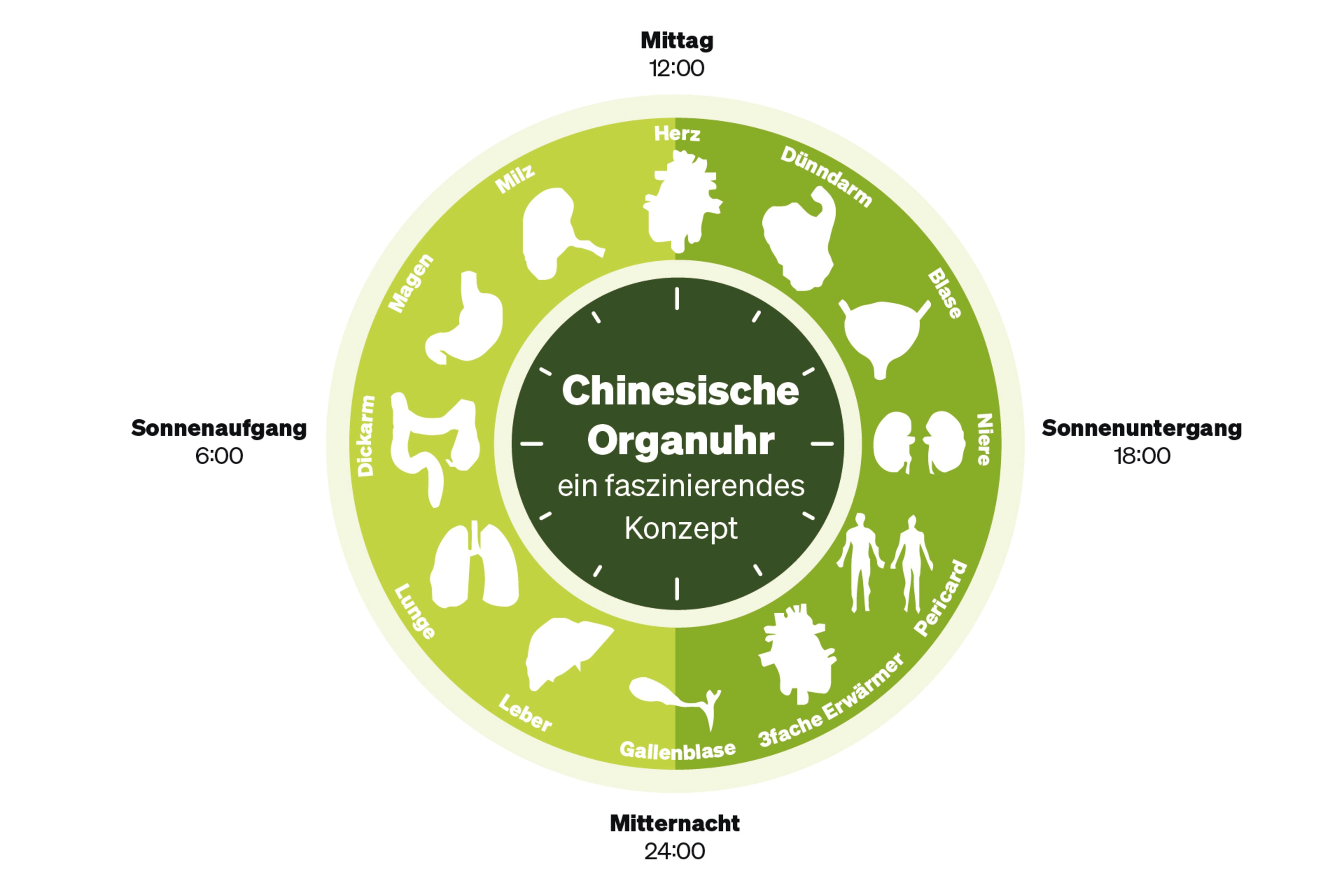
In Traditional Chinese Medicine, the body clock indicates when each organ in the body is active. Each of the twelve organs is assigned two hours of the day. For example, from 3 to 5 a.m., the organ clock points to the lungs. During this time, a particularly large amount of energy flows into the lungs.
The internal clock of the organs also indicates when the organs reach their resting phase: 12 hours after the energy peak. Those who live and eat in accordance with the body clock can maintain their inner balance and avoid sleep disturbances.
02 The TCM Organ Clock
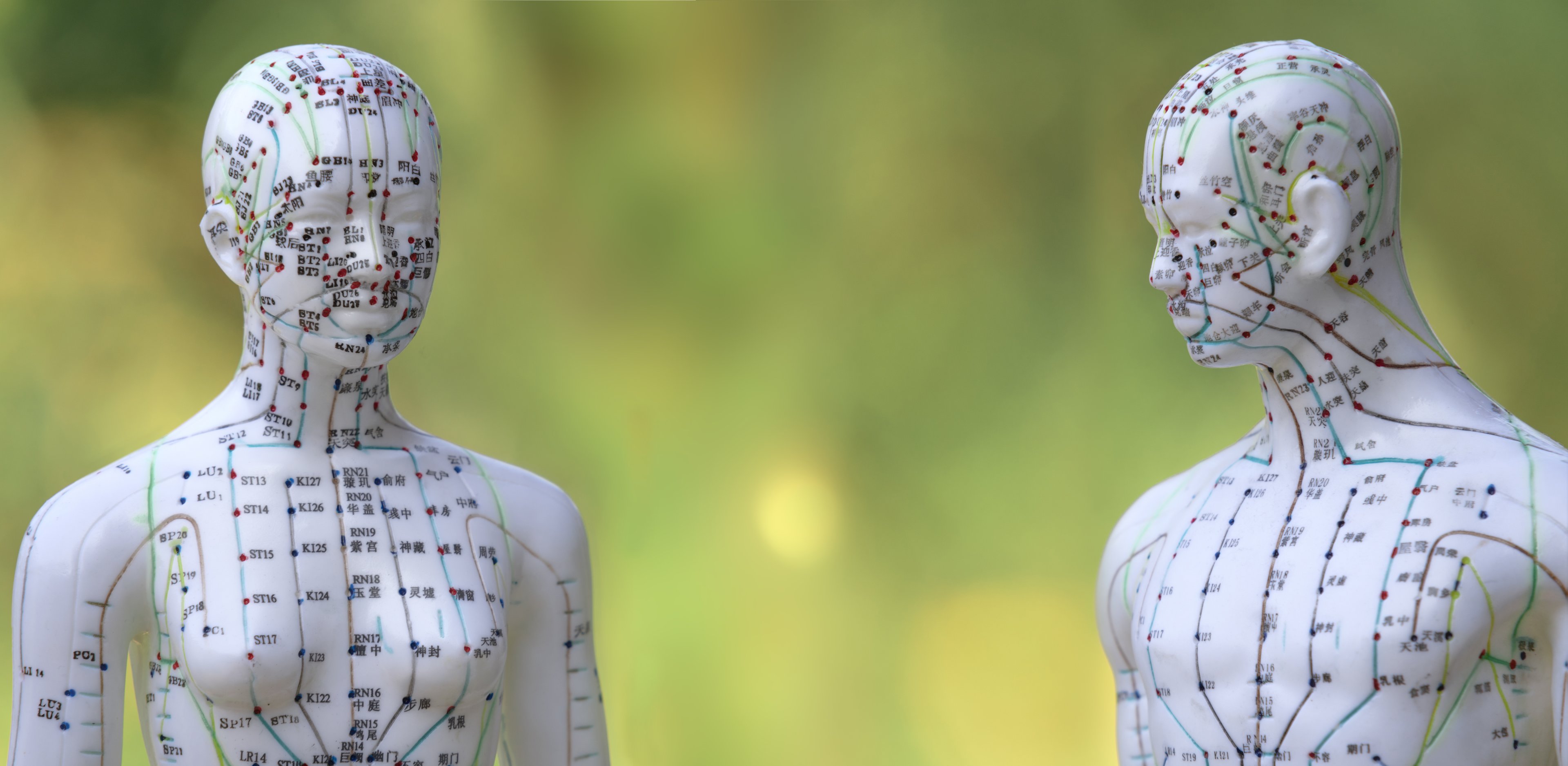
According to TCM, the human being is a unity of body, mind, and spirit. The life force Qi constantly flows through the body, ensuring that the system functions harmoniously. Qi flows through the body along 12 invisible energy pathways, known as meridians.
Each meridian is associated with an organ and receives its maximum energy supply at specific times of day. Chinese physicians have gained this knowledge through thousands of years of observation and documentation. Today, the TCM Organ Clock is available to us as a tool to help us achieve better sleep.
According to TCM, the gallbladder, liver, lungs, and large intestine are particularly active at night. In the early morning hours, the stomach is especially active.
"In TCM, the organ clock is more than just a way to measure time—it is a reflection of the dynamic interaction between body, mind, and environment. Our rest at night and our vitality during the day depend on how well we understand this interaction and respond to it through our lifestyle."
Dr. rer. nat. Torsten Pfitzer, pain expert

03 These organs are most active at night
- 9:00–11:00 p.m.: The Time of the Triple Burner
According to TCM, the Triple Burner is an organ system without a physical structure but with an important function. It connects all energy circuits. In the evening, the Triple Burner comes to rest. We all recognize this phase as the time when we slowly relax. During this time, both blood pressure and pulse rate decrease as we recover from the day. - 11 p.m.–1 a.m.: The Time of the Gallbladder
It stores bile and helps the intestines break down high-fat foods. It also aids in detoxifying the body and plays a key role in processing nutrients. Pulse, blood pressure, and cortisol levels continue to drop during this time. This is the time for deep relaxation, regeneration, and sleep. - 1–3 a.m.: The time of the liver
The liver works most intensively between 1 and 3 a.m. This organ is responsible for detoxifying the body and, in TCM, represents life. For most of us, this is the time of deep sleep. - 3–5 a.m.: The time of the lungs
The lungs are an organ without which life would not be possible. They supply our blood with oxygen from the air we breathe. Between 3 and 5 a.m., they cleanse themselves. - 5–7 a.m.: The time of the large intestine
One of the large intestine’s functions is to further process the liquid chyme that comes from the stomach and small intestine. During this phase, salts and water are extracted from the chyme. According to the Chinese organ clock, the large intestine is most active between 5 and 7 a.m. For many of us, this means that the night is interrupted or ends due to the stimulation of the bowel caused by a trip to the bathroom. - 7–9 a.m.: The Time of the Stomach
Our food is digested in the stomach. According to TCM, qi flows predominantly into the stomach between 7 and 9 a.m. This means that this time frame is ideal for breakfast, to get the day off to the best possible start.

04 How to Improve Your Sleep Using the Chinese Organ Clock
If we align our bedtime rituals and diet with the Chinese Organ Clock, it can help us fall asleep, sleep through the night, and wake up refreshed.
For the Triple Burner, for example, it’s important to wind down and relieve stress. Helpful activities here might include reading, practicing meditation, performing self-massage with fascia products, or spending time with loved ones. Late meals and unresolved stress from the day, on the other hand, can be counterproductive to falling asleep and staying asleep.
Heavy meals and alcohol in the evening also interfere with the function of the gallbladder, which is busy detoxifying the body between 11 p.m. and 1 a.m. According to TCM, both can lead to sleep disturbances. From a TCM perspective, vegetables—whether steamed, boiled, or grilled—are recommended for dinner.
If your deep sleep phase between 1 a.m. and 3 a.m. is repeatedly disrupted, this may be related to your liver’s function. The liver has a lot of work to do when it comes to processing alcohol, for example. Try observing your sleep when you’re under the influence of alcohol versus when you’re sober—you’re sure to notice a difference. However, the liver can also be positively influenced by various foods. Grapefruit, garlic, and green tea, for example, are foods that support liver health.
If you wake up at night and have to cough, that’s a sure sign that your lungs need some support. Sleep with the window open so that your lungs can cleanse themselves optimally between 3 and 5 a.m., according to the teachings of the internal organ clock. If that doesn’t help, allergies, tobacco use, or dehydration may be possible causes of nighttime awakenings and the urge to cough.
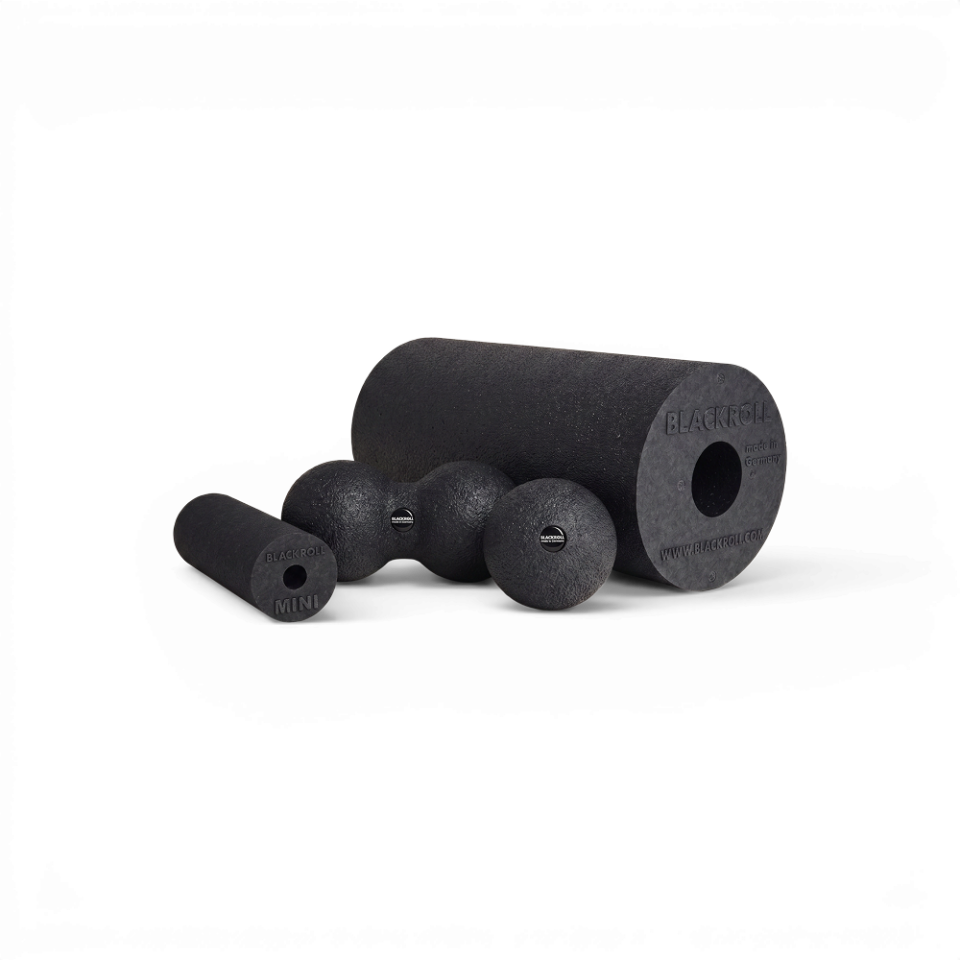
Our BLACKROLL® sleep products can also help promote restful sleep according to the principles of TCM.
05 Start your day well-nourished with the TCM Organ Clock
Between 5 and 7 a.m., the internal clock signals the large intestine to become active. Through increased cortisol release, the large intestine wakes up the body—and we need to use the restroom. A glass of lukewarm water can help support our digestion during this phase. And after a bowel movement, we can start the day feeling fresh and cleansed.
Once the large intestine has passed its most active phase, the TCM organ clock shifts its focus to the stomach. It’s time for the first meal of the day. Traditional Chinese Medicine recommends a light, ideally warm breakfast consisting of carbohydrates, protein, fat, and fruit. An example of this is porridge with fruit or fruit and spices. Cocoa or cinnamon, nuts, and a pinch of salt top off the perfect TCM breakfast.
06 These organs are most active during the day
- 9 a.m. to 11 a.m.: The time of the spleen
The spleen’s main functions are immune defense and blood purification. But thinking is also linked to the spleen. As a result, our cognitive abilities are particularly sharp between 9 a.m. and 11 a.m. According to the teachings of the body clock, this time of day is perfect for mental activities such as studying, school, lectures, or taking exams. - 11 a.m. to 1 p.m.: The Time of the Heart
Be cheerful, sociable, and communicative. This is what the heart’s time is all about. According to TCM, this period is between 11 a.m. and 1 p.m. and should be used to recharge your energy for the rest of the day. The midday break customary in the West is ideal for this and should not be skipped in order to prepare for the rest of the day. - 1:00 p.m. to 3:00 p.m.: The Time of the Small Intestine
Everyone is familiar with the midday slump. The reason for this is the small intestine, which is busy digesting and absorbing nutrients. This process requires blood, which causes blood pressure to drop and leaves less energy available for other activities. If we follow the TCM organ clock, now is the time for a short afternoon nap. If that’s not possible, it’s best to engage in activities that require less energy and concentration. At the same time, the small intestine helps us distinguish between important and unimportant tasks. - 3:00 to 5:00 p.m.: The Bladder Phase
After the low comes a high. During the time of the bladder, new energy is released, and all activities that were previously difficult now come easily. Long-term memory and concentration reach their peak. This new energy surge is ideal for exercise. But be careful: the bladder also helps with detoxification and should be kept well-hydrated. - 5:00 p.m. to 7:00 p.m.: The Kidney Phase
The kidneys are responsible for purifying the blood and detoxifying the body. When the kidneys are active, your pulse and blood pressure automatically drop in the evening. The body now wants to wind down and should not be overtaxed. A relaxing bath, a light meal, and herbal teas that support the kidneys’ detoxification process can help you prepare for a good night’s rest with healthy sleep. - 7:00 p.m. to 9:00 p.m.: The Time of the Pericardium
The pericardium is a connective-tissue-like sac that surrounds our heart. In Traditional Chinese Medicine, this pericardium is referred to as the “master of the heart.” For it to fulfill its function, qi must flow and the internal organ clock must be kept intact. Then the body and mind—as well as our emotions—remain in balance. During these active hours, it’s a good idea to consciously enjoy time with family and friends.
07 The Organ Clock in Summer
The time change often affects our internal clock. The body’s natural rhythm is disrupted, which can lead to sleep disturbances, fatigue, and exhaustion.
To counteract these negative effects, meal times should be adjusted accordingly. To determine the optimal times for meals, rest periods, and periods of activity, it’s important to listen to your own body.
The two hours during which an organ has its highest energy level are peak times and can vary from person to person.
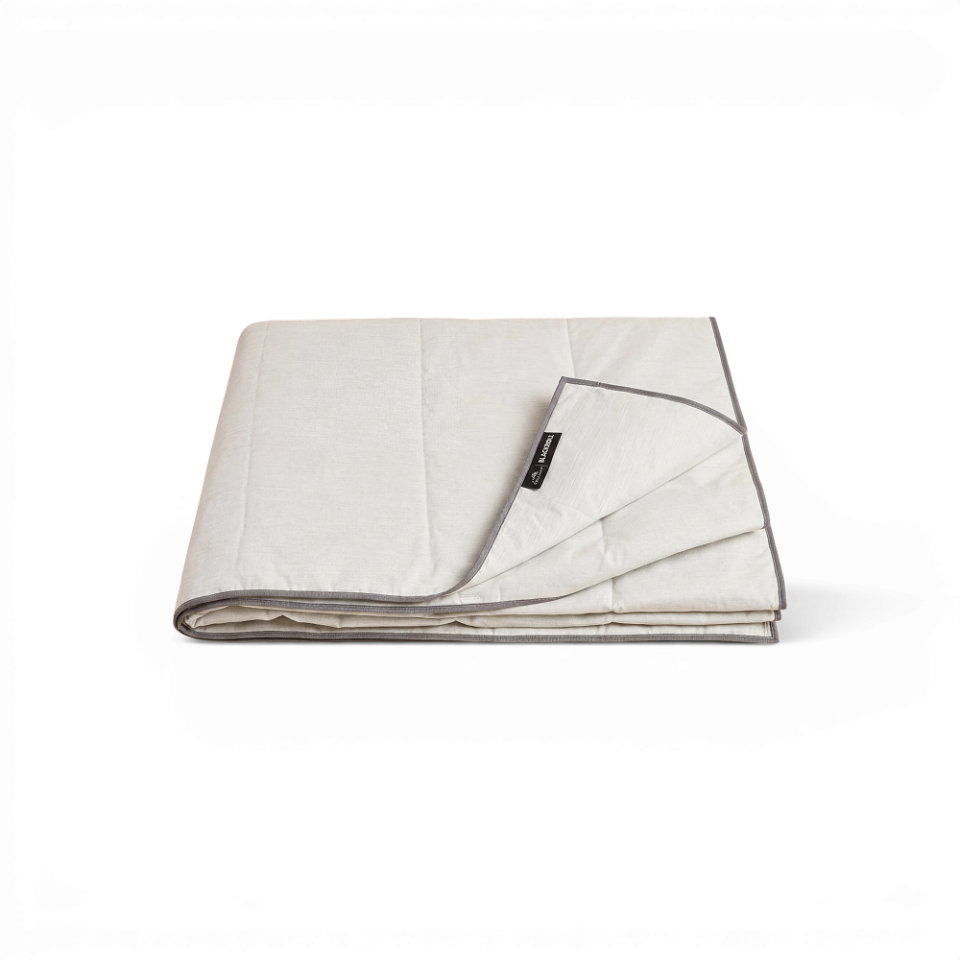
In addition to the time change, hot temperatures can also affect your sleep quality. We developed our RECOVERY BLANKET SUMMER specifically for this time of year; thanks to its innovative CELLIANT® filling, it supports the body’s thermoregulation and promotes local blood circulation.

Recovery Blanket Summer
Available in multiple variants
08 Scientific Classification of the Chinese Organ Clock
The effectiveness of the Chinese Organ Clock has only limited scientific support. While there are studies showing a connection between the activity of certain organs and the time of day, the Chinese Organ Clock should not be used as the sole tool for diagnosing and treating illnesses. An individual’s health history and specific symptoms must always be taken into account.
If you want to improve your overall well-being and the quality of your sleep, there’s no reason not to follow the Chinese Organ Clock, adopt a TCM-based diet, spend quality time with friends, exercise, limit your alcohol intake, and sleep with the window open.
09 Conclusion: Chinese Organ Clock
The Chinese Organ Clock is a fascinating concept from traditional Chinese medicine that can help us improve our health. By being aware of which organs are particularly active at which times of day, we can adjust our daily routine and thereby enhance our well-being.
Although the Chinese Organ Clock is not a scientifically recognized concept, there are many people who are convinced of its effectiveness. So if you’re looking for new ways to improve your health, it’s definitely worth exploring the Chinese Organ Clock in more detail and giving it a try.
How BLACKROLL® can improve your sleep quality:
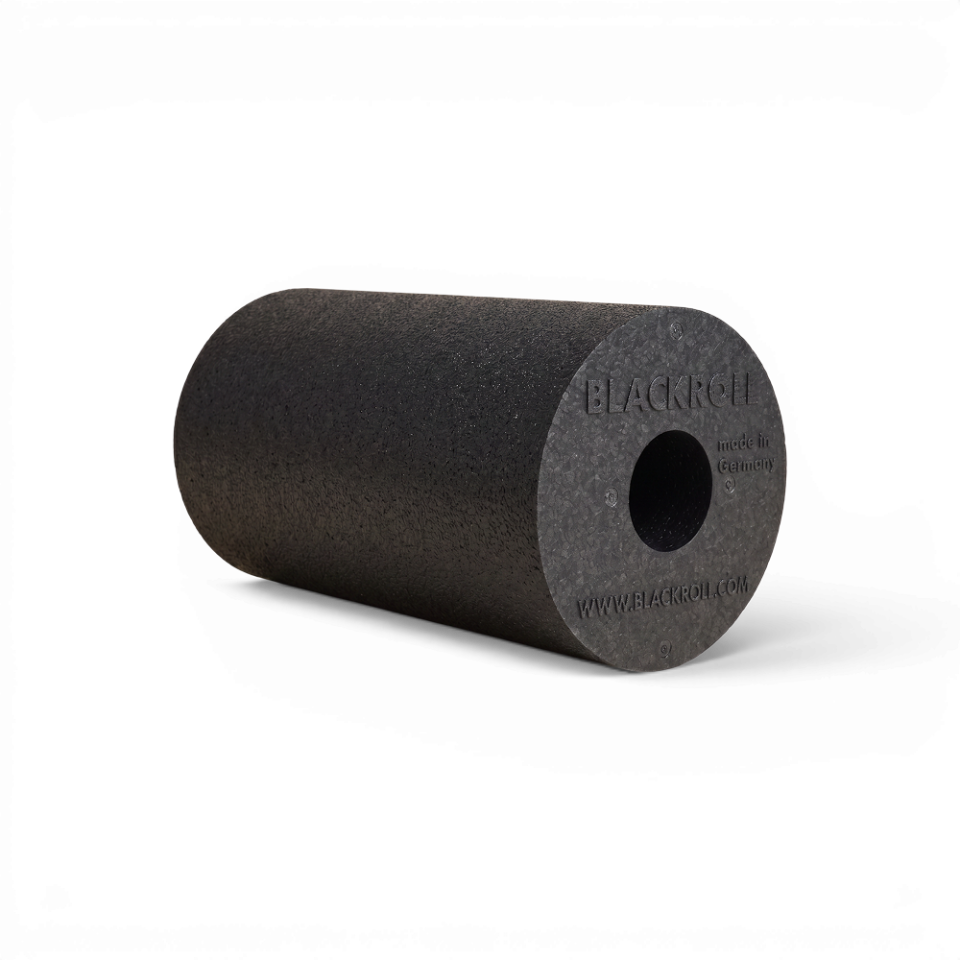

Standard
Available in multiple variants