Impingement Syndrome: Common Causes & Treatment

Is your shoulder joint stiff and painful? You may be suffering from impingement syndrome.
The shoulder joint is the most mobile ball-and-socket joint in the human body. But this also has a downside: The shoulder is prone to injuries and wear and tear. In impingement syndrome, various factors lead to a painful constriction of the supraspinatus tendon between the head of the humerus and the acromion. It primarily affects people who perform a lot of overhead work. Putting on a jacket or lying on the affected shoulder can cause pain. Overuse, wear-and-tear-related tissue changes, calcification, and inflammation can cause shoulder impingement. All of these factors involve abnormal muscle tension—that is, an imbalance in the muscle-fascia system. The good news is that you can take steps yourself to restore balance and, ideally, make your pain a thing of the past.
01. What is impingement syndrome?
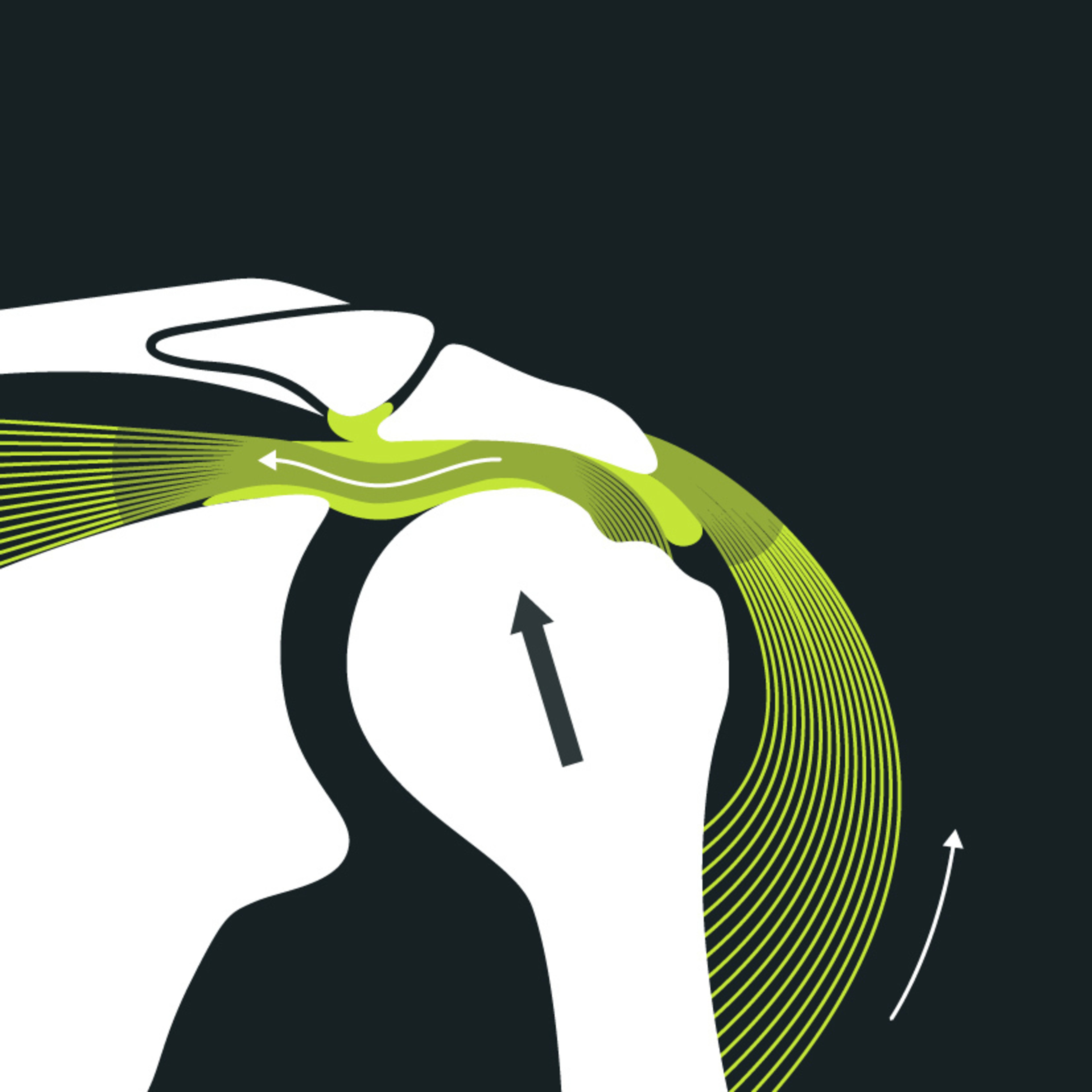
“Impingement” is a term from English meaning “collision.” In addition to shoulder impingement, there is also hip impingement. In German, we also refer to this type of shoulder pain as “shoulder impingement syndrome.” The rotator cuff is a group of muscles and tendons that attach your upper arm bone to the socket of the shoulder blade. They stabilize the shoulder and allow your upper arms to rotate inward and outward. In shoulder impingement syndrome (impingement syndrome), the space beneath the acromion becomes narrowed. A bursa—the so-called subacromial bursa—and the supraspinatus tendon become pinched between the acromion and the head of the humerus.
02. What are the symptoms of impingement syndrome?
Impingement syndrome causes limited range of motion in the shoulder. You’ll notice this most when raising your arms sideways between 60 and 120°. The pain may be worse at night if you’re lying on the affected shoulder. The space under the acromion is constricted—and that makes even the simplest everyday movements a struggle:
- Pain when lifting or abducting the arms
- Pain when rotating the arms
- Pain that radiates into the upper arm or neck
- Pain when lying on the affected shoulder
- Limited range of motion in the shoulder joint
- A feeling of weakness in the arm
- Unusual noises in the shoulder when raising the arms
With the “Painful Arc Test,” you can quickly and easily find out if you have shoulder impingement syndrome: Stand upright and let your arms hang at your sides. Now raise the arm on the affected side out to the side, with your palm facing down. If you have impingement syndrome, you’ll feel pain at an angle between 60 and 120°. This can serve as an initial self-diagnosis.
In general, the symptoms of impingement syndrome develop over a long period of time and are not dangerous. If you experience severe pain, significant restriction of movement, sudden swelling, or redness, we recommend that you see a doctor. They can properly diagnose your symptoms and initiate targeted treatment.
03. What are the causes of shoulder impingement syndrome?
Shoulder impingement syndrome is often a sign of wear and tear. It primarily affects people who perform a lot of overhead work. Various sports can also contribute to the problem. The following groups are particularly prone to shoulder impingement:
- Painters
- Auto mechanics
- Swimmers
- Tennis players
- Bodybuilders and weightlifters
- Volleyball player
- Badminton players
- Handball players
Are you wondering which sports to avoid if you have impingement syndrome? Try to avoid the sports listed above until your pain subsides.
The anatomical causes of impingement syndrome are complex. Bone loss, bursitis, and tendonitis, as well as congenital factors, can contribute to impingement syndrome just as much as the deposition of small calcium fragments. In any case, this leads to a narrowing between the head of the humerus and the acromion. It is often caused by excessive tension in the lateral shoulder muscle (deltoid muscle)—which cannot be balanced by other shoulder muscles that are too weak. This narrowing causes the supraspinatus tendon to become pinched. Sometimes, the pressure also irritates and inflames the bursa (subacromial bursa)—and that hurts.
"With early muscle and fascia training, impingement syndrome can be brought back under control."
Dr. Torsten Pfitzer, holistic pain therapist and health coach

"Smooth movement of the shoulder joint requires an extremely complex interplay of the structures involved, such as muscles, fascia, tendons, and ligaments. When overloaded, these can quickly lead to changes and, consequently, pain. With early intervention—such as performing appropriate muscle and fascia exercises—impingement syndrome can be effectively managed again." Dr. Torsten Pfitzer, holistic pain therapist and health coach
04. Extrinsic and Intrinsic Impingement
Shoulder impingement syndrome can be divided into two main categories: extrinsic and intrinsic impingement. Both forms have different causes and effects on the shoulder joint, which is also reflected in their treatment.
Extrinsic Impingement
Extrinsic impingement, also known as subacromial impingement, results from a mechanical narrowing of the space beneath the acromion. This narrowing causes structures such as the supraspinatus tendon, the bursa, or the biceps tendon to become pinched and irritated between the humeral head and the acromion. Common causes of extrinsic impingement include anatomical variations such as a hooked or lowered acromion, as well as external factors such as repetitive overhead movements or poor posture, which lead to overuse and damage to the affected structures. Treatment is primarily aimed at reducing inflammation, relieving pain, and improving shoulder function through targeted exercises and, if necessary, adjustments to daily activities.
Intrinsic Impingement
In contrast, intrinsic impingement results from problems within the joint itself. It is more common among athletes who perform repetitive throwing or overhead movements, such as baseball players, swimmers, or volleyball players. Intrinsic impingement is caused by overuse and the resulting damage to the rotator cuff and/or the labrum (a type of cartilaginous rim in the shoulder socket). This damage leads to instability of the shoulder joint, which in turn can cause increased friction and pinching of the soft tissue structures during certain movements. Treatment for intrinsic impingement focuses on restoring the shoulder’s stability and function through specific strengthening and stabilization exercises, often accompanied by adjustments to movement patterns or techniques in sports.
Rotator Cuff Tear
A rotator cuff tear is a tear in one or more of the muscles or tendons that make up the rotator cuff, a key structure in the shoulder joint responsible for the shoulder’s stability and wide range of motion. This injury often occurs as a result of wear and tear in older adults, but it can also be caused in younger individuals by acute injuries or overuse, particularly among athletes. Symptoms of a rotator cuff tear include pain, especially during overhead movements, weakness when lifting the arm, and, in some cases, limited shoulder mobility. The diagnosis is typically made using imaging techniques such as ultrasound or MRI, and treatment can range from conservative measures such as physical therapy and pain management to surgical procedures, depending on the extent of the tear and the patient’s individual needs.
05. What Can Help with Shoulder Impingement Syndrome
Treatment for shoulder impingement syndrome depends heavily on the severity of the condition. As a general rule, the earlier treatment begins, the sooner symptoms will resolve without the need for surgery. When is surgery necessary for impingement syndrome? In most cases, shoulder impingement surgery is unnecessary. Depending on the severity of the condition, it may help to first reduce the inflammation. After that, you can begin with a suitable treatment method. We recommend incorporating the following measures into your daily routine:
- Myofascial Techniques
Through so-called SMT (Self-Myofascial Treatment) exercises, you can, in the best-case scenario, release tightness and adhesions in the fascial tissue. This can relieve tension in the shoulder—and the pain will subside. BLACKROLL® fascia tools are ideal for this.
- Mobilize the shoulder girdle
Once the tissue has been loosened, you can perform mobilization exercises. The goal is to create more space between the head of the humerus and the acromion.
- Activation
The physical therapy approach involves strengthening the surrounding muscles. Targeted activation of the correct muscles in the rotator cuff can help reduce the tightness beneath the acromion.
Home Remedies for Impingement Syndrome
Home remedies can also play a supportive role in the treatment of impingement syndrome to relieve pain and promote the healing process.
One of the simplest and most effective home remedies is the use of cold and heat treatments. Cold packs can be applied to the affected shoulder immediately after an injury or during acute pain episodes to reduce inflammation and relieve pain. After a few days or in cases of chronic pain, applying heat—for example, with a warm cloth or a heating pad—can improve blood circulation and relieve muscle tension.
A gentle massage of the shoulder and surrounding area can also help improve blood circulation and reduce tension. Using essential oils such as lavender or peppermint, which have anti-inflammatory and pain-relieving properties, can enhance the effects of the massage.
In addition, taking natural supplements with anti-inflammatory and pain-relieving properties—such as turmeric, ginger, or omega-3 fatty acids —can be a useful addition to treatment. These natural remedies can help reduce inflammatory responses in the body and thus also alleviate pain associated with impingement syndrome.
06. Physical Therapy and Rehabilitation for Shoulder Pain
Physical therapy and rehabilitation play a very important role in the treatment of shoulder impingement syndrome. The goal of these measures is to reduce pain, improve mobility, and restore shoulder function in the long term. As part of physical therapy, individually tailored exercise programs are developed that aim to strengthen the muscles around the shoulder joint while promoting the joint’s flexibility and mobility.
Particular emphasis is placed on strengthening the rotator cuff and improving the coordination of the shoulder muscles to establish muscular balance and minimize stress on the affected tendons and bursa.
In addition to active strengthening and mobilization, physical therapy also employs passive techniques, such as manual therapy and mobilization techniques, which help relieve tension and improve the mobility of the shoulder joint. Furthermore, specific stretching exercises can help lengthen shortened muscles and thereby reduce pressure on the shoulder joint.
Another important component of rehabilitation is training in ergonomic movement patterns and adapting daily activities to avoid overloading the shoulder and minimize the risk of re-injury. Patients learn how to use and protect their shoulder properly in daily life, for example, by applying lifting and carrying techniques that relieve strain on the shoulder.
07. Surgery for Shoulder Joint Pain
In cases of advanced impingement syndrome where other treatment methods do not provide sufficient relief of symptoms, surgery on the affected area of the shoulder may be necessary.
Before such a surgical procedure, a thorough examination is necessary to identify the exact cause of the symptoms and determine which part of the shoulder structure—whether the rotator cuff, the bursa, or bony structures—is responsible for the impingement and pain.
Arthroscopy, a minimally invasive surgical technique in which a small camera is inserted through a small incision in the shoulder, allows the surgeon to directly visualize and treat the area. This procedure can be used to remove inflamed tissue or to perform repairs on the rotator cuff, thereby improving arm mobility and reducing pain.
By focusing on the specific cause of impingement syndrome, arthroscopic surgery enables targeted treatment aimed at restoring long-term shoulder function and allowing patients to return to their normal activities.
08. Painful Arc
Painful Arc Syndrome is a common symptom of shoulder impingement syndrome. It causes pain in the shoulder area, particularly when raising the arm out to the side or above shoulder height. This pain often manifests as a stabbing or burning sensation and typically occurs within a specific range of motion known as the “painful arc.” This range is usually between 60 and 120 degrees of lateral arm elevation.
Painful Arc Syndrome occurs when the tendons in the shoulder joint become pinched between the bones during movement, particularly between the acromion and the head of the humerus. This mechanism can be caused by a number of factors, including unfavorable anatomy of the shoulder joint, muscle weakness or muscle imbalances, as well as repetitive overhead movements or injuries.
Treatment for Painful Arc Syndrome aims to relieve pain and improve shoulder function. This may include physical therapy exercises to strengthen the shoulder muscles, anti-inflammatory medications, injections for pain relief, or, in some cases, even surgery to increase the space in the shoulder joint and relieve pressure on the tendons. It is important to see a doctor if symptoms of Painful Arc Syndrome occur in order to receive an accurate diagnosis and the best possible treatment.
09. Don’t let it get that far—prevent shoulder impingement!
To effectively prevent frozen shoulder syndrome, it’s important not only to avoid repetitive overhead movements and poor sleeping positions but also to specifically strengthen the shoulder girdle muscles and ensure good mobility in the shoulder area. The following preventive measures and exercises can help you maintain the long-term health of your shoulders and prevent shoulder pain:
- Shoulder Mobilization: Start with simple exercises to improve shoulder mobility. Pendulum exercises, in which you lean forward and let the affected arm swing loosely, can relieve tension and promote mobility.
- Rotator Cuff Strengthening: Specific exercises designed to strengthen the rotator cuff are essential. Simple exercises using a Theraband—such as moving your arm out to the side or rotating it—help strengthen the muscles crucial for shoulder joint stability.
- Postural corrections: Pay attention to maintaining good posture, both when standing and sitting. An upright posture relieves pressure on the shoulder girdle and prevents tension. Exercises that strengthen the upper back and stretch the chest muscles can be helpful in this regard.
- Ergonomic adjustments at the workplace: If you spend a lot of time at a desk, make sure your workspace is set up ergonomically. The screen should be at eye level, and your arms should be able to rest in a relaxed position while typing.
- Compensatory exercises: If you participate in sports that place a high strain on your shoulders, incorporate compensatory exercises into your routine. Yoga and Pilates, for example, are excellent for improving posture and strengthening your muscles evenly.
- Regular Breaks: Take regular short breaks throughout the day to relax your shoulders and do some simple stretching exercises. This is especially important if you perform repetitive tasks.
- Heat therapy: Gentle heat therapy can promote blood circulation and relieve muscle tension. Placing a warm towel or hot water bottle on your shoulders from time to time can help prevent discomfort.
By incorporating these measures into your daily routine and paying attention to your body’s signals, you can significantly reduce the risk of shoulder impingement syndrome and contribute to the long-term health of your shoulders.


Exercise Routine for Impingement Syndrome