Knee pain — causes, symptoms and what really helps

Knee pain can restrict your ability to walk, climb stairs, play sport or even sit down. You may be wondering: what’s causing my knee pain – and what can I do about it myself? In this article, you’ll find out what causes it, how different types of knee pain manifest themselves and what steps you can take to help you move more comfortably again.
Your knee is subjected to a great deal of strain every day. To keep it stable, cartilage, ligaments, muscles, tendons and fascia work closely together. If this interaction is disrupted – for example, due to incorrect loading, muscle imbalances or overuse – it can lead to pain, irritation and inflammation. What’s interesting is that the cause often doesn’t lie directly in the knee joint at all, but rather in the hip, pelvis or ankle, for example.
Knee pain is often initially treated with anti-inflammatory medication, ointments or injections. Whilst this can provide short-term relief, it usually does nothing to address the underlying causes. In the long term, adopt an approach that considers your musculoskeletal system as a whole – with targeted exercises, better load management and an analysis of your movement patterns.
When to see a doctor about knee pain
Although you can do a lot for your knee yourself, seek medical advice if:
- You can no longer put weight on your knee or can only walk with it whilst experiencing severe pain.
- You can no longer fully straighten or bend your knee.
- There's significant swelling, warmth or redness around the knee.
- You notice a visible misalignment or deformity of the leg or knee.
- The pain persists for several days or worsens despite rest.
In these cases, have your knee examined by a doctor to rule out serious injuries such as cruciate ligament tears, meniscus damage or bone injuries.
01. What is knee pain?
Knee pain is discomfort in the knee joint that can occur at rest, during movement or under strain. It’s one of the most common musculoskeletal complaints — among people who are physically active and in everyday life.
However, not all knee pain is the same. The nature, location and triggers of the pain provide important clues as to what's causing your symptoms.
- Pain at the back of the knee after exercise is often caused by overexertion, incorrect strain, muscle tension or irritation of tendons and fascia.
- Pain when climbing stairs may indicate irritation behind the kneecap (e.g. early-stage osteoarthritis or patellofemoral pain syndrome).
- Knee pain on the inside is typically associated with, among other things, medial collateral ligament irritation, meniscus problems or misalignment of the knee joint.
- Pain on the outside of the knee: a common sign of runner’s knee (iliotibial band syndrome).
- Knee pain when bending may indicate meniscus irritation, changes in the cartilage or overload in the front of the knee.
As you can see, the causes of knee pain vary widely – from overuse and muscular imbalances to misalignments, wear and tear or acute injuries.
The most common symptoms associated with activity-related knee pain include:
- Runner’s knee (iliotibial band syndrome, ITBS): overuse-related pain on the outside of the knee, particularly in runners and active people.
- Patellofemoral pain syndrome: pain around or behind the kneecap, often worsened when climbing stairs, squatting or after sitting for long periods.
- Patellar tip syndrome (jumper’s knee): stabbing pain below the kneecap, typically associated with jumping and running sports.
We'll look at these types of knee pain in more detail below – including typical symptoms, triggers and appropriate treatment approaches.
02. What to do if you have knee pain? Immediate measures and quick fixes
If your knee is in acute pain, you want one thing above all else: to do something that brings immediate relief – without hindering the healing process. Modern sports medicine now clearly advises against the traditional RICE approach. Instead, the evidence-based PEACE and LOVE protocol has proven effective. It combines short-term protection with active recovery and a gradual increase in activity levels.
Remember: movement is almost always better than complete rest — but only within pain-free limits. Use the 0–10 scale as a guide: pain up to around 3/10 is generally acceptable, provided it subsides after exercise.
PEACE & LOVE – evidence-based immediate measures for knee pain
PEACE (Acute phase – first 1–3 d)
- P – Protect: Reduce the load but avoid complete immobilisation. Move within your pain-free range.
- E – Elevate: Elevate your leg to reduce swelling and pressure.
- A – Avoid anti-inflammatories: Take painkillers only for a short time and as needed. They can inhibit the natural healing process.
- C – Compress: Use a light compression bandage for short-term stabilisation and to reduce pressure.
- E — Educate: Remember that active therapy works better in the long term than purely passive measures.
LOVE (Subacute – from 48–72 h)
- L – Load: Gradually increase the load and stay below a pain level of 3/10.
- O – Optimism: Positive expectations can promote healing — a neurobiological effect.
- V – Vascularisation: Light, cyclical movements (e.g. cycling without resistance, walking) promote tissue healing.
- E — exercise: Start with simple exercises for mobility and strength — focus on the hips, quadriceps, glutes and ankle.
These practical quick wins often help.
- Short-term relief: reduce the distance you run or the impact from jumping for a few days.
- Mini mobilisation: light movements such as knee swings, gentle cycling or hip mobility exercises.
- Gentle fascia massage: Carefully roll your quadriceps, the area around the IT band and your calves (e.g. with a foam roller or ball).
- Coordination and muscle control: isolated activation exercises for the gluteus medius and quadriceps.
- Move as much as you can withoutexperiencing severe pain — this promotes healing.
Research shows that active therapy and intelligent load management deliver better results than purely passive treatments, especially for overuse injuries such as runner’s knee, patellofemoral pain or patellar tip syndrome.
In the next section, you’ll learn how to use your symptoms to better identify which structure in the knee is affected.
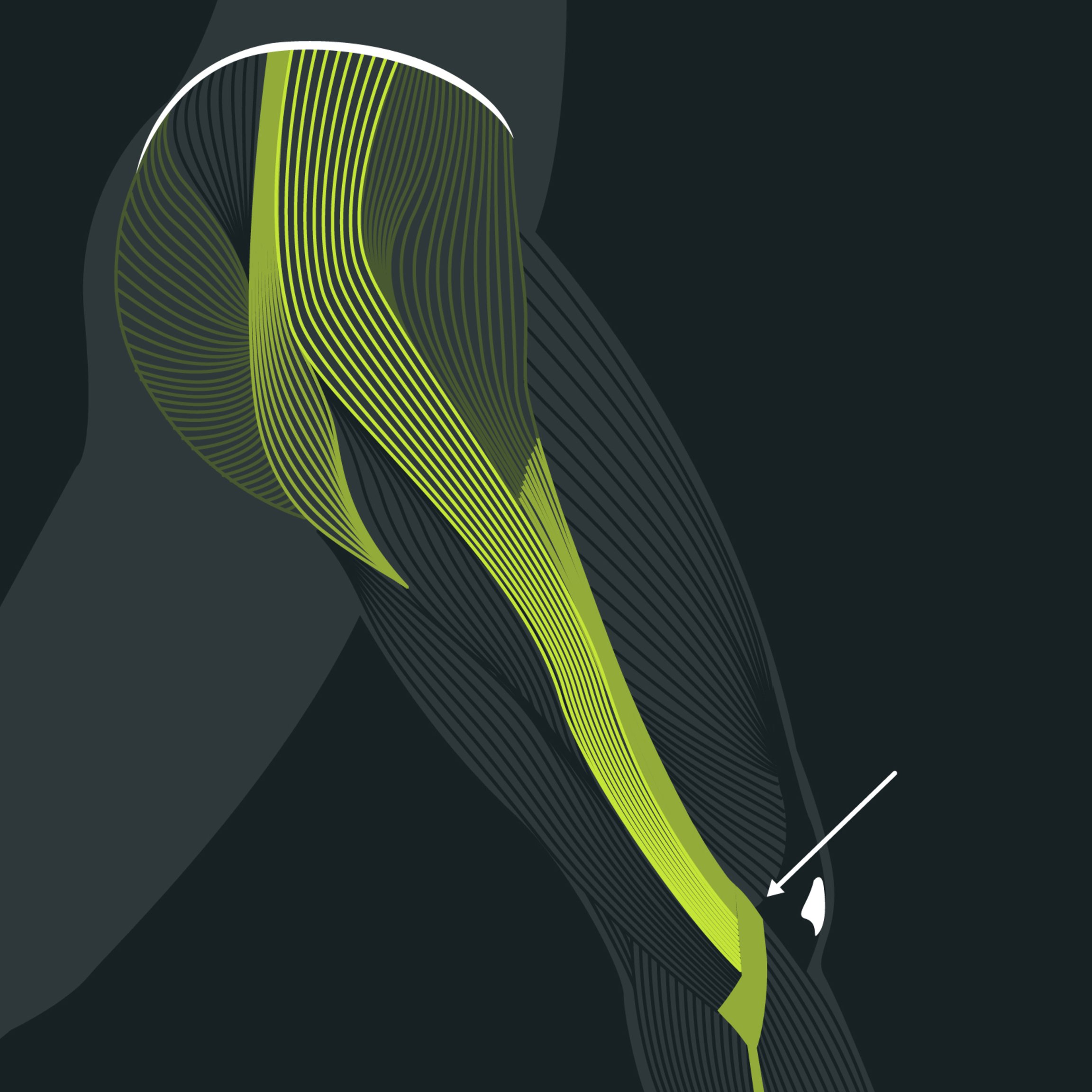
Runner’s knee / ITBS
Typical symptoms of runner’s knee are
- Knee pain on the outside after running
- a sort of ‘snapping’ sensation on the outside of the knee
- The pain tends to worsen over time.
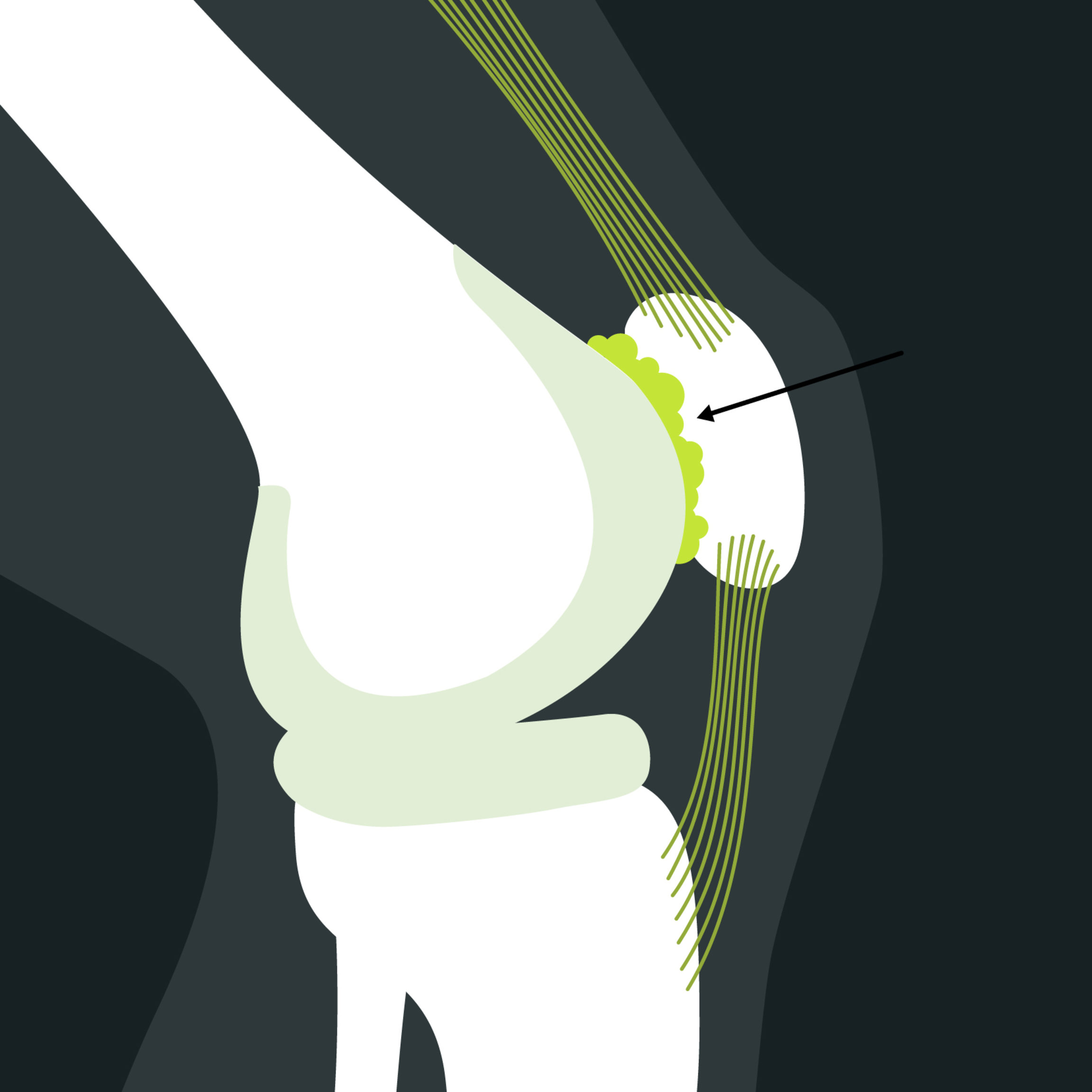
Do you havepainaround your kneecap or directly underneath it? If so, you're probably experiencing a tracking or compression problem with the kneecap, or a biomechanical dysfunction.
Patellofemoral pain syndrome:
Typical symptoms of patellofemoral pain syndrome include
- Stabbing pain below the kneecap
- Pain that increases with load
- instability in the knee (the knee tilts inwards) — ‘vagus’ position
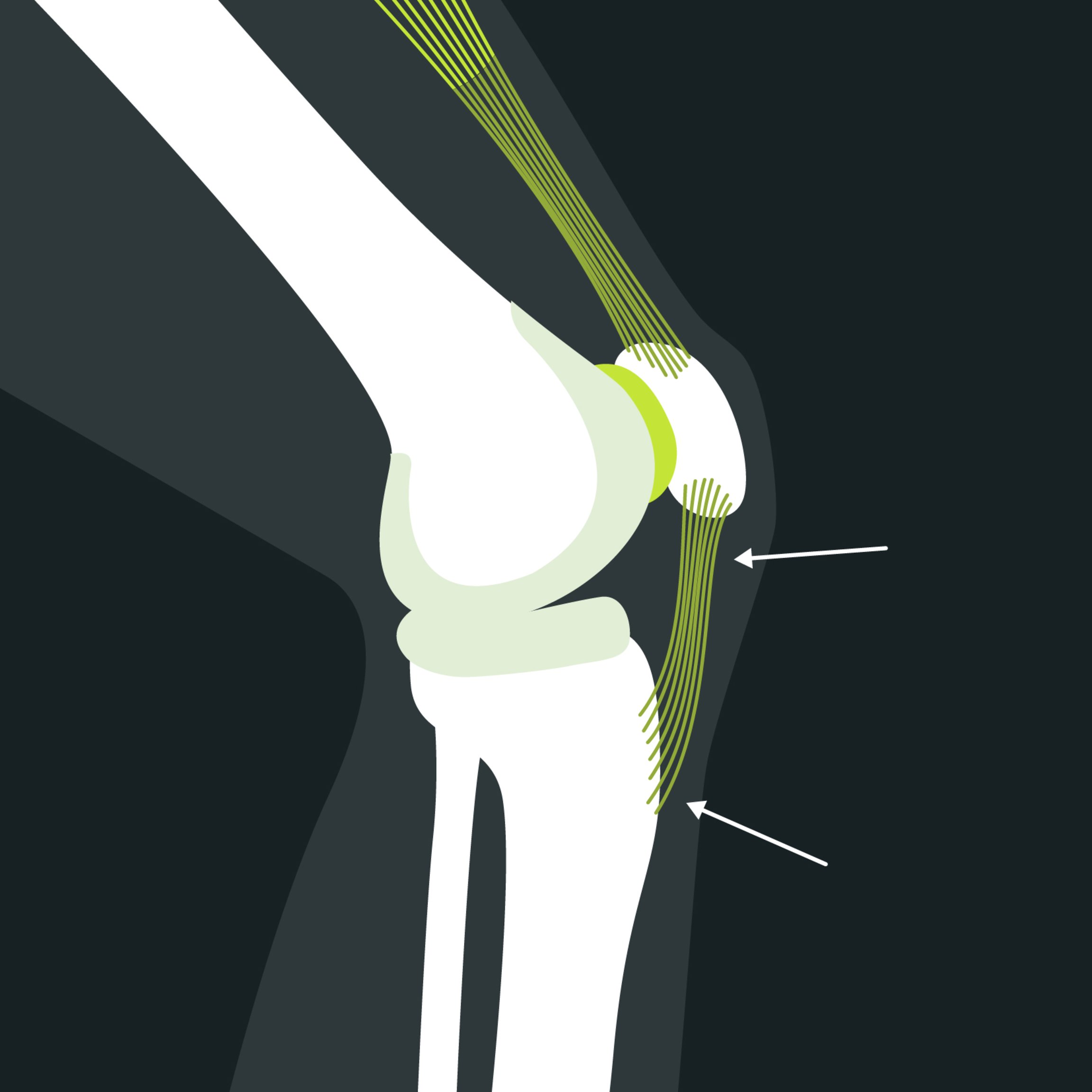
Patellar tip syndrome:
Typical symptoms of patellar tip syndrome
- You'll feel a stabbing pain below or above the kneecap
- The pain intensifies as you bend the knee further.
- It'll spike during explosive movements.
03. Symptoms of knee pain – what do they feel like?
Knee pain can feel very different: sharp, dull, a pulling sensation, only when putting weight on the knee or even at rest. Where exactly the pain occurs and in which situations it gets worse provides important clues as to the cause. Observe your symptoms more closely so you’ll be better able to assess which condition might apply to you.
Symptoms of runner’s knee (iliotibial band syndrome, ITBS)
Runner’s knee is a typical overuse injury affecting the outer side of the knee. It mainly affects runners, trail runners and people who are physically active. The pain often only sets in after a certain period of exertion.
- Location of pain: stabbing or burning pain along the outer edge of the knee joint.
- The pain worsens during running, especially when running downhill or over longer distances.
- Progression: initially only towards the end of exercise; later, symptoms may appear sooner or even during everyday activities.
- You may alsofeel a ‘snapping’ or rubbingsensation on the outside of the knee.
Typically, you’ll be pain-free at the start of your run – it’s only after a few minutes or km that the outside of your knee starts to ‘make itself felt’. If left untreated, the pain can become so severe that you have to stop running.
Symptoms of patellofemoral pain syndrome
With patellofemoral pain syndrome, pain around or behind the kneecap is the main symptom. It often affects people who sit a lot, climb stairs or take part in sports involving bending and straightening the knees.
- Location of pain: diffuse around the kneecap or ‘behind’ the kneecap.
- Factors that exacerbate the pain: climbing stairs (especially going downhill), squatting and sitting for long periods with bent knees (‘cinema or theatre sign’).
- Feeling of instability: the knee ‘capsizes inwards’, particularly when standing on one leg, running or jumping.
- Stress profile: pain increases with greater exertion, for example during deep squats or jumps.
Many people describe the sensation as if the kneecap isn't running smoothly along its track. Biomechanically this is often due to a tracking problem with the kneecap, influenced by the position of the hips and feet.
Symptoms of patellar tip syndrome (jumper’s knee)
In patellar tip syndrome, the main symptom is a stabbing pain in the area just below the kneecap. It frequently occurs in sports involving a lot of jumping, sprinting or rapid changes of direction – such as basketball, volleyball, handball or intensive running and jumping training.
- Location of pain: at the lower tip of the kneecap, sometimes slightly above it.
- Pain worsens during explosive movements such as sprints, jumps and changes of direction.
- Knee flexion: deep squats, landings after jumps or sudden stops exacerbate the pain.
- You'll also noticetenderness at the tip of the kneecap when pressure's applied.
Your knee may feel relatively normal in everyday life, yet the pain can shoot through it during intense exertion. Many athletes ignore these early warning signs — which can exacerbate the symptoms in the long term.
Other typical signs of knee pain
- Morning stiffness: your knee feels ‘stiff’ after getting up and only improves with movement.
- Cracking, grinding or snapping may indicate changes to the cartilage, tendons or fascia.
- Swelling or warmth: signs of irritation or inflammation in the joint.
- Instability or buckling: it may indicate ligament problems, muscular weakness or coordination issues.
It’s not so much a single symptom that’s decisive, but rather the overall picture comprising the location of the pain, the situation in which the pain occurs and your movement patterns. In the next step, we’ll take a closer look at the most common causes of knee pain – and why the problem often doesn’t originate in the knee alone.
04. Causes of knee pain – why your knee is often not the actual problem
Knee pain rarely arises in isolation within the knee itself. In most cases, the knee is merely the site where a problem manifests itself — not where it actually originates. Imbalances in the hip, pelvis or ankle can alter the load on the knee to such an extent that pain, irritation or inflammation occur.
From a biomechanical perspective, the knee is a ‘transitional joint’: it reacts to what happens above (hip/pelvis) and below (foot/ankle). If something in this chain becomes unbalanced, it almost always affects the knee.
Typical causes of knee pain
- Muscular imbalances: weak hip muscles, shortened thigh muscles or unstable foot muscles alter the leg axis.
- Leg misalignments: bow legs place greater strain on the outside of the knee whilst knock-knees put pressure on the inside of the knee and the kneecap.
- Overuse and incorrect loading: a sudden increase in running volume, training without recovery or one-sided loading patterns.
- Movement patterns: the knee ‘caving in’ towards the inside, overpronation of the foot or lack of hip stability.
- Shortened or tight fascia, particularly along the IT band, quadriceps or calves.
- Reduced mobility: restricted hip flexion or ankle mobility shifts the load onto the knee.
The following three clinical presentations illustrate how varied the causes can be:
Runner’s knee (ITBS) – causes
- Overpronation of the foot → increased tension on the IT band.
- Weak hip abductors (particularly the gluteus medius) → the thigh rotates inwards.
- Shortened tissues on the outer side of the thigh → increased friction on the lateral side of the knee joint.
- Bow legs or unequal leg lengths → contribute to uneven load distribution.
- Increasing running distance or intensity too quickly.
Patellofemoral pain syndrome – causes
- Bow legs or alignment abnormalities → the kneecap's pulled out of its track.
- Weak gluteus medius → the knee collapses inwards.
- Weak vastus medialis (inner quadriceps muscle) → uneven guidance of the patella.
- Prolonged sitting → increased pressure on cartilage structures.
- Walking downhill or deep squats → significantly increase pressure on the patella.
Patellar tip syndrome (jumper’s knee) – causes
- Repeated jumping or sprinting → high tensile forces on the patellar tendon.
- Tight thigh muscles → increased tensile stress on the tendon.
- Leg misalignments such as bow legs or differences in leg length.
- Weak pelvic and core stability → poorer shock absorption.
Why the hip and ankle are crucial
Studies show that restricted hip mobility increases the load on the knee by up to 30%. If the hip abductors or gluteus maximus are too weak, the thigh rotates inwards – the kneecap no longer moves smoothly along its track, the IT band is under greater tension and the patellar tendon is subjected to greater strain.
The ankle joint also plays a key role: if dorsiflexion is restricted (the movement of the shin forwards over the foot), the body compensates via the knee and hip — which increases the risk of overload on the knee.
Expert perspective
‘It’s not only acute knee injuries but also many cases of chronic knee pain that result from a counter-rotation of the upper and lower leg.’
Dr Torsten Pfitzer – holistic pain therapist and health coach
This rotational misalignment is often caused by joint misalignments, muscular imbalances and adhesions in the fascial structures, which force the knee to compensate for movements that should actually take place in the hip or foot.
In the next section we’ll show you how to tackle knee pain with targeted exercises, load management and practical measures.
‘Knee pain is often caused by a counter-rotational twist of the thigh and lower leg.’
Dr Torsten Pfitzer, holistic pain therapist and health coach

‘Not only acute knee joint injuries, but also general knee pain is often caused by a counter-rotation of the thigh and lower leg. This, in turn, is caused by other joint misalignments and tissue changes in stiffened muscles and fascia, which can lead to pain in the thighs even without the knee being involved.’ Dr Torsten Pfitzer, holistic pain therapist and health coach
05. What helps with knee pain? Active treatment and targeted exercises
The most effective treatment for most knee problems is controlled, pain-free movement combined with targeted exercises. Passive measures such as medication, electrotherapy or injections can provide short-term relief, but rarely address the root cause. The key is to make your musculoskeletal system more stable, stronger and better coordinated.
Many people ask themselves: ‘Should I take a break when I have knee pain?’ The answer is that complete rest delays healing. It’s better to follow an approach where you move as much as possible, provided the pain is no higher than 3/10 and subsides again after the activity.
Why active therapy works so well
- Improved tissue healing: movement boosts blood flow and metabolism.
- Better joint stability: strong hip and leg muscles stabilise the knee and kneecap.
- Less friction and tension: mobility in the hip and ankle joints reduces pressure on the knee.
- Sustainable pain reduction: active therapy leads to better long-term results than passive measures.
Combine fascia massage, mobilisation and strengthening to target the structures that matter for most knee pain.
1. Fascia massage: reduce tension and improve mobility
Gentle, controlled myofascial techniques can reduce tension in the thigh area and improve mobility. Of particular relevance are:
- Quadriceps (front of the thigh)
- structures along the IT band (outer thigh)
- Calf muscles
Use a foam roller or a fascia ball for this. Roll slowly, 8–12 repetitions per area, keeping within a pain-free range.
A medium-firm roller such as the BLACKROLL® STANDARD or a ball is ideal for releasing typical tension points around the knee.
2. Mobilisation exercises: loosen the hip and ankle joints
Many knee problems arise from a lack of mobility in neighbouring joints, so focus on:
Hip mobilisation
- Stretch the hip flexors → reduce tension on the kneecap
- Performlateral hip openers to improve leg alignment and stability.
Ankle mobilisation
- Shin-over-foot mobilisation (knee over the tips of the toes) → improves dorsiflexion
- Perform calf stretches to reduce compensatory tension in the knee.
Why this matters: restricted hip or ankle mobility means your knee has to compensate for movements it isn’t designed for.
3. Strengthening exercises: the foundation for a pain-free knee
Targeted activation and strength training improve knee joint stability and correct leg alignment. The key muscle groups:
- Gluteus medius (hip stabiliser) → keeps the knee in the mid-axis
- Quadriceps → stabilises the kneecap and the anterior chain
- Hamstrings → support tibiofemoral stability
- Calf muscles → important for shock absorption and the running cycle
Example exercises
- Side leg lifts / hip abduction (with Loop Band)
- Performglute bridges to activate the posterior chain.
- Performstep-downs to improve leg alignment.
- Mini squats within a pain-free range
Use a BLACKROLL® LOOP BAND or SUPER BAND to add controlled resistance and refine hip stability and leg alignment.
4. Load control: how to find your optimal training level
With many knee problems it’s not the movement itself that’s the issue but rather how much, how quickly and how intensely you exert yourself. A sensible progression looks like this:
- Start pain-free — no sharp pains.
- Gradually increase the load (e.g. +10% per week).
- Pain ≤ 3/10 is acceptable if it subsides after the workout.
- Ifthere's no increase in pain the following day, you're on the right workload.
This approach works particularly well for runner’s knee, patellofemoral pain and patellar tip syndrome.
5. Take a break when you feel a sharp increase in pain during exercise.
- If the pain increases significantly during exercise.
- If the knee swells severely or locks up after exercise.
- If the pain worsens over several days.
Reduce the load, adapt your exercises or seek medical advice.
Exercises for at home
You can find an overview of suitable exercises here:
For a complete training programme, the BLACKROLL® KNEE BOX combines rollers, bands and a structured online training programme for targeted knee rehabilitation.
In the next chapter, you’ll learn how to prevent knee pain in the long term.

View exercises for knee pain
Knee Pain: 7 Exercises That Really Help06. Preventing knee pain – five scientifically proven measures
Many knee problems can be avoided if you manage your physical activity sensibly, exercise regularly and watch out for warning signs early on. Prevention doesn’t mean moving less – it means moving more sensibly. The following measures are considered particularly effective in preventing knee problems from arising in the first place or preventing relapses.
1. A healthy body weight and reducing strain on the joints
Every additional kg of body weight increases the strain on your knee many times over. When you walk, the joint bears 3–4 times your body weight; when you climb stairs, it can be 6–8 times. Moderate weight loss can therefore provide noticeable relief and reduce the risk of strain-related problems.
Adopt a long-term approach: a balanced diet, regular exercise and strength training. Even small changes in your everyday life can make a difference.
2. Regular exercise and managing the load
Your knee benefits more from consistent, moderate exercise than from irregular peaks in physical strain. Ideal activities include:
- Cycling (gentle on the joints, promotes mobility)
- Walking or hiking
- Swimming or aqua aerobics
- Strength training, particularly for the legs and hips
Don't increase your training volume too abruptly; aim for a 10% rise per week, especially for running and jumping sports.
3. Optimised movement patterns and technique
Incorrect movement patterns are among the most common causes of knee problems. Particularly relevant:
- Knees caving inwards (‘valgus collapse’) whilst running or jumping
- Overpronation of the foot → increased tension on the IT band and patellar tendon
- An unstable leg axis due to weak hip muscles
Targeted technique training improves load distribution. Ideally:
- Video analysis during running or jumping training
- Include barefoot training to strengthen your foot muscles and improve stability.
- Execute squats, lunges and jumps with awareness.
4. Suitable footwear and personalised fit
Shoes affect your leg alignment and the cushioning when walking or running. For prevention:
- Replace your trainers regularly (approx. every 500–800 km)
- Ensureadequate cushioning on harder surfaces
- Usecustomised insoles for severe foot misalignments.
If you run frequently and are prone to knee pain, have your gait analysed by a professional.
5. Take your body’s signals seriously — react in good time
Many knee problems develop gradually so act early to prevent acute irritation from becoming chronic pain.
- Pain at the start of training that gets worse over time
- Morning stiffness or tenderness
- Unusual fatigue in the thigh muscles
- Swelling or warmth in the knee joint
In all these cases, adjust your workload, take it easier, improve mobility and build stability. This'll help you prevent minor warning signs from turning into real problems.
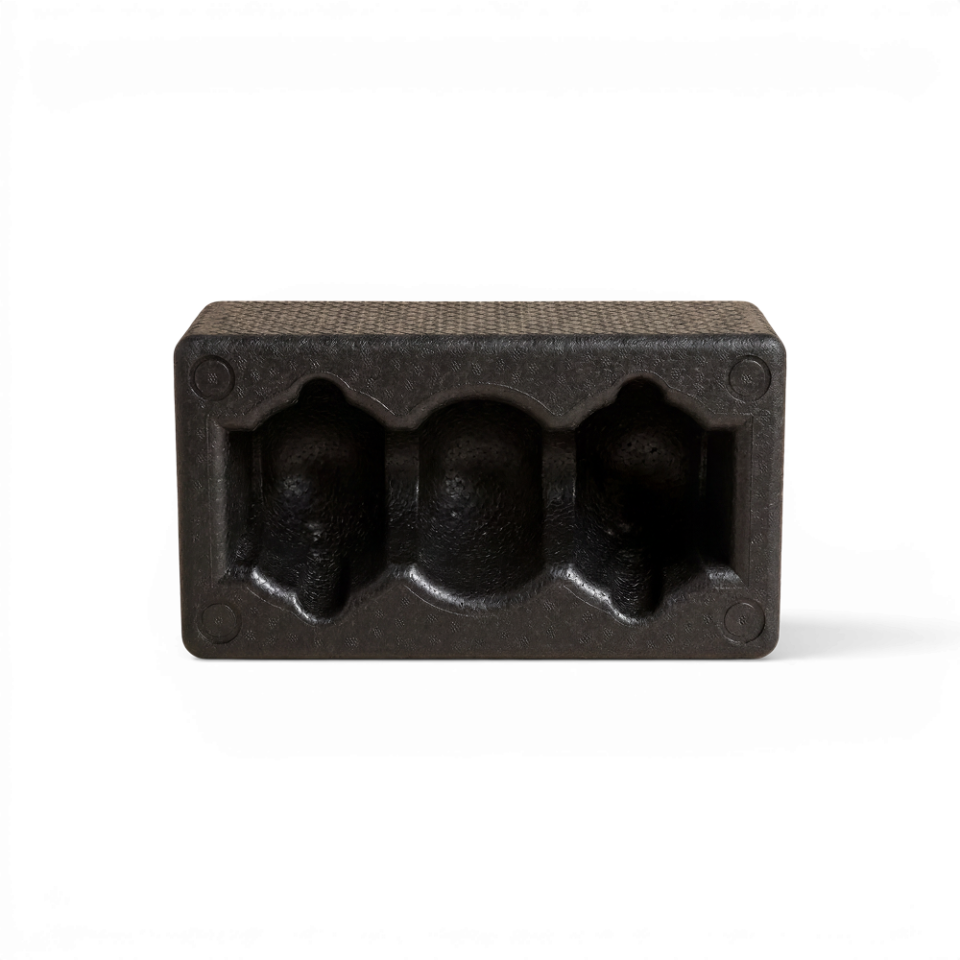
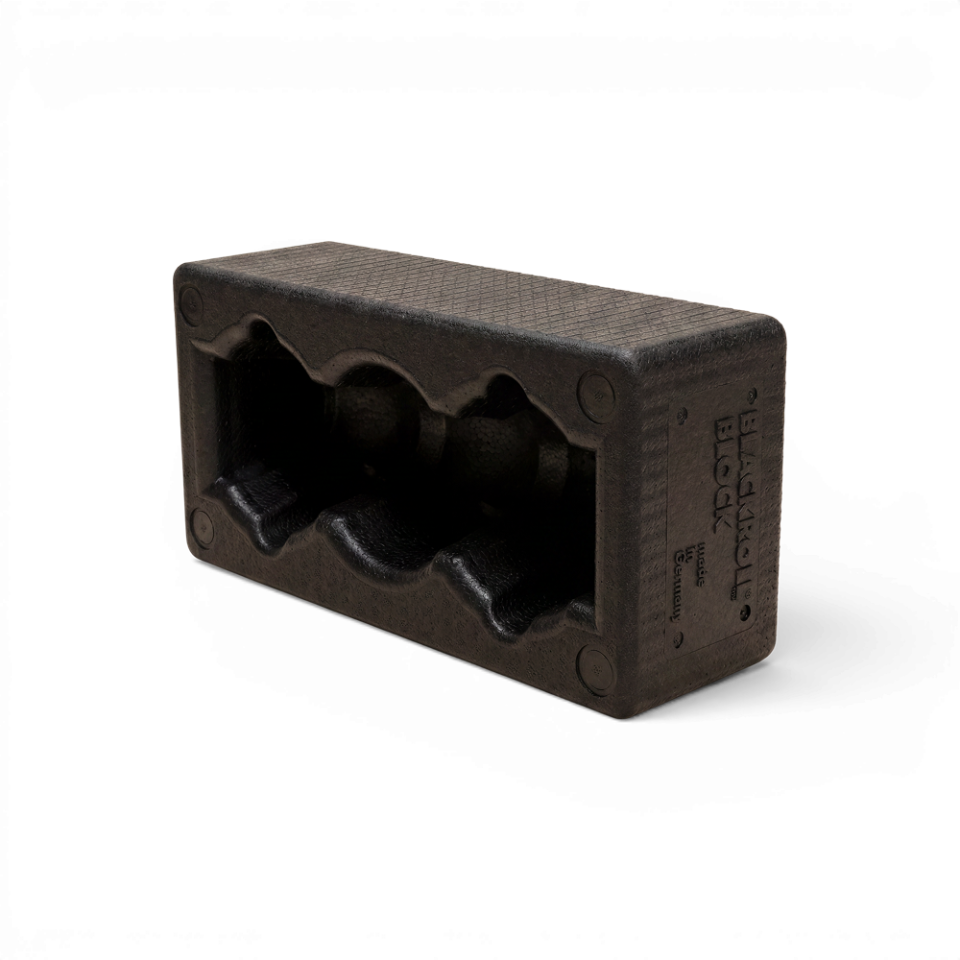
Tip: Foam rollers, Loop Bands and a soft surface such as a BLACKROLL® BLOCK or a MAT make regular training easier — and encourage you to keep at it in your everyday life too.
In the final section, you’ll find concise answers to the most common frequently asked questions about knee pain.
Your all-round package for knee pain
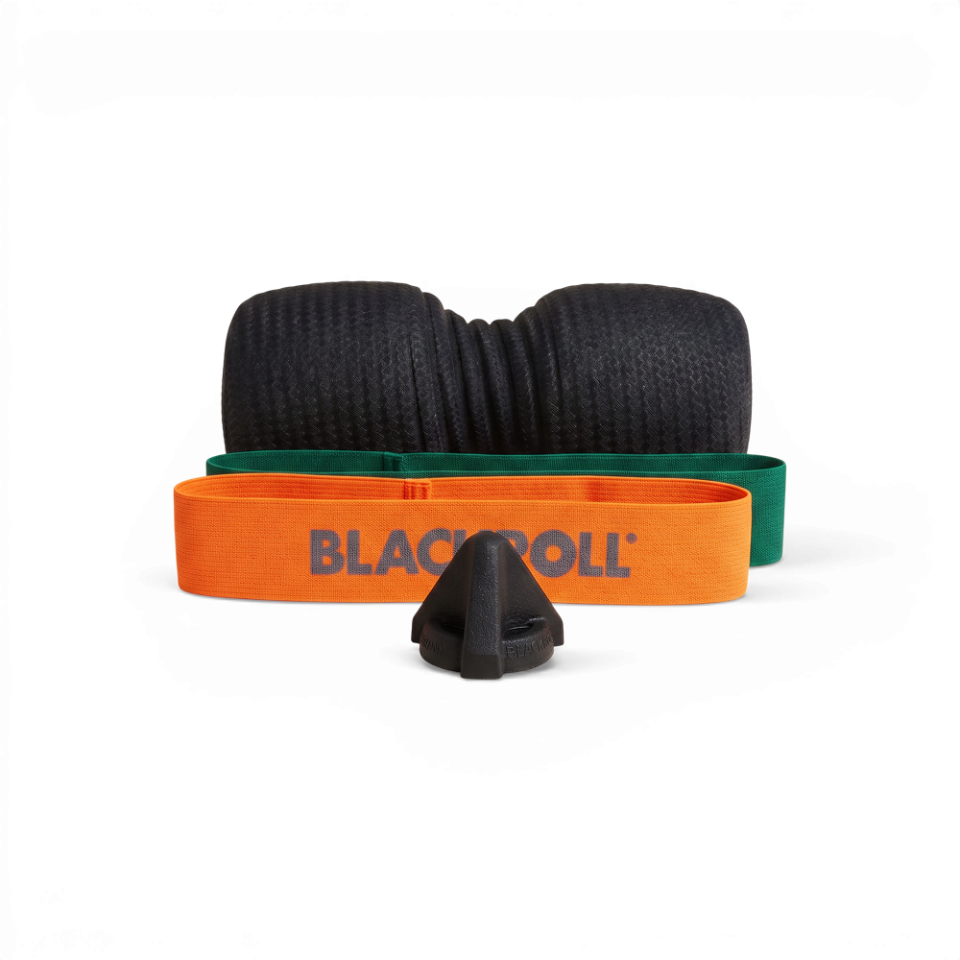
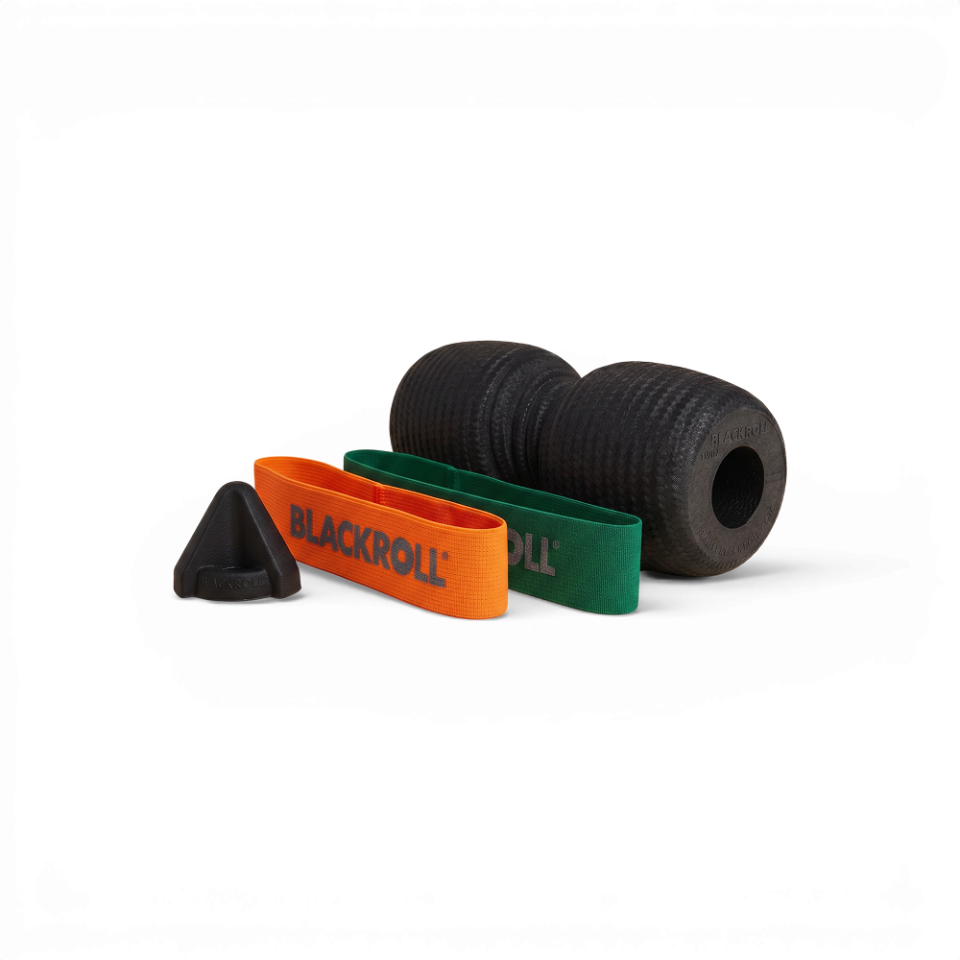
Your tools for exercises to relieve knee pain
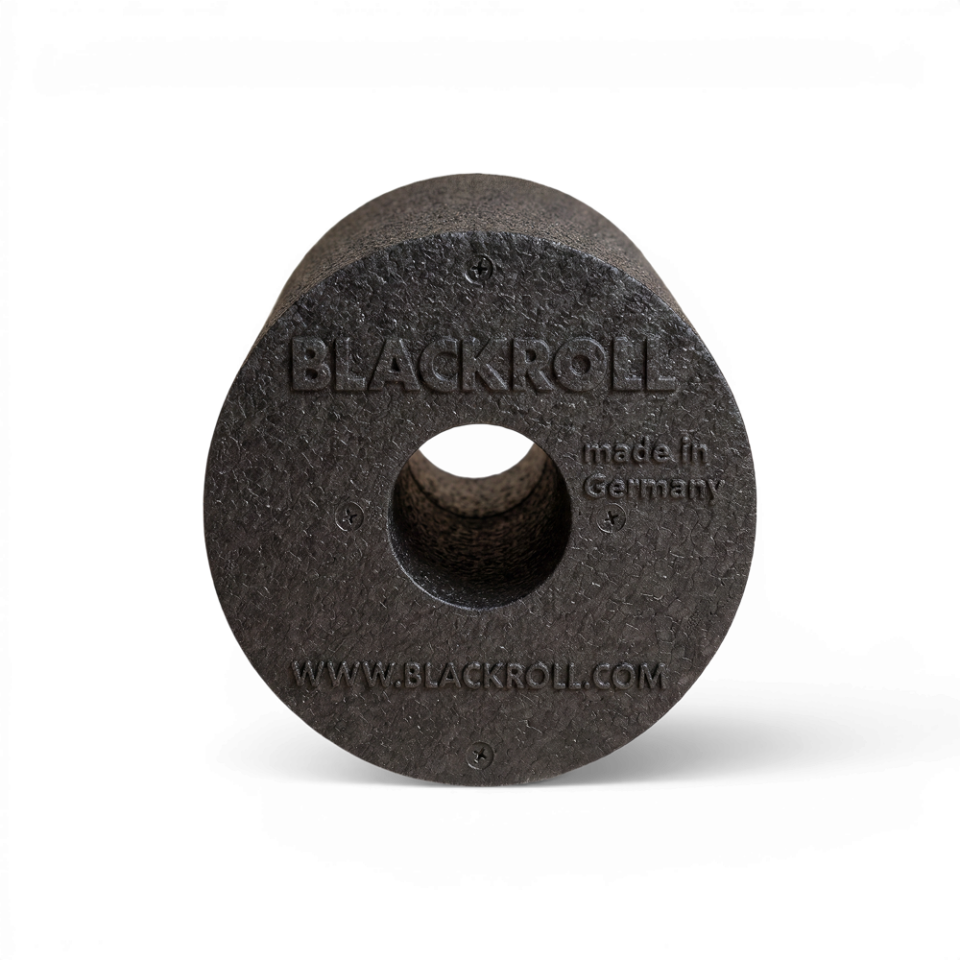
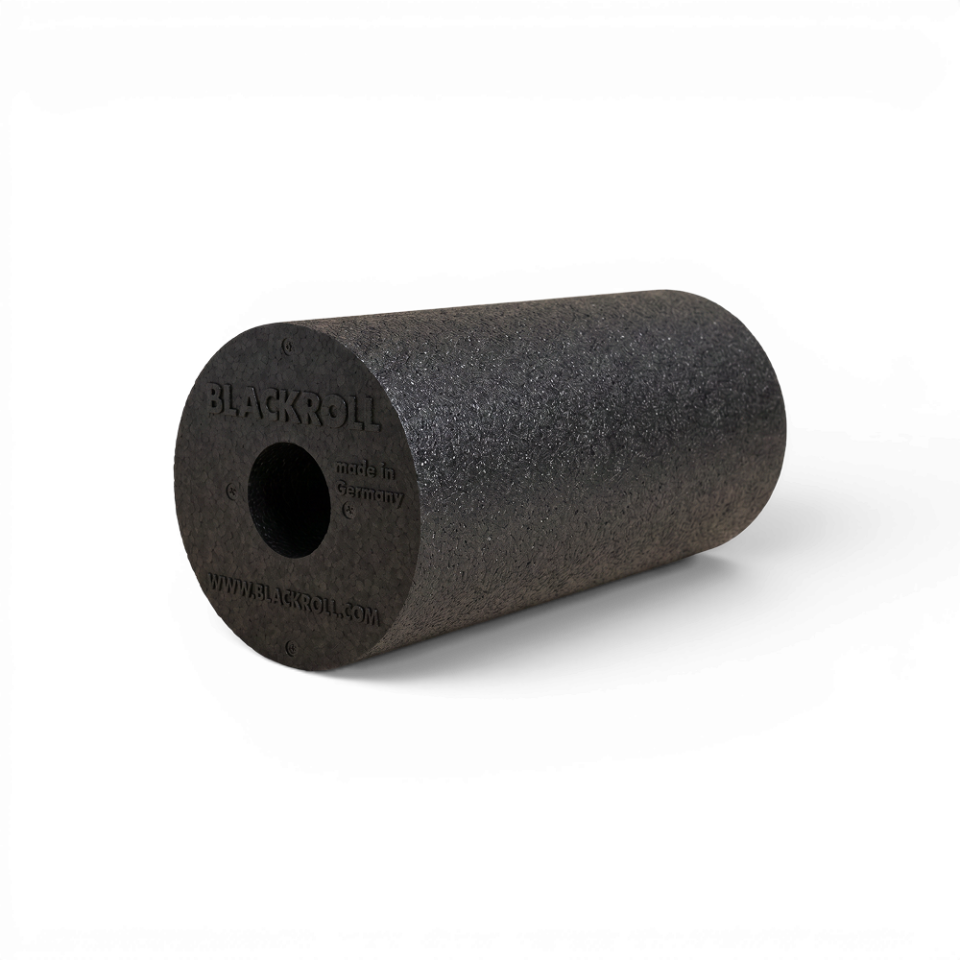
Standard
Available in multiple variants


Super Band
Available in multiple variants


Loop Band
Available in multiple variants
FAQ: Frequently asked questions about knee pain
Reduce strain in the short term but keep moving within your pain-free range. Follow the PEACE and LOVE approach, relieve muscle tension with gentle fascia massage and start mobilisation and light strengthening exercises early on.
Knee pain can be sharp, dull or aching and often occurs during physical activity, when bending the knee or when climbing stairs. The exact location of the pain provides important clues as to the cause, such as the medial collateral ligament, the kneecap or the iliotibial band.
For severe pain, reduce weight-bearing, elevate the knee and apply a cold compress (not ice-cold). Move the knee without causing pain, apply gentle fascia massage and start mobilisation at an early stage. If there's severe swelling or stiffness, seek medical advice.
Consult an orthopaedic surgeon or sports medicine specialist. If you suspect an acute injury such as a meniscus or ligament tear, seek prompt assessment.
Choose a medium-firm mattress with good point elasticity. It reduces pressure points, stabilises your spine and helps prevent uneven strain on your knee and hip.
The most effective exercises are those for hip stability (gluteus medius), the quadriceps, ankle mobility and fascia massage on the quadriceps, the area around the iliotibial band and the calves.
Depending on the cause, you may feel pain on the inside, outside, front, beneath the kneecap or at the back of the knee, and the location helps narrow down the diagnosis.
Typical sensations include a stabbing pain, pressure, a burning sensation, a pulling sensation or a feeling of instability. In cases of overuse, the pain often increases with the duration of the strain.
Yes, a blockage in the sacroiliac joint can alter the alignment of your leg and place greater strain on your knee, resulting in pain on the inside or outside of your knee caused by compensatory movements.
Pinched or irritated nerve roots in the lumbar spine can refer pain to the knee or leg, typically causing a pulling sensation, tingling or numbness.
It's often caused by irritation of the cartilage, tendons or ligaments. Misalignment of the leg or a lack of hip stability can also exacerbate pain when walking.
Yes, very often. The hip, knee and ankle form a functional chain so problems in the hip or pelvis often lead to altered movement patterns in the knee.
Muscular imbalances, misalignments, overload, lack of stability, shortened fascia, restricted mobility and incorrect movement patterns are among the main causes.
Without treatment, knee problems can become chronic, restrict mobility, lead to compensatory postures and, in the long term, put strain on other joints.
Pain on weight-bearing, tenderness, stiffness, swelling, cracking, instability or a pulling sensation along the thigh or lower leg muscles.
You may also be interested in



Sources
Scientific literature (APA style)
- Crossley, K. M., et al. (2016). Management of patellofemoral pain: Clinical practice guidelines. Journal of Orthopaedic & Sports Physical Therapy.
- Ferber, R., et al. (2020). Running mechanics and tibiofemoral loading in runners with medial knee pain. Sports Medicine.
- Höher, J., et al. (2018). Biomechanik des Kniegelenks: Einfluss der Beinachse auf Patellaführung und Belastung. Der Orthopäde.
- Cook, J. L., & Purdam, C. R. (2012). The continuum model of tendon pathology. British Journal of Sports Medicine.
- MacAuley, D., et al. (2020). PEACE & LOVE: A modern approach to soft tissue injury management. British Journal of Sports Medicine.
- Barton, C. J., et al. (2013). The influence of hip function on knee pain. American Journal of Sports Medicine.
- Powers, C. M. (2010). The influence of abnormal hip mechanics on knee injury. Journal of Orthopaedic & Sports Physical Therapy.
- Warden, S. J., et al. (2007). Patellar tendinopathy: Clinical presentation and rehabilitation. Sports Medicine.
- van der Worp, H., et al. (2012). Iliotibial band syndrome in runners: Epidemiology, etiology & treatment. Sports Medicine.