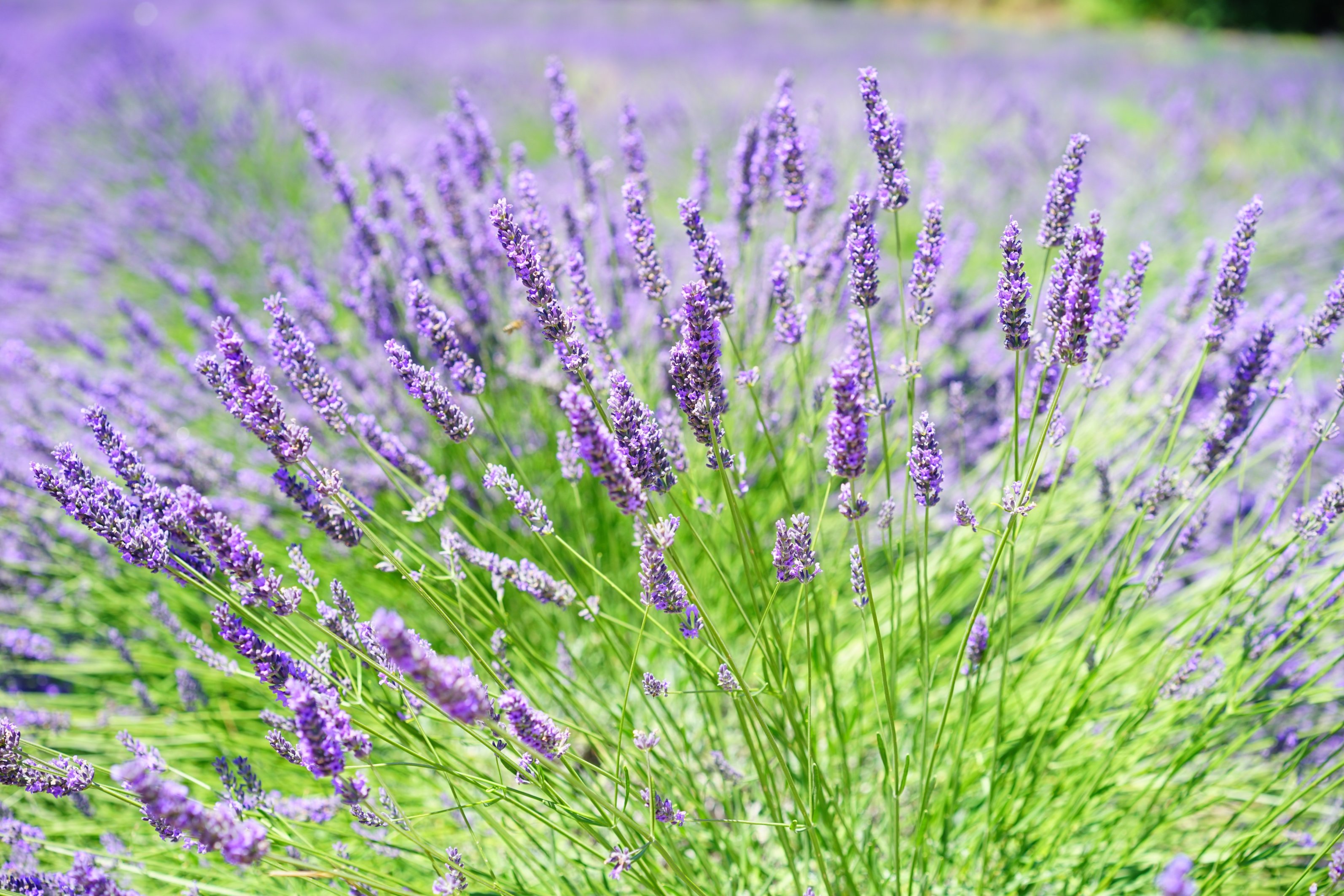
Lavender for Falling Asleep: Hype or Help?

Lavender is known for its sleep-promoting and calming effects. But not all lavender is the same. It all comes down to the right quality and form of administration. Some products can cause headaches and discomfort.
In this article, you’ll learn how lavender and lavender oil affect the body and mind, and how you can make the most of them for yourself.


Lavender has a long tradition
As far back as ancient Greece, lavender was valued as a medicinal plant and used to alleviate sleep disorders.
This tradition continued into the Middle Ages, and lavender was cultivated in many monastery gardens.
One of the most famous figures of that time was Hildegard von Bingen, a German Benedictine nun, writer, and healer. She described lavender as a “warming” plant that could help with restlessness and sleep disorders. Hildegard von Bingen recommended placing lavender sachets under the pillow or spraying lavender water to promote calm.
Today, lavender is also commonly used as lavender oil, tea, or a bath additive.
Sleep-Promoting Effects Proven in Studies
An interesting study¹ investigating the sleep-promoting effects of lavender was conducted by Dr. Hideki Koyama and his team in Japan. This study examined the effects of lavender aroma on the sleep quality of 79 participants with mild sleep disturbances. The participants were divided into two groups: one group inhaled lavender oil, while the other group inhaled a placebo oil. Although the placebo oil smelled like lavender, it was a synthetic imitation.
The study’s results were clear: Participants who inhaled the real lavender oil showed a significant improvement in sleep quality compared to the placebo group. Their morning fatigue also decreased. The researchers suspect that the aromatic compounds in lavender (terpenes) are responsible for this. They influence the nervous system, thereby making it easier to fall asleep and stay asleep.
"Lavender, known for its relaxing effects, can be used effectively to treat sleep problems. By using lavender oil or tea before bedtime, people can create a calming atmosphere that makes it easier to fall asleep and improves sleep quality."
Dr. Lutz Graumann, expert in regeneration

How does lavender help you fall asleep?
Science doesn’t know exactly yet. However, we do know that so-called terpenes play an important role here.
The most extensively studied terpene is linalool. A study² shows that linalool can increase the production of GABA (gamma-aminobutyric acid), a neurotransmitter. GABA has a calming and relaxing effect by reducing the activity of nerve cells in the brain.
When you inhale the fragrances in lavender or drink lavender tea, the terpenes enter the body and can thus increase GABA levels.
Lavender – Effects Due to Various Terpenes
According to current research³, lavender’s sleep-promoting effect is attributable to a mixture of various terpenes. Terpenes are signaling molecules and nature’s little all-rounders.
- Linalool: This is the best-known and most extensively studied compound in lavender. It is a monoterpene and is known for its calming, relaxing, and anxiety-relieving properties. Linalool influences GABA transmission in the brain.
- Linalyl acetate: This is also a monoterpene. It works in conjunction with linalool and enhances its effects on the nervous system.
- Terpinen-4-ol: Terpinen-4-ol is another monoterpene. It has anti-inflammatory and antimicrobial properties, as well as a calming and relaxing effect on the central nervous system.
- β-Caryophyllene: This compound belongs to the sesquiterpene group and, in addition to its calming effect, also has anti-inflammatory and pain-relieving properties.
There are many other terpenes and compounds in lavender that likely enhance its sleep-promoting effects. These include myrcene, ocimene, and lavandulyl acetate. It is important to note that all of these compounds work best when combined in the mixture.


Lavender and Its Effects on the Mind
Lavender can be helpful for anxiety disorders and stress. It acts on the limbic system, which is responsible for processing emotions. The aromatic compounds in lavender influence the activity of neurotransmitters and hormones involved in stress responses³.
Less cortisol is released, but more relaxing hormones such as serotonin are produced. Restlessness and nervousness can subside. Lavender acts as a brake on the nervous system.


The Use of Lavender
There are various ways to use lavender to promote sleep.
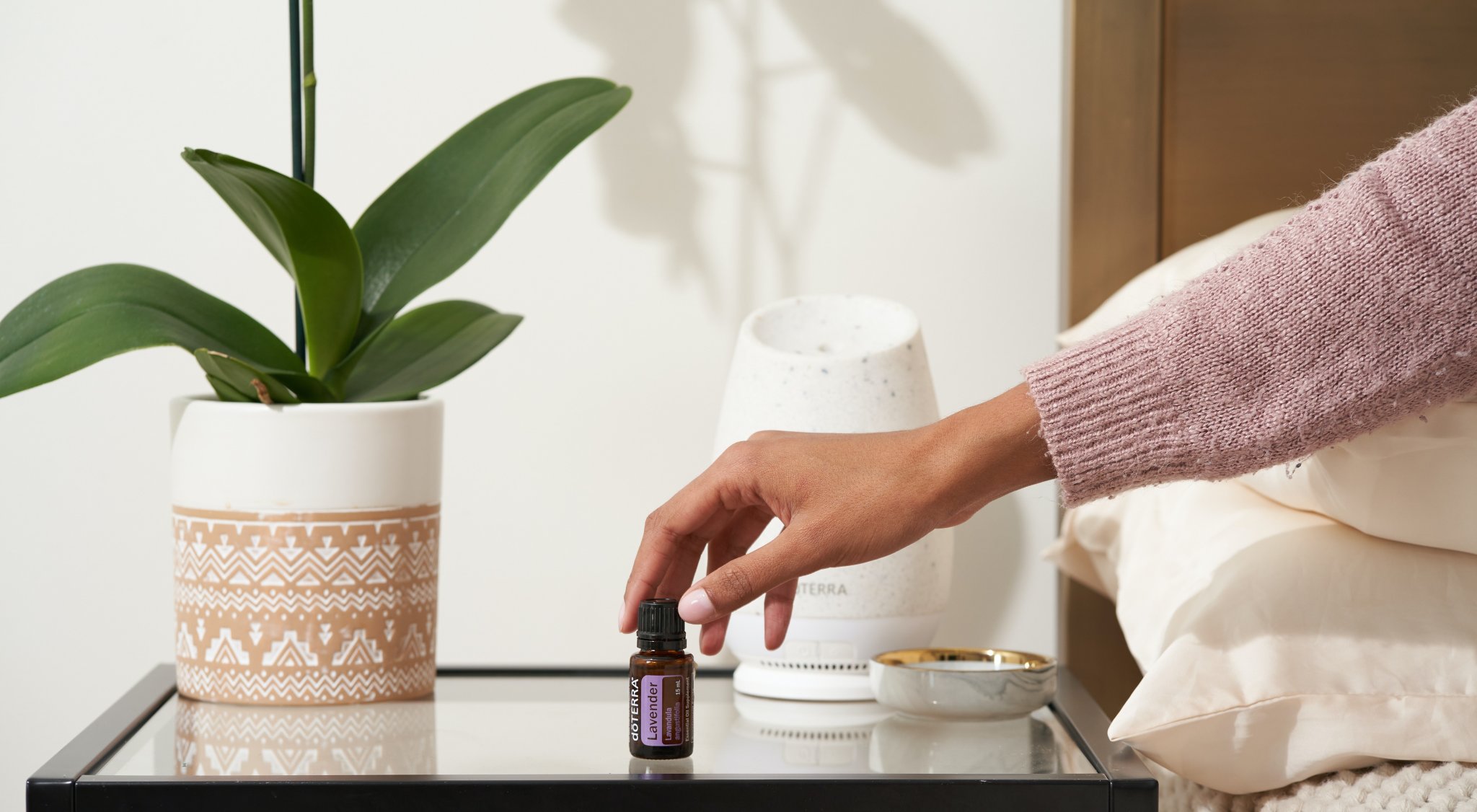
Lavender oil: Lavender oil is a highly concentrated form of lavender. By vaporizing the oil in a diffuser or inhaling it directly, you can breathe in the soothing scent to promote sleep. A massage with diluted lavender oil before bedtime can also have a relaxing effect. You can also put a few drops on a cloth and place it near your bed. Important terpenes such as linalool are present in the oil in a highly concentrated form.
Lavender flowers: Dried lavender flowers can be used as filling for lavender pillows or sachets. These pillows can be placed under your head or kept near where you sleep. The scent of the flowers is not as strong as that of the oil.
Lavender water: Lavender water is an alcohol-free distillate of lavender flowers that can be used as a body spray or room spray. Spraying lavender water on your pillow or in the room can also have a relaxing effect and promote sleep.
Lavender tea: Lavender flowers can also be brewed as tea. To make it, pour hot water over the dried flowers and strain after a few minutes. Drinking lavender tea is especially suitable for people who don’t want the scent in their bedroom.
Lavender-Infused Bath Additives: Lavender oil or dried lavender flowers can also be used as bath additives. This allows you to combine a relaxing bath with the calming effects of lavender.
Lavender plant in the bedroom: A real lavender plant in your bedroom can also help you sleep better. Not only does it look beautiful, but it also gives off a pleasant scent that has a relaxing and calming effect. Be sure to place the plant in a bright spot so it can thrive and release its fragrance.
Ready-made lavender sprays: Lavender sprays are a practical and easy way to harness the calming properties of lavender to improve your sleep quality. These sprays typically consist of a lavender oil extract mixed with water. You can easily make them yourself or buy them in stores and online. To benefit from the positive effects of a lavender spray, simply spray it on your pillow, your bedding, or into the air in your room before going to sleep. The relaxing aroma of lavender can help reduce stress, lift your mood, and thus promote restful sleep.
However, it’s important to note that the effects of lavender sprays can vary from person to person, and not everyone responds to the scent of lavender. Experiment with the amount of spray and how often you use it to find what works best for you.
Just figure out what works best for you!
Take a Cautious Approach When Using Lavender Oil
Essential oils are highly concentrated natural substances and should be used with care. This also applies to lavender oil. The oil should not be applied undiluted to the skin or taken internally. This could lead to allergic reactions.
Although lavender oil is generally suitable for internal use, it’s best to leave this type of treatment to a trained aromatherapist.


Lavender Oil – What to Look for When Buying
There are significant differences in the quality of lavender oils. High-quality lavender oil is produced through steam distillation of freshly harvested lavender flowers.
In this process, the flowers are heated so that the steam extracts the essential oils from the plant parts.
The oil is then condensed and separated from the water.
This process ensures a pure and concentrated lavender oil. Some lavender oils contain synthetic additives or are derived from low-quality plant materials.
Such oils are often diluted with similar fragrances or cheaper oils to reduce costs. These lavender oils do not offer the full health benefits associated with high-quality lavender oil.
Here are a few things to keep in mind when purchasing:
- It’s best to buy products labeled “100% pure essential oil” or, for example, “naturally pure lavender oil.” There may be valid reasons why the oil isn’t sold in its pure form—for instance, if it’s marketed as a massage oil.
- Organically grown oils often have higher terpene concentrations and are produced without herbicides and pesticides that are harmful to the human body.
- Make sure the oil comes from a trustworthy source and, ideally, from a region known for its high-quality lavender cultivation (e.g., southern France or Bulgaria).
- Essential oils should be packaged in light-proof bottles (e.g., made of dark glass) to prevent light from breaking down the valuable compounds.
- A very low price may be a sign of poor quality. High-quality lavender oil comes at a price, but that doesn’t mean the most expensive oil is always the best.
- Genuine lavender oil has an intense fragrance and goes a long way. You only need a few drops of the oil, and it will scent the air for several hours.
- To be on the safe side, you can purchase lavender oil at a pharmacy or from a manufacturer you trust.


Is lavender dangerous as a houseplant in the bedroom?
Lavender as a houseplant in the bedroom is generally not dangerous. There are no specific risks associated with keeping lavender plants indoors.
However, you should follow a few care guidelines to keep the plant healthy and avoid problems such as mold growth or pest infestations.
Place the plant in a sunny spot and be careful not to overwater it. Good air circulation is also important to prevent moisture-related problems.
Of course, for people who are sensitive to the scents in the oil or are allergic to lavender, having a lavender plant in the room can also be problematic.


Side Effects of Lavender
Some people find the scent of lavender unpleasant and experience headaches. Allergic reactions to certain ingredients in lavender oil are also possible.
Quality also plays a crucial role here. Low-quality oils or those containing synthetic additives are more likely to cause headaches or other adverse reactions.
To determine whether you are sensitive to lavender, you should first use the essential oil in small, diluted amounts or perform a scent test. If you experience headaches or other symptoms, it’s best to avoid the oil or try a different brand.
Lavender Oil and Its Effects on Prepubertal Boys and Girls
Some studies⁴⁵ suggest that the use of lavender oil in prepubertal boys could lead to hormonal changes that might cause breast growth (gynecomastia).
The first study⁴ examined the cases of three prepubertal boys with gynecomastia and found that the use of lavender or tea tree oil in personal care products may be associated with this condition. The second study⁵ confirms and expands upon the findings of the first study. It identifies additional cases of premature breast development in girls and boys that could be linked to the use of lavender products. Children also have more sensitive skin and a less developed immune system than adults, which is why they may be more susceptible to side effects and reactions to essential oils. Although lavender is considered one of the most well-tolerated essential oils, you should still proceed with caution, especially when using it on children, and closely monitor how it is tolerated.


Conclusion – Lavender & Sleep
Lavender is excellent for promoting sleep, whether it’s fresh flowers in a pillow, a spray, tea, a bath additive, or concentrated lavender oil.
The active compounds in lavender that contribute to better sleep are called terpenes.
These aromatic compounds likely affect GABA metabolism in the brain and the limbic system, which is responsible for emotions. As a result, lavender can have a calming and anxiety-relieving effect. It’s important to ensure you use high-quality lavender.
The effects of lavender oil should not be underestimated. Essential oils can be very effective and, in rare cases, may also cause side effects. Some people may experience headaches or allergic reactions. Children before puberty should be especially cautious.
Some studies suggest a link between lavender oil in personal care products and hormonal changes in children.
All in all, however, lavender can be a great natural way to relax better and fall asleep.
Sources
- Koyama H, Toda M, Ueda M, et al. "Effects of lavender aroma on sleep quality in healthy Japanese students." Perceptual and Motor Skills, 2017;124(1):111-127. DOI: 10.1177/0031512516678323
- Kako H, Fukumoto S, Kobayashi Y, Yokogoshi H. "Linalool Odor-Induced Anxiolytic Effects in Rats." Journal of Natural Medicines, 2008;62(1):59-63. DOI: 10.1007/s11418-007-0210-0
- Kasper S, et al. Int J Psychiatry Clin Pract, 2013;17(Suppl 1):15-22. DOI: 10.3109/13651501.2013.813555
- Henley DV, Lipson N, Korach KS, Bloch CA. "Prepubertal gynecomastia linked to lavender and tea tree oils." New England Journal of Medicine, 2007;356(5):479-485. DOI: 10.1056/NEJMoa064725
- Ramsey JT, Li Y, Arao Y, et al. "Lavender products associated with premature thelarche and prepubertal gynecomastia: case reports and EDC activities." Journal of Clinical Endocrinology and Metabolism, 2019;104(9):5393-5405. DOI: 10.1210/jc.2018-01880


Recovery Blanket Summer
Available in multiple variants