Calf Stretches: 3 Gentle Exercises
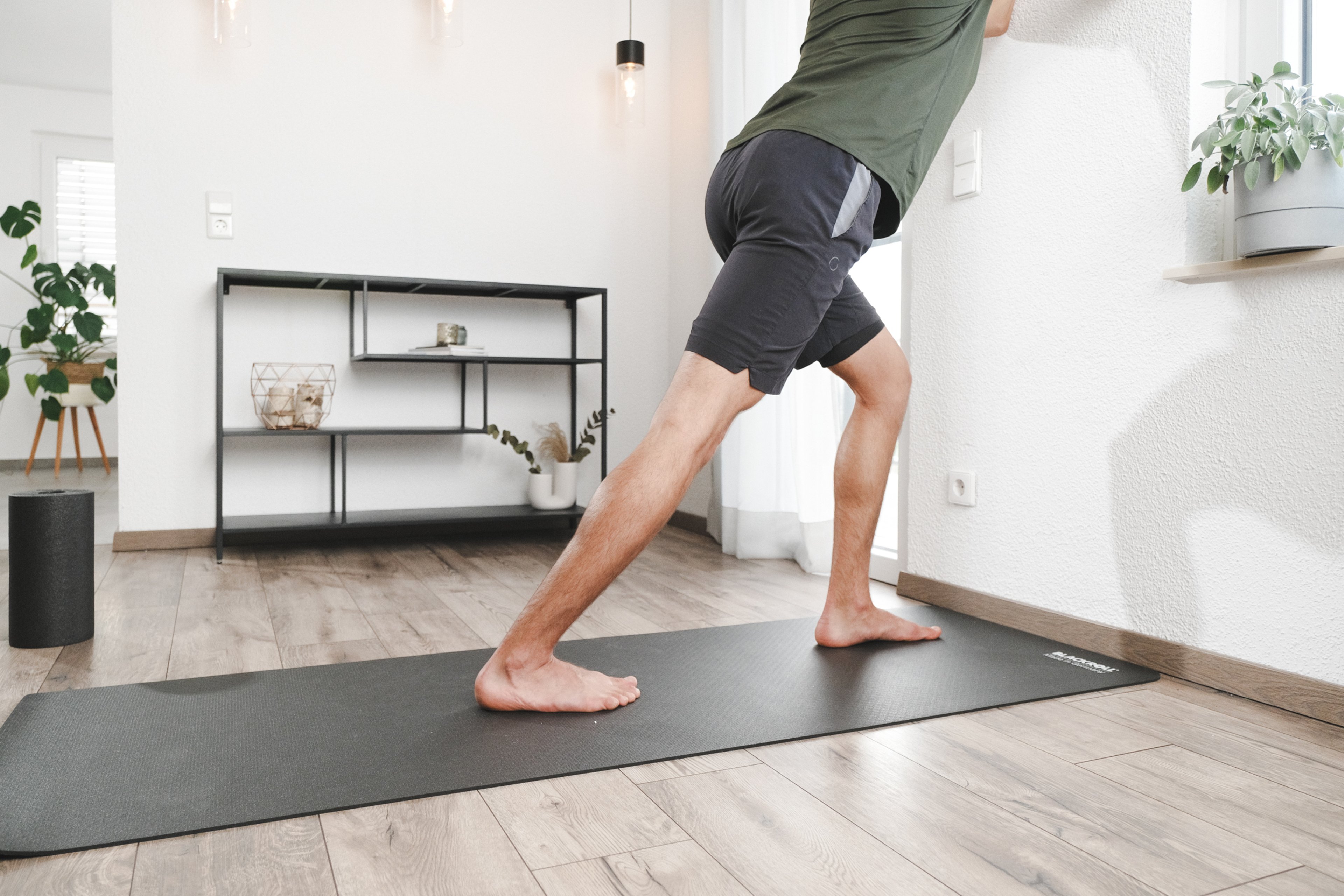
Loosen up your calf muscles and relieve tightness: We’ll show you 3 gentle and simple exercises you can do at home.
Time
- 13 minutes
- 3 exercises
Stretching Your Calf Muscles
Do your calves often feel tight? Especially after exercising? If you’re looking for exercises to stretch your calf muscles and relieve tension, this video is for you.
In this short routine, Master Trainer Stefan shows you effective stretching exercises for your calves.
The Calf—Anatomy and Function
The calf muscles are a group of muscles located on the back of the lower leg.
From an anatomical perspective, there is a superficial and a deep layer of calf muscles.
Superficial Calf Muscles
- Musculus gastrocnemius (gastrocnemius muscle)
- Musculus soleus (soleus muscle)
- Plantar muscle
Deep calf muscles
- Posterior tibial muscle
- Long flexor of the big toe
- Long flexor of the toes
- Popliteus muscle (knee-hollow muscle)
The main function of the calf muscles is to move the foot downward (plantar flexion), which is very important for walking. They also assist in the inward rotation of the feet (supination).
Symptoms of Shortened Calf Muscles
The calf muscles are an area where many people are prone to tension and functional shortening.
Shortened calf muscles disrupt the coordination of the muscle groups in the legs and can lead to imbalances throughout the musculoskeletal system .
Shortened calf muscles can occur especially when standing for long periods, particularly when high-heeled shoes are worn frequently.
Calf muscle shortening occurs when these muscles lose their normal length. The causes can be varied. Often, this results from excessive tension in the muscle, which leads to restricted mobility. Tense calf muscles can manifest in various ways.
The effects of shortened calf muscles can spread throughout the entire body, particularly because our bodies are connected by fascial tracts that run through the entire body. Tight calf muscles can therefore affect posture and lead to a variety of problems in the body.
These include:
- Calf Tension
- Shin pain
- Achilles tendon pain
- Heel spurs/plantar fasciitis
- Forefoot pain
- Knee pain
- Hip problems
- Swayback
- Upper body issues, such as in the thoracic spine, neck, and shoulders
Tight Calf Muscles: Cause
A common cause of shortened calf muscles is repetitive strain, such as from running. When the calf is subjected to continuous stress, it can become tight. This is especially true when the exercise is new or when the intensity, frequency, or duration of training is increased.
Tension can also result from overtraining . If the calf is not given sufficient time to recover between training sessions, it can become tense. This tension can manifest either as calf cramps or as a persistent, dull pain.
Inappropriate footwear can also contribute to tight calf muscles. In particular, wearing high-heeled shoes for extended periods can cause the calf muscles to tense up and thus contribute to shortening.
The Right Footwear for Tight Calves
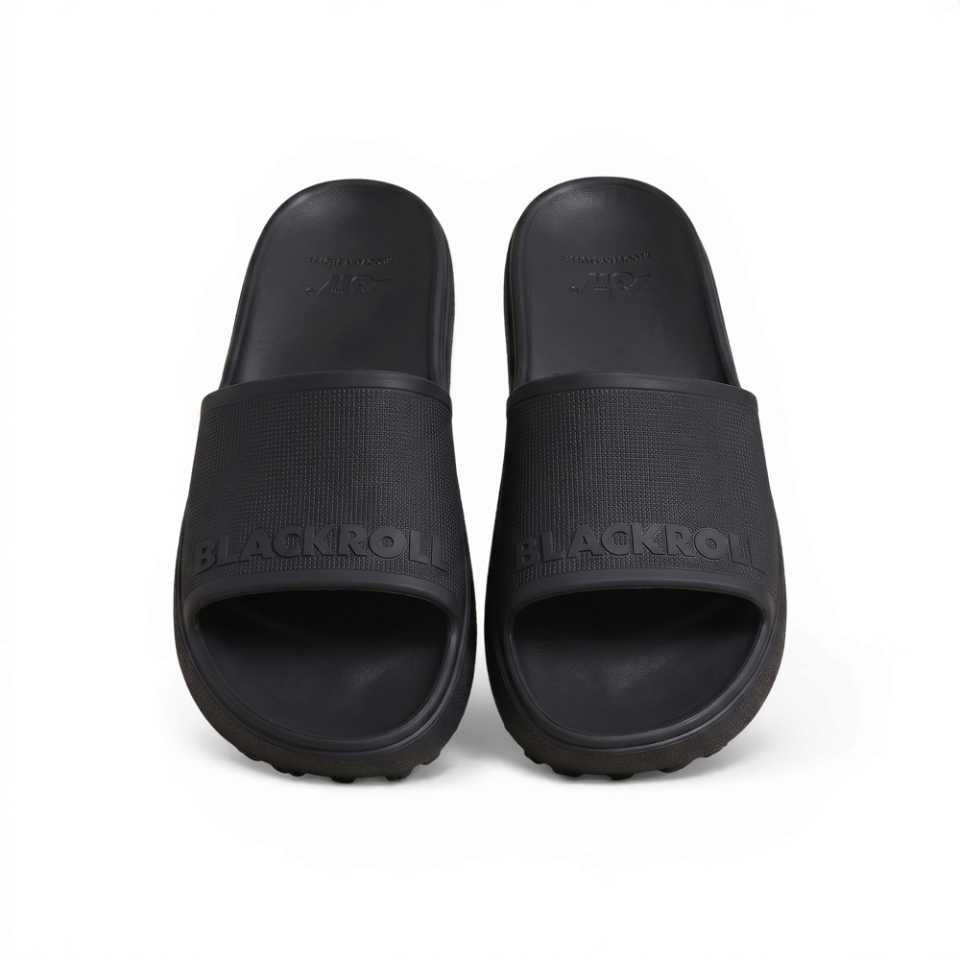
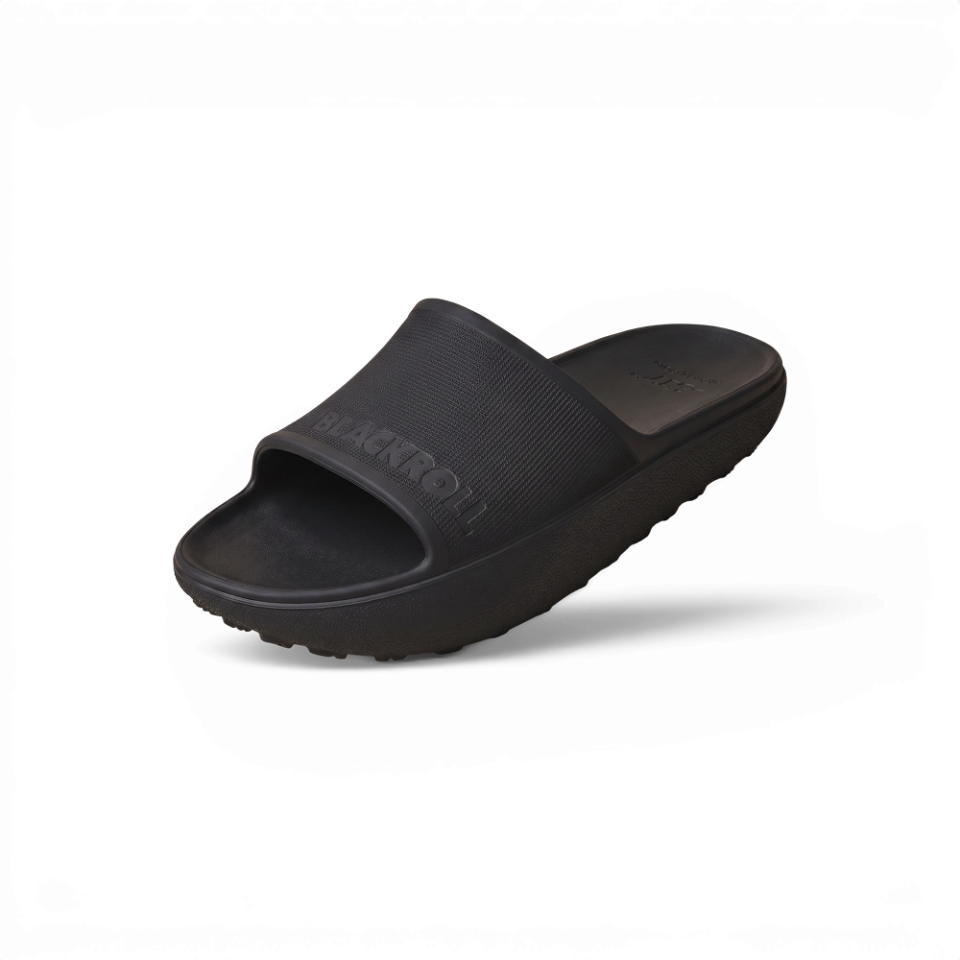
Recovery Slopes
Available in multiple variants
Injuries can also be a cause of shortened calf muscles. When the calf muscles are damaged by injury or overuse, they often respond with increased tension. This can occur particularly after sports injuries, muscle strains, or muscle overstretching.
There are also other causes of tight calf muscles that are not related to athletic activities. One of these is deep vein thrombosis, in which a blood clot forms deep within a vein in the leg. This can cause a feeling of tightness, pain, or discomfort in the calf.
If you suspect that your calf pain or tightness is due to a medical condition rather than physical activity, you should consult a doctor.
Calf Stretching Exercises—What to Keep in Mind?
Are you unsure if you’re doing something wrong during your calf stretching exercises? Here are some tips on how to increase your flexibility over the long term without injuring yourself.
Warm-up: Stretching is easier when your muscles are warm. This is also why your body is often so stiff in the morning. If you move around for a few minutes beforehand or do your stretches at the end of your workout, you’ll find it easier. A warm shower before stretching can also be helpful.
No pain: Stretch only to the point where you feel slight discomfort—never to the point of pain. Otherwise, there’s a risk that your body will react by tensing up as a protective measure.
Focus on the muscle you’re stretching: You’ll notice that one side of your body is often tighter than the other. Work on balancing this out over time. You can think of stretching as a form of body awareness training.
Breathe: Breathe calmly and evenly while stretching. You can also use breathing techniques from yoga to further calm your nervous system. It’s important not to hold your breath while stretching.
Practice regularly: You’ll make the most progress if you stretch regularly—daily or as many days a week as possible. At a minimum, aim to do stretching exercises two to four times a week.
Stretching Your Calves While Standing
Here are three exercises for stretching your calves while standing and for mobilizing your ankle joint. Perform each exercise for about 60 seconds on each side.
Calf Stretch
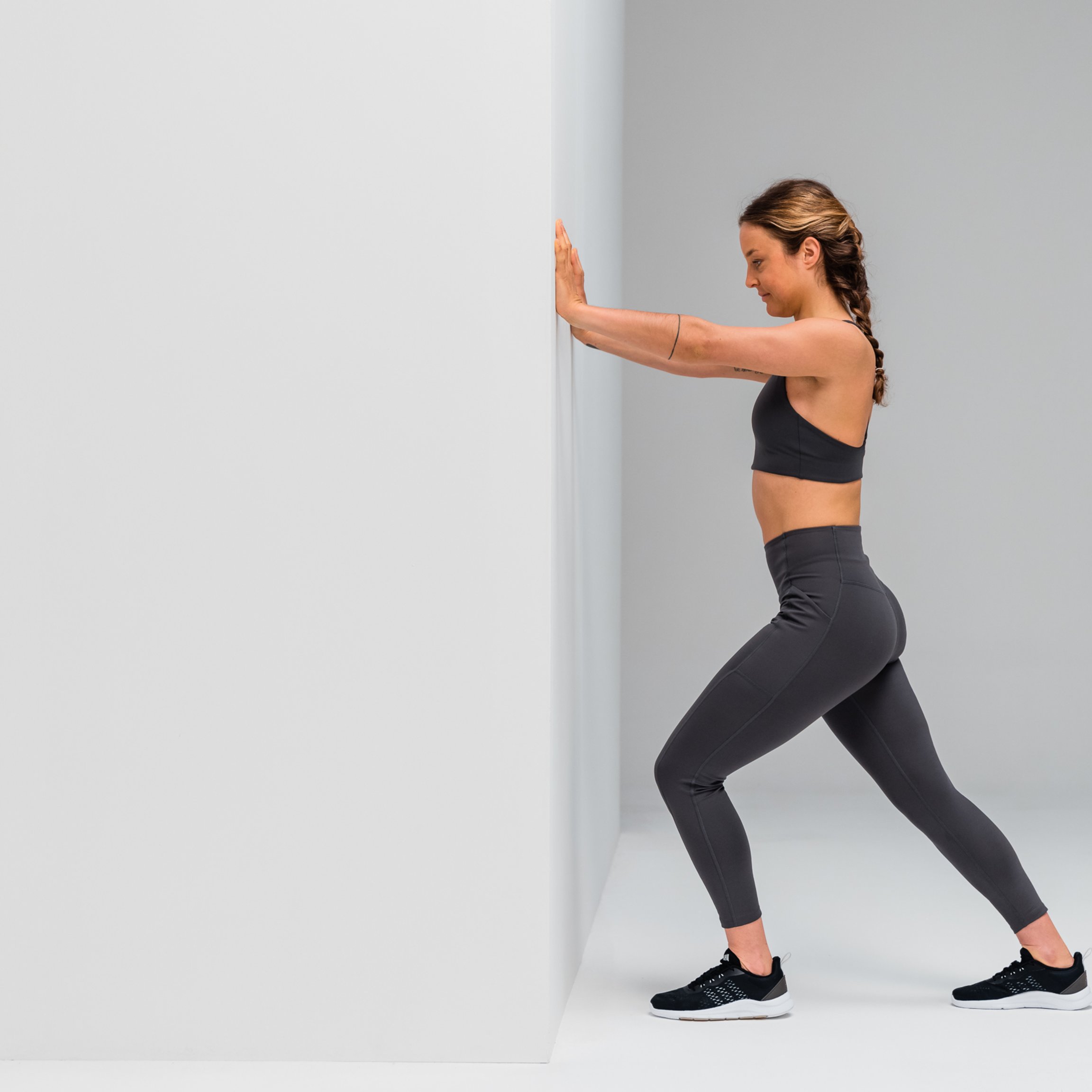
Stand in a lunge position in front of a wall. Support yourself with your hands. Shift your body weight onto your front leg. Make sure the entire sole of your back foot is flat on the floor. Keep your knee straight.
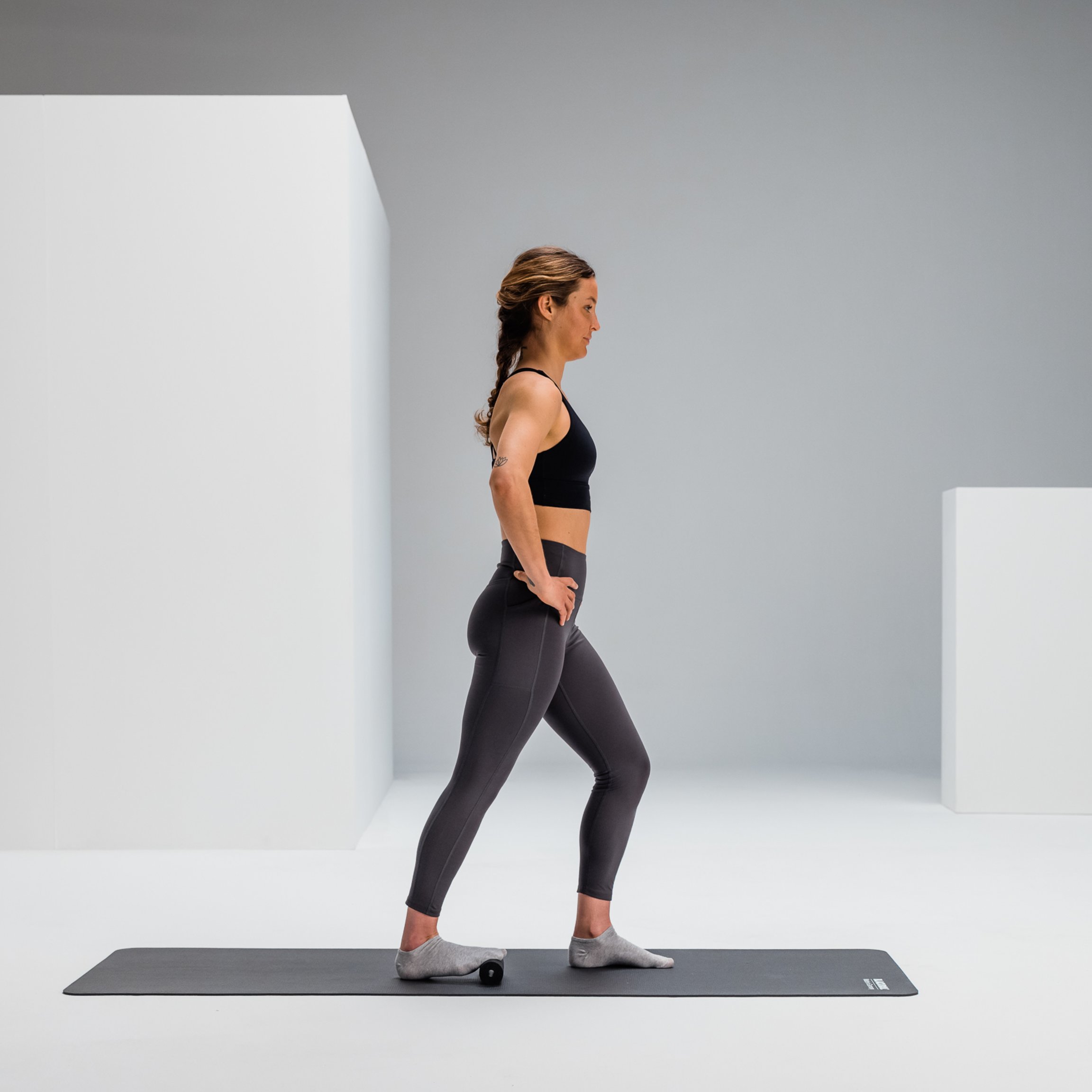
Calf Stretch with a Foam Roller
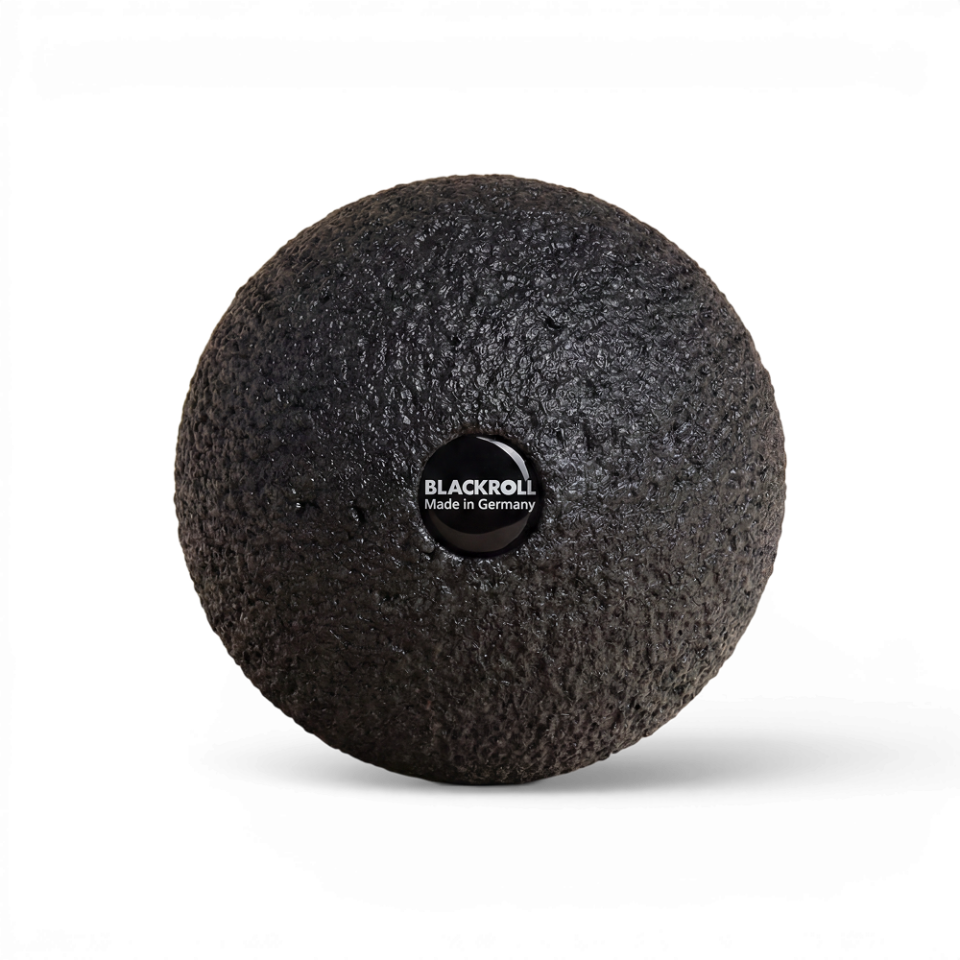
Start in an upright standing position. Place the ball of your foot on the foam roller. Keep your heel on the floor and your knee straight. Shift your weight forward. This will increase the stretch in the sole of your foot and your calf muscles. To strengthen the muscles while stretching them, press the sole of your foot into the roller. Release the tension. Go a little deeper into the stretch.
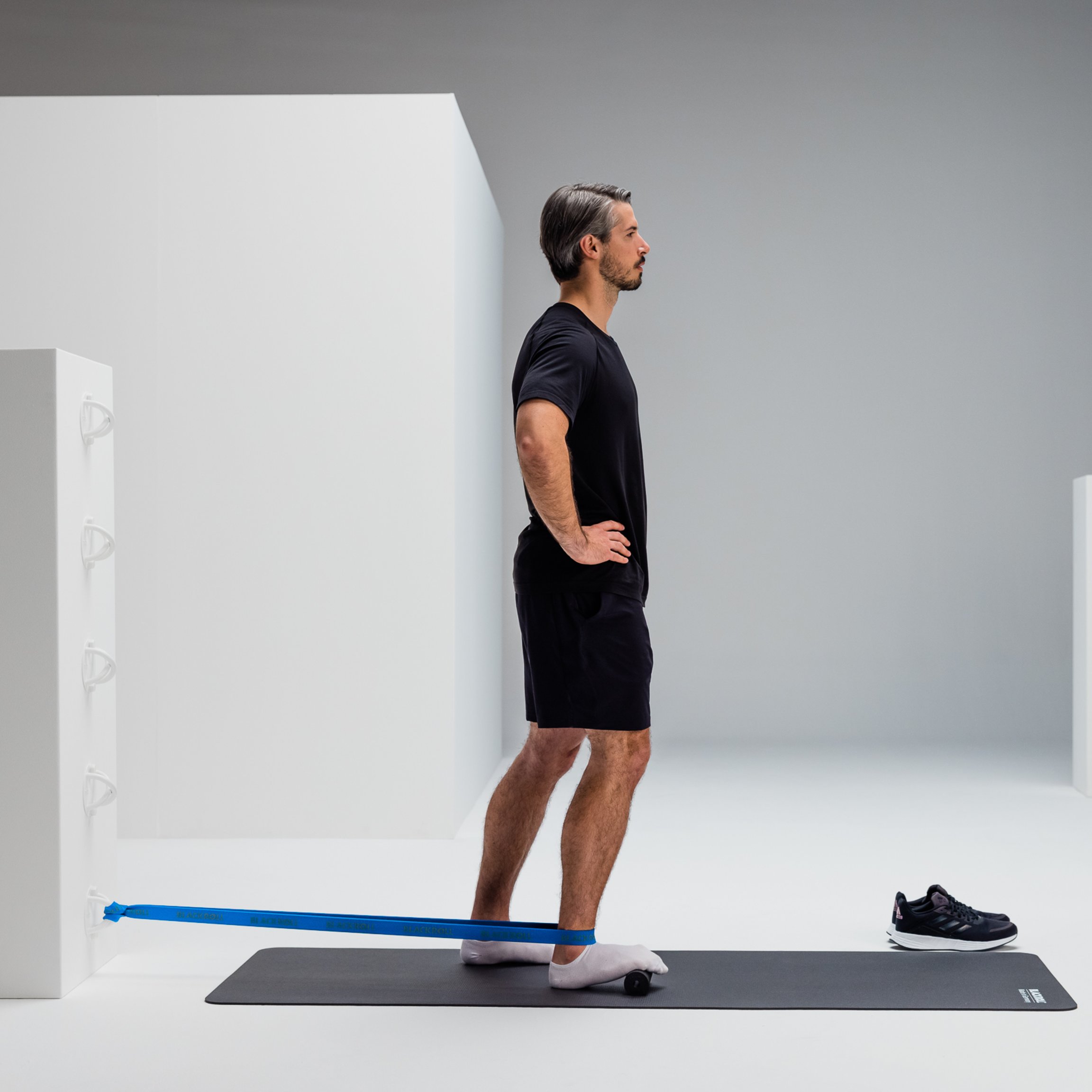
Ankle Joint Mobilization
Start in an upright standing position and place a MINI under your forefoot. Wrap the SUPER BAND around your shin from behind for targeted ankle joint mobilization. Keep your heels on the floor. Bend your knee and push your body forward. Hold the position. You can also perform small movements by pushing your knee forward and backward.
Stretching Your Calves While Seated
A simple way to stretch your calves while sitting is to use a fitness band. You can use different bands for this. Here are two variations for stretching your calves while sitting. Hold the stretch for at least one minute on each side.
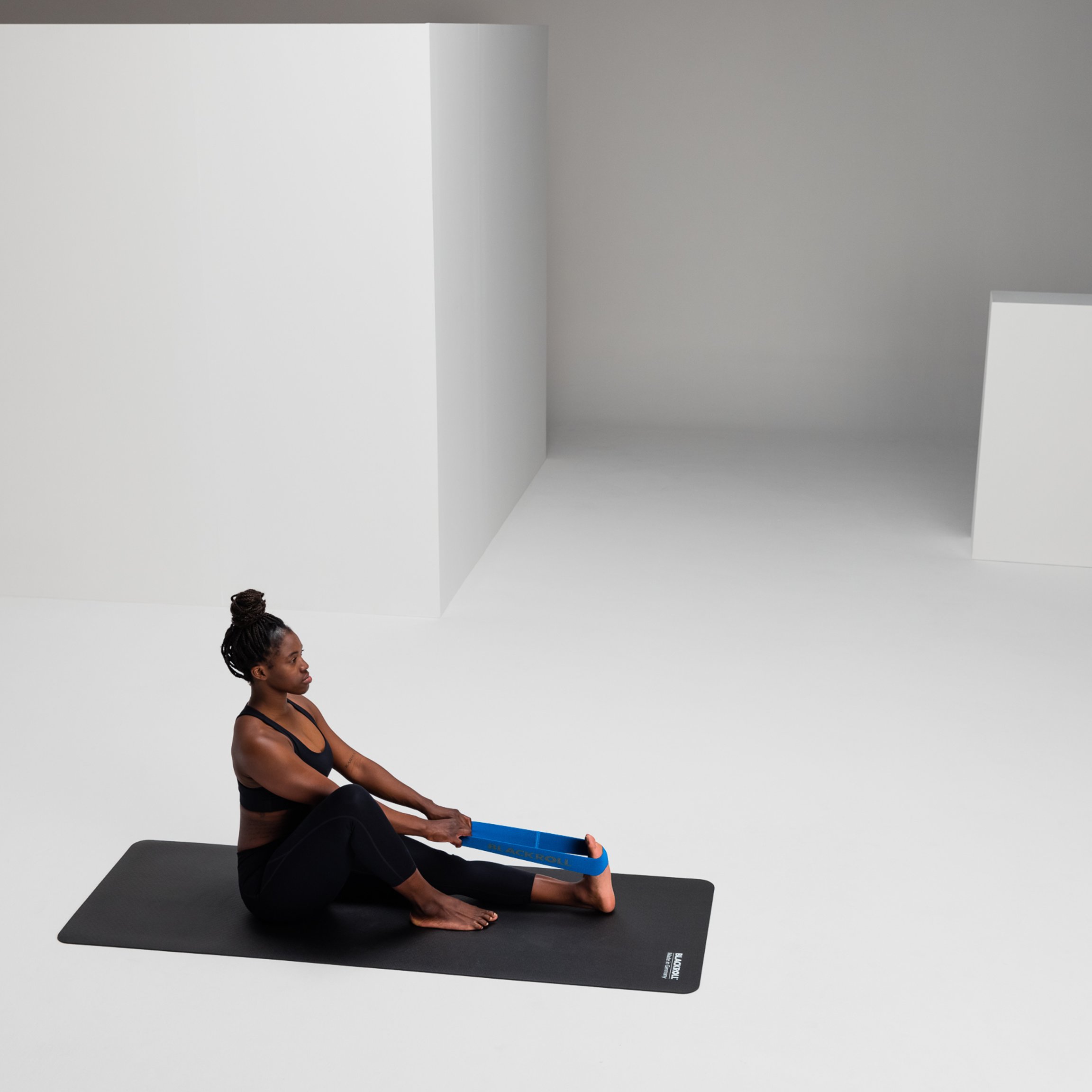
Calf Stretch
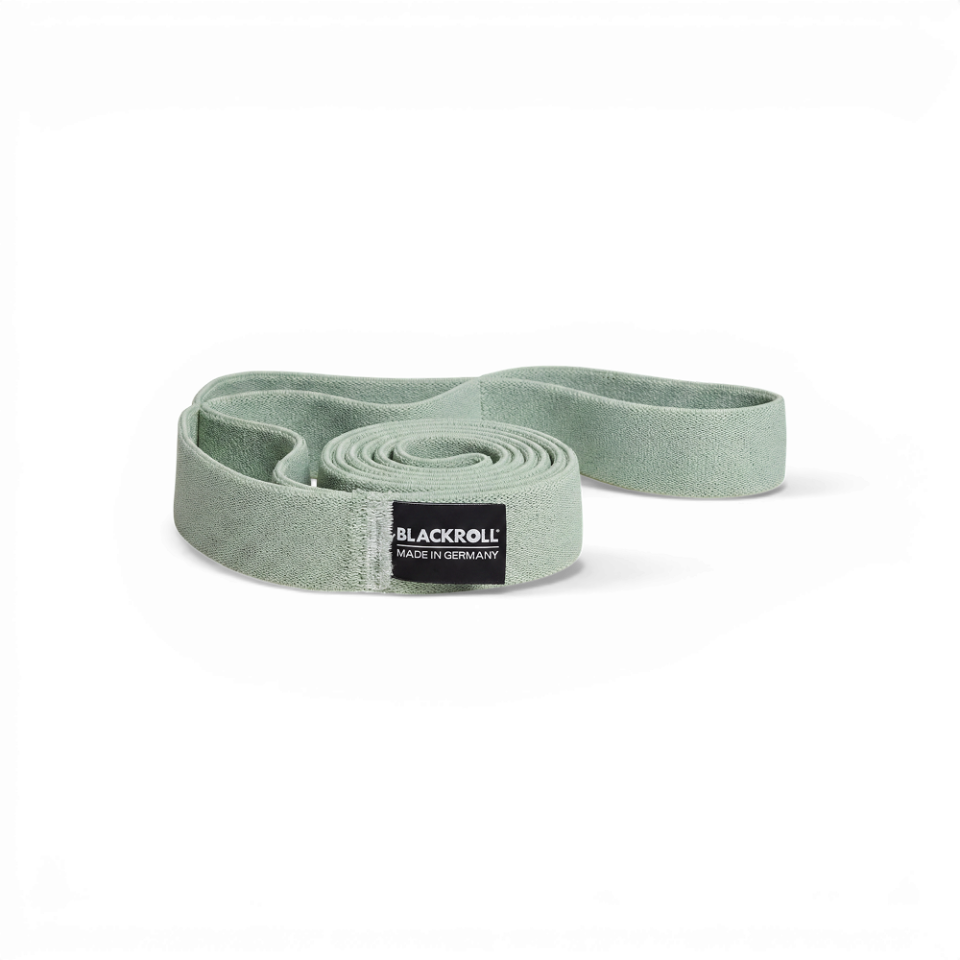
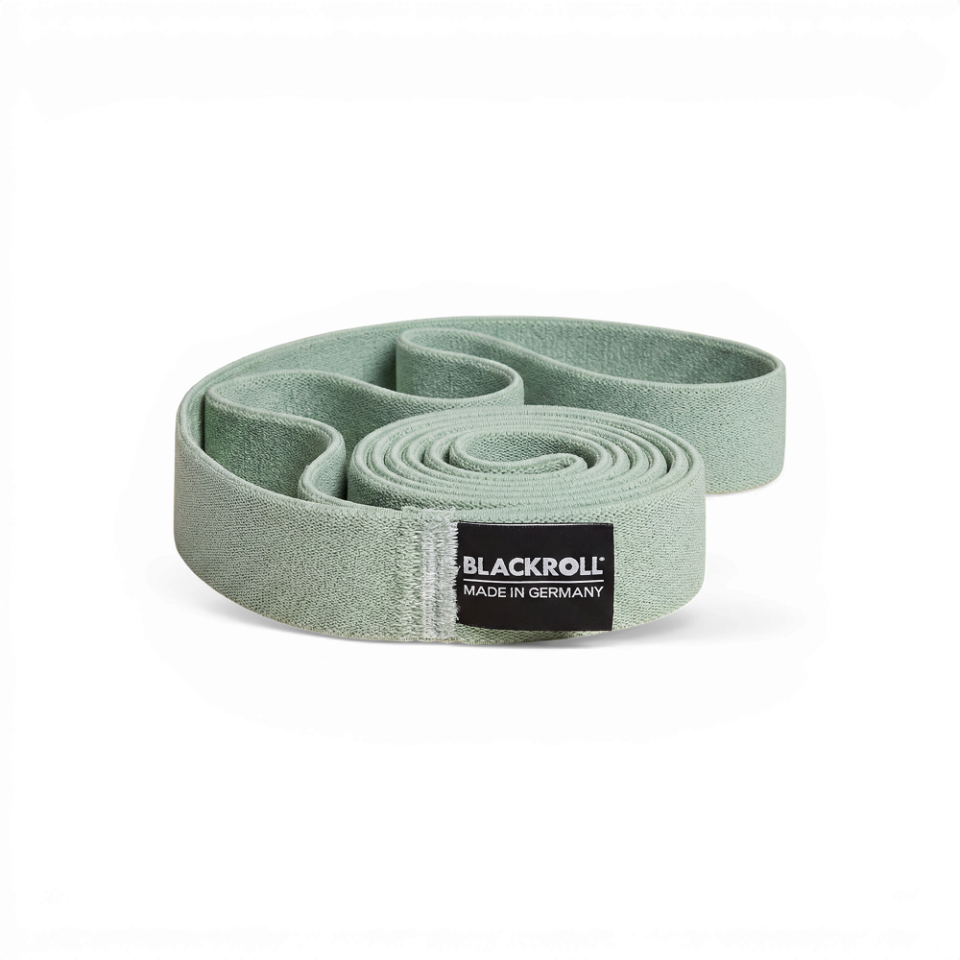
While sitting, wrap the MULTI BAND around one foot. Extend your leg. Grasp the band with both hands. Pull the MULTI BAND slightly toward your body. Hold this position. While stretching, actively pull your toes toward your torso. This exercise can also be performed effectively with the LOOP BAND or SUPERBAND.
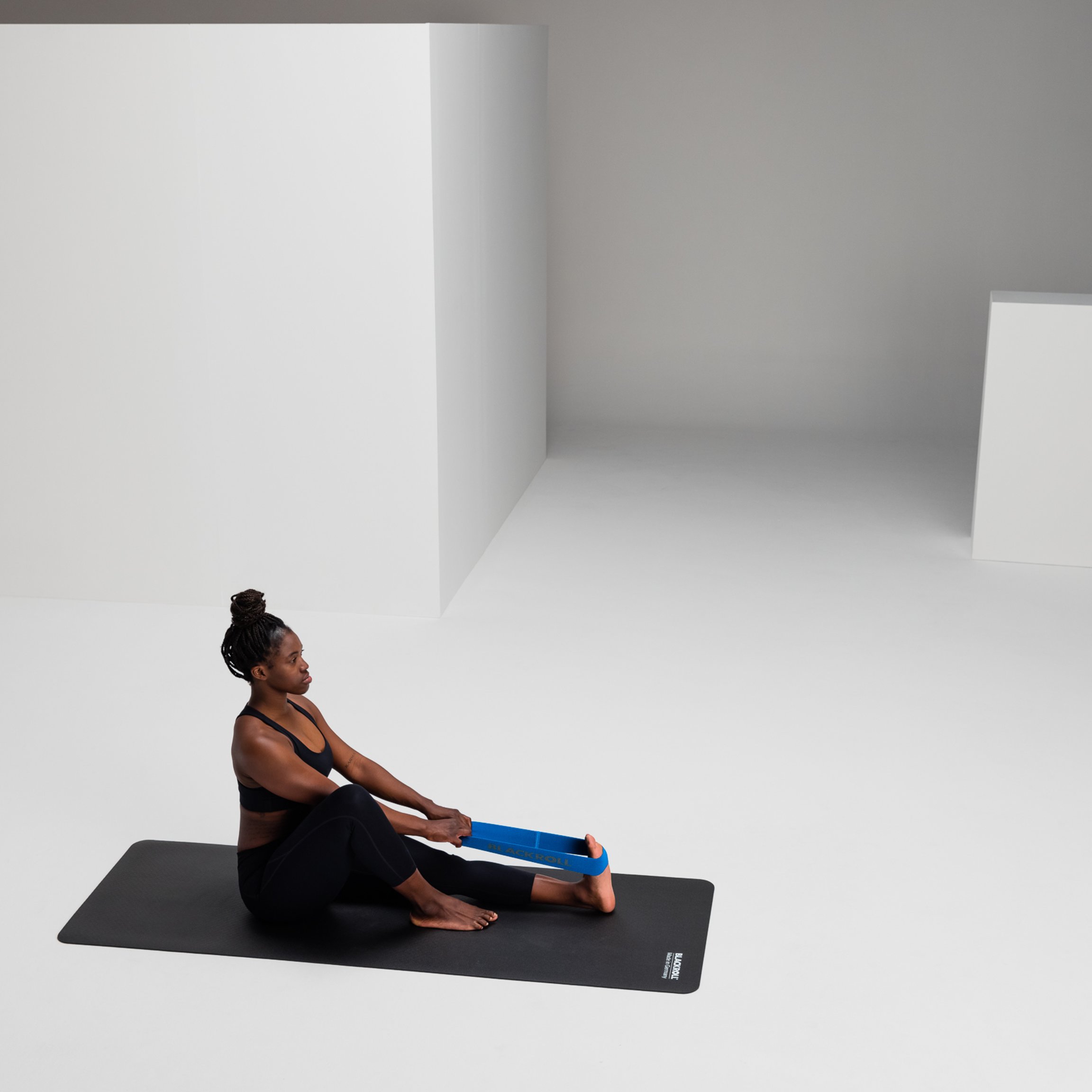
Calf Stretch
While seated, place the BLACKROLL LOOP BAND around one foot. Extend your leg. Grasp the other end of the band with both hands. Pull the BLACKROLL LOOP BAND toward your body. Hold this position. Keep your head in line with your spine.
Loosen the calf muscles – relieve muscle tension in the calves
In addition to stretching, fascia self-massage offers an effective method for loosening the calf muscles and releasing muscle tension. These exercises can easily be combined with calf stretches. It’s best to perform them right before stretching your calves to release tension in the tissue and make the stretching exercise even more effective. Below are a few exercises to inspire you. Perform the self-massage exercise until you feel a noticeable “release” in the muscles
Massaging the Calves
Sit in a long-sitting position and place your calf on the BLACKROLL so that it is centered on your lower leg. Using your arms for support, push and pull yourself back and forth on the foam roller so that it rolls along the muscles of your calves. Alternate the direction as you roll. After about 30 seconds, you can switch sides.
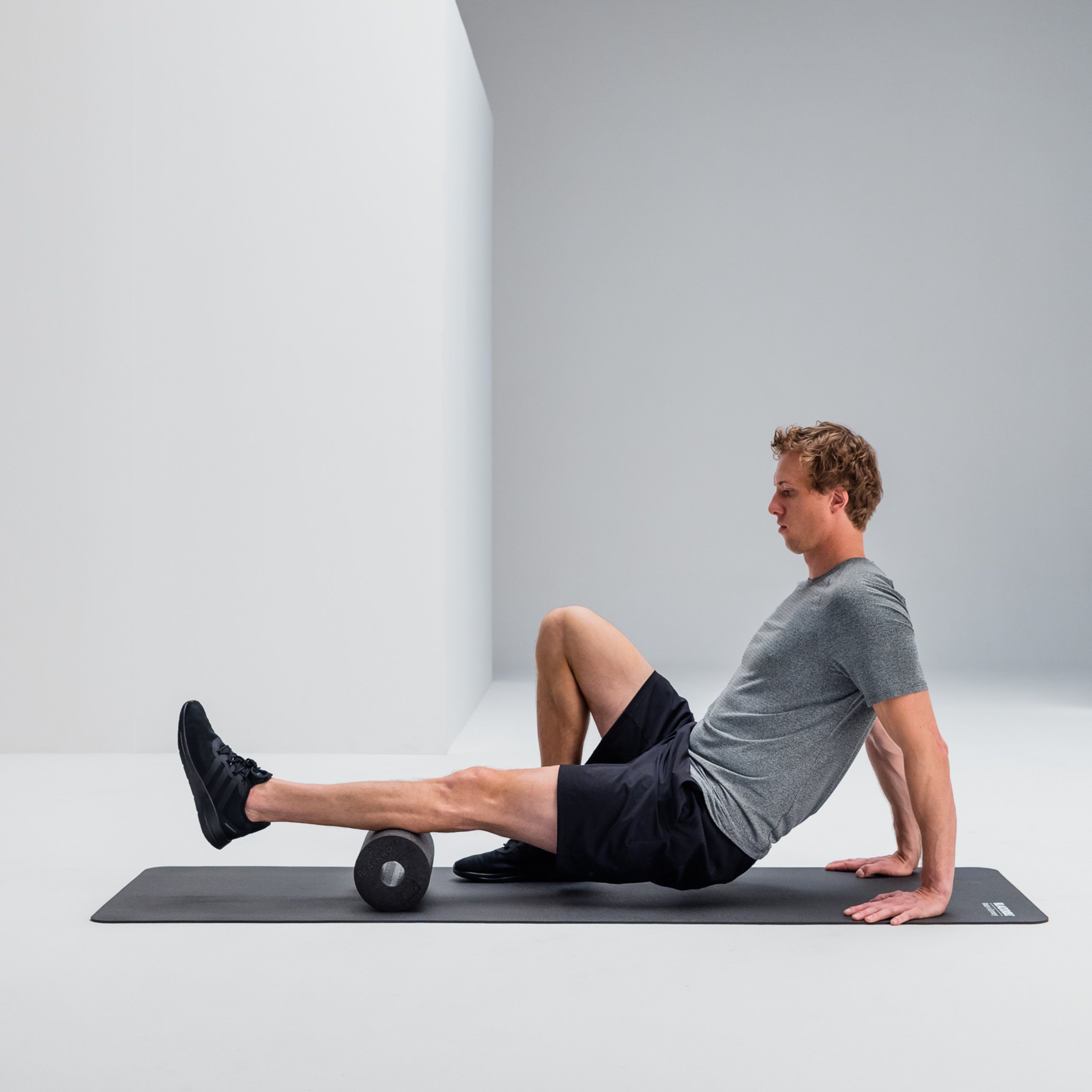
Calf massage
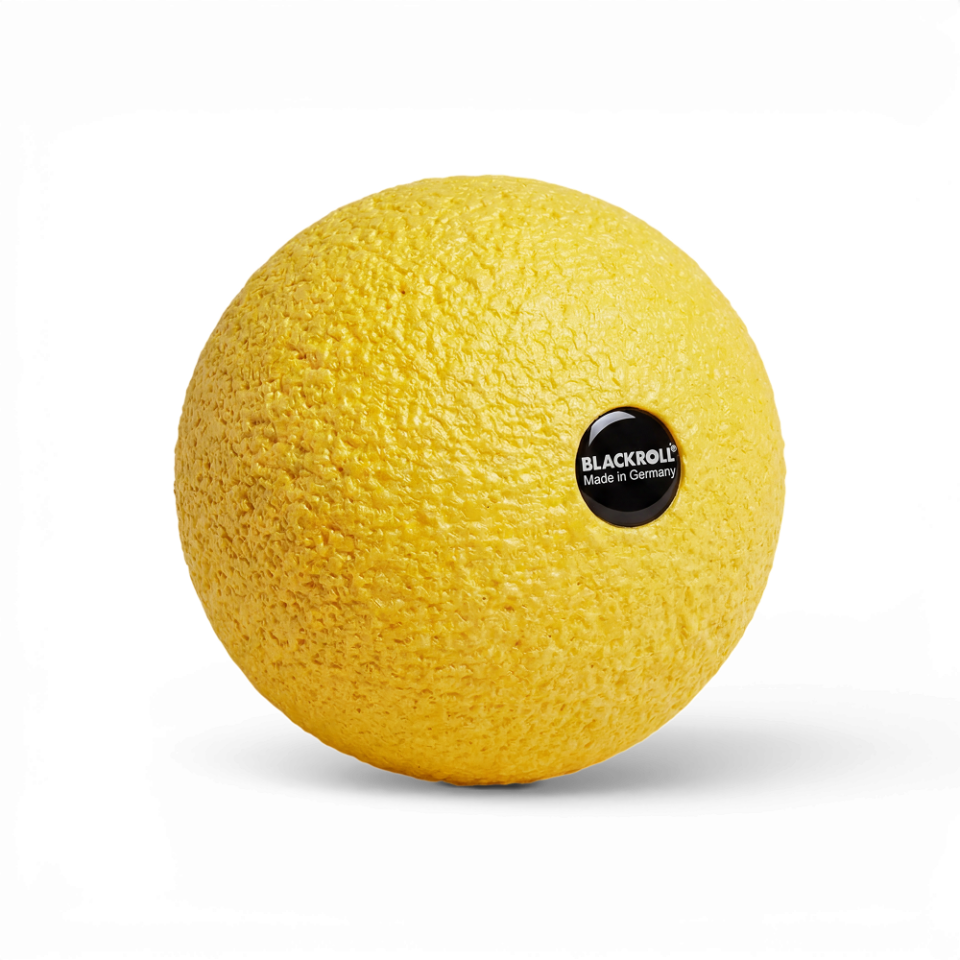
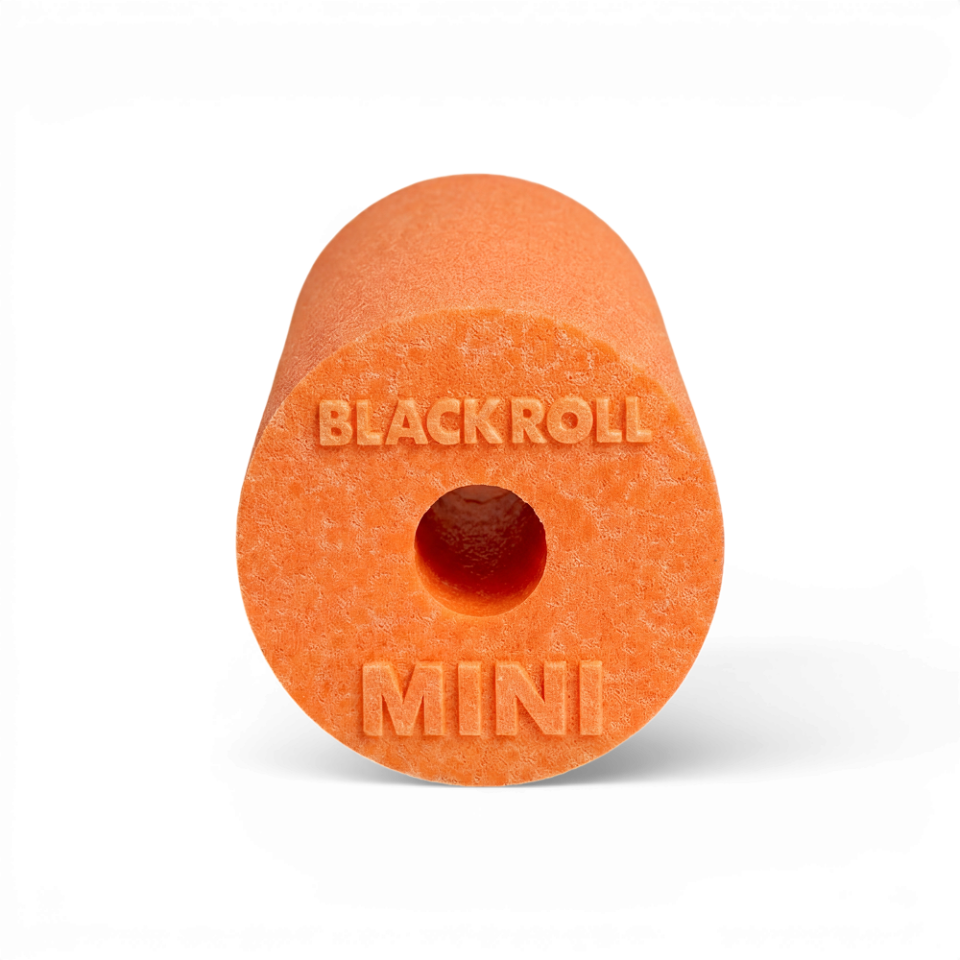
While sitting, bend one leg at the knee. Place the calf of the extended leg on the MINI. Lift your buttocks off the floor. Slowly roll out your calf. Placing a BLOCK under the MINI makes the exercise even easier to perform. You can also perform this exercise with our STANDARD, the DUOBALL, or the BALL 08.
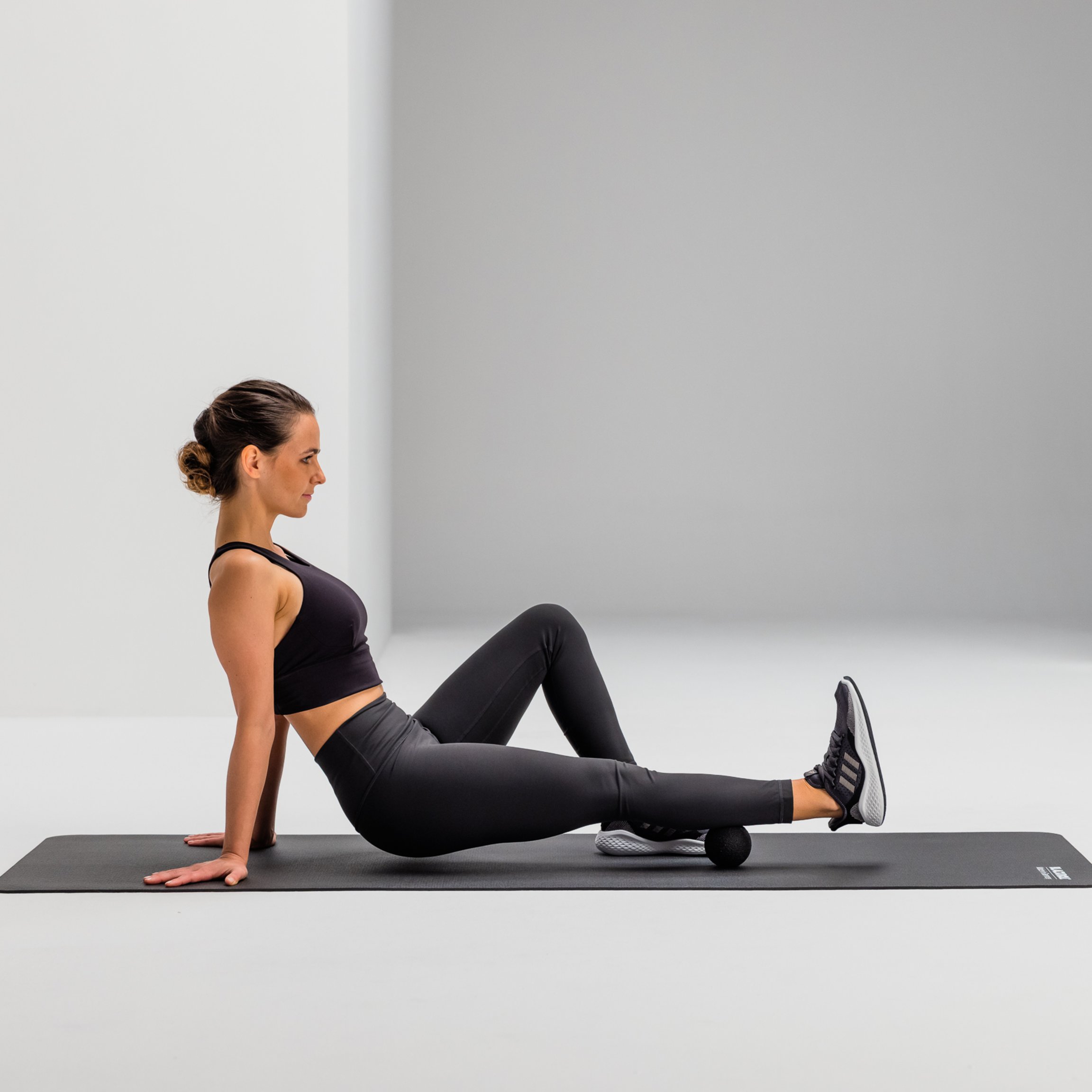
Loosening the Calf
Get into a kneeling position. Wedge a BLACKROLL as shown in the picture as close as possible to the back of the knee, between the lower and upper thigh. Sit back on the roll with your buttocks. Move your buttocks to the right and left to release tension points in your legs. Lean your upper body further back for more pressure.
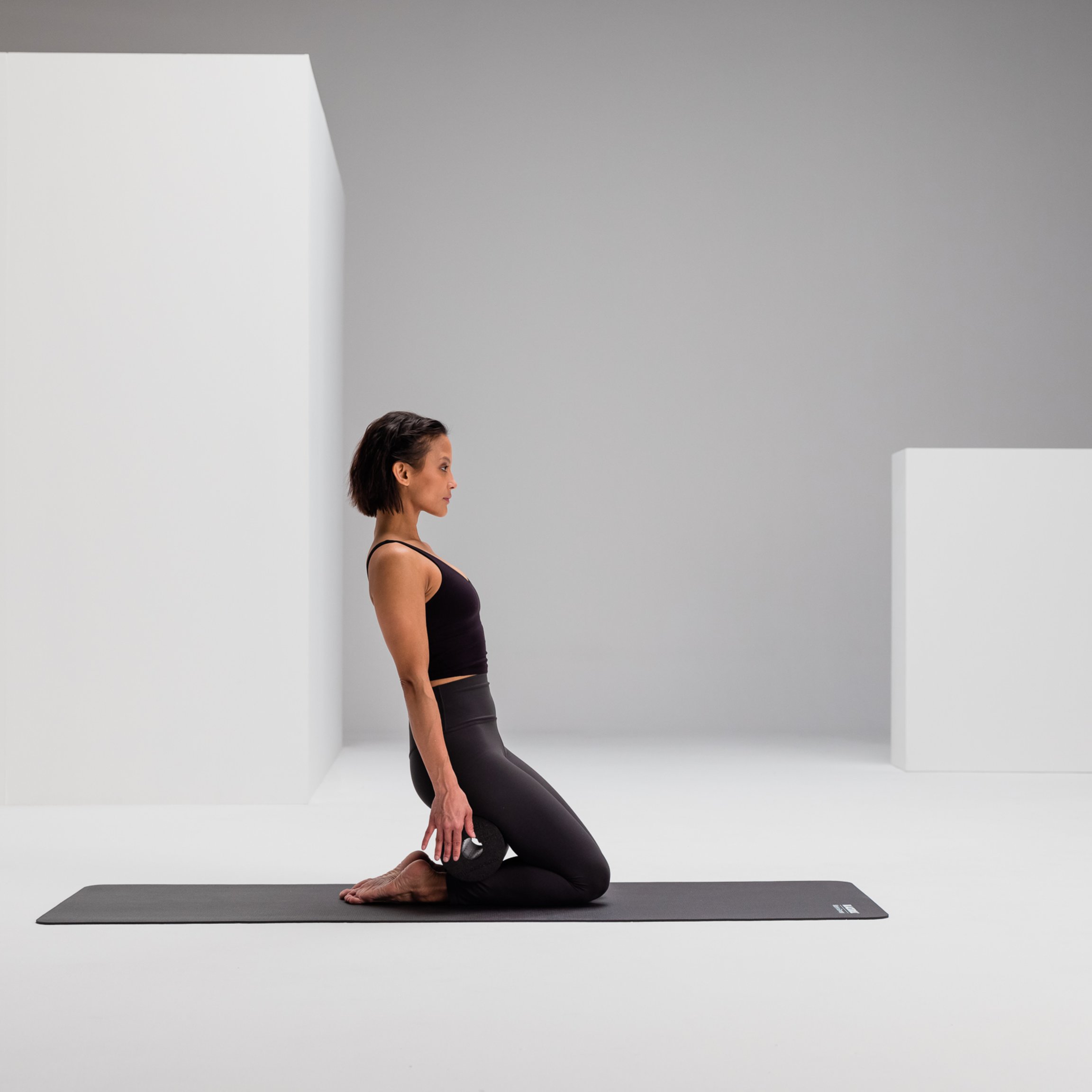
In addition, our trigger roller makes it very easy to relieve tightness in the calf. The acupressure technique is ideal for releasing deep calf tightness. Locate the spot in your calf that hurts the most.
Trigger Point Massage for the Calf
Lie down and place your calf on the TRIGGER. Find a tender spot. Stay on that spot. Relax your muscles. Focus on your breathing. Move your foot up and down once the initial pain has subsided.
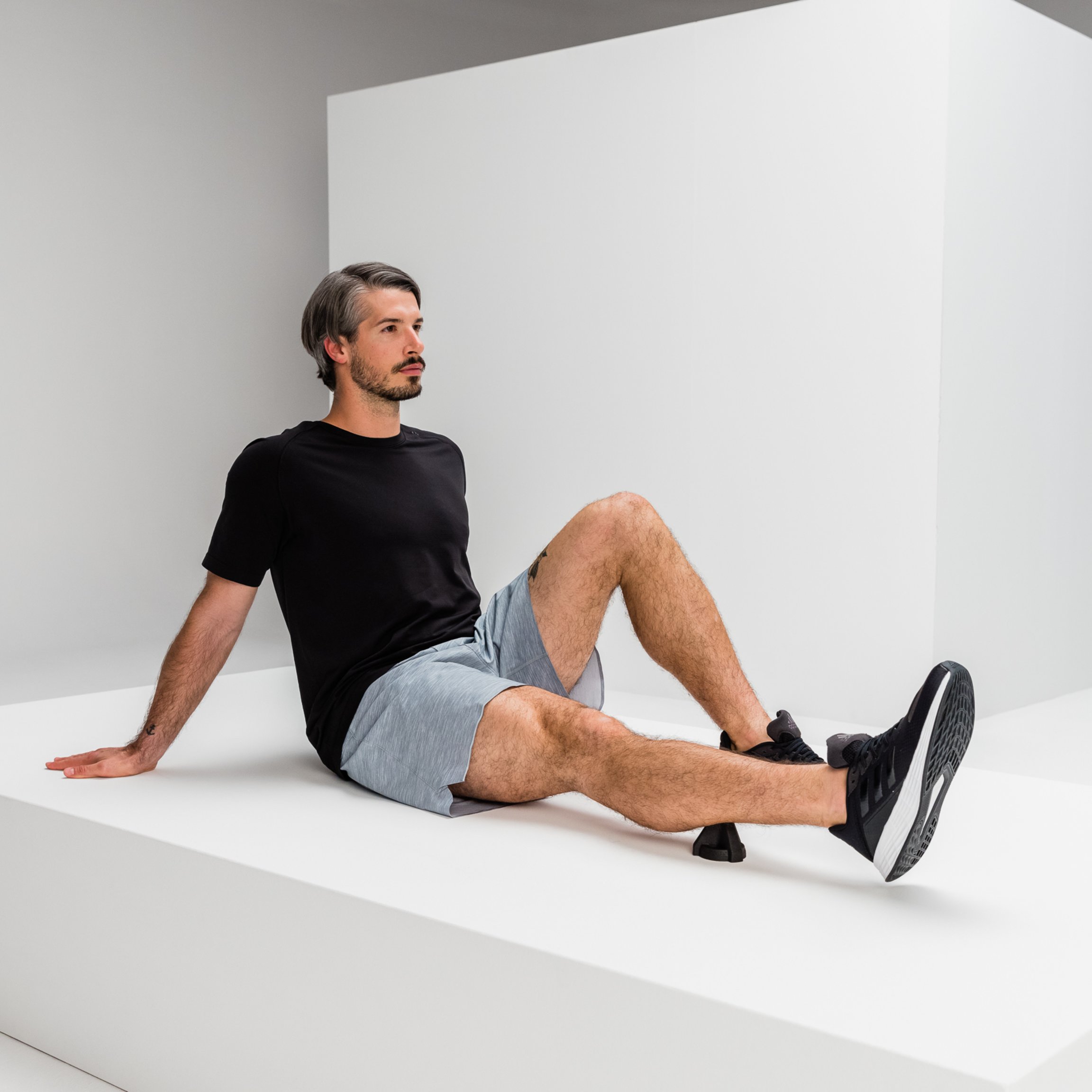
Mobilizing the Ankle
Sometimes stretching your calf alone isn’t enough to improve mobility in your ankle. You might want to consider a holistic program. In this video, Master Trainer Stefan shows you exercises to mobilize your ankle and improve your mobility in the long term.
The workout includes myofascial self-massage, stretching exercises, joint mobilization, and strength training for underactive muscles.
Why not give it a try and incorporate this exercise routine into your workout? You might discover even more benefits for yourself. Have fun with it.
Calf Pain
Do you know that feeling when your calf hurts?