Piriformis Stretches: 6 Exercises to Relieve Pain
Exercises for Piriformis Syndrome
Focus areas
- Gesäß
- Unterer Rücken
- Rücken
- Beine
Time
- 17 minutes
- 6 exercises
Your exercise routine for stretching the piriformis muscle
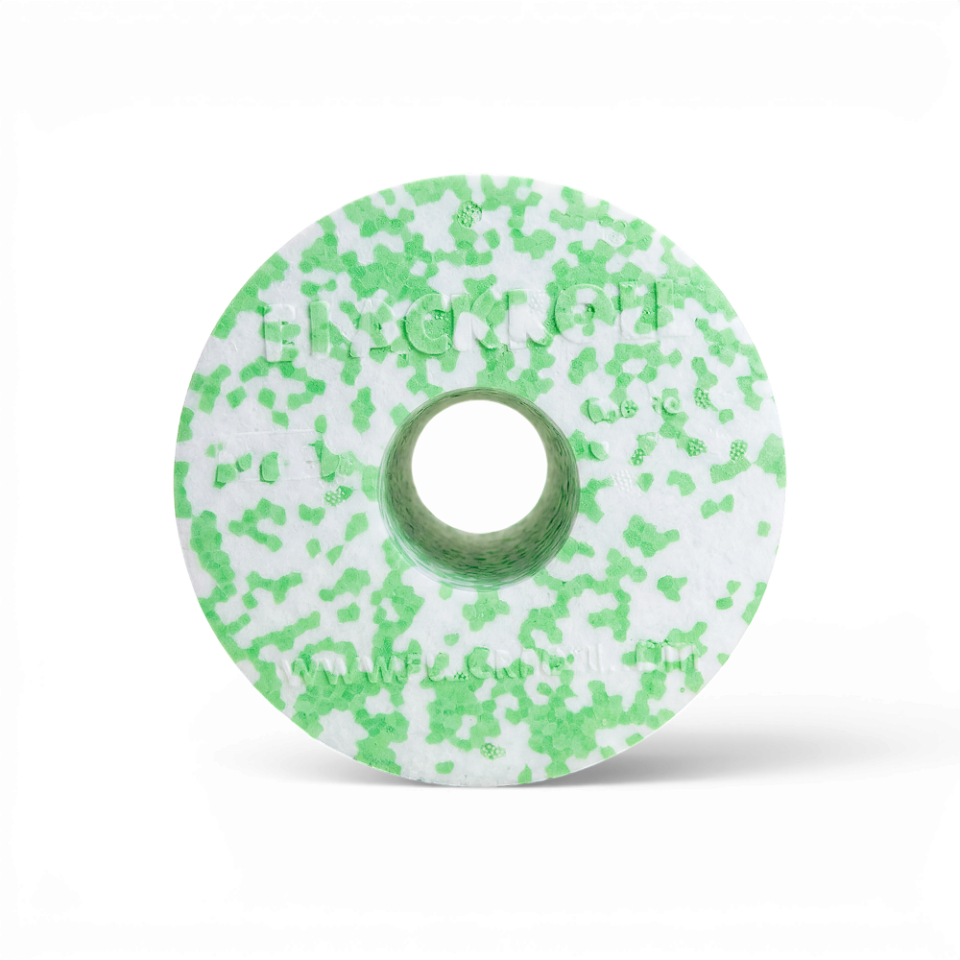
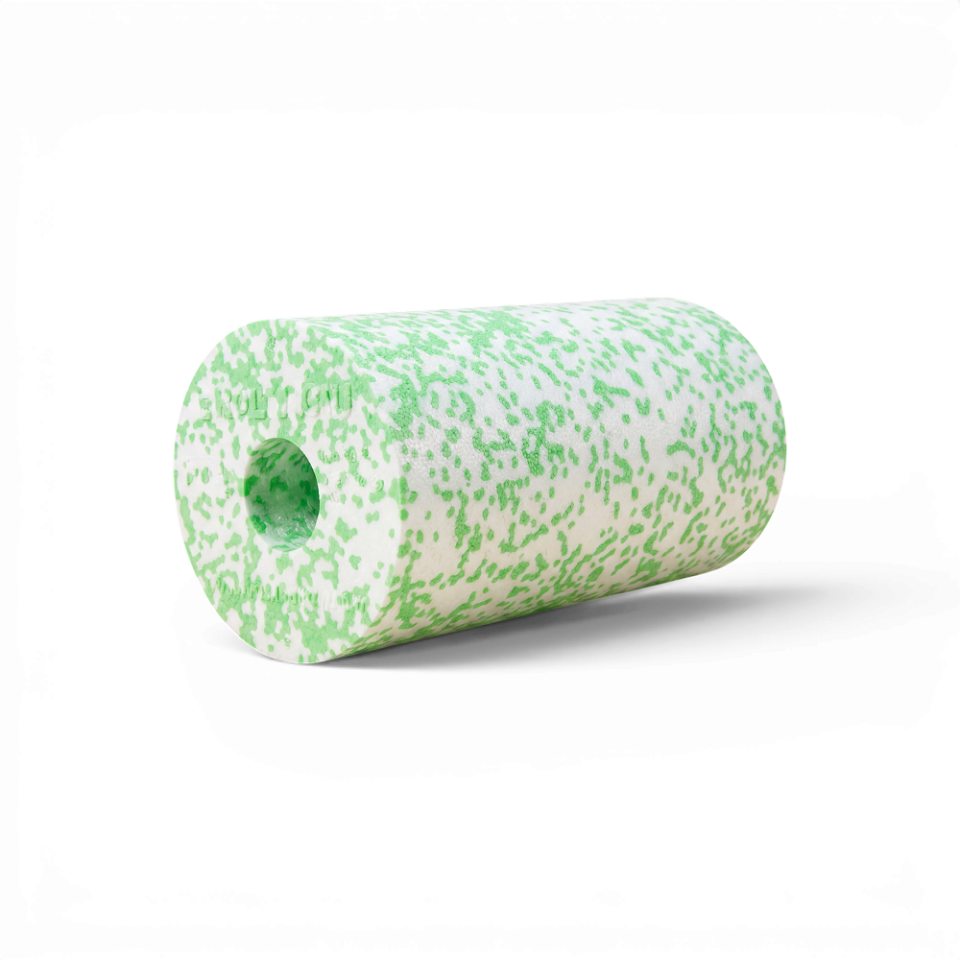
In the following video, our Master Trainer Stefan shows you how to easily stretch your piriformis muscle. You can easily do these exercises at home. All you need is: a BLACKROLL or a BALL 12, and optionally the LOOP BAND or SUPER BAND.
Grab your gear and get started with Stefan. Have fun!
If the piriformis muscle is the cause of the pain, manual therapy, various exercises, and complementary treatments can help relax the muscle.
Physical therapists don’t just focus on the piriformis muscle; they also treat joints and other muscle groups, such as the gluteal muscles. However, it’s important to avoid uneven strain and correct improper movement patterns to achieve long-term improvement.
Stretching the Piriformis While Standing
Stretching the piriformis while standing is a practical way to relieve discomfort in the buttocks and lower back. Here are two exercises for you.
First, we’ll use targeted trigger point massage to release tension from the muscle-fascia tissue. Then, we’ll stretch the piriformis muscle while standing.
Perform each exercise for 60–90 seconds per side.
Trigger Point Massage for the Buttocks
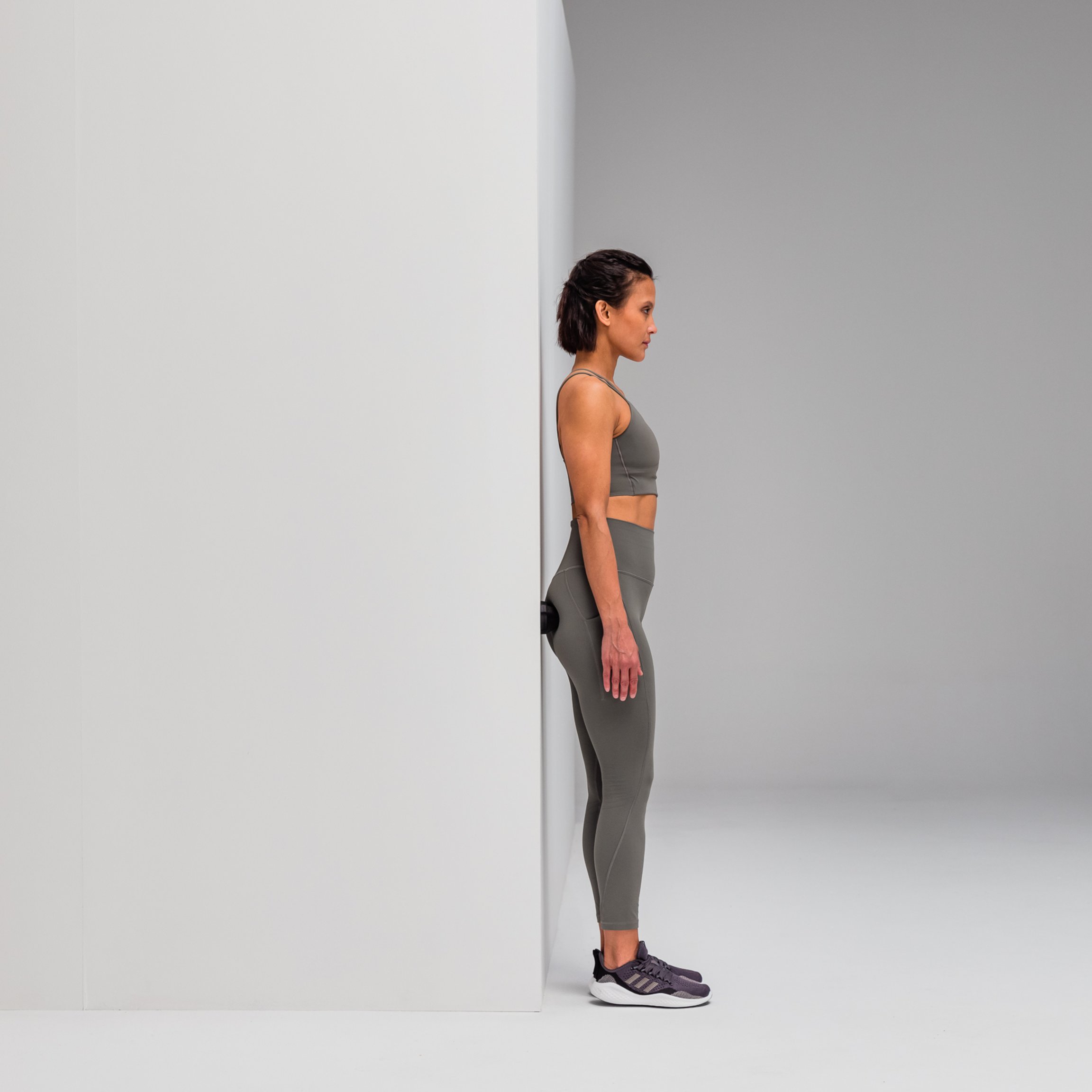
Stand with your back to the wall. Place the TRIGGER on a painful spot on your gluteal muscle. Press your body against it. When the pain subsides, begin circling your leg to promote mobility.
Standing Piriformis Stretch
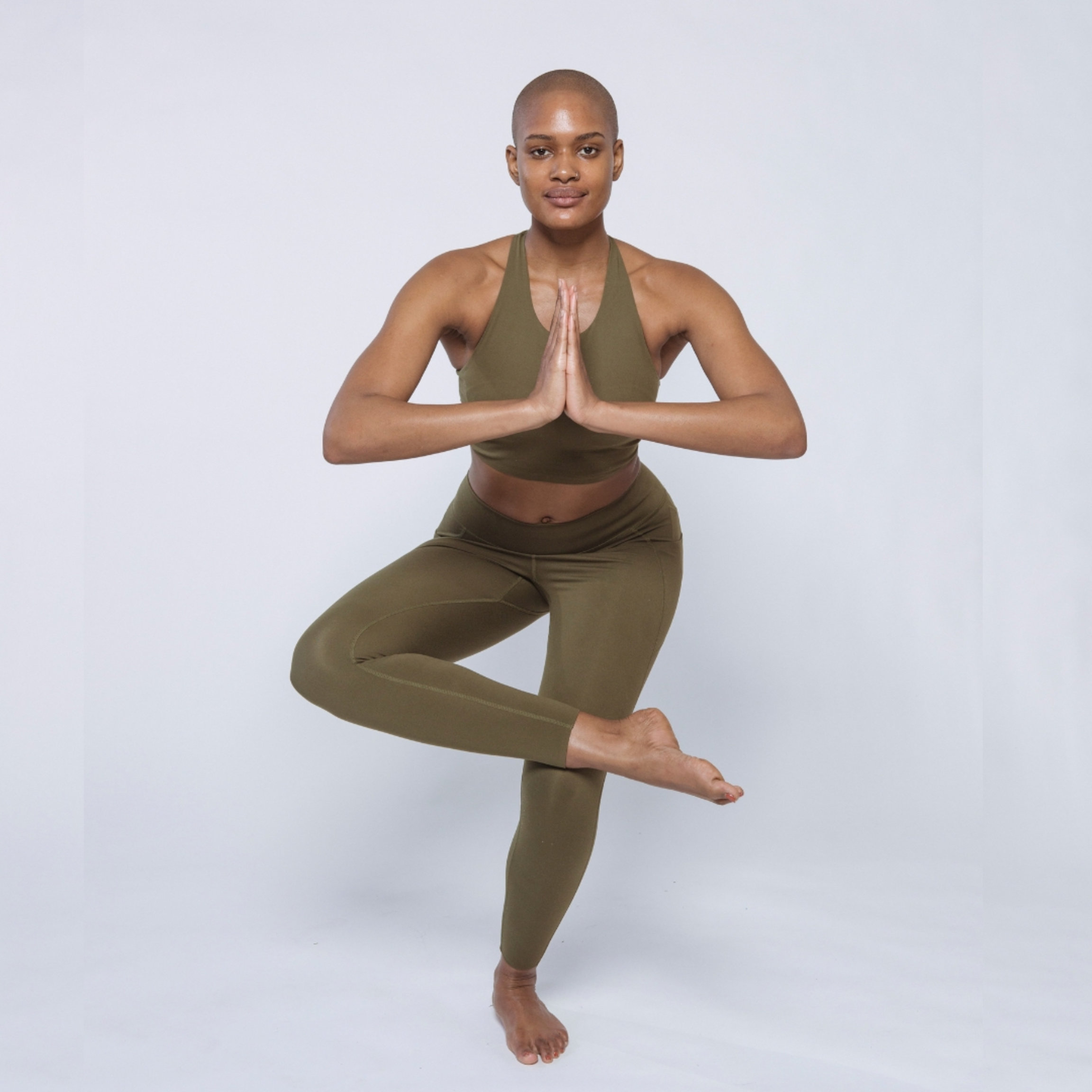
To stretch the piriformis while standing, stand on one leg. Cross the lower leg of one leg over the thigh of the other. The deeper you bend your knees and lean your upper body forward, the more intense the stretch will be.
Stretching the piriformis while lying down
Sitting for long periods of time, a lack of physical activity, and the habit of frequently crossing your legs can often lead to a painful, stabbing sensation in the buttocks.
To relieve these symptoms, we’ve also included piriformis stretches you can do while lying down—which you can easily perform at home on the sofa, bed, or floor. In addition to the piriformis, it’s also helpful to mobilize other areas of the hip. Here are three exercises. Hold each stretch for 60–90 seconds on each side.
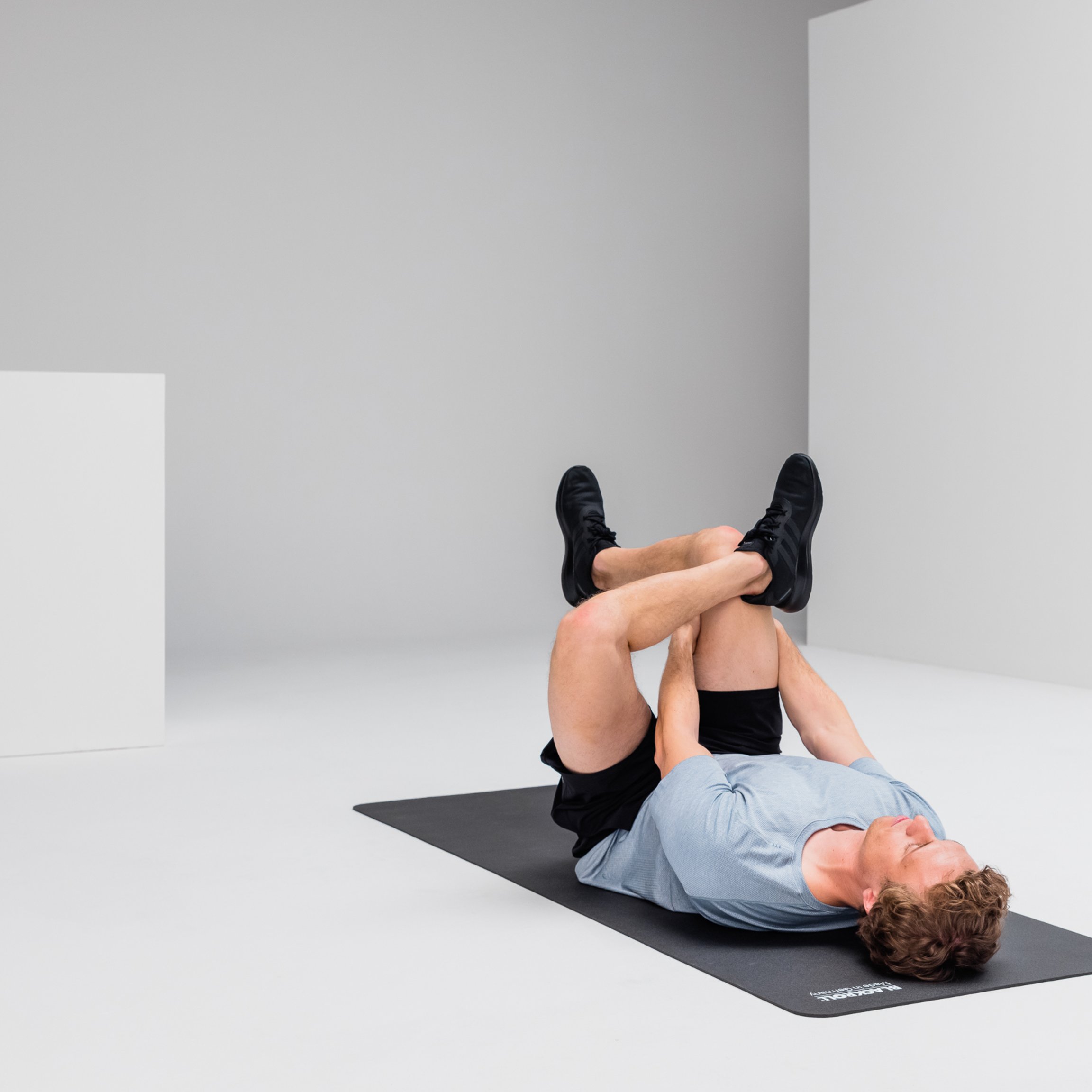
Piriformis Stretch
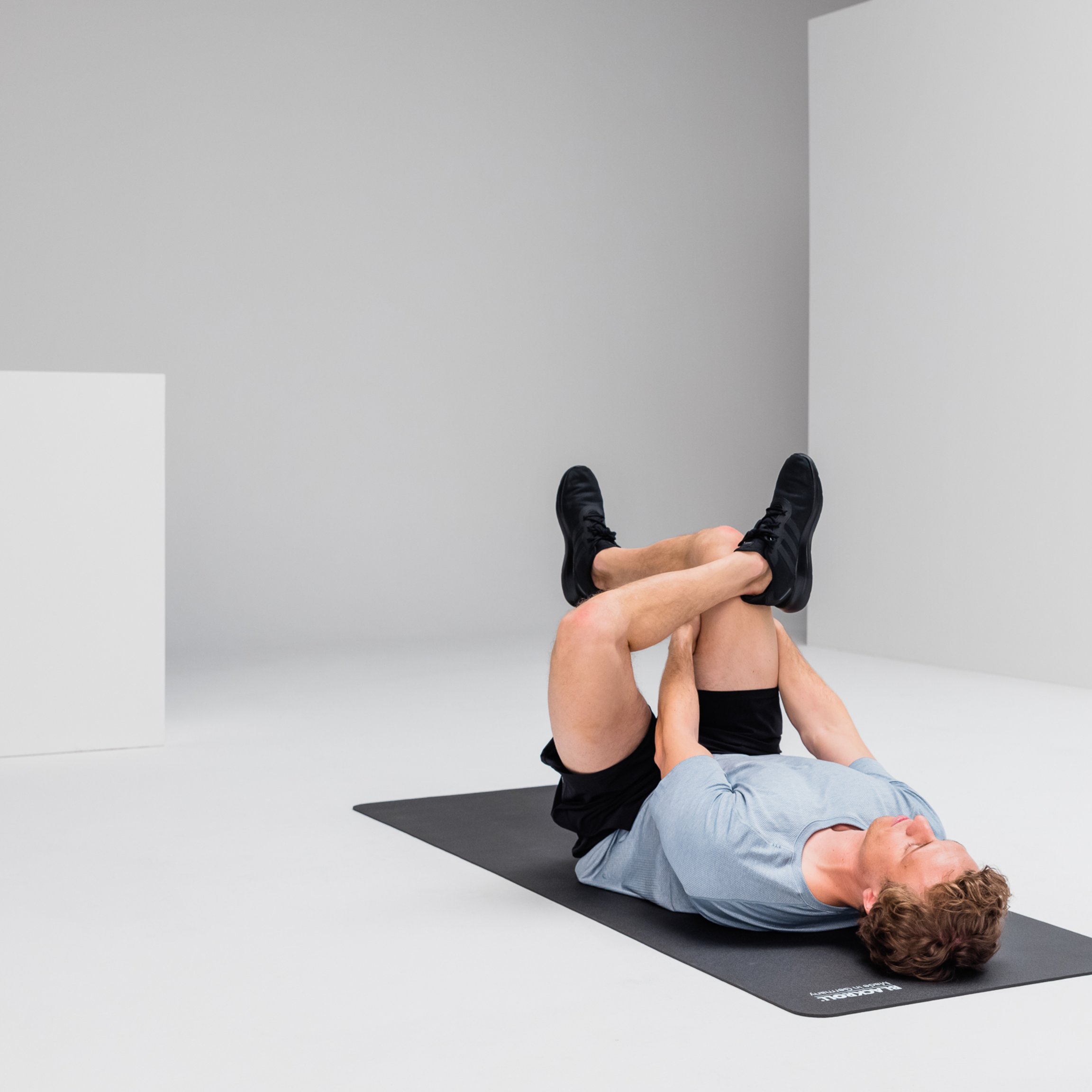
Start by lying on your back. Bring both legs up. Place one foot on the thigh of the other leg. Grasp the raised leg with both hands. Pull the leg toward you. Hold this position.
Sacroiliac Joint Mobilization
Place the BLACKROLL on the floor. Lie down with your lower sacrum on it. Use your hands to pull one leg toward your chest. Keep the other leg straight. Gently rock the straight leg up and down.
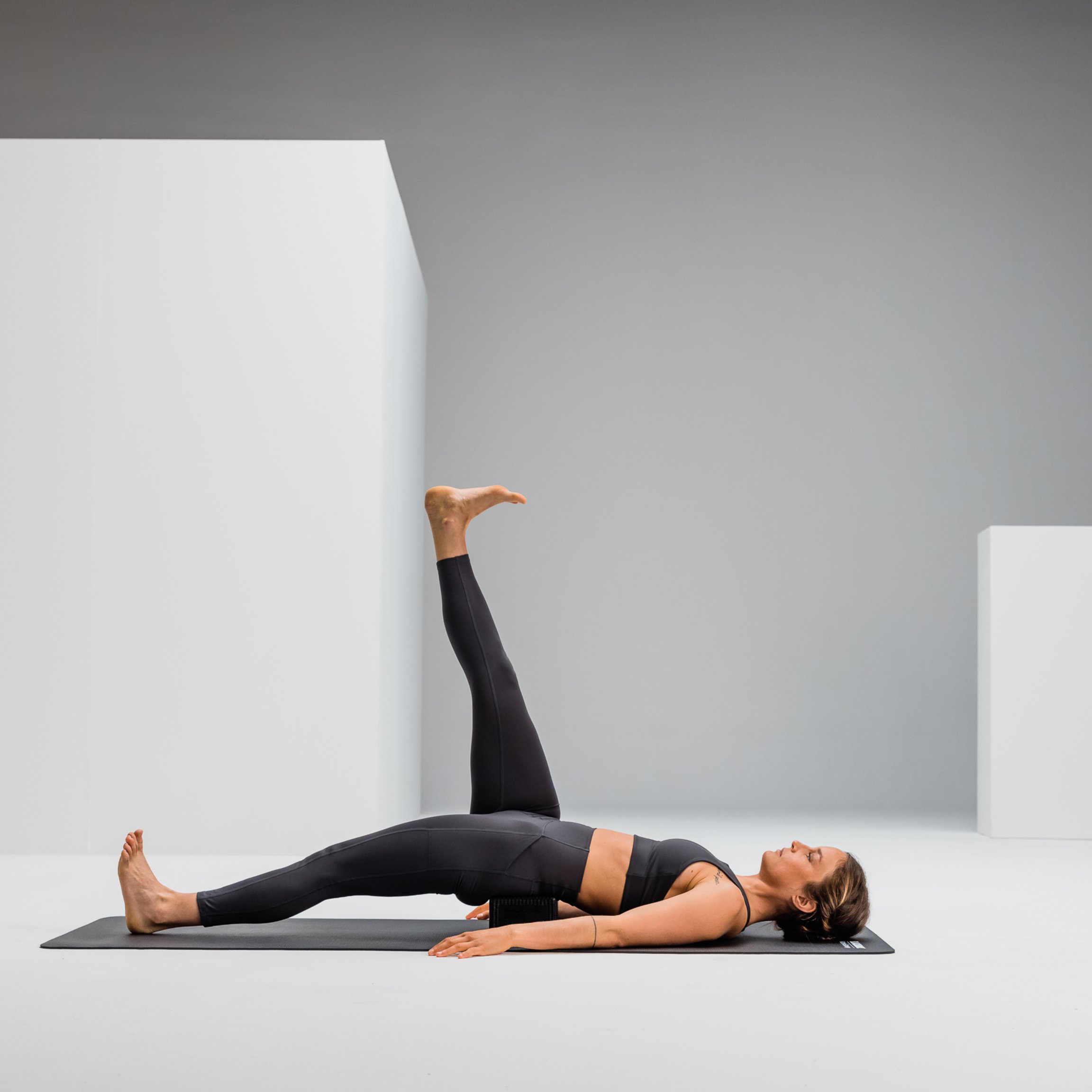
Hip Flexor Stretch
While lying on your back, place the BLACKROLL under your hips. Rest your arms at your sides. Place one leg on the floor with the knee bent. Now take deep breaths in and out. Hold this position.
Piriformis Stretch While Sitting
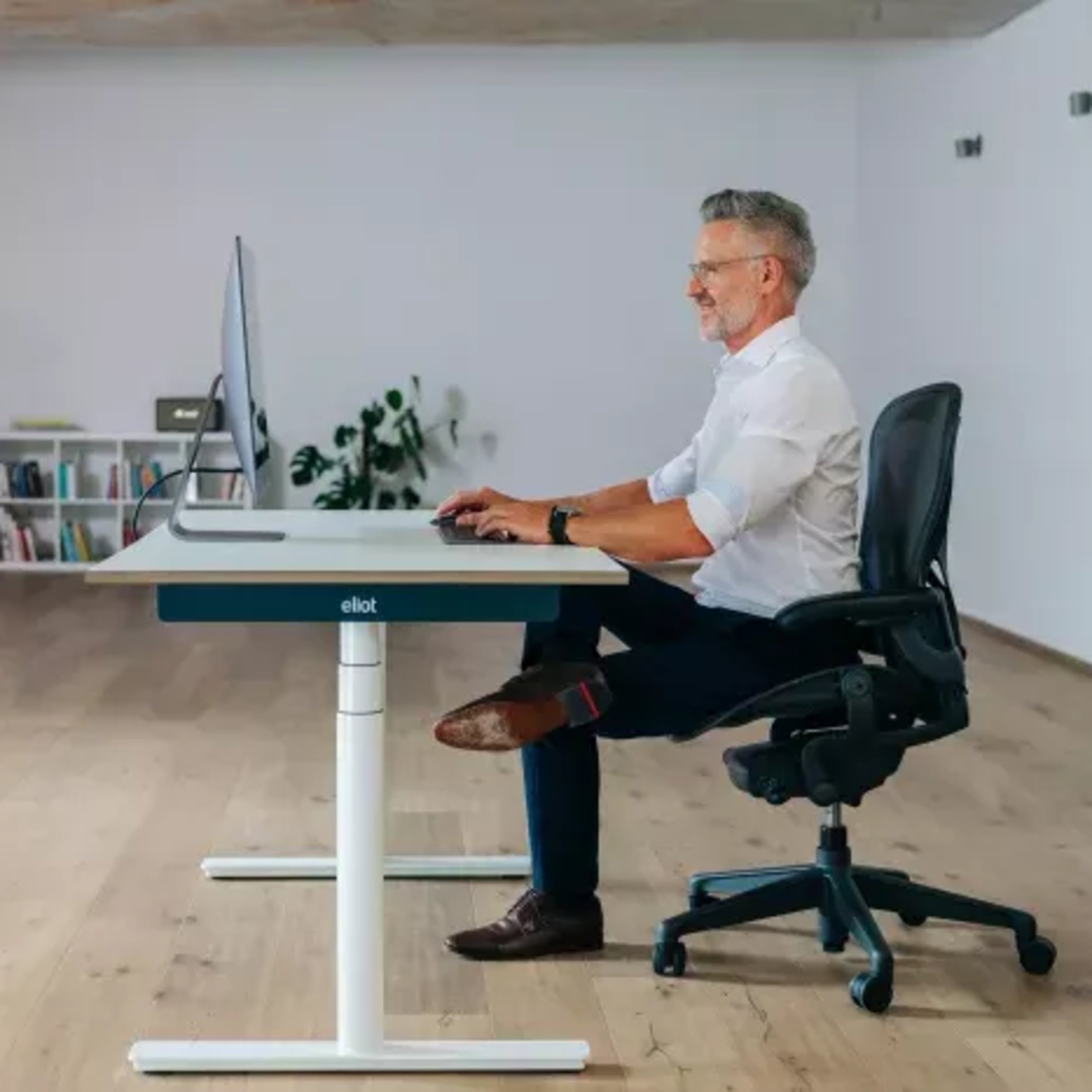
The piriformis muscle shortens due to one-sided strain, such as that caused by prolonged sitting, especially in an office setting. Crossing your legs while sitting further exacerbates this effect.
In addition, incorrect movement patterns—such as those that occur while jogging or due to improper footwear—can lead to muscle stiffness. Although sitting is often the trigger for piriformis syndrome, we also have piriformis stretches for you that you can easily perform while sitting.
Stretching the Piriformis While Sitting
You can also stretch your piriformis while sitting by placing the lower leg of one leg over the thigh of the other leg while you work. It’s important to stretch both sides equally, as we often tend to favor the more flexible side.
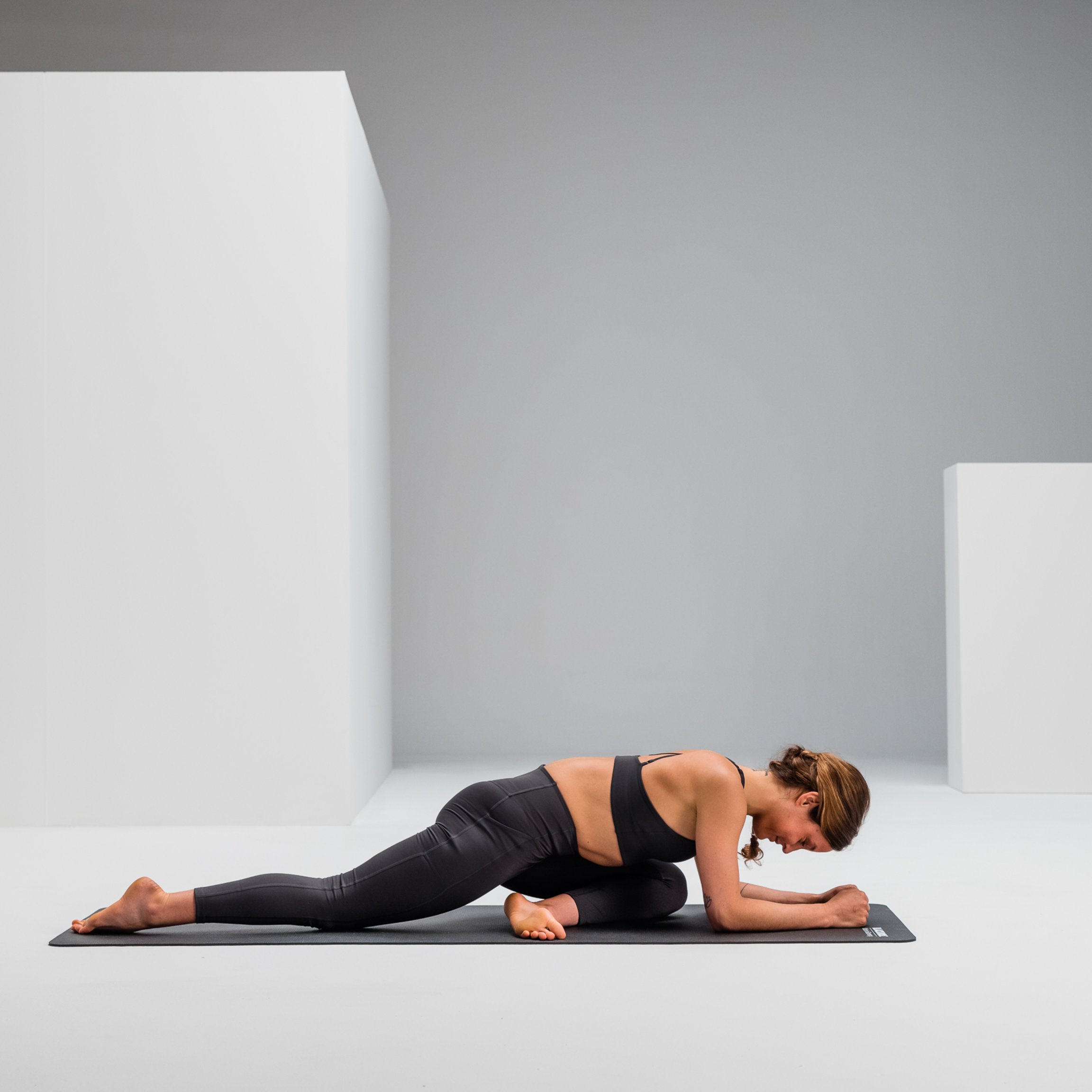
The Pigeon
The Pigeon Pose, which you may have done in yoga before, also stretches the piriformis. Bring one leg in front of your body. Bend the knee at a 45° to 90° angle. Extend the other leg behind your body. Press your pelvis toward the floor on the side of the extended leg. If possible, rest your upper body on the back of your hand in front of you. If you feel pain in your knee, the angle of your front knee is too flat. In this case, pull your foot back.
Tips for Proper Stretching:
- Proceed gently to avoid injury.
- Make sure you don’t hold your breath while stretching.
- Repeat the exercises 2–3 times on each side as needed.
- If you feel pain, reduce the pressure or stop immediately.
When Should You Avoid Stretching the Piriformis?
The piriformis muscle, a small but important muscle in the hip region, is often the culprit behind pain in the lower back and buttocks. Have you ever experienced pain in this area? And have you perhaps tried to relieve this pain with stretching exercises? Many people who suffer from pain in the piriformis area regularly try to relieve it through stretching exercises—but most may not realize that stretching isn’t always the key to success.
Here’s why stretching may not be the best approach in all cases—and why you shouldn’t stretch the piriformis.
Basically, stretching exercises for the piriformis are only beneficial if the muscle is actually shortened.
The muscle contains receptors that send information about its length to the nervous system. If the muscle is too short, they signal that it should relax; if it’s too long, they signal a contraction.
That’s why overstretched muscles often feel tighter than shortened ones. It’s important to assess the condition of the muscle on an individual basis and not to stretch it without good reason. A physical therapist, for example, can do this. In the next chapter, you’ll also learn a self-test for this.
If the muscle is already too long, you shouldn’t stretch it; instead, use a foam roller to release tension from the muscle without lengthening it further.
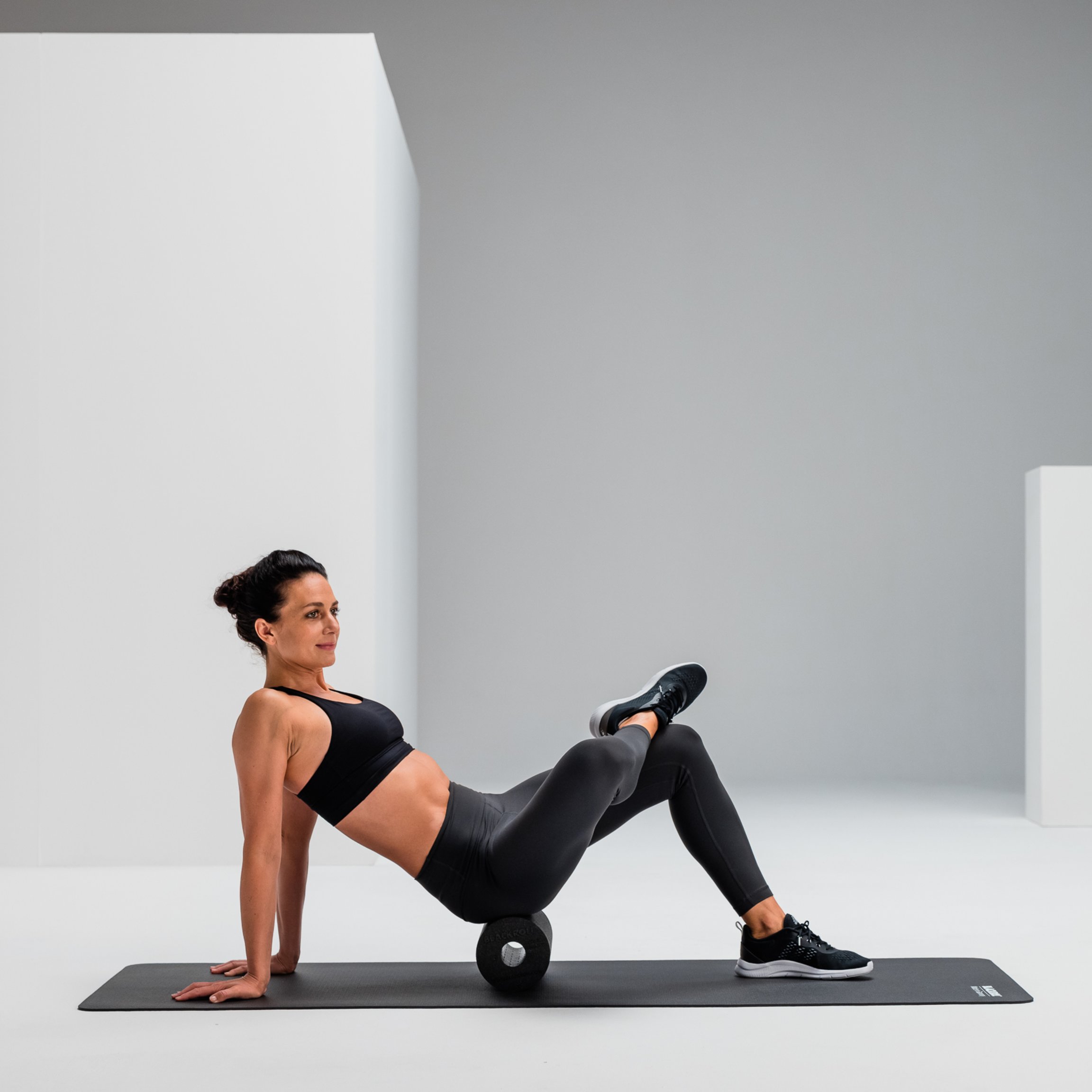
Glute Massage
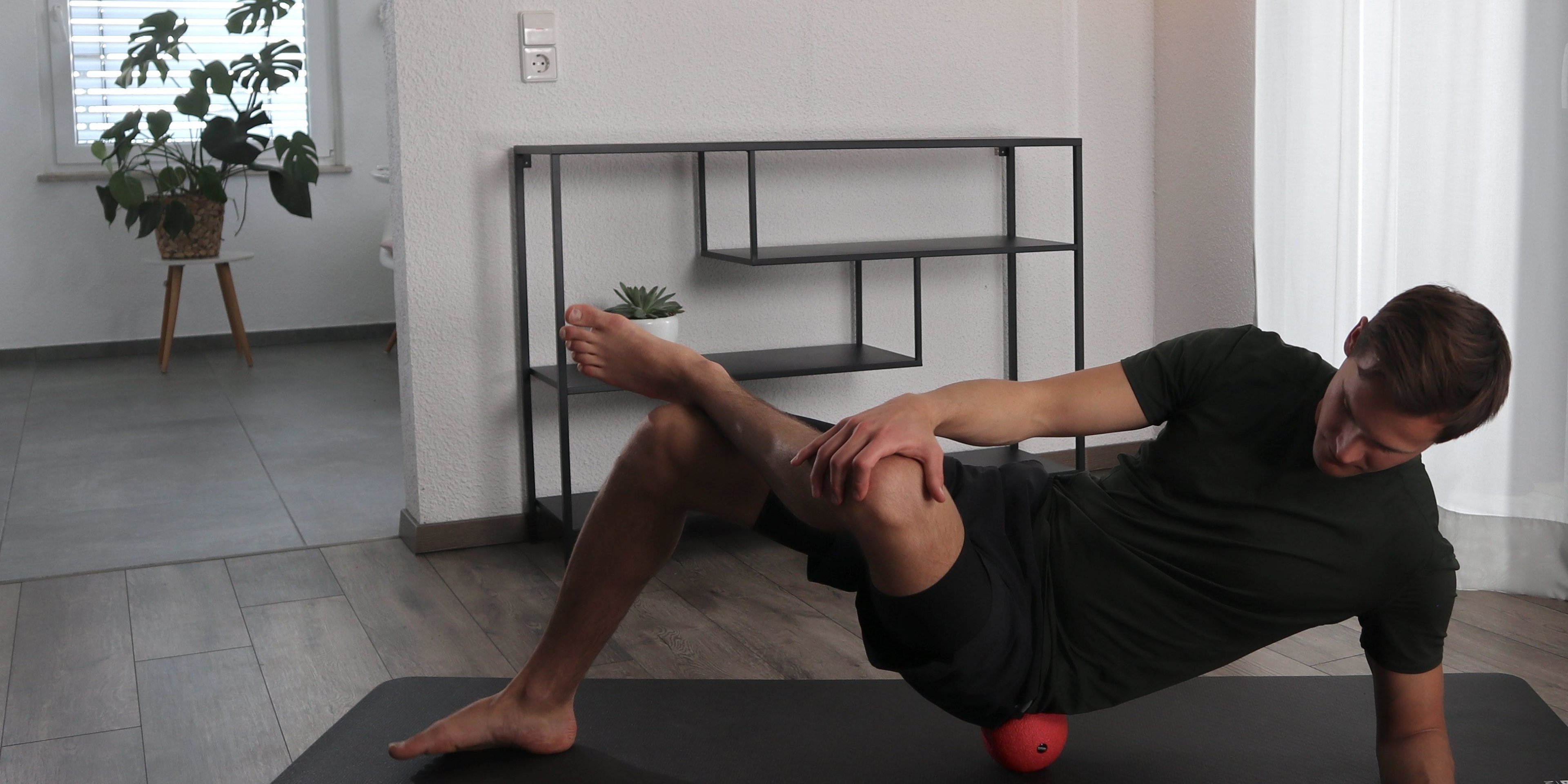
Sit with one buttock on the BLACKROLL. Place the opposite leg upright. Rest the foot of the side you’re working on top of the upright knee. Support yourself with your hands behind your back. Roll slowly back and forth. Turn slightly to the side to work even more areas of your gluteal muscles.
Strengthen the Piriformis Instead of Stretching It
As mentioned earlier, in certain cases the piriformis muscle may not be too short, but rather too long. In such situations, it may be beneficial to strengthen the piriformis rather than stretch it. Additionally, many other external hip rotators tend to weaken and can contribute to misalignments.
Self-test:
To check the length of the piriformis muscle, lie face down on the floor and bend your knees at a 90-degree angle. First, let the foot on the painful side fall outward. Then, let the foot on the non-painful side fall outward. If the foot on the painful side falls further outward than the foot on the non-painful side, this could indicate that the piriformis muscle is not shortened and might benefit from targeted activation.
Exercises to build muscle:
Perform the exercises for 15 repetitions and 3 sets.
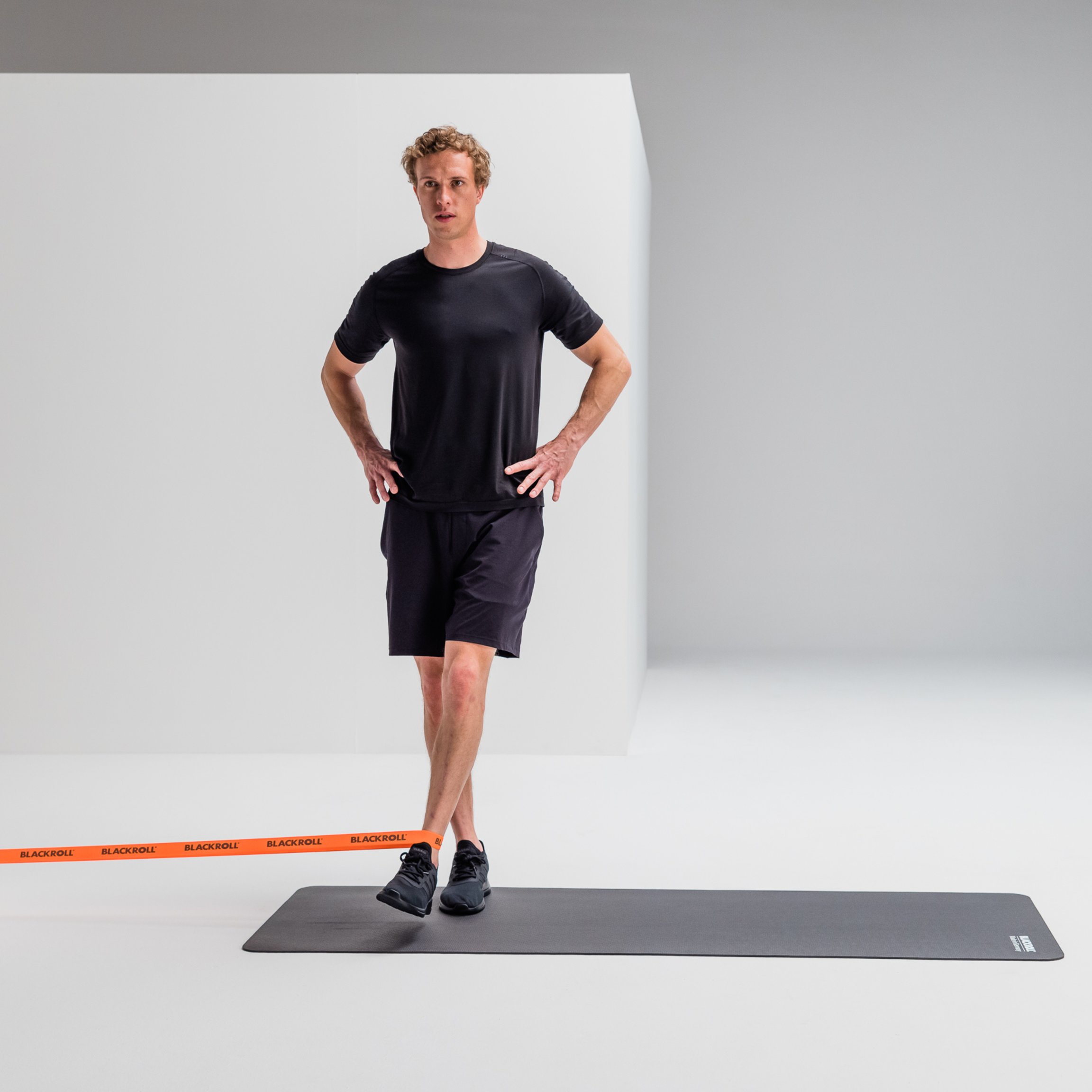
Leg Abduction
Attach a SUPER BAND at ankle height. Stand sideways to the anchor point and wrap the band around the ankle of your outer leg. Move away from the anchor point. Shift your weight onto your inner leg and move your outer leg inward and outward.
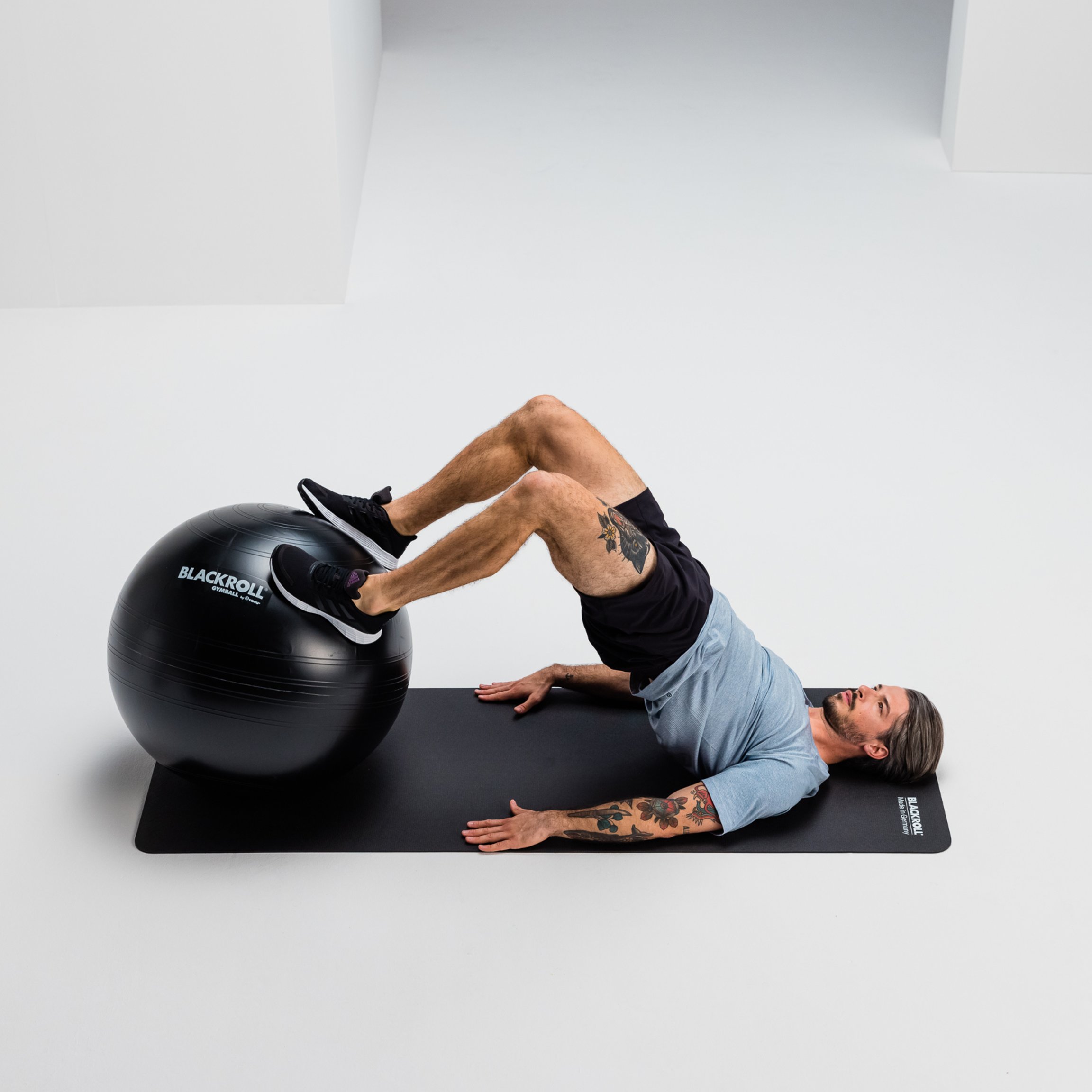
Hip Raise
Lie on your back. Place your feet on the GYMBALL. Keep your arms at your sides. Lift your hips. Then lower your hips back down. If you want more stability during the exercise, extend your arms out to the sides. If you don’t have a gym ball, you can simply place your feet on the floor or use the sofa or a chair as a raised surface.
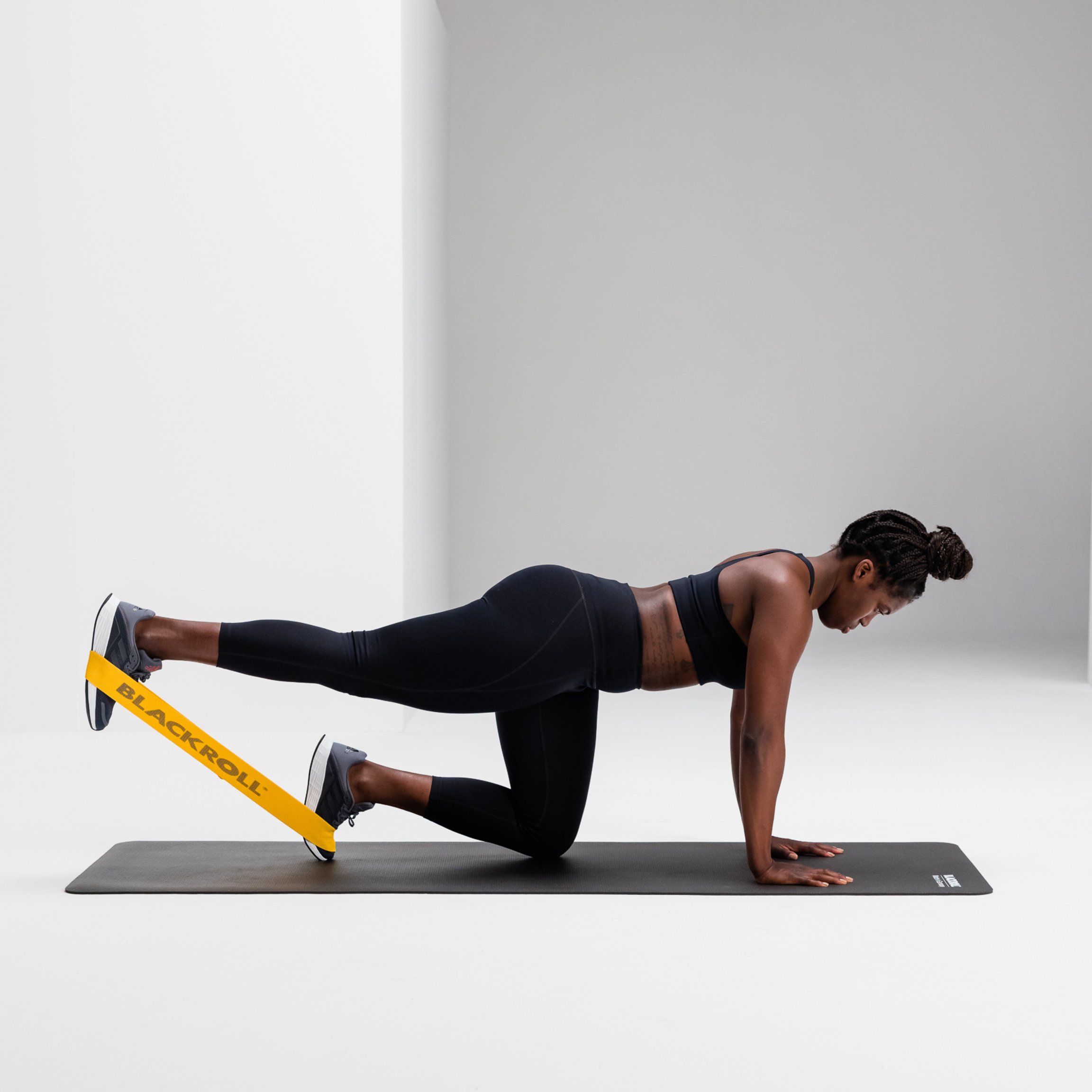
Glute Kickbacks
Place the LOOP BAND around your feet. Get on all fours. Engage your core muscles. Extend one leg backward so that it’s in line with your upper body. Pause briefly at the top of the movement. Feel the tension in your glutes. The movement comes exclusively from your hips. Keep your back straight the entire time.
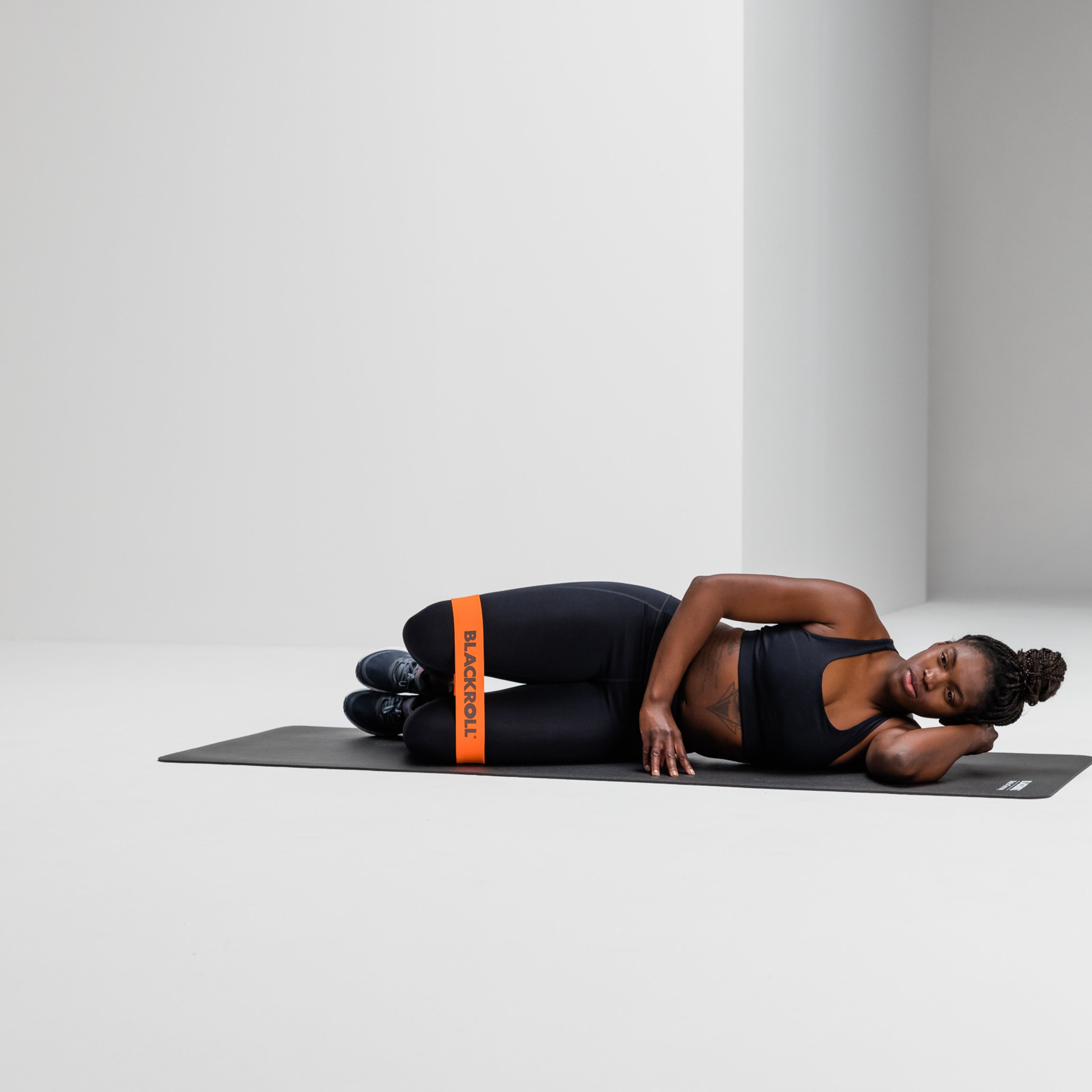
Clamshell
Lie on your side and wrap the LOOP BAND around your knees. Bend your knees slightly. Lift your top knee upward. Return to the starting position. Keep your feet touching throughout the entire exercise. You can rest your upper body comfortably on the ground. Make sure you don’t rotate your upper body during the exercise.
If you do not notice any improvement after a considerable amount of time, or if your symptoms actually worsen, you should consult a specialist. Be patient as you work toward relieving pain in your buttocks and back.
Tools to Help You Become Pain-Free
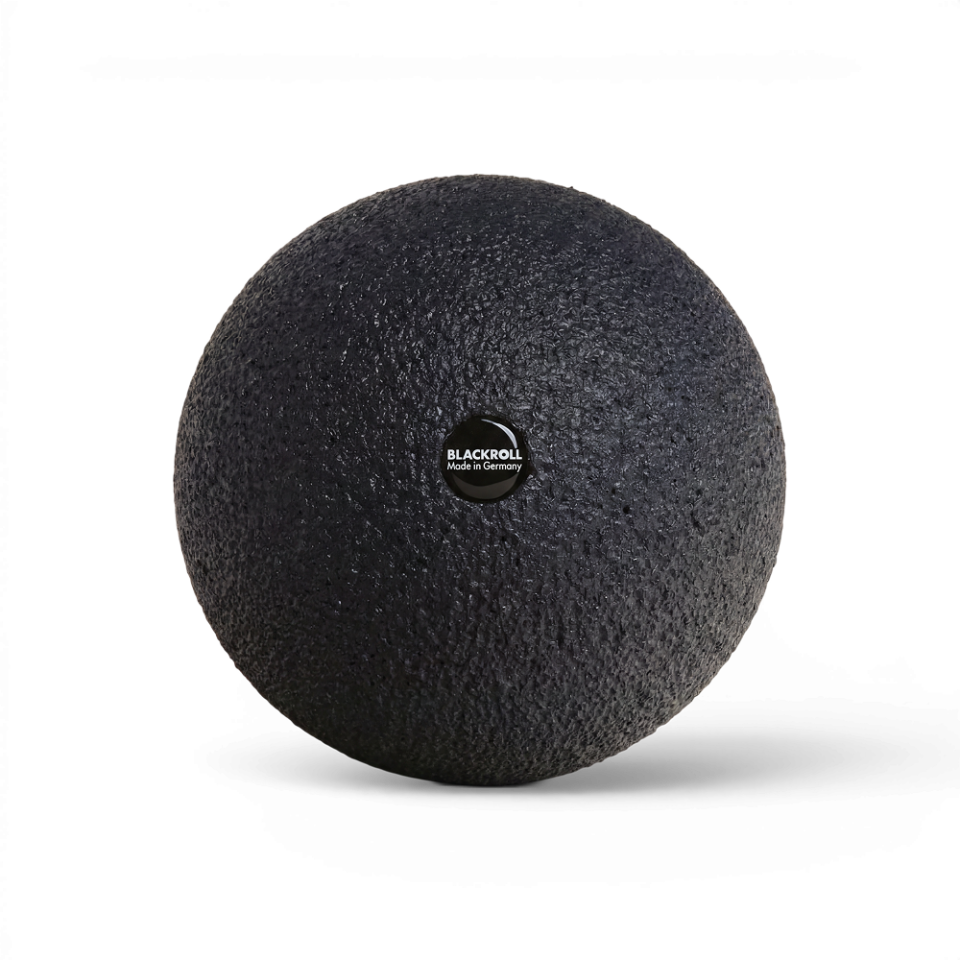

Ball 12
Available in multiple variants


Loop Band
Available in multiple variants


Super Band
Available in multiple variants


