Stretching Your Hip Flexors: Exercises for Greater Flexibility
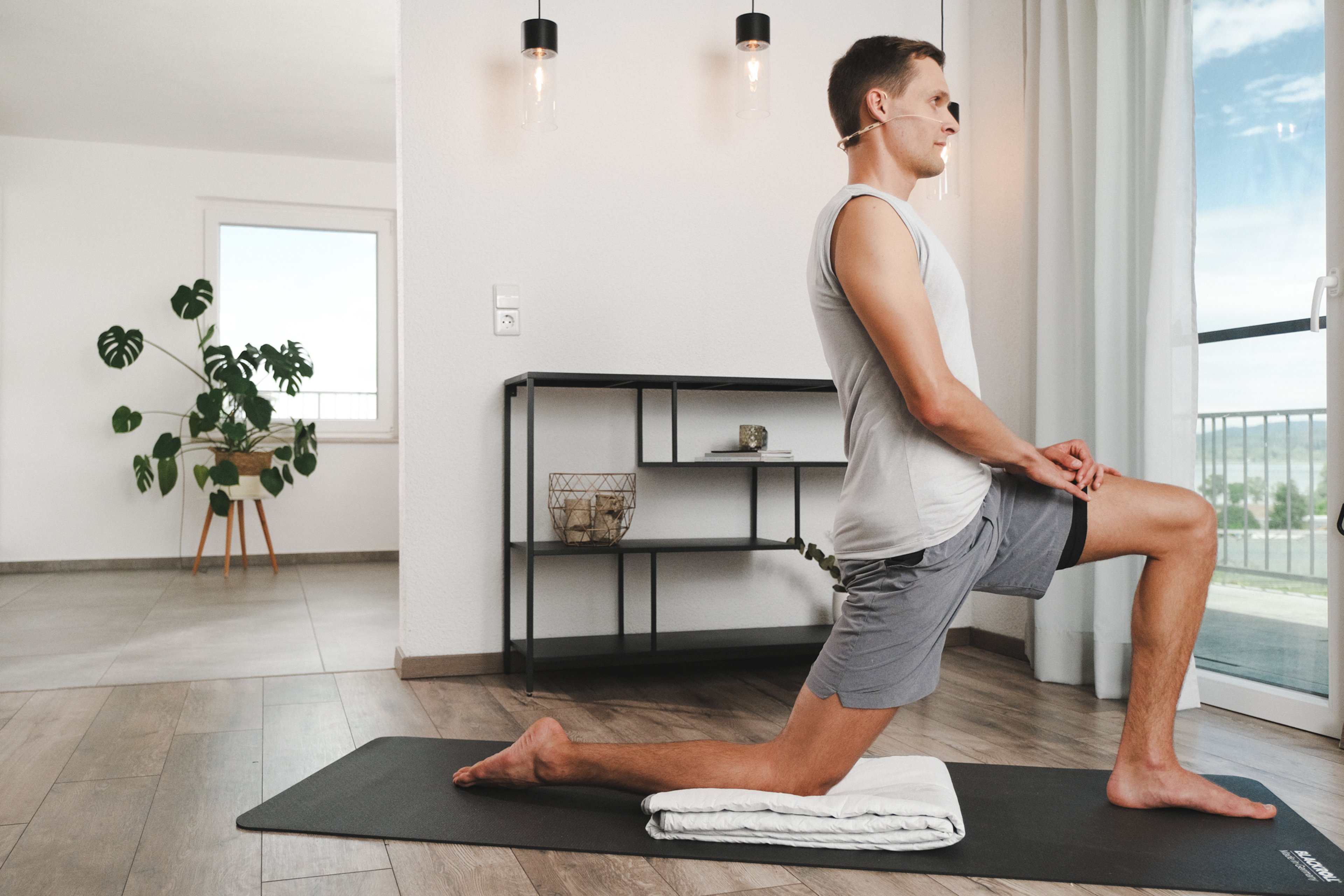
Effective Stretching Exercises for Your Hip Flexors
Focus areas
- Gesäß
- Hüfte
Time
- 20 minutes
- 3 exercises
Langes Sitzen und einseitige Belastungen können dazu führen, dass deine Hüftbeuger dauerhaft unter hoher Spannung stehen und deine Hüftbeweglichkeit eingeschränkt wird. Gezielte Übungen helfen dir, die Hüftbeuger zu dehnen und wieder beweglicher zu werden. Plane dafür regelmäßig einige Minuten ein und halte statische Dehnungen etwa 30–60 Sekunden.
Das Wichtigste in Kürze:
- Langes Sitzen und einseitige Belastungen können die Spannung der Hüftbeuger erhöhen und die Hüftstreckung einschränken.
- Typische Anzeichen sind eingeschränkte Hüftbeweglichkeit, ein Spannungsgefühl an der Hüftvorderseite und eine verkürzte Schrittlänge.
- Regelmäßiges Dehnen kann helfen, die Beweglichkeit der Hüfte zu verbessern.
- Statische Dehnungen kannst du etwa 30 bis 60 Sekunden halten.
- Eine Kombination aus Mobilität, Dehnung und Kräftigung kann die Hüftfunktion unterstützen.
- Kurze Bewegungspausen und einfache Übungen lassen sich gut in den Alltag integrieren.
Hip Flexor Stretches - Exercises
If you spend a lot of time sitting during your daily routine, there’s a good chance your hip flexors are becoming overly tight and functionally shortened. This can not only lead to tension and back pain but also negatively affect your posture—your pelvis tilts forward, your back becomes overloaded, and your ability to maintain an upright posture suffers.
In the following video, Master Trainer Stefan shows you which exercises you can do to specifically stretch your hip flexors, release tension, and improve your posture through hip flexor stretching. This routine can provide noticeable relief—especially if you sit a lot and are already struggling with lower back pain.
Relieving Hip Flexor Pain—Your Routine
Do you sometimes feel like your hip flexors are tight and limiting your range of motion? You’re not alone. People who sit a lot, in particular, often suffer from limited hip mobility and the pain that comes with it.
In the following video, our Master Trainer Stefan shows you a targeted strengthening routine for the hip flexors across their entire range of motion—both when the muscles are shortened and when they’re stretched. This combination of active stretching and controlled strengthening helps you correct muscular imbalances, improve hip stability, and relieve pain in the long term.
All you need is a LOOP BAND and a non-slip mat. Let’s start with a brief explanation of the background—then you can jump right into the workout!
Tight Hip Flexor Symptoms
A shortened hip flexor can cause various symptoms and discomfort that may affect the hip, lower back, and legs. Here are some symptoms of a shortened or tight hip flexor:
Hip pain: A shortened hip flexor can lead to pain in the hip area. This pain may feel dull or sharp and can be exacerbated by walking, running, or other movements.
Reduced hip mobility: Shortened hip flexors can impair the mobility of the hip joints. In particular, full hip extension becomes difficult.
Posture: When the hip flexor muscles pull the pelvis forward, poor posture can develop, often manifesting as an excessive swayback.
Back pain: When the hip flexors are tight, there is a risk that pain will manifest on the opposite side, usually in the lower back. Therefore, most holistic back pain programs should also include stretching the hip flexors.
Problems with walking and running: When the hip flexors are tight, this can impair walking and running. This can manifest as stiffness, discomfort, or a reduced stride length.
Problems with athletic activities: Many sports, such as sprinting, require full hip extension. A functionally shortened hip flexor restricts hip mobility and can therefore negatively impact performance.
Symptoms of Tight Hip Flexors
A tight hip flexor means that the muscle maintains high tension or that so-called trigger points have formed. However, a tight muscle is not necessarily shortened. Tightness and shortening often occur together, but this is not always the case. While shortening represents an actual structural change in the length of the muscle fascia, tension is a result of neuromuscular activity. The nervous system signals the muscle to maintain tension. Below, you’ll find typical symptoms of a tight hip flexor. You’ll see that there is a lot of overlap.
Symptoms of Tight Hip Flexors
Hip pain: One of the most common complaints associated with tight hip flexors is pain in the hip area. This pain can be dull, sharp, or pulling and may extend to the hip region or the groin.
Lower back pain: Tight hip flexors can cause the lower back to feel strained. This can lead to back pain in the lumbar spine.
Limited mobility: Tight hip flexor muscles can reduce hip mobility. This can manifest as difficulty lifting the thigh.
Pain When Walking: Walking can be uncomfortable when hip flexor muscles are tight, as leg movement is restricted. This can lead to stiffness and pain while walking.
Pain while sitting: People with tight hip flexor muscles may experience pain or discomfort while sitting, especially when remaining in one position for an extended period of time.
Problems with physical activities: Athletes and active people may notice limitations in performing certain movements and sports when their hip flexor muscles are tight.
Weakness in the hips and legs: Tight hip flexor muscles can impair the strength and stability of the hips and legs.
Anatomy of the Hip Flexors
The hip flexors are a group of muscles located in the hip region. As the name implies, their main function is to flex the hip.
To better understand the anatomy of the hip flexors, let’s take a look at which muscles are involved in hip flexion:
- Iliopsoas muscle: This muscle consists of two parts, the psoas (lumbar muscle) and the iliacus (hip muscle). Together, they are responsible for hip flexion and play a crucial role in many movements of the lower trunk and legs.
- Rectus femoris: The rectus femoris is part of the quadriceps muscle on the front of the thigh and contributes to hip flexion and knee extension. It is particularly important for activities such as lifting the thigh and climbing stairs.
- Tensor fasciae latae (TFL): The TFL muscle is located on the lateral side of the hip and also contributes to hip flexion. It is also important for stabilizing the pelvis during walking and running.
- Adductors (primarily the adductor longus, brevis, and magnus): Although their main function is to bring the leg toward the body, the adductor longus and brevis in particular play a supporting role in hip flexion—especially at certain angles of flexion or in combination with rotational movements.
Well-balanced hip muscles are important for maintaining healthy hip function and help prevent back problems, as well as hip and knee pain.
It is not only the strength and flexibility of the hip flexors that are crucial—the hip extensors, such as the gluteus maximus (large gluteal muscle) and the hamstring muscles, also play a central role. They are responsible for hip extension and counteract flexion movements. A muscular balance between the hip extensors and hip flexors ensures a stable pelvic position, an upright posture, and smooth movement patterns.
Strengthen hip flexors
Strong hip flexors are essential for stable posture, healthy hip function, and a powerful gait. Weakness in this area can develop quickly, especially from prolonged sitting or one-sided strain—with noticeable consequences in daily life and during sports. That’s why we’re showing you three simple but effective exercises using our BLACKROLL products that will help you specifically strengthen your hip flexors and prevent imbalances.
Perform each of these exercises for 30–40 seconds per side, 2–3 times.
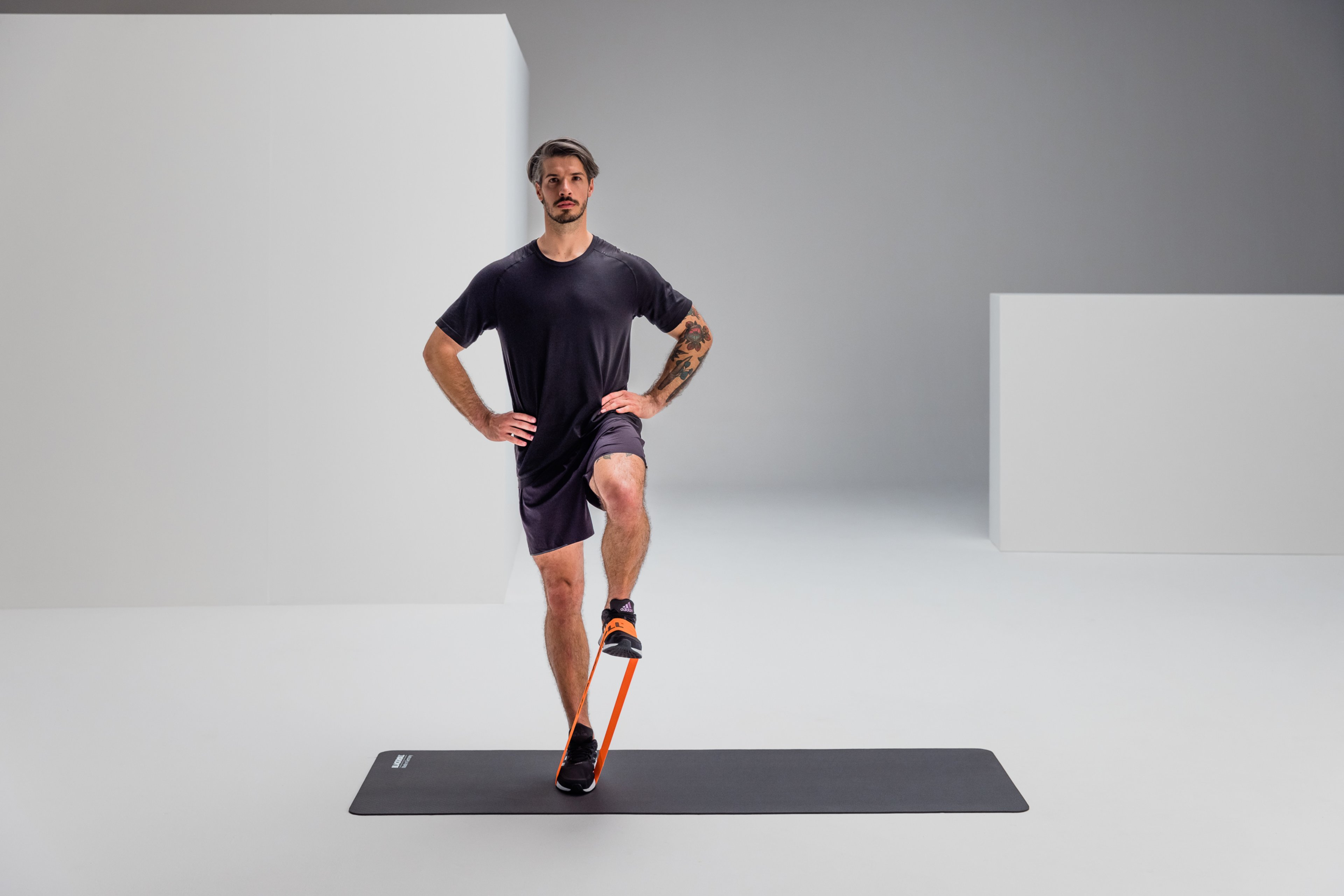
Standing Hip Flexion
Loop the LOOP BAND around your feet. Stand upright with your feet hip-width apart. Pull one knee toward your chest, bending your hip at least 90 degrees. Tightly engage the gluteal muscles on the opposite side to maintain an upright posture.
Always try to keep your knee bent past 90 degrees in the final position.
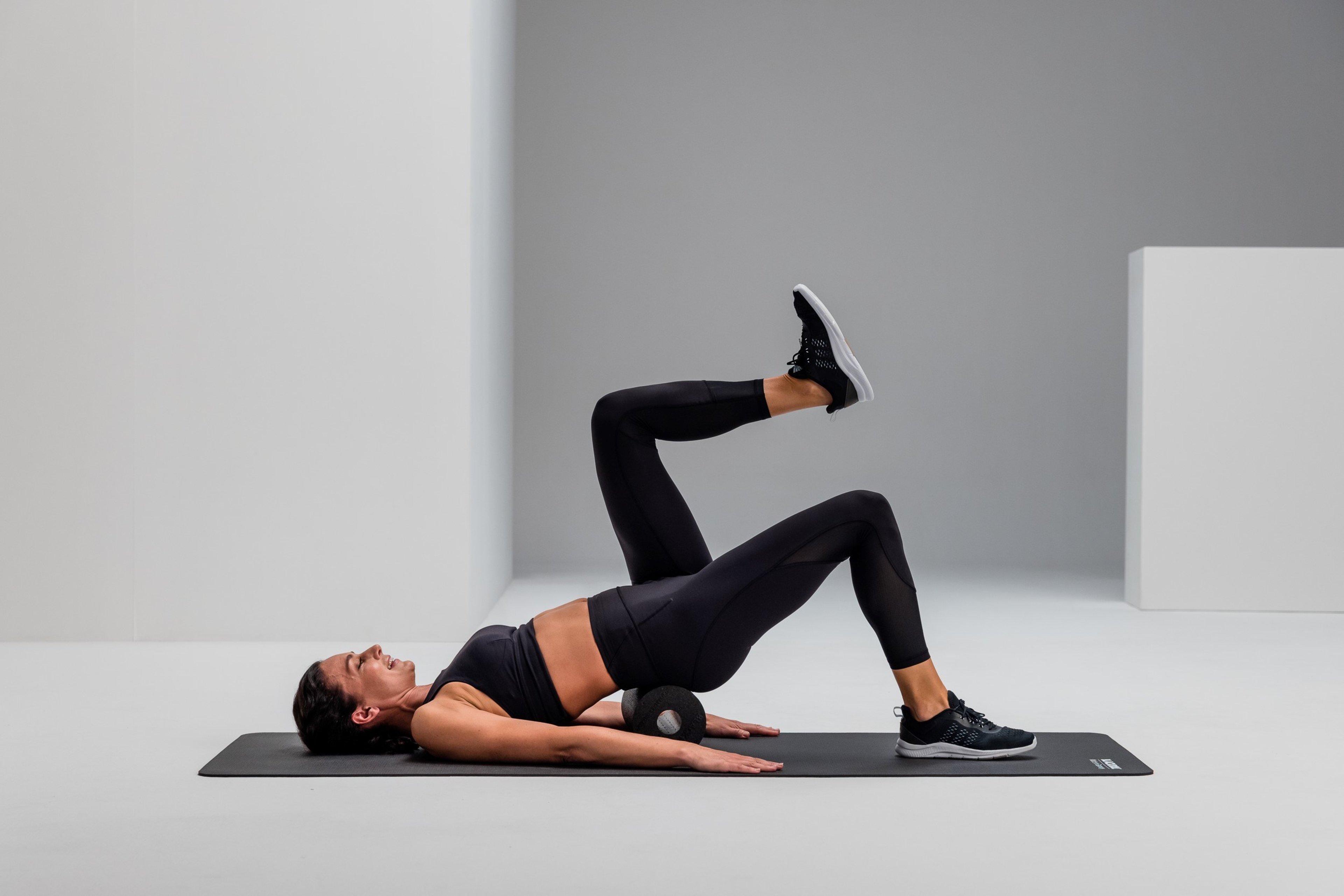
Reverse Crunch
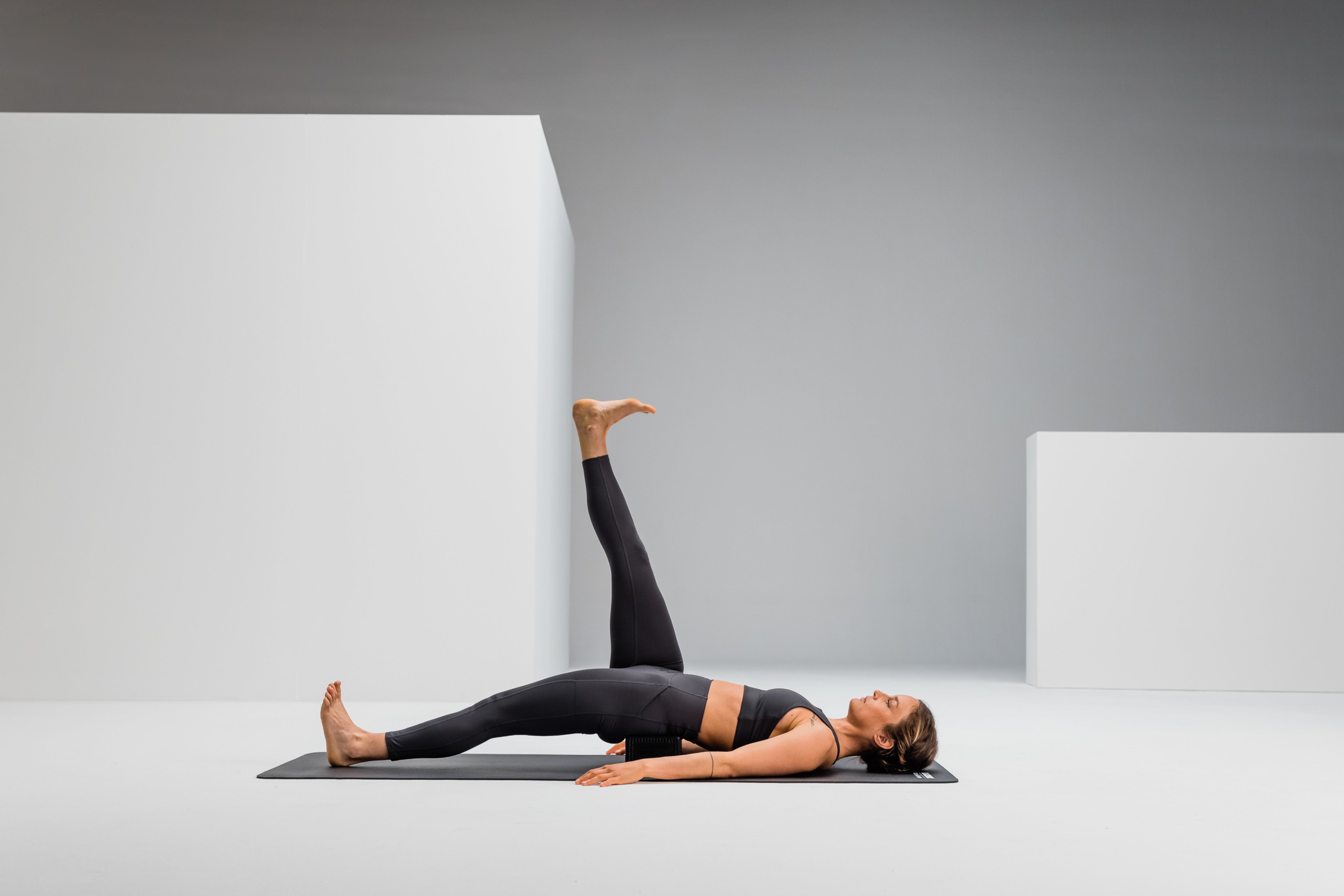
Start by lying on your back with the FASCIAL ROLLER positioned just above your buttocks. Bend your knees and place your feet flat on the floor. Alternately lift your legs to a vertical position.
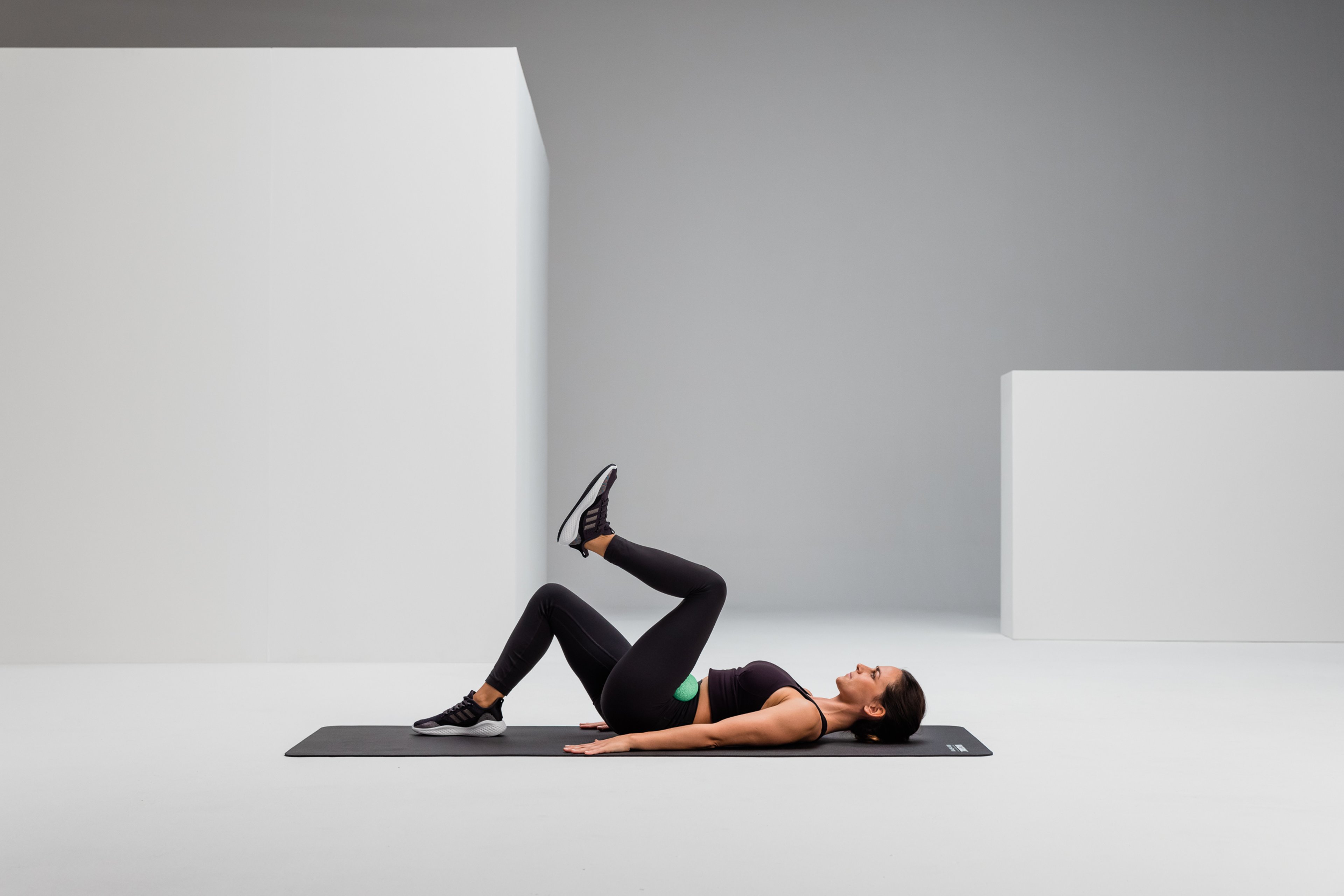
Single-Leg Bridge
Start by lying on your back. Bring your legs up. Clamp the BALL 08 between your thigh and hip by pulling your leg toward you. Lift your hips without losing the BALL. Slowly lower your hips back down.
Stretching the Rectus Femoris & Psoas
You’ve already learned about two of the most important hip flexors: the rectus femoris at the front of your thigh muscles and the psoas, which runs from the thigh bone up to the lumbar spine.
Here are 3 exercises for stretching the rectus femoris and psoas.
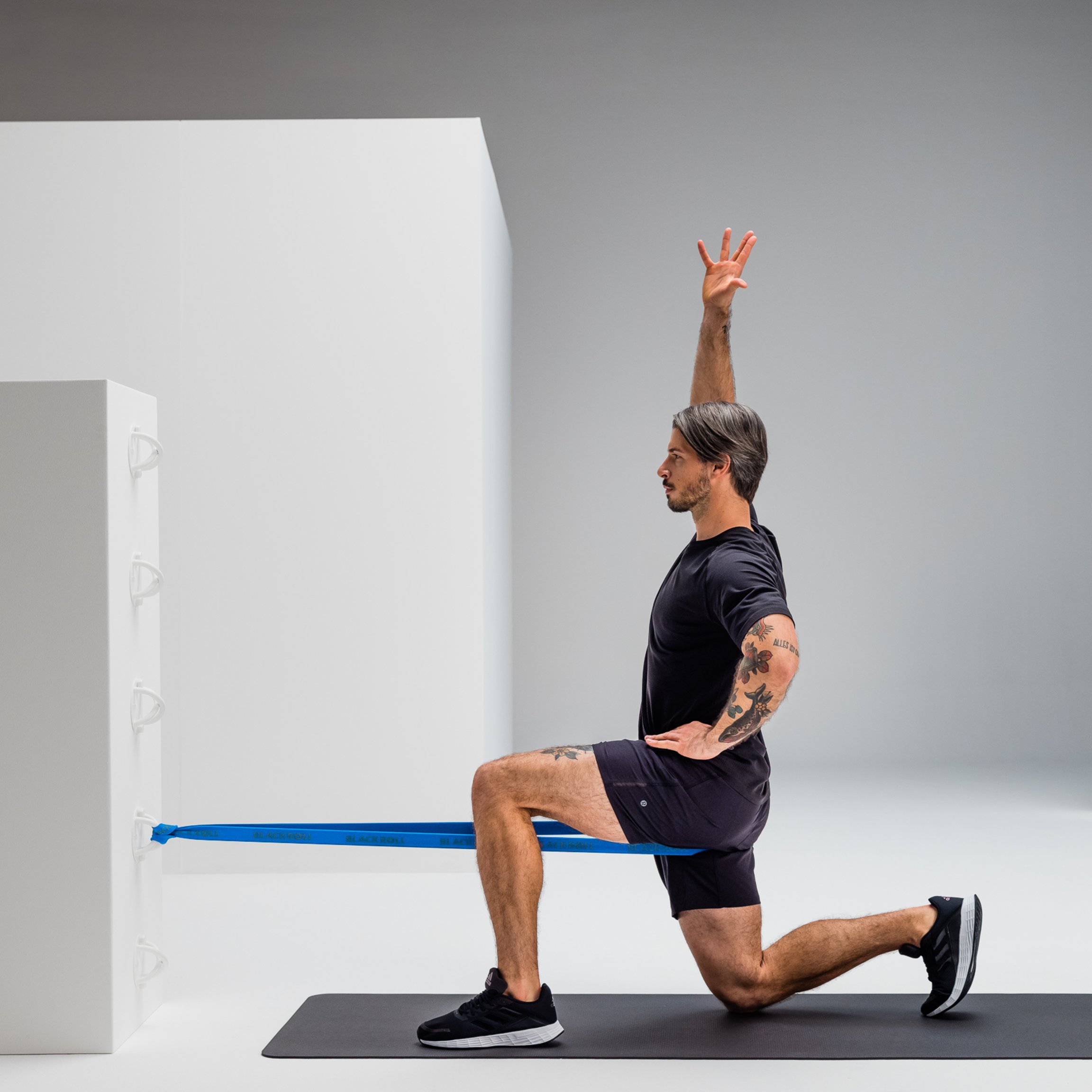
Hip Flexor Stretch
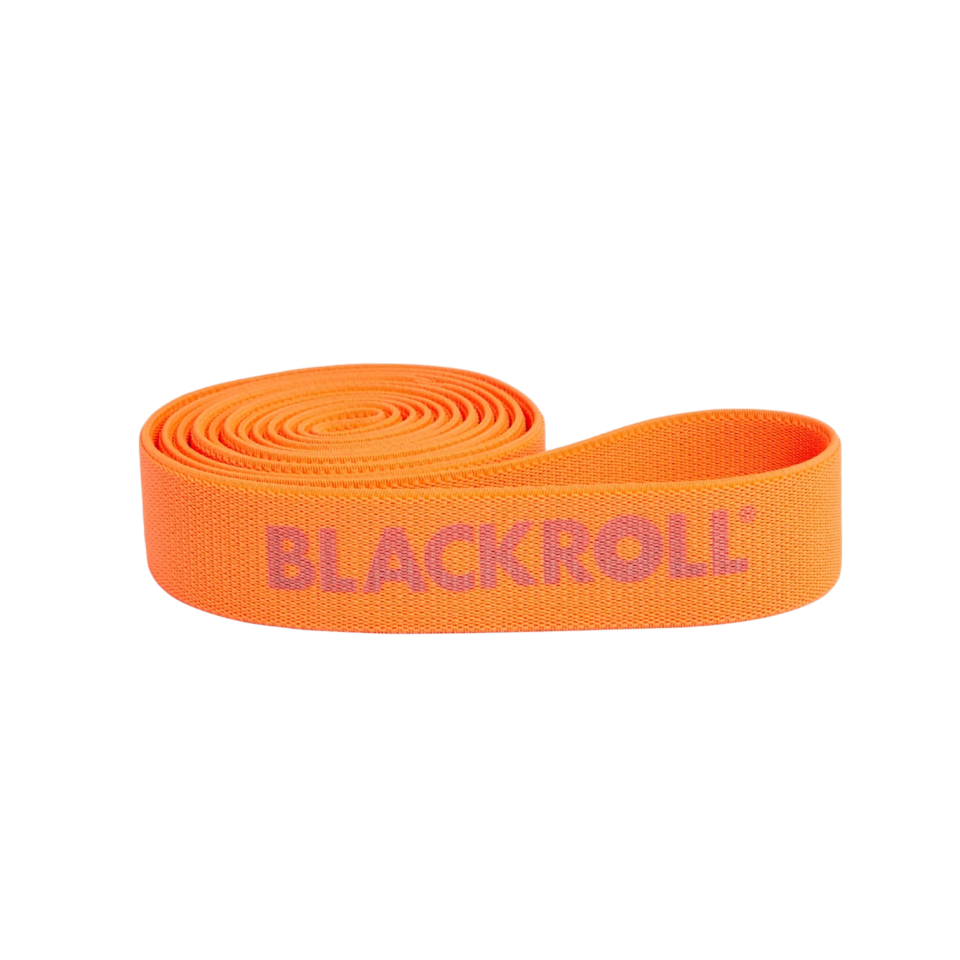
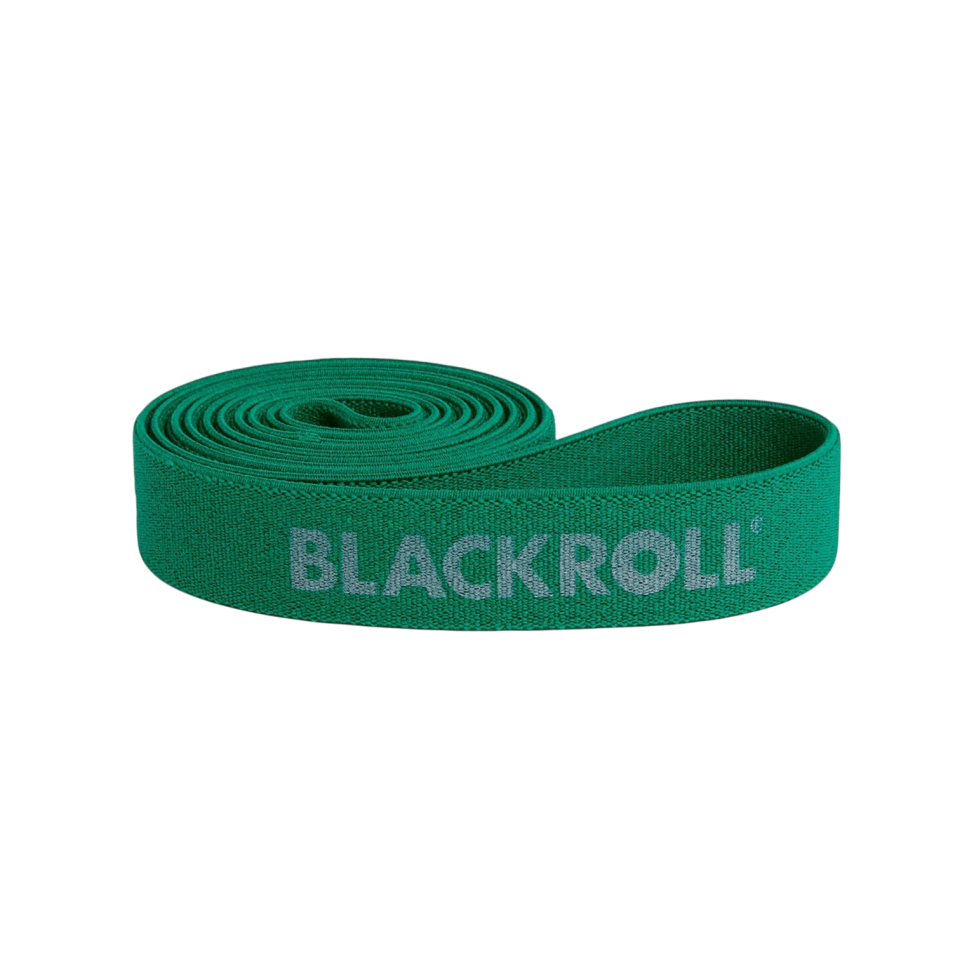
Attach the SUPER BAND to an object at hip height. Get into a kneeling position. Wrap the band around your thigh from behind. Extend your hips and engage your glutes. Let the band pull you into the stretch. Hold the position.
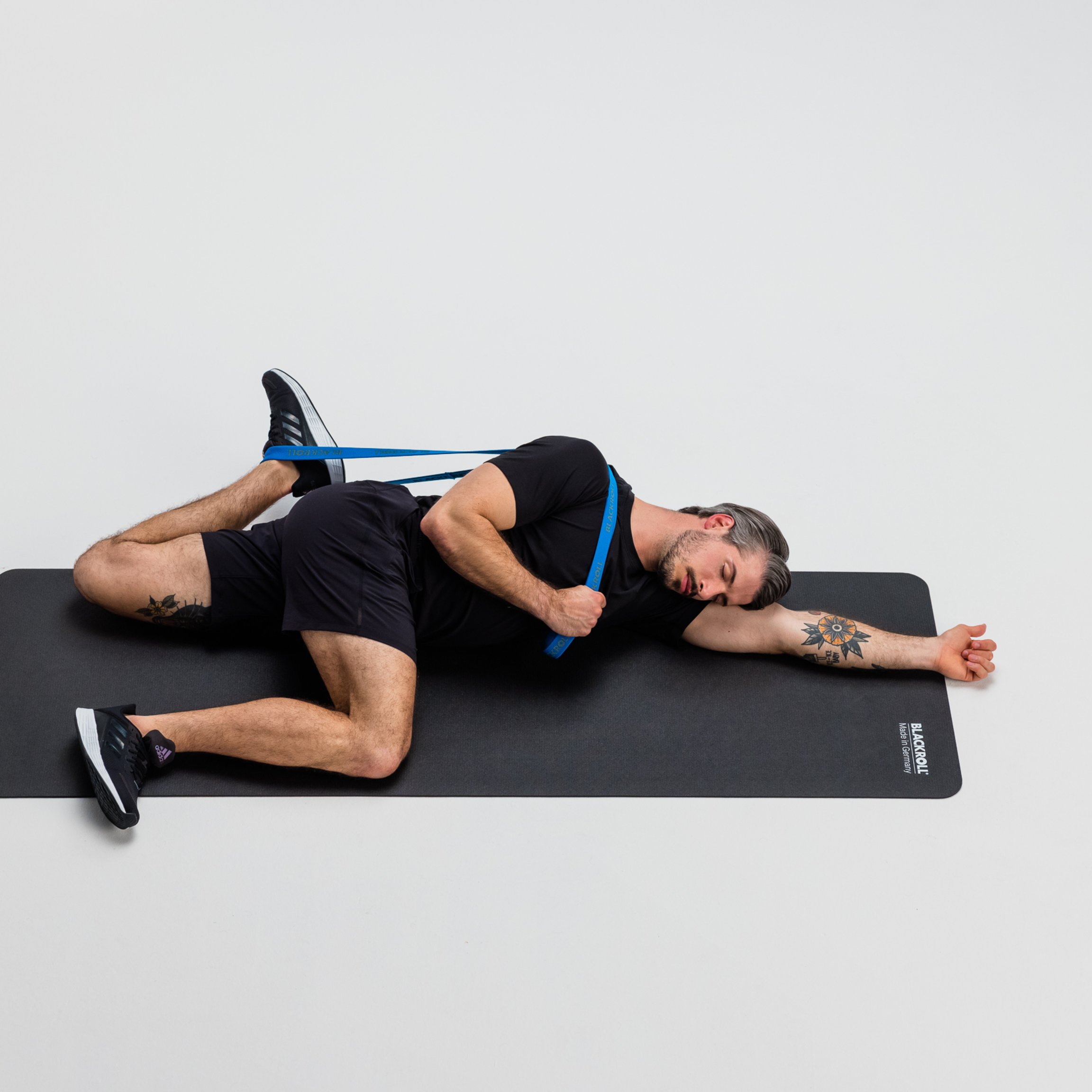
Quad Stretch
Place the SUPER BAND around your ankle. Grasp the other end and pull the band forward with your hands. Use the band to pull your leg further forward. Hold the position. This exercise primarily stretches the rectus femoris muscle.
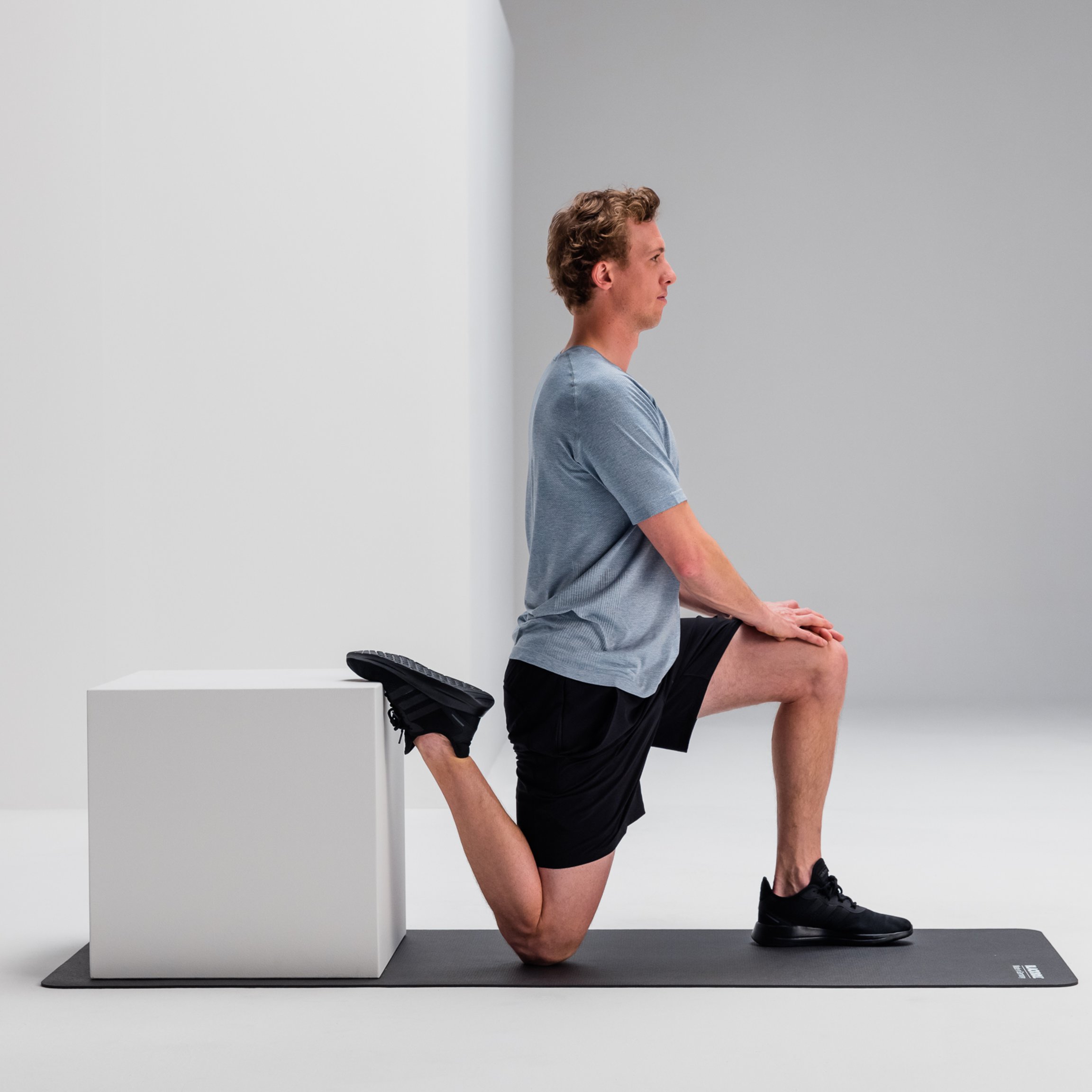
Couch Stretch
Start in a half-kneeling position. Rest the lower leg of your back leg against the wall. Keep your upper body upright. Consciously tilt your hips upward. Hold this position.
Stretching Your Hip Flexors While Standing
To enjoy your favorite sport for years to come, it’s a good idea to stretch your hip flexors regularly. You don’t always need a lot of time or an exercise mat to do this. With these three exercises, you can easily stretch your hip flexors while standing. Hold each stretch for at least one minute.
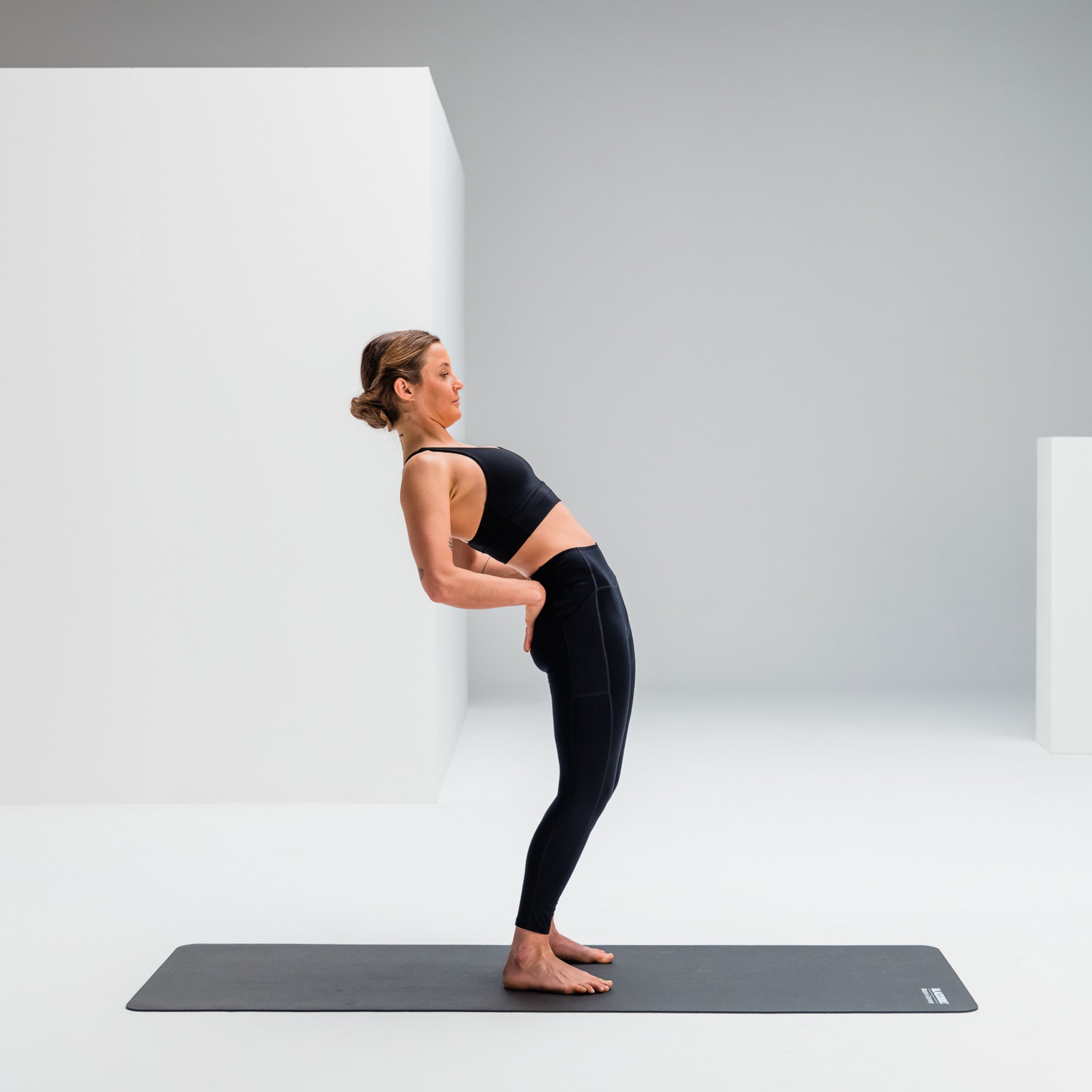
Standing Backbend
Stand upright and distribute your weight evenly on both feet. Push your hips forward and your upper body backward. Lift your sternum. Bring your chin to your chest. Hold the position. You can support yourself with the backs of your hands on your lower back or let your hands hang freely at your sides. The latter is more intense.
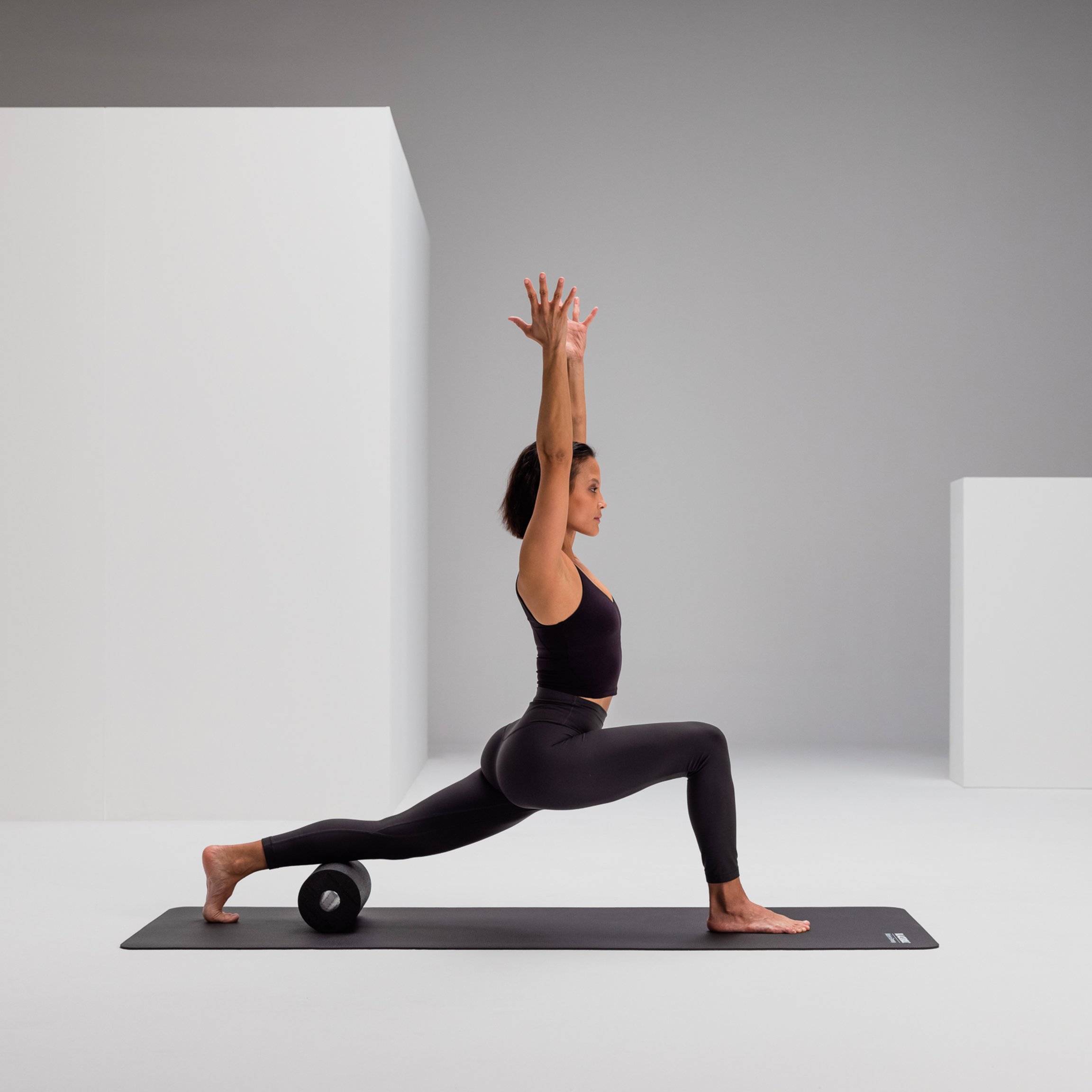
Warrior
Start in a lunge position. Place the BLACKROLL under your back shin. Extend your hips. Raise your straight arms overhead. Hold this position or deepen the stretch by rolling the BLACKROLL backward or pushing your heel toward the end of the mat. Keep your core stable so you don’t arch your lower back. Your front knee should remain above your ankle throughout the entire exercise.
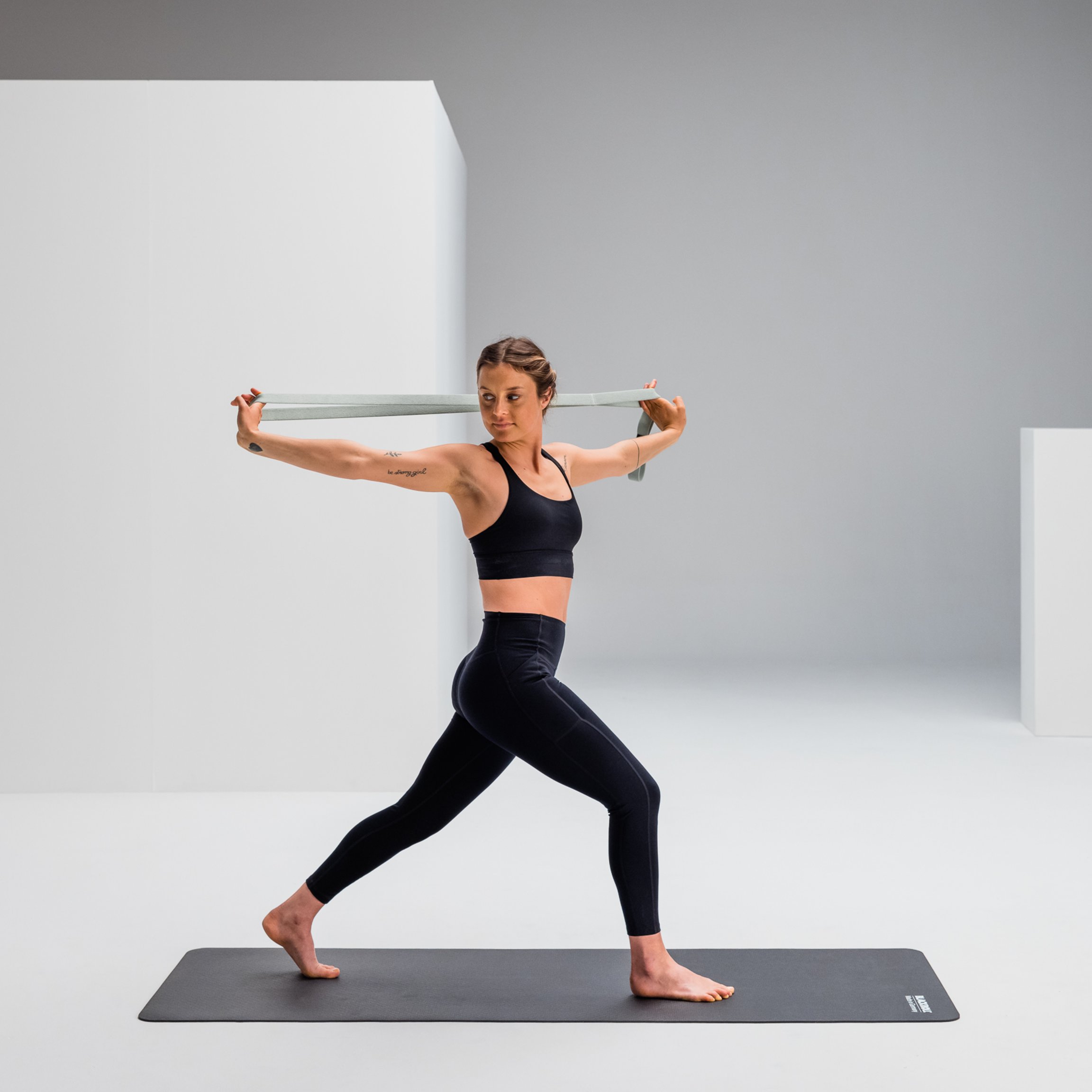
Lunge Twist
Get into a lunge position. Grasp the STRETCH BAND with your fingertips and bring it behind your head. Rotate your upper body toward the opposite side of your back leg. Keep your gaze following your hand.
Tools to Help You Stretch Your Hip Flexors
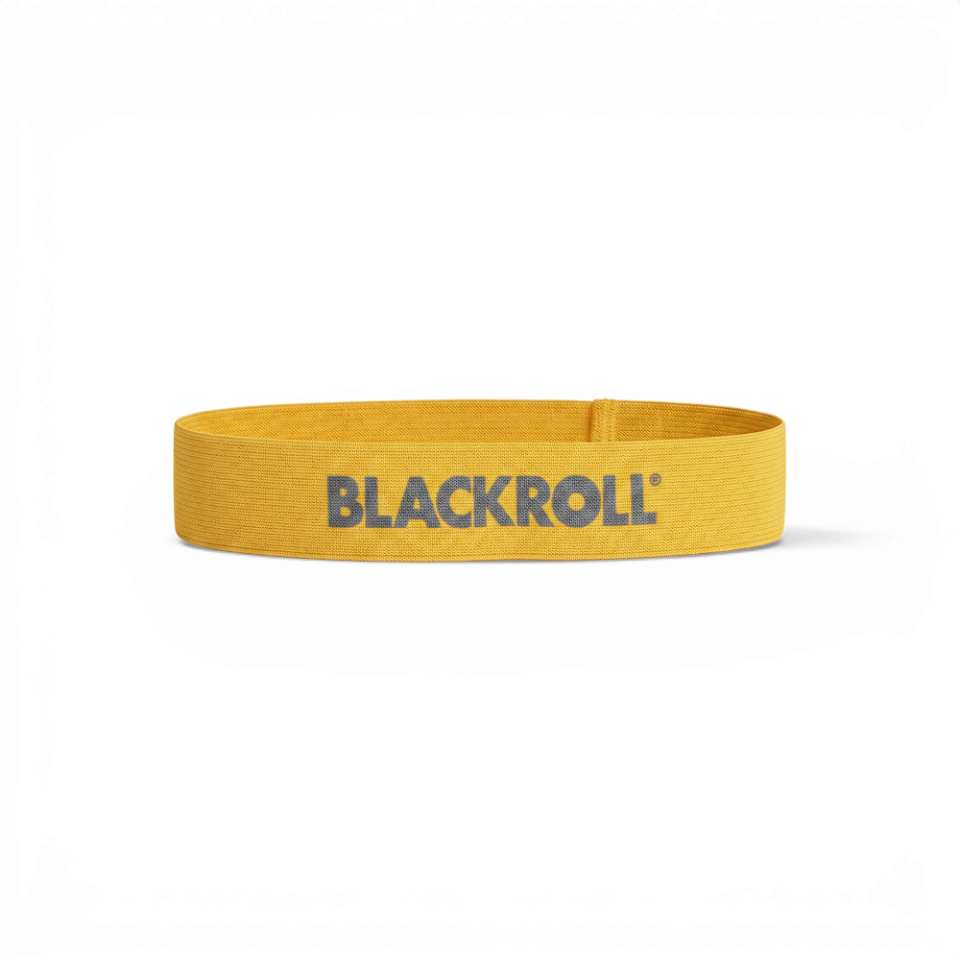
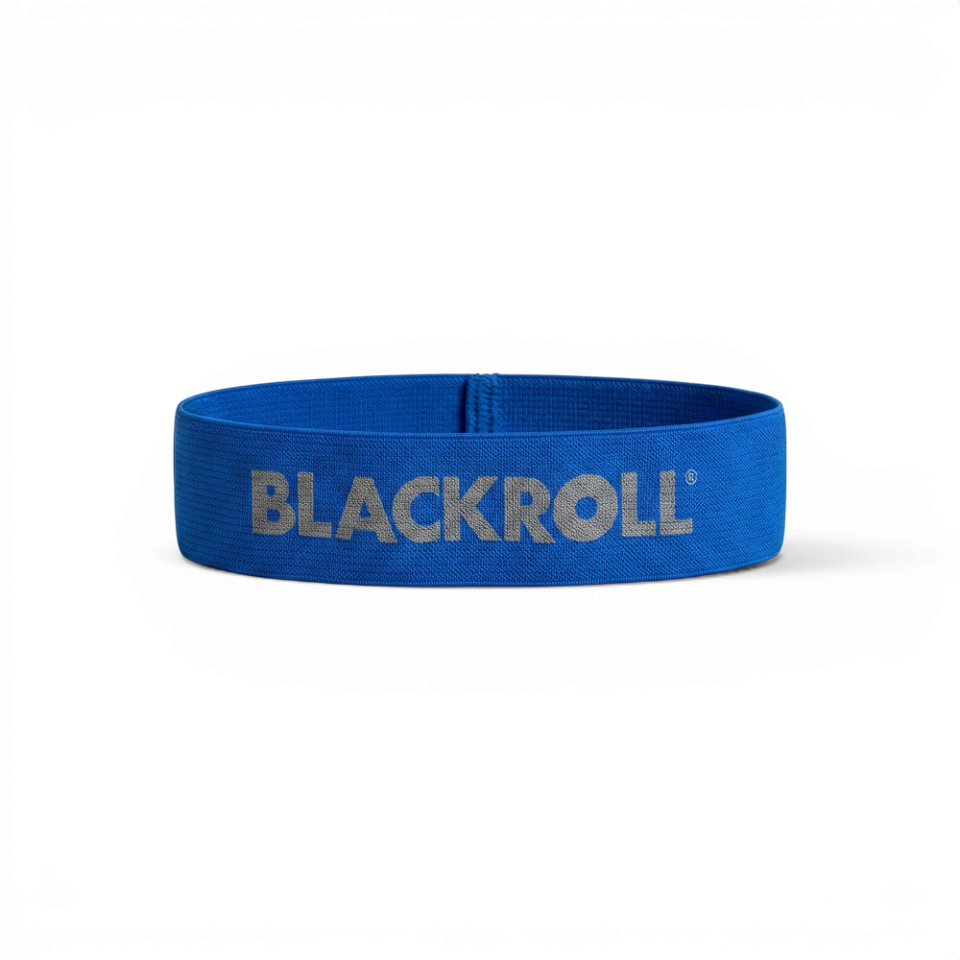
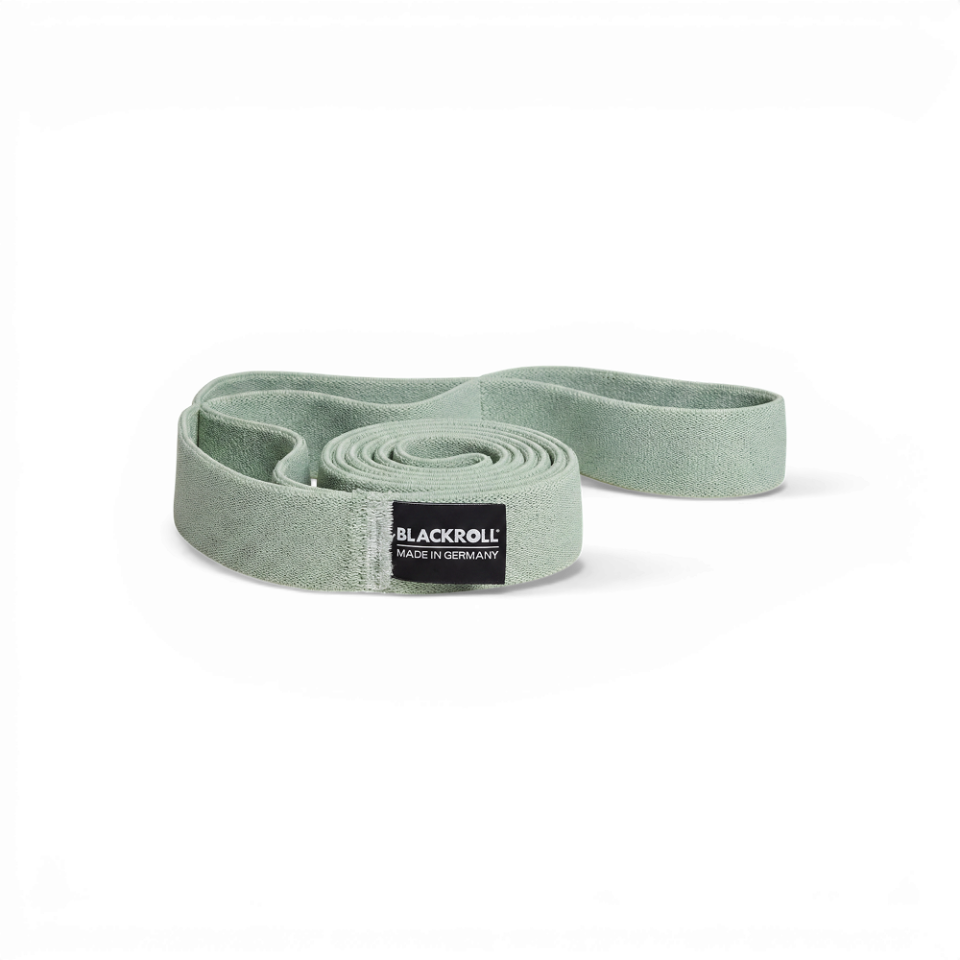
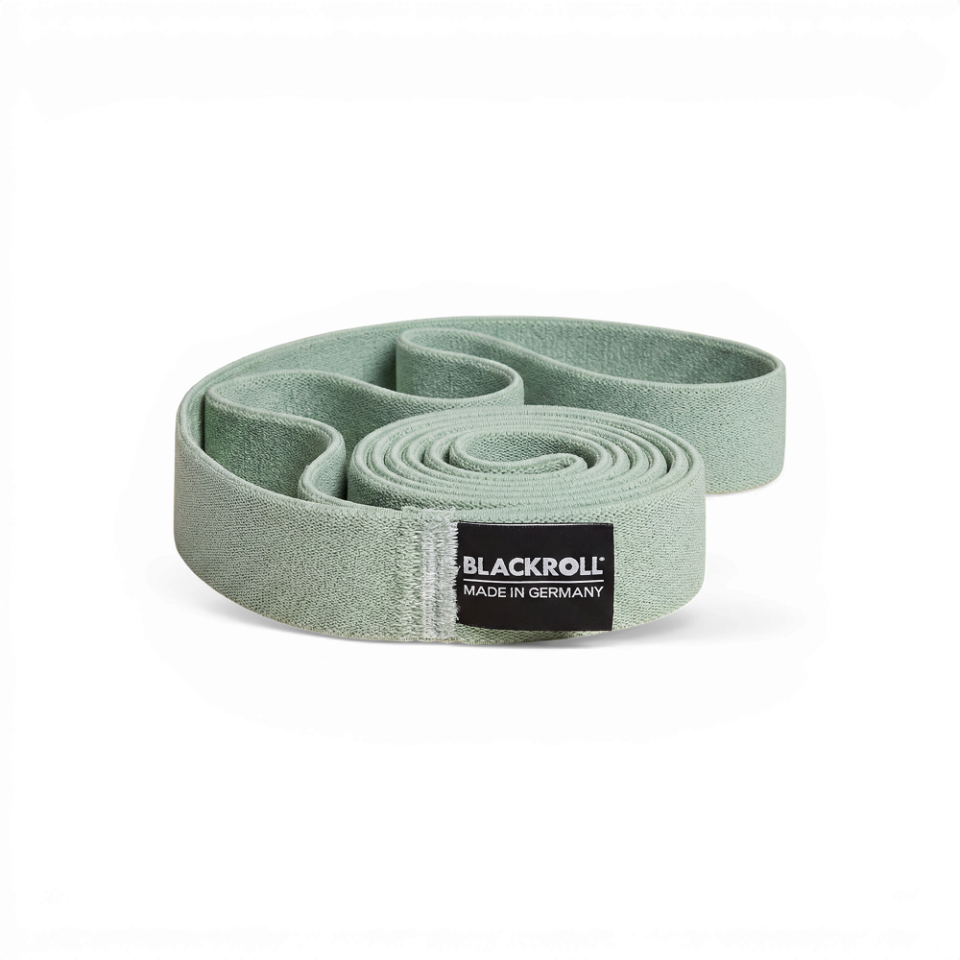
Loop Band
Available in multiple variants
Super Band
Available in multiple variants
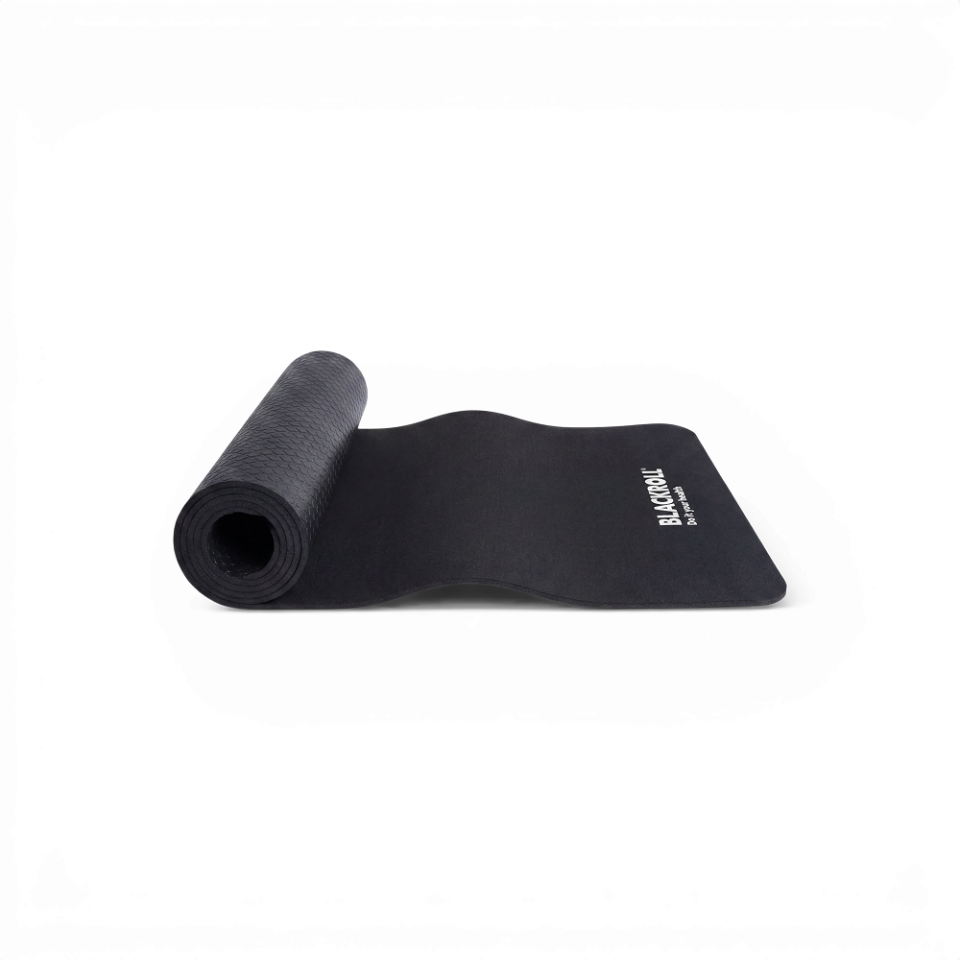
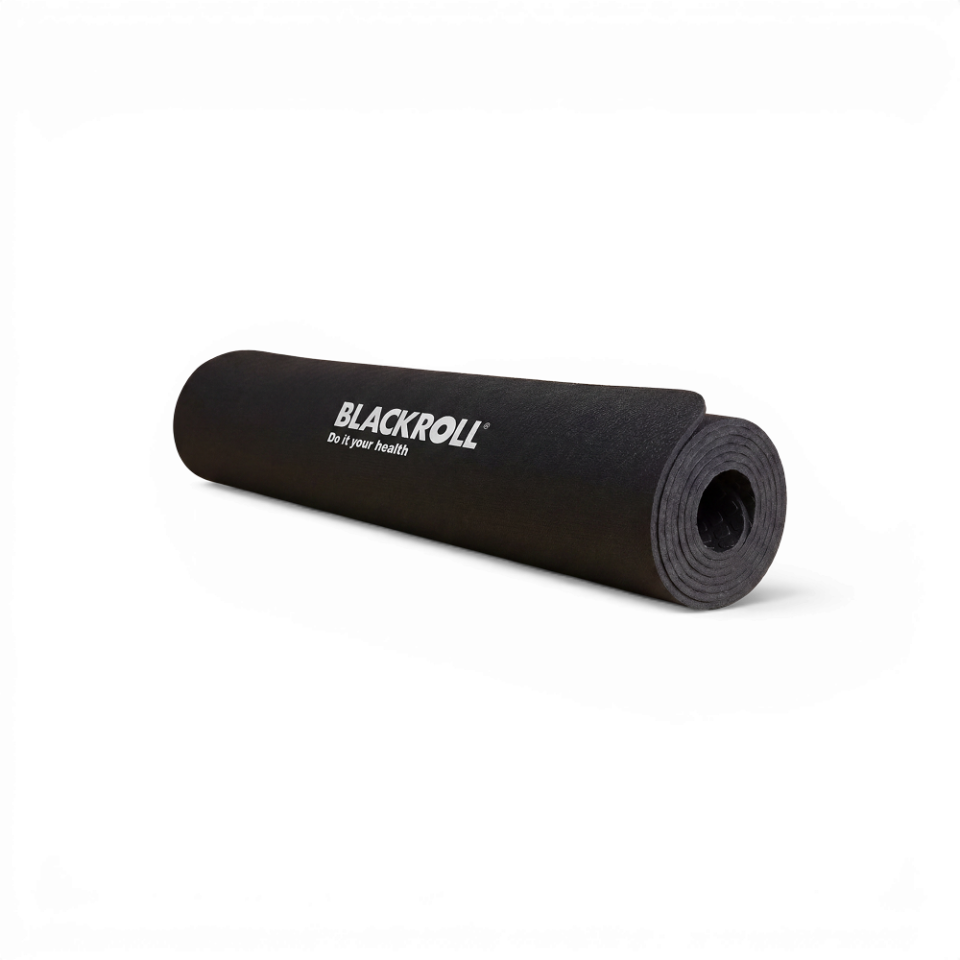
Mat
Available in multiple variants
Stretching the Hip Flexors While Seated
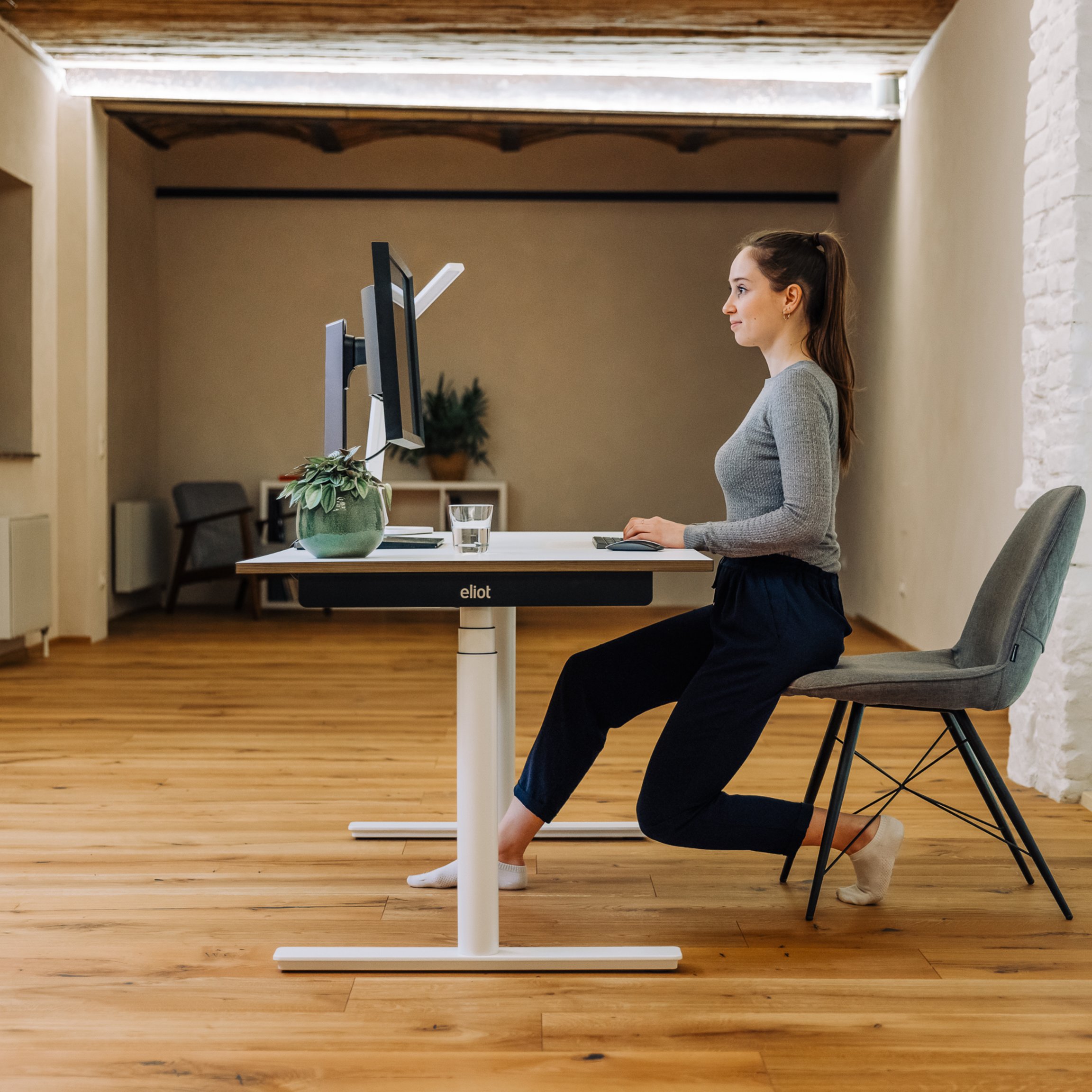
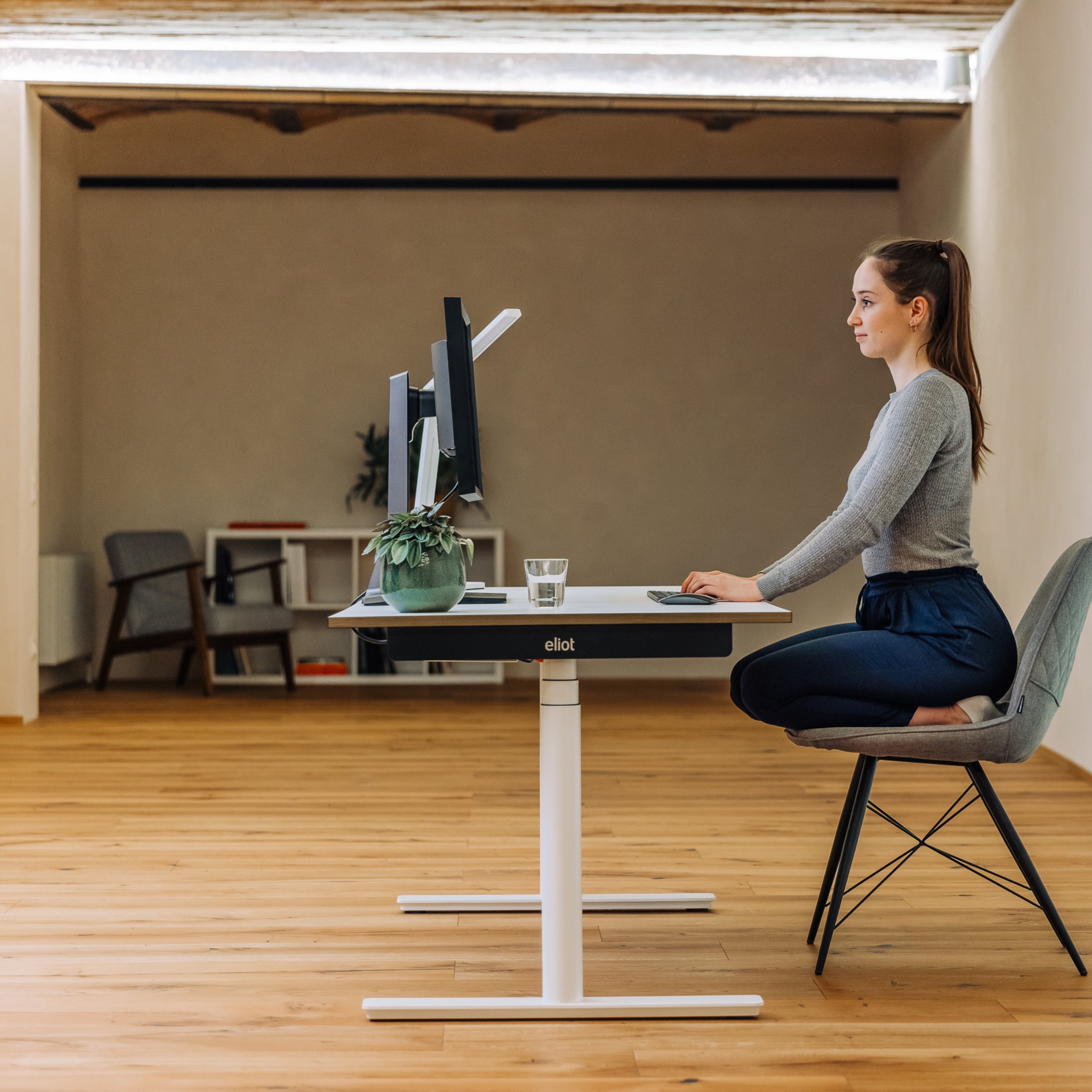
The problem with sitting is that our hips are already in a flexed position. This makes it difficult to specifically stretch the hip flexors while sitting. When sitting, it’s therefore important to change your position as often as possible. Below are two dynamic sitting positions that you can easily incorporate into your daily routine.
Lunge
Helps you maintain an upright posture. Sit on the edge of your desk chair. Place one foot about half a meter in front of you on the floor. The back foot is tucked under the chair. Switch sides regularly.
Heel Sit
Admittedly, many people lack the flexibility needed for the heel sit. You can make this dynamic sitting position easier by placing a pillow under your buttocks. Incidentally, this position is also said to have a beneficial effect on digestion.
Stretching the hip flexors while lying down
Tight hip flexors can not only limit your mobility but also contribute to back pain and negatively affect your posture. With targeted stretching exercises while lying down, you can gently and effectively mobilize this area—without putting any pressure on your joints. Below, we’ll show you two simple exercises using the FASCIAL ROLLER that you can comfortably do at home to loosen your hip flexors and gain more length in your front body line.
Pretzel
Start by lying on your side on the floor. Bend the knee of your top leg to a 90-degree angle. Place the FASCIAL ROLLER under your bent knee to stabilize your pelvis for the upcoming mobilization. Extend your lower leg actively at the hip. Grab the back of your foot to deepen the stretch. Try to rest your entire upper back on the floor.
Make sure your upper leg does not leave the FASCIAL ROLLER. Your other leg should remain in full hip extension throughout the entire exercise.
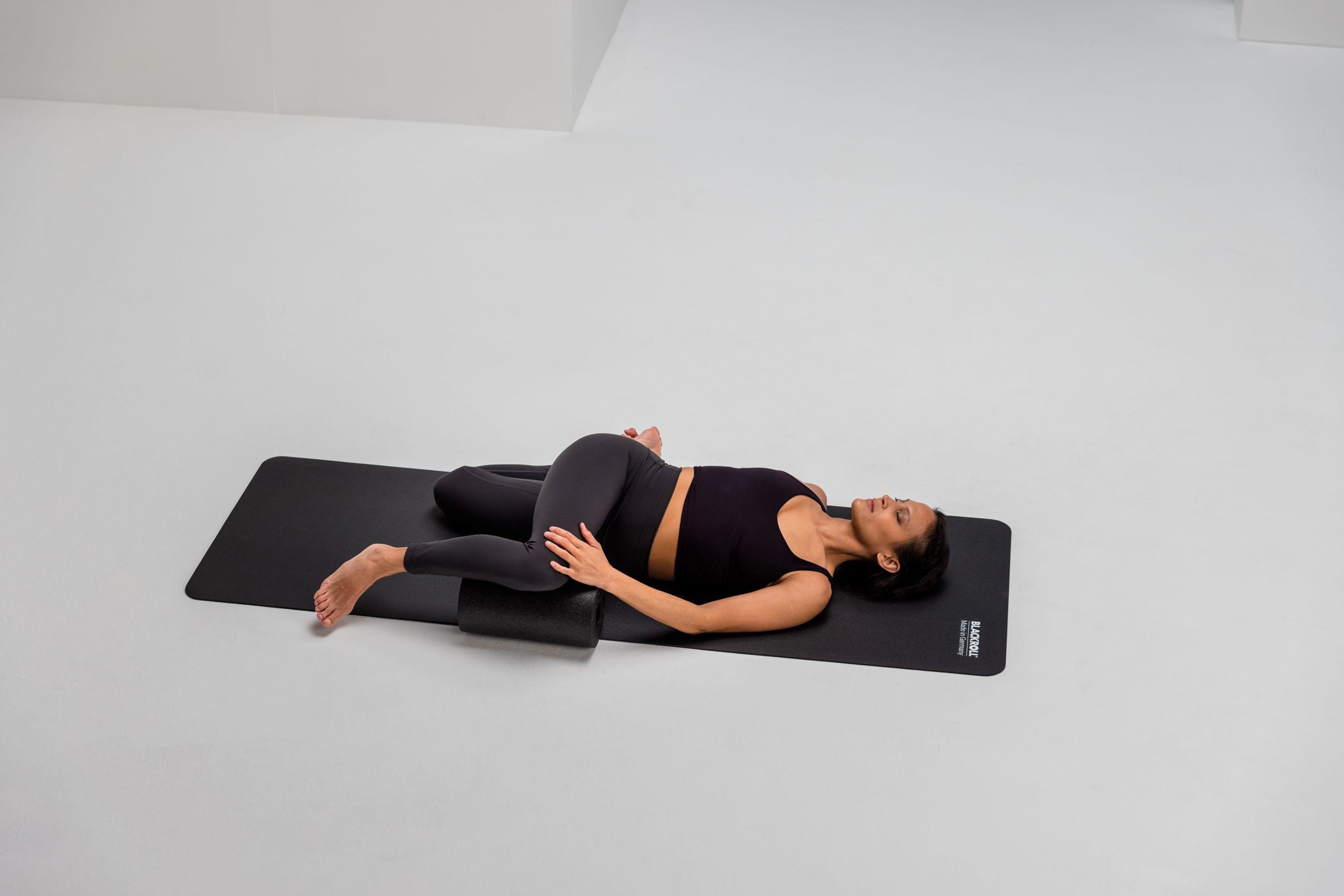
Hip Flexor Stretch
Lying on your back, place the FASCIAL ROLLER under your hips. Place your arms at your sides. Place one leg on the floor with the knee bent. Now take deep breaths in and out. Hold this position.
Stretching Your Hip Flexors While You Sleep. Is That Possible?
While it’s not possible to directly stretch your hip flexors while sleeping, you can consider choosing a sleeping position that keeps your spine aligned and promotes relaxation of the hip flexors.
- Sleeping on Your Back
Sleeping on your back is considered one of the best sleeping positions for tight hip flexors. Sleeping on your back preserves the natural curve of the spine and reduces pressure on the hips and lower back.
- Avoid sleeping in the fetal position
One sleeping position you should avoid if you have tight hip flexors is the fetal position. In this position, you lie on your side, slightly curled up, with your knees pulled toward your chest. This position can further shorten the hip flexors and lead to more discomfort.
Conclusion: Stretching the hip flexors
Regularly stretching your hip flexors is crucial for maintaining your health and mobility. The hip flexors are an often-neglected muscle group, but their shortening can have far-reaching effects on your body.
Neglected hip flexors can lead to postural problems, back and knee pain, and a swayback, and may even contribute to hip osteoarthritis. Through targeted stretching exercises, we can prevent or alleviate these problems. Adequate flexibility in the hip flexors helps maintain hip mobility, keep the spine in a healthy position, and reduce the risk of injury. In addition, regularly stretching the hip flexors can improve athletic performance and enhance overall quality of life.
It’s important to stretch your hip flexors regularly—this is the only way to achieve long-term benefits. Many of the exercises can be easily incorporated into your daily routine and don’t take much time. By stretching your hip flexors regularly, you’re investing in the health of your entire body and helping to prevent discomfort and functional impairments.
Häufige Fragen zu verkürzten Hüftbeugern
Woran merke ich einen verkürzten Hüftbeuger?
Ein funktionell verkürzter Hüftbeuger kann sich durch eine eingeschränkte Hüftstreckung, ein Spannungsgefühl an der Vorderseite der Hüfte oder eine verkürzte Schrittlänge bemerkbar machen. Auch langes Sitzen oder vollständiges Aufrichten können sich unangenehm anfühlen.
Warum verkürzt der Hüftbeuger?
Langes Sitzen und einseitige Belastungen halten die Hüfte über längere Zeit in einer gebeugten Position. Dadurch können die Hüftbeuger dauerhaft eine erhöhte Spannung entwickeln und sich die Beweglichkeit in der Hüftstreckung verringern.
Hüftbeuger oder Piriformis – wo liegt der Unterschied?
Der Hüftbeuger liegt hauptsächlich an der Vorderseite der Hüfte und ermöglicht die Hüftbeugung. Der Piriformis liegt tief im Gesäß und ist vor allem an der Außenrotation und Stabilisierung des Hüftgelenks beteiligt.
Wie lange sollte man den Hüftbeuger dehnen?
Als Orientierung kannst du eine statische Hüftbeuger-Dehnung etwa 30 bis 60 Sekunden halten und anschließend die Seite wechseln. Entscheidend ist eine kontrollierte Dehnung ohne starken Schmerz.
Wie oft sollte man den Hüftbeuger dehnen?
Du kannst deine Hüftbeuger mehrmals pro Woche dehnen. Wenn du viel sitzt, können kurze und regelmäßige Bewegungspausen sowie Mobilisationsübungen zusätzlich sinnvoll sein.
Sollte man den Hüftbeuger trotz Schmerzen dehnen?
Bei leichtem Spannungsgefühl kannst du den Hüftbeuger vorsichtig und schmerzfrei mobilisieren. Bei starken, stechenden oder anhaltenden Schmerzen solltest du nicht in den Schmerz hineindehnen und die Ursache medizinisch oder physiotherapeutisch abklären lassen.
Wann wird ein verkürzter Hüftbeuger besser?
Wie schnell sich die Beweglichkeit verbessert, ist individuell und hängt unter anderem von der Ausgangssituation und der Regelmäßigkeit des Trainings ab. Erste Veränderungen können bereits nach einzelnen Einheiten spürbar sein, für nachhaltige Verbesserungen ist jedoch regelmäßiges Mobilitäts- und Krafttraining entscheidend.
More Hip Exercise Routines


Quellen & Studien
Konrad, A., Močnik, R., Titze, S., Nakamura, M., & Tilp, M. (2021). The influence of stretching the hip flexor muscles on performance parameters: A systematic review with meta-analysis. International Journal of Environmental Research and Public Health, 18(4), 1936. doi: 10.3390/ijerph18041936
Nojiri, S., Yagi, M., Mizukami, Y., & Ichihashi, N. (2021). Static stretching time required to reduce iliacus muscle stiffness. Sports Biomechanics, 20(7), 901–910. doi: 10.1080/14763141.2019.1620321
Preece, S. J., Tan, Y. F., Alghamdi, T. D. A., & Arnall, F. A. (2021). Comparison of pelvic tilt before and after hip flexor stretching in healthy adults. Journal of Manipulative and Physiological Therapeutics, 44(4), 289–294. doi: 10.1016/j.jmpt.2020.09.006
Singhvi, P. M., & Bharnuke, J. K. (2024). A cross-sectional study on association of iliopsoas muscle length with lumbar lordosis among desk job workers. Indian Journal of Occupational and Environmental Medicine, 28(3), 235–238. doi: 10.4103/ijoem.ijoem_316_23