Recovery

For professional soccer players, physical health is of the utmost importance: For 90 minutes, these athletes run across the field at the highest level and engage in sometimes intense one-on-one battles. In doing so, they also expose themselves to a certain risk of injury. This can happen due to a sliding tackle, an accidental kick, or even without any external influence, and can sideline players for months at a time. A thorough warm-up before the game can minimize the risk of injury, but minor or major injuries cannot be ruled out entirely. There are sometimes significant differences in the number of injury-related substitutions depending on the stadium.
We conducted a comprehensive comparison to determine which stadium has seen the most player injuries over the past three seasons in the 1st and 2nd Bundesliga, the DFB Cup, and the Champions League. In total, we analyzed approximately 2,360 games and 1,661 injury-related substitutions. One stadium in particular—belonging to a first-division club—has been especially plagued by injuries:
According to our findings, TSG Hoffenheim’s PreZero Arena is the most dangerous for professional soccer players: Since the 2021–22 Bundesliga season, players have had to leave the field early due to injury a total of 51 times. For Leipzig midfielder Xaver Schlager, too, the current season ended prematurely at Hoffenheim’s stadium with a torn cruciate ligament. As a result, the Austrian national team player will miss the European Championship.
At the infamous Signal Iduna Park , the Yellow Wall creates a great atmosphere, but many players have had to leave the field due to injury: 47 substitutions during Borussia’s home games were made because of injuries. Injuries can happen quickly, especially when sprinting —players can twist an ankle, slip, or run into a sliding tackle. Stuttgart’s MHP Arena follows with 46 substitutions. VfB striker Serhou Guirassy had to limp off the field three times, including once due to an adductor injury. The turf at Frankfurt’s Deutsche Bank Park is also dangerous: over the last three seasons at Eintracht, matches ended early due to injuries 44 times. At SV Darmstadt 98’s Merck Stadium at Böllenfalltor and at Augsburg’s WWK-Arena, players were substituted 42 and 41 times, respectively, because they were physically unable to continue.
An overview of injury-related substitutions by stadium in the 1. Bundesliga can be found here:
It’s not just in the top flight—games in the second division can also get rough at times. For some professional players in the 2. Bundesliga, despite being in excellent physical condition, a collision or a fall without contact from another player can force them to leave the game. Matches at Schalke, in particular, are especially dangerous: With 38 injury-related substitutions, the Veltins-Arena tops the 2. Bundesliga rankings. Six of those substitutions were due to right-back Cédric Brunner alone. Matches at the Sportpark Ronhof || Thomas Sommer, home of SpVgg Greuther Fürth, are just as risky, with the number of injured professional soccer players totaling 38.
The Kiel team can celebrate promotion this season, defying the dangers of Holstein Stadium, where a total of 37 players have been injured over the past few seasons. Things are similarly rough at Düsseldorf’s MERKUR SPIEL-ARENA, with 36 substitutions due to physical injuries. Hannover’s Heinz von Heiden Arena follows with 34 injury-related substitutions. At the Olympiastadion, which hosts not only Hertha BSC’s home games but also the cup final, there were 33 injuries.
Check out the table to see how all the 2. Bundesliga clubs are faring:
While the PreZero Arena and the Veltins-Arena are known for a comparatively high number of injuries, there are also stadiums where injuries are few and far between. Since this season, 1. FC Heidenheim has been playing in the top flight on a safe field. Only 21 times have professional players been unable to continue due to an injury sustained during a game. At the Red Bull Arena, too, the number of injuries is manageable, with 30 substitutions. SC Freiburg has recorded 32 injury-related substitutions, 30 of them at the new Europa-Park Stadium and two at the Dreisamstadion.
In the 2. Bundesliga, Hamburger SV once again failed to secure promotion to the top flight. However, the Blue-Whites have a low injury rate at their home stadium: Players had to leave the field injured only 23 times at the Volksparkstadion. The number of injury-related substitutions is equally low at Paderborn’s Home Deluxe Arena and at 1. FC Nürnberg’s Max-Morlock-Stadion (23 and 24 substitutions, respectively). While other clubs have even fewer injury-related substitutions, they have also played fewer games in the Bundesliga.
A comprehensive overview of the comparison can be found on this map:
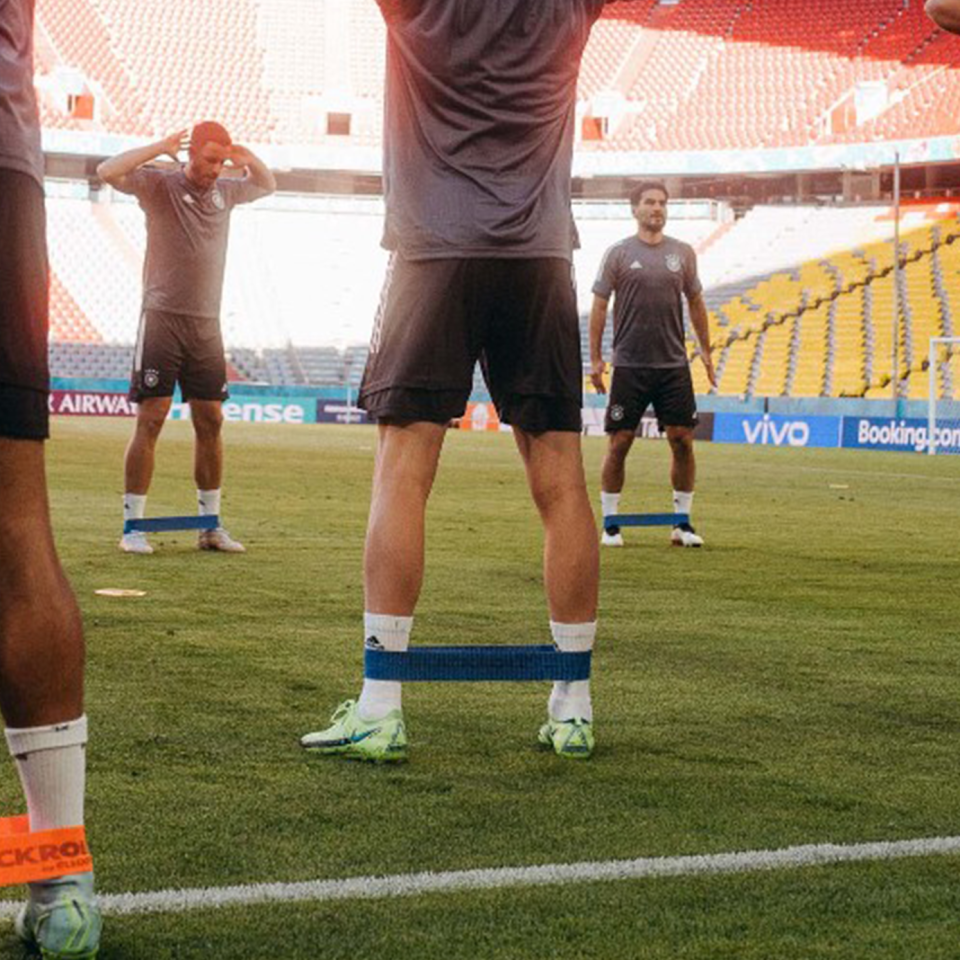
In the DFB Cup as well, clubs run the risk of having to take their players off the field after an injury. Especially in one-on-one situations, soccer players need to be physically fit to prevail against their opponents. Strength training can help optimize fitness and strengthen joint stability. Otherwise, the game can quickly end in an injury.
RB Leipzig’s Red Bull Arena is the most dangerous, with six professional players having been injured there—the highest number of any stadium. Five other stadiums follow, each with five forced substitutions. Among them is the municipal stadium on Grünwalder Straße, where Türkgücü Munich and TSV 1860 Munich battled for a spot in the next round, and the makeshift arena at the Ernst-Abbe-Sportfeld, home to FC Carl Zeiss Jena.
This overview reveals where the action is still heating up in the DFB Cup:
In the Champions League, no German stadium tops the list; instead, it’s Milan’s Giuseppe Meazza Stadium: players had to leave the field due to injury 27 times. This is partly because AC Milan and Inter Milan share San Siro for their matches. FC Bayern Munich’s Allianz Arena follows with 13 injury-related substitutions, ahead of FC Porto’s Estádio do Dragão and Manchester City’s Etihad Stadium (12 injuries each). Currently, Borussia Dortmund’s stadium has brought no luck to PSG pro Lucas Hernandez in the Champions League: He is expected to be sidelined for months after tearing his cruciate ligament.
You can find an overview of the Champions League results here:
Although the PreZero Arena is the stadium with the highest overall number of injuries, the risk of injury varies by club. This is evident in Borussia Dortmund’s away matches at VfB Stuttgart: BVB players have had to be substituted due to injury a total of six times at the MHPArena over the past three seasons. For Borussia Mönchengladbach, on the other hand, a visit to this year’s champions is risky: Six substitutions due to injury have occurred at Leverkusen’s BayArena.
In the 2. Bundesliga, 1. FC Kaiserslautern must brace for rough play ahead of away matches at Hertha BSC and Holstein Kiel: At the Olympiastadion and the Holstein-Stadion, Kaiserslautern players have each been injured four times in the last three seasons alone.
The table shows where players from your favorite club get injured most often:
In terms of individual matches, the clash between TSG 1899 Hoffenheim and VfB Stuttgart is the most dangerous, with eleven injury-related substitutions. The same number of players who were no longer fit enough to continue was recorded over the past three seasons in matches between Eintracht Frankfurt and VfB Stuttgart. Some derbies also get physical: In the Rhine Derby between 1. FC Köln and Bayer 04 Leverkusen, eight players fell victim to injuries. In the Revierderby between Borussia Dortmund and Schalke 04, however, only BVB pro Marco Reus had to leave the field once with a torn lateral ligament in his ankle.
This overview shows you which matches can be dangerous:
For this comparison, we analyzed a total of 20,725 substitutions in professional soccer and categorized them based on the reason for the substitution. We included a total of 2,356 matches from the 1st and 2nd Bundesliga, the Champions League, and the DFB Cup over the past three seasons starting with 2021/2022. For the analysis, the respective matches played by promoted or relegated teams in other leagues were included.