
Building Routines: How They Change Your Life—and How to Really Stick With Them

At first glance, routines seem unspectacular. They’re neither radical nor particularly motivating. And yet, in everyday life, they often determine whether exercise, recovery, or other health-related behaviors actually take place—or are repeatedly put off.
From a scientific perspective, routines don’t directly change your health or performance. They change the conditions under which behavior occurs. Their benefit lies in making desired behavior more likely, more predictable, and less dependent on ad-hoc decisions.
In this guide, we’ll explore:
- what routines are—and how they differ from habits
- what routines can achieve (and what they can’t)
- which few factors, according to research, truly determine whether routines stick
- why exercise and recovery are ideal areas of application
- and how to structure routines so you can get back on track even after interruptions
It’s not about “more discipline” or “perfect plans,” but about making routines feasible.

Find your BLACKROLL® Challenge and make 2026 your year.
Take the quiz now

What are routines—and how do they differ from habits?
In everyday life, routines and habits are often lumped together—but from a scientific perspective, it’s worth distinguishing between them.
- Routines are consciously initiated, recurring sequences of actions tied to a clear trigger. This can be a time (“after getting up”), a place (“at the office”), or an action (“after brushing my teeth,” “after shutting down my laptop”).
- Habits are the automated aspect of a behavior that is triggered by specific situations and requires little to no conscious decision-making.
Routines don’t have to be fully automated to be effective. Many stable routines remain consciously controlled over the long term and still reduce the effort you put into decision-making. They are often the path through which habits develop over time—but they don’t have to reach this stage to help you in your daily life.
Important for you:
If you want to build routines, you don’t have to wait until everything runs “completely automatically.” It’s enough for a routine to become reliable enough to take decisions off your hands and make certain behaviors more likely.
Christoph Ebenbichler, certified sports scientist, passionate mountaineer, and expert in exercise and rehabilitation.



What Routines Can Do—and What They Can’t
Routines are not a magic bullet. They:
- make behavior more predictable and easier to plan
- reduce reliance on spontaneous decisions and motivation
- increase the likelihood that desired behavior will occur regularly
However, they do not guarantee results. Individual differences, your daily life, stress, health, family, and work—all of these factors remain relevant. Routines are a tool for structure, not a guarantee of success.
This realistic perspective is important:
Routines are no substitute for medical treatment, exercise, or personalized support. They create a framework that makes it more likely you’ll do what you want to do.
Routines make behavior more predictable and less dependent on spontaneous decisions or motivation (Rhodes et al., 2020).
From a scientific perspective, studies show moderate but reliable effects of routines on the stability of everyday behavior. They increase the likelihood that desired behavior will occur regularly, but they do not guarantee results.

Fall Asleep More Relaxed
Discover evening routines

The Five Factors That Really Determine Whether Routines Stick
Let’s now take a look at the factors that, according to research and practical experience, are crucial—and that both of Chris’s versions describe at their core.
Factor 1: The initial hurdle is what matters—not your motivation
The beginning is the most critical point of any routine. Studies on behavior change consistently show that the higher the barrier to entry, the less likely you are to even start an action—no matter how sensible or well-intentioned it is.
Typical problems:
- “I want to work out for 45 minutes three times a week.”
- “I’ll do a full mobility routine every evening.”
Sounds good—but in real life, it’s often too much.
Routines rarely fail because of laziness, but because getting started in daily life demands too much: too much time, too much energy, too many conditions (“first get changed, then…”).
A good way to start:
- is something you can do right away
- takes little time and energy
- requires no preparation
Examples:
- one minute of movement exercises after getting up
- Three conscious breaths after turning off your laptop
- briefly standing up and moving around during your lunch break
The effect comes not from intensity, but from consistency. Many solid routines start with something that feels almost “ridiculously small”—but happens reliably.
Lever 2: Context Trumps Motivation
Motivation is volatile. It depends on how you’re feeling that day, stress, sleep, emotions, and countless other factors. The research is clear: Your behavior is driven less by your internal states and more by external conditions—the context.
Context can include:
- a specific time (e.g., right after getting up)
- a place (e.g., at your desk, in the living room)
- an action (e.g., after brushing your teeth, after shutting down your laptop)
The more clearly the context is defined, the more likely the routine is to be triggered. It works like a starting signal—and saves your brain from having to ask, “Should I do this now or later?”
Example:
- “Exercise sometime during the day” → high risk of failure
- “1 minute of exercise after brushing my teeth” → clear starting point
A common mistake: tying routines to “flexible time slots” (“whenever it works”). The more vague the context, the more internal debate—and the greater the chance that the routine will be skipped.
Lever 3: Automate the start—not the entire routine
Many people believe that a routine isn’t a “real routine” until the entire sequence runs automatically. In practice, however, something else becomes apparent: Often, the start becomes automatic first, not the entire action.
What matters is the moment before—the “action before the action”:
- Putting on your shoes vs. “running for 30 minutes”
- Rolling out the mat vs. “complete stretching routine”
- Getting up vs. “a proper workout”
This is exactly where many things fall short. Here,
- your current energy level
- your stress level
- your perceived barrier to getting started
- and your inner dialogue.
That’s why it makes sense to focus not on perfecting your routine, but on getting started:
- What’s the smallest step you can reliably take?
- What can you do without even thinking about it?
This makes a difference, especially when it comes to exercise and recovery. Small starts that provide quick physical feedback (e.g., a few breaths, a short mobility exercise) increase the likelihood that you’ll start again next time.

Lever 4: Repetition in the same context is more important than any specific day of the week
“How long does it take for a routine to become a habit?”—the classic question.
The honest answer from research: There’s no fixed, meaningful number.
Meta-analyses with large sample sizes show:
- a huge range (from a few weeks to several months)
- significant differences depending on the person, behavior, and context
What matters isn’t “21 days” or “66 days,” but rather:
- how often a behavior is initiated in the same context
- how reliably the initiation is triggered
- how low the barrier to entry remains
A small action that you perform regularly in response to the same trigger has a significantly higher chance of becoming a stable habit than a major program that you carry out “every now and then.”
Time is a contributing factor—not the mechanism itself.
Routines become established through consistency within the context, not simply by the passage of days.
Lever 5: Routines rarely fail because of a break—but because of getting back on track
Breaks are part of any realistic routine. Illness, travel, overtime, family chaos—welcome to real life. The problem isn’t the interruption itself, but rather:
- how hard or easy it is for you to get back on track.
Many routines fail because, after a break, getting back on track is planned to be just as big a task as before—or even bigger (“Now I have to catch up”). The mental hurdle skyrockets, and the routine falls apart.
Better:
- Consciously plan a small way to get back on track
- Define a “minimal version”
Examples:
- Not 20 minutes, but 1 minute of movement
- Not a full session, but 3 conscious breaths
- Not a full evening session, but 5 minutes of recovery
The evidence is clear: Low barriers to getting back into a routine increase its long-term sustainability. It’s not perfection that keeps routines alive, but the ability to pick them up again and again.


Why Routines Are Especially Important for Exercise and Recovery
Regular exercise and proper recovery are among the most important factors for long-term health. In practice, however, the problem rarely lies in a lack of knowledge (“I know I should do more”), but rather in putting it into practice in everyday life.
This is exactly where routines come into their own:
- They shift the question from “whether I’ll do something” to “when and how I’ll do it.”
- They create fixed anchor points in the day where exercise or recovery become the norm.
Examples:
- after getting up: a short mobility routine
- during lunch break: 2–5 minutes of movement or fresh air
- after shutting down the laptop: a short recovery or stretching session
- in the evening: 3–5 minutes of fascia work or breathing exercises
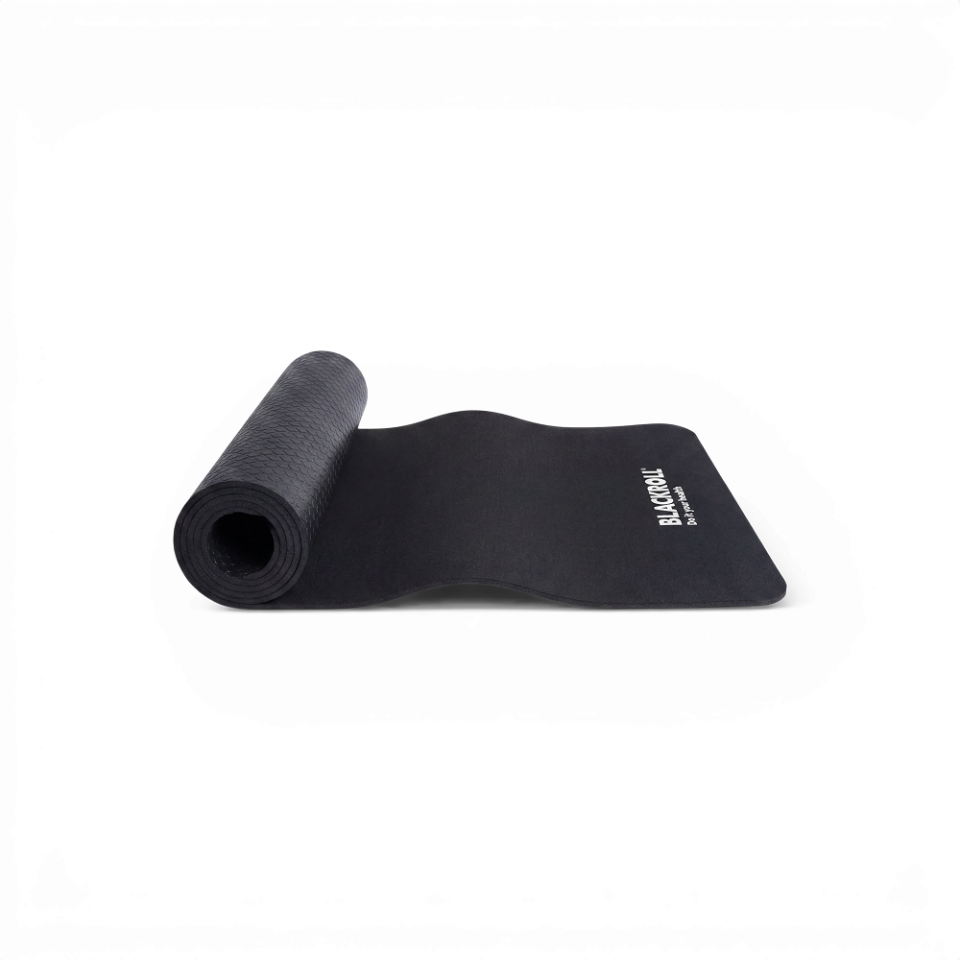
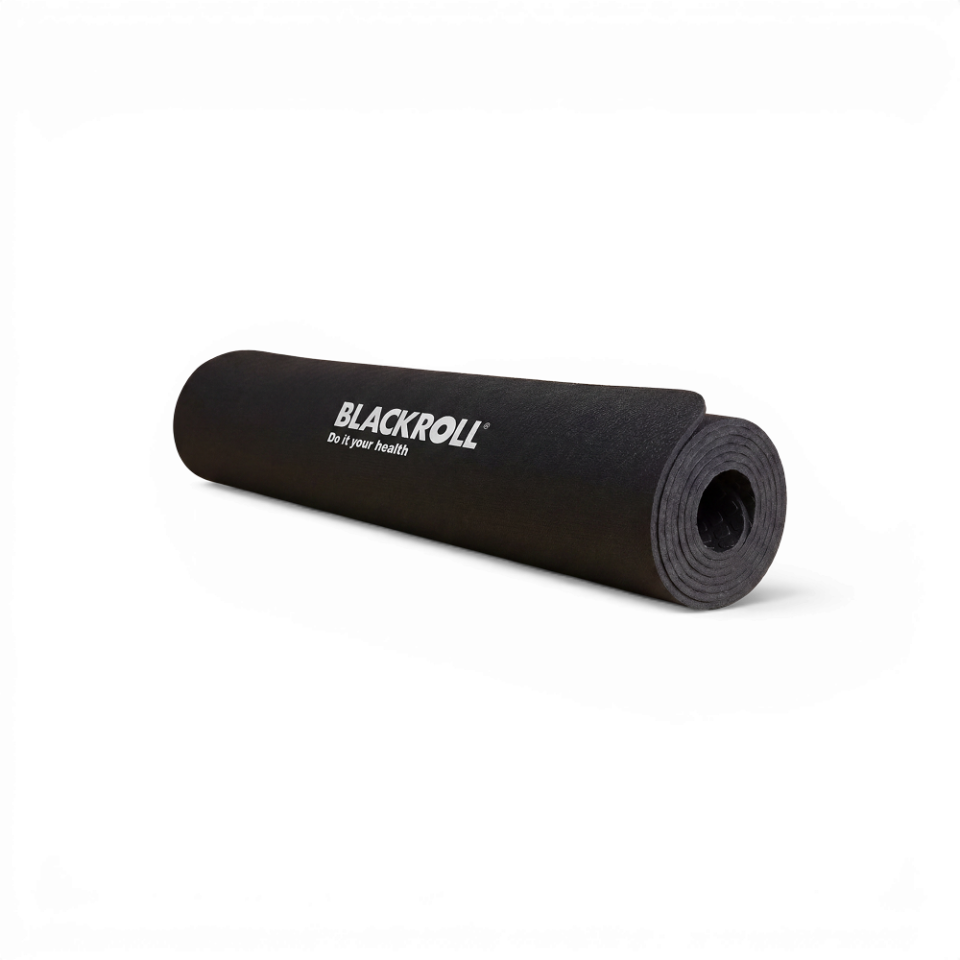
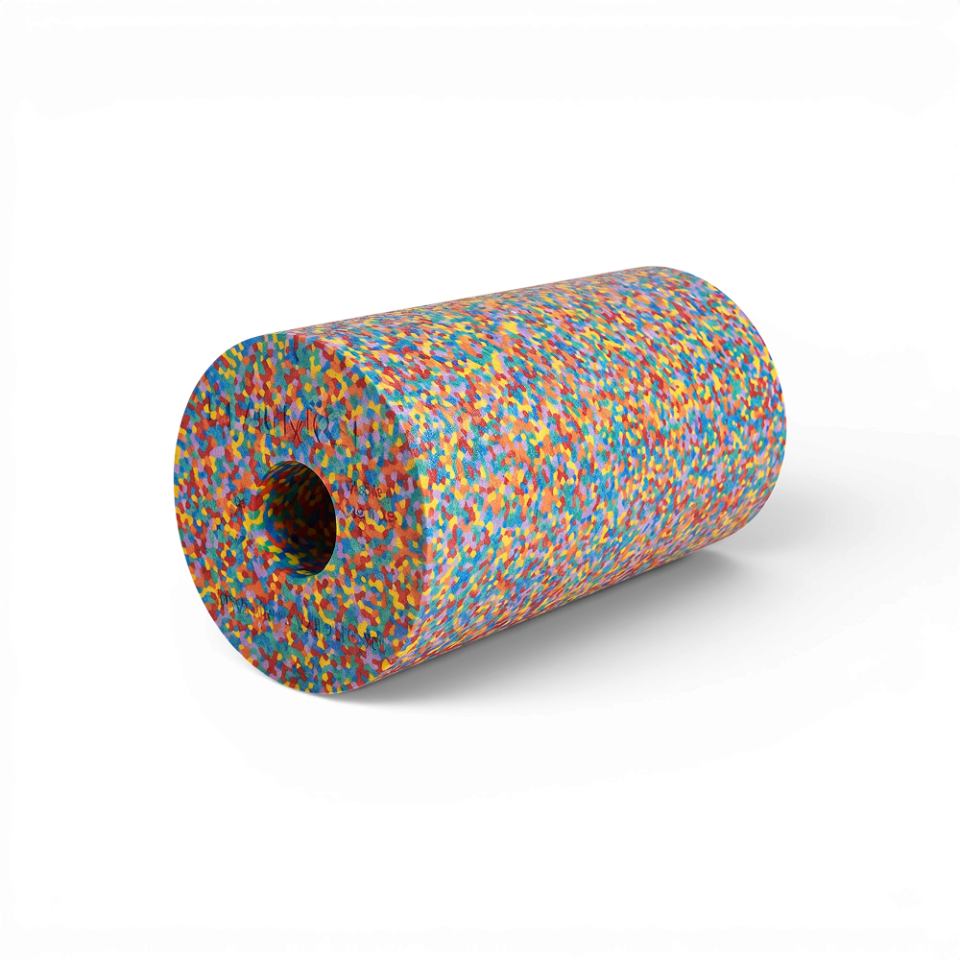
A BLACKROLL ball under your desk, a mat in the living room, or a roller in the bedroom aren’t “magic tools,” but they lower the barrier to getting started and remind you of your routine. The health benefits come less from heroic sessions and more from regular, small bursts of activity in the same context.
Mat
Available in multiple variants


The Body as a Learning System – Why Repetition Works
Your body is a learning system. Repeated stimuli lead to adaptations in the nervous system, muscles, fascia, and the autonomic nervous system. What you do regularly is processed preferentially—your body “remembers” these patterns.
Important to note:
- not every session has to be intense
- Frequency and consistency beat occasional peak performances
Short bursts of movement and recovery:
- change tension patterns over the long term
- improve movement economy
- sharpen your body awareness
Routines utilize precisely this mechanism: They ensure that small stimuli occur repeatedly under similar conditions—and that is exactly what promotes adaptation.


Evidence Review – What Routines Can Achieve and Where Their Limits Lie
The current body of research shows:
- Routines can moderately but reliably improve the stability of behavior
- Effects are present, but not huge
- Individual differences are significant
- Many studies rely on self-reports and limited time frames
What this means for you:
- Routines are helpful, but they’re no guarantee
- They make certain behaviors more likely, but they’re no substitute for personalized support
- They are a building block—not the entire solution
It is precisely this down-to-earth perspective that makes routines realistic to use: They are a tool in everyday life that you can use to make certain behaviors more likely—nothing more, but also nothing less.


Conclusion
Routines aren’t a magic shortcut. They work behind the scenes:
- They reduce the effort required to make decisions.
- They provide clarity on “when” and “how.”
- They take the strain off your brain because you have to make fewer decisions.
- They increase the likelihood that exercise, recovery, and other important behaviors will actually happen.
The key factor isn’t the size of your routine, but its practicality in the right context:
- Start small
- Lower the barriers to entry
- Clearly define the context
- Plan for getting back on track
It’s not perfection that matters, but reliability.
What starts regularly can become a stable habit. The rest doesn’t come from pressure or self-optimization, but from structures that fit your real everyday life.
More helpful articles



Feil, K., Allion, S., Kolar, D. R., & Froehlich, D. E. (2022).
Barriers and facilitators of physical activity behavior change: A systematic review of intervention studies focusing on initiation and maintenance. Health Psychology Review, 16(4), 520–546. https://doi.org/10.1080/17437199.2021.1893768
Gardner, B., de Bruijn, G. J., & Lally, P. (2011).
A systematic review and meta-analysis of applications of the Self-Report Habit Index to nutrition and physical activity behaviors. Annals of Behavioral Medicine, 42(2), 174–187. https://doi.org/10.1007/s12160-011-9282-0
Ma, H., Wang, S., Liao, Y., Zhang, Y., & Chen, S. (2023).
Effects of habit formation interventions on physical activity habit strength: A systematic review and meta-analysis with meta-regression. International Journal of Behavioral Nutrition and Physical Activity, 20(1), Article 109. https://doi.org/10.1186/s12966-023-01493-3
Rhodes, R. E., McEwan, D., & Rebar, A. L. (2020).
Theories of physical activity behavior change: A history and synthesis of approaches. Psychology of Sport and Exercise, 47, 101597. https://doi.org/10.1016/j.psychsport.2019.101597 (Reference in the text: Motivation is overestimated; decision-making and contextual factors are central.)
Singh, B., Olds, T., Curtis, R., Dumuid, D., Virgara, R., Watson, A., & Maher, C. (2024).
Time to form a habit: A systematic review and meta-analysis of health behavior habit formation and its determinants. Healthcare, 12(23), 2488. https://doi.org/10.3390/healthcare12232488