


I take care of my health
published on 26/03/2026 - updated at 06/10/2026
People who take a conscious approach to their health don’t make frivolous choices.
You don’t rely on every trend or every promise—but look for substance, evidence-based solutions, and an approach that works in the long term.
For BLACKROLL®, this means:
taking scientific insights seriously and working closely with experts in sports, therapy, and medicine. Because true recovery isn’t just a fad—it’s based on knowledge.
That’s why evidence-based solutions and genuine expertise are at the heart of BLACKROLL®.

01
I trust in evidence-based solutions
01. When Was the Fascia Discovered: The History of the Fascia
The first article published in the medical database PubMed that mentioned the term “fascia” dates back to 1814. Even then, it was noted that fascia separate the muscles and support movement (Mackesy 1814). To this day, this view has remained unchanged, although countless studies on fascia have since been conducted. However, thanks to these new insights, our understanding of fascia has expanded significantly, and as a result, the definition of fascia has changed several times. This is especially true over the last forty years. As research into fascia continues to grow, the definition of fascia will continue to evolve. (Adstrum and Nicholson 2019)
In a recent update to the fascial nomenclature, the definition of fascia is somewhat condensed and, loosely translated, reads: “Any tissue capable of responding to mechanical stimuli can be considered fascia. The three-dimensional fascial continuum arises from a perfect synergy between the various tissues, with all their solid and fluid components, which run throughout the body, dividing, connecting, and nourishing it—from the superficial layer of skin to deep within the bones. These include, for example, muscle and nerve sheaths, joint capsules, ligaments, tendons, and blood and lymph vessels with the fluids circulating within them” (Bordoni and Myers 2020; Bordoni et al. 2019; Bordoni et al. 2018).
In-depth research on fascia has now been ongoing for over thirty years. Here, we provide an overview of the most important scientific insights and studies on fascia.
02. Anatomy of the Fascia
The Three Layers of Fascia
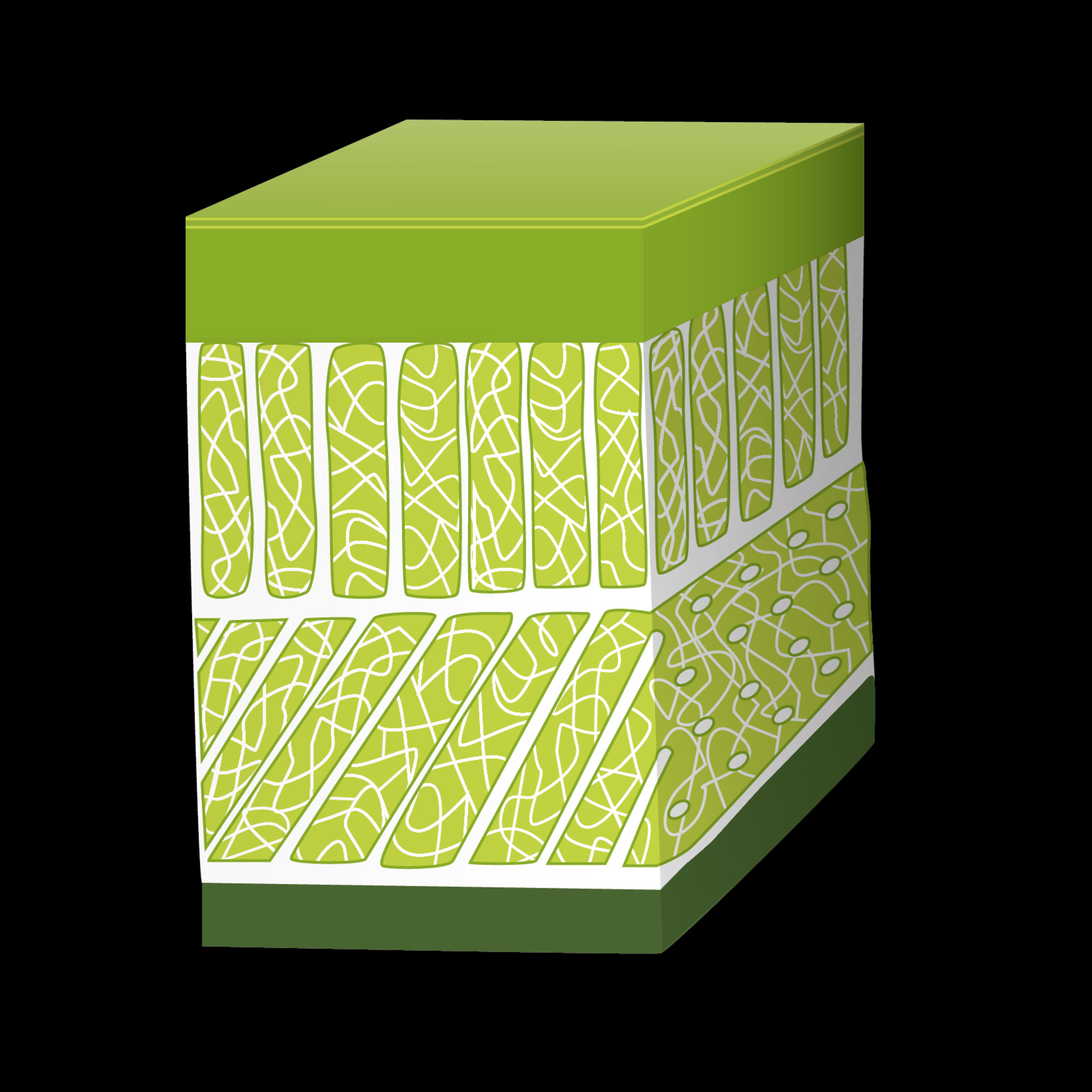
Fascia consists of three distinct layers: the subcutaneous, deep, and connective/visceral layers (Gatt et al. 2020).
The subcutaneous fascial layer contains many elastic fibers, making it quite mobile. The deep layer, however, is clearly rigid due to its high proportion of collagen fibers and is subject to a certain degree of continuous tension. This serves, for example, to transmit forces generated by the muscles to adjacent areas. Within these areas, proprioceptors—among other structures—are then stimulated, providing important information for body awareness and movement (Klingler et al. 2014).
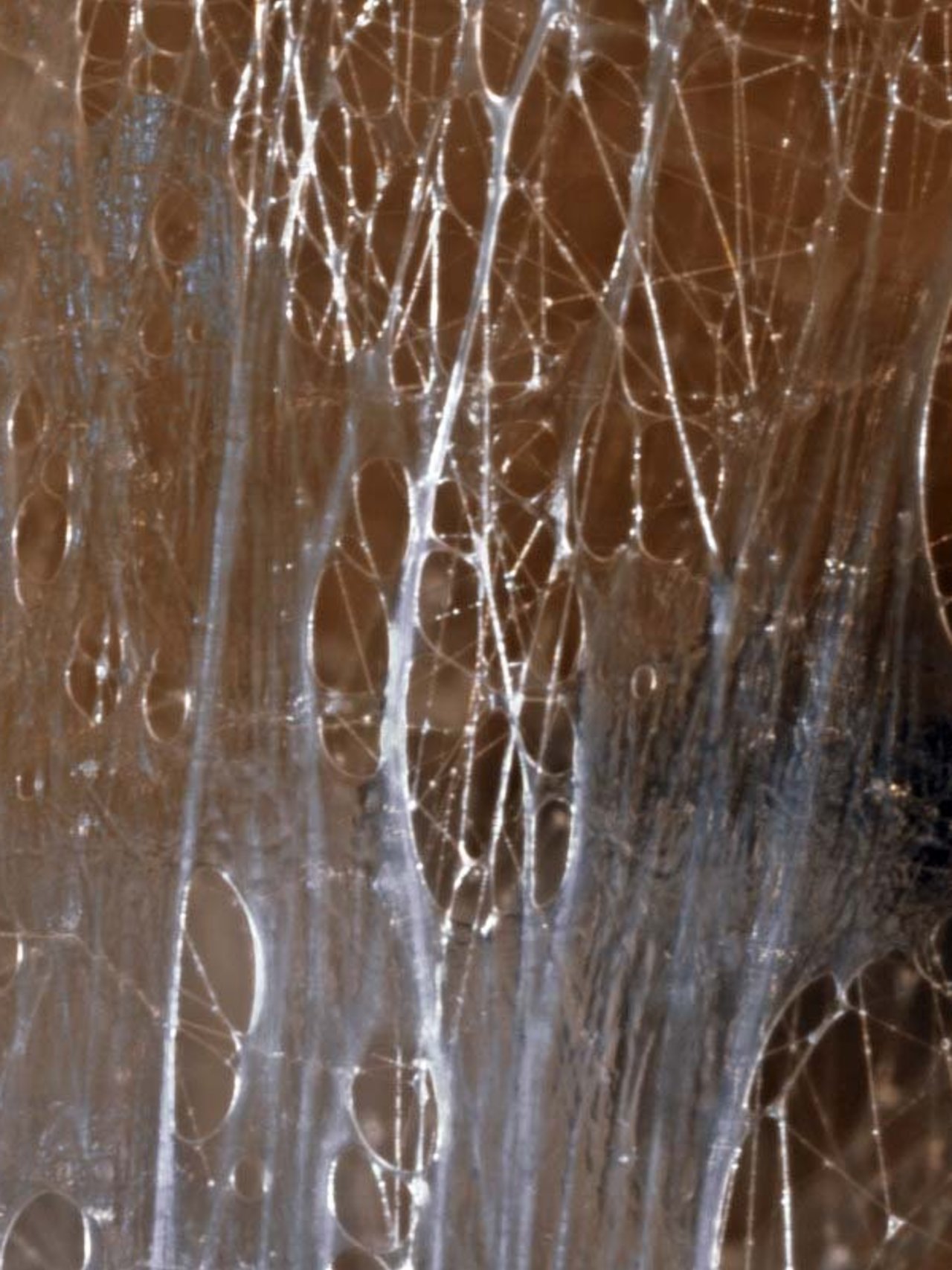
Contraction of the fascia
The notion that fascia play exclusively a passive role in force transmission has been clearly refuted by an increasing number of studies in recent years. Fascia contain elements—known as myofibroblasts—that can contract and contribute to force generation, as well as modulate it. Furthermore, they contribute to a certain degree of mechanosensory “fine-tuning,” allowing information from the body to be processed more precisely. Unlike muscles, however, fascia can contract autonomously (similar to the heart muscle). This means that contraction does not occur arbitrarily.
Because fascia99 can contract, they can regulate their own stiffness and thus actively contribute to stabilizing joints and supporting dynamic movements for minutes to hours. If this regulatory mechanism becomes disrupted, myofascial tension increases or decreases and/or neuromuscular coordination is affected. Both can lead to various musculoskeletal disorders and pain syndromes. It is believed that increased tension lasting for days to months can even cause severe joint contractures (Schleip and Klingler 2019; Klingler et al. 2014).
03. Fascia Models
Knowledge and explanations of how fascia function in the human body have also evolved in recent years. Current fascia research discusses three models: the biotensegrity model, the fascintegrity model, and the myofascial chain model (Bordoni et al. 2019; Bordoni et al. 2018).
Biotensegrity Model
The biotensegrity model is derived from the tensegrity model. Tensegrity refers to a mechanical balance of tension within a structure and originated in architecture (Figures 1 and 2). From this, the biotensegrity model emerged to apply the concept of mechanical tension balance in a structure to the living body (Figure 3). This model explains the body’s constant ability to adapt, encompassing all its structures, regardless of their forms and functions. However, this mechanical model does not take into account bodily fluids, which also contribute to mechanical stress and thus determine the body’s form and function.

(2) Tensegrity model of the spine: the spine remains stable, in part, due to the tension in the ligaments and tendons. Image from: (Bordoni et al. 2018)

(3) Biotensegrity model of the fascial continuum in the human body. This image shows a seated man in perfect balance. It reflects the tensegrity model. Image from: (Bordoni et al. 2018):
Fascintegrity model
The Fascintegrity model was developed based on this. In addition to the structural components of tissues covered in the Biotensegrity model, this model also takes bodily fluids into account. These include blood and lymph, as well as fluids within and around cells. This better reflects current knowledge about the fascial continuum. However, this model still lacks the emotional level and pain, which can also influence the body and the fascial system. Therefore, fascial research will undoubtedly yield other explanatory models in the future.
Myofascial chains
Myofascial chains are pathways of muscles and fascia that run throughout the body and can transmit tension from one part of the body to a nearby or more distant part.
Although research shows that muscles are interconnected and can transmit force to one another, the existence of the often-described myofascial chains has only been partially scientifically demonstrated. In particular, the significance of their function is not yet fully understood. However, there is evidence that disruptions in myofascial connections may contribute to the development of musculoskeletal disorders and that treating these disruptions may prevent such disorders (Ajimsha et al. 2020; Wilke and Krause 2019; Krause et al. 2016; Wilke et al. 2016).
All of the models described here represent the human body as a fascial continuum. They are used to explain this concept. To date, however, they can only be viewed as theoretical models, as scientific evidence in living humans is lacking in many respects. Further research on the fasciae is needed to fully understand the complexity of the fascial system and how it functions (Bordoni et al. 2019).
04. Fascia and (Back) Pain
Fascia may be responsible for pain. This has been demonstrated, for example, in the large fascia of the back (fascia thoracolumbalis). This fascia contains many free nociceptive nerve endings that can become irritated by very minor injuries or inflammation, triggering the transmission of a pain signal to the brain (Wilke et al. 2017). This insight can be applied to pain caused by stiff muscles or a torn muscle fiber. Muscle pain results from small tears in the muscle fascia (Gibson et al. 2009), and a torn muscle fiber is, in fact, a myofascial or tendomyogenic injury (Wilke et al. 2019).
However, the nerve endings mentioned above can also become irritated by pathologically altered fascia. This fascia is often thickened, stiffer, and more rigid. The cause is fibrosis and adhesions within the fascial layers, which can result from prolonged poor posture and physiologically incorrect movement patterns (Langevin et al. 2009; Klingler et al. 2014; Pavan et al. 2014).
This was recently demonstrated in volunteers with nonspecific back pain (Almeida et al. 2020). The altered large dorsal fascia in these individuals also led to reduced mobility of the spine, as seen in many people with back pain. Flexion and rotation were particularly affected by this.
What can help?
Fascia training, as multiple studies have now shown. Most of the published research involves studies on the use of the foam roller, with the following results: foam rolling alters the way fluids flow within the fascia, improves blood flow, and enhances fluid absorption in the fascia. This changes the stiffness and suppleness of the fascia. Furthermore, training with the foam roller leads to reduced pain and increased mobility. Although the reasons for this are not yet entirely clear, it is likely that foam rolling activates the mechanoreceptors in the skin and fascia, which in turn attenuate pain signals, thereby regulating the activity of the sympathetic and parasympathetic nervous systems (the autonomic nervous system) and adjusting myofascial tension via a reflex response. However, the commonly held assumption that foam rolling primarily releases adhesions in the fascia has not yet been proven (Guzmán-Pavón et al. 2020; Rodríguez-Fuentes et al. 2020; Behm and Wilke 2019; Wilke et al. 2018).
05. Conclusion on Fascia Research
Although fascia research in recent years has yielded a great deal of knowledge about fascia, there is still at least as much—if not more—that remains unknown. However, current insights are increasingly aligning with one another, and thus our understanding of fascia and the effects of fascia training is growing. It would be interesting to take a look into the crystal ball! Research into fascia will undoubtedly continue.
Want to learn more about fascia? Here are some more interesting topics








02
I choose real expertise
Whether it’s developing products or sharing knowledge with our customers—at BLACKROLL®, we collaborate with experts from the worlds of sports and health. Why do we do this? Because valid, well-researched information is important to us. And products that create real added value.
Only when our scientists, doctors, therapists, and professional athletes are convinced are we convinced.



Learn More
In our knowledge section, you’ll find a wide range of fascinating topics on sports and health. Discover them now.
Articles in our knowledge base