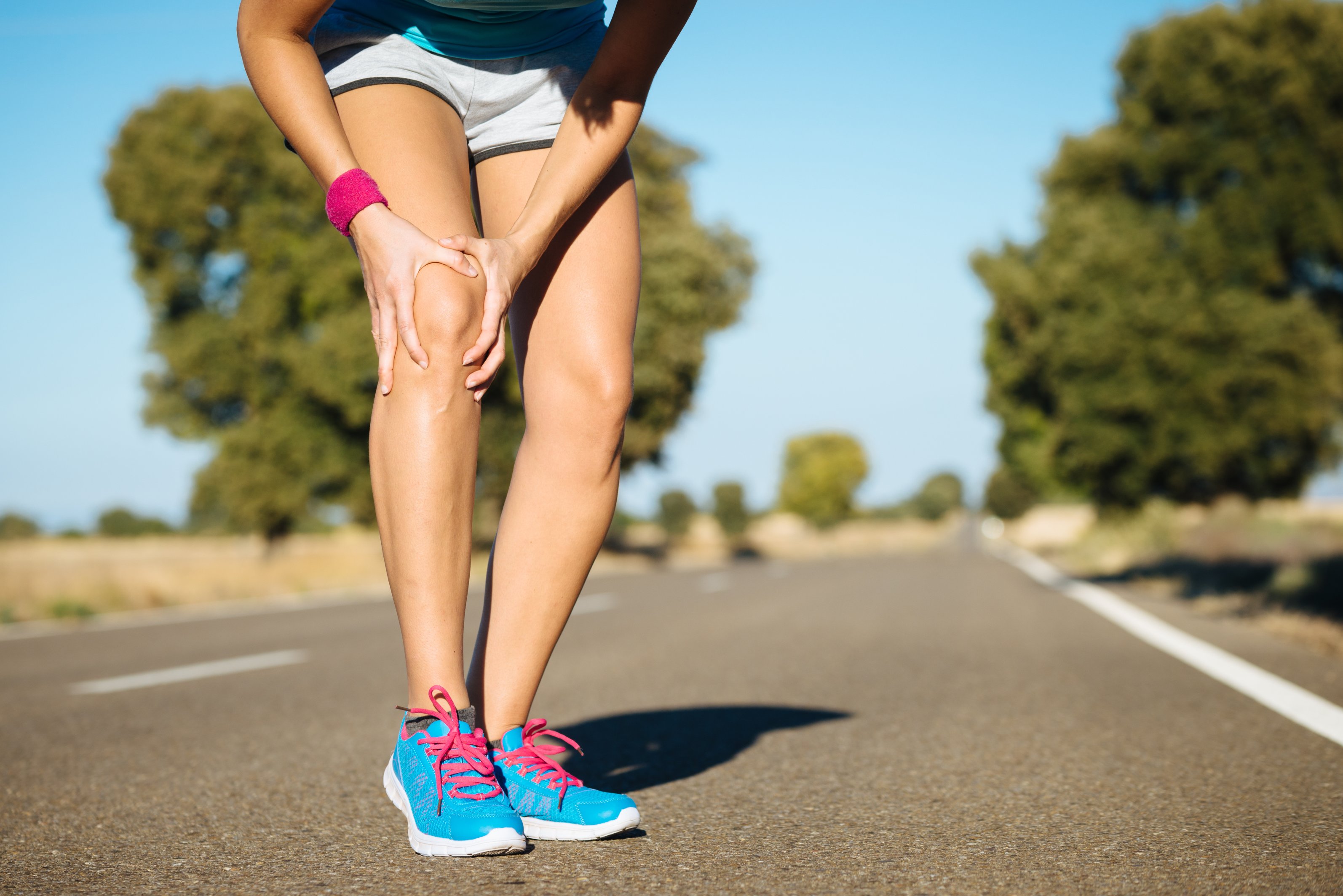
Knee Pain While Jogging—Is Jogging Bad for Your Knees?
The importance of proper form while running is often underestimated, especially when it comes to preventing knee pain. This pain is frequently caused by overuse and is therefore a particular concern for runners. However, other factors—such as poor posture in daily life or previous injuries—can also trigger this pain.
Jogging on hard surfaces , in particular, can easily lead to impact that puts uncomfortable strain on the knees. Inexperienced runners, in particular, are often surprised by just how much strain their knees are subjected to. Jogging can also lead to increased knee pain if the knee joint is subjected to stress beyond normal levels—for example, due to the wrong choice of shoes, irregular training, or poor running form.
This makes the early detection and treatment of painful knee problems all the more important. Knee pain is the body’s way of signaling that we need to take care of our well-being. Prevention should always be a top priority, which includes regular, varied training, strengthening the leg muscles, using the right equipment, and possibly adjusting your running style.
Anatomy and Function: Understanding the Knee
To better understand the causes of knee pain while jogging, it’s important to know the anatomy and function of the knee. The knee is a complex structure consisting of several components—the bones, menisci, ligaments, and tendons.
The femur and tibia form the main supportive structure of the knee, which is protected at the front by the patella. The menisci act as shock absorbers between these bones, while the ligaments provide stability. The tendons, on the other hand, connect the muscles to the bones, enabling movement.
During normal running and jogging, the knee is subjected to constant stress. It absorbs body weight and helps absorb the energy of impact. However, excessive or improper stress on the structures within the knee can lead to discomfort.
As a runner, it’s important to maintain proper running form. Striking the ground too hard or unevenly can increase stress on the joints and thus lead to knee pain. Insufficient strengthening of the surrounding muscles or an imbalance between different muscle groups can also overburden the knee joint.
We recommend regular exercises to strengthen the leg muscles, exercises to improve flexibility and mobility of the knee joint, as well as monitoring and improving your running form. This way, as a runner, you can reduce the risk of knee pain while jogging and enjoy the sport in a healthy and pain-free way in the long term.
Common Causes: Knee Pain After Jogging
When it comes to knee pain from jogging, the issue often revolves around overuse or improper movement patterns. The three most common causes are:
1. Overtraining could be a factor. If you increase the intensity of your runs too quickly, it creates physical stress that your body isn’t yet able to handle. This causes micro-tears in the tissue around the knee, which can lead to inflammation and ultimately pain.
2. Misalignments or incorrect running techniques can put excessive strain on the knee. A common running error is overpronation, which is excessive inward rotation of the foot upon landing. Bowlegs or knock-knees can also cause improper weight distribution and lead to knee pain while jogging.
3.Muscular imbalances often contribute to knee pain. Discrepancies in strength or flexibility among the various muscle groups that control the knee can impair the joint’s efficiency.
To avoid knee pain while jogging, you should regularly perform targeted stability and strength training, including mobility and stretching exercises. It’s also important to manage the progression of your training wisely and strive for optimal running form. If you experience persistent pain, please consult a doctor or physical therapist. This will help ensure that you can enjoy your passion for running for a long time to come, free of pain.
Knee Pain When Bending the Knee
Knee pain when bending the knee can be really bothersome and significantly impact your daily life. This pain can have various causes, ranging from overuse to injuries. Let’s take a closer look at what might be causing it and how you can find relief.
Possible causes of knee pain when bending the knee:
- Overuse: If you put too much strain on your knee too often or too intensely, it can lead to pain. This often happens during sports activities or physically demanding work.
- Injuries: A fall or a sudden twisting of the knee can damage ligaments or menisci. This often leads to pain and swelling.
- Arthritis: Inflammatory conditions such as arthritis can affect the knee joint and cause pain, especially when bending the knee.
- Patellofemoral pain syndrome: This refers to pain behind or around the kneecap, which can result from overuse or misalignment.
- Bursitis: The bursa in the knee can become inflamed and cause pain, especially during movement.
What you can do about knee pain when bending your knee:
- Rest: Give your knee a break and avoid activities that make the pain worse.
- Cold and heat therapy: Cold can help reduce swelling, while heat relaxes the muscles.
- Support braces and bandages: These can stabilize your knee and relieve pressure on it.
- Physical therapy: A physical therapist can show you exercises that strengthen your muscles and improve your range of motion.
- Medications: Pain relievers and anti-inflammatory medications can provide short-term relief, but should only be taken after consulting a doctor.
When to see a doctor:
If the pain persists for a long time or is very severe, it’s important to see a doctor. This is especially true if you:
- Notice significant swelling
- Your knee feels unstable
- Can no longer fully bend or straighten your knee
- The pain occurs even when you’re at rest
Knee pain when bending the knee can have many causes, but with the right diagnosis and early treatment, you’ll soon be able to start jogging again pain-free.
Knee pain on the side
Knee pain on the side can be very uncomfortable and limit your range of motion. This type of pain has various causes and can be influenced by different factors. Here, you’ll learn why side knee pain can occur and how you can relieve it.
Common causes of lateral knee pain
- Lateral ligament injury: An injury to the medial or lateral ligaments that stabilize your knee can result from sudden twisting movements or impacts.
- Meniscus tear: The medial or lateral meniscus can tear due to a twisting motion or overuse, leading to pain on the affected side.
- Iliotibial band syndrome (ITBS): This is irritation of the iliotibial band, which runs from the hip to the shin. It is particularly common among runners.
- Arthritis: Inflammation in the knee joint can also cause lateral pain.
- Bursitis: Inflammation of the bursa on the side of the knee can cause painful swelling.
What You Can Do About Lateral Knee Pain
- Rest and Avoidance: Avoid strenuous activities to take the pressure off your knee and promote healing.
- Cooling: Cold packs can help reduce pain and swelling.
- Compression: A compression bandage can provide stability to your knee and reduce swelling.
- Elevation: Elevate your leg to promote blood flow and reduce swelling.
- Stretching exercises: Specific stretches for the iliotibial band and surrounding muscles can be helpful for ITBS.
- Physical therapy: A physical therapist can show you targeted exercises and techniques to strengthen the muscles around your knee and improve mobility.
When to See a Doctor
If the pain on the side of your knee persists for a long time or is very severe, it’s advisable to see a doctor. In particular, you should seek medical advice if:
- The pain is very intense and does not subside
- You notice significant swelling or instability in your knee
- You can no longer bend or straighten your knee properly
- The pain occurs even when you’re at rest
Side knee pain can also have various causes, but with the right treatment, you can usually relieve the symptoms quickly and restore stability to your knee.
Pain in the back of the knee
Pain in the back of the knee can be very uncomfortable and limit your mobility. These symptoms have various causes and can indicate different problems. Here, we’ll explain what might be causing pain in the back of your knee and how you can relieve it.
Possible causes of pain in the back of the knee
- Baker’s cyst: A Baker’s cyst develops due to the accumulation of synovial fluid in a bursa behind the knee. This cyst can cause pressure and pain, especially when bending the knee.
- Muscle tension: Tension or strain in the muscles behind the knee can cause pain, especially after intense exercise or unfamiliar movements.
- Tendonitis: Inflammation of the tendons that run through the back of the knee can result from overuse or injury and cause pain.
- Meniscus tear: A tear in the meniscus can also cause pain in the back of the knee, especially if the tear affects the posterior portions of the meniscus.
- Thrombosis: In rare cases, pain in the back of the knee can be caused by deep vein thrombosis (DVT). This requires immediate medical attention.
What You Can Do About Pain in the Back of the Knee
- Rest and Avoidance: Give your knee a break and avoid activities that could worsen the pain.
- Cooling: Cool the painful area with an ice pack to reduce swelling and pain.
- Compression bandages: A compression bandage can help reduce swelling and provide support.
- Elevation: Elevate your leg to promote blood flow and reduce swelling.
- Stretching and Strengthening Exercises: Gentle stretching and strengthening exercises can help strengthen the muscles around the knee and relieve tension.
- Physical therapy: A physical therapist can recommend specific exercises and treatments to promote healing and relieve pain.
When to See a Doctor
If the pain in the back of your knee persists for a long time or is very severe, it’s important to see a doctor. This is especially true if:
- You notice significant swelling or a lump in the back of your knee
- The pain is very intense and does not subside
- Your knee feels unstable or you cannot fully bend or straighten it
- The pain occurs even at rest or is accompanied by a fever
Don’t ignore pain in the back of your knee—start treatment early so you can get back to your workout routine quickly.
Swollen Knee
A swollen knee, also known as a knee effusion, can be a symptom of various health problems. It’s important to understand the cause of the swelling so you can take appropriate action and prevent long-term damage.
Why is a swollen knee significant?
- Signs of an injury: Swelling can indicate an acute injury, such as a torn ligament, meniscus tear, or fracture. Such injuries often require immediate medical attention.
- Sign of inflammation: Swelling can be caused by inflammatory conditions such as arthritis or bursitis (inflammation of the bursa). These conditions often lead to chronic pain and limited mobility.
- Reaction to Overuse: A swollen knee can result from overuse due to sports activities or physical labor. In such cases, the body is signaling that rest is necessary.
- Symptom of an infection: Sudden and severe swelling, accompanied by redness and fever, may indicate an infection in the knee joint. This is a serious condition that requires immediate medical treatment.
- Signs of systemic diseases: Conditions such as gout or lupus can cause swelling in the knee. These conditions often affect multiple joints and require comprehensive medical care.
When should you take action if your knee is swollen?
A swollen knee should not be ignored, as it may be a sign of serious health problems. Here are some scenarios in which you should definitely take action:
- Sudden swelling: If your knee swells for no apparent reason, this could indicate an acute injury or infection.
- Severe pain: Severe pain that cannot be relieved by simple measures such as rest and icing requires a medical examination.
- Limited mobility: If you can no longer fully bend or straighten your knee, a medical evaluation is necessary.
- Systemic symptoms: Fever, general malaise, or other systemic symptoms along with a swollen knee may indicate serious health problems.
A swollen knee is more than just an unpleasant symptom. It’s a signal from your body that something is wrong. Identifying the exact cause and taking appropriate action is crucial for maintaining the health of your knee and your overall mobility.
Prevention: How to Avoid Knee Pain While Jogging
To prevent knee pain while jogging, there are a few measures you can incorporate into your running routine.
First and foremost is a good warm-up and cool-down. A thorough warm-up eases the transition from rest to activity and ensures your body is properly prepared. After running, a gentle cool-down helps your muscles relax and improves recovery.
Another preventive measure against knee pain while jogging is wearing appropriate running shoes. The right gear can help cushion the impact and support your joints. It’s worth investing in running shoes that match your running style and foot shape.
In addition, as a runner, you should make sure to schedule enough rest time between training sessions. Overtraining can lead to injuries and increase the likelihood of knee pain.
Regularly strengthening your muscles can help you prevent knee pain while jogging. These exercises help stabilize your joints and distribute the load more evenly. Why not give our exercise routine a try?
Finally, incorporating variety into your running program—such as varying your pace and distance or including cross-training activities—can help minimize overuse injuries and reduce the risk of knee pain.
Professional help from physical therapists or running coaches can also be useful for analyzing your running form and providing personalized recommendations.
Conclusion: Is Jogging Bad for Your Knees?
Jogging is a popular form of exercise that offers many benefits for overall health. Nevertheless, runners often experience knee pain. However, jogging isn’t necessarily bad for your knees. To jog safely without knee pain, there are a few important factors to consider.
First, proper technique is very important. An efficient running style puts less strain on the knees, which can reduce the likelihood of knee pain. Pace can also play a role. Try to maintain a moderate pace and avoid abrupt accelerations or sudden stops.
Your choice of footwear can also have a significant impact on potential knee pain. Running shoes that are specifically tailored to your individual needs—such as those offering arch support or cushioning—can help minimize stress on the knees and thus prevent knee pain while running.
Adequate warm-up and stretching before running are equally important. You should focus on exercises that strengthen the muscles around the knee and keep them flexible. At the same time, you shouldn’t neglect varied forms of training to avoid one-sided strain.
To promote recovery after running, rest periods and, if necessary, cooling measures are recommended. If you experience persistent or recurring knee pain, it’s always advisable to consult a doctor or physical therapist.
Jogging without knee pain is possible and can be achieved through a combination of proper running technique, appropriate footwear, and suitable supportive measures.
If you do end up with knee pain, we’ve also included a few exercises here that can help you.