
Restless Legs Syndrome: Causes, Symptoms, Treatment Options

Your legs tingle, burn, and twitch, and moving them seems to be the only way to relieve the symptoms— even though you’re actually trying to relax right now. Do you often feel an almost unbearable urge to move your legs as soon as you’ve settled in on the couch or in bed? If so, Restless Legs Syndrome (RLS) might be the cause. You can learn all about the causes, symptoms, and treatment options in our article below.

Overview of Restless Legs Syndrome (RLS)
Restless Legs Syndrome is a neurological disorder also known as Willis-Ekbom Disease (WED)—named after the Swedish neurologist Karl Axel Ekbom. It is characterized by unpleasant sensations in the legs and a constant urge to move them. Typically, these sensations occur mainly in the evening or at night and can therefore make it significantly more difficult to fall asleep, disrupt sleep, and impair quality of life. Long car rides, train trips, or trips to the movies can also be a torment for those affected. According to‘ärzteblatt,’ the prevalence—that is, the frequency—of RLS in the German population is between five and ten percent.
Restless Legs Syndrome usually affects middle-aged people between the ages of 30 and 40, although in hereditary forms, younger people may also be affected. While the symptoms initially occur only occasionally, the symptom-free periods typically become shorter with age. In addition, RLS is more common in women than in men.
Incidentally, in rare cases, even children can develop Restless Legs Syndrome. However, the symptoms then appear only in a very mild form, and the condition is often not diagnosed as such.
In medicine, Restless Legs Syndrome is classified into a primary form with no identified cause (idiopathic)—which accounts for the majority of cases—and a secondary form resulting from another condition (symptomatic).
Signs and symptoms of Restless Legs Syndrome
Restless Legs Syndrome typically manifests with the following symptoms:
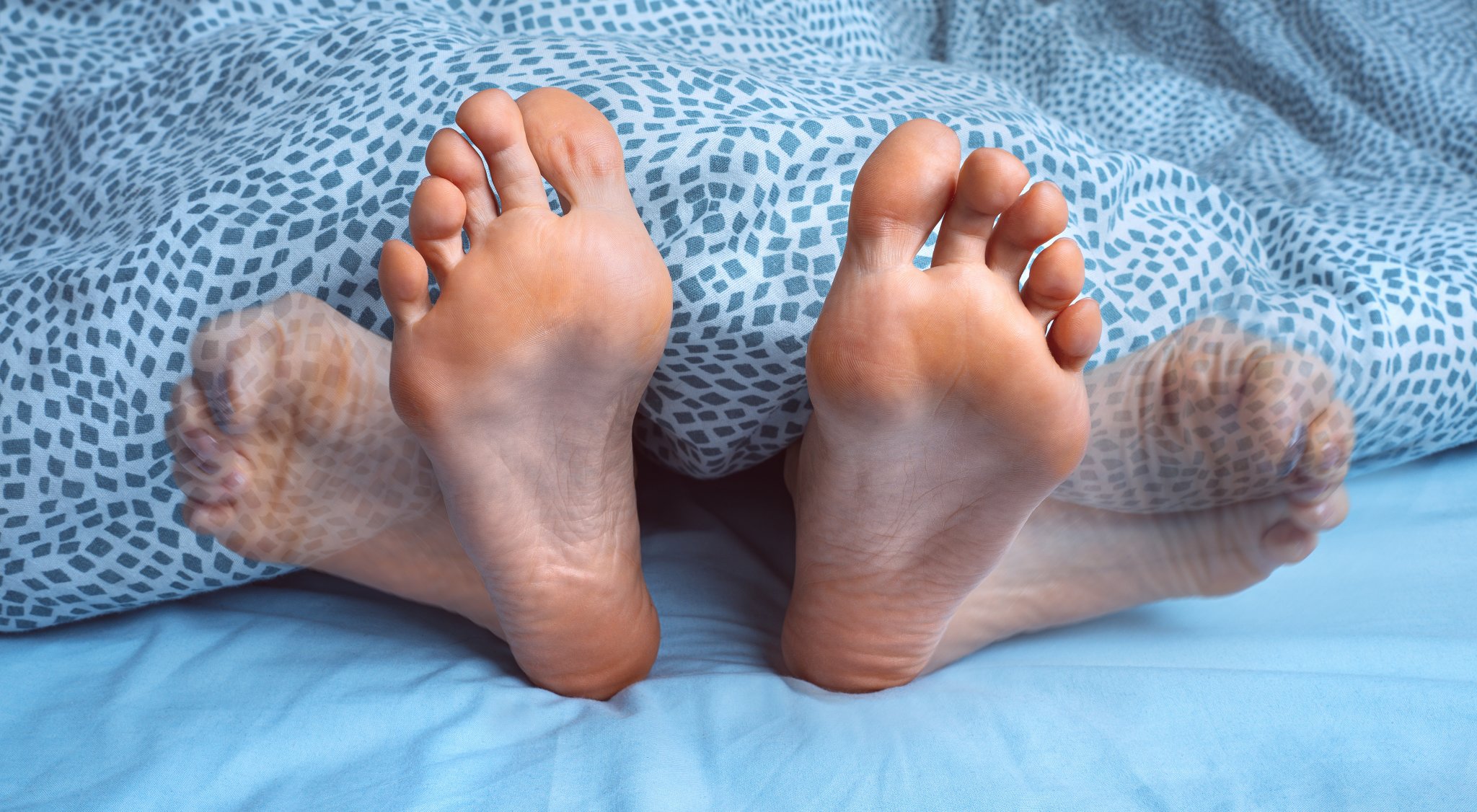
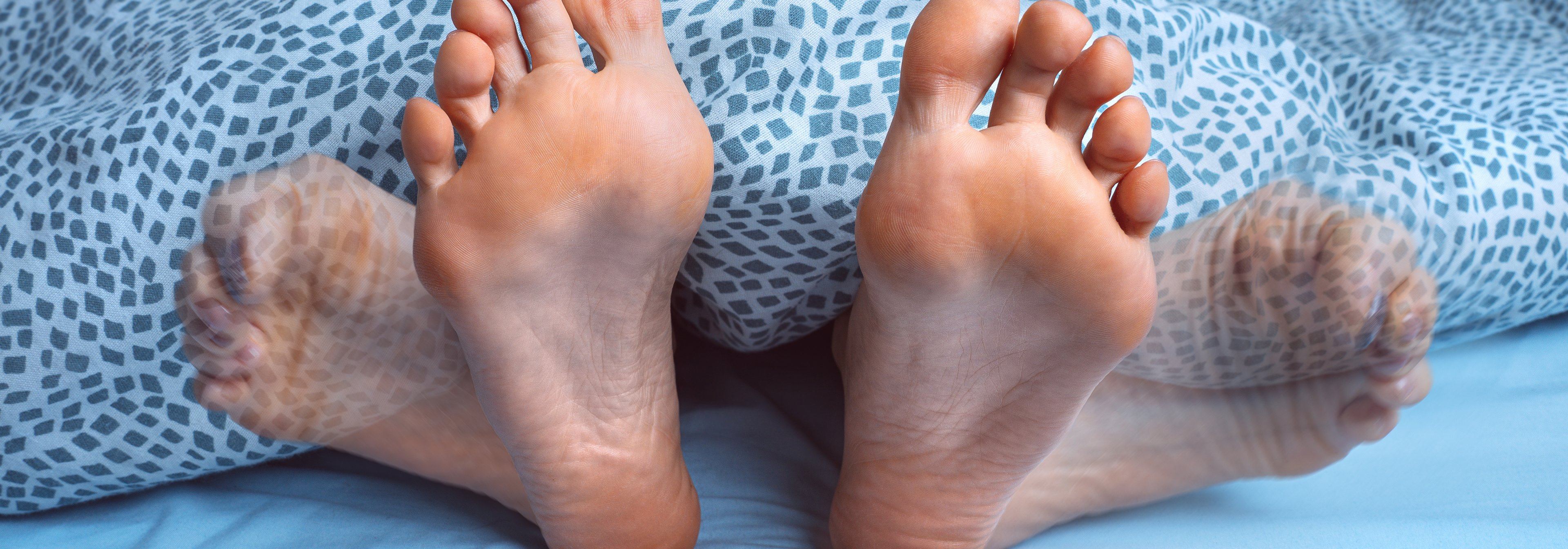
- Unpleasant sensations: Those affected often describe a tingling sensation (like pins and needles), pulling, twitching, burning, or pain in the thighs or calves, which is exacerbated by rest or inactivity. The severity of RLS symptoms varies from person to person. In rare cases, those affected may also experience symptoms in the arms or other parts of the body.
- Urge to move: To find relief, people with RLS feel a strong urge to move or stretch their legs. This need for movement can lead them to frequently change positions in an effort to alleviate their symptoms. In many cases, the symptoms can also be temporarily relieved by movement or activity.
- Worsening at Night: The symptoms of RLS often occur in the evening or at night, especially when the person is in bed or on the sofa trying to relax and wind down. This can lead to difficulty falling asleep, restless sleep, and sleep onset insomnia, and can increase daytime sleepiness.


Causes and Risk Factors for RLS
Exactly how this movement disorder develops remains unclear. However, there is evidence suggesting that a key cause of primary restless legs syndrome may be a disruption in dopamine metabolism at a specific location in the brain. Dopamine is a neurotransmitter responsible, among other things, for controlling movement. How this ultimately leads to RLS, however, remains unclear.
Scientists believe that genetic factors, iron deficiency, certain medications, and neurological changes in the brain, among other things, may play a role. Below, we outline the most common causes and risk factors for RLS.
- Genetic predisposition: If one or more family members are already affected by RLS, it is assumed that there is a familial clustering of RLS. Although it is not a genetic disorder in the classical sense, but rather a genetic predisposition that makes other family members susceptible to restless legs. This is where epigenetics may come into play, as certain behaviors and lifestyles can activate or deactivate genes.
- Iron deficiency: In addition to dopamine, iron metabolism is also believed to play an important role in restless legs syndrome. Iron is essential for the production of dopamine. If there is a disruption—for example, due to a deficiency—this can manifest as RLS.
- Pregnancy: RLS frequently occurs during pregnancy, especially in the third trimester. The exact causes are not fully understood, but hormonal changes, iron deficiency, and pressure from the growing uterus on the nerves in the pelvic area may play a role. After pregnancy ends, RLS symptoms typically resolve on their own.
- Side effects of medications: Some medications can trigger or worsen RLS symptoms as a side effect. These include antidepressants—such as those used to treat anxiety disorders and depression—antipsychotics, antiemetics, neuroleptics, medications for cardiovascular problems such as beta-blockers, and antihistamines.
- Chronic and neurological conditions: Certain chronic conditions, such as renal insufficiency (declining kidney function), diabetes, polyneuropathy (a disorder of the peripheral nervous system), Parkinson’s disease, or multiple sclerosis, may also be associated with an increased risk of RLS.
- Sleep disorders: People who suffer from sleep disorders such as sleep apnea may have an increased risk of RLS. Lack of sleep and disrupted sleep can worsen the symptoms of RLS.
Physical exhaustion typically intensifies the symptoms of RLS. Symptoms also tend to worsen more frequently in warm summer temperatures . Alcohol consumption before bedtime is another risk factor that can exacerbate typical RLS symptoms.


Diagnosis of RLS
Restless Legs Syndrome is usually diagnosed by a primary care physician, neurologist, or sleep specialist. Although RLS itself cannot be detected through tests, it can be diagnosed based on certain parameters. The doctor will ask the patient about their symptoms, how often and when they occur, and any possible triggers. To determine a genetic predisposition, a family history is also taken. The doctor will ask whether other family members have experienced the same symptoms.
Through a thorough physical examination and/or additional tests, a doctor can also rule out other possible causes of the symptoms and confirm the diagnosis. In some cases, an evaluation in a sleep laboratory and a polysomnography may also be helpful. During sleep, brain wave activity, leg movements, breathing, heart rate, blood pressure, and other bodily functions are continuously measured, and periodic, involuntary leg movements are recorded on video.
In addition, those affected can keep a sleep diary to record their sleep habits, RLS symptoms, and how these symptoms affect their sleep. This information can help the doctor identify patterns and support the diagnostic process.
The diagnostic criteria a doctor uses to evaluate a patient include typical symptoms such as unpleasant sensations in the legs that worsen at rest, as well as a strong urge to move the legs to find relief.
Measuring nerve conduction velocity and electrical muscle activity ( electromyography) at a neurologist’s office can also help determine whether a neurological disorder is underlying the symptoms.
A blood test inthe laboratory can reveal the presence of thyroid or kidney disorders, as well as a possible iron deficiency, all of which could also be potential triggers of RLS.
In rare cases, imaging procedures such as magnetic resonance imaging (MRI) or computed tomography (CT) of the brain may be performed to rule out structural abnormalities in the brain that could be associated with RLS.
An MRI of the spinal canal can also rule out spinal cord damage or spinal stenosis.
Treatment Options: Medications for RLS
The treatment options available for RLS depend on the severity of the symptoms and the extent to which they limit patients’ daily lives.
Once diagnosed, the first step should always be to address the potential underlying cause. If low iron levels have been diagnosed, iron supplements can be taken to restore iron levels to normal. If iron levels are not low or if iron supplements are ineffective, the current S2k guideline states that, in cases of the primary/idiopathic form, so-called dopamine agonists or L-dopa preparations may also be used as first-line therapy. These medications replace the missing dopamine—a neurotransmitter—in the brain. Studies show that they can alleviate the symptoms caused by RLS. However, they often also have side effects such as nausea and sleep disturbances.
Dopamine agonists recommended in the guidelines include, for example, rotigotine, ropinirole, and pramipexole. However, they should always be used at the lowest possible dose, as otherwise the receptors may become overstimulated and the symptoms may actually worsen (a phenomenon known in medicine as “augmentation”).
If RLS symptoms are very severe, or if patients no longer respond to dopaminergic medications or cannot tolerate them, treatment with a combination opioid preparation is also approved . Opioids, also known as opiates, act on the opioid receptors in the nervous system and can prevent the transmission of pain signals there.
According to the guidelines, taking cannabinoids, magnesium, and benzodiazepines does not help with RLS.
Important: Drug therapy for RLS should always be initiated as late as possible and, of course, in close consultation with the treating physician.
If, on the other hand, a secondary form of restless legs syndrome is present, treating the underlying condition often leads to relief or even the complete disappearance of symptoms.


Lifestyle changes, home remedies, and self-help tips
If symptoms are mild, lifestyle changes and home remedies can help alleviate the discomfort.
These include, among other things, maintaining good sleep hygiene, which also involves going to bed at regular times (even on weekends, if possible!). Avoid taking an afternoon nap so that you’re sufficiently sleepy by evening, and try not to go to bed immediately after finishing your daily tasks; instead, unwind for at least an hour. For example, by doing gentle exercise like yoga , reading, or meditating. A balanced diet with sufficient iron and vitamin C (which promotes iron absorption), as well as avoiding factors that stimulate RLS, can also help. Stimulating substances include, among others , alcohol, nicotine, caffeine, black tea, and intense heat. Regular, moderate exercise, on the other hand, has a positive effect on symptoms. To achieve these benefits, activities such as walking, light cycling, jogging, or gentle stretching are sufficient.
Gentle massages, cooling gels, or baths can also relieve acute symptoms. So can distracting oneself from the symptoms—for example, by reading, doing housework or gardening, or engaging in crafts. Relaxation exercises such as yoga, meditation, or deep breathing exercises reduce stress and help shift focus away from the symptoms.


Potential benefits of COMPRESSION BOOTS for RLS
Although there is currently no conclusive body of research on the effectiveness of compression therapy specifically for Restless Legs Syndrome (RLS), research findings suggest that rhythmic pressure on the legs —such as that generated by the BLACKROLL® COMPRESSION BOOTS —can help alleviate the typical symptoms.
Many people with RLS report a noticeable reduction in the restless sensation in their legs as well as an improved ability to fall asleep, especially with regular use in the evening.
Possible mechanisms that could underlie this effect include:
- Promotion of blood circulation in the extremities
- A soothing sensory stimulus for the nervous system
- Relaxation of the leg muscles and an indirect effect on the sensation of tension
Even though the use of COMPRESSION BOOTS for RLS is not yet considered a medically validated standard treatment, it can be a useful addition to an evening routine —especially for people who respond positively to mechanical stimulation. 👉 Learn more about the BLACKROLL® COMPRESSION BOOTS


Strategies for Better Management of RLS
If you’re suffering severely from these symptoms, the tips mentioned above might already help you. Always remember that you’re not alone with RLS—many people suffer from these symptoms. You might also find it helpful to share experiences with others in a support group. Alternatively, talking to a psychologist could be beneficial. Through behavioral therapy, they can provide you with methods to help you better manage your symptoms in everyday life.
Keep in mind that you should always consult a doctor promptly if your symptoms change or worsen.
Conclusion
While RLS can be bothersome for those affected, the condition is generally not dangerous. Depending on how severe your symptoms are and what’s causing them, you may be able to alleviate your symptoms with just a few home remedies or by making changes to your current lifestyle. These include staying active, eating a balanced diet rich in iron-containing foods, and avoiding stimulants such as caffeine, nicotine, or alcohol. If you’re experiencing very severe symptoms, be sure to get a thorough examination and consultation from your primary care physician or a specialist. In some cases, medication with dopamine agonists or opioids may be appropriate to help restore your quality of life. Often, treating any underlying condition is sufficient to make the symptoms disappear. However, such treatment should always be carried out only in consultation with your treating physician.
Sources:
- PNEUMATIC COMPRESSION DEVICES FOR TREATMENT OF RESTLESS LEGS SYNDROME, Eliasson, Arn H. - CHEST, Volume 128, Issue 4, 383S