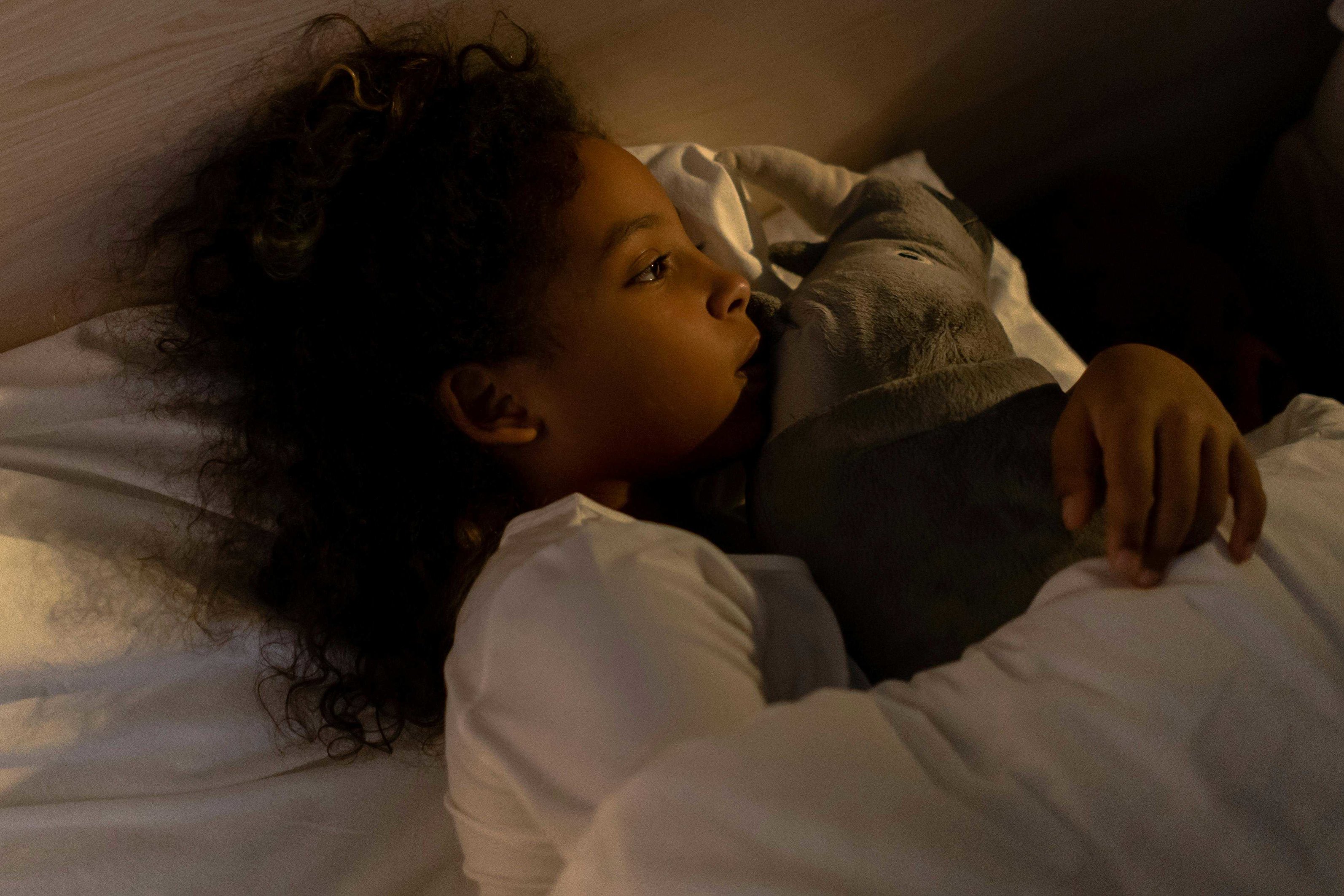
Find the right size children’s duvet for restful sleep

Choosing the right children’s duvet in the correct size is crucial to ensure your child sleeps well and develops healthily. From the first duvet for toddlers to the transition to a full-size duvet — here you’ll find out everything about duvet sizes, the best time to make the switch and suitable materials for children’s duvets.
Children’s duvet sizes by age and height – the key sizes at a glance
Choosing the right size duvet for your child is just as important as it is for us adults.
The right size helps your child stay comfortable and lets the duvet regulate temperature and wick away moisture. A duvet that's too small can leave them feeling exposed, while one that's too large may feel heavy or awkward.
The table below shows the most common sizes of children’s duvets for your reference:
Age | Height | Bed dimensions | Duvet size |
0–1 yr | 50–80 cm | 60 × 120 cm | Sleeping bag (not a duvet) |
2–3 years | 80–99 cm | 70 × 140 cm | 100 × 135 cm |
3–6 years | 100–119 cm | 70 × 140 cm | 100 × 135 cm |
6–12 years | 120–149 cm | 90 × 200 cm | 135 × 200 cm |
When choosing the right size of children’s duvet, your child’s age and height are important factors, but their sleeping habits also play a role: children who toss and turn a lot or sleep restlessly are better protected from the cold under a larger duvet.
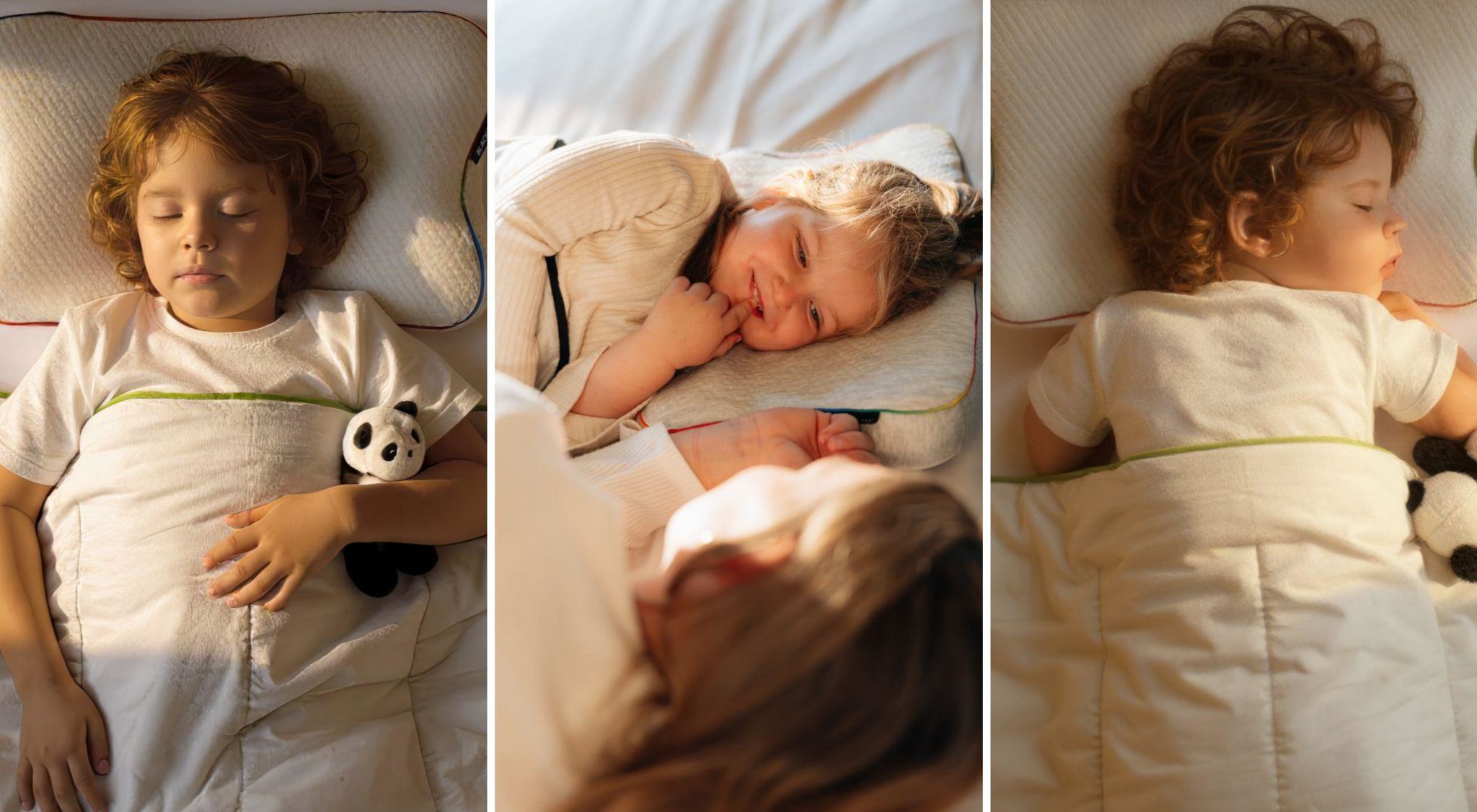
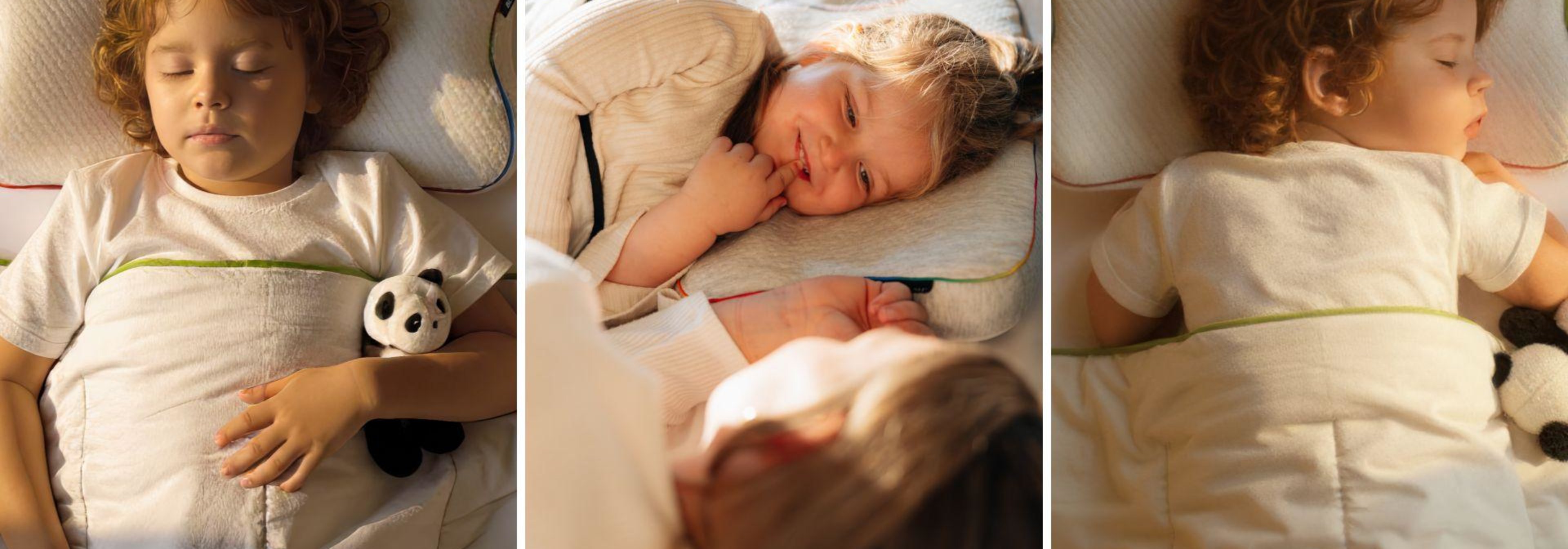
Babies and toddlers: the transition from a sleeping bag to a blanket
For your baby’s safety, use a sleeping bag for the first year and place them on their back until they can roll over independently. These practices help reduce the risk of sudden infant death syndrome.
From the age of one, you can try a light children’s blanket measuring 100 × 135 cm — but only if your child feels comfortable with it. Some children prefer to stick with a sleeping bag for longer. That’s perfectly fine, as long as the sleeping bag is big enough.
What size should a duvet be for children aged 2 to 3?
For toddlers aged two to three, a children’s duvet measuring 100 × 135 cm is ideal . It’s large enough to cover your child completely and evenly — even if they move around a lot while sleeping — yet it remains light enough not to restrict them.
It also fits a standard toddler bed with a sleeping area of 70 × 140 cm, so the duvet won't slip off.


When is it advisable for children to use a large duvet of suitable size?
The right time to switch to a larger duvet depends on your child’s height, age and individual needs.
- Height: once your child reaches about 120 cm (usually between the ages of five and six), the standard children’s duvet measuring 100 × 135 cm becomes too short. If their shoulders or feet are no longer fully covered, a larger duvet will provide significantly greater sleep comfort. Keep an eye on whether your child frequently kicks the duvet off at night or complains of cold feet; both can indicate that the duvet has become too small or too narrow.
- When your child moves from a cot to a standard-sized bed (90 × 200 cm) it's a natural moment to change the duvet too so they can snuggle up comfortably in their new bed.
- Your child’s preference: Some children specifically ask for a ‘big duvet’ because it makes them feel more grown-up. If your child wants this and the duvet seems manageable, there’s no reason not to try a ‘big duvet in a small bed’. Sooner or later, you’ll need the bigger duvet anyway.
Practical transition phase
During the transition phase — usually between the ages of four and six — it’s normal for children to still sleep with the smaller duvet. Even if they already have a bigger bed, a large duvet may still feel too big and heavy. Ensure your child doesn’t slip out from under the small duvet while sleeping, due to having more freedom of movement in bed. Give them time to get used to the new bed and change the duvet only when they’re ready. This way, their sleep remains restful and secure.


Other factors to consider when choosing the right children’s duvet
As well as the size of the child’s duvet, the material also plays a major role in sleep comfort and wellbeing. Which fabrics are best suited depends on your child’s individual needs and the time of year.
Material and filling
- Down is cosy and helps regulate temperature, making it ideal for colder nights. However, it's generally not suitable for children with allergies or sensitive airways.
- Synthetic fibres are easy to care for, machine washable at high temperatures and quick drying. The material is very hygienic and therefore a good choice for children with allergies. If your child has skin problems such as atopic dermatitis, avoid synthetic fabrics.
- Lyocell is soft, breathable and moisture-regulating, making it suitable for children with allergies or sensitive skin and easy to care for.
- Natural fibres such as cotton, camel hair, alpaca or sheep’s wool are breathable and gentle on the skin. They’re well suited to children’s sensitive skin and create a comfortable sleep climate.
Seasonal variants
- Summer duvet: light and breathable to prevent heat build-up during the warmer months. The ability to regulate body temperature is still limited, particularly in babies and toddlers. In hot weather, use thin cotton or linen duvets if necessary.
- Winter blanket: with a thicker filling for cosy warmth on cold nights
- Four-season duvet: with a filling that adapts to temperatures in both summer and winter
Weight and handling
- Choose a blanket that isn’t too heavy, as excess weight can disrupt sleep or make it hard to drop off. It shouldn’t weigh more than 10% of your child’s body weight, and the same rule applies to so-called weighted blankets.
- Your child should be able to handle a light duvet as they need to: they can cover themselves with it independently, but also wrap themselves up in it and drape it around themselves differently depending on their sleep position.

Going to bed more relaxed
Discover evening routines

Continue with more tips for better sleep for children
We've found that the following factors relating to the sleeping environment and sleep patterns are also crucial for restful and healthy sleep:
- Room temperature: 18°C is ideal for healthy sleep in a child’s bedroom.
- Keepthe room dark and quiet.
- A child-friendly mattress supports the spine and helps them grow.
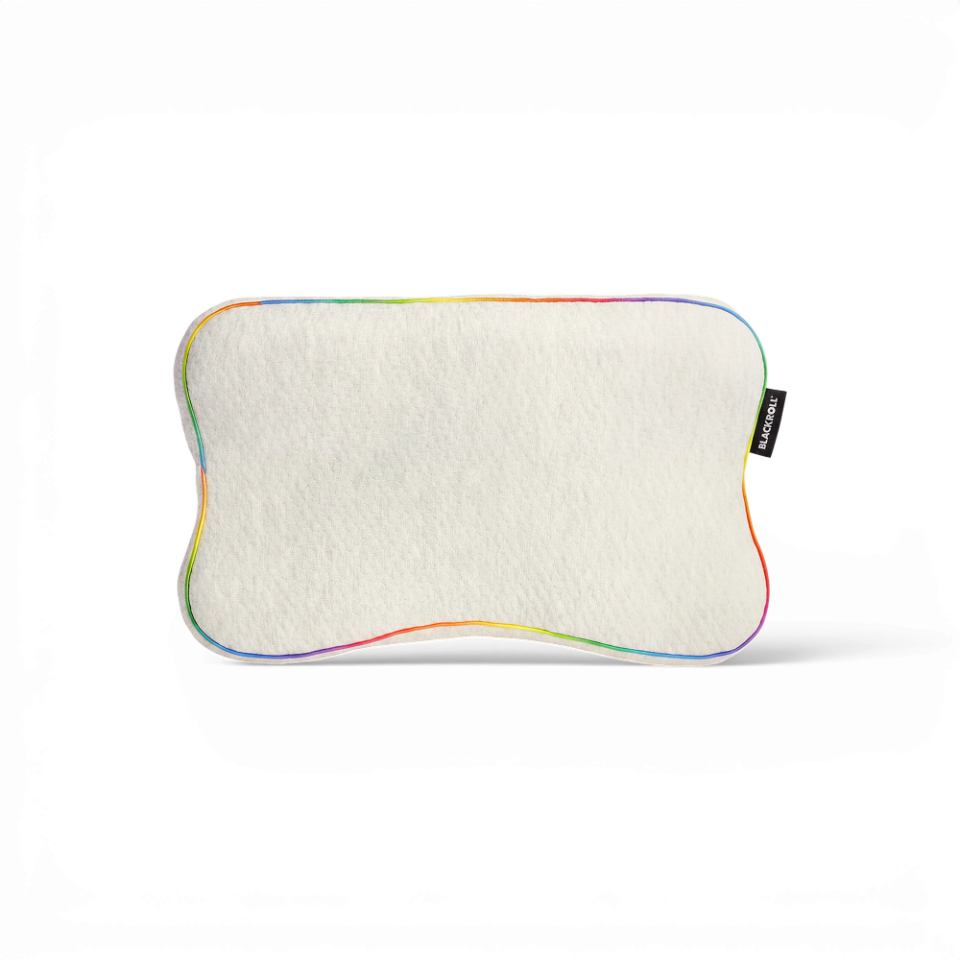
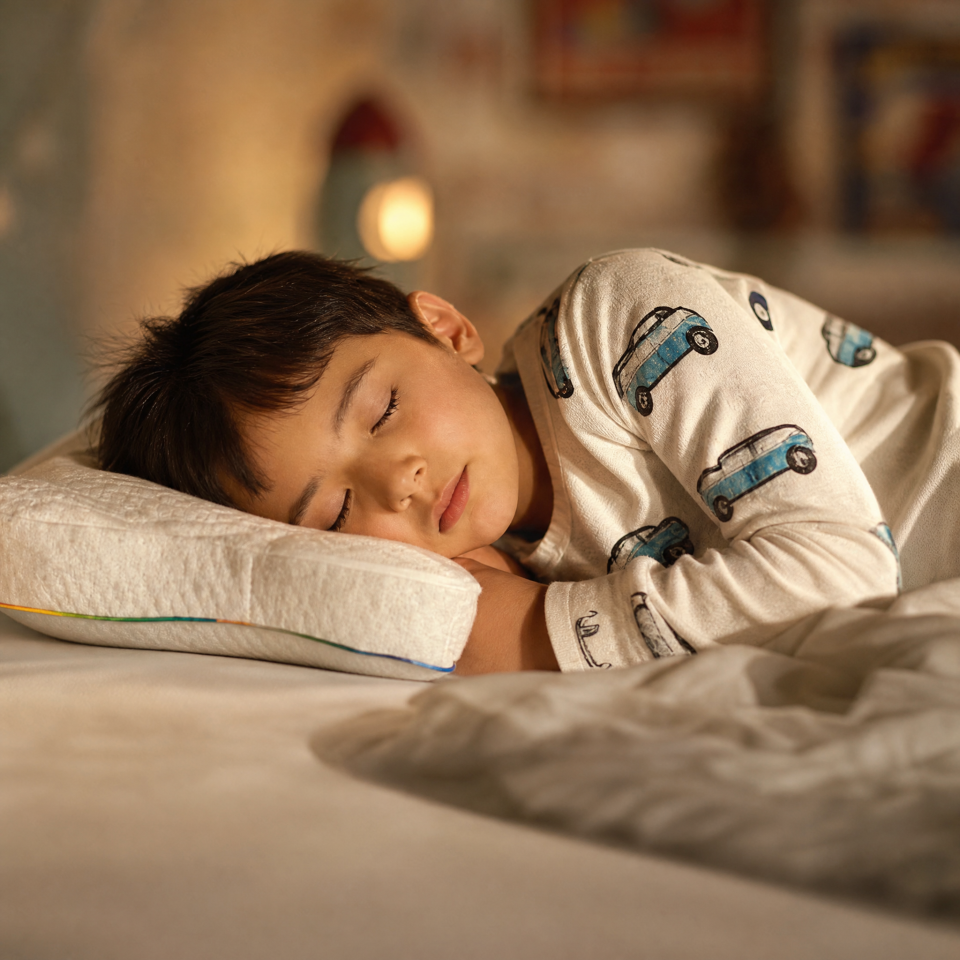
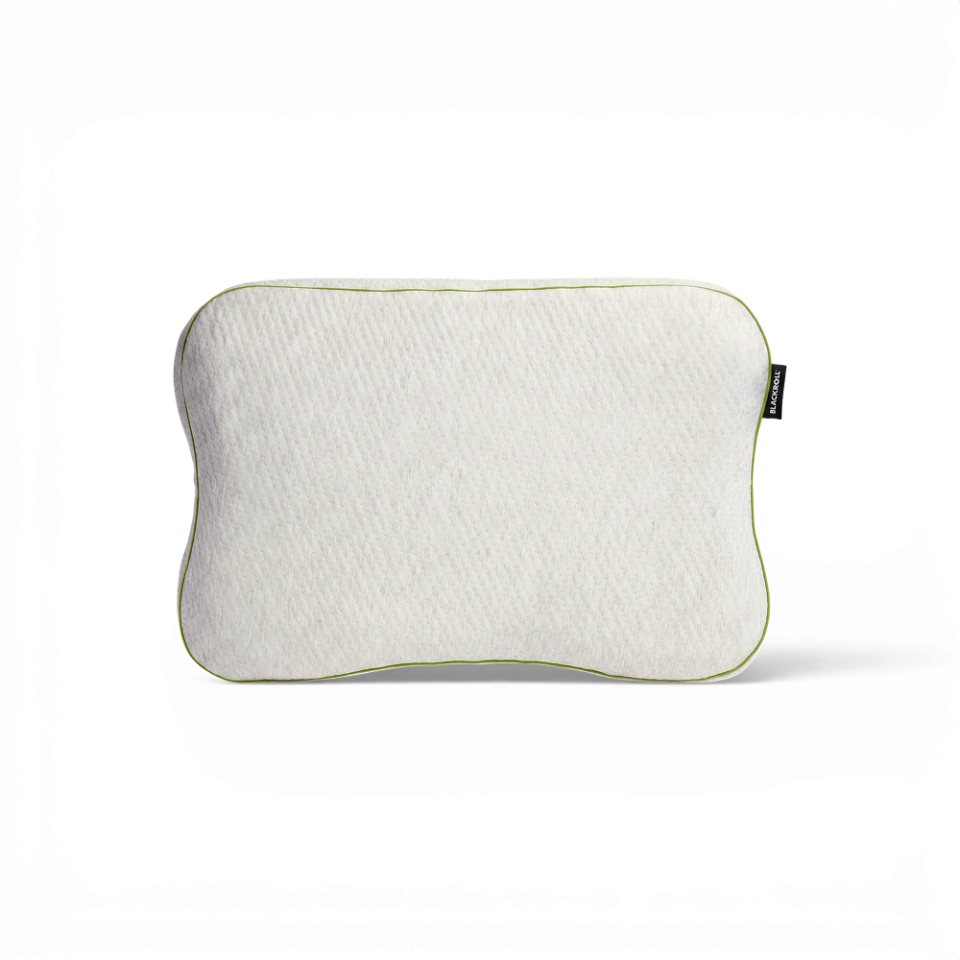
- Pillow: Keep your child’s head unobstructed at all times. Don’t use a pillow during the first few years of life. From around the age of 4, a flat, ergonomic children’s pillow can improve sleep comfort.
- Regular bedtimes: a structured routine, such as an evening routine, helps children fall asleep and sleep through the night.


Frequently asked questions about the size of children’s duvets
From their first birthday onwards, a duvet of size 100 × 135 cm is suitable for toddlers. During their first year, lay babies on their backs in a sleeping bag to help reduce the risk of sudden infant death syndrome.
The children’s duvet is generally suitable up to the age of five or six. However, when a larger duvet becomes suitable for your child depends primarily on their height. As soon as your child is around 120 cm tall or moves to a larger bed (90 × 200 cm), switch to a 135 × 200 cm duvet.
We strongly advise against this. For safety reasons, children should sleep in a sleeping bag during their first year of life. Even after that, a duvet that is too large is unwieldy and too heavy for small children. Not only can it affect the sleep quality, but it also increases the risk of overheating and suffocation. Children should be able to handle their duvet independently. Invest initially in a duvet of a size suitable for toddlers.
Whether your child needs different duvets for each season depends on the room temperature and your child’s preferences. A four-season duvet is often the most practical solution, as it can be used all year round. Make sure your child neither sweats nor feels cold at night. The ideal room temperature for sleeping is 18°C.
Replace it when your child’s feet or shoulders stick out from under the duvet, when they wake more often feeling cold or when they say the duvet is too small. If the duvet no longer fits their new, larger bed, change it provided your child is ready.
Continue with items on children’s sleep


Studies and sources
Hauck, F. R., Tanabe, K. O. and Moon, R. Y. (2016). Sleep-related infant suffocation deaths attributable to soft bedding. Pediatrics, 138(3), e20160702.
Erck Lambert, A. B., Parks, S. E. and Shapiro-Mendoza, C. K. (2018). National and state trends in sudden unexpected infant death: 1990–2015. Pediatrics, 141(3): e20173519.
Mitchell, E. A., Thompson, J. M. D., Ford, R. P. et al. (1996). The current status of the sleeping environment and risk factors for sudden infant death syndrome: A New Zealand-wide study. Journal of Paediatrics and Child Health, 32(1), 45–52.
Shapiro-Mendoza, C. K., Colson, E. R., Willinger, M., et al. (2014). National Infant Sleep Position Study, 1993–2010. Pediatrics, 134(6), e1600–e1607.
Centres for Disease Control and Prevention (CDC). (2025). Nursing pillows in the sleep environment and sudden unexpected infant deaths — United States, 2015–2022. Morbidity and Mortality Weekly Report, 74(19), 555–559.