How much sleep do children need? What you should know about your child's sleep requirements

Is your child tired, fussy or struggling to concentrate at school in the mornings? The cause could be too little sleep, or restless sleep. Getting enough restful sleep is one of the most important foundations for your child's healthy development, growth and wellbeing. But how much sleep do children actually need – or how long should or must they sleep? The answer depends on age and varies from child to child.
In this guide, you'll find out how much sleep children need at different ages, when your child or toddler should go to bed, and how you can improve their sleep quality long-term.
Das Wichtigste in Kürze
- Der Schlafbedarf von Kindern verändert sich mit dem Alter und nimmt im Laufe der Entwicklung schrittweise ab.
- Die empfohlenen Schlafzeiten sind Orientierungswerte – das tatsächliche Schlafbedürfnis kann von Kind zu Kind variieren.
- Entscheidend ist nicht nur die Schlafdauer, sondern auch, ob dein Kind erholsam schläft und sich tagsüber fit und ausgeglichen fühlt.
- Regelmäßige Schlafenszeiten und feste Abendroutinen können einen gesunden Schlafrhythmus unterstützen.
- Die folgende Tabelle zeigt dir auf einen Blick, wie viel Schlaf für die jeweilige Altersgruppe empfohlen wird.
Alter | Empfohlene Schlafdauer/24 h |
|---|---|
4–12 Monate | 12–16 h inkl. Tagschlaf |
1–2 Jahre | 11–14 h inkl. Tagschlaf |
3–5 Jahre | 10–13 h inkl. Tagschlaf |
6–12 Jahre | 9–12 h |
13–18 Jahre | 8–10 h |
Why is enough sleep so important for children?
Sleep is far more than a period of rest. While your child sleeps, a number of important processes take place in the body that are essential for healthy development:
- Growth and physical development: during deep sleep, the body releases growth hormone (somatropin). Your child quite literally grows while asleep. Enough sleep is therefore especially important during growth phases.
- Brain development and learning: at night, the brain processes the day's impressions and what's been learned. It forms new neural connections and transfers information from short-term to long-term memory. Children who get enough sleep can concentrate better and learn more effectively.
- Immune system: sleep strengthens the body's defences. Children who sleep regularly and enough get ill less often and recover more quickly from infections.
- Emotional regulation: tired children are often more irritable, tearful or aggressive. Good sleep helps your child regulate their emotions and stay more balanced.


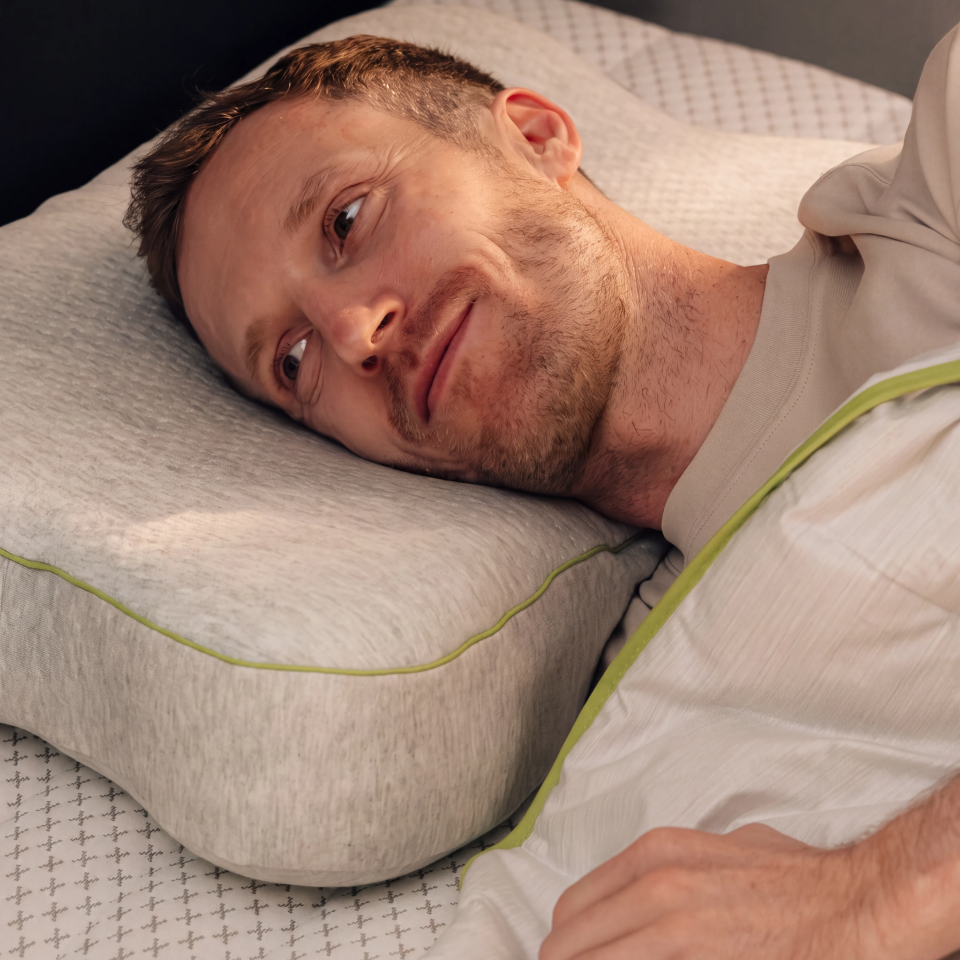

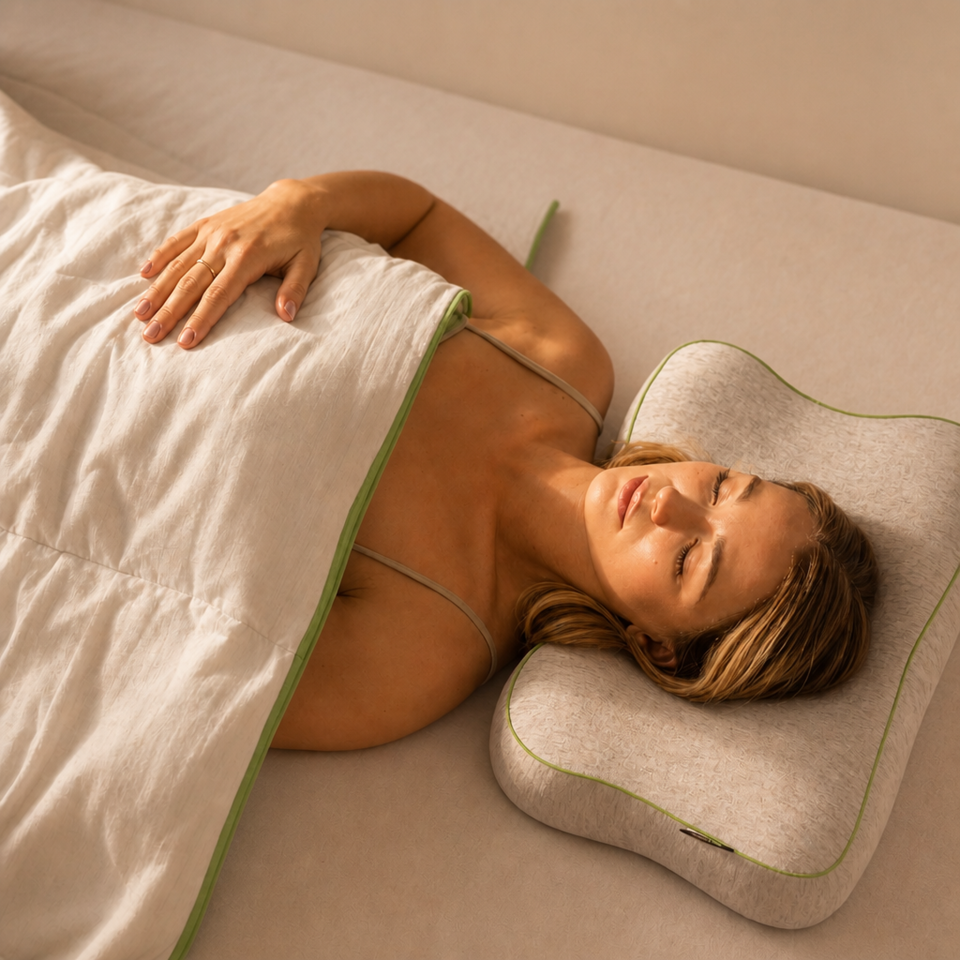
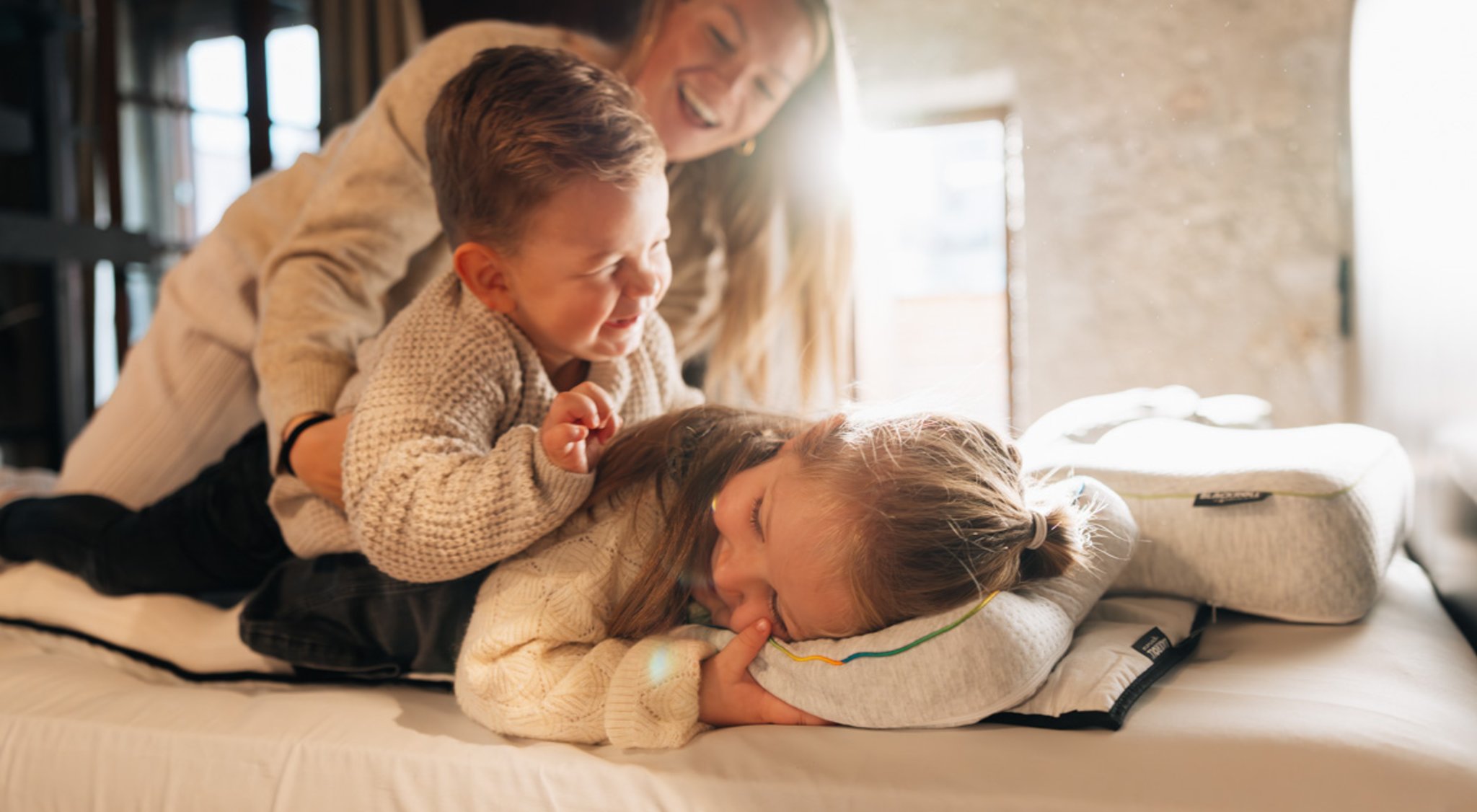
Sleep requirements in children: how many hours of sleep does a child need?
The amount of sleep children need varies considerably by age. The following recommendations are based on scientific findings from sleep medicine specialists and paediatric associations, such as the German Sleep Society (DGSM). It's worth noting that these are guideline figures – individual variations of up to two hours are entirely normal and nothing to worry about.
Overview: children's sleep requirements by age
This sleep table gives you a quick overview of recommended sleep by age group:
Age | Recommended sleep per day |
|---|---|
Infants (4–12 months) | 14–14.5 hours |
Toddlers (1–2 years) | 13–13.5 hours |
Preschoolers (3–5 years) | 11.5–12.5 hours |
Primary school children (6–9 years) | 10–11 hours |
School-age children (10–13 years) | 9–11 hours |
Teenagers (14–17 years) | 8–10 hours |

The right pillow for growing children
Discover the Recovery Pillow KidsThese figures are averages and include any daytime naps. The details for each age group are set out below.
Different age groups
Newborns have the highest sleep requirement. They sleep for up to 17 hours a day, spread across several short sleep periods. A day–night rhythm hasn't developed yet at this age, so your baby sleeps more or less evenly across the day and night.
Sleep requirements decrease slightly with age. At around four to 12 months, babies sleep an average of 14 to 14.5 hours a day. Your baby now starts to develop a day–night rhythm: night-time sleep gets longer, while daytime naps become less frequent. By around six months, many babies start sleeping through for six to eight hours at a stretch for the first time.
How much sleep does a two-year-old need? Between the ages of one and two, sleep requirements are around 13 hours, including a nap. By 18 months, most toddlers have dropped down to just one additional nap during the day: the classic one- to two-hour afternoon nap. Some toddlers manage without a nap altogether by age two, while others still need one until late in preschool age.
How much sleep does a three-year-old need?
Between the ages of three and five, recommended sleep is 11.5 to 12.5 hours a day. At this stage, many children stop napping altogether. While around half of three-year-olds still take a nap, this drops to around 35% of four-year-olds.
How much sleep does a four-year-old need?
At four years old, most children need around 12 hours of night-time sleep. Sleep needs at this age can vary individually between 11 and 13 hours. Many four-year-olds already sleep through the night without a nap.
How much sleep does a five-year-old need?
At five years old, sleep requirements are typically around 11.5 hours. By preschool age, only around five to eight per cent of children still nap regularly during the day.
Once your child starts school, a regular sleep routine becomes especially important. School-age children between six and nine should get ten to 11 hours of sleep a night. If children in this age group still need a nap, it can be a sign that their night-time sleep is too short or not restful enough.
How much sleep does a six-year-old need? Six-year-olds should get around 11 hours of sleep a night, on average. Napping is generally a thing of the past at this age – it's pure night-time sleep.
How much sleep does a seven-, eight- or nine-year-old need? For seven- to nine-year-olds, the recommended amount remains ten to 11 hours.
How much sleep do teenagers need? Although a teenager's daily routine often leaves little room for sleep, they still need eight to ten hours a night for healthy development. During puberty, the body clock shifts: teenagers become tired later in the evening and would, biologically speaking, benefit from sleeping later into the morning. This is one reason behind the ongoing, heated debate over later school start times. If teenagers in this age group still or once again need a nap, it can be a sign that their night-time sleep is too short or not restful enough.
How much sleep do 14-year-olds need? From age 14, requirements are eight to ten hours, with most teenagers needing around nine hours.
How much sleep do 15- and 16-year-olds need? At 15 and 16, teenagers should still get eight to ten hours of sleep to stay physically and mentally on form. In practice, though, teenagers tend to sleep considerably less due to school, homework and social activities.
When should children and toddlers go to bed? The optimal bedtime
The ideal bedtime for children depends on what time they need to get up in the morning. Work backwards from the wake-up time and allow for the recommended amount of sleep – plus around 15 to 30 minutes to fall asleep.
Worked example: if your seven-year-old needs to be up at 7:00 and needs 10.5 hours of sleep, they should be asleep by 20:30 at the latest, meaning bedtime should be around 20:00.
Children's bedtimes: a guideline table
This bedtime table gives you a starting point for orientation (calculated for a 7:00 wake-up time):
Age | Recommended bedtime |
2 years | 18:00–19:00 |
3–4 years | 19:00–19:30 |
5–6 years | 19:30–20:00 |
7–9 years | 20:00–20:30 |
10–13 years | 20:30–21:30 |
14–17 years | 21:30–22:30 |
Please note: these times are guidelines only. If your child needs to wake up earlier or later, bedtimes should shift accordingly.
Individual differences: how to recognise your child's sleep needs
No two children are the same. Some children are naturally 'late sleepers', while others manage well on less sleep. Watch out for your child's individual signals.
Signs of tiredness:
- Yawning, a dreamy look, rubbing their eyes.
- Losing interest in play, or fighting to stay awake – frowning, widening their eyes, becoming restless, clenching their fists.
- Moving more slowly and less steadily than usual.
- Fussing and seeming unhappy, or seeking closeness and wanting cuddles.
Signs of enough sleep:
- Your child wakes up on their own in the morning (without an alarm).
- They're balanced and in good spirits during the day.
- They can concentrate well.
- They fall asleep within 15–30 minutes in the evening.
Signs of too little sleep:
- Your child is hard to wake in the morning.
- They're tired, fussy or irritable during the day.
- They have trouble concentrating.
- They fall asleep instantly in the evening (within a few minutes).
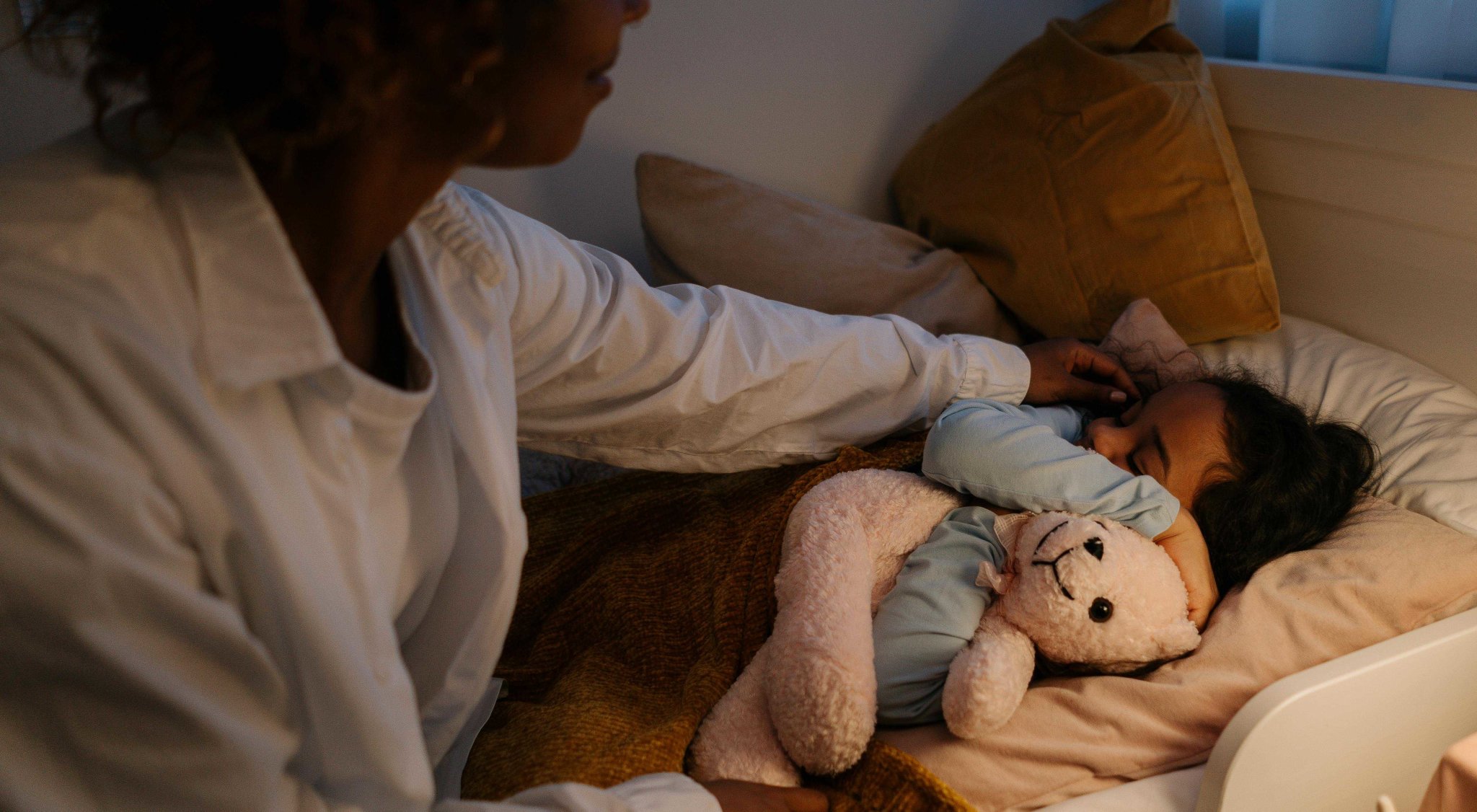
Your child's sleep isn't only shaped by their individual sleep needs, but also by their body clock, which governs when we feel more or less alert. This creates so-called sleep windows over the course of the day, when it's easier to fall asleep. It's important to notice when your child's optimal evening sleep window is, using the signs of tiredness above as a guide. If you miss this window – or your child becomes more active rather than less when tired – the window closes, and it can take up to an hour for tiredness to return.
How to help your child get enough sleep
Good sleep hygiene helps children just as much as adults get the sleep they need – and it's worth starting early.
- Set consistent bedtimes: children benefit from routine. Try to keep bedtimes similar even at weekends, as this helps stabilise the day–night rhythm.
- Introduce a calming evening routine: a regular evening routine and an additional bedtime ritual signal to the body that it's time to sleep. This can include brushing teeth, reading, cuddling or quiet music.
- Create the right sleep environment:
- Room temperature: ideally around 18°C.
- Darkness: the bedroom should be as dark as possible. A gentle night light can help ease any anxiety, if needed.
- Quiet: keep noise to a minimum.
- Fresh air: air the room thoroughly before bedtime.
- The right pillow for children: children's anatomical needs differ from those of adults. An ergonomic children's pillow such as the RECOVERY PILLOW KIDS is designed specifically for a child's smaller build and sensitive cervical spine. It supports a healthy sleeping position and can help your child sleep more restfully and wake up without stiffness.
- Reduce screen time before bed: blue light from phones, tablets and TVs suppresses production of the sleep hormone melatonin. Ideally, children shouldn't use screens for at least an hour before bedtime.
- Encourage movement during the day: children who get enough exercise during the day tend to fall asleep more quickly in the evening. Just make sure intense physical activity doesn't happen right before bedtime.
- Pay attention to a balanced diet: heavy, fatty meals shortly before bed can make it harder to fall asleep. Sugary drinks or snacks aren't helpful either.
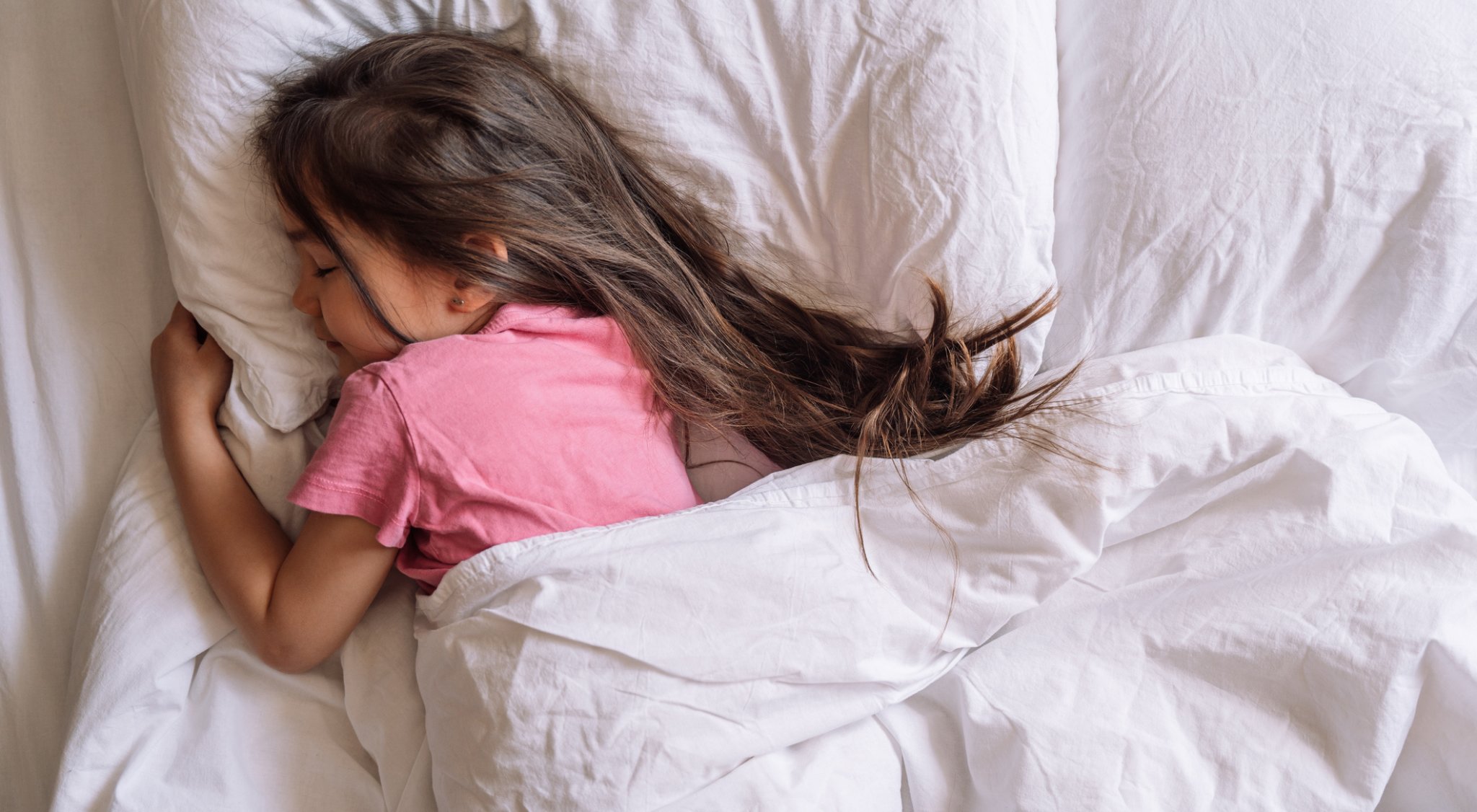
If children don't get enough sleep, this can lead to sleep problems further down the line, even from a young age.
Conclusion: helping your child meet their sleep needs
Children's sleep requirements vary by age – from 14 to 14.5 hours for infants, down to eight to ten hours for teenagers. But sleep quality matters just as much as quantity. With the right sleep environment, calming evening rituals and consistent bedtimes, you can help your child get more restful nights. Pay attention to your child's individual signals, and create the conditions for them to fall asleep feeling relaxed and secure.
Good sleep doesn't happen by chance – there's plenty you can do to support it. From the right pillow and duvet to consistent routines and a pleasant sleep environment, small changes can make a big difference. Hopefully, your child will thank you for it with more energy, better concentration and a more balanced mood.


FAQ: children's sleep requirements
Sleep is far more than rest: during deep sleep, the body releases growth hormone, supporting growth and physical development. At night, the brain also processes experiences and things learned during the day, which is important for concentration and memory. Regular, sufficient sleep also strengthens the immune system and supports emotional balance in children.
Sleep requirements vary with age. Infants (4–12 months): around 14–14.5 hours; toddlers (1–2 years): around 13–13.5 hours; preschoolers (3–5 years): around 11.5–12.5 hours; primary school children (6–9 years): around 10–11 hours; school-age children (10–13 years): around 9–11 hours; teenagers (14–17 years): around 8–10 hours.
The ideal bedtime depends on wake-up time. Work backwards from the wake-up time, allowing for the recommended amount of sleep plus around 15–30 minutes to fall asleep. Example: for a child who needs to be up at 7:00 and needs 10.5 hours of sleep, they should be asleep by around 20:30 at the latest.
Signs of enough sleep include: waking up on their own in the morning, being balanced and in good spirits during the day, concentrating well, and falling asleep within 15–30 minutes in the evening. Signs of too little sleep include noticeable tiredness in the morning, daytime sleepiness, trouble concentrating, low mood or quick irritability.
Key factors include a consistent bedtime, a calming bedtime ritual (such as reading or cuddling), a good sleep environment (quiet, dark, around 18°C, fresh air), reduced screen time before bed, enough exercise during the day, and a balanced diet. Habits like these help children sleep better and more restfully.
Weitere Kinderschlaf Artikel





Quellen
Magee, L., et al. (2022). Nonpharmacological interventions to lengthen sleep duration in healthy children: A systematic review and meta-analysis. JAMA Pediatrics, 176(11), 1084–1097. https://doi.org/10.1001/jamapediatrics.2022.3172
Tham, E. K. H., et al. (2024). Sleep duration trajectories and cognition in early childhood: A systematic review. Sleep Medicine Reviews, 74, 101912. https://doi.org/10.1016/j.smrv.2024.101912
Lollies, F., et al. (2022). Associations of sleep and emotion regulation processes in childhood and adolescence: A systematic review. Sleep Science, 15(4), 490–514. https://doi.org/10.5935/1984-0063.20220082
Cook, G., Carter, B., Wiggs, L., & Southam, S. (2024). Parental sleep-related practices and sleep in children aged 1–3 years: A systematic review. Journal of Sleep Research, 33(4), e14120. https://doi.org/10.1111/jsr.14120
Bello, B., Mohammed, J., & Useh, U. (2023). Effectiveness of physical activity programs in enhancing sleep outcomes among adolescents: A systematic review. Sleep and Breathing, 27(2), 431–439. https://doi.org/10.1007/s11325-022-02675-2
Dibben, G. O., et al. (2023). Adolescents' interactive electronic device use, sleep and mental health: A systematic review of prospective studies. Journal of Sleep Research, 32(5), e13899. https://doi.org/10.1111/jsr.13899
Gemke, R. J. B. J., Burger, P., & Steur, L. M. H. (2024). Sleep disorders in children: Classification, evaluation, and management. A review. European Journal of Pediatrics, 184(1), 39. https://doi.org/10.1007/s00431-024-05822-x
Paruthi, S., Brooks, L. J., D’Ambrosio, C., Hall, W. A., Kotagal, S., Lloyd, R. M., Malow, B. A., Maski, K., Nichols, C., Quan, S. F., Rosen, C. L., Troester, M. M., & Wise, M. S. (2016). Consensus statement of the American Academy of Sleep Medicine on the recommended amount of sleep for healthy children: Methodology and discussion. Journal of Clinical Sleep Medicine, 12(11), 1549–1561. https://doi.org/10.5664/jcsm.6288
Hirshkowitz, M., Whiton, K., Albert, S. M., et al. (2015). National Sleep Foundation’s sleep time duration recommendations: Methodology and results summary. Sleep Health, 1(1), 40–43. https://doi.org/10.1016/j.sleh.2014.12.010
Kok, E. Y., Kaur, S., Mohd Shukri, N. H., Abdul Razak, N., Takahashi, M., Teoh, S. C., Tay, J. E. F., & Shibata, S. (2025). The role of light exposure in infant circadian rhythm establishment: A scoping review perspective. European Journal of Pediatrics, 184, 112. https://doi.org/10.1007/s00431-024-05951-3
O’Connor, C., Ventura, S., Proietti, J., O’Sullivan, M. P., & Boylan, G. B. (2026). Sleep and infant development in the first year. Pediatric Research. https://doi.org/10.1038/s41390-026-04780-4
Staton, S., Rankin, P. S., Harding, M., Smith, S. S., Westwood, E., LeBourgeois, M. K., & Thorpe, K. J. (2020). Many naps, one nap, none: A systematic review and meta-analysis of napping patterns in children 0–12 years. Sleep Medicine Reviews, 50, 101247. https://doi.org/10.1016/j.smrv.2019.101247