What do
Germans,
doto
be able to fall asleep?
Germany Has Such Trouble Falling Asleep—and What Really Helps with Sleepless Nights?
Do you have trouble falling asleep? Can’t get a wink of sleep at night? Then you’re not alone. Many Germans struggle to fall asleep. Yet restful sleep has a lasting impact on your mental and physical health and is a factor for your well-being that shouldn’t be underestimated. So you shouldn’t take the significance and importance of sleep lightly. But what do we Germans actually do when we can’t get a wink of sleep? And which of these methods are truly helpful? BLACKROLL® wanted to take a closer look at this and conducted a representative survey of 5,003 Germans aged 18 and older. The results showed that trouble falling asleep is widespread in Germany.
Majority of Germans Struggle to Fall Asleep
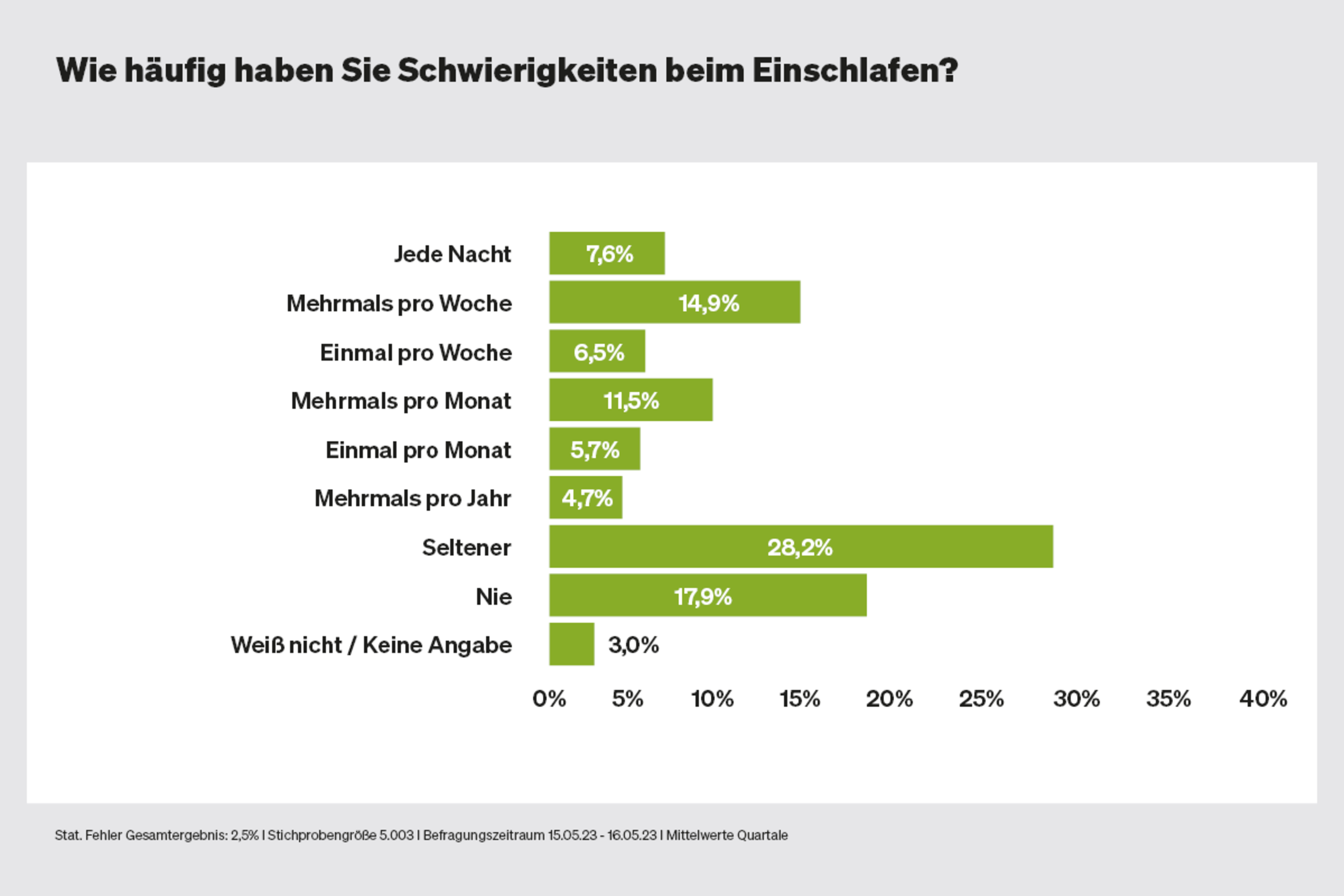
As a general rule: If you have trouble falling asleep, you’re not alone.Nearly one in three Germans struggles with falling asleep from time to time.
- Only one in five Germans never has trouble falling asleep
- Nearly one in three has trouble falling asleep once or more per week.
- Overall, half of Germans have trouble falling asleep at least once a year.
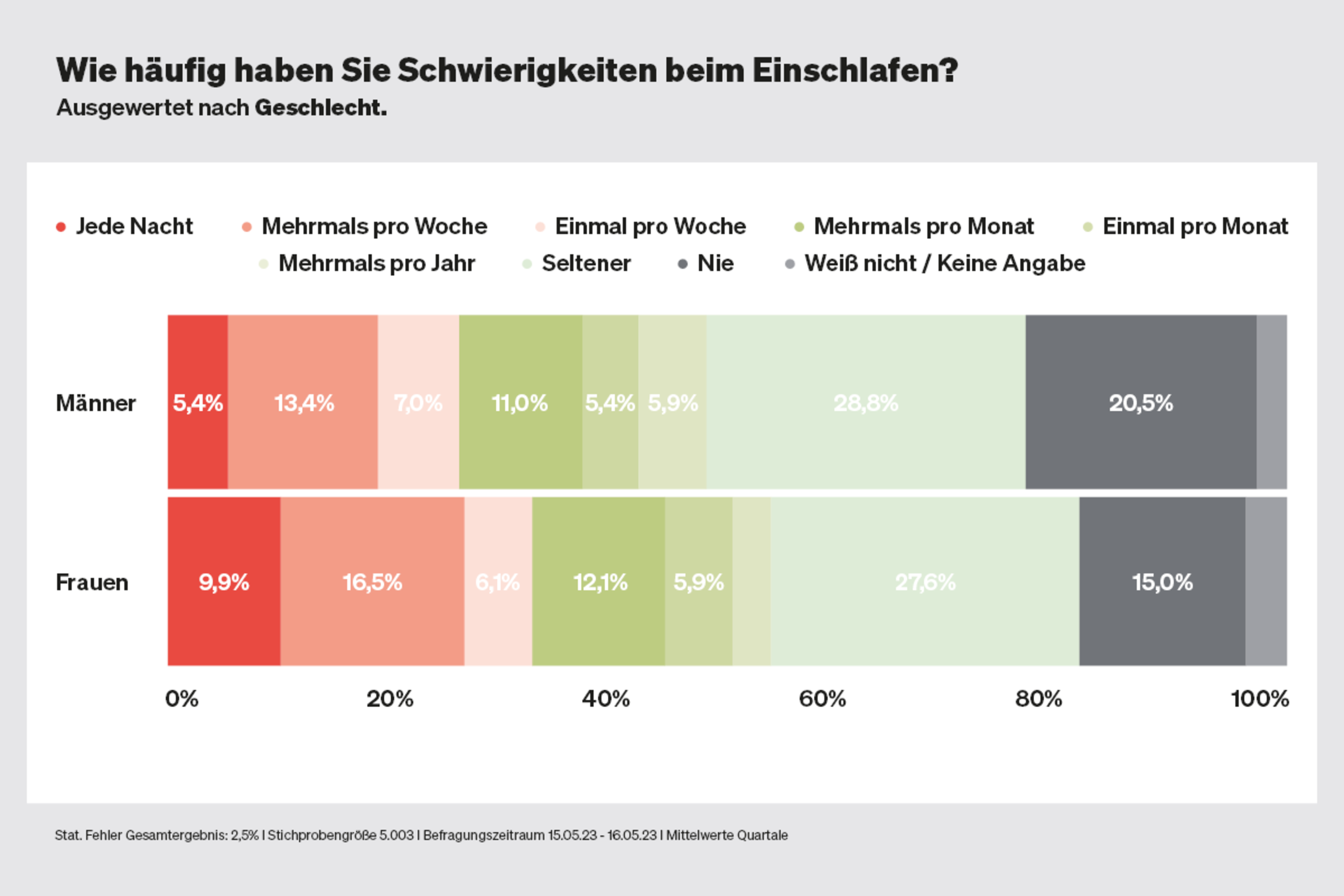
Men and women are affected by trouble falling asleep with similar frequency
The biggest difference is found at the extremes (every night vs. never).
- Women are twice as likely as men to have trouble falling asleep every night.
- Men report slightly more often that they are never affected by problems falling asleep.
- Otherwise, however, there is little difference between the sexes, and they struggle with falling asleep in very similar ways.
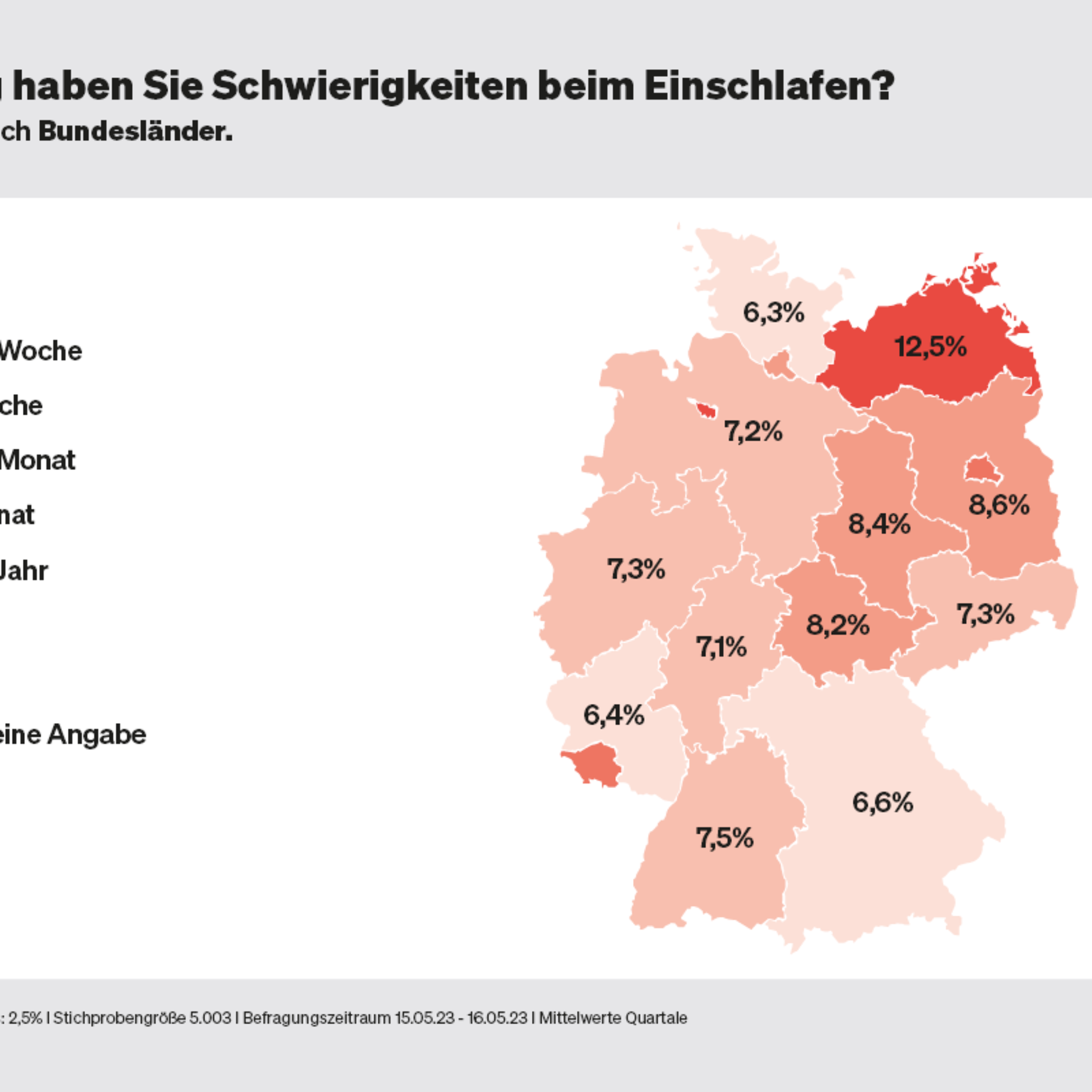
Regional differences: How well do people in the federal states fall asleep?
How many hours of sleep are ideal?Whether you can fall asleep easily or not may also depend on where you live.
- More than one in 10 people in Mecklenburg-Western Pomerania has trouble falling asleep every night.
- People in Saxony and Lower Saxony fall asleep most easily: Here, only one in five has trouble falling asleep.
This is how much sleep Germans get
In addition to trouble falling asleep, staying asleep or the duration of sleep can also be a source of stress. How many hours of sleep you need per night varies greatly from person to person. Most people get between 6 and 8 hours. Statistically speaking, people who sleep around 7 hours have the highest life expectancy. If you regularly get less than 6 hours of sleep, this unfortunately increases your risk of certain diseases, such as heart attack, high blood pressure, stroke, and certain types of cancer.
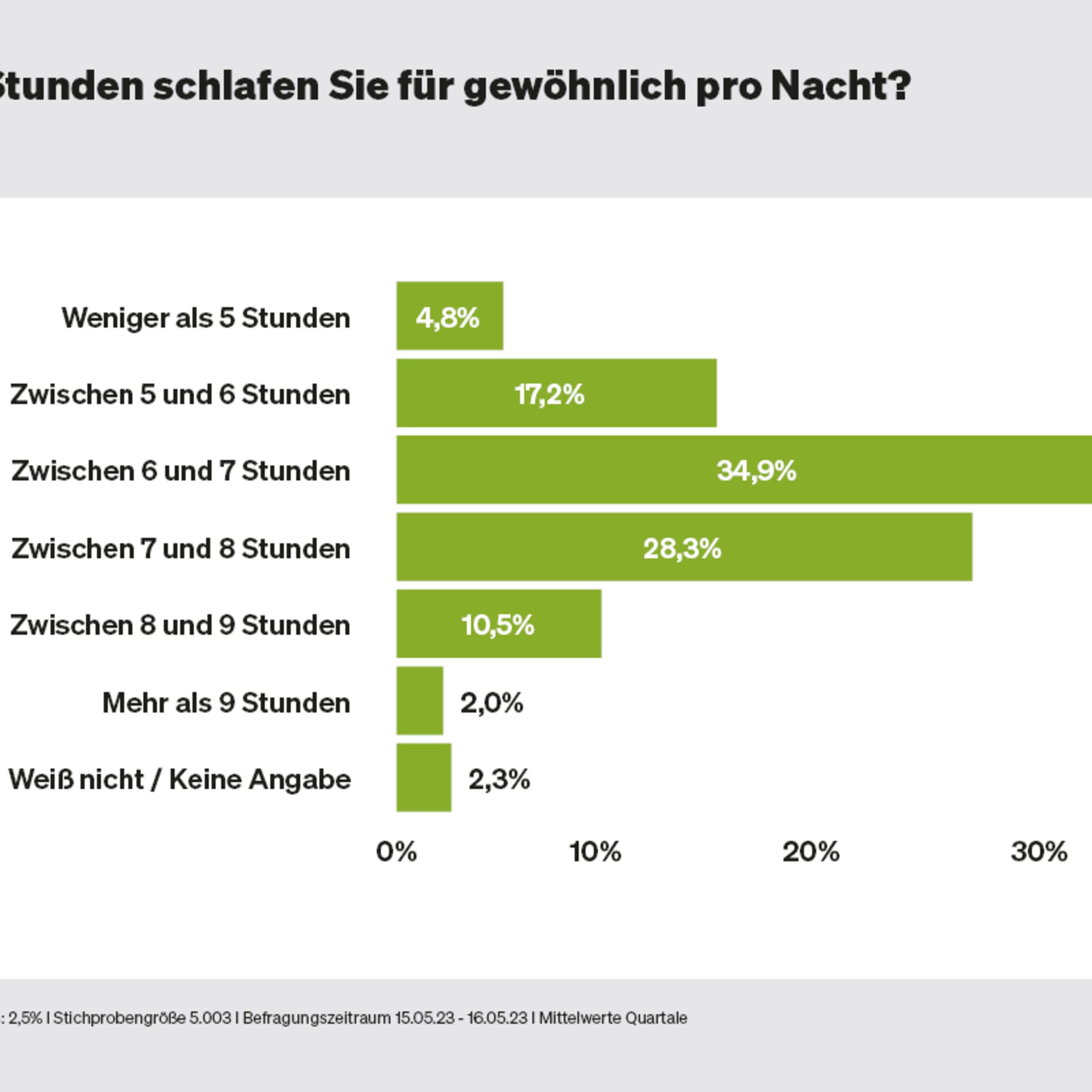
- Not even half of Germans get seven hours or less of sleep per night; just under 5% sleep even less than five hours per night.
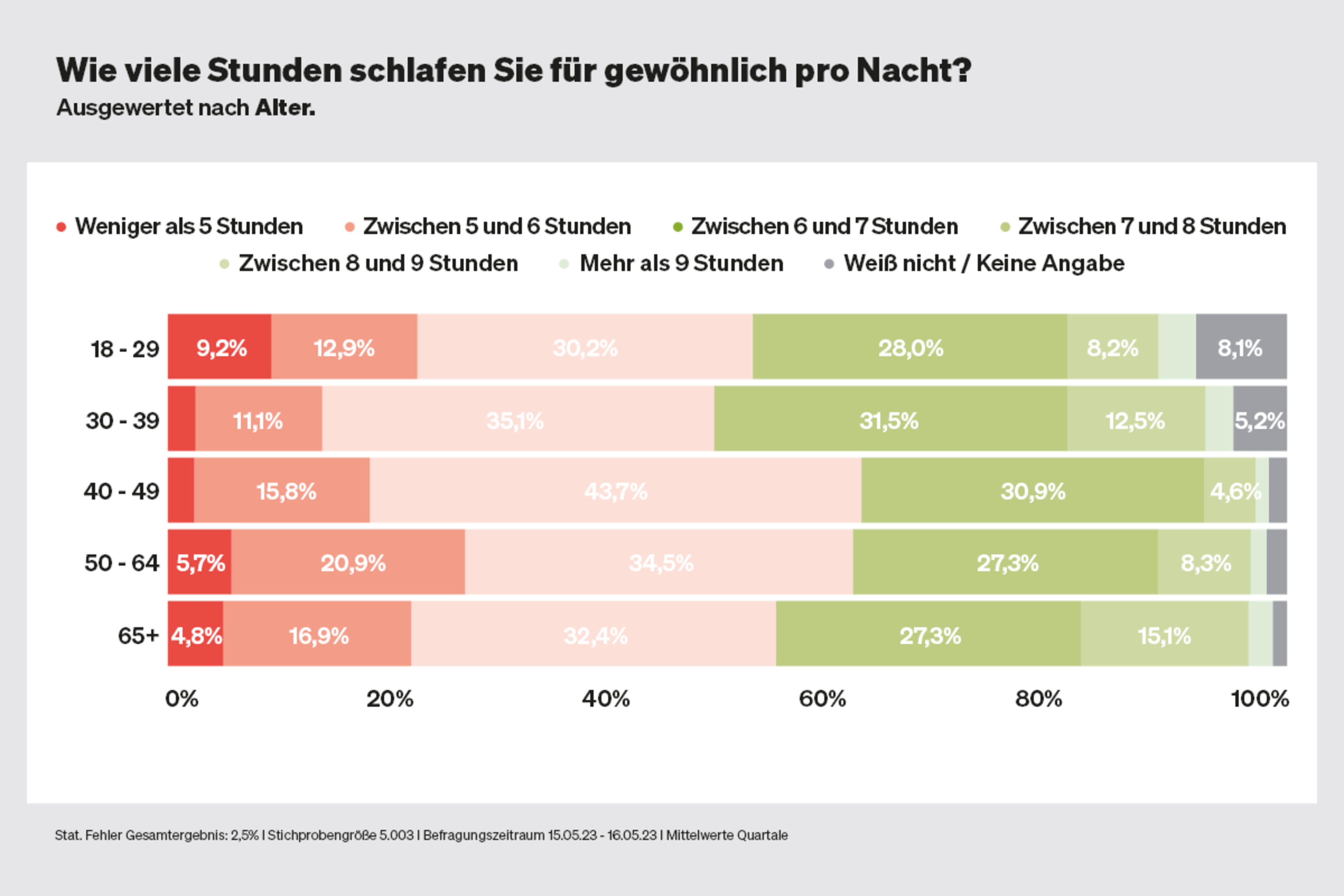
- People between the ages of 50 and 64 are the most affected by insufficient sleep. Among them, one in four gets seven hours of sleep or less.
- Only about one in 10 people sleeps significantly more than 7–8 hours per night.
Sleep Environment
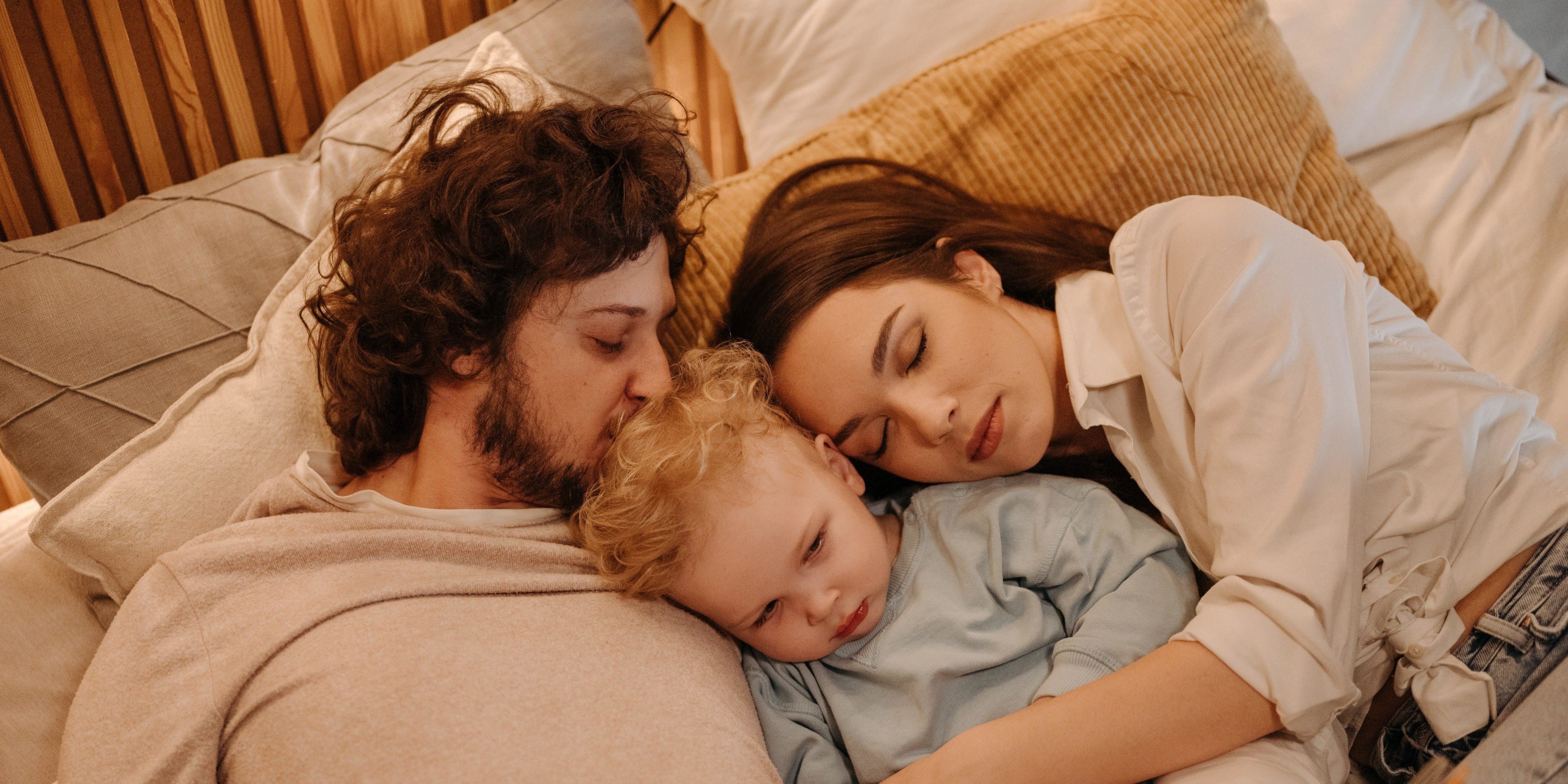
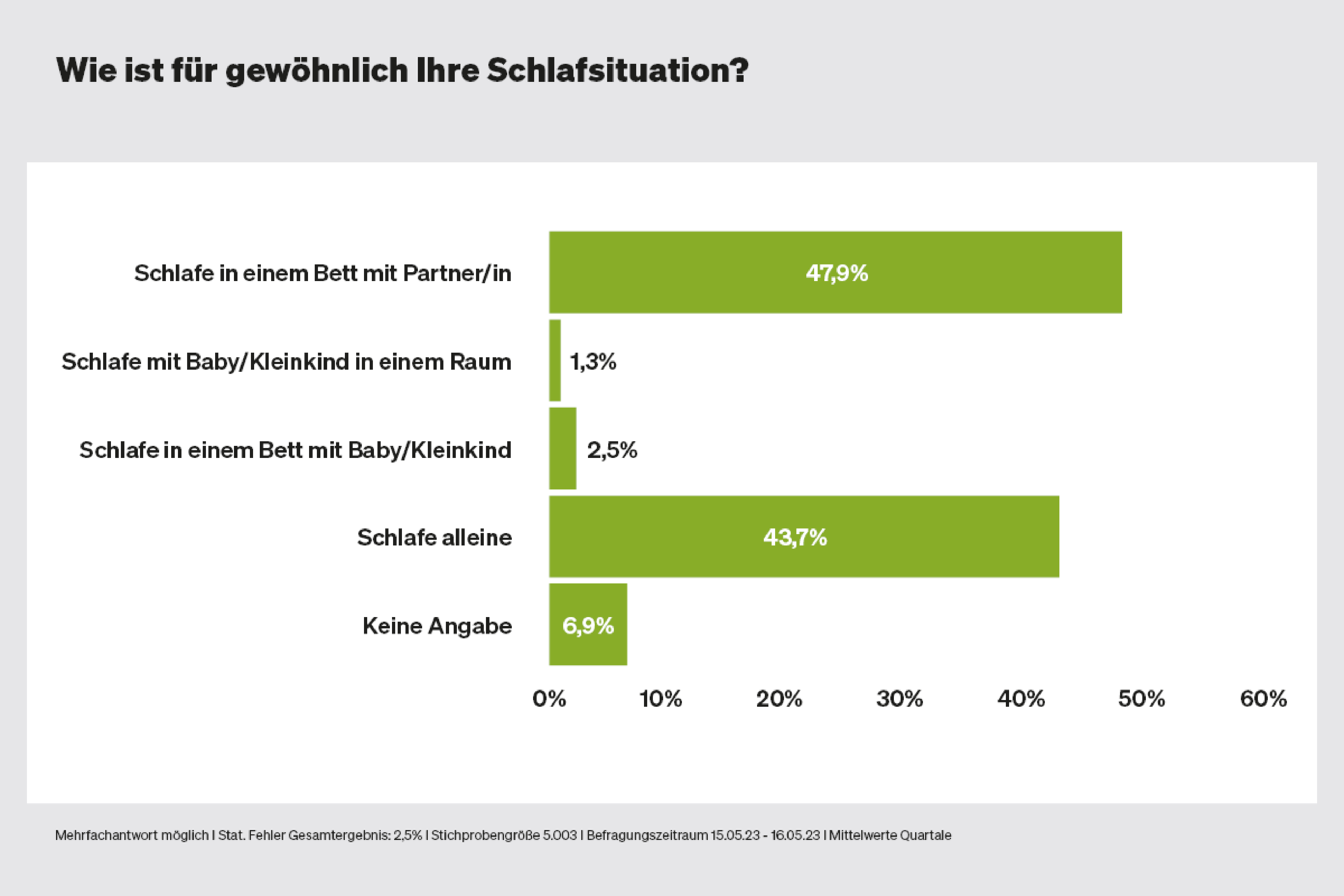
How well you can fall asleep may also depend on your (social) environment. Do you sleep alone? With a partner or child(ren)?
- One in two Germans shares a bed with a partner.
- Demographic change is also reflected in this survey: Hardly anyone sleeps in the same bed or room as a (young) child.
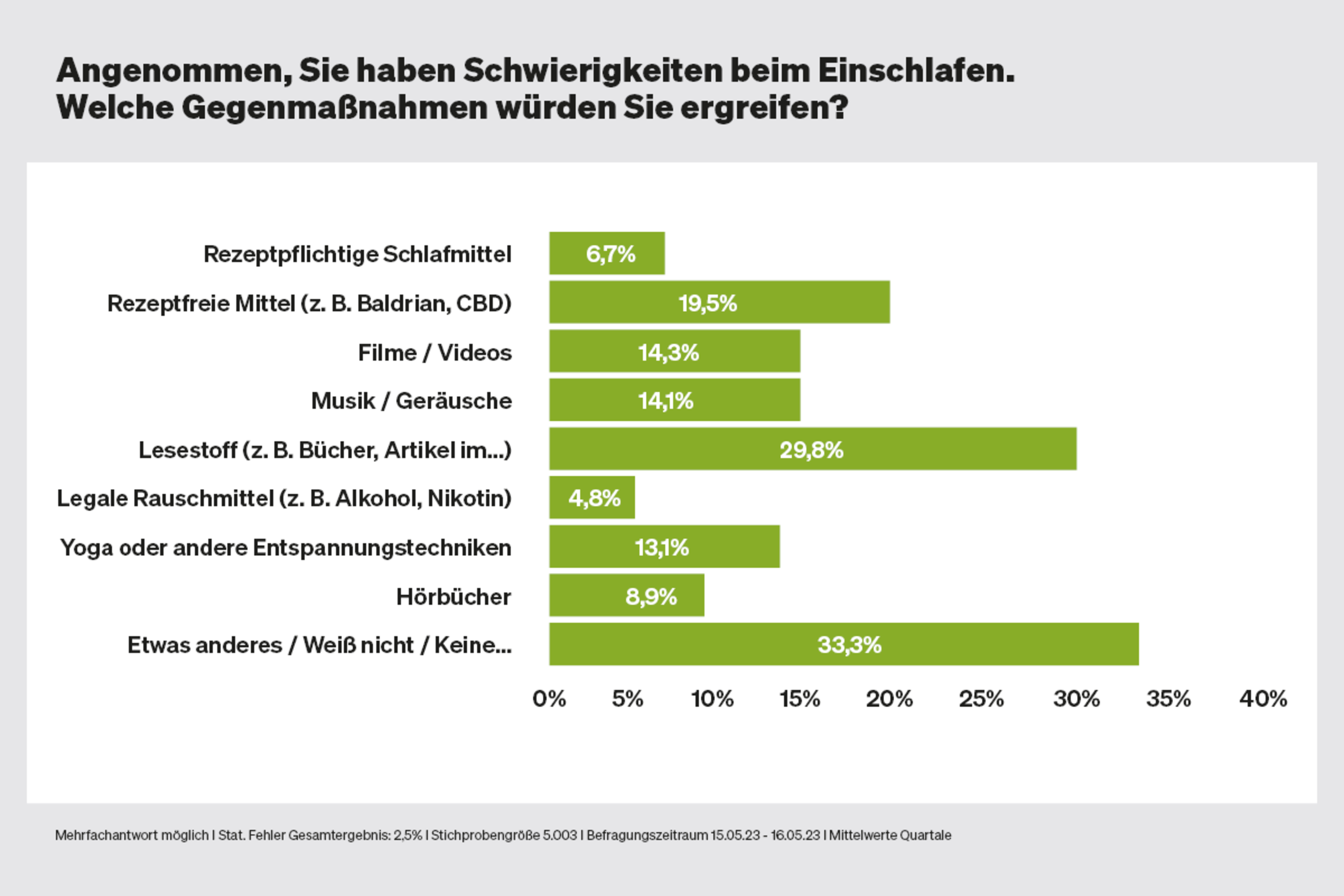
What Germans do when they can’t fall asleep.
- One in five people turn to over-the-counter remedies like valerian or CBD when they can’t fall asleep—only reading is a more popular strategy.
- Germans are least likely to turn to legal intoxicants like alcohol or nicotine. That’s a good thing, since substances like alcohol disrupt your sleep and don’t help you fall asleep or sleep better.
- One in three people cannot nameany countermeasures. We can only speculate here—but it’s possible that factors not covered in the questionnaire, such as illegal drugs or sex, play a role.
Age Differences: Media Consumption as a Sleep Aid Is Especially Popular Among Younger People
- When it comes to media, Gen Z is way ahead: Nearly all respondents between the ages of 18 and 29 reported turning to movies, sounds, or reading material when having trouble falling asleep.
- People aged 40 to 49 are most likely to turn to prescription medications: One in 10 people said they use this method when having trouble falling asleep.
- One in 10 people between the ages of 30 and 39 turns to legal intoxicants such as alcohol when plagued by trouble falling asleep.
So what actually helps?
The top ten tips for falling asleep quickly and healthily.
Many of the sleep aids mentioned here aren’t good for your sleep health. This study surveyed various sleep aids—but not all of them are suitable for helping you achieve healthy sleep in the long term.
Relaxation Exercises


Inspiration for Restful Sleep
Sign up for free now and become part of the community.
Of course, your ritual—or your strategy for dealing with trouble falling asleep—can be customized to suit your individual needs. You can find inspiration on how to do this in the BLACKROLL® newsletter, for example, which you can sign up for free at any time to become part of the community.
And if none of that helps
Very important: If your trouble falling asleep is affecting your daily life and lasts longer than 4 weeks, it may be advisable to see a doctor you trust. You don’t necessarily have to go straight to a specialist—your primary care physician is a good first point of contact. Through targeted questions during an initial consultation, they can determine whether a referral to a specialist is necessary or not. These specialists might include neurologists, psychiatrists, or ENT doctors. In particularly severe cases, a short stay in a sleep lab may also be necessary, where your sleep is monitored by a sleep medicine specialist.
Methodology: The survey was conducted in May 2023 on behalf of Blackroll AG by the independent market and opinion research institute Civey GmbH among 5,003 German citizens. The results are representative based on quota sampling and weighting, taking into account a statistical margin of error of 2.5% (overall result).
Everything You Need to Know About Restful Sleep









Products for Restful Sleep from BLACKROLL®
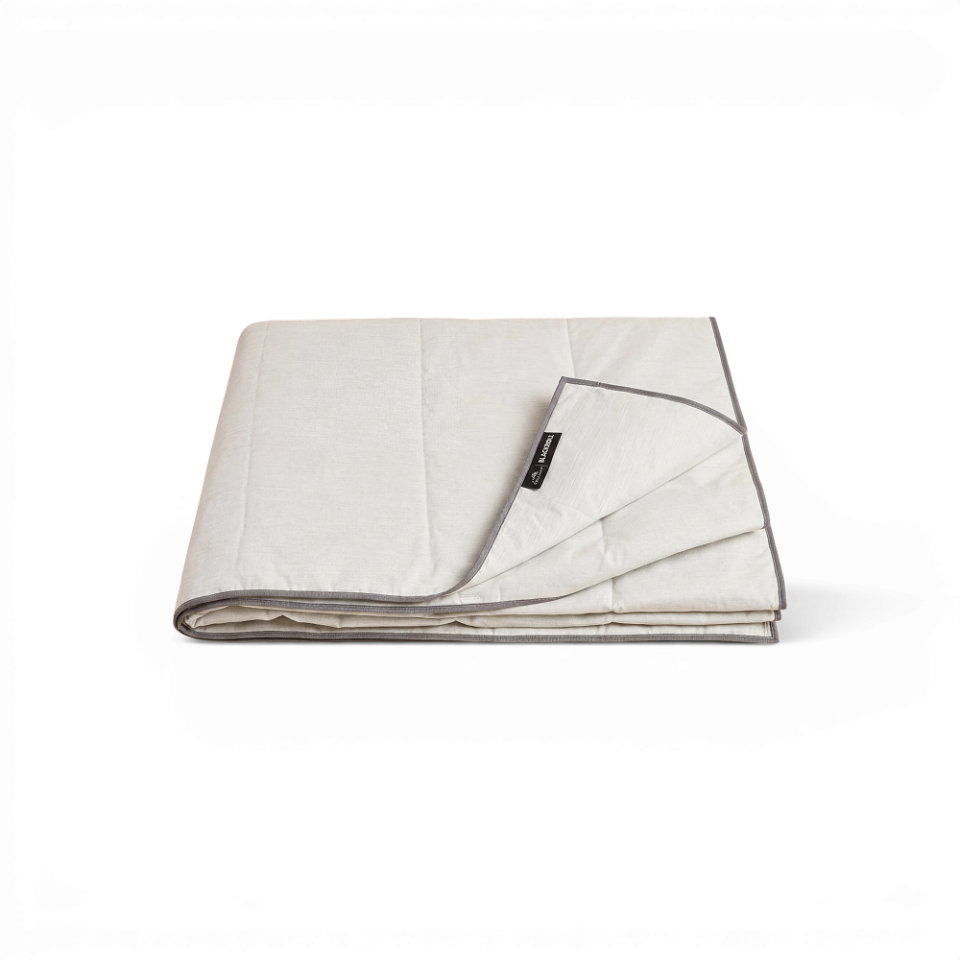
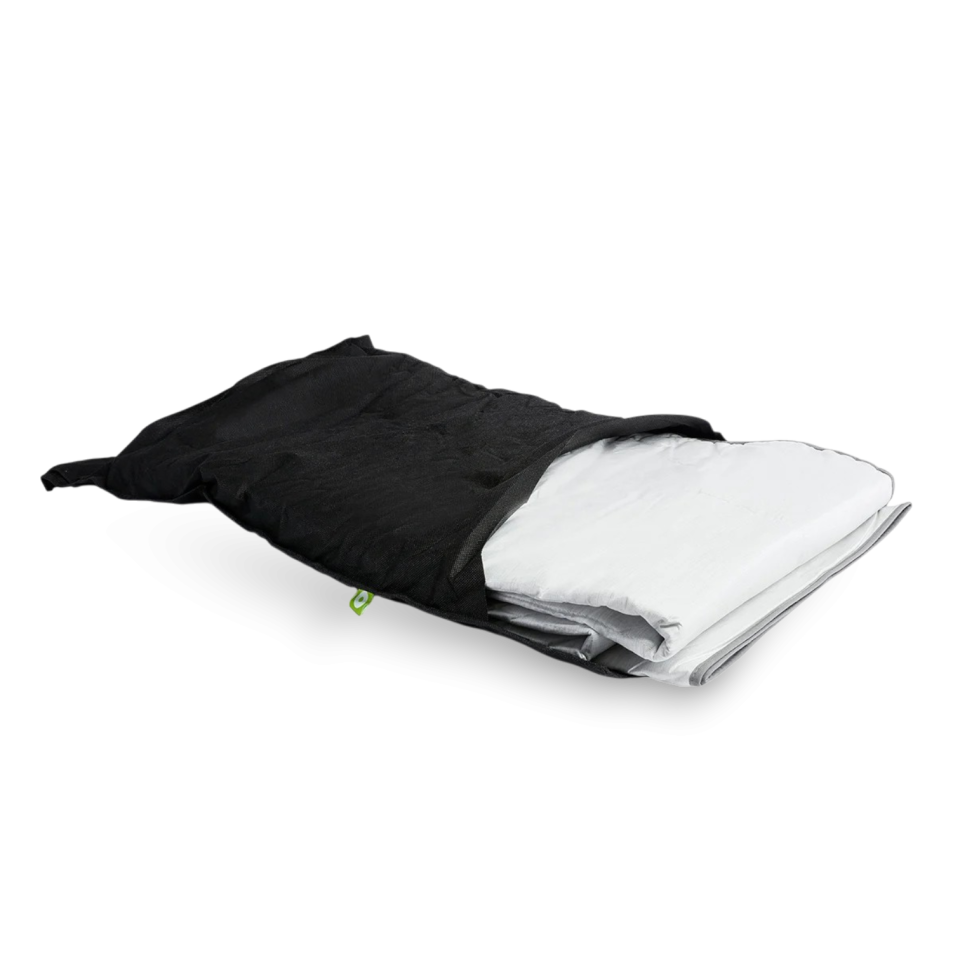
Recovery Blanket Summer
Available in multiple variants