Knee Stability and Injury Prevention in Skiing—Tips for the Slopes
This session specifically improves knee stability, leg alignment control, and the activation speed of individual muscles. It strengthens the muscle groups important for skiing and is designed to specifically prevent injuries.
The program covers four key aspects:
1. Rate of Force Development – Important for quick changes of direction
The rate of force development describes how quickly muscles can generate force after the nervous system activates them. In skiing, sudden movements—such as initiating a turn or stabilizing on uneven terrain or during a fall—are common.
• Why is this important for the knee? Rapid muscle reactions protect the knee joint from sudden stress. For example, if the knee is subjected to an unexpected impact, the quadriceps, hamstrings, and gluteal muscles can stabilize the joint before the ligaments are overstressed.
• Injury prevention: Without rapid activation, the knee remains temporarily unprotected, which increases the risk of ligament or meniscus injuries. Explosive exercises such as counter-movement jumps, fast leg extensions with a band, or explosive hip thrusts specifically improve this ability.
2. Core Stability – Essential for Balance and Power Transfer
The core muscles comprise the deep abdominal, back, and hip muscles. They form the stable center that transfers force from the legs to the upper body and ensures balance during dynamic movements.
• Why is this important for the knee? A stable core keeps the pelvis in a neutral position, allowing for symmetrical force transfer to both legs. Core instability often leads to uncontrolled internal rotation of the thigh, which forces the knee into a dangerous bow-legged position (valgus).
• Injury prevention: Skiers with weak core muscles are more prone to uncontrolled movements under stress, which places significant strain on the cruciate ligaments and menisci. Exercises such as the Pallof press, glute bridge on the Blackroll, and rotational lunges improve core stability.
3. Leg Axis Control – Prevents Misalignment and Protects the Knee
The leg axis refers to the line running from the hip joint through the knee to the ankle. A stable leg axis ensures that the knee does not deviate inward (valgus position) or outward (varus position) under load.
• Why is this important for the knee? A correct leg axis distributes the load evenly across the knee joint. Especially in skiing, where the knee is constantly bent and the leg must absorb lateral forces, a stable axis protects against overloading.
• Injury prevention: Weak hip muscles and poor coordination cause the knee to cave inwards during turns or landings. This increases the risk of injury. Exercises such as the Monster Walk, Clam, Bulgarian Split Squat, and Single-Leg Romanian Deadlift promote axis control.
4. HQ Ratio (Ratio of Front-to-Back Thigh Muscle Strength) – Balanced Strength Distribution for Healthy Knees
The strength ratio between the quadriceps (front) and hamstrings (back) is known as the HQ ratio. An ideal ratio is approximately 60:40, with the quadriceps allowed to be slightly stronger, but the posterior chain (hamstrings and glutes) should not be neglected.
• Why is this important for the knee? The quadriceps stabilize the knee from the front, while the hamstrings protect the knee from the back and prevent the so-called “drawer effect.” Quadriceps that are too strong relative to weak hamstrings pull the shin forward—a strain that puts the anterior cruciate ligament at risk.
• Injury prevention: An imbalanced quadriceps-to-hamstring ratio is one of the most common risk factors for cruciate ligament injuries, especially during uncontrolled landings and rotations in skiing. To optimize this ratio, exercises such as the banded leg extension (quadriceps), the single-leg Romanian deadlift, and the glute bridge on the Blackroll (hamstrings) are ideal.
TRAINING
I. Warm-up & Activation (10–15 minutes)
2–3 exercises with the foam roller (TFL massage, outer thighs, calves, etc.)
2–3 exercises with the loop band, etc.
II. Main Section – Strength & Stabilization (30 minutes)
A. LEG AXIS STABILITY
(2–3 sets per exercise)
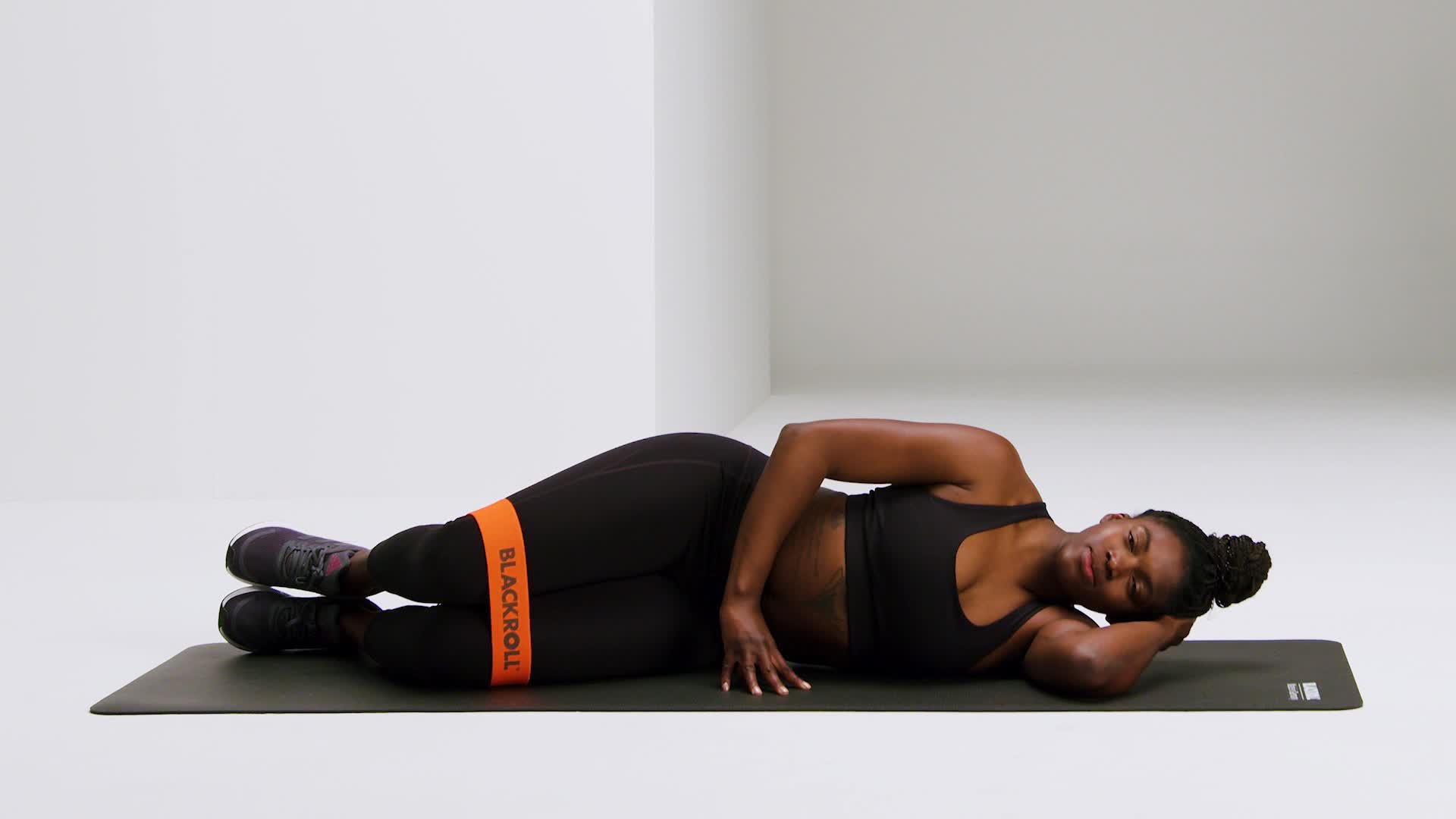
1. Clamshells
◦ 12–15 repetitions per side.
◦ Targets the gluteus medius and stabilizes the leg axis.
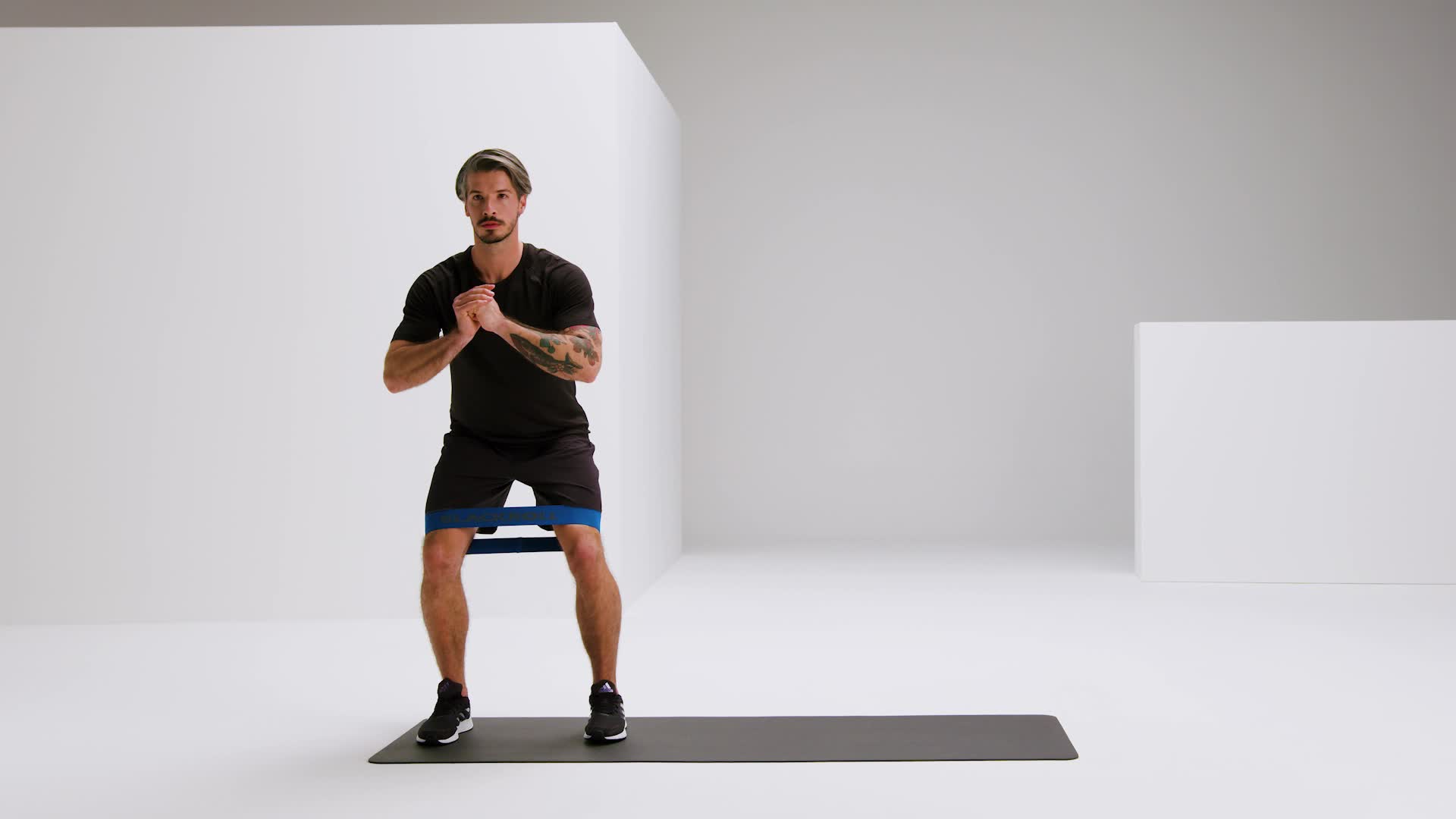
2. Side Walks
◦ 2 sets of 15 steps per side.
◦ Strengthens the gluteus medius and helps prevent bowlegs.
3. Bulgarian Split Squat
Place one leg behind your body on a raised surface. Bend the front leg until the thigh is parallel to the floor. Keep the knee stable and directly above the foot.
◦ 10–15 repetitions per leg.
◦ Works the quadriceps, glutes, and core; improves single-leg stability.
4. Pelvic Lift with Toes on the Blackroll (Heels Must Be Free)
Lie on your back with your feet hip-width apart on the Blackroll; actively press the balls of your feet into the roll. Lift your pelvis upward, consciously engaging your glutes.
◦ 12–15 repetitions.
◦ Activates the posterior chain (hamstrings, glutes, lower back).
Side Walks