Who are carbon running shoes suitable for?
With the start of the summer and marathon season, many runners are once again on the hunt for their personal bests. In addition to training, the right gear plays a crucial role—and here, the focus is on high-tech running shoes with thick soles and carbon plates. These running shoes not only feature a futuristic design but also offer technological advantages that are becoming increasingly popular even among recreational runners.
01 What’s the story behind running shoes with thick soles?
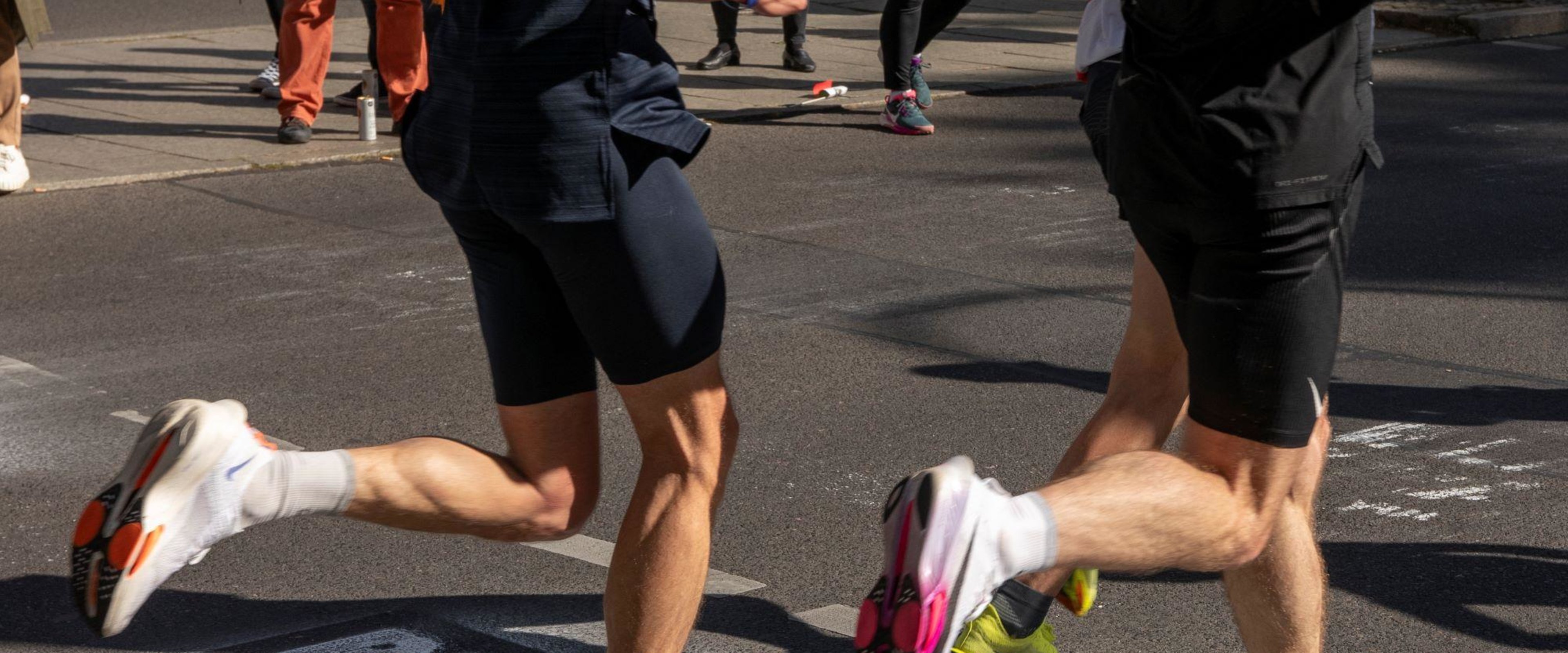
Anyone who’s ever stood along the course of a half-marathon or marathon has seen them: XXL running shoes with strikingly thick soles, often referred to as carbon running shoes. They originated in professional competitive sports—and according to studies, they’re said to give elite runners a time advantage of up to four minutes on the marathon course and significantly increase running speed.
These so-called “super shoes” combine several innovative elements that ensure maximum efficiency over long distances—most notably the built-in carbon plate in the midsole.
The Carbon Plate: An Efficiency Booster for Running
At the heart of these running shoes is a special technology featuring an integrated carbon plate. This provides improved energy return, giving you more propulsion with every step—ideal for anyone looking to improve their personal best.
The benefits at a glance:
- Greater stiffness combined with flexibility
- Optimized push-off during the propulsion phase
- Reduced dorsiflexion—meaning less unwanted bending in the forefoot
- Reduced energy loss over long distances such as the half marathon (21.1 km) or marathon (42.2 km)
According to the International Association of Athletics Federations, the maximum sole thickness for official competitions is limited to 40 mm —many models fully utilize this limit.
Why does the running shoe look like a seesaw?
In addition to sole thickness, the geometry is also crucial . Many modern running shoes with carbon plates feature a so-called rocker sole —a curved sole shape that resembles a seesaw from the heel to the forefoot.
This rocker geometry supports the natural motion sequence and ensures a smooth roll-off, making running feel easier and less strenuous. This has a positive effect on running economy—not only for professionals but also for recreational runners.
02 Carbon Running Shoes: Not Just for Pros
Running shoes with a carbon plate and thick sole are no longer reserved solely for elite athletes. Many brands now also offer carbon running shoes for beginners and ambitious recreational athletes.
Whether you’re looking for the best running shoes for your half marathon, an extra boost for your marathon, or simply a modern, comfortable training shoe—the new models with thick soles might be just right for you.
03 Potential Drawbacks of High-Performance Running Shoes
1. Biomechanical Adjustment
- The carbon plate and the highly responsive midsole alter your running mechanics.
- This results in increased stress on the Achilles tendon, calf muscles, and forefoot.
- Without adequate preparation, this can lead to muscle strain.
2. Reduced Proprioception and Stability
- The highly cushioned design reduces sensory feedback from the ground.
- This can lead to instability and improper weight distribution in runners with weak foot muscles.
3. Limited suitability for everyday use
- The shoes are designed for competition and are not suitable for extended warm-up phases or slow recovery runs.
Injuries and Physical Ailments
1. Achilles tendon issues
- Cause: Increased stress due to altered foot position and propulsion mechanics.
- Common among runners: those with weak calf muscles or those who abruptly switch to carbon shoes.
Recommended Exercises:
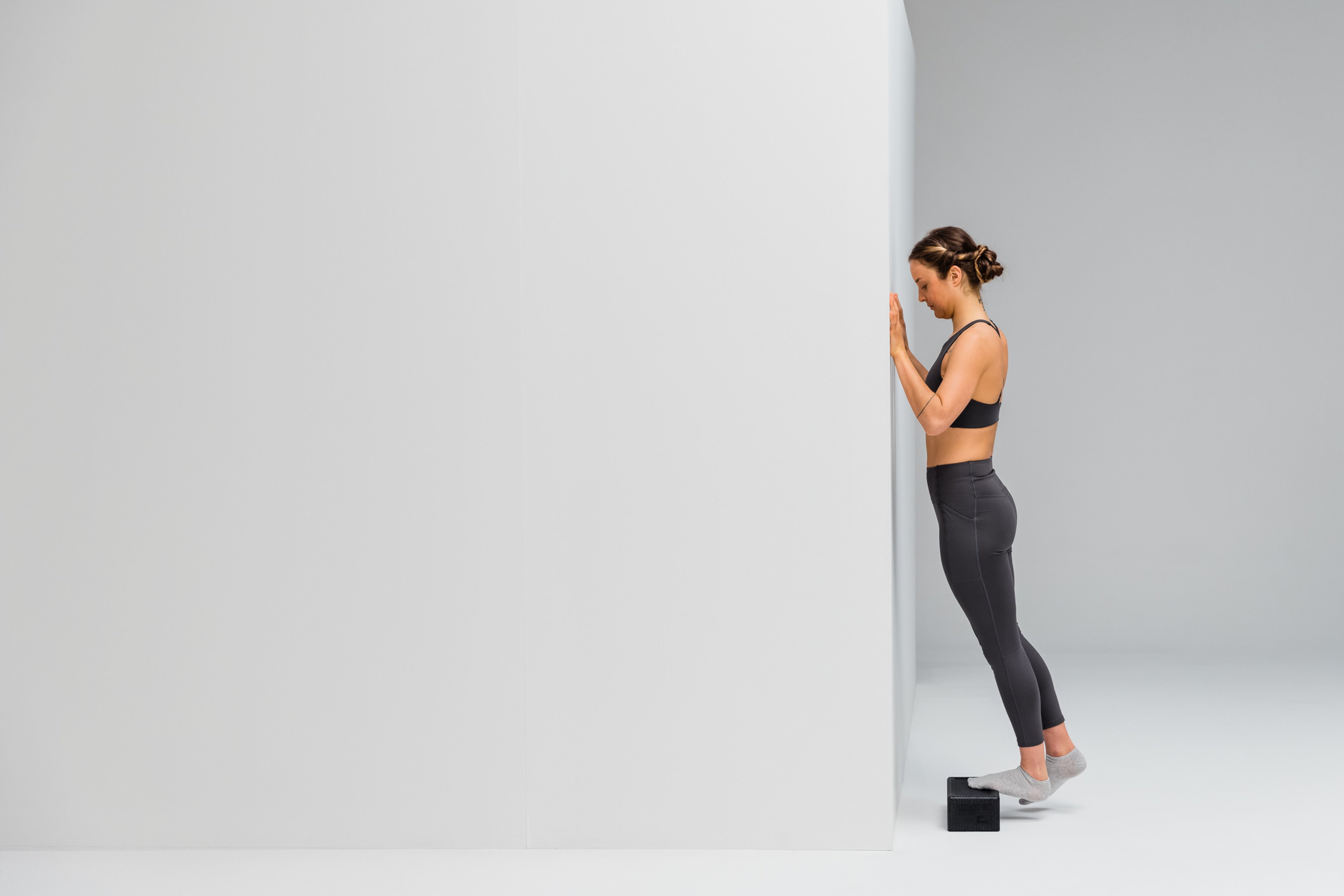
Eccentric calf raises
These activation and strengthening exercises are not intended as direct pain treatment, but they can help prevent calf problems. Weak leg muscles are often the main cause of calf issues. Therefore, perform specific exercises to strengthen your calves and leg muscles.
Stand with the ball of one foot on the BLOCK in front of a wall so that your heel is suspended in the air and you can support yourself with your hands on the wall.
Myofascial Self-Massage for Calf Pain
Do you have muscle or fascial tightness in your calf? If so, massaging your calf can help relieve tension. If you want to address the area holistically, you should also roll out the sole of your foot.
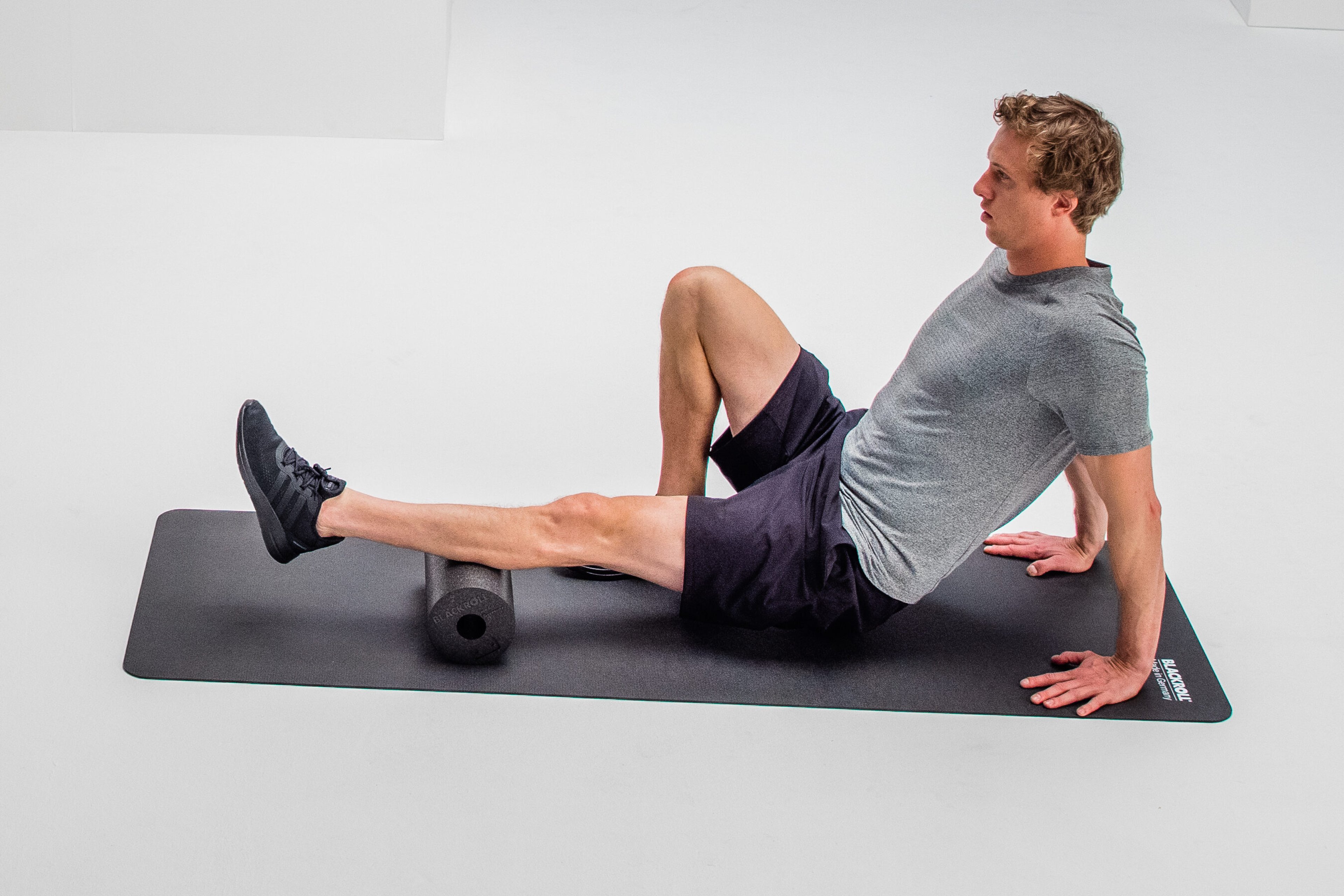
Sit in a long-seat position and place your calf on the FASCIAL ROLLER or the TWIN so that it is centered on your lower leg.
Mobilizing the Sole of the Foot
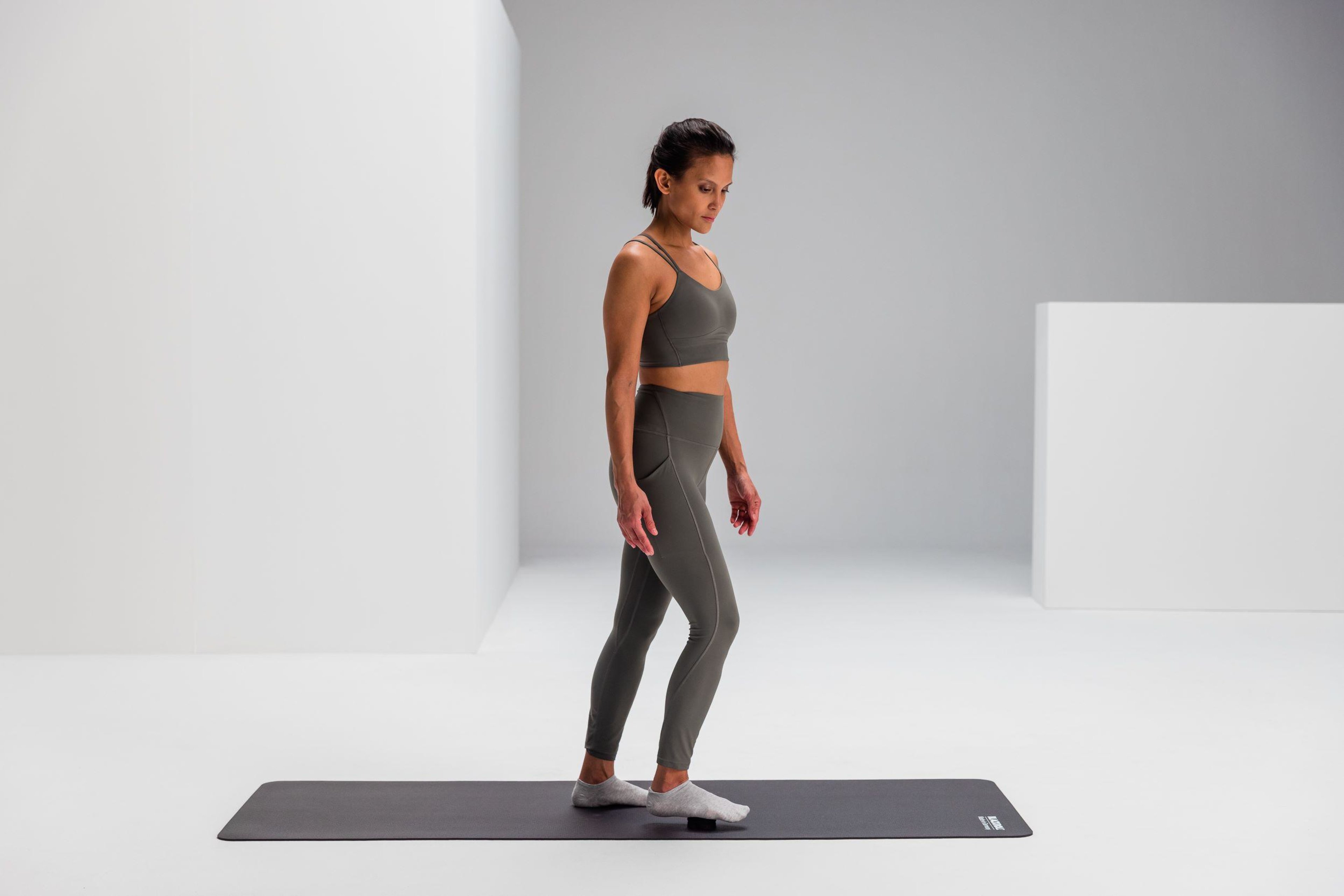
Stand in a relaxed position or sit on a chair. Place a MINI or TWISTER in the center of the sole of your foot. Apply as much pressure as you can comfortably tolerate, and slowly move your foot back and forth on the roller.
2. Shin Splints
- Cause: Overuse of the tibialis anterior muscle due to changes in forefoot load.
- This condition often occurs in runners who have switched to running or who have increased their running mileage too quickly.
Recommended exercises:
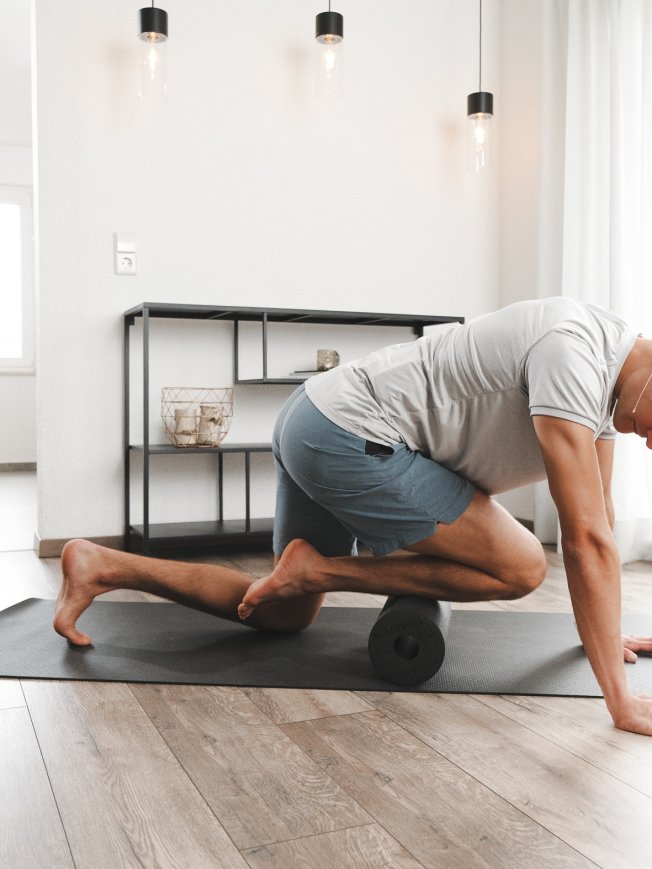
Mobilization of the shin muscles
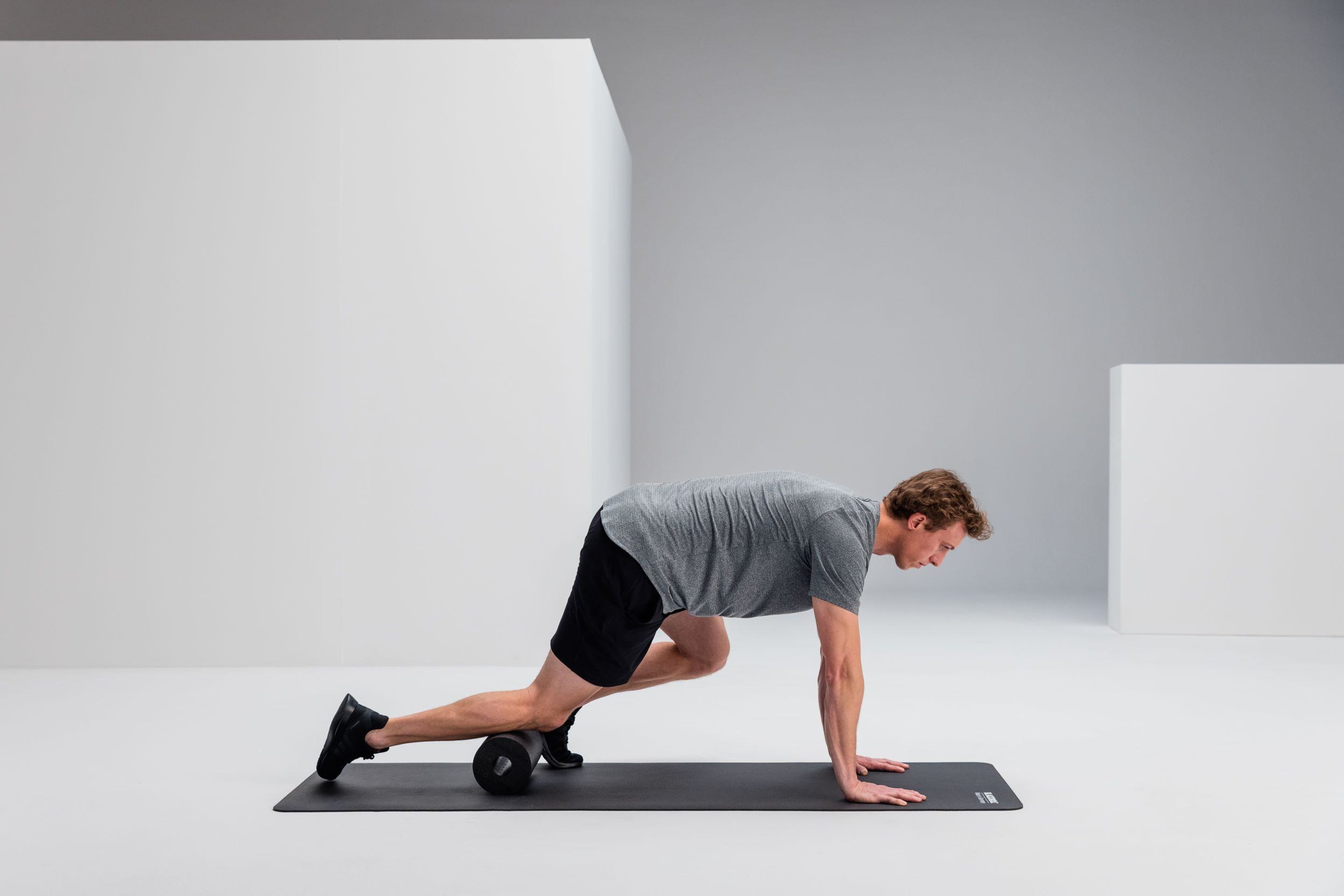
Start on all fours. Place your shin on the FASCIAL ROLLER. Rotate your foot slightly inward. Slowly roll your shin from the knee to the ankle.
Calf Stretch
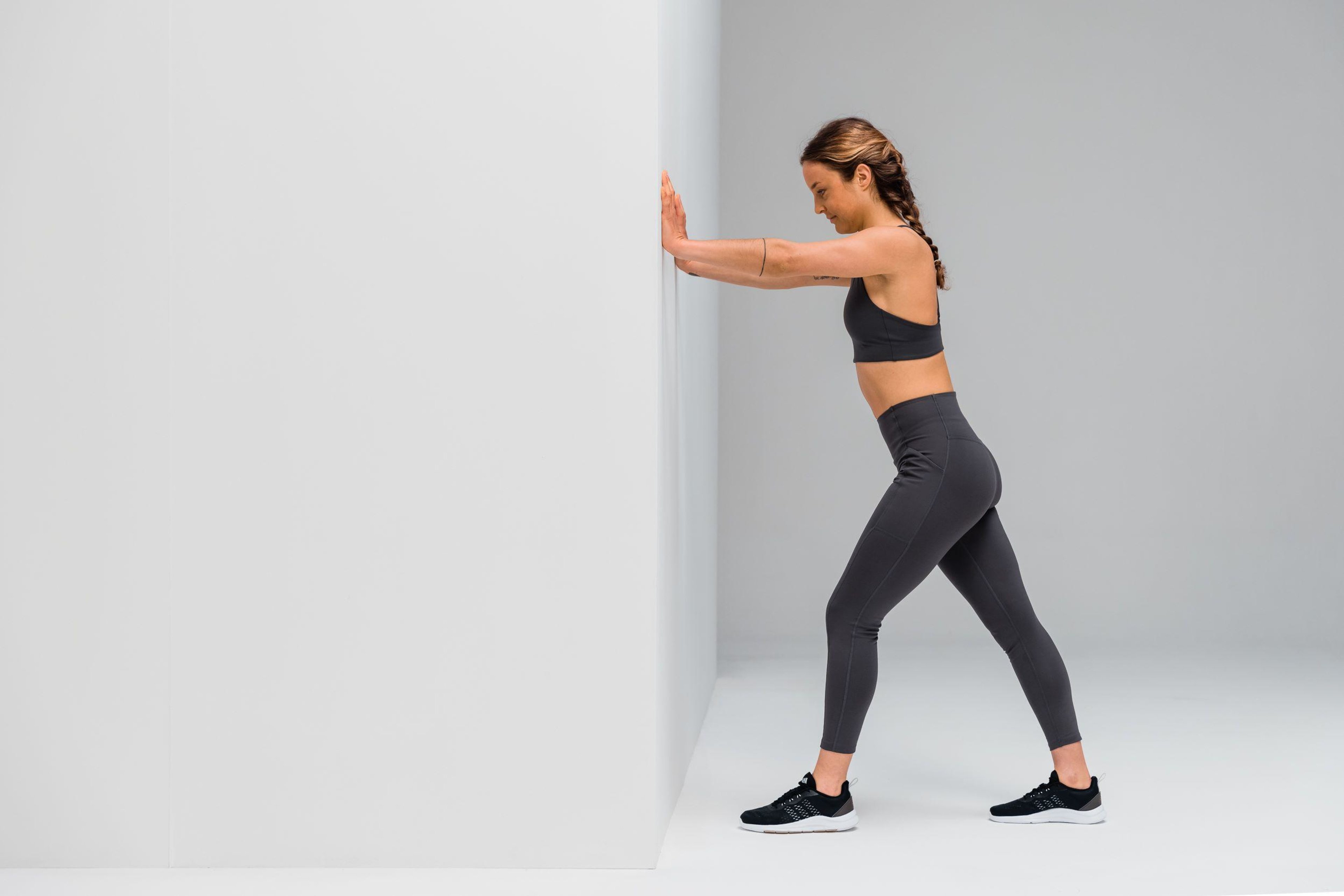
Stand in a lunge position facing a wall and support yourself with your hands. Make sure the entire sole of the back foot is flat on the floor and the knee is straight. Now shift your body weight onto your front leg until you feel a distinct stretch in your calf. This exercise can help relieve tension in your calf muscles and increase the flexibility of your ankle joint.
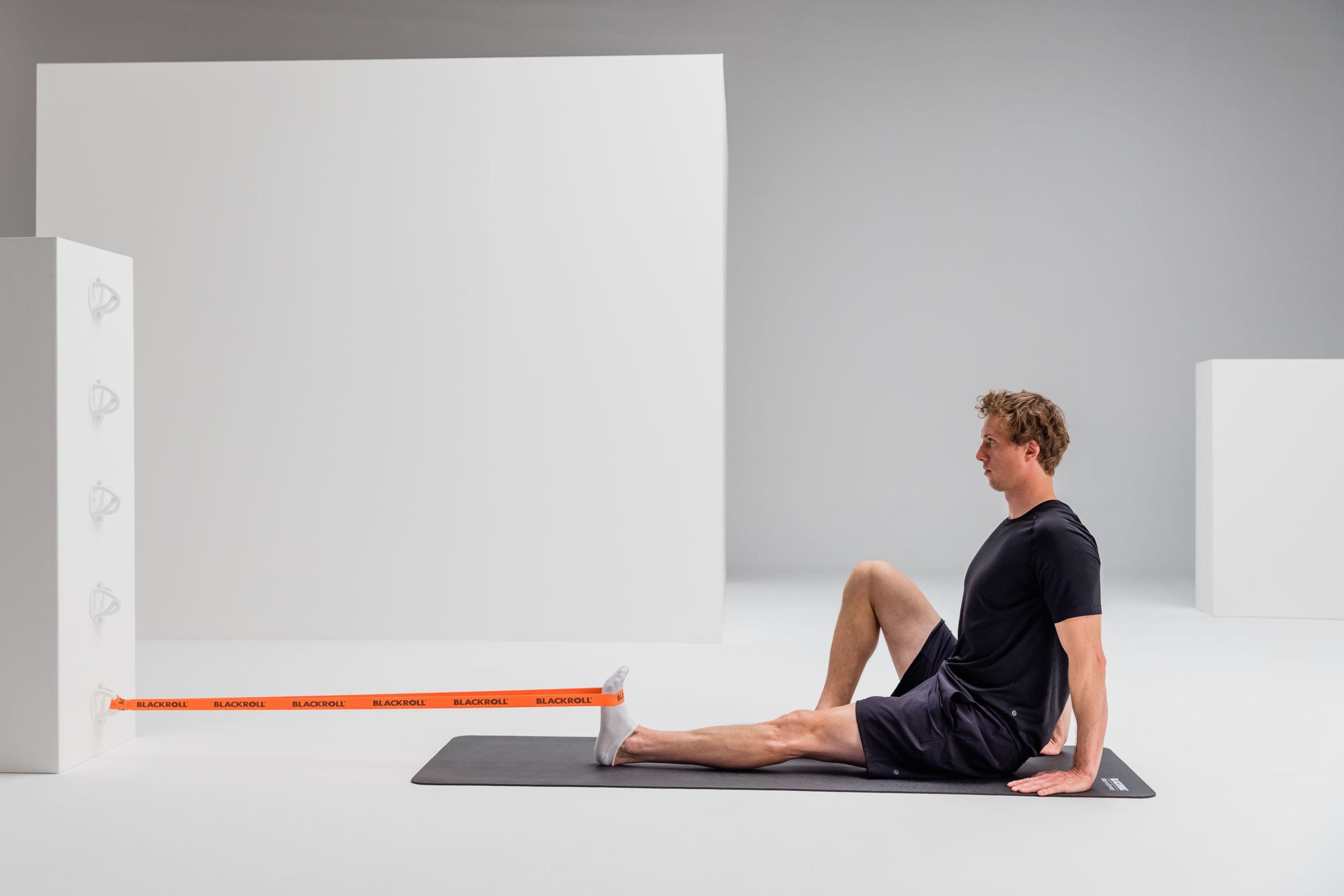
Shin Activation
Sit in a long sit position. Place a SUPER BAND around the tip of one foot. Actively move your ankle so that the tip of your foot alternates between pointing toward you and away from you. Hold the end position for two to three seconds before moving the tip of your foot away from you again.
More Interesting Articles on Running Injuries

3. ITBS (Iliotibial Band Syndrome)
- Cause: Slightly altered leg axis mechanics and propulsion in shoes with carbon plates, which lead to uneven stress on the lateral knee joint.
- Particularly common among runners with hip instability.
Recommended exercises:
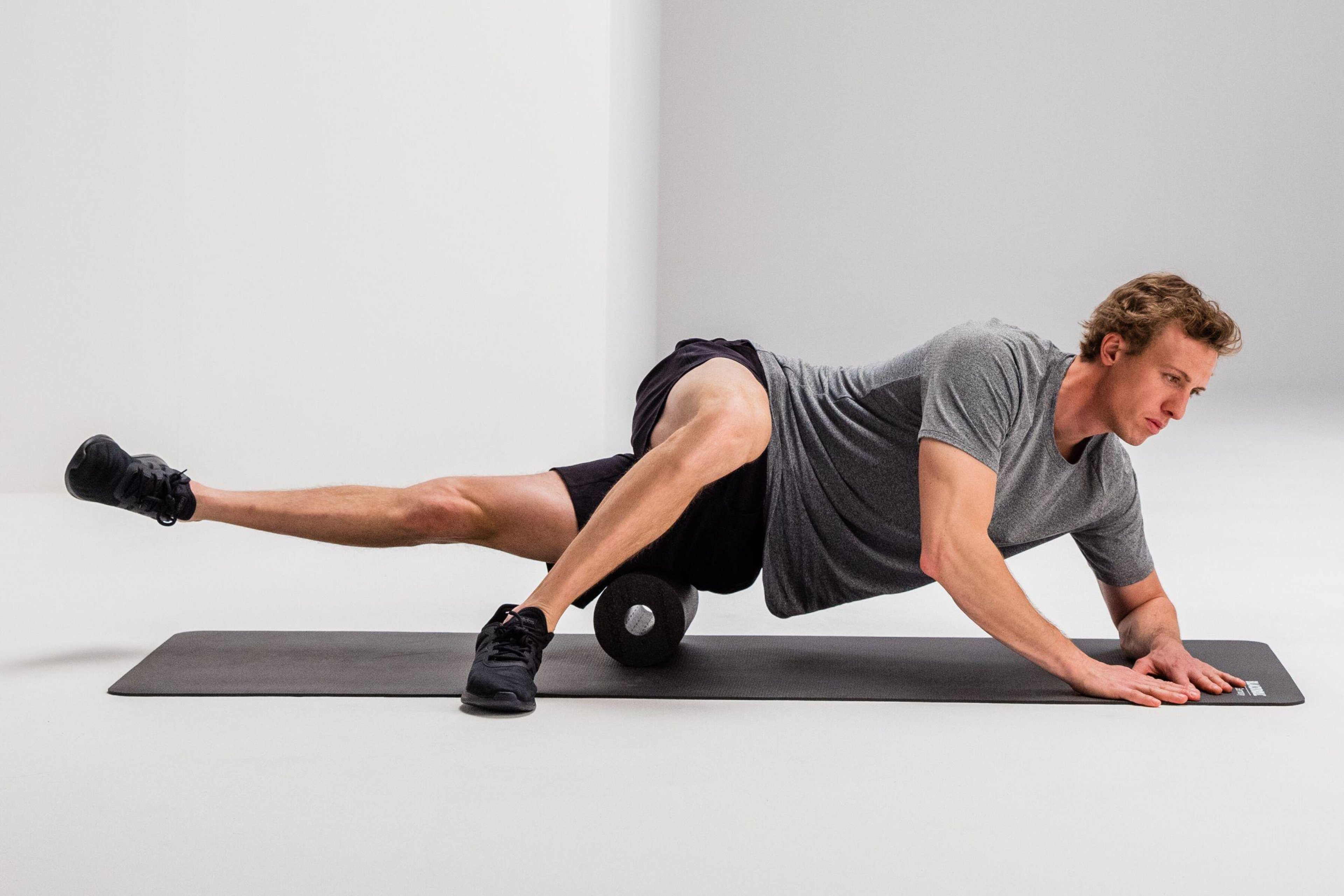
Fascia massage on the outer thigh
Lie on your side in a forearm-support position with the outer side of your thigh on the FASCIAL ROLLER so that it is centered on your thigh. Now push and pull yourself back and forth on the roller using your opposite leg and arms, so that the roller moves along your iliotibial band and the muscles on the outer side of your thigh. Also shift your position slightly forward so that the outer portion of your front thigh muscles is rolled as well.
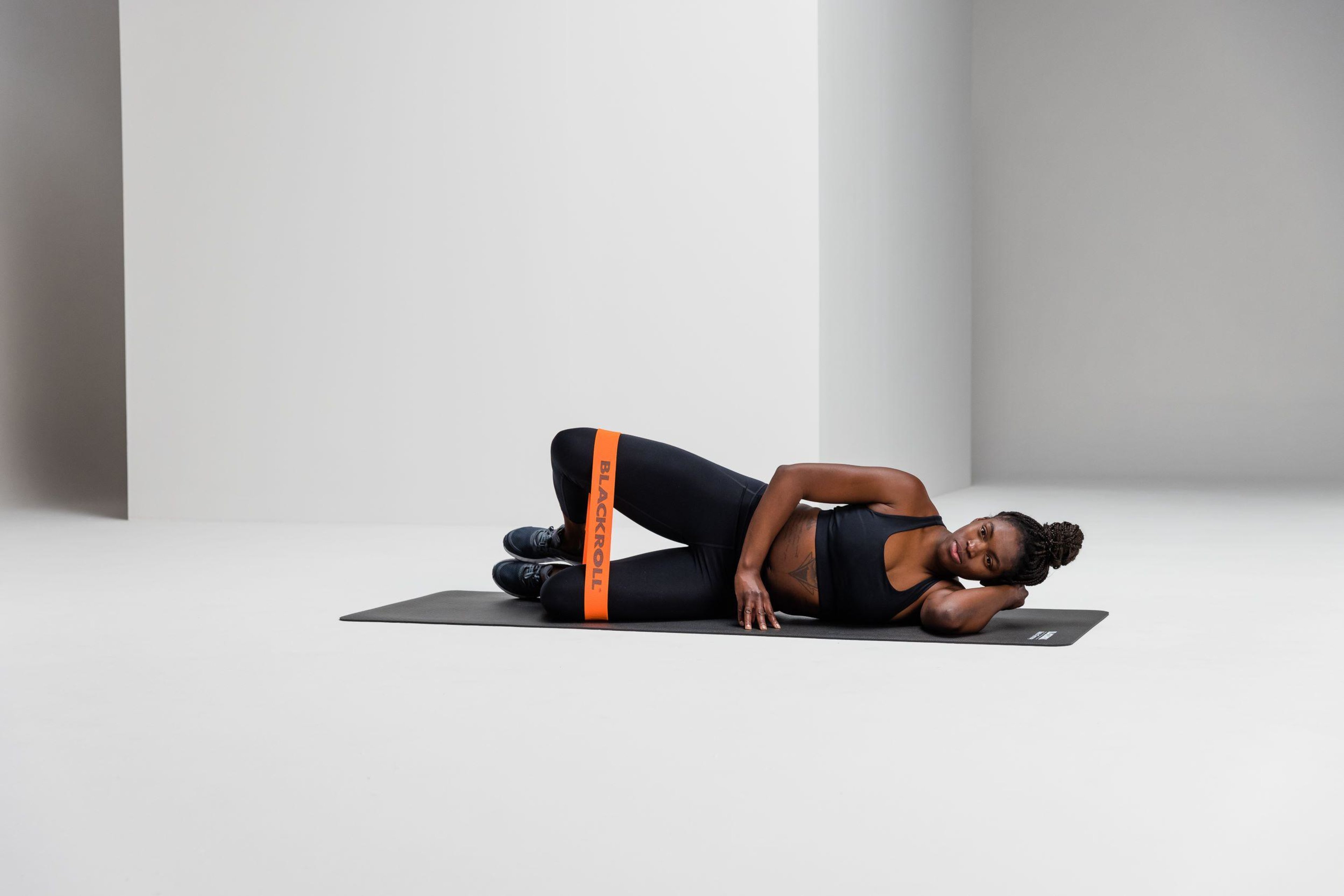
Activating the Hip External Rotators
Pull the LOOP BAND over your bent legs and position it above your knees. Lie on your side and bend your hip at about a 45° angle. Lift your top thigh and rotate it outward. Hold the thigh in the end-range contraction for up to six seconds, then return to the starting position.
Runner’s Knee Stretch: Stretches Your IT Band
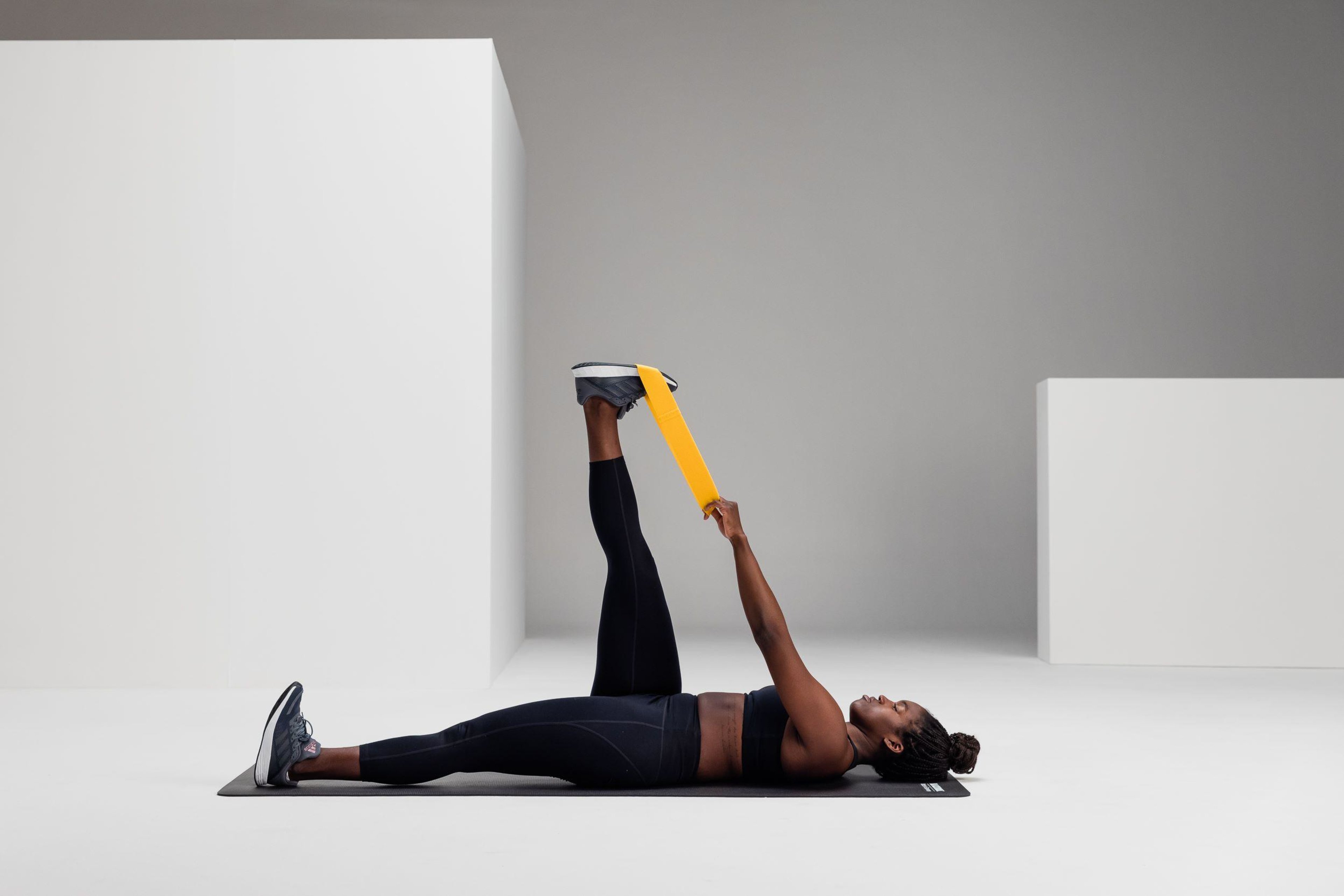
Start in an upright seated position and loop the SUPER BAND or LOOP band around your foot. Grasp the band with both hands. Slowly lie on your back and place both legs on the floor. Actively lift the leg with the SUPER BAND as high as possible and let it drop inward. Use the band to pull your leg further into the stretch and hold this position.
04 Who is this shoe designed for?
1. Ambitious recreational runners and professionals
- Especially those who train regularly (several times a week) and work systematically on their running technique and performance improvement.
- Ideal for races (e.g., 10 km, half marathon, marathon) where achieving personal bests is key.
- Thanks to improved energy return, these athletes can make the most of their running economy.
2. Runners with strong foot and leg muscles
- Stable calf, thigh, and gluteal muscles are essential, as the biomechanical demands are increased by the “forward roll” of the carbon plate.
- People with well-trained foot muscles are better able to cope with the altered pressure distribution and instability.
3. Runners with good technique (midfoot/forefoot running)
- The shoe primarily supports propulsion during midfoot or forefoot running.
- Heel strikers: may experience problems or run inefficiently due to the heel-to-toe drop and instability.
Who is this shoe not suitable for?
1. Beginner runners
- Poor running form, weak foot muscles, and a lack of stability can lead to overexertion and injuries.
- The rapid motion patterns of carbon plate shoes can overtax the musculoskeletal system.
2. Runners with existing issues (e.g., Achilles tendon problems, knee problems)
- The altered biomechanics and increased stress on certain structures can cause these conditions to worsen.
- The Achilles tendon, the knee joint, and the lower back are particularly at risk.
3. Heavy runners (above-average body weight)
- The highly cushioned midsole may provide less stability, which increases the risk of twisting an ankle or overpronation.
05 What should you train—or which muscles or structures should you focus on—to be able to run in such a shoe without getting injured?
Here are two recent scientific studies that examine the effect of high-performance running shoes (“super shoes”) on biomechanics and provide recommendations on which muscles runners should train to use these shoes safely and injury-free:
The Impact of High-Performance Running Shoes on Biomechanics
A study examines how modern running shoe technologies influence the biomechanical stress on the lower extremities. It shows that certain shoe designs can increase the stress on the Achilles tendon and the knee joint, which raises the risk of overuse injuries.
Recommendation: Runners should specifically strengthen their calf muscles (gastrocnemius and soleus) as well as their thigh muscles (quadriceps) to compensate for the additional strain caused by high-performance shoes and prevent injuries.
Muscle Activation with Different Shoe Sole Hardnesses
Another study analyzed the effects of running shoes with different sole hardness levels on muscle activation. It was found that shoes with harder soles cause increased activation of the vastus lateralis (part of the quadriceps) and reduced activation of the gluteus maximus.
Recommendation: To avoid muscular imbalances, runners should strengthen both their thigh muscles and their gluteal muscles (gluteus maximus) through targeted training.
Training Tips for Safe Running in High-Performance Shoes
Based on the study results, runners should specifically train the following muscle groups:
- Calf muscles (gastrocnemius, soleus): For shock absorption and propulsion.
- Thigh muscles (quadriceps): To stabilize the knee joint.
- Gluteal muscles (gluteus maximus): For hip stability and efficient propulsion.
- Core muscles: To maintain a stable running posture.
Recommended exercises:
- Calf Raises
- Squats
- Lunges
- Glute bridges
- Planks
Note: Targeted strength training 2–3 times a week can help strengthen the muscle groups mentioned and reduce the risk of injury when running in high-performance shoes.
It is important to introduce high-performance shoes gradually and adjust your training accordingly to optimally prepare your body for the changed biomechanical demands.
Conclusion: Innovation Meets Running Comfort
The running shoe industry has reinvented itself with the introduction of carbon plates and rocker soles. If you want to beat your personal best, run more efficiently, and experience less fatigue on long distances, you can’t really ignore this running shoe trend.
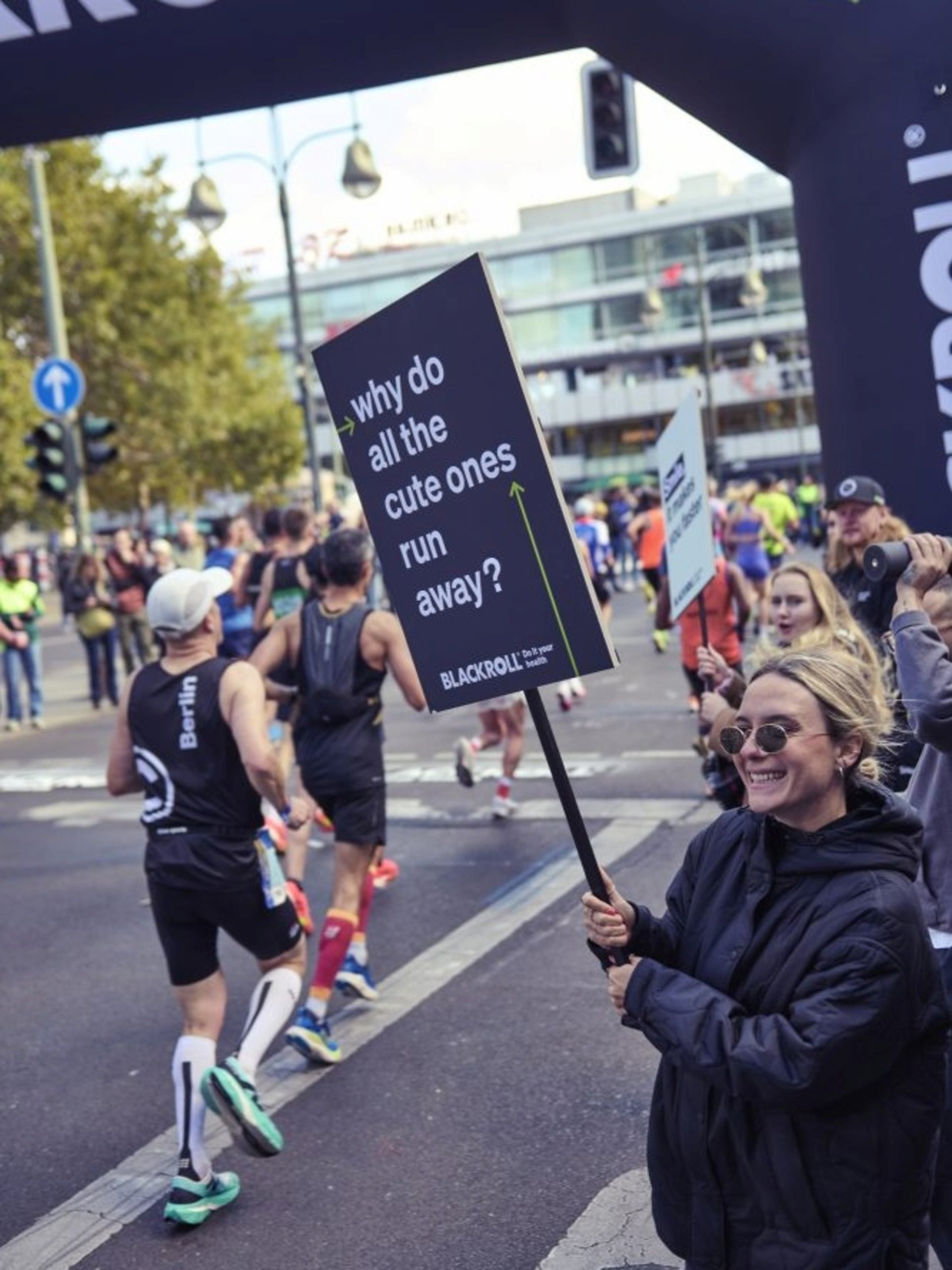
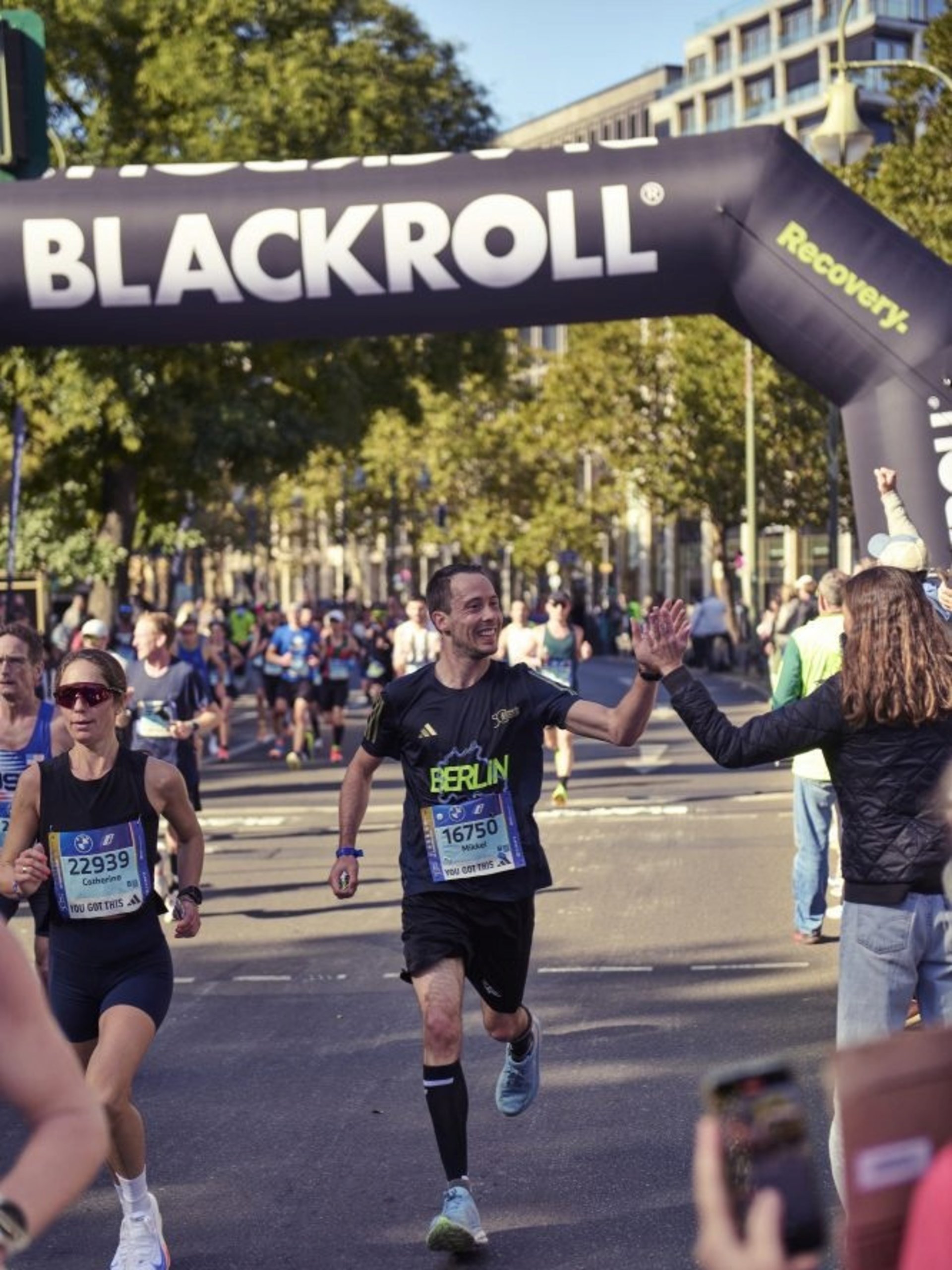
And for anyone who also wants to work on their recovery, the motto is: After the run is before recovery—with BLACKROLL.
Sources & Studies
How New Running Shoe Technologies Influence Biomechanics and Injury Outcomes in Recreational Runners
Effect of High-Elasticity Running Shoes on Biomechanical Factors