Foam roller, massage gun or double ball? A comparison of tools

Fascia tools have different areas of application and can be used specificallyin fascia training: foam rollers target larger muscle groups, fascia balls are suitable for localised massage and massage guns are designed for vibration-based applications. Which variant is right for you depends on the area of the body, your goal and your level of experience.
‘Recent studies show that the differences between foam rollers, fascia balls and massage guns are often smaller than many advertising claims suggest. Success often depends less on the tool itself than on correct application, regular use and selecting the right tool for the specific area of the body.’
Dr rer nat Torsten Pfitzer, Holistic Pain Expert and Health Coach

Key points at a glance:
- Foam roller (£12.41–£24.90): covers the most surface area per minute, is also suitable for strengthening and stabilisation exercises – but doesn't target individual areas of tension with pinpoint accuracy
- Fascia ball (£14.90): reaches trigger points and deeper structures where the roller is too coarse – but is time-consuming for large muscle groups
- Double ball (£19.90–£24.90): the only way to work both sides of the spine simultaneously without pressing on the spinous processes, should you be sensitive in this area
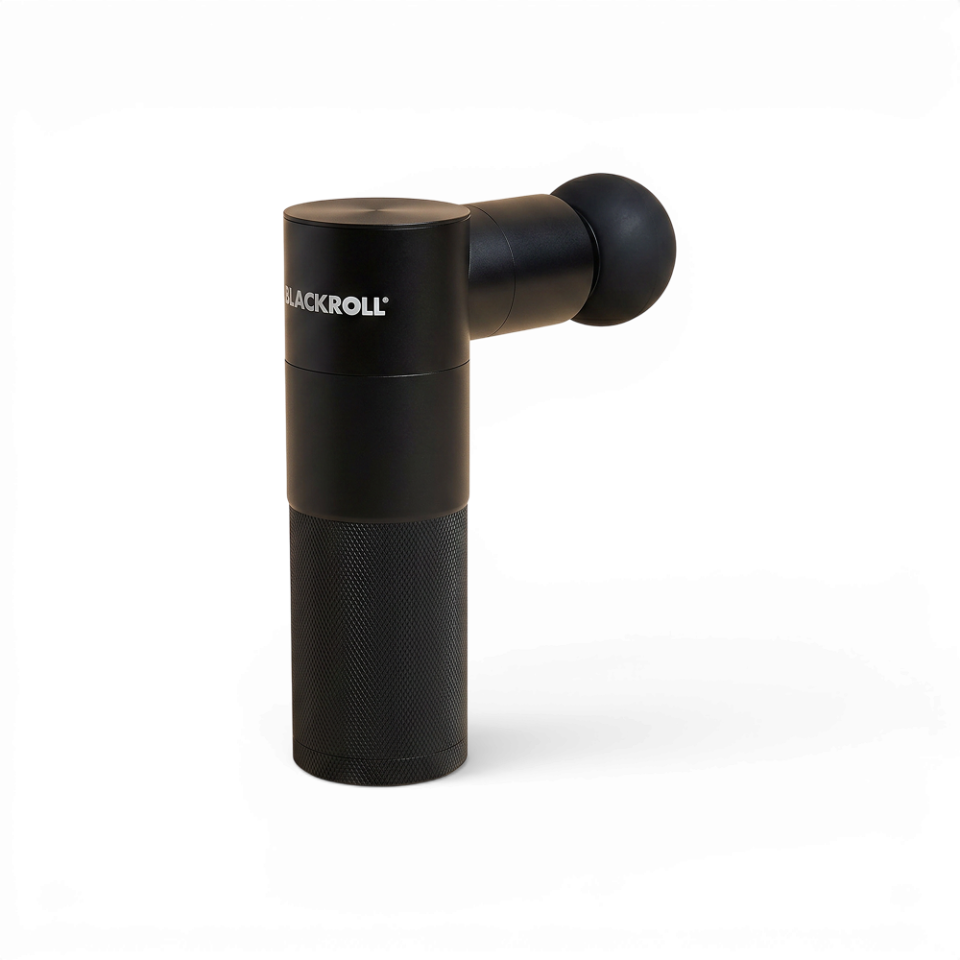
- Massage gun (£149.90): works without any effort on your part and via slightly different mechanisms of action, but costs five to ten times as much as the other tools
Effectiveness: When it comes to muscle soreness, none of these tools has so far been proven to be more effective than simply resting – choose based on ease of use and price, not on the hoped-for advantage in recovery
An overview of the four tool categories
Before you decide on a tool, take a quick look at the fundamental differences: rollers and balls work using your own body weight and pure pressure, whilst massage guns use motorised percussion (vertical force pulses).
These differences determine which tool suits your purpose best.
Foam roller – the entry-level tool for large areas
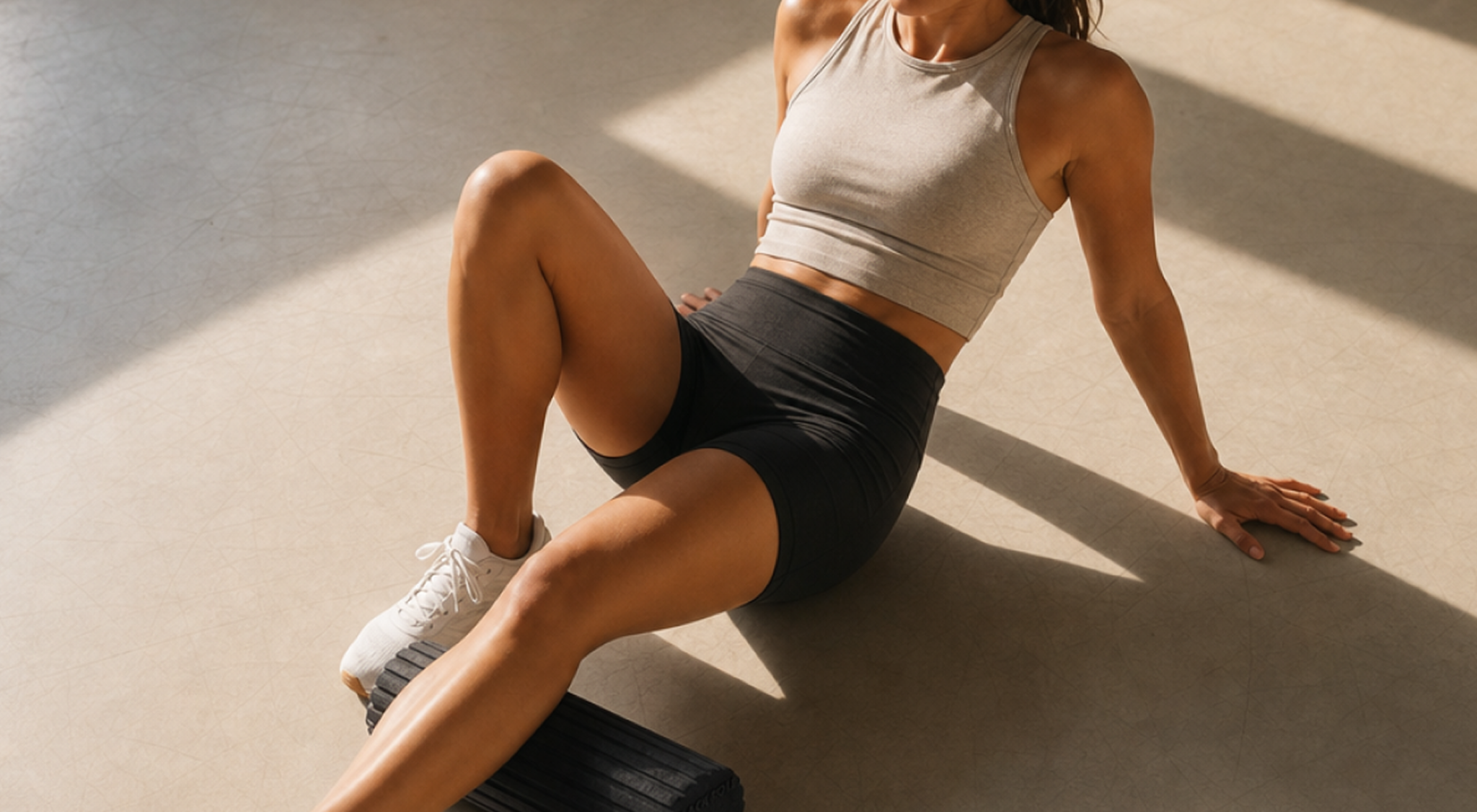
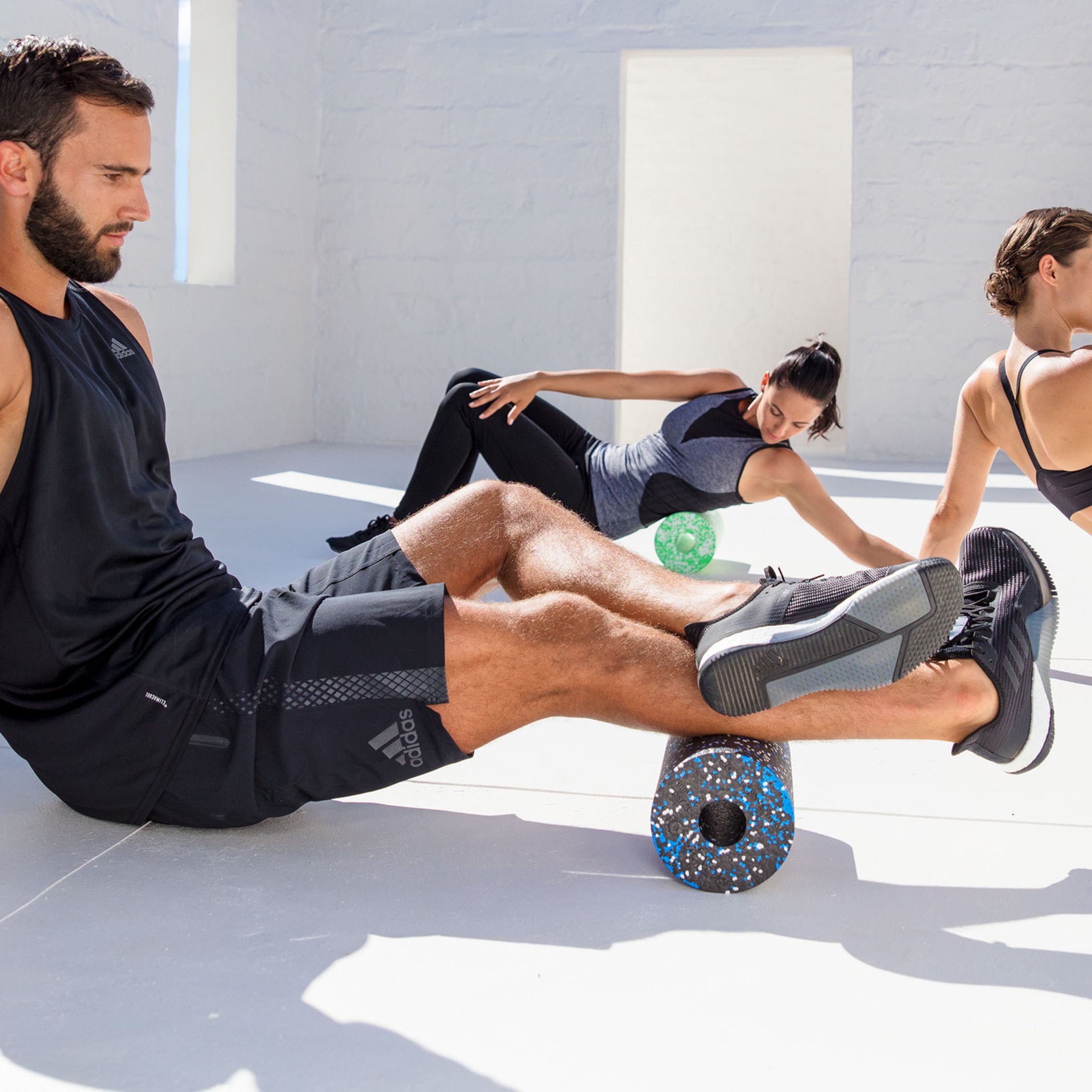
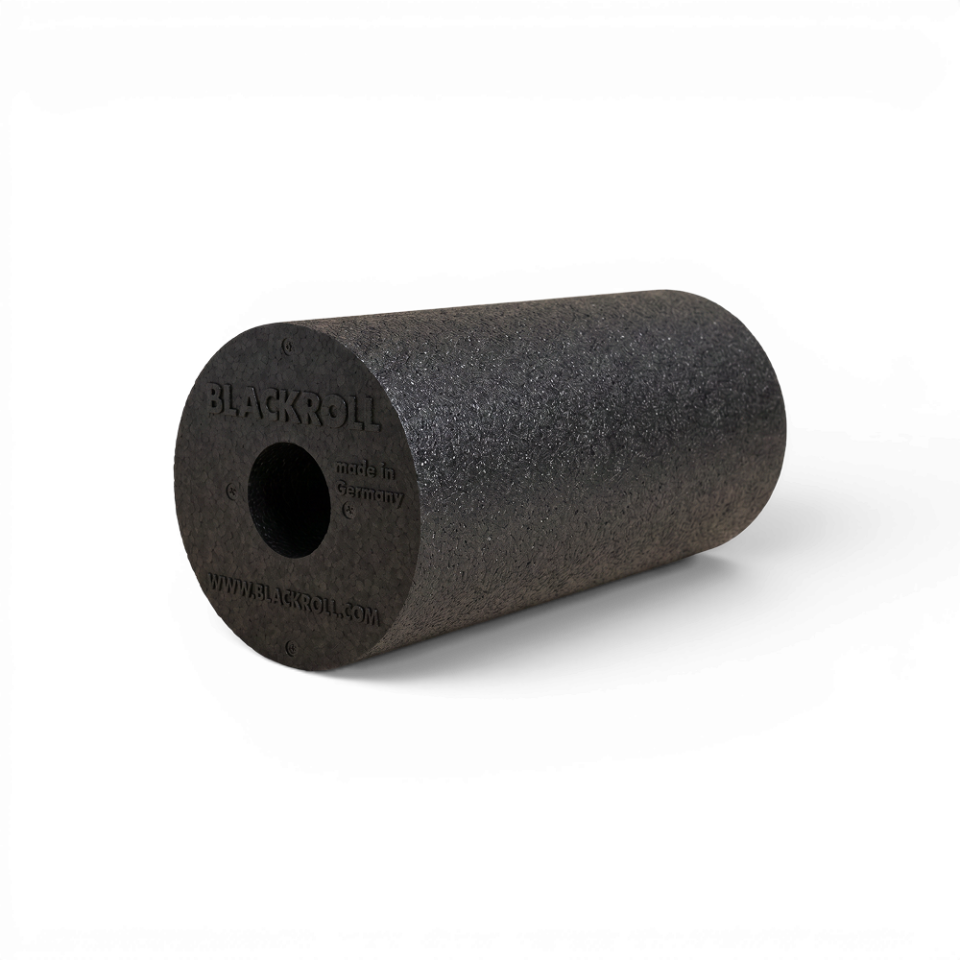
Use your body weight to roll over larger muscle groups such as the thighs, calves or back. It’s the most affordable option, can also be used for strengthening and stabilisation exercises and covers large areas that neither a ball nor a gun can reach in the same amount of time.
- Product: STANDARD (from £29.99) or MINI (from £14.99) for when you’re on the go.
- Exercise routine: ‘Foam rollers exercises’, 23 min, 7 exercises.
Fascia ball — when precision is key
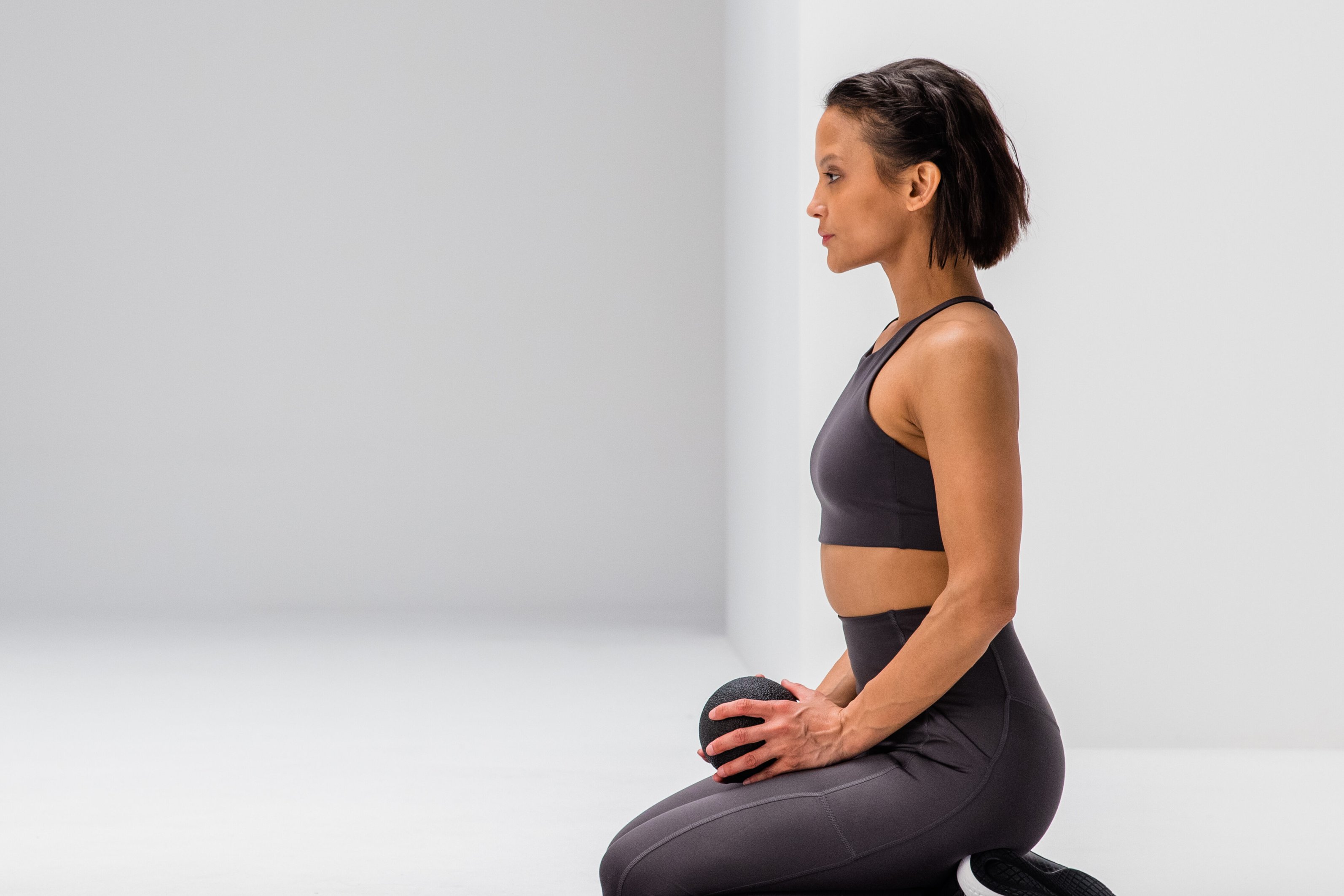
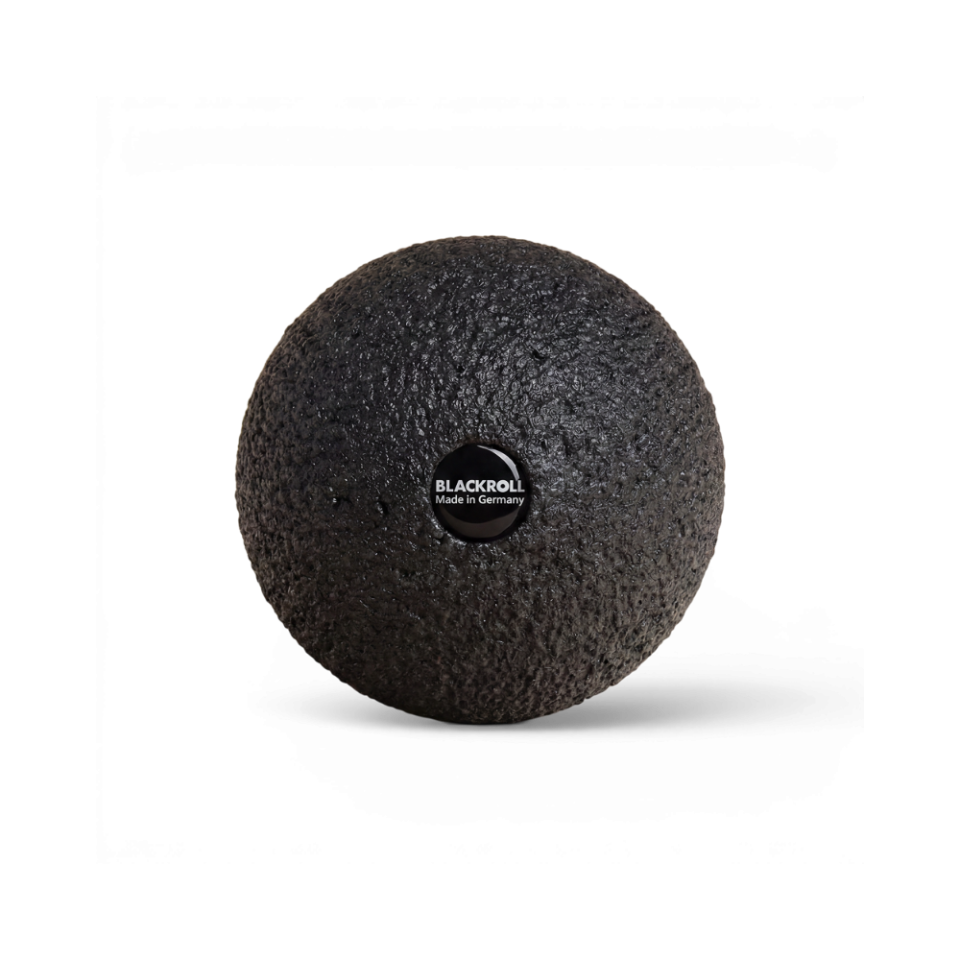
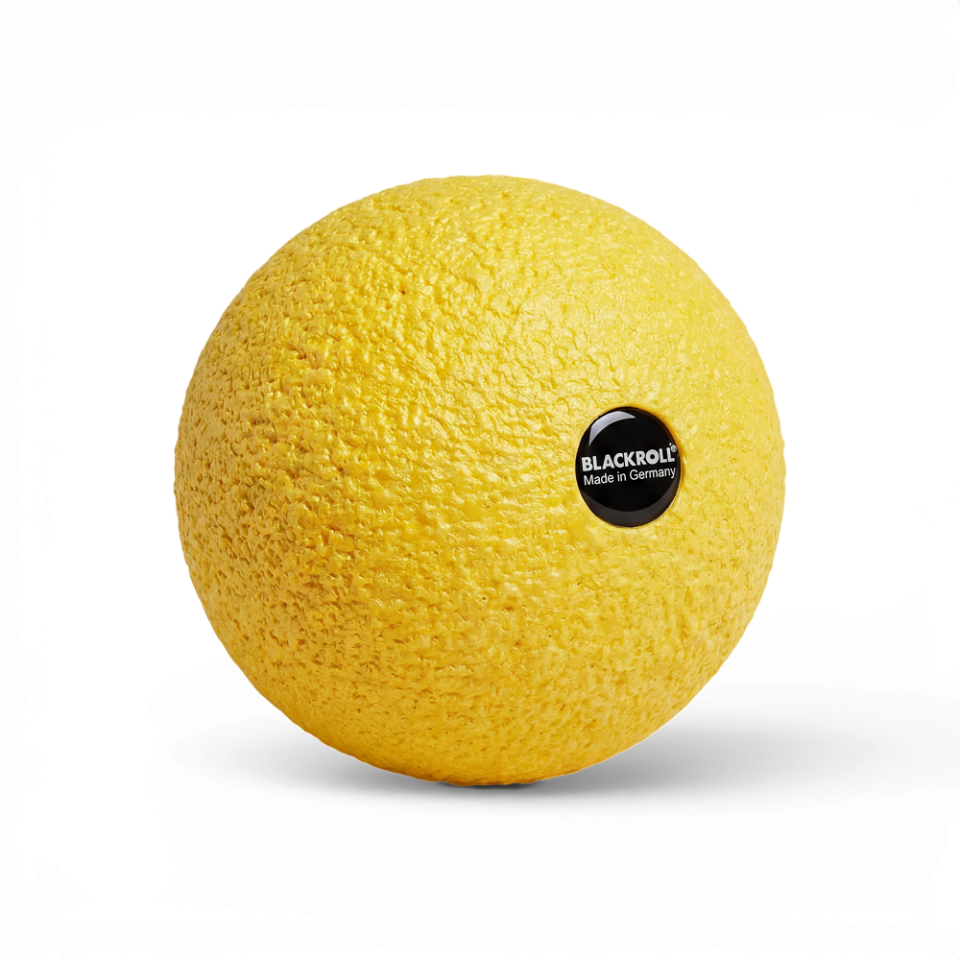
The fascia ball targets individual trigger points — for example, in the neck, chest, shoulders or the soles of the feet. It's small and light enough to fit in any bag, and that's precisely where its advantage over the roller lies: it reaches areas and deeper layers of tissue where a roller works over too large an area.
- Product: BALL 08 (£14.90 incl. VAT).
- Exercise routine: ‘Fascia ball: The best exercises for at home’.
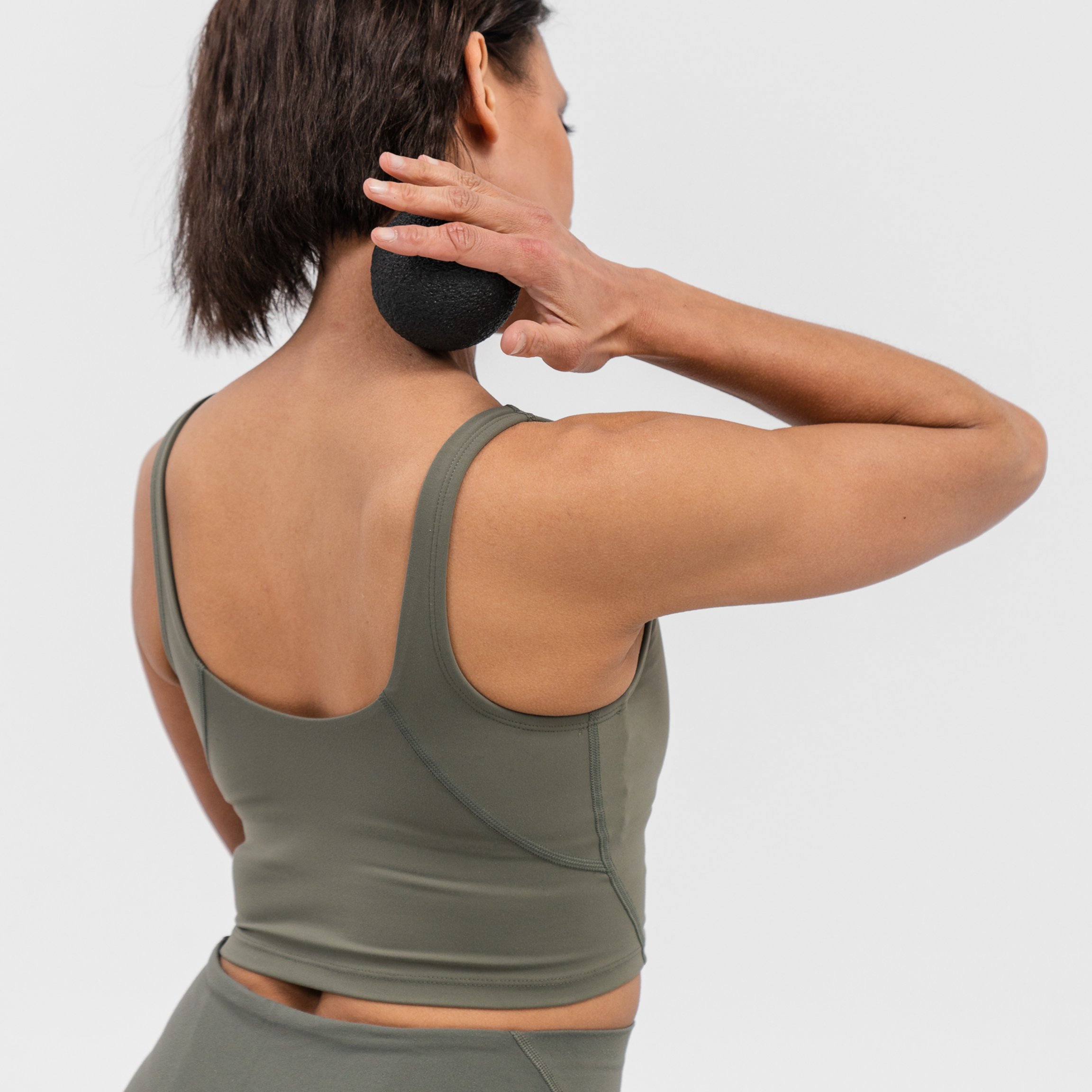
Double ball (DUOBALL) – symmetrical areas along the spine
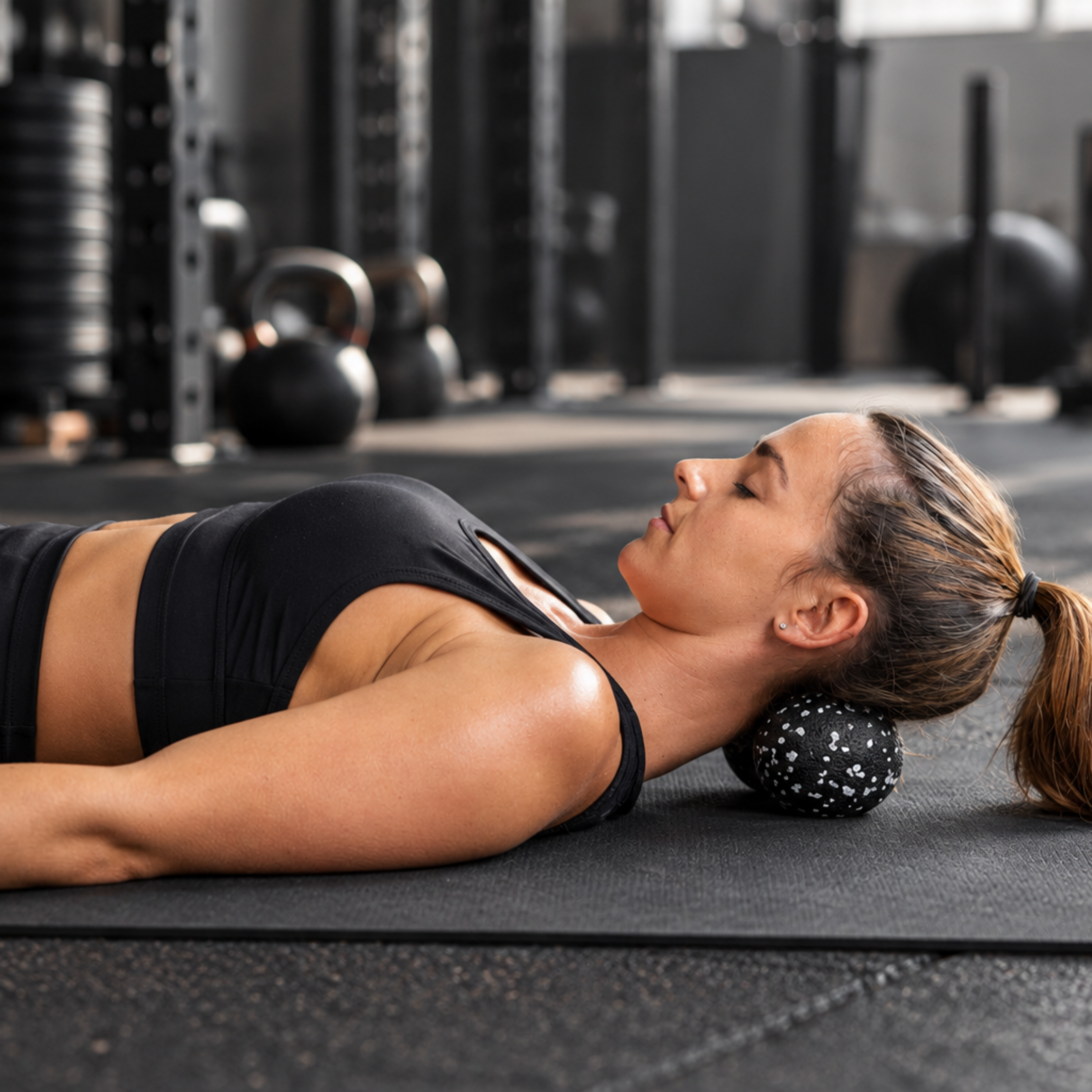
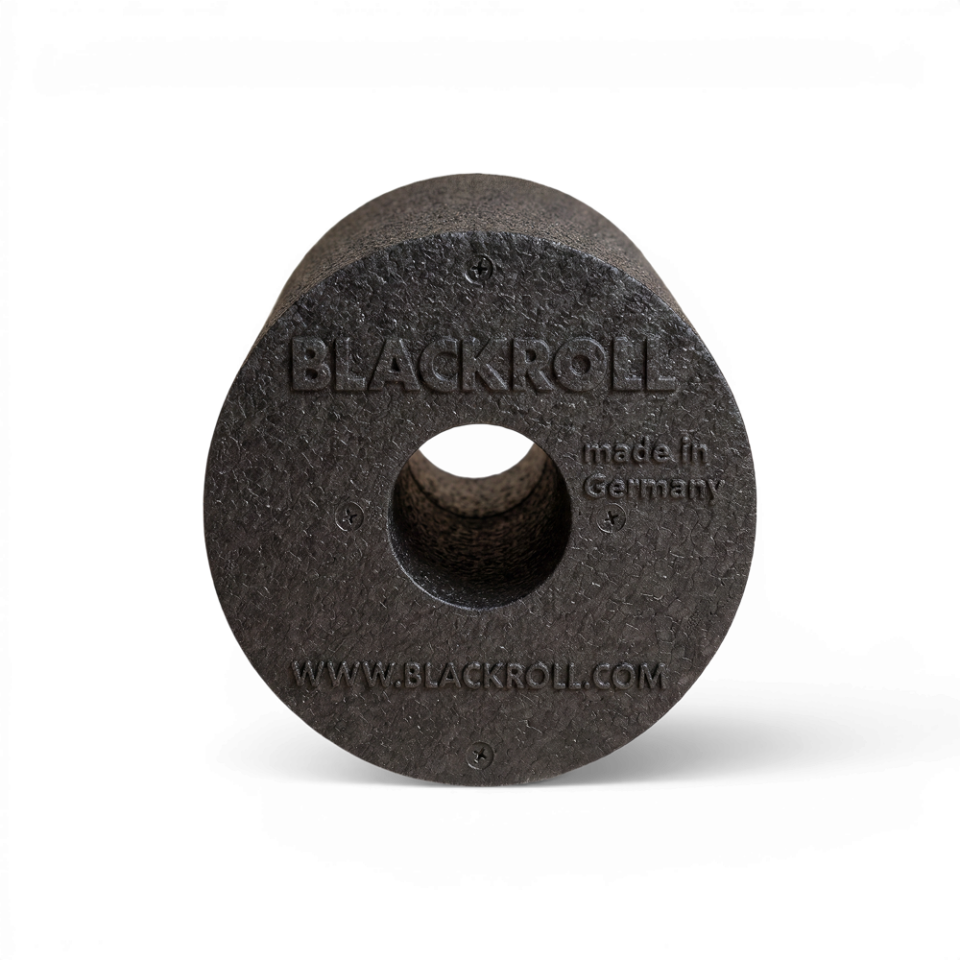
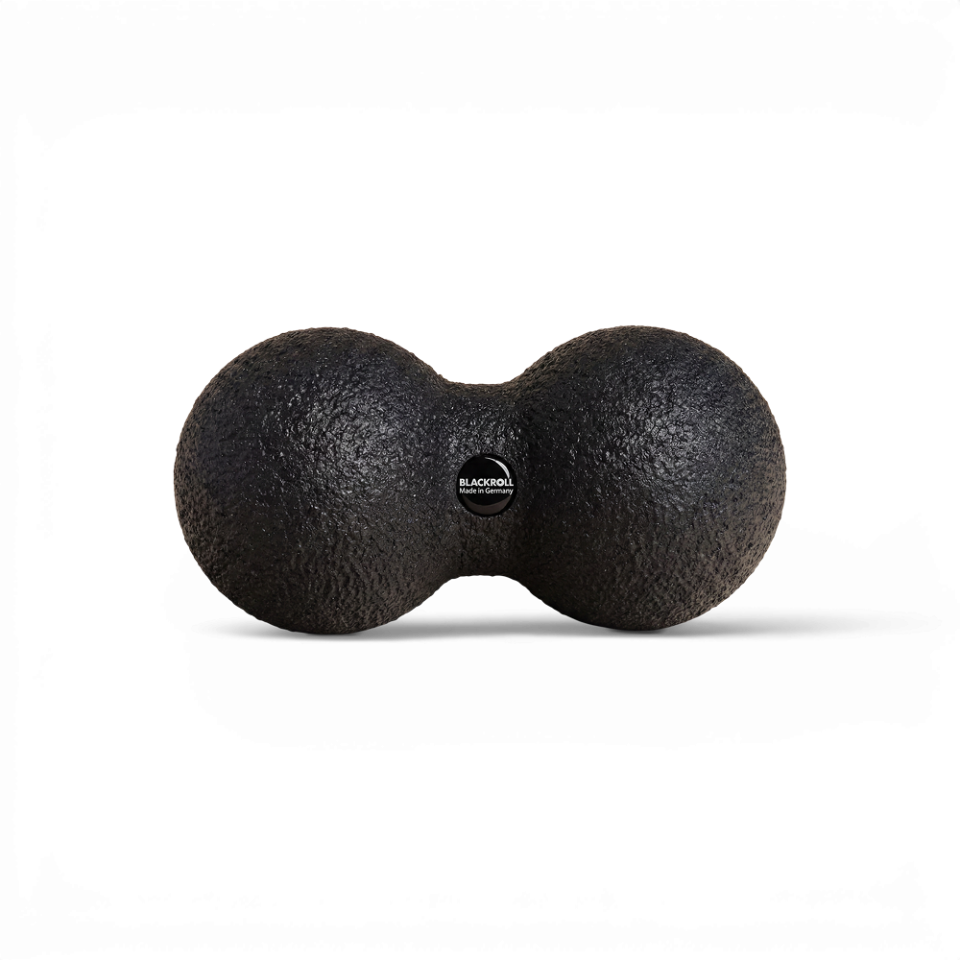
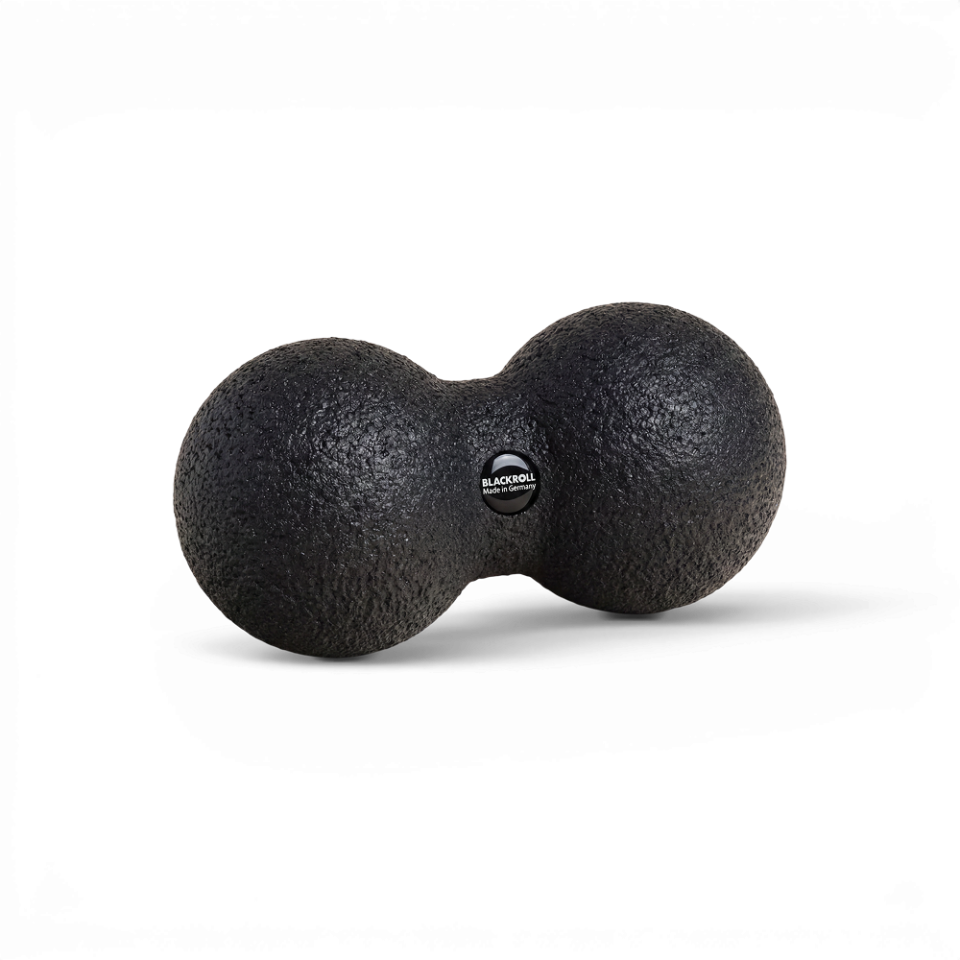
The double ball comprises two firmly connected balls with a recess in the middle, enabling it to work on both sides of the spine simultaneously without exerting direct pressure on the spinous processes — an area that neither a roller nor a single ball can reach as precisely and safely at the same time.
- Choose from two sizes: DUOBALL 08 (£16.57) and DUOBALL 12 (£20.74) for broader backs.
- The ‘Fascia Double Ball: The Best Exercises’ guide demonstrates the appropriate exercises .
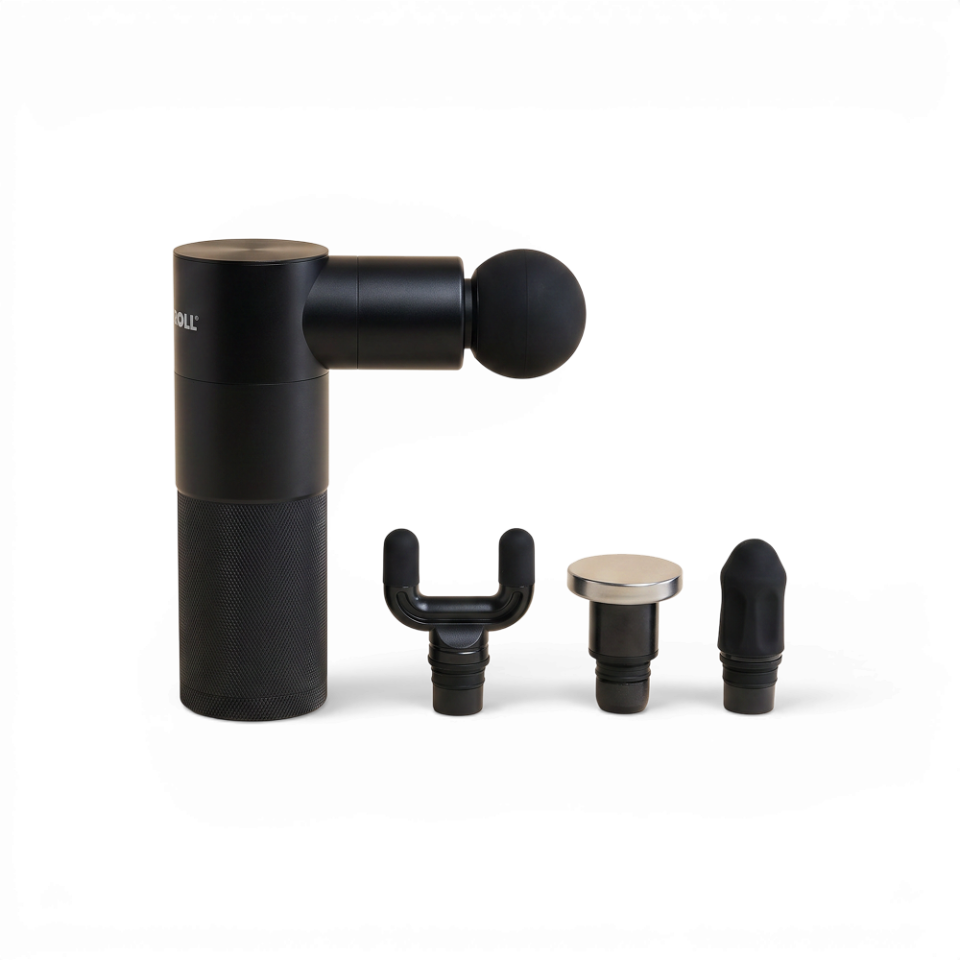
Massage gun – comfort comes at a price
The massage gun delivers fast, pulsating vertical vibrations (percussion) that reach deep into the tissue. Simply hold it against the relevant area — you don’t need to use any of your own strength. However, for large areas such as the entire back, it performs less well than a roller and costs many times as much.
- The BLACKROLL FASCIA GUN (£119.99 incl. VAT) is the Stiftung Warentest test winner.
- For guidance, see ‘Massage gun: tips for correct use’, 65 min, 7 step-by-step routines.
The four tools vary in price by more than a factor of ten – from £14.90 (incl. VAT) for the Fascia ball to £149.90 (incl. VAT) for the Massage gun.
This overview shows you what you get for your money with each product:
Tool | Price | Best use | Intensity/firmness level | Suitable for travel |
|---|---|---|---|---|
Foam roller | £14.90–£29.90 (incl. VAT) | Back, thighs, lower legs and arms | Adjust the firmness level to suit your pressure preference. | Yes with Mini, limited with STANDARD |
Fascia ball | £14.90 | Chest, shoulder girdle, arms and soles of the feet | It's selective and very targeted. | Yes |
Double ball | £19.90–£24.90 | on both sides along the spine, neck and calves | selective, symmetrical | Yes |
Massage gun | £149.90 (incl. VAT) | targeted deep-tissue massage, on the go, in combination with the other tools | It’s continuously adjustable for both frequency and amplitude. | Subject to certain limitations (battery, size, weight). |
View products
‘Anyone who believes that the greater the pressure, the better the effect, is mistaken. According to current scientific understanding, what matters most is a suitably dosed mechanical stimulus that’s tolerated by the tissue. Excessive pressure doesn’t automatically improve the effect – it can even make the treatment unnecessarily uncomfortable. That’s why the right tool is usually more important than the hardest or most expensive one.’
Dr Torsten Pfitzer, Holistic Pain Expert and Health Coach


Which tool suits your symptoms?
Rather than being guided by the marketing jargon of various suppliers, focus on your specific problem:
- Back pain / tension in the lower back → Foam roller (for large areas) or double ball (use directly along the spine, without applying pressure to the spinous processes if you’re sensitive in this area)
- Chest and shoulder tension → Fascia ball for precise trigger point work
- Tight thighs or calves after training → foam roller — covers a large area and represents good value
- Localised, stubborn trigger points → massage gun with a pointed attachment or fascia ball
- Short on time and not keen on floor exercises → Massage gun (works whilst seated, without using your own body weight)
- Travelling or office, limited space → MINI roller or Fascia ball
Suitable exercises


What the research says: is one tool more effective than another?
No study to date has proven that a foam roller or massage gun is more effective than rest alone for treating muscle soreness. Sarac et al. (2024) compared these three conditions in a randomised controlled trial involving 36 recreational athletes following a specific fatigue protocol targeting the thigh muscles. No significant differences between the groups were observed in terms of pain perception or fatigue, either after 24 or 48 h.
In a further controlled study involving active adults, Leabeater et al. (2024) even found slightly greater perceived muscle pain following the application of a massage gun than in the control group (effect size d = –0.35 immediately afterwards, d = –0.48 after 4 h). However, the authors review the overall effects as unclear. To date there have been no comparable direct comparisons for the fascia ball and double ball.
This doesn’t mean the tools are useless. Many people find their application pleasant and relaxing — and that, too, can be a legitimate reason for using them. However, there’s currently no evidence of a measurable recovery benefit from any particular tool. Base your decision on comfort, price and intended use.
Value for money: is the more expensive massage gun worth it?
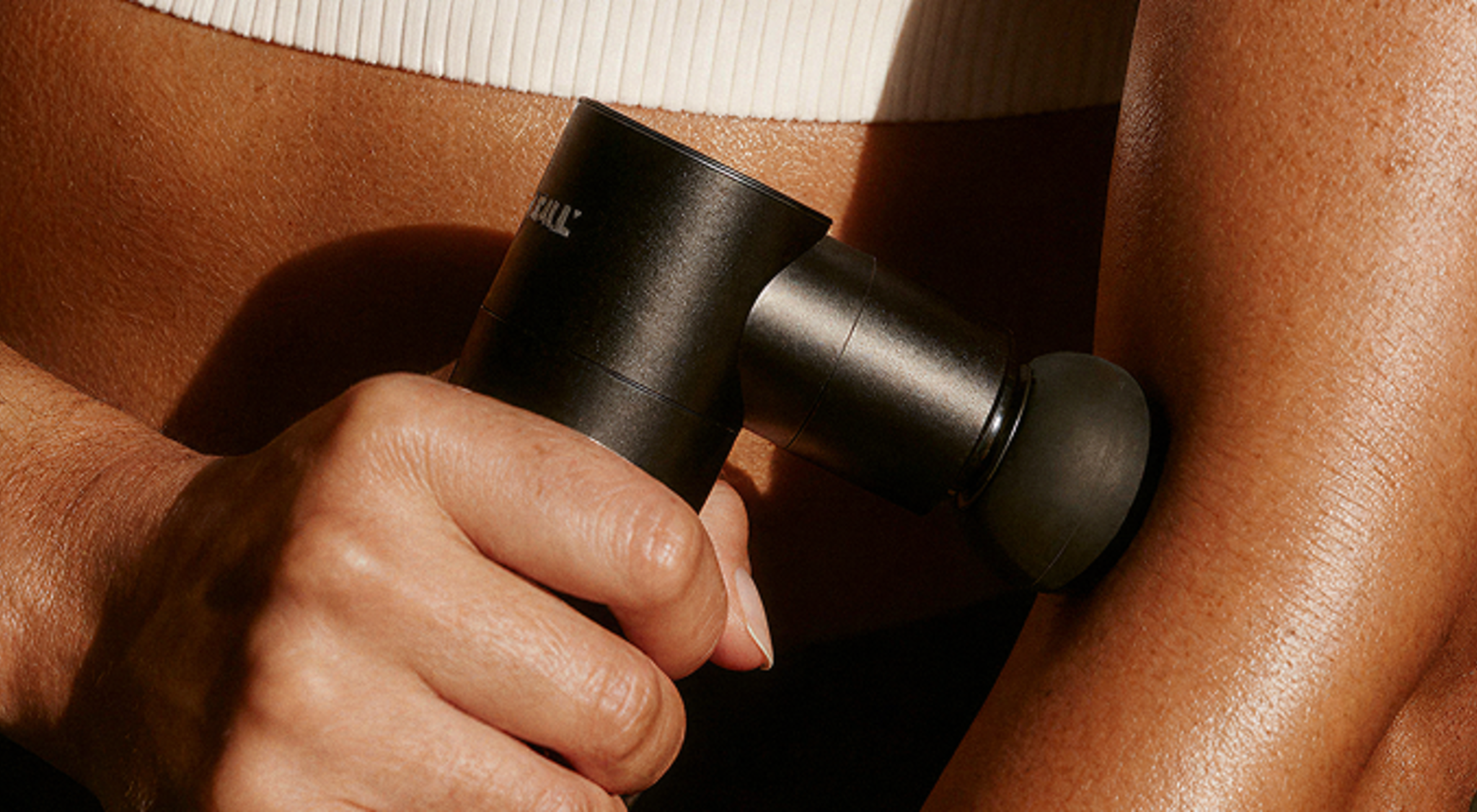
A massage gun costs roughly five to ten times as much as a foam roller or ball. That extra spend doesn’t buy you any proven additional benefits (see above), but it does buy convenience: different attachments for specific pain points and an application you can carry out whilst sitting down, without having to use your body weight. For large areas such as your entire back, though, you’ll reach your goal more quickly and cheaply with a roller.
If you only want to buy one tool and primarily have localised discomfort, a massage gun is a good choice. If you mainly want to work on large areas or are on a tight budget, a roller or ball is the more economical option.


Contraindications: when a particular tool is not suitable
Regardless of the tool you choose, the same basic rules apply:
- Hard contraindications (don't apply any tool): redness, swelling or acute pain – for example, in the case of fractures, thrombosis or open wounds
- Mild contraindications (consult a doctor on a case-by-case basis): osteoporosis, disc damage, recent joint replacement, blood-thinning medication and an increased risk of blood clots, pacemakers or other implanted medical devices, pregnancy
- For the massage gun, don't apply it directly to bones or joints (unless you're using a soft attachment) and avoid use if you have epilepsy. With the double ball and fascia ball, increase pressure gradually and don't press into acute pain points.
If you're unsure, consult your doctor.
Combine rather than choose one or the other
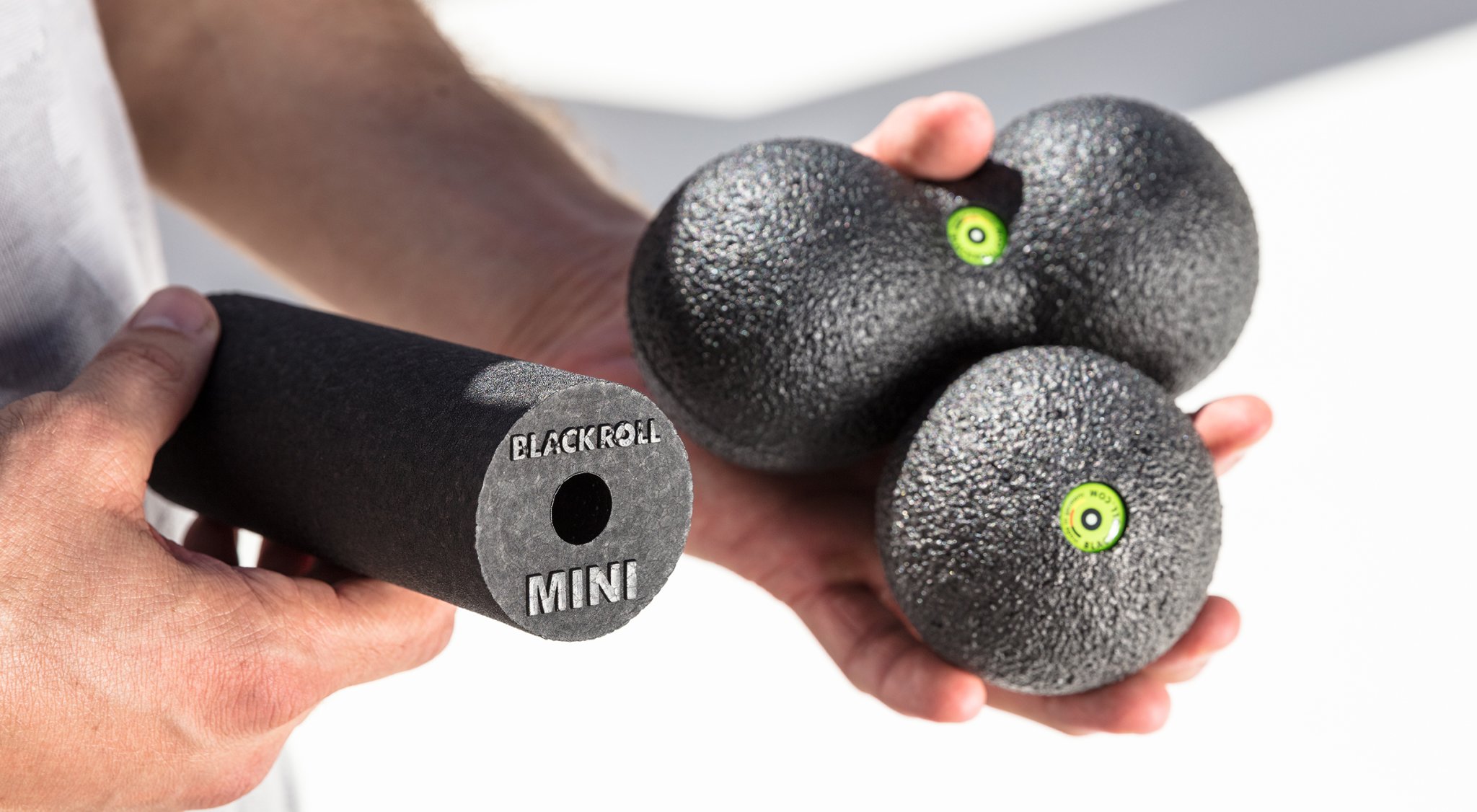
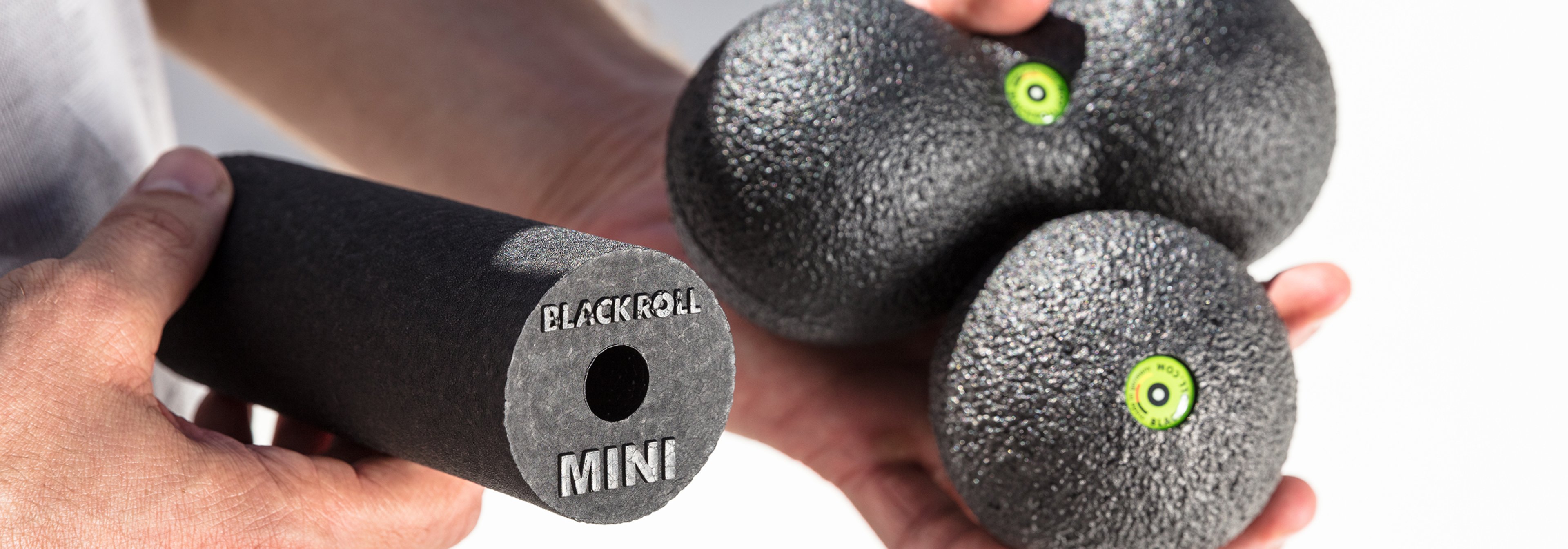
In practice, these tools aren’t mutually exclusive. A useful basic set for home use often consists of a foam roller for large areas and a ball or double ball for targeted follow-up treatment. If you also value comfort and quick application without having to exert much effort yourself, add a massage gun to the set — without replacing the more versatile and cheaper foam roller.
If you’d like to use all the tools in a full-body session, follow the ready-made routine in ‘Full-body fascia training: the best exercises’ (24 min, 12 exercises).
Courses and routines for your fascia

Frequently asked questions
Choose based on the area: for the neck and individual knotted areas in the shoulders, select the DUOBALL08 or Fascia ball; they target specific points with precision. For large areas of the back, use the roller; for along the spine, use the double ball. If symptoms persist or worsen, seek medical advice — no self-massage tool can replace a diagnosis.
No. A foam roller acts on muscle and connective tissue, not on the position of individual vertebral joints. What’s commonly referred to as a ‘blockage’ in everyday life is best left to a doctor or physiotherapist – manipulative techniques on the spine aren’t something you should carry out on yourself using a massage tool. Use the foam roller as a complementary aid to loosen the surrounding muscles. As the tissue relaxes you might involuntarily hear or feel a cracking sound in your spine; it's usually harmless but if it happens regularly and persistently seek an examination from a healthcare professional.
A foam roller works on large muscle groups using your body weight, while a fascia ball targets specific trigger points — such as in the neck, on the chest or on the sole of the foot.
The softer variant (Med) is a better choice for beginners: the harder the roller, the more intense the pressure – and the more likely you are to roll into painful areas. The BLACKROLL STANDARD is designed as a beginner’s model. In any case, you increase the intensity less through the firmness level of the roller than through the body weight you apply to it.
Not necessarily. For large areas the roller covers more ground in less time and costs significantly less. A massage gun is particularly worthwhile if you want to treat specific points without exerting any effort yourself or provide your fascial tissue with an additional form of stimulation.
The BLACKROLL FASCIA GUN was named the test winner by Stiftung Warentest in a test of eleven models. Find out more about this in the article ‘Massage gun test: Stiftung Warentest at a glance’. One important point to bear in mind is the frequency ranges. Lower vibration frequencies below 30 Hz loosen the tissue, whilst higher frequencies stimulate it.
In a direct comparison, Sarac et al. (2024) found no difference between the two methods in terms of pain perception or fatigue after 24 and 48 h. The practical difference therefore lies less in the effect than in how they’re used: the massage gun is more convenient and offers greater precision, while foam rolling is cheaper and covers a larger area.
You can try BLACKROLL® foam rollers and balls for 90 days, so you don’t need to decide upfront whether a roller, ball or double ball suits you – take your time to see what works.
Yes – many people use the roller for general treatment over large areas and the massage gun specifically for individual, stubborn spots, as well as for additional stimulation afterwards.
You might also be interested in





Sources
Leabeater, A. J., Clarke, A. C., James, L., Huynh, M., & Driller, M. (2024). Under the Gun: Percussive Massage Therapy and Physical and Perceptual Recovery in Active Adults. Journal of Athletic Training, 59(3), 310–316. https://doi.org/10.4085/1062-6050-0041.23 (PMID: 37248364)
Sarac, D. C., Kocak, U. Z., Bayraktar, D., Gucenmez, S., & Kaya, D. Ö. (2024). The Effects of 2 Different Soft Tissue Mobilization Techniques on Delayed Onset Muscle Soreness in Male Recreational Athletes: A Single-Blinded Randomized Controlled Trial. Journal of Sport Rehabilitation, 33(2), 63–72. https://doi.org/10.1123/jsr.2023-0105 (PMID: 38086367)