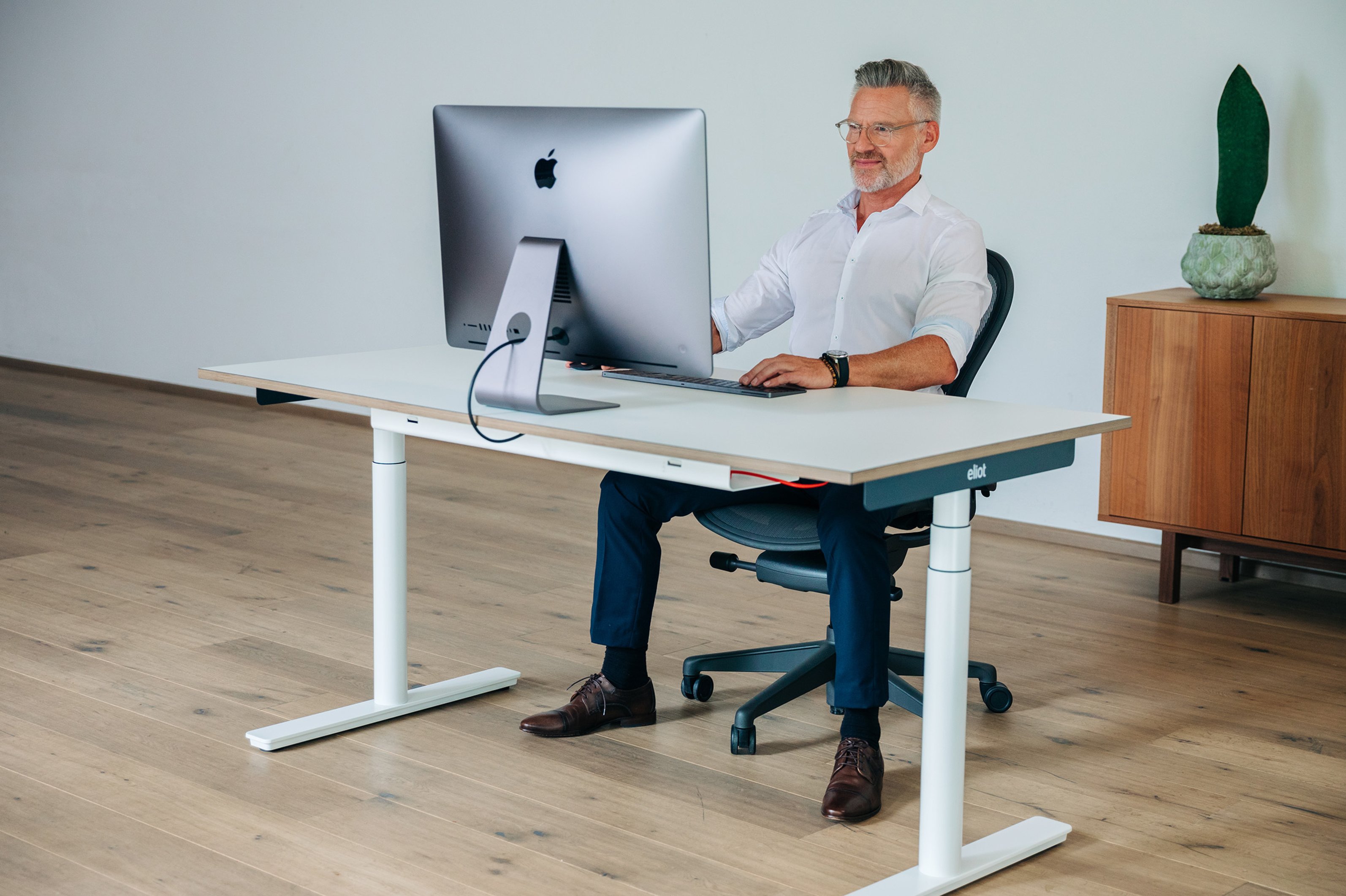
Healthy Sitting: 5 Tips Everyone Should Know

How to Counteract Harmful Effects by Sitting Correctly
No matter what you do for a living, chances are you spend a lot of time sitting these days—whether in a car, on a plane, or at the office. Learning to sit properly so as not to negatively impact your mental and physical well-being is an important skill.
So ask yourself: How can I reduce the damage I’m doing to my body from sitting too much? We have a few tips for you on how to sit more healthily.
01. Learn to sit better
Very few people know how to adopt an efficient sitting posture. In this context, “efficient” means sitting in a way that’s healthy, to minimize the negative effects on our bodies. You should stand up at least every half hour to readjust your posture. Otherwise, we tend to neglect our posture. Find out how to sit correctly and readjust your sitting posture using the 4-point plan here.
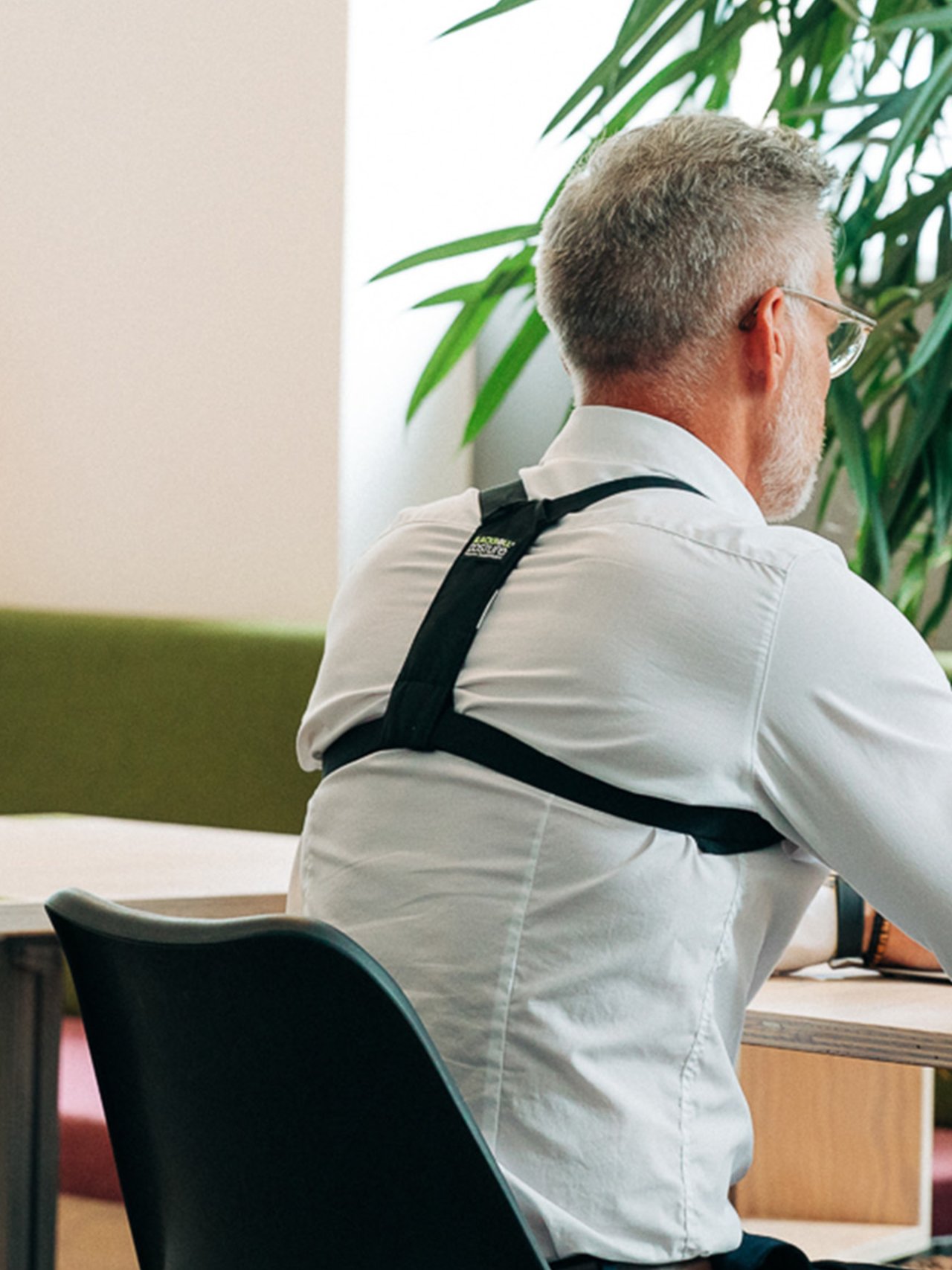
02. Dynamic Sitting Is Worth It
Sitting correctly doesn’t mean staring completely upright at a screen without moving a single centimeter. Quite the opposite is true. The reason most of us couldn’t sit still for long as children is that the human body isn’t really designed for sitting. Prolonged, monotonous sitting takes a toll on our bodies, our fitness, and our mental well-being. So it’s high time to get active, adopt dynamic sitting, and break up the monotony with short bursts of movement. Why not try these alternative sitting positions to bring movement and dynamism to your otherwise monotonous sitting routine:
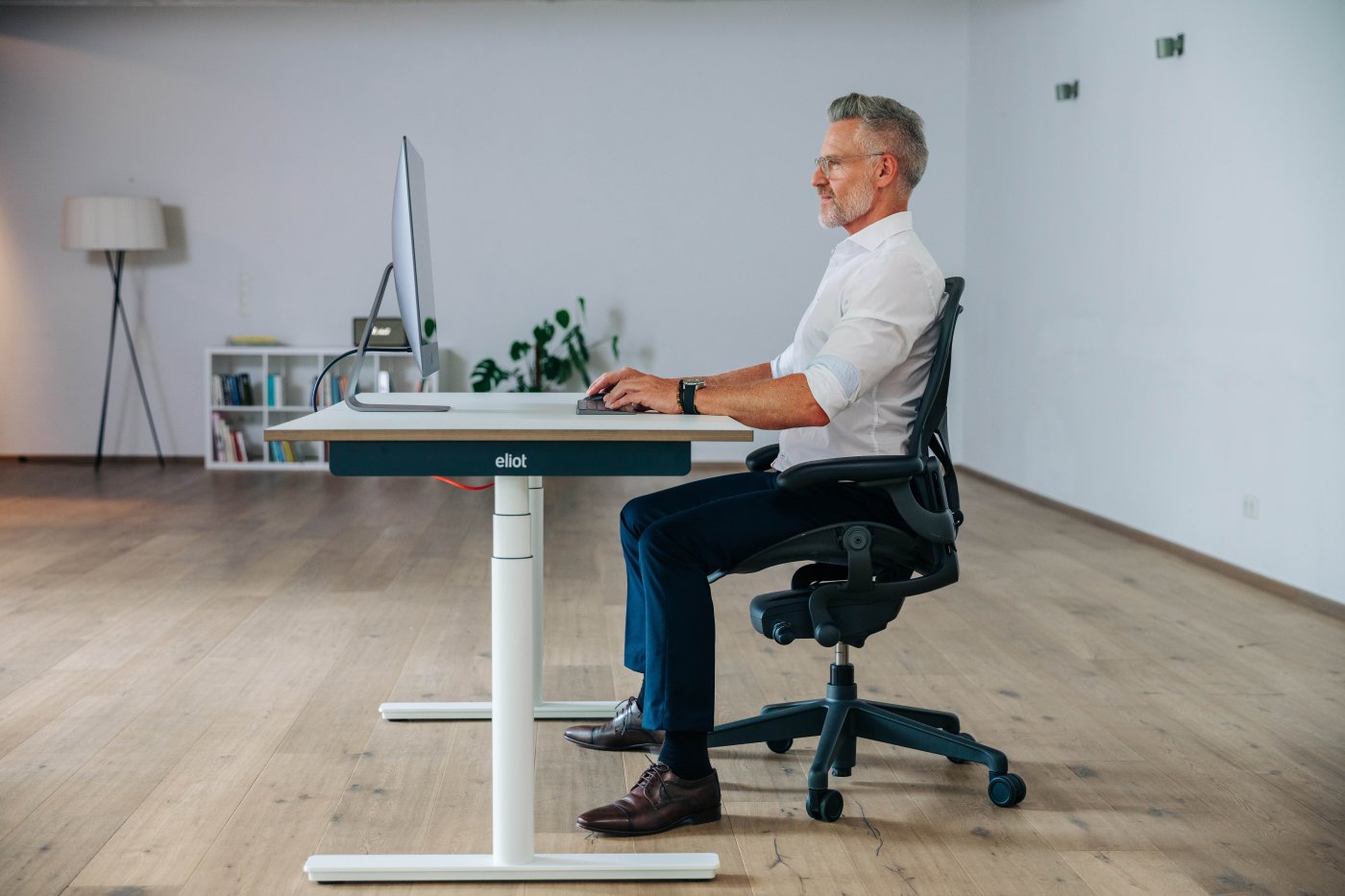
Menspread
Stabilizes the pelvis and the lumbar spine. It’s best to place your feet as wide apart as possible (or bring the soles of your feet together) and let your knees fall outward.
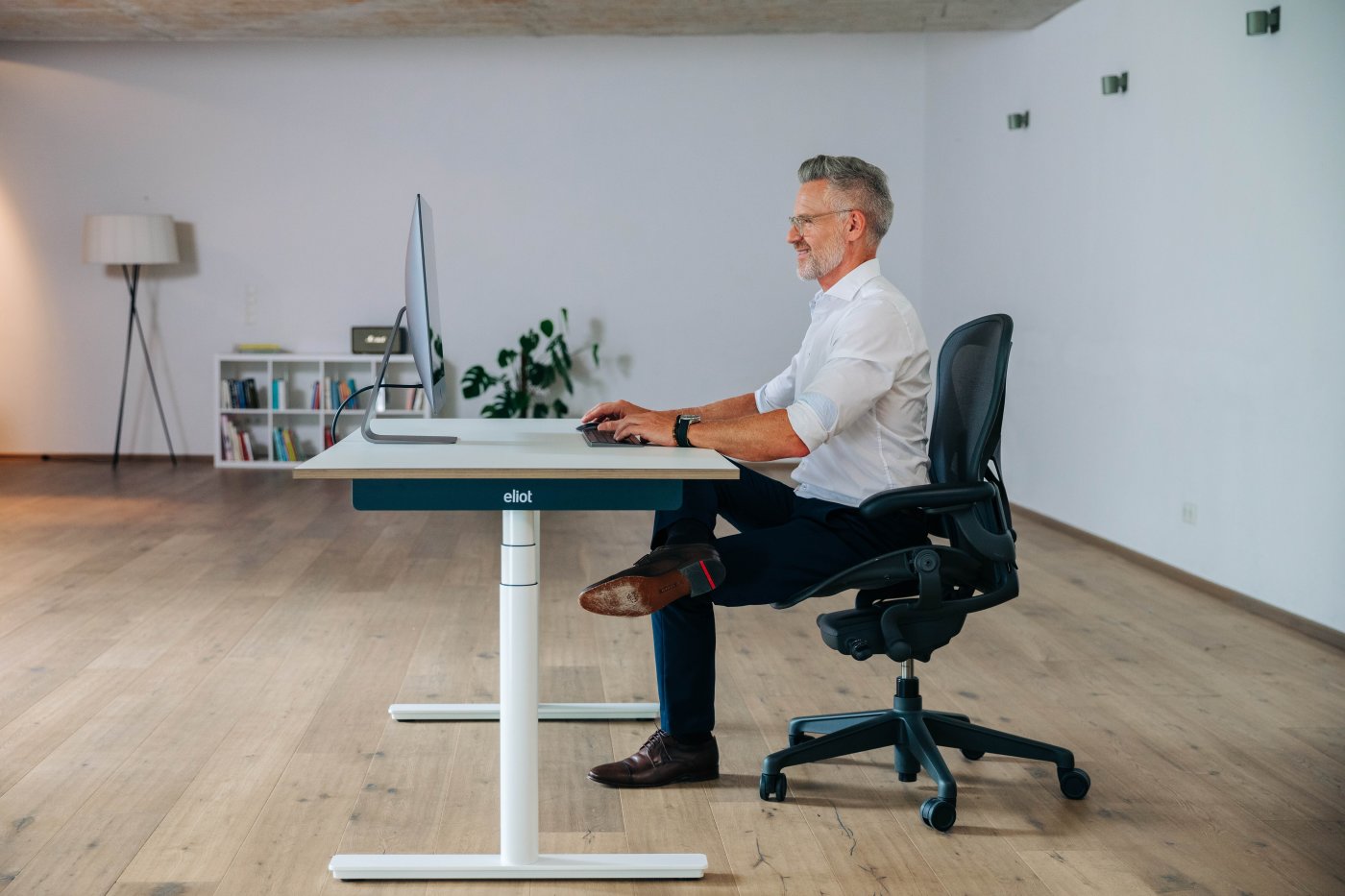
Leg Rest
Improves external rotation and mobility on the respective hip side. Place one foot on the knee of the other leg for a while, switching sides regularly.

Lunge
Helps maintain an upright posture. Sit on the edge of your desk chair. Place one foot on the floor about half a meter in front of you. The back foot is tucked under the chair. Switch sides regularly.
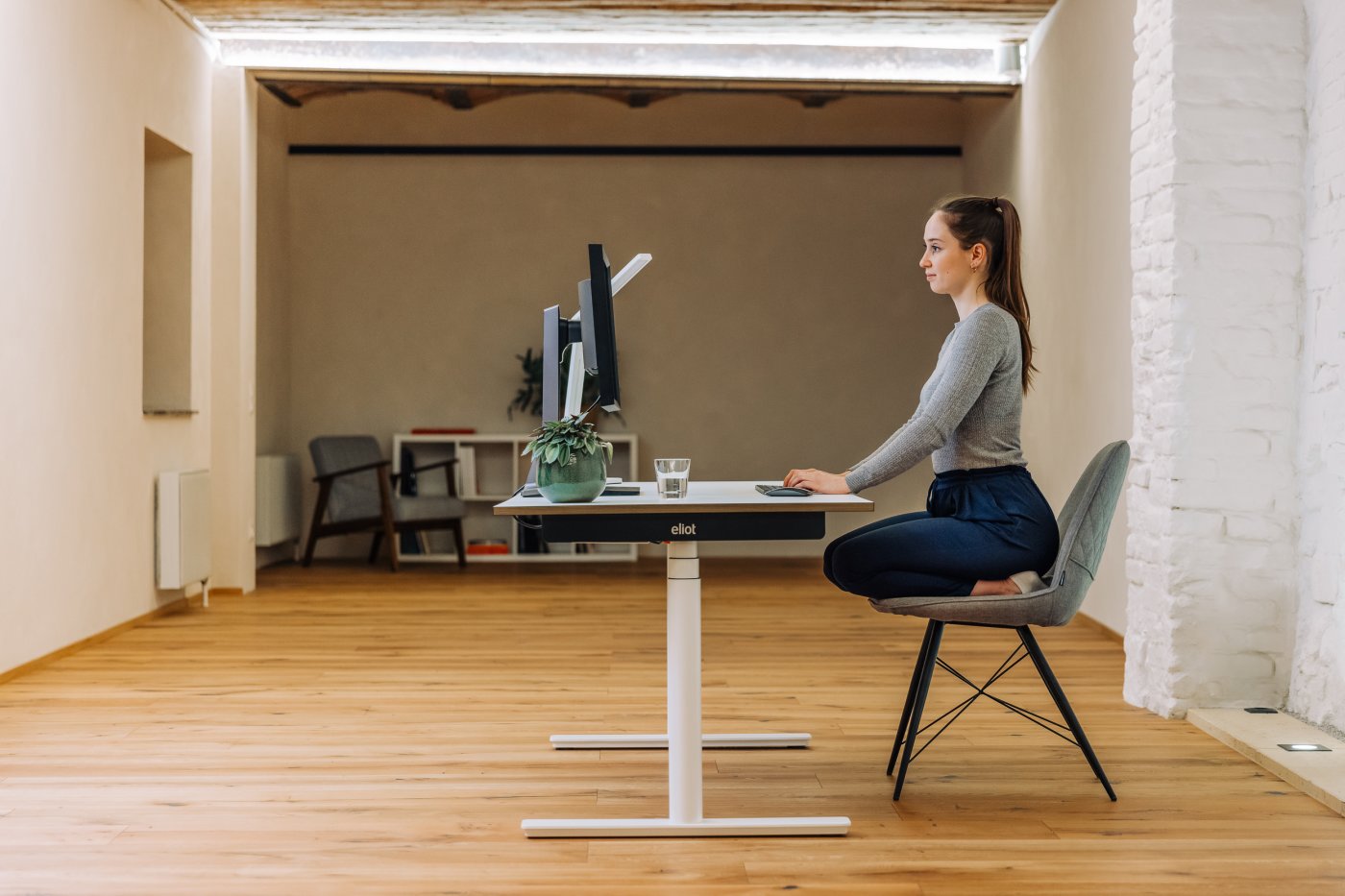
Heel Sit
Admittedly, many people lack the flexibility needed for the heel sit. You can make this dynamic sitting position easier by placing a pillow under your buttocks. Incidentally, this position is also said to have a beneficial effect on digestion.
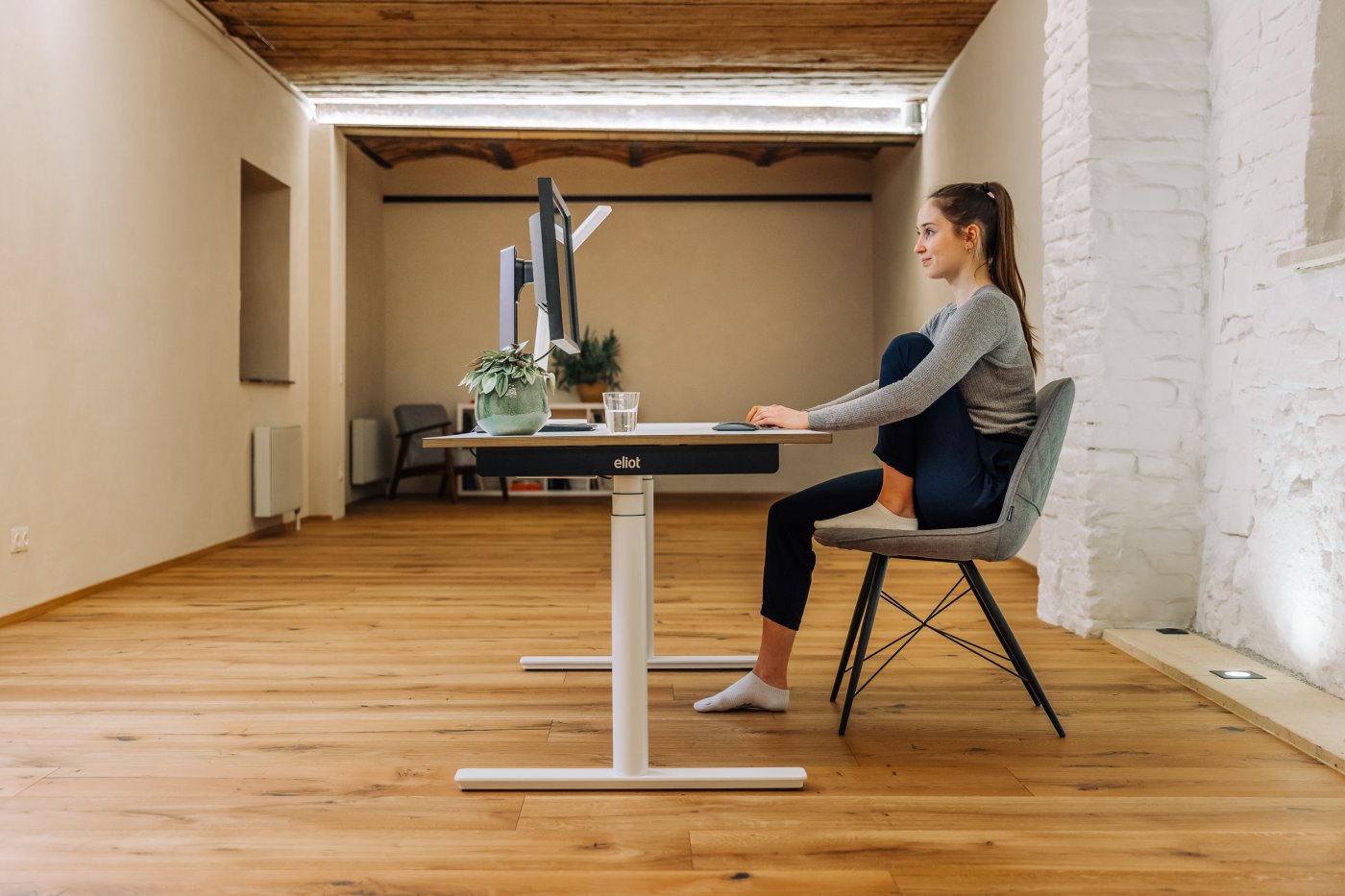
Single-Leg Squat
Improves ankle and hip flexibility. For this sitting position, you should use a chair with sturdy legs. Place one foot on the chair as if you were performing a deep single-leg squat. Keep the other foot firmly on the floor. Your buttocks should touch the back of the chair. Switch sides regularly.

The 4-Point Plan for Good Posture
Improving Your Posture Made Easy

