Height-Adjustable Desk: Useful or Not?

Why You Should Incorporate More Movement into Your Workday
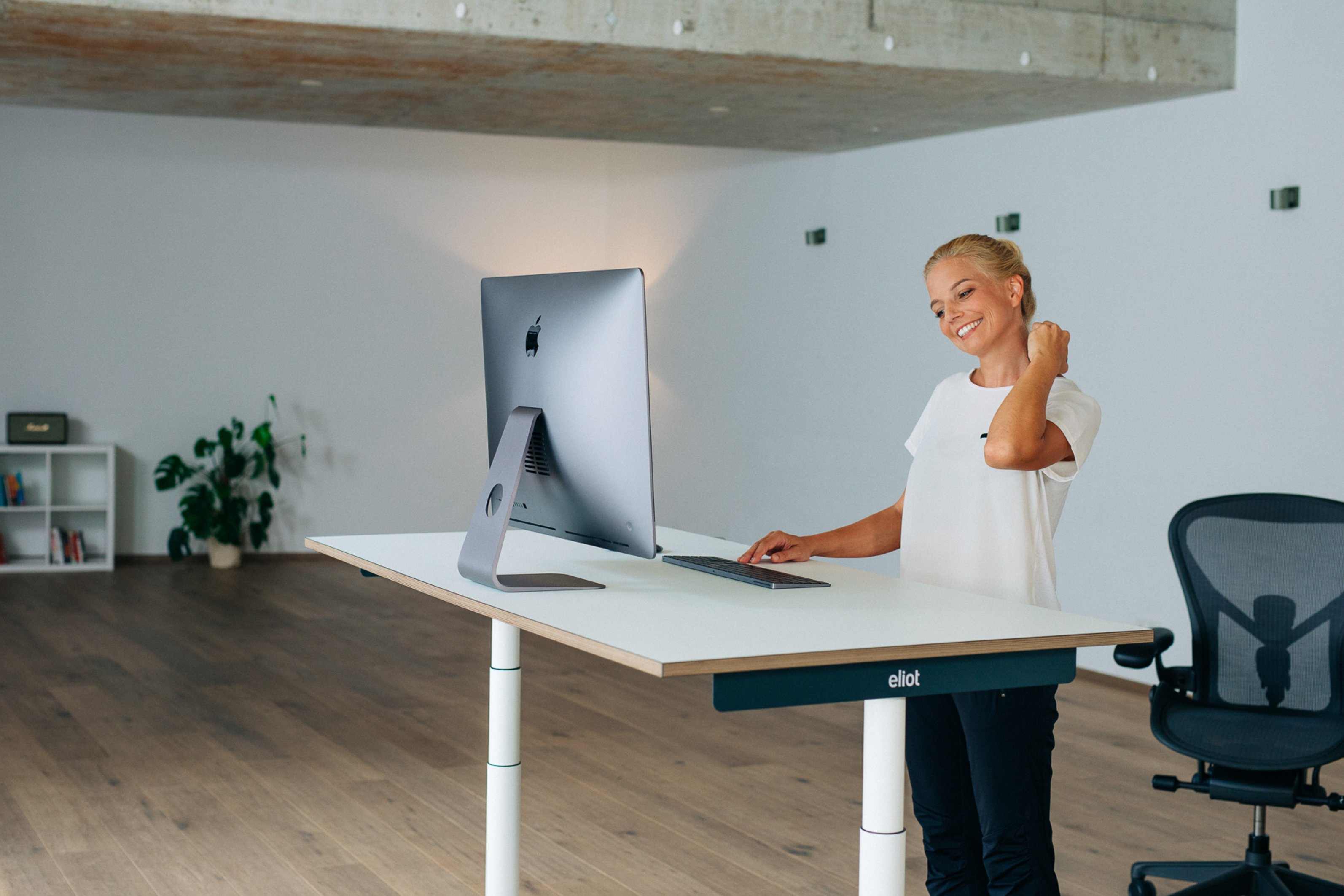
The human body is built for movement: walking, running, and sprinting were the main activities of our ancestors. However, these days, our office routines in particular are characterized by long periods of sitting. The only solution: we need to get active and move as often as possible to stay healthy in the long term. Alternating between sitting and standing—ideally at a height-adjustable desk—taking active movement breaks, and regularly varying your sitting or standing position have been proven to improve your physical and mental health and overall well-being. Spreading physical activity throughout the day—which can be easily integrated into your workday—can reduce stress levels and get your cardiovascular system going. This, in turn, improves cognitive performance. In addition, movement burns more calories. This was confirmed in a study[1] published in the European Journal of Preventive Cardiology. If 6 hours of sitting per day are replaced by standing, a person weighing 65 kg can be expected to burn an additional 54 kcal per day. Assuming that calorie intake does not increase, this would result in a loss of 2.5 kg of body fat mass.
Incidentally, your behavior during the workday also affects your free time: An active workday means that in the evening, we don’t feel completely exhausted, drained, and stressed, but rather motivated to do something else—whether it’s a workout or getting together with friends or family. However, an evening workout or a bike ride to the office alone cannot compensate for 10 hours of poor posture during the day.
Want to incorporate more movement into your daily office routine and learn how to use your height-adjustable desk with the right mix of sitting and standing times? Let’s get started!

Prevent Pain with Simple Habits
Just sign up for free, and we’ll send you your office guide by email.
Sitting or standing at work—which is better?
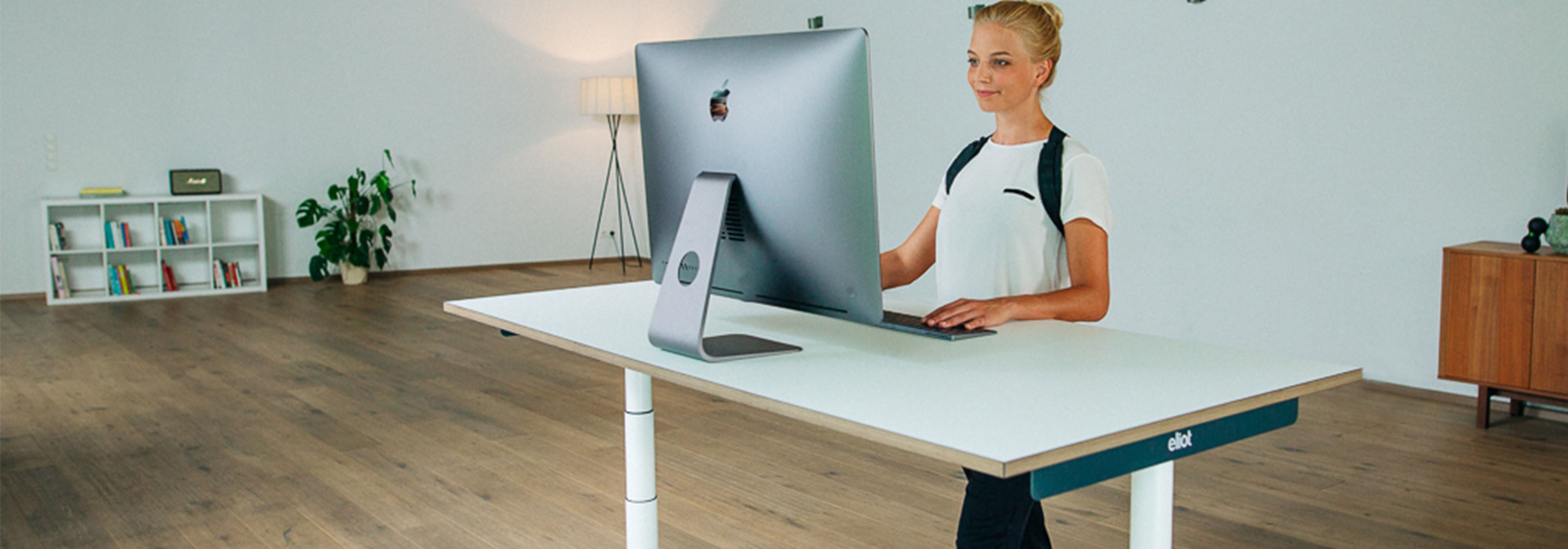
Switching from a seated workstation to a standing one brings about an initial positive change: Being active at work reduces tension in the neck and shoulder muscles and helps relieve strain on the cardiovascular system. In addition, your back and leg muscles get a workout when you stand up every now and then during your workday. Standing also stimulates your circulation and improves your ability to concentrate through more active movement.
But just as with sitting, proper posture is key when standing. When standing for extended periods, we may unconsciously shift our weight entirely to one side. In the long term, this one-sided strain has a negative effect on our musculoskeletal system, as it adapts to the poor posture. Just like sitting for extended periods, standing for too long can also have negative consequences: for example, standing for too long can lead to musculoskeletal pain, heart disease, lower back pain, or atherosclerosis.
Another very important factor when working while standing is setting up your workspace ergonomically. This includes aspects such as the correct height of your standing workstation, as well as the distance and alignment of the monitor.
In short: Neither standing constantly at a standing desk nor sitting for extended periods is good for our health. Rather , it’s important to maintain a balanced ratio of standing to sitting work time.
Working while standing
Working while standing is becoming increasingly popular in modern offices and is considered a healthy alternative to the traditional seated position at a desk. Many people spend a large part of their workday sitting —but this can have negative long-term health consequences. Studies show that prolonged sitting increases the risk of back pain, poor posture, and various chronic conditions. That’s why experts recommend breaking up the workday with periods of standing to incorporate more movement into your work routine.
When you work standing up, you not only improve ergonomics at your workstation but also bring more activity into your daily office routine. Alternating between sitting and standing improves blood circulation, has a positive effect on your back, and can prevent muscle tension. Your posture while standing also plays an important role: An upright posture with a relaxed stance relieves pressure on the spine and supports concentration at work. Combined with short movement breaks, working at a height-adjustable desk has a positive effect on your well-being.
It’s important to switch regularly between standing and sitting and to incorporate breaks into your daily work routine. This not only improves workplace ergonomics but also keeps the entire body actively engaged. Modern offices are increasingly turning to flexible solutions to promote employee health—and standing workstations play a central role in this.
How long and how much you should sit, stand, and move
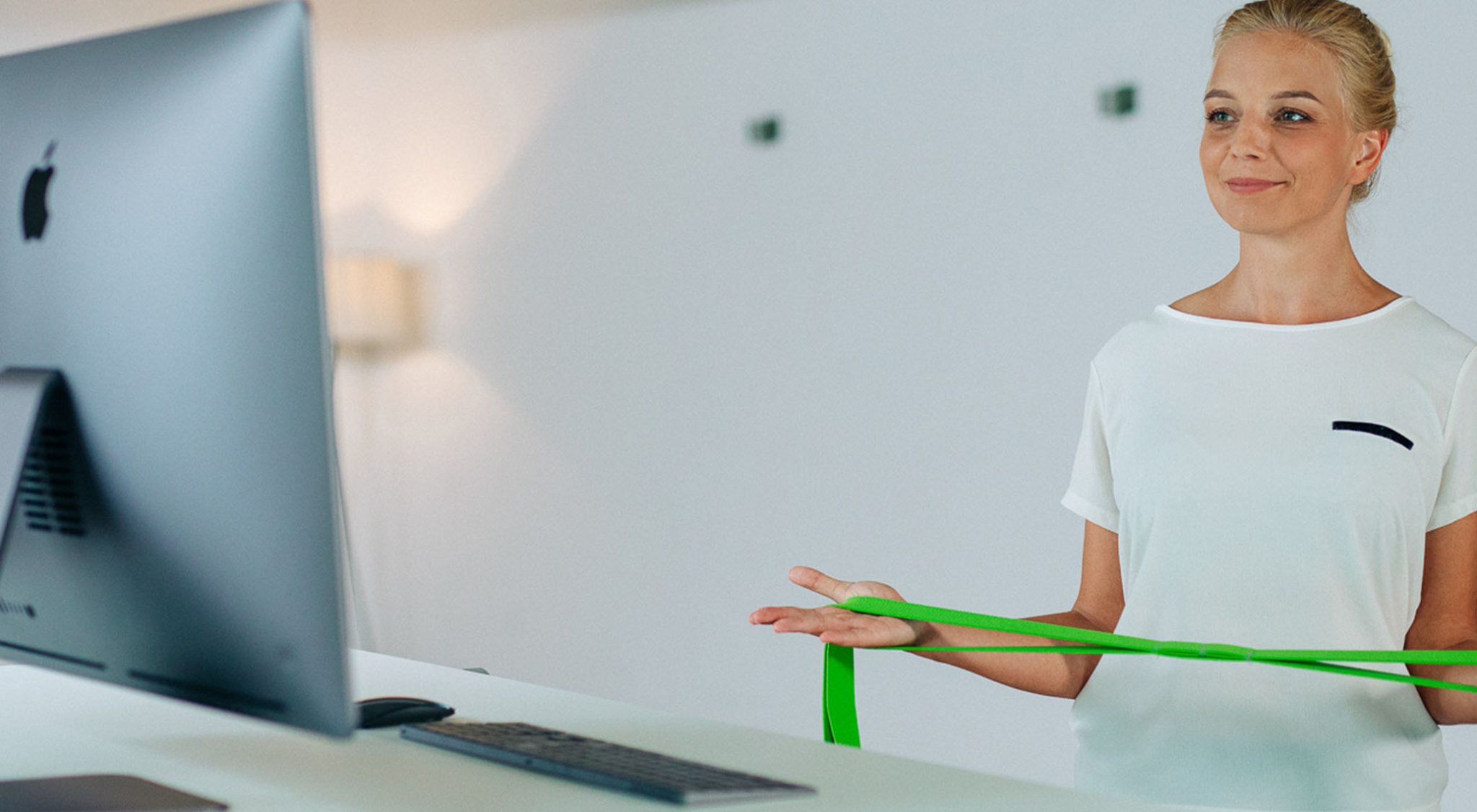
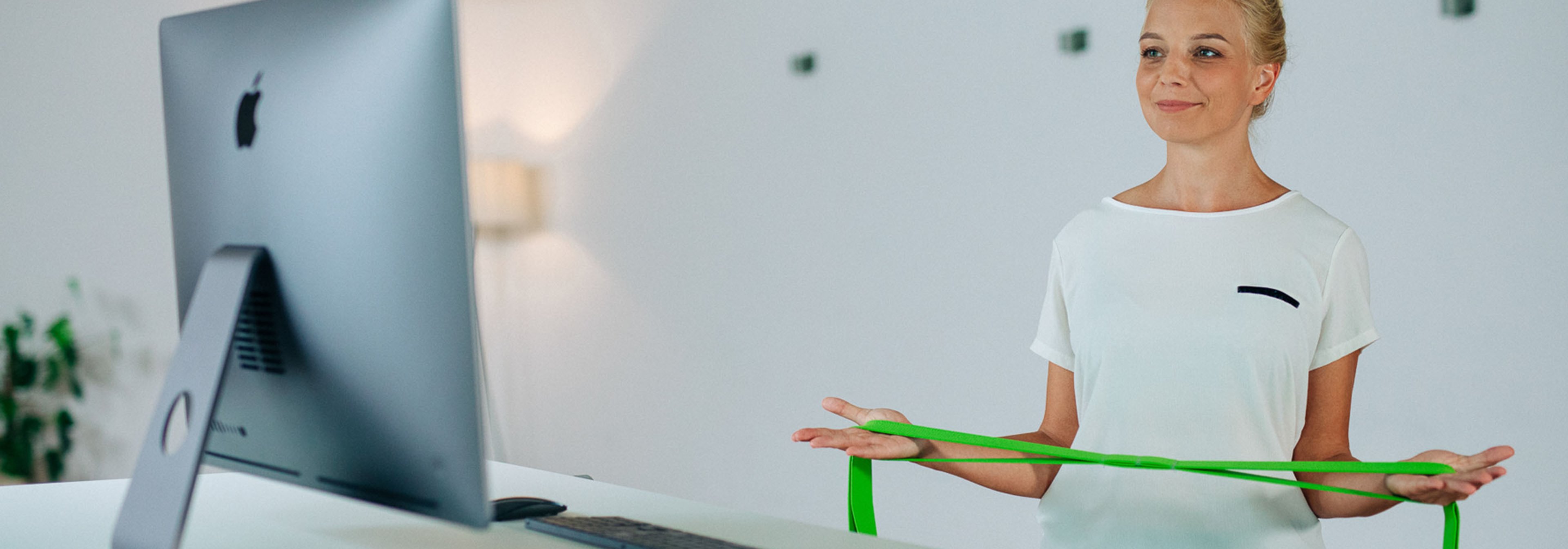
Make sure to alternate between sitting, standing, and moving around during your office job. As a general rule, you should periodically shake up your musculoskeletal system and get your circulation going by climbing a few flights of stairs, taking a quick trip to the office kitchen, or doing specific exercises while standing.
Experts recommend spending at least 30% to 60% of your workday standing. In addition, about 5–10% of your workday should be spent engaging in active movement.
An eight-hour workday could look like this:
- Sit for 4 hours (50% sitting)
- Stand for 3 hours and about 15 minutes (40% standing)
- Walk around actively for about 45 minutes (10% walking)
Break down these daily totals into smaller sessions so that you frequently alternate between standing and sitting. To prevent pain and discomfort in the musculoskeletal system, it’s also recommended not to stand for more than 1.5 hours at a time or sit for more than 30 minutes at a time. Most importantly, however, incorporate as much movement as possible into your workday. Dynamic sitting is particularly recommended here.
Instructions for transitioning from a seated to a standing workstation
It’s best to start with set intervals and slowly increase the amount of time you spend standing at your height-adjustable desk to let your body get used to it. Ideally, you should vary your posture 2–3 times per hour. You should definitely avoid standing statically in one spot and incorporate as much active movement as possible between intervals. Here’s how:
Week 1: Alternate between 10 minutes of standing and 20 minutes of sitting
Week 2: Alternate between 15 minutes of standing and 20 minutes of sitting
Week 3: Alternate between 20 minutes of standing and 20 minutes of sitting
Week 4: Alternate between 30 minutes of standing and 20 minutes of sitting
Week 5: Alternating between 40 minutes of standing and 20 minutes of sitting
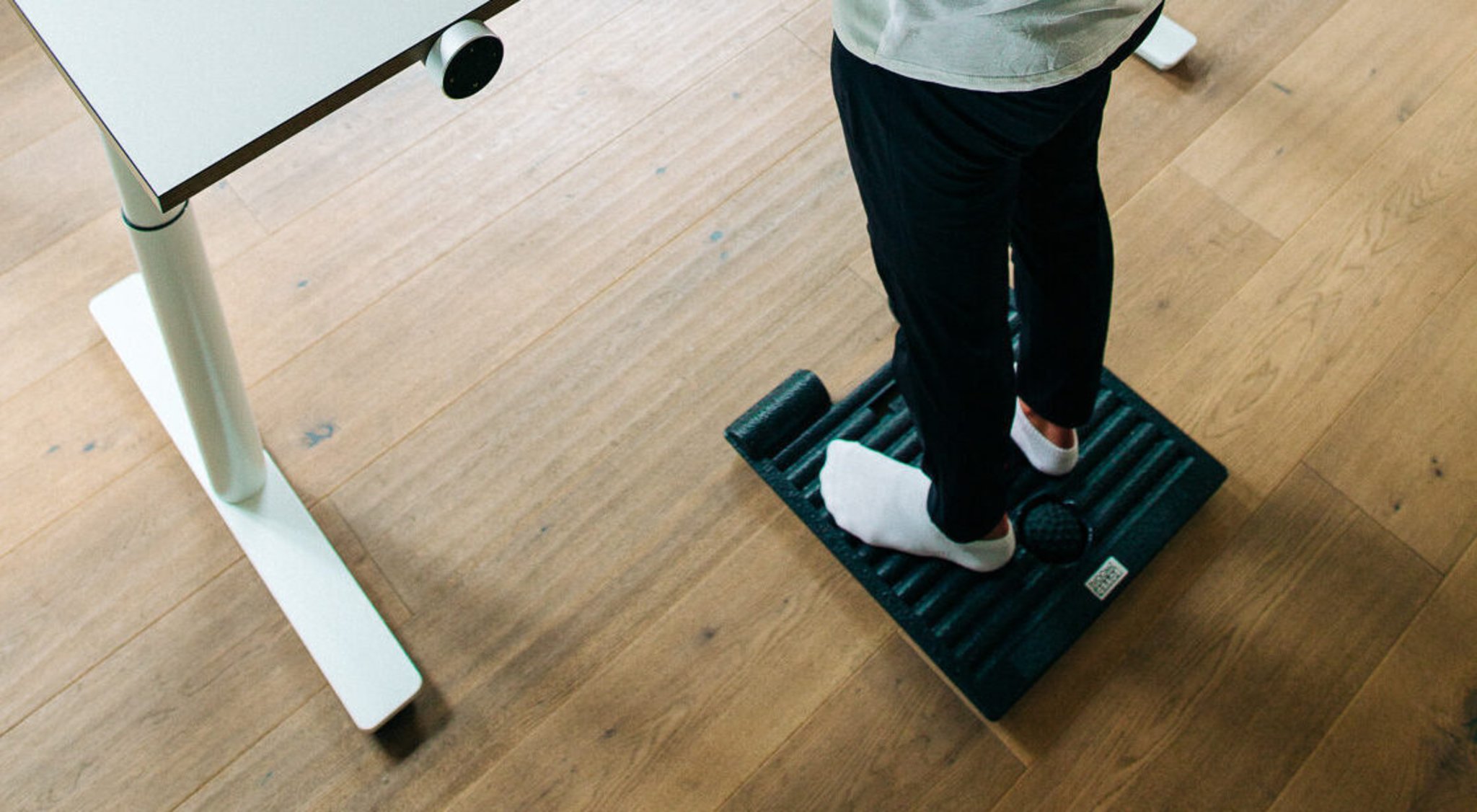
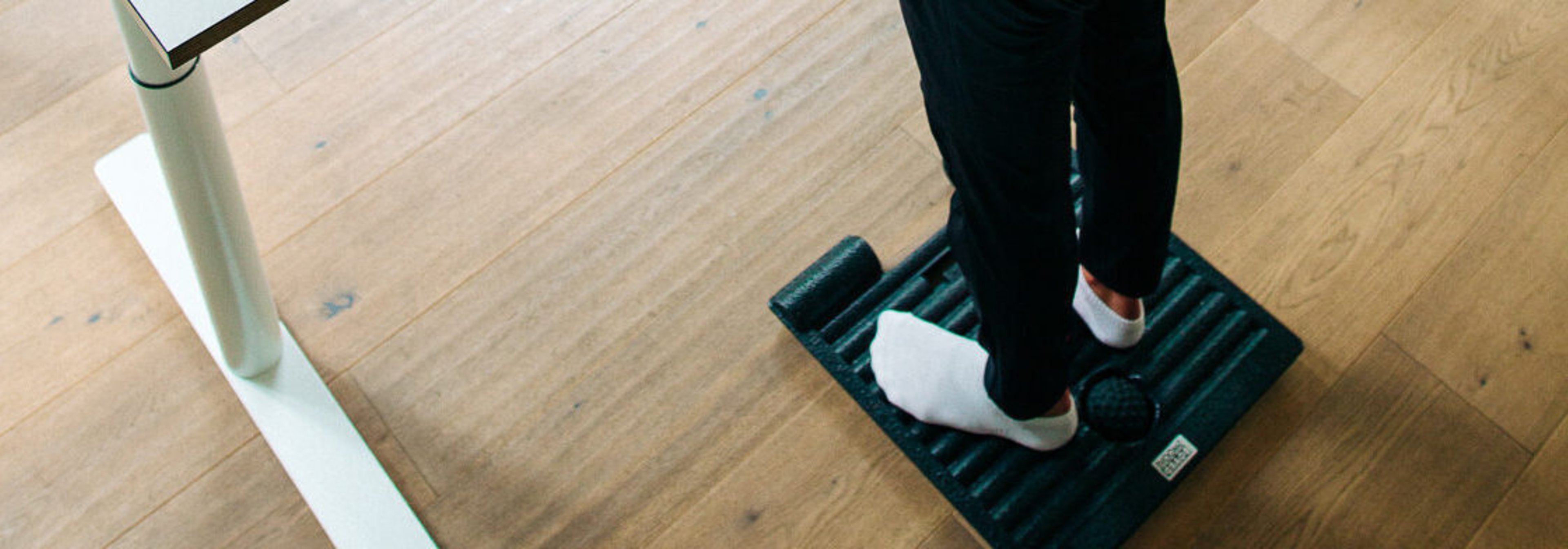
Active standing at a height-adjustable desk
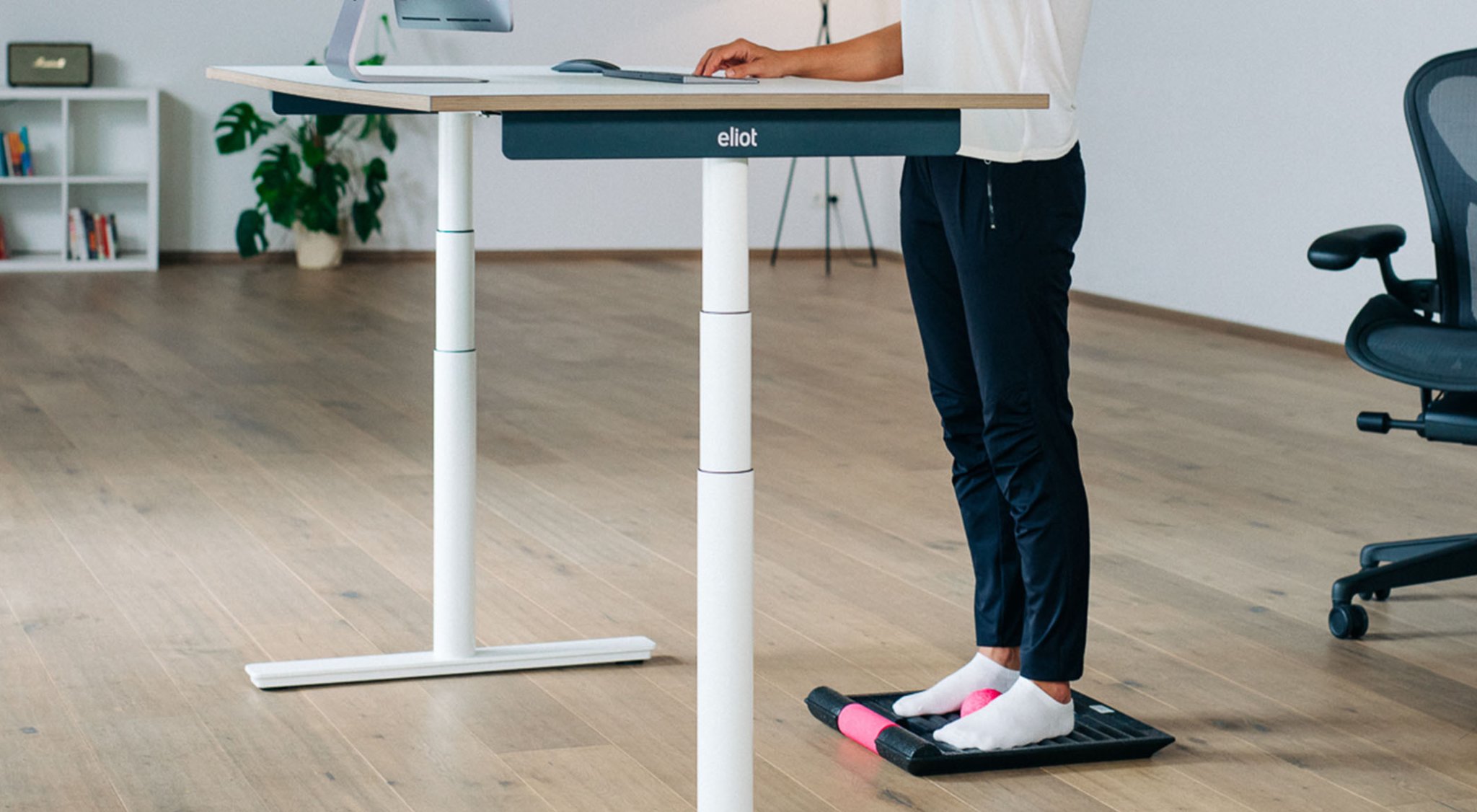
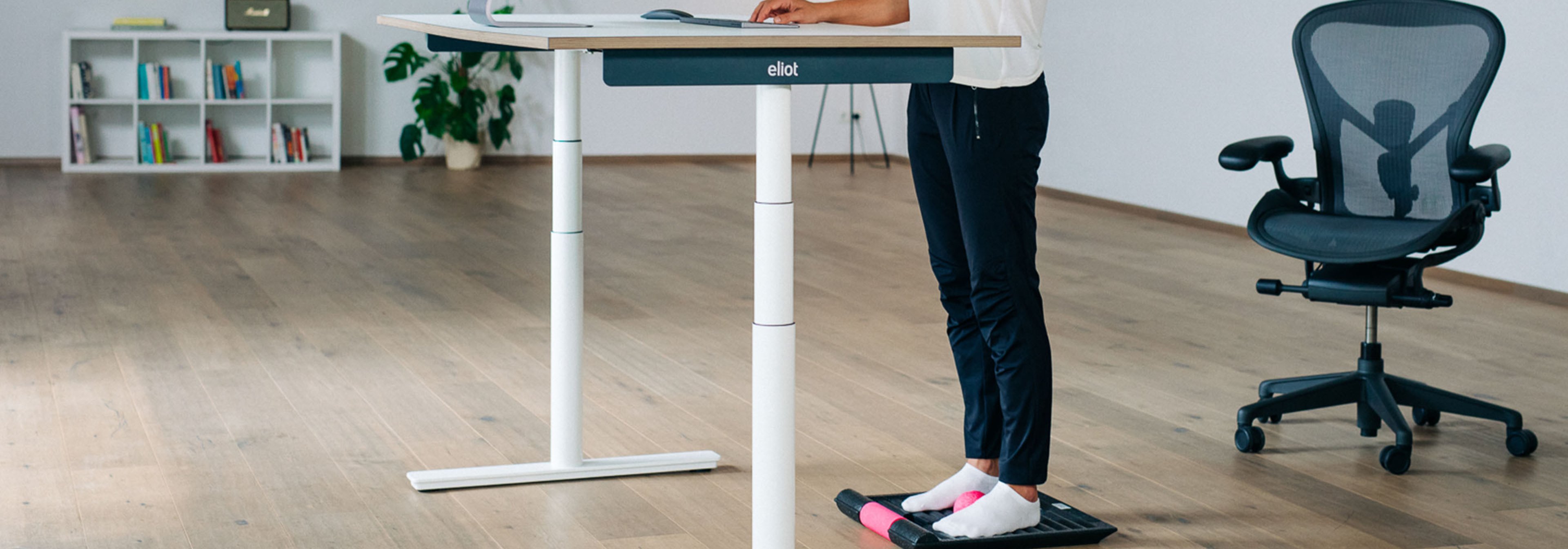
A standing mat for your standing workstation can make it even easier for you to work more while standing. It ensures that you stay in motion intuitively even while working at your computer and helps you avoid standing rigidly on a hard surface. It strengthens your muscles and relieves pressure on your joints. It also helps reduce leg fatigue.

Pressure-relieving standing mat for working at a height-adjustable desk.
Smoove BoardExercise inspiration for more movement at work
Every movement counts in the office! Our exercise routines show you how to easily incorporate more activity at your desk. Get started right away and give it a try. >


[1] Saeidifard F, Medina-Inojosa JR, Supervia M, et al. Differences in energy expenditure while sitting versus standing: A systematic review and meta-analysis. European Journal of Preventive Cardiology. 2018;25(5):522-538. doi:10.1177/2047487317752186
Also of interest



Tools for Your Active Office Life
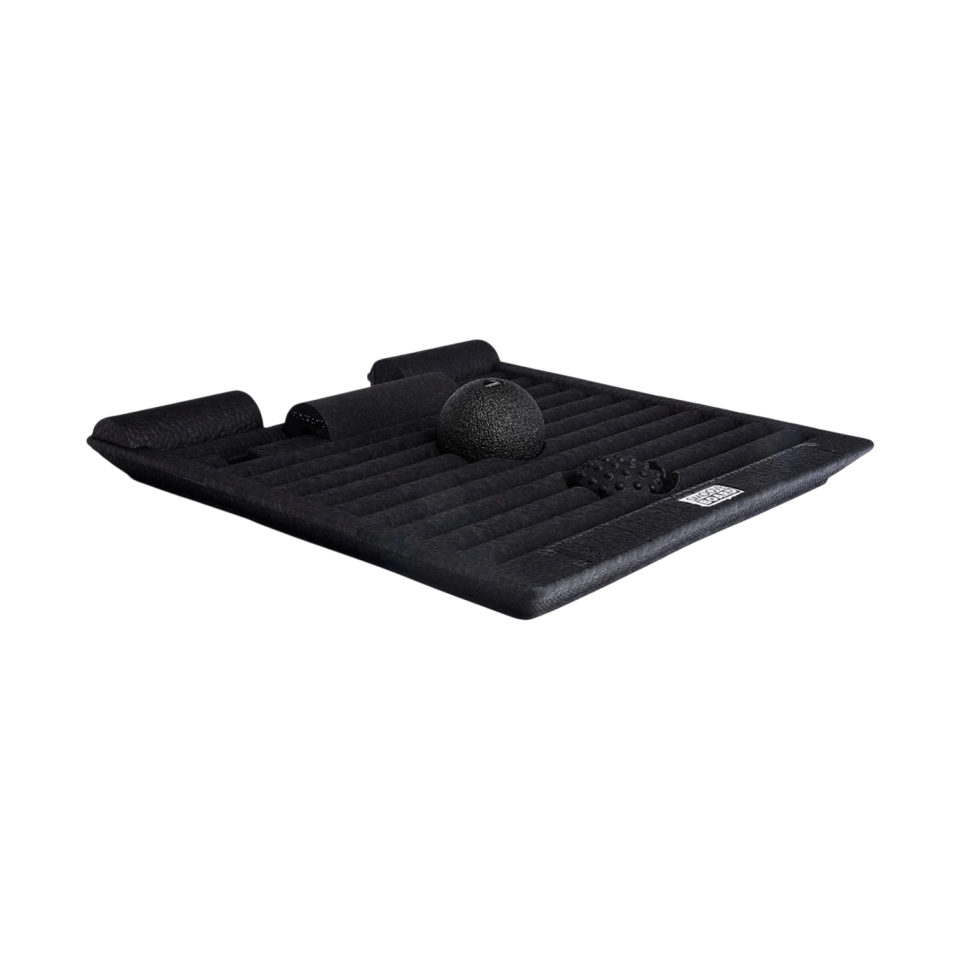
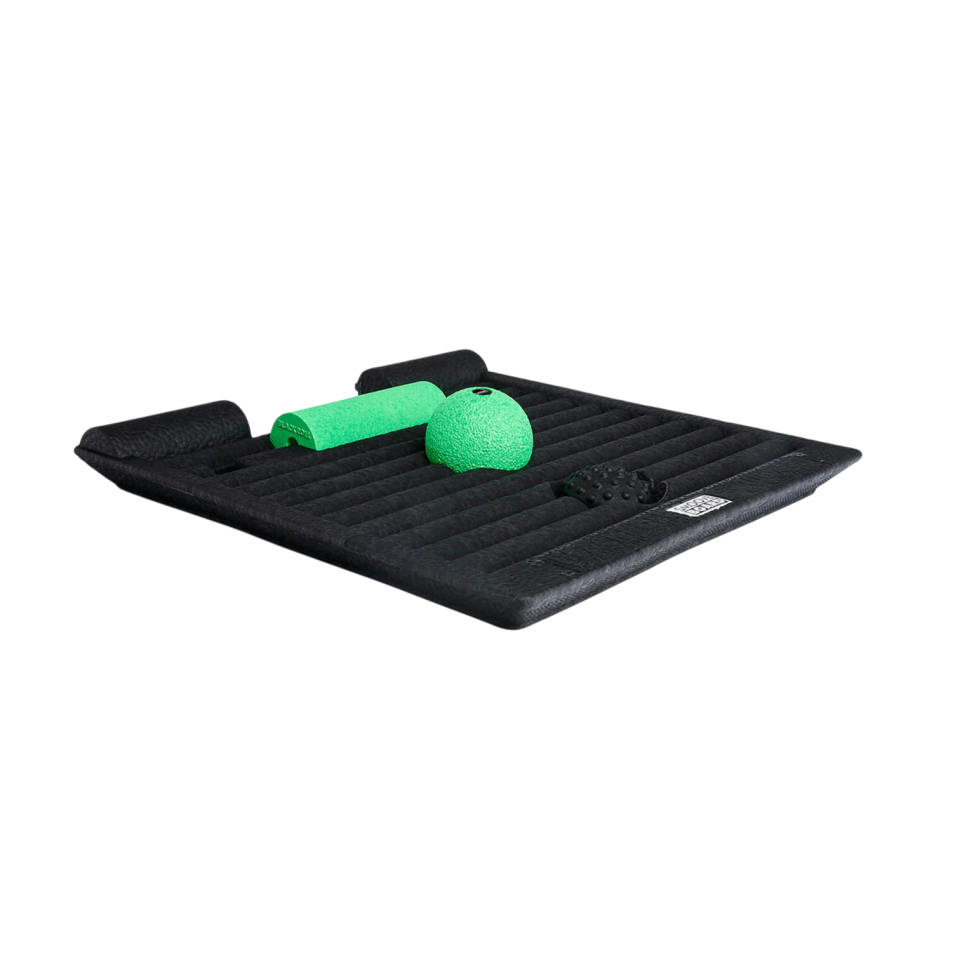
Smoove Board
Available in multiple variants