Polyphasic Sleep: More Productive Through Sleep Deprivation?

Polyphasic sleep (also known as interval sleep) refers to a sleep pattern in which several short sleep phases are spread out over a 24-hour period.
In contrast, the long monophasic sleep (sleeping through the night) is omitted. Proponents of this sleep pattern see it as a way to satisfy the need for sleep in a shorter amount of time, as well as a means to achieve positive effects in terms of increased performance. We’ll explain what this unusual sleep pattern is all about, what its pros and cons are, and give you the information you need on how to train yourself to adopt it.
So what exactly is polyphasic sleep, or interval sleep?
Soccer icon Cristiano Ronaldo has repeatedly been linked in the media to interval sleep or polyphasic sleep. The name itself suggests that it involves multiple sleep phases (“poly” comes from Greek and means “many”). Although this myth surrounding Ronaldo is very interesting, there is no concrete evidence that he continues to use a polyphasic sleep schedule in his daily training and competition routine.
With this sleep pattern, you don’t divide your total sleep requirement into one long sleep of 6 to 8 hours at night, but rather into several short sleep sessions spread out over a 24-hour period. Ronaldo is said to sleep for 90 minutes five times a day on the recommendation of sleep coach Nick Littlhales, which reportedly helps him perform better on the field.
To understand this unusual sleep pattern, it’s helpful to look at the monophasic sleep that is typical for most of us. Over the course of a night, depending on the duration of sleep, a person goes through an average of 5 sleep cycles with different sleep phases, consisting of the falling-asleep phase, light sleep phase, deep sleep phase, and REM phase. Each sleep cycle lasts about 90 minutes.
In total, REM and deep sleep account for 20–25% of total sleep during these cycles. According to polyphasic theory, they are primarily responsible for our recovery. The falling-asleep phase and light sleep phase, on the other hand, are said to be dispensable, which is why a minimum amount of them is sufficient. Since, according to this theory, we spend the rest of our sleep time (80 to 85%) in inefficient sleep, polyphasic sleep is intended to help us avoid falling into light sleep altogether and reach restorative REM and deep sleep directly. Conversely, this means that with polyphasic sleep, we would only need this 25% of sleep as the main sleep phase to achieve the same level of rest as we do after 6 to 8 hours of sleep. So at first glance, this sounds like a classic win-win situation.
Once you’ve gotten used to the new rhythm, this sleep model is supposed to help your body enter deep and REM sleep faster while simultaneously reducing the time spent falling asleep and in light sleep to a minimum. Your sleep need is met in less time, and the longer waking periods leave more time for other activities instead of sleep—without any loss of performance or daytime sleep deprivation.
Incidentally, polyphasic sleep occurs naturally in newborns and, according to a study by German sleep researcher Jürgen Zulley, is—from an evolutionary perspective— actually more in line with human nature than a single long, uninterrupted sleep phase, as we’re accustomed to in our daily lives.


Benefits of polyphasic sleep
The following benefits are said to result from a polyphasic sleep pattern:
- Increased alertness and concentration: By dividing your sleep into several short phases, you’re supposed to feel more awake and generally more alert, and be more productive during the day. Professional athletes, in particular, are said to benefit from polyphasic sleep, as it helps them maintain consistent physical performance despite the intense physical demands of training and competitions.
- Time savings: Since the total time spent sleeping is reduced, people who sleep polyphasically have more time for other activities.
- Greater creativity: Polyphasic sleep is also said to have a positive impact on creativity and cognitive performance.
- Flexibility: Polyphasic sleep is ideal for people with irregular work schedules, as they can adapt it to their individual schedules.


The Different Types of Polyphasic Sleep
There are different types of polyphasic sleep. In this section, we’ll explain what they are and how they differ from one another. Depending on which pattern you choose, your sleep will be divided into several segments, some of which may vary in duration.
Polyphasic Sleep According to the Everyman Sleep (Rhythm)
A well-known type of polyphasic sleep is the Everyman sleep pattern, which is said to be feasible for “everyone.” With the Everyman sleep pattern, you sleep for 3 hours straight at night—this is your main sleep phase. During the day, you take three 20-minute power naps , each designed to provide brief recovery. This brings your total sleep time to about 4 hours. If you haven’t tried polyphasic sleep before, it’s recommended that you start with the Everyman method. It’s considered the entry-level option.
Polyphasic Sleep According to the Uberman Method
Uberman sleep is more of an extreme example of polyphasic sleep—and it’s no coincidence that it translates to “superhuman sleep.” That’s because this method no longer includes a core sleep period. Instead, the total sleep time is evenly divided into six 20-minute sleep periods. The waking periods in between last about 4 hours, and sleep can thus be reduced to as little as 2 hours a day. To get your body used to this very unusual way of sleeping, you must meticulously stick to your sleep and wake times so that your body gets enough rest.
Triphasic Sleep (Rhythm)
If you choose this sleep pattern, you divide your sleep into three sessions of about 1.5 hours each—for a total of 4.5 hours. Triphasic sleep isn’t quite as difficult to learn, since 1.5 hours of sleep gives you enough time to enter the REM phase. This sleep model is also said to save time by allowing for more time spent awake.
The advantages of this sleep pattern are that you go through all sleep stages, which, according to sleep research, is the minimum duration required for restful sleep. Triphasic sleep also most closely aligns with our circadian rhythm—the day-night cycle. Sleep sessions should therefore ideally be scheduled after sunset, shortly before sunrise, and around noon, so that the body can recover and remain productive between sleep phases.
Dymaxion Sleep
The Dymaxion sleep method is also a form of polyphasic sleep. The name is a combination of the English words “dynamic,” “maximum,” and “tension,” roughly translating to “dynamic maximum tension,” which describes the enormous demands this sleep pattern places on the body. In principle, Dymaxion sleep is similar to Uberman sleep. With the Dymaxion sleep pattern, you sleep in a total of 4 sleep phases—30 minutes every 6 hours. Spread out over 24 hours, this amounts to only 2 hours of sleep; however, according to proponents of this sleep pattern, sleep deprivation is said to be avoided nonetheless. With such a drastic reduction in total sleep, as is the case with Dymaxion, your self-perception may become distorted. The distinction between day and night becomes blurred, and phases of euphoria and heightened awareness alternate with extreme feelings of fatigue.

What other sleep patterns are there?
In addition to the polyphasic sleep pattern—or interval sleep—and its various individual variations, there are two other sleep patterns. These are practiced by the majority of people in the Western world. They include:
- Monophasic sleep (rhythm): This is the “usual” nighttime sleep for adults, which typically consists of a long nightly sleep phase lasting 6 to 8 hours. In this sleep pattern, the waking phase during the day lasts about 16–18 hours.
- Biphasic sleep (rhythm): Biphasic sleep refers to a pattern in which a person sleeps twice over a longer period within a 24-hour period. This usually involves the classic combination of nighttime and afternoon sleep. However, biphasic sleep can also consist of two sleep phases at night, interrupted by a period of wakefulness. In adults, these two sleep phases at night are usually close together, with a waking period in between. Theoretically, however, a midday nap and a short sleep at night also count as biphasic sleep. Biphasic sleep is particularly popular in southern countries, and for Spaniards, Italians, and others, the siesta—lasting several hours at midday—has long been part of their lifestyle.
And until the introduction of artificial light, people worldwide actually slept according to this rhythm. As soon as it got dark, they went to bed and got up again after a few hours to engage in other activities for 1 to 2 hours. The subsequent second sleep phase then lasted until morning.


Long-Term Studies on Polyphasic Sleep
Polyphasic Sleep: What Do Long-Term Studies Say About This Sleep Pattern?
To date, there have been no conclusive long-term clinical studies on polyphasic sleep. And reducing total sleep time, as is the case with polyphasic sleep, is a controversial topic in sleep medicine. This is precisely what makes evaluating this sleep model somewhat challenging.
Critics note, however, that dividing sleep into several short segments—which may result in less than 7 hours of total sleep—can also carry risks. For example, it can have a negative impact on cognitive functions, including memory. It is also believed to increase the risk of accidents as well as the risk of chronic diseases such as obesity and diabetes. It is also considered healthier not to interrupt one’s sleep cycles with an alarm clock, but rather to adjust sleep and work times to one’s natural sleep-wake rhythm.
However, in a study, scientists concluded that performance can be significantly improved by taking a power nap . Since polyphasic sleep ultimately consists of nothing more than several power naps, it stands to reason that multiple short naps could indeed have a positive effect on our performance.


Conclusion
If you’re curious about whether polyphasic sleep might also have a positive effect on your energy levels and daily life, your only option is ultimately trial and error. Think carefully about which of the models presented can best be integrated into your daily routine and whether you can even reconcile this sleep pattern with your work, other commitments, hobbies, and social life. Most professions are compatible only with a monophasic sleep pattern because that’s the norm in our society. And your boss might take it the wrong way if you step away from your screen several times a day to take a nap. In that case, create a polyphasic sleep schedule by carefully noting when your sleep and wake phases occur during the day and night.
There are certainly people for whom polyphasic sleep patterns work—for example, in extreme situations (such as those sometimes encountered during exceptional athletic performances) or while preparing for exams. However, whether polyphasic sleep is a viable long-term solution still needs to be examined more closely through studies. Until then, all anyone can do is rely on their own self-observation.
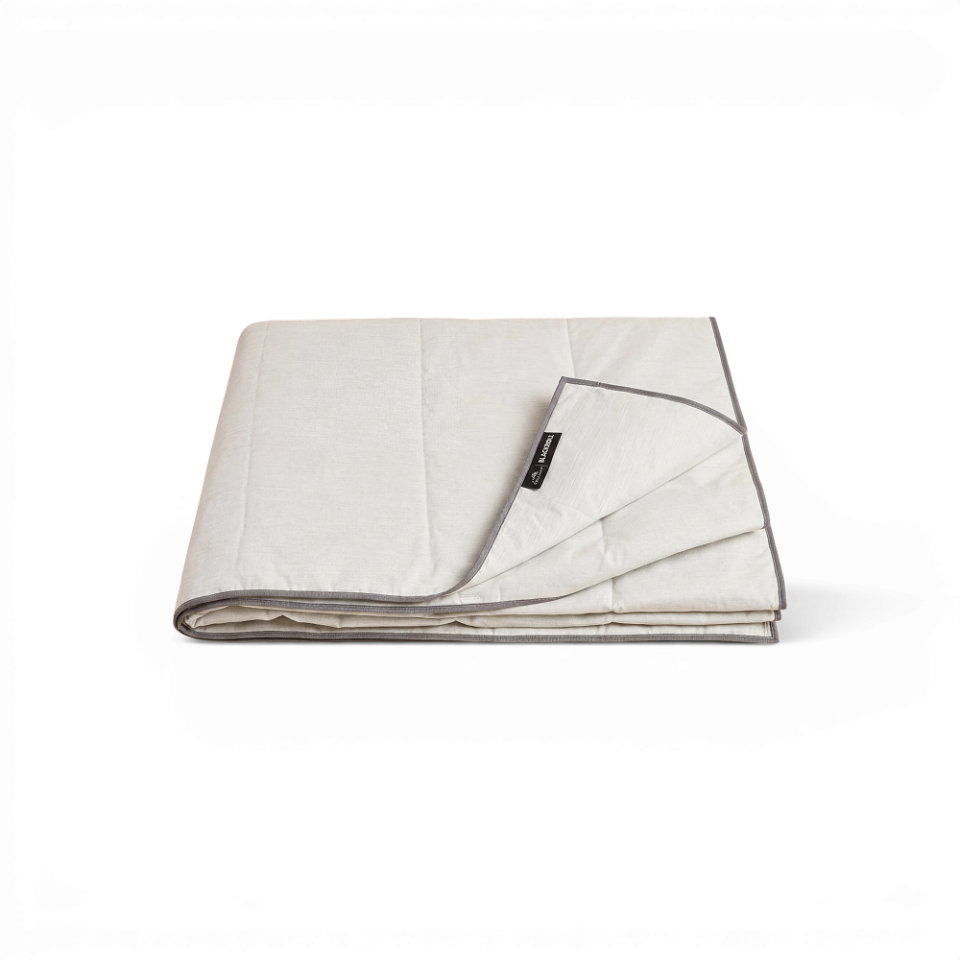
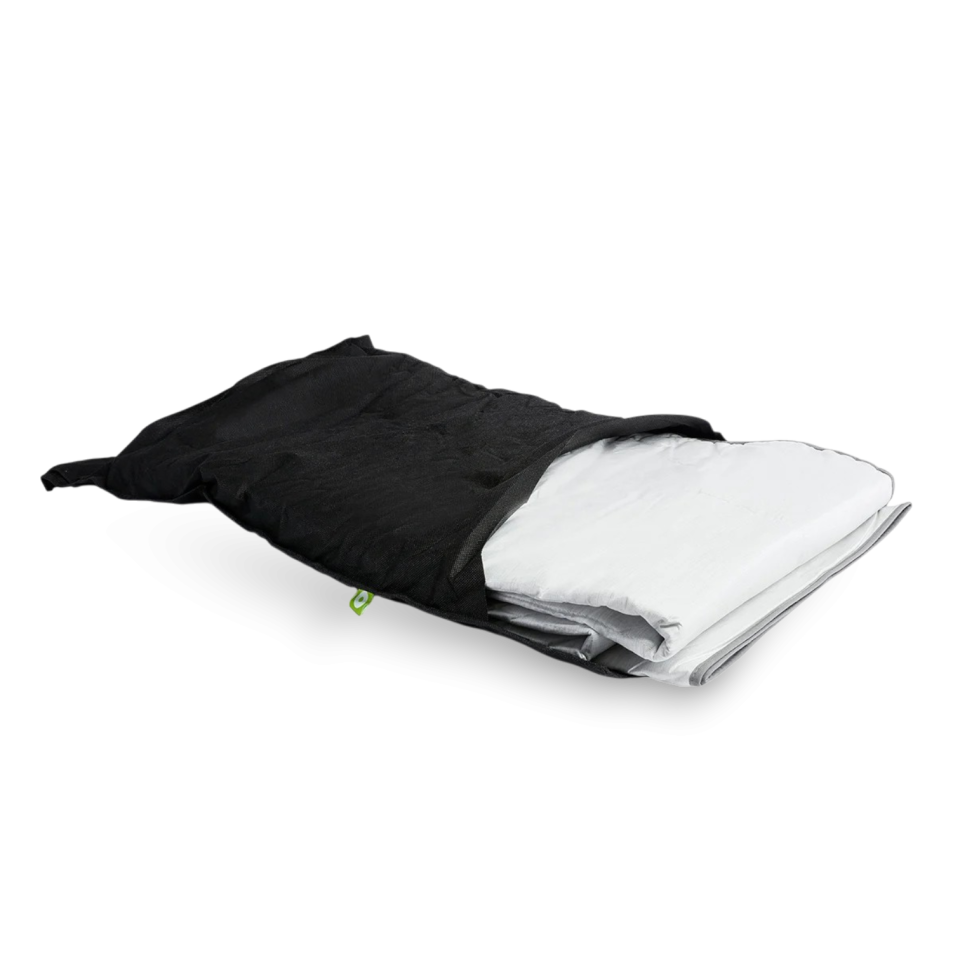
Recovery Blanket Summer
Available in multiple variants