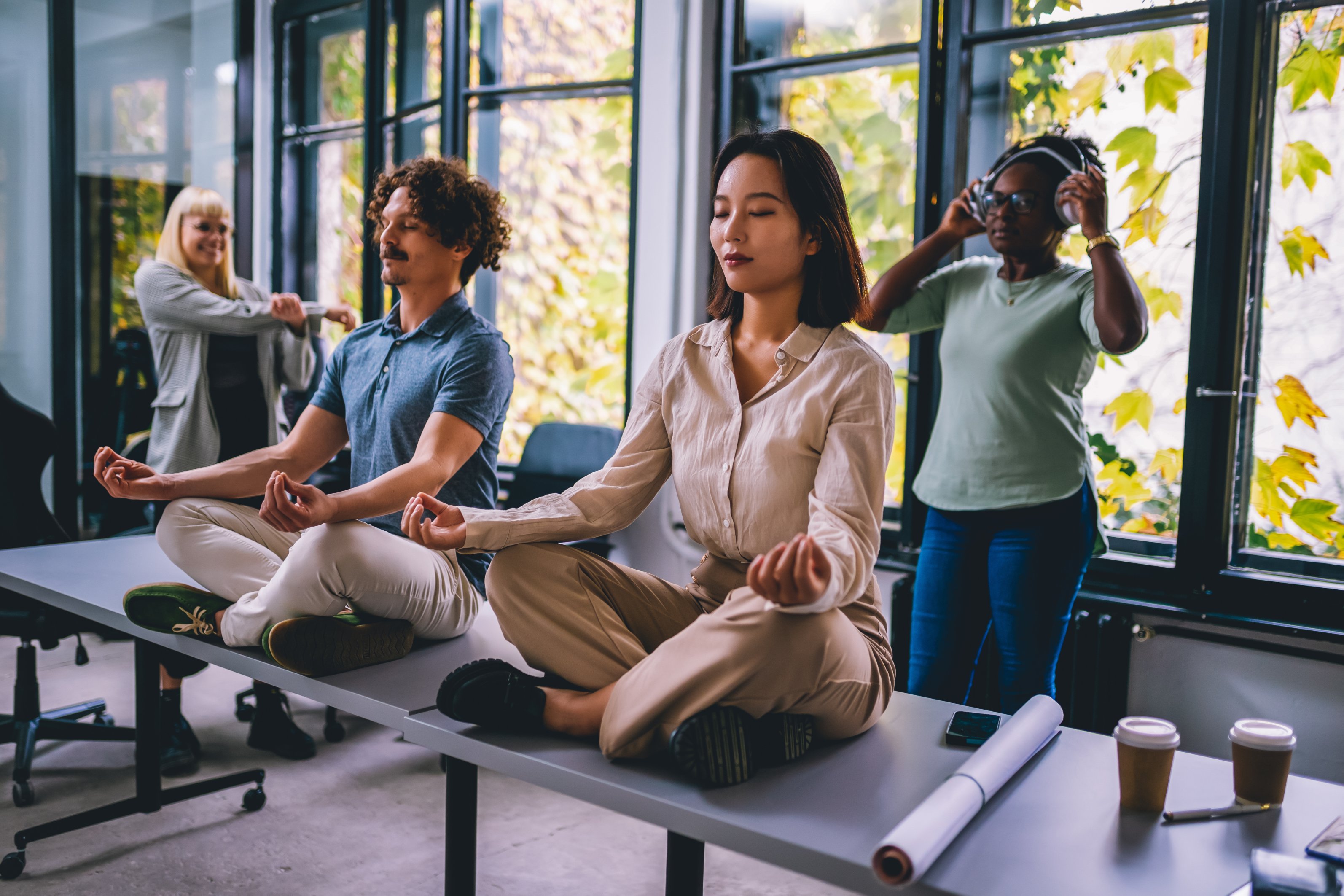
Relaxation Techniques: Reducing Stress and Finding Peace

Whether due to work pressure, personal obligations, emotional ups and downs, or fears about the future: Stress is a daily reality for many people—and can be harmful in the long run.
Relaxation techniques such as meditation, yoga, autogenic training, and progressive muscle relaxation can help counteract this. When practiced regularly, relaxation exercises support you in reducing mental stress and can help relieve physical tension.
Which strategies bring the desired relaxation to your body and mind varies from person to person. To best support your health, try out different methods and see what works for you. Some people find immediate calm with relaxation music, while others need exercise in nature or a massage to unwind. It’s important not to give up right away if the positive effects take time to kick in. The ability to relax is like a muscle that only grows through regular practice.
In this guide, we’ll introduce you to proven relaxation methods and show you how to incorporate them into your daily life.
1. Why Are Relaxation and Stress Relief Important?
Stress isn’t inherently negative; on the contrary, it’s essential for survival. In stressful situations, the body releases the hormone cortisol, among other things, which puts your body “on high alert”: Blood pressure rises, the heart beats faster, glucose is released into the bloodstream as an energy source, and the digestive system is suppressed.
1.1. Chronic stress can be harmful to your health
The body’s stress responses are useful in the short term when you’re in danger or need to perform at your best. In everyday life, however, constant stress can harm the body. Possible consequences include sleep disturbances, headaches, muscle tension, a disrupted metabolism, and a weakened immune system. Many people regularly experience such stress symptoms, at the expense of their health. The good news: Stress relief is possible through targeted relaxation techniques. These can help regulate the release of stress hormones like cortisol and quickly let troubling thoughts drift away.
1.2. Just relaxing isn’t the solution either
It makes sense to strengthen your stress resilience. However, staying in relaxation mode all the time shouldn’t be the goal. Short-term periods of tension are important so that your body and mind can continue to withstand stress. Otherwise, your stress level drops, and you’ll end up feeling overwhelmed much more quickly in the long run. A good balance between tension and relaxation is what you should aim for.
2. How do relaxation exercises help?
Relaxation techniques can affect the entire body, both physically and mentally. When practiced regularly, relaxation exercises can
- relieve muscle tension.
- alleviate psychosomatic symptoms such as tension headaches and high blood pressure.
- alleviate nervousness and inner restlessness.
- improve body awareness.
- reduce physical and emotional arousal during acute stress.
- Strengthen stress resilience.
- Promote long-term serenity and contentment.
- Increase vitality.
- Improve concentration and performance.
- Help with psychological stress, anxiety, phobias, and depression.
3. What relaxation techniques are there?
There are two ways to enter a state of relaxation: through the body and through the mind. Neither approach is better than the other. Whether a method works depends on many factors. Ultimately, it’s important that you find a technique that suits you and your daily life. The good news is that all relaxation exercises for the body automatically influence the mind—and vice versa. So you can’t go wrong.
Here’s an overview of various methods for physical and mental relaxation—we’ll take a closer look at the most popular ones in the following sections.
3.1. Relaxation Exercises for the Body
- Yoga: As a holistic practice for the body and mind, yoga can be an effective way to relax. It combines breathing exercises and meditation with movement.
- Progressive muscle relaxation: Muscle relaxation involves deliberately tensing and then relaxing different muscles. This helps you release muscle tension and strengthen your ability to relax consciously.
- Breathing Exercises: Conscious breathing can divert your focus away from negative thought spirals and calm the nervous system.
- Tai Chi: In Tai Chi, a form of exercise originating in China, gentle, flowing movements are linked together to bring the body and mind into harmony.
- Qigong: Qigong also originates from China. The movements are usually performed slowly while holding a fixed position. The goal is to consciously focus on the body and release mental blocks as well as physical tension.
- Going for a walk: Gentle exercise in nature, such as in the woods, can help reduce stress hormones and promote relaxation.
- Exercise: In general, moderate exercise such as running and cycling can help you unwind and release “feel-good” hormones that lower stress levels.
- Wellness: Wellness treatments such as massage, as well as sauna sessions, can quickly relieve muscle tension and soothe the mind.
3. 2. Relaxation Methods for the Mind
- Meditation: Meditation, often combined with mindful breathing, involves creating a state of deep, inner calm by focusing on the self and ignoring distractions.
- Autogenic Training: Autogenic training is a form of self-hypnosis that you perform while sitting or lying down. With this relaxation technique, you visualize different physical states—for example, imagining that your arm is becoming heavy or warm. Through the power of your imagination alone, your body can relax very quickly.
- Mindfulness: Being mindful means consciously perceiving and accepting the present moment. This concept helps you heighten your awareness of your body and your feelings and can help you calmly navigate stressful situations.
- Relaxation music: Gentle sounds can calm the mind, lower blood pressure, and promote deep states of relaxation.
- Hypnosis: With the help of hypnosis, you’re guided into a trance-like state in which your nervous system can completely relax.
Our tip: Take the time to try out the different relaxation techniques and repeat your favorite exercises regularly. The more often you practice them, the easier it will be for you to find peace.
4. Meditation for Stress Relief
Meditation is one of the most effective relaxation techniques for managing stress. It involves focusing on your breathing, a visualization—such as breaking waves—or a specific mantra. You can also enter a meditative state through mindful walking and yoga. Mindfulness meditation has been the most extensively studied in scientific research. The goal is to consciously observe and accept thoughts, feelings, and sensory perceptions rather than fighting against them.
4.1. Benefits of Meditation as a Relaxation Technique
In more than 200 studies, researchers concluded that mindfulness-based techniques can successfully reduce stress, anxiety, and depression. Regular meditation can also help lower blood pressure, relieve tension in the back, and prevent sleep disorders.
4.2. Incorporating Meditation into Daily Life
Our tip for anyone who wants to start meditating to reduce stress: Begin with guided meditations that walk you through the process step by step. Five minutes once or twice a day is enough to start with. There are now many apps, such as Calm, Headspace, and Insight Timer, that allow you to learn the various techniques from the ground up.
5. Breathing Exercises for Relaxation
One of the fastest ways to manage stress is through breathing exercises. They are among the oldest relaxation techniques and are often used in combination with yoga or meditation.
5.1. Benefits of Breathing Exercises as a Relaxation Method
By focusing on your breathing, you divert your attention away from stressful thoughts and worries. At the same time, you can calm your nervous system and signal to your body that “you are safe.” This helps you relax!
5.2. Breathing Exercises for Everyday Life
There are various types of breathing exercises. One example is what’s known as abdominal breathing: You take a deep breath into your abdomen, hold your breath briefly, and then exhale slowly. This exercise can help release tension in your body and reduce acute stress.
Another technique for managing acute stress—and for falling asleep more easily—is the so-called “4-7-8” breathing method. With this technique, you inhale for four seconds, hold your breath for seven seconds, and then exhale for eight seconds.
Click here to go directly to 10-minute guided breathing exercises to release stress and anxiety. We’ll also show you simple breathing techniques specifically designed to help you fall asleep, which you can do in the evening before going to bed.
6. Autogenic Training for Greater Calm
Autogenic training is a relaxation method developed in the 1920s by the Berlin psychiatrist Johannes Heinrich Schultz. It is still used today to reduce stress and find inner peace. Autogenic training is based on the principle of self-hypnosis. You focus on your body, your breathing, and specific phrases such as “I am completely calm” or “My arm is getting heavy.” The goal is to achieve a state of deep relaxation—similar to that experienced during meditation or yoga.
6.1. Benefits of Autogenic Training as a Relaxation Exercise
Autogenic training can, for example, help relieve tension and lower blood pressure. This form of self-hypnosis is also said to have positive effects on sleep disorders, depression, and other ailments.
6.2. How Autogenic Training Works
In this guide, we’ll show you exactly how this relaxation method works: Using Autogenic Training Specifically to Reduce Your Stress
7. Progressive Muscle Relaxation for Well-Being
Another proven technique for managing stress is progressive muscle relaxation. Developed by Dr. Edmund Jacobson, this method involves systematically tensing and relaxing individual muscle groups.
7.1. Benefits of Progressive Muscle Relaxation
By consciously tensing and then releasing various muscle groups, you signal to your body to relax. Progressive muscle relaxation can help relieve tension, lower blood pressure, reduce sleep disturbances, and improve overall well-being.
7.2. How Muscle Relaxation Works
There are various approaches to progressive muscle relaxation. Typically, while lying down, you start at your feet and tense each individual muscle group for about five seconds before releasing it. You work your way up toward your head. It can be helpful to play calm, relaxing music in the background.
Would you like to try progressive muscle relaxation with guidance? We’ll show you five relaxation exercises combined with fascia training to combat stress and tension.
8. Yoga as a Relaxation Technique
Looking to find an oasis of calm amid the hustle and bustle of everyday life? Yoga makes it possible! As a form of moving meditation that combines physical and mental training, this millennia-old practice from India is one of the world’s most proven relaxation techniques for reducing stress.
8.1. Benefits of Yoga as a Relaxation Technique
Yoga can not only improve flexibility and strengthen muscles but also have a positive effect on mental well-being. Its relaxing effects are primarily based on slow, flowing movements and conscious breathing. Progressive muscle relaxation plays a central role in this process: By consciously tensing and relaxing different muscle groups, tension—a common symptom of stress—can be counteracted.
Numerous studies confirm the positive effects of yoga on blood pressure, heart rate, and stress hormones such as cortisol and adrenaline. Thus, regular practice can help alleviate sleep disorders, prevent depression, and strengthen the immune system.
8.2. Integrating Yoga into Your Daily Life
Of the more than 90 known types of yoga, Yin Yoga, Restorative Yoga, Yoga Nidra, and Hatha Yoga are particularly well-suited for relaxation. As a beginner, start with short sessions and simple poses—for example, after work or before bed. Be gentle with your body. After all, the goal isn’t to perform the most complicated poses, but to leave stress behind.
9. Body Scan: Awareness and Relaxation
The body scan is an effective method for relaxation and promoting mindfulness. Through this technique, you’ll learn to consciously perceive your body, which helps you identify and release physical and mental tension. During the body scan, you focus on different parts of your body one by one to recognize tension and consciously release it. This technique promotes self-awareness and can help reduce stress and improve your overall well-being.
9.1. Benefits of the Body Scan: Deep Relaxation and Mindfulness
The body scan is not only a method for relaxation but also a way to promote mindfulness. By systematically moving through different areas of the body, the body scan helps reduce physical tension and mental stress. This technique improves body awareness and fosters a deep sense of calm and serenity.
9.2. How to Practice the Body Scan
Start in a comfortable position and slowly focus your attention on each part of your body. Notice every sensation without judgment. This focused awareness helps you identify and release tension. The body scan is a simple yet effective method for calming the body, enhancing mental well-being, and even relieving pain
For detailed instructions and more information, visit our in-depth article on the body scan or check out our “Body Scan for Pain Relief” exercise with Master Trainer Stefan.
10. Stress Relief in Nature
Relaxing can be so simple: Just stepping outside and spending time in nature can significantly lower your stress levels. A particularly effective outdoor relaxation technique is forest bathing. This refers to a mindful visit to the forest. In other words, you don’t just stroll through the landscape—you consciously take it in with all your senses and immerse yourself in the forest. The goal is to experience the calming effect of unspoiled nature and relax in the process.
10.1. Benefits of Exercise in Nature
In general, experiences in nature—whether in forests or parks—are said to strengthen both the mind and the body. According to scientists, just 20 minutes spent in green spaces is enough to significantly reduce stress hormones in the body. In addition, exercising in the fresh air can improve performance and build resilience.
10.2. How to Use Nature to Relax
Take every opportunity that arises in your daily life to get some fresh air: Walk the last kilometer to the office, take an active lunch break, and plan a trip to the woods for the weekend.
11. Relaxation Music for Inner Peace
Music has a significant impact on our mood. It can fuel feelings of happiness just as much as it can trigger sadness. And music can help you relax.
11.1. Benefits of Relaxation Music
Researchers have found that listening to music can affect brain function to the same extent as certain sedative medications. To experience positive effects, you should listen to gentle sounds at about 60 beats per minute (BPM) for around 45 minutes while in a relaxed physical position.
11.2. How to Use Music as a Relaxation Technique
Music can help you relax anywhere and anytime—for example, during your lunch break or in the evening. Experience shows that headphones help you completely withdraw from the hustle and bustle of everyday life and focus on the gentle sounds.
Here’s another tip: Sound baths have been trending for several years now. They’re often offered in yoga studios, and there are now playlists available for use at home as well. A sound bath is a form of sound therapy designed to put you into a deep meditative state. It primarily uses singing bowls, gongs, bells, chimes, and cymbals.
12. Wellness and Massage as Relaxation Techniques
It’s usually easier for the mind to find peace once the body has relaxed. Massages and sauna visits can be particularly helpful for relieving physical tension and muscular blockages.
12.1. Benefits of Saunas and Massages as Relaxation Techniques
Massages can relieve muscle tension and stiffness, alleviate pain and other stress symptoms, and lower blood pressure. They generally have an immediate relaxing effect. Sauna sessions are said not only to strengthen the immune system and flush out toxins, but also to enhance well-being and promote relaxation. It is important to find your personal comfort temperature and to cool down after each sauna session.
12.2. Using Wellness to Combat Stress
Massages and sauna visits aren’t meant for every day, but with a little advance planning, they can usually be easily incorporated into your daily routine. Make sure to set aside time for them, especially during demanding phases of life. Foot reflexology massages are said to be particularly effective for loosening muscles and reducing stress. Treatments targeting the back, neck, or leg muscles can also contribute to relaxation. For at home, massage guns are a good option, allowing you to massage yourself.
13. : 10 Tips: Applying Relaxation Techniques in Everyday Life
Relaxation techniques are most effective when you use them regularly. Here are ten tips on how to incorporate the methods described into your daily routine:
- Start your day with meditation: Right after your alarm goes off, sit down on a cushion and meditate for five to ten minutes. Use guided meditations or focus on your breathing.
- Incorporate yoga into your workout routine: Schedule one or two yoga sessions into your weekly workout plan. There are even sequences designed specifically for runners, cyclists, and strength trainers.
- Take breathing breaks: Set a timer for several short breaks throughout the day during which you breathe mindfully. For example, focus on abdominal breathing for two to three minutes.
- Get some fresh air: Use your lunch break to take a walk in nature—20 minutes is enough to help you relax. Bad weather? Put on your headphones and listen to 45 minutes of relaxing music.
- Use autogenic training or progressive muscle relaxation to fall asleep: Take time before bed to do one of these exercises to consciously relax and fall asleep more easily.
- Be mindful: Drink your tea or coffee mindfully, eat your meals without distractions, have focused conversations, and walk through nature with your eyes open. Also practice noticing your feelings and thoughts without judging them.
- Find your personal sanctuary: Designate a room or area in your home specifically for relaxation and stress relief. You can retreat here at any time and be undisturbed for a while.
- Set realistic goals: Excessive stress can often stem from unrealistic expectations or overly ambitious goals. Be realistic about what you can accomplish each day.
- Make time for yourself: Although life can sometimes be hectic, it’s important to take regular breaks and do things that bring you joy.
- Maintain a positive lifestyle: A healthy diet, regular exercise, and enough sleep can help improve your overall well-being and reduce stress.
The key to incorporating relaxation techniques into your daily routine is finding what works best for you. With a little practice, you’ll find that these techniques are an effective way to relieve tension and induce a state of deep calm.
FAQ
For a relaxation technique to have the desired effect, you should practice it regularly. Practicing once or twice a day in a quiet place where you won’t be disturbed has proven effective.
If practiced once or twice a day, you can start to feel the first positive effects of relaxation exercises after about a week. It takes a little longer for the technique to become second nature. It generally takes about three weeks to adopt new habits.
Relaxation is a skill that needs to be trained, just like a muscle. The more often you use relaxation techniques, the faster you’ll be able to switch to “rest mode” during stressful times. It’s important to find a method that works for you, whether it’s progressive muscle relaxation, yoga, autogenic training, meditation, going for a walk, or breathing exercises. When practiced regularly, any relaxation technique can calm you down immediately.
Relaxation exercises are generally suitable for everyone. However, each person reacts differently to the various techniques. Therefore, it’s important to find one or more relaxation methods that suit you and work for you in your everyday life.
Relaxation exercises can regulate stress hormones in the body, which can have fundamentally positive effects on your health. Possible benefits include better sleep, a strong immune system, an optimally functioning metabolism, and fewer muscle tensions and headaches.
Right before bedtime, relaxation techniques that can be performed while lying down are recommended, such as autogenic training, progressive muscle relaxation, and meditation. Gentle yoga can also promote relaxation and a restful sleep before going to bed.
If you have a lot on your plate in your daily life, you should make sure to set aside time for relaxation. Just a few minutes is enough—ideally, several times a day. Quick relaxation techniques include meditation, breathing exercises, and a walk in nature.