
Sleeping with Pets

For many animal lovers, falling asleep with a dog or cat is an integral part of their evening routine. Having a pet in bed provides closeness, strengthens the emotional bond, and conveys a sense of security. At the same time, these very sleeping habits raise questions: How does sleeping together affect sleep quality? What about hygiene, pet hair in the bed, or potential allergies?
In this article, we’ll explore the pros and cons of sleeping with pets, give you practical tips for better hygiene in the bedroom, and help you make the right decision—for both you and your pet.


Pets in bed—not uncommon
Letting pets sleep in bed? For many people, this is a given. Some pet lovers share their bed with their pets—especially dogs and cats. A U.S. online survey of 962 adult women found that 55% let at least one dog and 31% let at least one cat sleep in their bed; dogs were perceived as less disruptive and more conducive to comfort and security than cats or human partners. (Hoffman, Stutz & Vasilopoulos, 2018, Anthrozoös).
Data from the Mayo Clinic (Sleep Center, Arizona) show that among 150 consecutive patients surveyed who owned pets, 56% allowed their pet to sleep in the bedroom. 20% reported sleep disturbances, while 41% found their pet to be unobtrusive or even conducive to sleep. (Krahn, Tovar & Miller, 2015, Mayo Clinic Proceedings).
A large-scale online study of 1,136 Australian dog owners found that 49% sleep with their dog in bed, another 20% sleep with their dog in the same bedroom (but not in bed); 31% reported that their dog sleeps outside the bedroom. (Hoffman, Hazelton & Smith, 2021, Human-Animal Interaction Bulletin).
These findings make it clear that having pets in bed is a part of everyday life for many people—and at the same time, a subject of controversial debate, particularly with regard to sleep quality, hygiene, and health risks.
Our companions for more restful sleep and renewed energy




Recovery Blanket Summer
Available in multiple variants


Recovery Blanket Winter
Available in multiple variants

Pros and Cons: Dogs and Cats in Bed
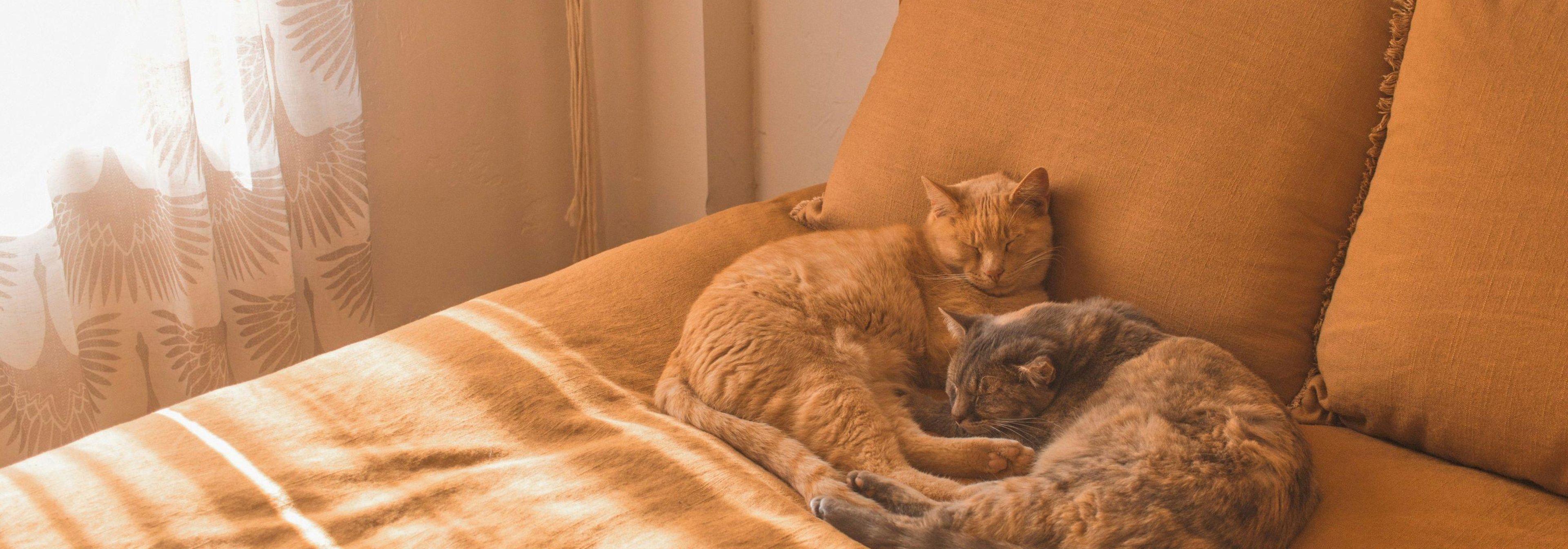
Whether it’s a dog or a cat in bed—sharing your sleeping space with your pet has many fans, but it’s not the best choice for everyone. Here’s a direct comparison of the most common pros and cons:
Sleeping in the same bed as your pet is a very personal decision. Those who find it emotionally rewarding and have no health restrictions can certainly benefit from it. However, those who suffer from sleep problems, allergies, or hygiene concerns should consider alternatives, such as having the pet in the same room—but not in the bed.


Do a husband and wife sleep better with a dog in bed?
Research on sleeping with pets is still in its infancy. Much of the evidence is based on surveys in which people report how well they sleep with a dog or cat. There are also initial studies using movement tracking (known as actigraphy), but comprehensive laboratory measurements, such as those conducted in a sleep lab, are still lacking.
Therefore, the data available so far primarily show correlations—whether men and women sleep better with a dog in bed or whether a pet is actually the cause of poorer sleep cannot yet be definitively determined.
Scientific Facts:
Large-scale survey: A large U.S. study involving over 1,500 participants found that people who sleep with a pet in their bedroom report poor sleep and difficulty falling asleep more frequently than those without a pet in the room. The often-hoped-for “protection against stress” provided by the pet’s presence was not evident in the data.
Notably: These effects primarily affected dog owners. No similar disadvantage was observed with cats—in this case, sleep quality was comparable.
How disruptive are dogs, really? Measurements using so-called motion trackers show that when dogs move during sleep, we humans often react as well—frequently without even realizing it. A small pilot study involving five human-dog pairs revealed that dogs’ movements often occurred before those of their human partners. While this slightly affected sleep quality, it did not cause significant disruption.
In another study involving twelve women, it became clear that having a dog in bed can increase the likelihood of moving more during the night—even though many of the participants did not subjectively find this disruptive at all.
Dog in the Room vs. in the Bed: A small study by the Mayo Clinic involving 40 dog owners found that when the dog slept in the bedroom but not in the bed, overall sleep quality was good—so-called sleep efficiency was about 83%. If, on the other hand, the dog slept in the bed, efficiency dropped slightly to around 80% and there were more frequent brief periods of wakefulness during the night.
Even though the study examined only a small group, a commonly recommended tip can be derived from it: If your sleep is easily disturbed, it’s better to let your pet sleep next to the bed—not directly in it.
Dogs vs. Cats (subjective): In an online survey of 962 women in the U.S., 55% reported sleeping in bed with at least one dog, while 31% shared their bed with one or more cats. Interestingly, dogs were perceived as more pleasant and less disruptive than human partners—while the opposite was true for cats. Cats were perceived as being just as disruptive as humans and also conveyed a lesser sense of security. Dogs often have a calmer, more synchronized sleep rhythm, whereas cats are naturally more nocturnal and tend to be active at night. This explains why cats are more frequently perceived as disruptive.
The objective sleep score (PSQI) did not differ significantly—regardless of whether a pet was in bed or not. However, the researchers suspect that sleep routines differ among dog owners: Many go to bed earlier, which could affect sleep in the long term.
Expert perspective: Sleep medicine specialist Melissa Milanak (Medical University of South Carolina) reports from her practice: Many people are woken up at night by their pets—for example, because dogs are light sleepers or because cats are most active at dusk and at night.
Nevertheless, many people do not want to ban their pets from the bedroom. They value the emotional closeness and are often willing to put up with minor sleep disturbances in exchange for a sense of closeness and security.
In short:
Pets in the bedroom can slightly impair sleep quality—especially dogs, which can be disruptive due to their movements or noises. Cats are perceived as being just as disruptive as people. Nevertheless, many find the closeness emotionally valuable and consciously accept minor disturbances. Those who are sensitive to nighttime disturbances should let their pet sleep next to the bed instead.
Our Evening Routines for More Peace & Restful Sleep




Are dogs and cats in bed bad for your health?
A pet in bed provides warmth and closeness—but also fur, dirt, and possibly germs. Is sleeping with dogs and cats in bed actually harmful to your health? The risk of infection from sleeping with pets is very low for healthy people, provided the animals receive regular veterinary care and are well-groomed. However, people with weakened immune systems or young children should be especially careful.
If you sleep with a dog or cat, you should therefore pay special attention to hygiene in the bedroom. With these 5 simple steps, you can keep your sleeping environment clean and healthy—even for people with allergies or sensitive skin.
- Change your bedding regularly: Wash your bedding weekly at a temperature of at least 60°C to reliably remove pet hair, dander, and any germs.
- Keep their coat and paws clean: Clean your pet’s paws after walks or outdoor time, and brush their coat regularly—this reduces dirt and hair in the bed.
- Use a separate blanket for your pet: Place a separate blanket on your bed that’s intended solely for your pet. It protects your bedding and is easy to wash.
- Keep the bedroom clean: Vacuum regularly with a HEPA-filter vacuum and air out the room daily—this helps combat dust, pollen, and odors.
- Weigh your options carefully if you have allergies: If you suffer from pet dander allergies or asthma, a pet-free bed or even a pet-free bedroom may be a good idea—if in doubt, talk to your doctor.


When should pets not sleep in bed?
As nice as it is to be close to your pet, there are situations where it’s better for the animal not to sleep in bed. The health and safety of both people and pets are the top priority. The following points will help you assess the situation:
If you have allergies or respiratory conditions: If you’re allergic to pet dander or suffer from asthma, you should keep your bed—and ideally your entire bedroom—pet-free whenever possible.
- If you have a weakened immune system: People with chronic illnesses, those who are pregnant, or those recovering from surgery should avoid close contact in bed—germs and parasites can pose a risk.
- If there are small children in the household: Toddlers can be unintentionally crushed or injured by the pet. It’s also difficult to monitor nighttime hygiene when multiple people are in bed together.
- If the pet is very restless: Dogs or cats that move around a lot, bark, or meow at night can significantly disrupt your sleep. Running around or jumping up at night is also a problem.
- If there are behavioral issues or dominance issues: Some pets develop territorial behavior in bed, won’t let anyone else near “their spot,” or show signs of jealousy. In these cases, the pet may need clear boundaries.
Alternatives: A shared bedroom without a bed
- Don’t want to give up being close to your pet entirely? Then a compromise might help: a shared bedroom—but separate sleeping areas.
- A dog bed or cat cushion next to the bed: This way, your pet stays close to you without sharing your mattress.
- Washable pads or orthopedic pet beds: They promote both comfort and hygiene.
- Establish clear rules: Designate specific spots where your pet is allowed to sleep—and be consistent.
- Help them adjust: Use treats or rituals to make your pet’s new sleeping spot appealing.
This way, you’ll have both closeness and structure—for peaceful nights with a clear separation between cuddling and sleeping.

More Peace & Restful Sleep in 21 Days
Our 21-Day Online Sleep Course


Conclusion: A personal decision
Sleeping with pets is a very personal decision—there’s no right or wrong. For some, being close to their pet brings peace, comfort, and a sense of security. Others cite restlessness, allergies, or hygiene concerns as clear reasons against it. It’s important to honestly assess your own situation: How well do you really sleep? Do you have any health limitations? And how does your pet behave at night?
With a little mindfulness, clear rules, and the right conditions, sharing a bed can work well—but it doesn’t have to. Make a conscious decision that works best for you and your pet.


FAQ: The Most Common Questions About Sleeping with Pets
FAQ: The Most Common Questions About Sleeping with Pets
For healthy people, this is generally safe. Good hygiene, regular grooming, and a pet-free sleeping area are important if you have allergies or a weakened immune system.
Possible drawbacks include pet hair in the bed, disturbed sleep, hygiene issues, or health risks—especially for people with allergies, asthma, or a weakened immune system.
Yes, dogs in particular can interrupt sleep with their movements or noises. However, many people are barely aware of this or simply get used to it.
Washing the bedding weekly, keeping their paws clean, grooming their fur, and providing the pet with its own blanket help keep the sleeping area clean.
A cozy sleeping spot right next to the bed—such as a basket or cat pillow—offers closeness without sharing the bed. This way, the bond remains intact without compromising hygiene or sleep.