
Headaches After Waking Up

You wake up—and your head feels tight, throbs, or feels like it’s wrapped in cotton. Waking up with a headache is frustrating, drains your energy, and makes it hard to start the day. Often, there are factors you can influence: tension headaches caused by neck tension and an uncomfortable sleeping position, morning migraines, lack of sleep, teeth grinding, or breathing problems like sleep apnea. Sometimes your bedding setup—pillow, mattress, and room climate—also plays a role. In this article, you’ll learn why headaches occur in the morning (sometimes even while you’re still in bed), which home remedies provide short-term relief, how to improve headaches and sleep quality in the long term—and when it’s important to seek medical advice.








Headaches upon waking: How common is this, and why does it affect you?
Headaches upon waking are more common than many people think. According to studies, between 5% and 8% of the population regularly wake up with these symptoms. The causes can vary widely: short-term triggers such as restless sleep, tense neck muscles, or a stressful day the day before, as well as chronic factors like morning migraines, sleep apnea, or nighttime teeth grinding. In addition, blood pressure, muscle tension, lymphatic drainage, and hormone levels change during the night—in sensitive individuals, this can significantly lower the pain threshold in the morning. People who tend to suffer from sleep deprivation or an unfavorable sleeping position are particularly prone to morning headaches.
Quick Help – Immediate Relief & Next Steps for Morning Headaches
- Keep a Pain & Sleep Log
Record the time, duration, pain intensity, sleep quality, and possible triggers to identify patterns. - Adjust Your Sleep Environment
Check for an ergonomic pillow and a suitable mattress. Ensure a comfortable room temperature and good air quality to prevent headaches while lying down. - Reduce Stress Before Bed
10–15 minutes of breathing exercises, meditation, or gentle stretching can reduce tension headaches (Verywell Mind). Give your eyes a break by avoiding straining to look at a computer screen for 2 hours before bed, and relax them using the “palm-over-eyes” technique. - Recognizing & Treating Sleep Disorders
If you experience symptoms such as loud snoring, pauses in breathing, or constant morning fatigue, you should see a doctor to rule out sleep apnea. - Use Home Remedies Targeted
Drinking plenty of fluids, gentle neck stretches, cold or warm compresses, and a quiet, darkened room can help relieve acute symptoms.

Sleep better, live healthier—with our sleep course. Get up to a 100% refund.
Discover the online sleep course now

Headaches After Waking Up: Common Causes
If you regularly wake up with headaches, you should know that the triggers are often complex and can exacerbate one another. Some causes are easy to address, while others require medical evaluation.
Tension headaches—typical pressure in the morning
Tension headaches often feel like a dull, pressing band around the head. They’re frequently caused by muscle tension in the neck and shoulder area that doesn’t resolve overnight. Triggers often include stress, poor sleeping posture, or a lack of relaxation during the night. People who wake up with neck pain after sleeping usually experience this exact type of headache.
Morning Migraines – When the Day Begins with Pain
Morning migraines are often influenced by hormones or sleep patterns. Many sufferers report that migraine attacks occur more frequently in the early morning hours—possibly because hormone levels such as cortisol and melatonin fluctuate, or because typical triggers like irregular sleep schedules, certain foods, or dehydration come into play.
Neck Tension & Sleep Position – Triggers for Morning Headaches
Your sleeping position plays a major role:
Sleeping on your side can cause your neck to hyperextend if your pillow is the wrong height. In addition, this puts one-sided strain on the jaw joints, which over time can lead to muscle imbalances and teeth grinding.
Sleeping on your back is often the gentlest option if your head and spine are in a neutral position.
Sleeping on your stomach often leads to twisting of the cervical spine, which contributes to sleep-position-related headaches. The same applies to the jaw here as when sleeping on your side.
Sleep Apnea Headaches – When Breathing Stops
Sleep apnea involves repeated pauses in breathing throughout the night. This leads to a lack of oxygen, which can cause morning headaches, daytime sleepiness, and difficulty concentrating. Typical signs include loud snoring, restless sleep, and exhaustion despite getting enough sleep.
Teeth Grinding (Bruxism) – Strain on the Jaw and Head
Nighttime teeth grinding places significant strain on the chewing muscles and the temporomandibular joint. This tension spreads to the temples, neck, and forehead. Over the long term, the right exercises, lifestyle changes, and a therapeutically effective dental splint can help reduce grinding or clenching and prevent temporomandibular joint problems as well as morning headaches.
Lack of Sleep & Lifestyle – Underestimated Triggers
Insufficient or restless sleep impairs nighttime recovery. The risk of headaches is exacerbated by factors such as alcohol consumption, dehydration, excessive caffeine intake, or late-night screen light, which disrupts the sleep cycle.
Pillows, Mattresses, & Sleep Environment – Underestimated Factors
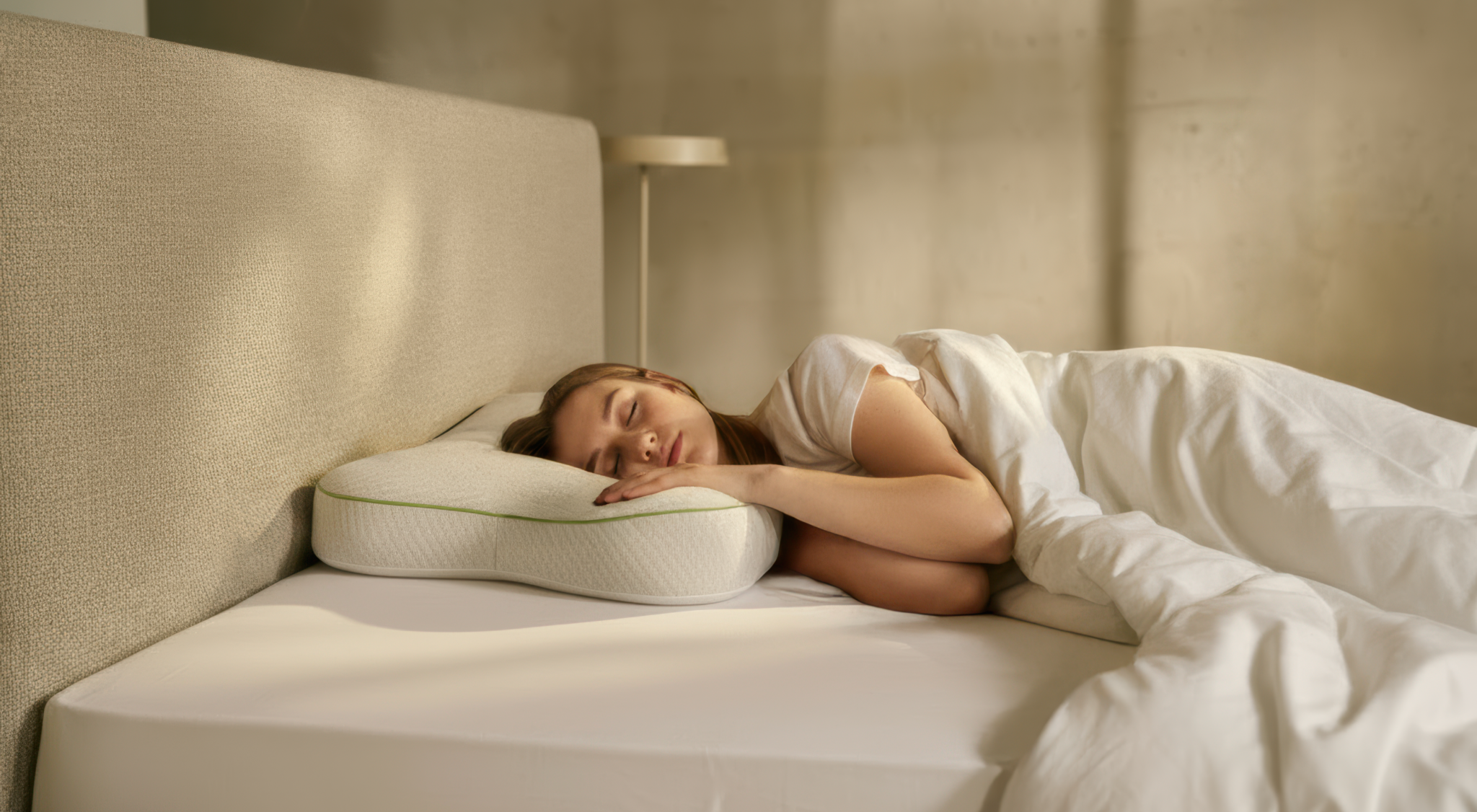
An unsuitable pillow or a sagging mattress can strain the neck and shoulder muscles. Optimizing your bed environment —that is, adjusting pillow height, support, and room temperature—not only reduces tension but also improves sleep quality.
Other Triggers—From Allergies to Cervical Spine Problems
Allergies can lead to a stuffy nose at night, poor oxygen supply, and morning headaches.
Certain medications (e.g., blood pressure or hormone medications) can cause headaches as a side effect.
Cervical spineproblems, such as blockages, muscular imbalances, or degenerative disc disease, also affect the head area.
If you know your own triggers and address them specifically, you can significantly reduce the risk of morning headaches and start your day feeling more refreshed in the long run.

Fall Asleep More Easily
Discover Evening Routines

Waking Up with a Headache: Migraine vs. Tension Headache
Not every morning headache feels the same. To prevent and treat them effectively, it’s important to distinguish between migraines and tension headaches. Both can occur upon waking, but they have different symptoms, triggers, and courses.
Typical migraine—throbbing pain with accompanying symptoms
With morning migraines, the pain is often one-sided, throbbing, or stabbing. Nausea, vomiting, and sensitivity to light and sound frequently accompany the pain. Some people experience a warning aura beforehand, characterized by visual disturbances or tingling sensations. Migraine attacks frequently occur after restless nights, changes in sleep patterns, or hormonal fluctuations, and can even begin while lying down.
Typical Tension Headaches – Dull Pressure and Neck Involvement
Tension headaches usually manifest as a bilateral, dull pressure that encircles the entire head—often described as a “tight band.” The neck and shoulder muscles are frequently tense as well, which intensifies the discomfort. They can last for hours but usually do not worsen with movement, unlike migraines.
“Headaches while lying down” vs. after getting up—what your position reveals
- Headaches while lying down may indicate changes in blood pressure, sinus problems, impaired lymphatic drainage, or poor neck posture.
- Headaches that occur only after getting out of bed are often caused by circulatory adjustments, muscle tension, or dehydration.
- If headaches remain equally severe in both positions, this may indicate migraines or chronic tension headaches.
Carefully observing the type of pain, its duration, how it varies with position, and any accompanying symptoms is important for identifying the correct cause and providing targeted treatment.
More Articles





Morning Headaches: When Should You See a Doctor?
Occasional morning headaches are often harmless, but in certain situations, a medical evaluation is urgently needed. Especially if the symptoms are new, unusually severe, or accompanied by other symptoms, you shouldn’t hesitate.
Warning Signs (Red Flags)
These symptoms require an immediate medical examination—and, if in doubt, a visit to the emergency room:
- A sudden, extremely severe headache (“thunderclap headache”)
- Neurological deficits such as paralysis, speech difficulties, or vision problems
- Fever and neck stiffness, possible signs of meningitis
- Headaches following an accident or head injury
- New headaches starting at age 50, especially without a known history
- Headaches during pregnancy, to rule out complications
- Increasing frequency or intensity of pain over weeks to months
Record duration and frequency
Structured records help your doctor make a precise diagnosis:
- Headache diary: Note the date, time, duration, pain intensity, possible triggers, and accompanying symptoms.
- Sleep log: Record sleep duration, sleep quality, nighttime interruptions, and sleep position.
- Include lifestyle factors such as stress levels, diet, fluid intake, and medication use.
Early evaluation can help rule out serious causes and initiate appropriate treatment. Carefully documenting your symptoms supports the diagnostic process and often saves valuable time.


Headaches When Lying Down: The Effects of Sleep Position and Other Factors
Many people notice that headaches begin while lying down or intensify immediately after waking up. This is often due to an unfavorable sleeping position, an ill-fitting pillow, or a mattress that does not provide optimal support for the body. The bed environment and breathing habits also play an important role.
Optimizing Your Sleeping Position – Maintaining Spinal Neutrality
The best way to prevent headaches caused by an incorrect sleeping position is to keep the spine in a neutral alignment:
- Supine position: Ideally, the head should be positioned so that the neck and spine remain in a straight line.
- Side sleeping: Adjust the pillow height to shoulder width to prevent the neck from bending at an angle. Switch sides to avoid one-sided strain.
- Stomach position: Avoid this as much as possible, as it leads to twisting of the cervical spine and promotes tension.
Sleeping Correctly: What Is the Best Sleeping Position?
The Right Pillow —Height, Material, and Neck Support
A pillow that is too high or too low can strain the neck muscles and cervical spine, which can lead to headaches. The following are recommended:
- Height: Adjust to your sleeping position and shoulder width
- Material: Memory foam or ergonomic neck support pillows for even pressure distribution
- Replacement: Replace at least every 2–3 years to prevent loss of shape and hygiene issues
Your mattress should also suit your sleeping position—models that are too soft allow your body to sink in and put strain on your spine, while those that are too hard lead to pressure points and tension. The ideal mattress provides even support for your body and conforms to your shoulder and pelvic areas.
Promote nasal breathing—reduce snoring & avoid mouth breathing
Breathing through your mouth at night can lead to dry mucous membranes, oxygen deprivation, and morning headaches. The following can help:
- Sleeping on your side or in a slightly elevated supine position to reduce snoring
- Keeping the nasal passages clear (e.g., through nasal irrigation, allergy-friendly bedding, or nasal strips)
- Exercising the tongue muscles and maintaining the correct tongue position against the roof of the mouth
- Seek medical evaluation if you have a chronically stuffy nose or suspect sleep apnea
Mouth taping for better sleep—does it work?
The right combination of an ergonomic sleeping position, a suitable pillow, and a suitable mattress can significantly reduce the risk of headaches while lying down and improve sleep quality in the long term.


Everyday tips for fewer morning headaches
With small changes in your daily routine, you can significantly reduce the likelihood of morning headaches. The key is to minimize triggers and provide optimal support for both your body and mind even before you go to sleep.
Home Remedies for Emergencies
- Drink water: Quickly rehydrate in the morning.
- Light exercise & stretching: Relaxes tense neck and shoulder muscles.
- Calm breathing: Reduces stress and improves oxygen supply.
- Peppermint oil on your temples: Cools the area and can relieve pain.
- Cold or heat: Use cold for migraines, heat for tension headaches.
Incorporate relaxation routines
- Neck mobilization before bed to relieve tension.
- Progressive muscle relaxation: Promotes deep relaxation.
- 4-7-8 breathing: Helps lower your heart rate and makes it easier to fall asleep.
- Palm compression for relaxed eyes
Sleep better—wake up better
- Stick toa regular bedtime, even on weekends.
- Evening routine: Dim the lights, avoid screens 1–2 hours before bed, and avoid caffeine in the afternoon.
- Optimal room climate: 16–18 °C and fresh air promote restful sleep.
Morning routine for a good start
- A glass of water right after getting up.
- A light breakfast for energy and stable blood sugar levels.
- Get some fresh air: Step up to the window or go outside for a few minutes.
Watch for triggers—alcohol, lack of sleep, and irregular bedtimes
Certain habits significantly increase the risk of morning headaches. Alcohol can impair sleep quality, lead to dehydration, and trigger migraine attacks. Lack of sleep or restless nights reduce nighttime recovery and increase sensitivity to pain. Irregular bedtimes also disrupt the natural sleep-wake cycle—even a few hours’ deviation can trigger morning discomfort in sensitive individuals.
Alcohol and Sleep: Helpful or Harmful?
Regular rest, good sleep habits, and small adjustments to your daily routine are often more effective at combating morning headaches than many people realize—and they help you start your day with more energy.


FAQ: Headaches After Waking Up
Home remedies such as drinking water, gentle stretching, or peppermint oil can relieve mild tension headaches because they promote blood circulation and relieve muscle tension. If they are no longer sufficient, the pain worsens, or the headaches occur more frequently, you should consult a doctor.
Typical signs include tense chewing muscles in the morning, jaw noises when opening the mouth, tooth wear, or a feeling of pressure in the temple area. It’s also not uncommon for partners to notice grinding noises. The right exercises, combined with a therapeutically effective dental guard from your dentist, can help counteract teeth grinding, protect your teeth, and prevent further damage.
Signs include loud snoring, pauses in breathing during sleep (observed by partners), severe daytime fatigue, and morning headaches. A sleep medicine evaluation provides certainty and enables targeted treatment.
Sleeping on your back or side with an ergonomically designed pillow relieves pressure on the neck and shoulder muscles. Sleeping on your stomach should be avoided, as it puts too much strain on the cervical spine.
Immediate measures include a quiet, darkened room, staying well-hydrated, and taking medication that works for you. In the long term, regular sleep schedules, stress reduction, avoiding personal triggers, and a medically tailored migraine prevention regimen can help.
If headaches suddenly become very severe, are accompanied by neurological deficits, fever, neck stiffness, or visual disturbances, or occur for the first time after age 50, you should see a doctor immediately.
If morning headaches last longer than two weeks, occur several times a week, or are getting progressively worse, a medical evaluation is recommended. Act immediately if warning signs are present.
Conclusion: Act quickly, sleep better—prevent morning headaches
The most important points at a glance:
- Many triggers can be reduced by making small adjustments to your daily routine.
- A good sleep environment is just as important as a consistent sleep schedule.
- Relaxing before bed can help prevent tension headaches and migraine attacks.
- Early diagnosis saves time, prevents further complications, and provides peace of mind.
Our tip for you:
Don’t wait until morning headaches become more frequent—start making simple changes today. Check your pillow and mattress, establish a relaxing evening routine, and relieve neck tension with targeted exercises.