
Back pain is one of the most common complaints—whether caused by prolonged sitting, uneven strain, or a lack of exercise. But is strength training really helpful for back pain, or could it even be harmful?
The good news: Targeted strength training can help relieve back pain. It strengthens the muscles, stabilizes the spine, and counteracts tension. However, proper form is key. Incorrectly performed exercises or excessive strain can worsen the pain. That’s why it’s important to start with gentle, back-friendly exercises and gradually increase the intensity.
In this article, you’ll learn which exercises are particularly effective for a healthy back. You’ll discover what to keep in mind during your workout and how targeted muscle-building can help you achieve a strong, pain-free back in the long term.


Common causes of back pain
Back pain is very common and can be triggered by a variety of factors. One of the most common causes is a lack of physical activity, particularly from sitting for long periods at the office or in daily life. Spending a lot of time in a static posture puts strain on the entire musculoskeletal system, leading to tension and muscular imbalances. This overworks certain muscle groups while weakening others—especially the deep core muscles, which play a central role in maintaining spinal stability.
In addition to a lack of exercise, improper lifting or lifting objects that are too heavy can also cause back pain. If the core muscles aren’t strong enough or the technique is incorrect, the intervertebral discs and the lumbar spine are subjected to excessive strain. Over time, this can lead to signs of wear and tear or even acute pain. Uneven strain in daily life or during sports—such as from favoring one side of the body—can also lead to poor posture and muscle tension.


Recovery Slopes
Available in multiple variants
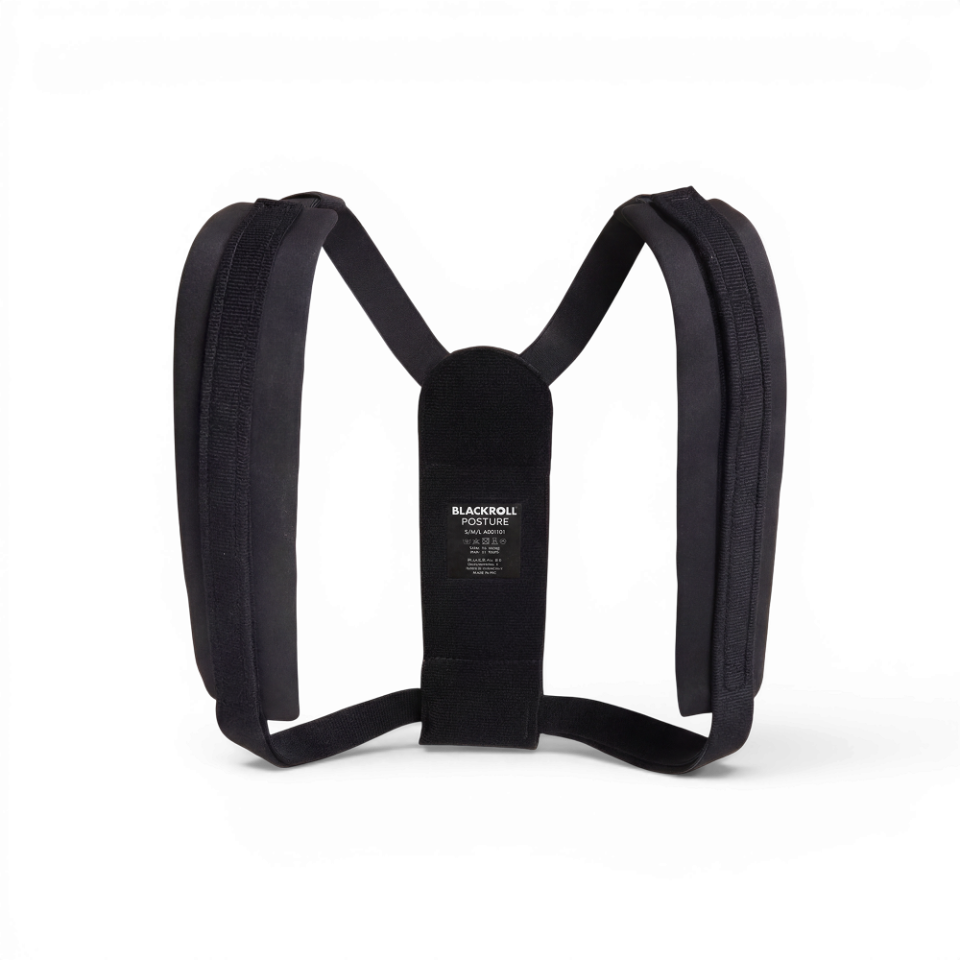

Posture
Available in multiple variants
Psychological stress is another factor that is often underestimated. Emotional tension frequently leads to increased muscle tension, particularly in the neck and lower back. People under chronic stress tend to adopt an unconsciously tense posture, which can reduce blood flow to the muscles and exacerbate pain.
Many people wonder whether strength training can help or even cause harm in such cases. When done correctly—and specifically combined with other techniques such as mobility exercises—strength training is one of the best methods for reducing back pain in the long term. By specifically strengthening the core muscles, the spine is stabilized, poor posture is corrected, and the strain on the intervertebral discs is reduced. However, it is crucial to start with controlled, back-friendly exercises and to increase the intensity gradually. Incorrect techniques or excessive strain can worsen the symptoms. Therefore, it is advisable to seek professional guidance and ensure that the exercises are performed correctly.

Why strength training for back pain?
Many people fear that strength training could worsen back pain. But studies show that the opposite is often true: Targeted muscle training alleviates and prevents back pain in the long term. The muscles play a crucial role in stabilizing the spine and relieving pressure on the intervertebral discs.
1. Strengthening the core muscles: The muscles surrounding the spine—especially the back extensors, the deep abdominal muscles, and the stabilizing muscles in the pelvis—act as a natural support corset. A strong core reduces the strain on the intervertebral discs and joints of the spine. This helps alleviate pain.
2. Correcting Postural Problems: Many cases of back pain result from poor posture, often caused by muscular imbalances. For example, many people have functionally shortened muscles on the front of the body (e.g., hip-flexor muscles), while their back and gluteal muscles are too weak. Strength training corrects these imbalances and promotes an upright posture that is gentle on the back.


3. Spinal Relief and Reduction of Tension: Weak muscles often cause structures not designed to bear weight—such as intervertebral discs or small joints in the spine—to take on the load. This results in pain and tension. Targeted muscle building distributes the load more evenly. This relieves pressure on the spine and reduces pain.
4. Improved blood circulation: Strength training not only increases muscle strength but also improves blood flow in the affected areas. Better blood circulation promotes faster recovery. It also reduces muscle tension, which frequently causes back pain.
5. Long-term prevention of recurring pain: A well-trained back is better able to withstand the stresses of daily life. Regular exercise significantly lowers the risk of recurring back pain. The body learns to better absorb stress, thereby supporting the spine’s natural function.
Important:
Not all strength training is suitable for people suffering from back pain. Incorrect movement patterns, weights that are too heavy, or poor form can worsen the symptoms. That’s why it’s crucial to start with controlled, functional exercises that strengthen the core and promote spinal stability. A personalized training program—ideally under professional guidance—is the key to a strong and pain-free back.


Tips on Strength Training for a Healthy Back
For strength training to actually help relieve back pain, it’s important to focus on proper form and training techniques. Incorrectly performed exercises or excessive strain can actually worsen your symptoms. Here are some proven tips to make your strength training back-friendly and effective:
- Start with a targeted warm-up: Prepare your body before strength training. A short mobility and activation routine helps prepare your muscles for the workout and release tension. Gentle stretching exercises, self-massage with a foam roller, or light core stabilization exercises are ideal for this.
- Focus on core stability: The deep muscles in the abdominal and back regions play a central role in spinal stability. Exercises like planks, bird dogs, or dead bugs effectively strengthen the core. They also protect the spine from improper strain.
- Start with bodyweight or light weights: Don’tstart training with heavy weights right away. It’s best to improve the quality of your movements first. Exercises using your own body weight or light resistance gently strengthen your back and prevent overexertion.
- Choose functional exercises that are gentle on the joints: Not every strength exercise is suitable for back pain. Avoid exercises that involve a severely rounded back or place excessive strain on the spine (e.g., heavy squats or deadlifts without proper form). Instead, functional exercises such as hip thrusts, rowing variations, single-leg exercises, and gentle rotational movements are recommended.
- Pay attention to proper form and technique: Performing exercises correctly is crucial to avoiding improper strain. Here, rotation—or anti-rotation—of the core is important. If you’re unsure, a trainer or physical therapist can check your technique.
- Train regularly, but not excessively: For long-term pain relief, regular training (e.g., 2–3 times a week) is ideal. At the same time, however, you shouldn’t overwork your back. Rest periods are important so that your muscles can recover and build strength.
- Plan for a progressive increase in intensity: Once youfeel comfortable with the exercises, slowly increase the intensity. Either increase the number of repetitions, add extra weight, or choose more complex movement patterns. Always adjust the intensity in a controlled and personalized manner.
- Integrate movement into your daily routine: In addition to targeted strength training, it’s important to incorporate more movement into your daily life outside of your workouts. You should regularly break up prolonged periods of sitting—for example, by practicing dynamic sitting, taking short movement breaks, or going for walks.
- Listen to your body: Back pain is individual—what works for one person may be uncomfortable for another. Therefore, pay close attention to your body’s signals. Mild muscle fatigue is normal, but acute pain is a warning sign. If certain exercises worsen your discomfort, you should modify them or skip them.
- Use complementary measures: In addition to strength training, fascia training, stretching exercises, and targeted mobilization techniques can also help relieve tension and improve back health. Training with a fascia roller or gentle yoga exercises, in particular, can be beneficial.
Only the Best for Your Back
Strength training can be an extremely effective method for providing long-term relief from back pain and specifically strengthening the back muscles. However, the right training strategy is crucial: functional exercises, proper form, and a controlled progression of intensity ensure lasting results and a pain-free spine.




Effective Exercises for Back Pain
To relieve and prevent back pain in the long term, specifically strengthen the stabilizing core muscles. Strengthen both the deep and superficial muscles. This ensures optimal support for the spine. Here are some of the best exercises for a strong, pain-free back:
- 1. Plank (Forearm Plank): Start in a forearm plank position. Place the FASCIAL ROLLER under your forearms. Focus on engaging your core. Hold the position without letting your pelvis drop. To increase the difficulty, alternately lift your feet off the floor or push the FASCIAL ROLLER forward and backward with your arms.

- 2. Bird Dog (back extensor exercise): Start on all fours and wrap the SUPER BAND around your foot. Grasp the other end of the band with your opposite hand. Simultaneously lift your leg and arm. Return to the starting position. In the starting position, your knees should be directly under your hips and your hands directly under your shoulders. Maintain core tension throughout the entire exercise and avoid arching your back.

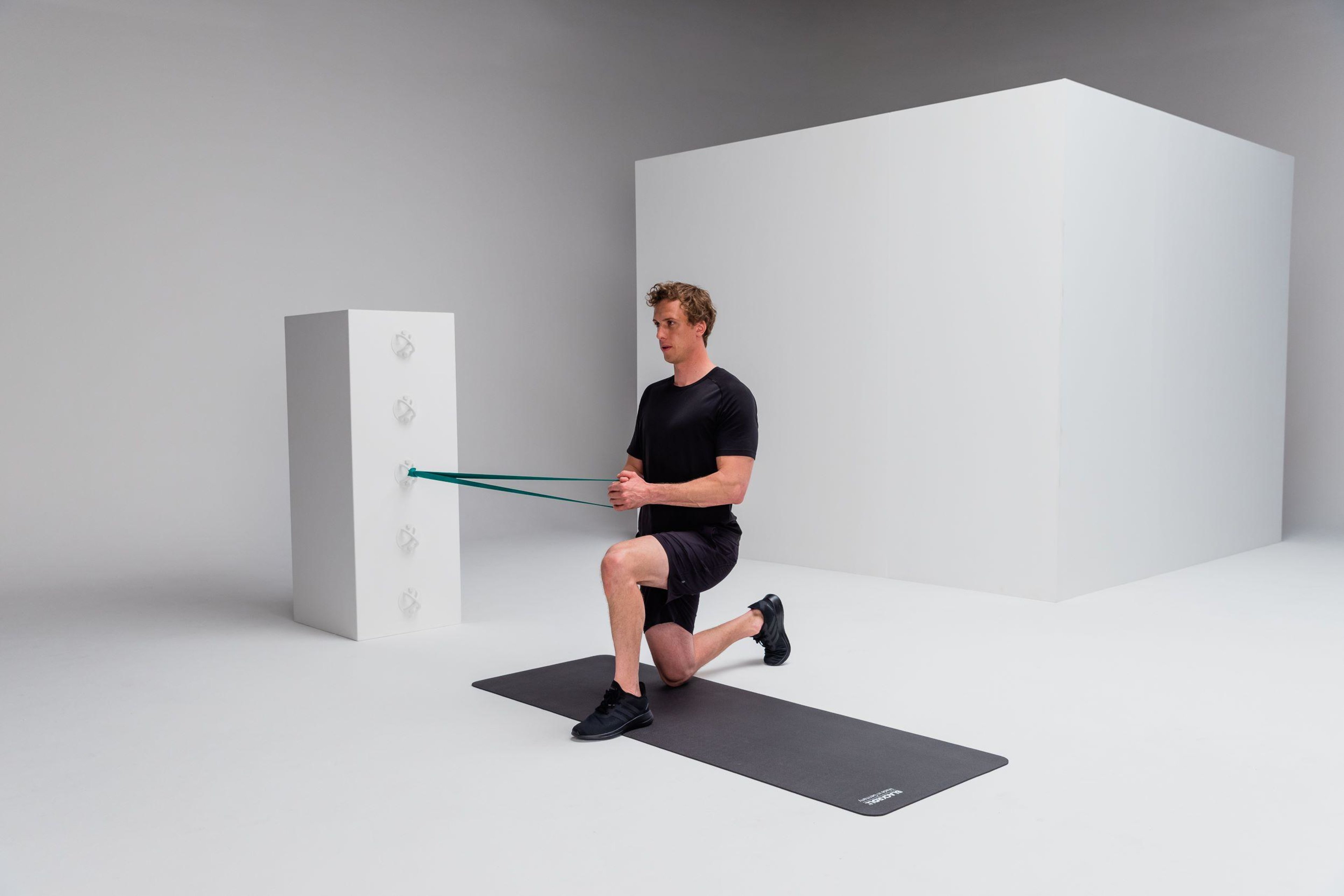
- 3. Pallof Press: Secure the SUPER BAND to an object at thigh height. Kneel in a side lunge position next to it. Grasp the free end of the band. Move away from the anchor point so that the band is under tension. Push the band forward. Then return to the starting position.
- 4. Push-up: Start in a push-up position with your hands on the FASCIAL ROLLER. Keep your core engaged without letting your pelvis drop. Bend your elbows. Lower your upper body. Push yourself back to the starting position. To reduce the difficulty, perform the exercise with your knees on the floor.

- 5. Forearm Side Plank: Start in a forearm side plank. Position the FASCIAL ROLLER under your forearms. Maintain core engagement. Hold the position without letting your pelvis drop. To increase the difficulty, lift and lower your top leg.

- 6. Mountain Climber: Start in a push-up position. Place the FASCIAL ROLLER under your hands. Hold this position without letting your pelvis drop. Alternately pull your legs toward your chest.

These exercises are simple and particularly effective. They specifically strengthen your entire core without putting unnecessary strain on your back. It’s important to always maintain proper form and to increase the intensity gradually. If you feel pain during an exercise, adjust it or switch to a different one.


Mistakes to Avoid in Strength Training When Dealing with Back Pain
A strong back is essential for pain-free movement in everyday life—and targeted strength training can be a great help. However, it’s crucial that the exercises are performed correctly. Incorrect technique or an inappropriate choice of exercises can not only prevent the desired progress but even lead to new symptoms. To train effectively and safely, you should avoid these common mistakes:
- Weights that are too heavy and poor form: Many people think that heavy training leads to a strong back more quickly. But especially when dealing with back pain, it’s more important to master proper form before increasing the load. Weights that are too heavy or sloppy movements often lead to strain on the spine and exacerbate existing symptoms. Therefore, start with moderate resistance and increase it gradually.
- Lack of core stability: A common mistake is failing to sufficiently engage the core muscles (abdominal and lower back muscles). Without a stable core, the spine bears the brunt of the load, which can lead to pain.
- Incorrect exercise selection: Not every strength exercise is suitable for people with back pain. Heavy deadlifts, deep squats, or uncontrolled rotational movements can place unnecessary strain on the spine. Instead, choose functional exercises that strengthen the back muscles without overloading the intervertebral discs.
- Failure to correct muscular imbalances: Many people train only certain muscle groups—such as the back extensors—while neglecting the abdominal, gluteal, or lateral core muscles. This leads to muscular imbalances that can exacerbate pain over time. A balanced workout routine is crucial for a healthy spine.
- Too little focus on mobility and stretching: Another problem is that many people focus exclusively on building muscle and neglect mobility. Functionally shortened muscles—especially in the hips and the posterior fascial chain—can increase strain on the back. Therefore, supplement your strength training with mobility and stretching exercises for the hips, legs, and spine.
- Training too frequently or irregularly: Both overly intense and irregular training can be counterproductive. If you don’t give your back enough time to recover, it can lead to overuse injuries. On the other hand, training only once a month is of little benefit. A consistent but moderate training program (2–3 sessions per week) is ideal.
- Ignoring pain or continuing with incorrect exercises: Pain is a signal that something needs to change. Your body is telling you that you should make an adjustment. If an exercise causes pain, it should be modified or replaced with an alternative movement. Continuing to exercise through pain risks long-term damage. If you’re unsure, it may be helpful to consult a physical therapist or an experienced trainer.
So keep in mind:
Poor form, improper exercise selection, or an unbalanced workout often exacerbate back pain. However, you can avoid this by focusing on proper form and sensible exercise selection. A balanced training strategy ensures a strong and pain-free back in the long term through strength training.


Don’t forget mobility training
Strength training alone does not provide lasting relief from back pain. Your mobility plays an equally important role. Functionally shortened muscles or restricted joint movement lead to poor posture and tension. This puts additional strain on the spine.
The following body parts are often particularly affected:
The hip flexors: Prolonged sitting causes them to remain tense, pulling the lumbar spine into a swayback posture.
The posterior fascial chain (back extensors, hamstrings, calves): Limited mobility here can place unnatural strain on the spine.
The thoracic spine: If it’s too stiff, the lower back often has to take on too much of the workload—a common cause of pain.
So incorporate targeted mobility exercises into your strength training as often as possible—this can help you avoid back pain.
Here are a few examples to help mobilize your body:
Spinal mobilization: Start in a cross-legged position. Place the BLACKROLL to your right . Place your right hand on the roller. Extend your left arm over your head while leaning your upper body to the right. Hold this position before switching sides. Your upper body should only perform a lateral bend during this exercise.
Be careful not to tilt forward or backward.

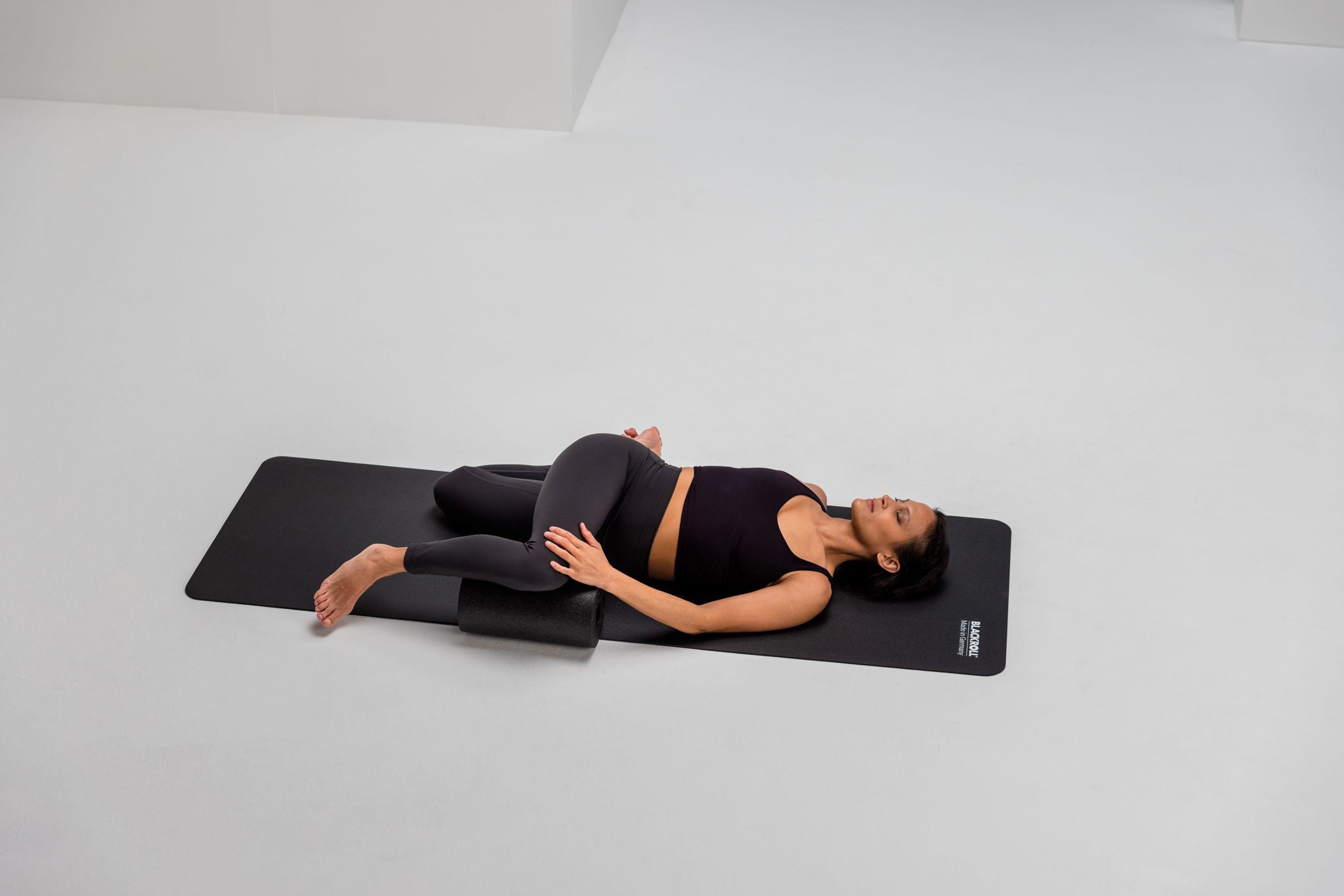
Pretzel: Start in a side-lying position on the floor. Bend the knee of your top leg to 90 degrees. Place the FASCIA ROLL under the bent knee to stabilize your pelvis for the following mobilization. Bring your bottom leg into an active hip extension. Grab the back of your foot to increase the stretch. Try to rest your entire upper back on the floor.
Make sure your top leg does not leave the FASCIAL ROLLER . Your other leg should remain in full hip extension throughout the entire exercise.
Cat-Cow: Start on all fours with your head in line with your spine. Your hands should be directly under your shoulders and your hips directly over your knees. As you exhale, round your back. The movement should come from your entire spine. Pull your navel inward and bring your chin toward your chest. As you inhale, arch your back and look up toward the sky.
Tip: This exercise for neck painhelps mobilize your lumbar, thoracic, and cervical spine. The combined breathing technique also helps mobilize your diaphragm.

The combination of strength training and targeted mobility work ensures a healthy, pain-free back. If you only build strength but neglect mobility, you risk improper strain and limited functionality. That’s why it’s important to stay strong AND flexible!
Studies & Sources
More Interesting Articles