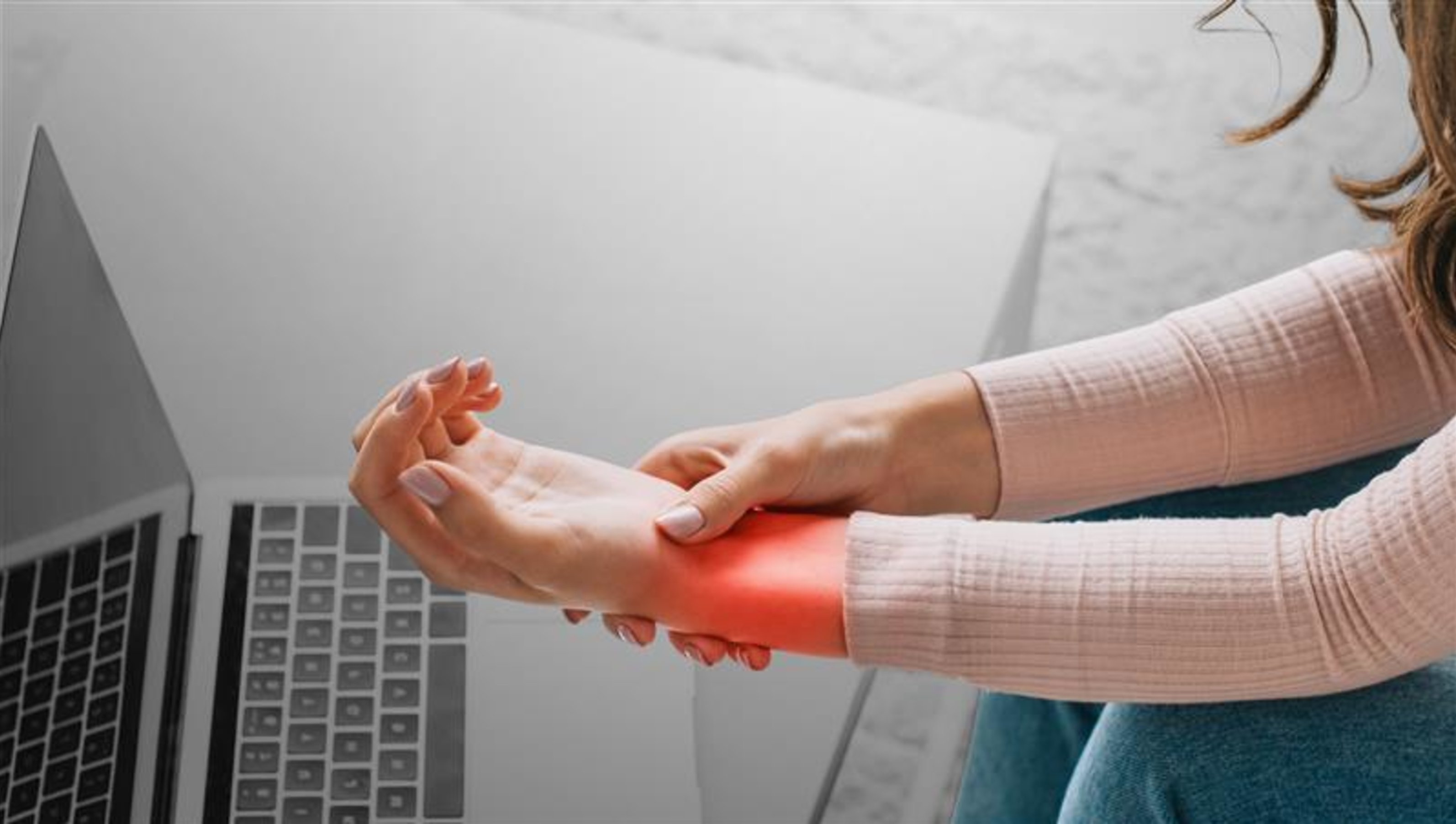
Mouse Arm (RSI Syndrome)

Does this sound familiar—after a long day of working at the computer, your forearm hurts, your wrist feels stiff, or your fingers tingle slightly?
Then you might be experiencing what’s known as “mouse arm”—also called RSI (Repetitive Strain Injury). This insidious overuse injury is caused by repetitive, one-sided movements, such as those involved in using a mouse and keyboard.
What starts out as harmless can lead to persistent pain and limited mobility if left untreated. In this article, you’ll learn what mouse arm is, how it develops, what the typical symptoms are, and what really helps to relieve and prevent discomfort—from simple exercises to ergonomic tips for your workspace.


Mouse Arm – Symptoms & Differentiation
Mouse arm, medically known as RSI (Repetitive Strain Injury), is a chronic condition caused by overuse of muscles, fascia, tendons, and nerves—primarily in the hand, forearm, elbow, and shoulder. It is caused by repetitive, monotonous movements, such as clicking, typing, or scrolling on a computer or cell phone. These tiny, constantly recurring stresses lead to micro-injuries in the tissue, which can develop into painful symptoms over weeks or months.
RSI syndrome is an umbrella term for various forms of strain caused by monotonous activities. “Mouse arm” is the best-known variant and primarily affects people who work at a computer screen for many hours each day.
Typical characteristics of “mouse arm”:
- Slow onset: Symptoms develop gradually—often only after months of intensive computer work.
- Wide range of symptoms: Pain, tingling, a feeling of tension, or loss of strength in the affected arm. Sometimes the hand is also affected.
- Cause: Repetitive strain without sufficient breaks or ergonomic support.
Distinction from similar conditions:
- Tendinitis:
→ usually occurs suddenly and is localized; caused by acute irritation of individual tendons. - Mouse arm / RSI syndrome:
→ develops slowly and systemically; affects multiple structures simultaneously. - Computer arm / secretary’s disease:
→ not a medical term, but a colloquial term for the same type of overuse.
“Mouse arm” is not a single injury, but rather the result of prolonged improper use or overuse. If countermeasures are taken early—such as targeted exercises, rest, and ergonomic adjustments—the progression can often be effectively halted.
Causes & Risk Factors: How Does Mouse Arm Develop?
Mouse arm develops when muscles, tendons, and nerves are overloaded over an extended period due to repetitive movements and static postures. People who spend many hours a day working with a mouse and keyboard —for example, in an office, while working from home, or while gaming—are particularly at risk. This was also confirmed by a study conducted in 2024. The constant repetition of small movements leads to microtrauma in the tissue, which can trigger inflammatory processes, circulatory disorders, and neuromuscular imbalances.
Overview of the main causes:
- Repetitive movements of the hand and finger muscles (e.g., clicking, scrolling, typing)
- Static postures whileworking at a computer—such as a wrist that is constantly bent
- Poor ergonomics: mouse positioned too high, incorrect desk height, or lack of support
- Insufficient breaks and physical activity, which exacerbates muscle fatigue
- Psychosocial factors such as stress or a heavy workload can, according to studies, further increase muscle tension.
A recent study shows that RSI conditions such as “mouse arm” must increasingly be understood as multifactorial disorders: Not only physical strain but also neural sensitization and biomechanical maladjustments play a role. This means that the longer the strain persists without countermeasures, the more firmly the pain memory becomes entrenched—even if the original cause has already subsided.
Risk Factors in Everyday Life:
- Working for long periods without taking breaks to move around
- Repetitive strain on the dominant hand
- Working with non-ergonomic equipment
- High time pressure or mental stress
- Lack of recovery and stretching after work
Mouse arm doesn’t develop “overnight,” but is the result of chronic micro-strain. Good workplace ergonomics, regular movement breaks, and targeted compensatory exercises are the most effective ways to break the vicious cycle of overexertion and pain.
Mouse arm symptoms
The symptoms of mouse arm (RSI syndrome) usually develop gradually. At first, only occasional feelings of tension or mild pain occur after long periods of computer use—over time, these can develop into chronic symptoms that significantly limit daily life and the ability to work.
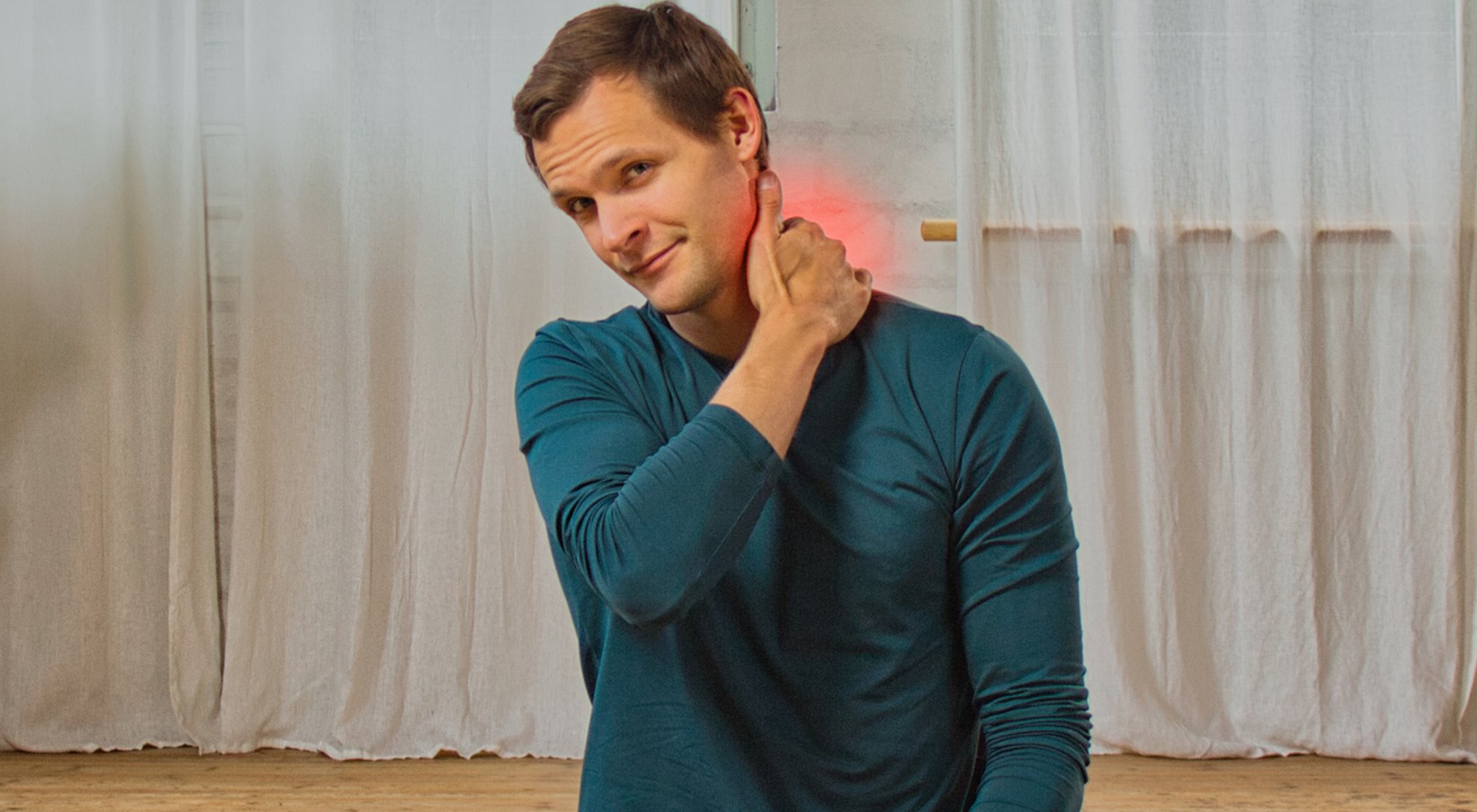
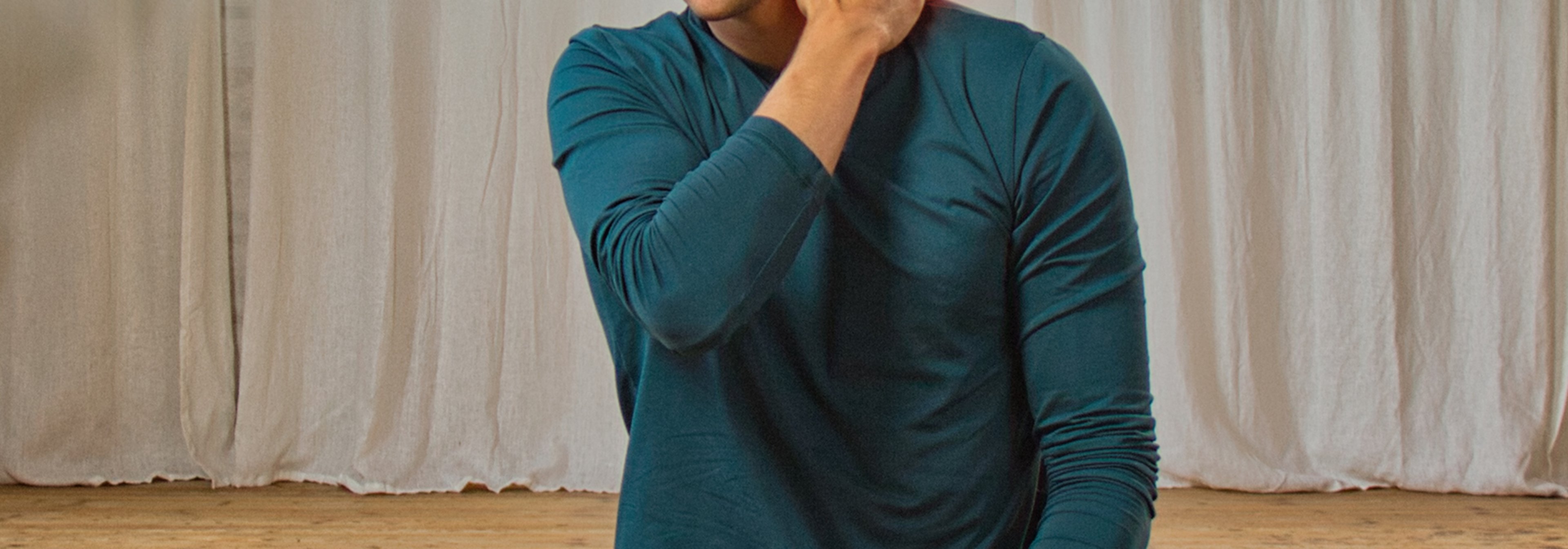
Typically, the pain does not originate in a single joint but spreads along the hand, forearm, elbow, shoulder, and neck. The symptoms are closely related to the duration and intensity of the strain.
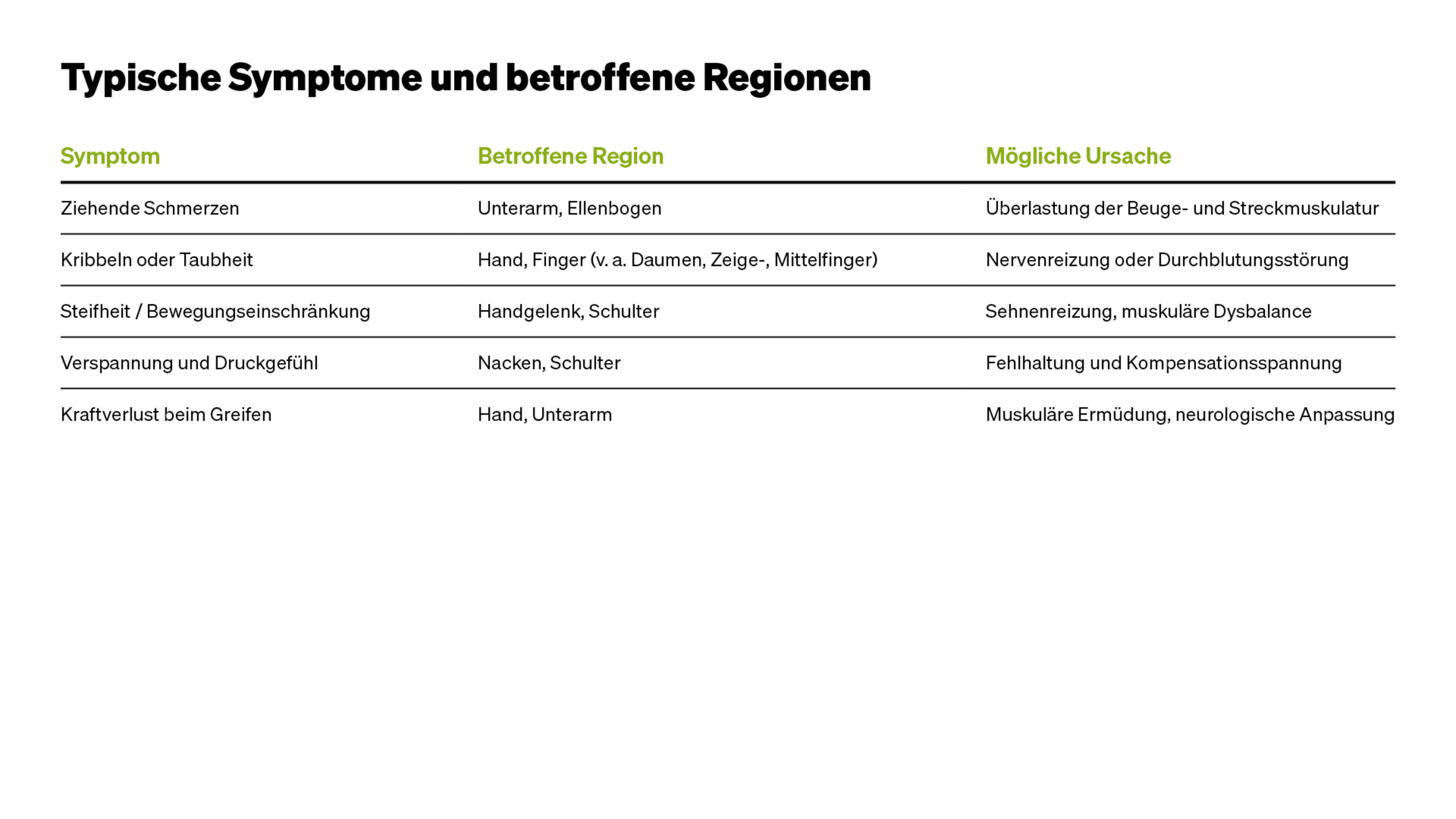
Common symptoms of mouse arm:
- Pain or a burning sensation in the wrist, forearm, or elbow
- Tingling and numbness in the fingers or palm
- Stiffness or limited mobility, especially in the morning or after periods of rest
- A feeling of weakness or loss of strength when grasping or holding objects
- Tension in the neck and shoulder area due to poor posture and compensatory movements
- Increasing fatigue during everyday computer use
- Aching pain in the arm at rest
- Aching pain extending from the shoulder to the fingers
In the long term, persistent strain can lead to inflammatory reactions, thickening of the tendon sheaths, and sensitization of the nervous system. These changes result in even minor strain triggering severe pain (Bongers et al., 2024).
Table: Typical symptoms and affected regions
Early intervention pays off
The sooner you recognize the warning signs, the better you can treat mouse arm. Regular breaks, stretching exercises, and ergonomic adjustments can halt the progression of the condition and reduce pain in the long term. If you ignore the symptoms, there is a proven risk that the condition will develop into a chronic irritation or pain disorder.
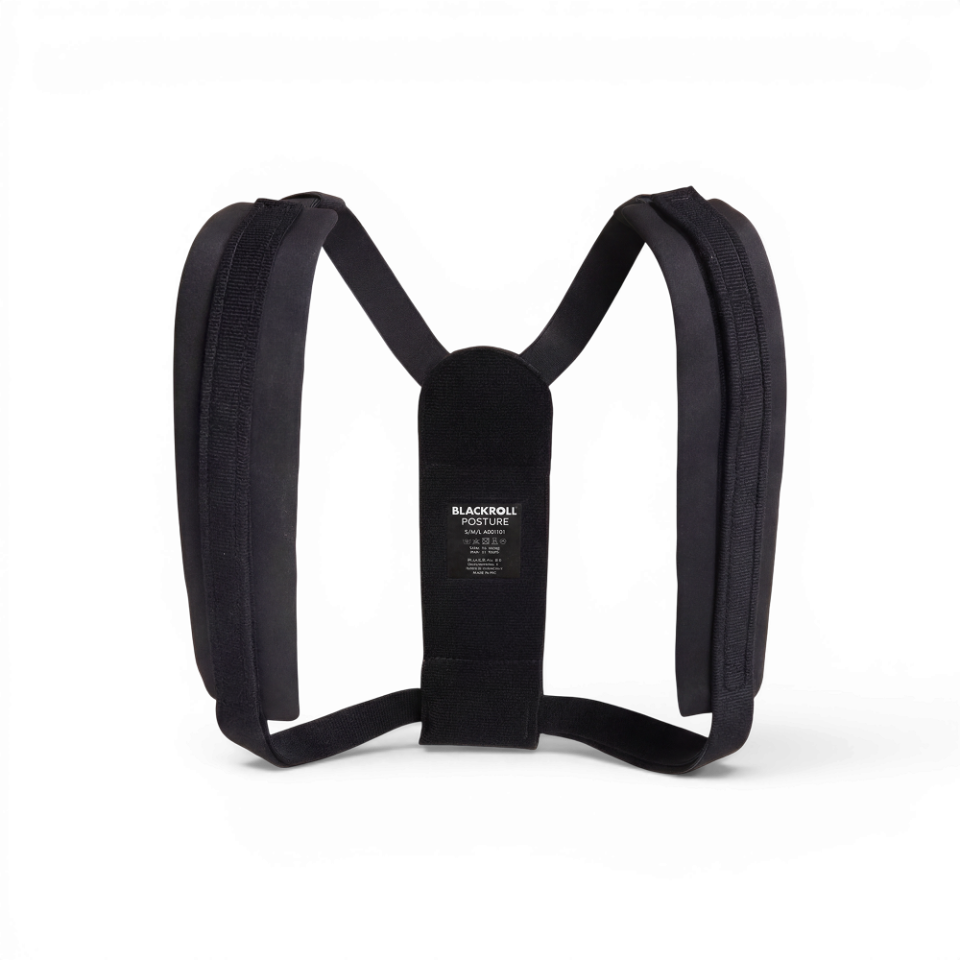
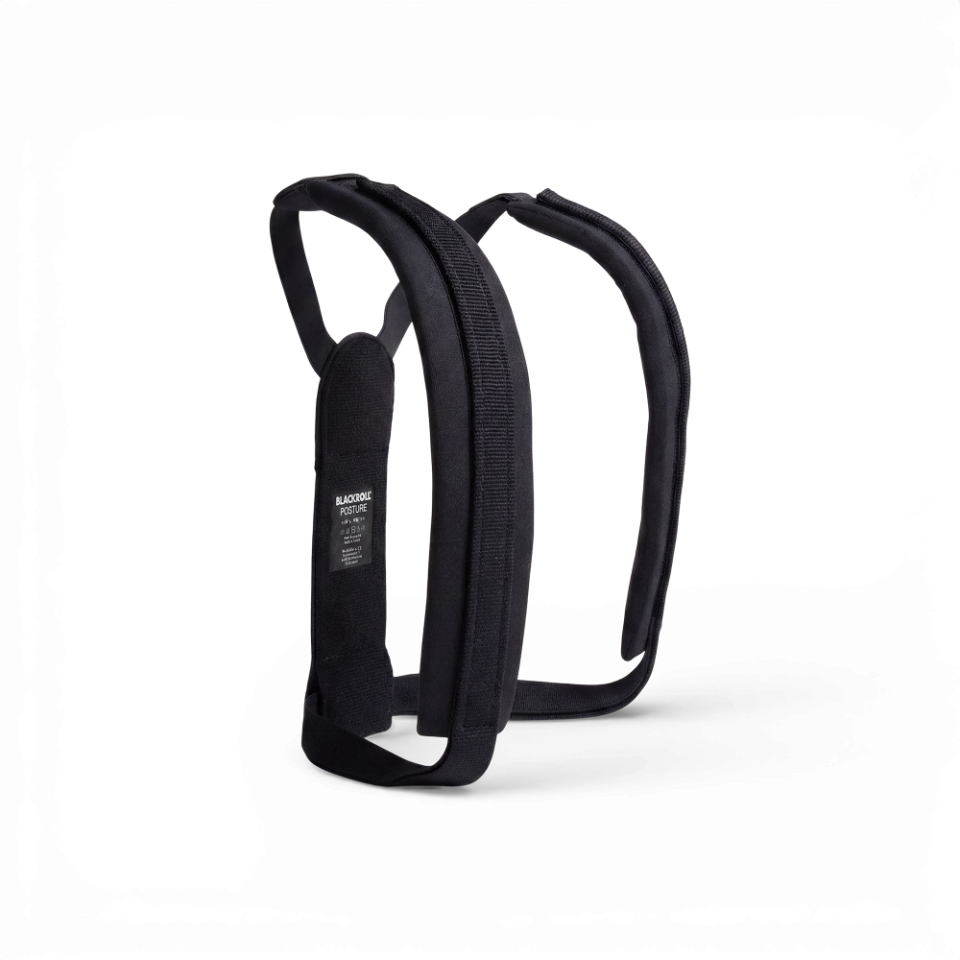
Posture
Available in multiple variants
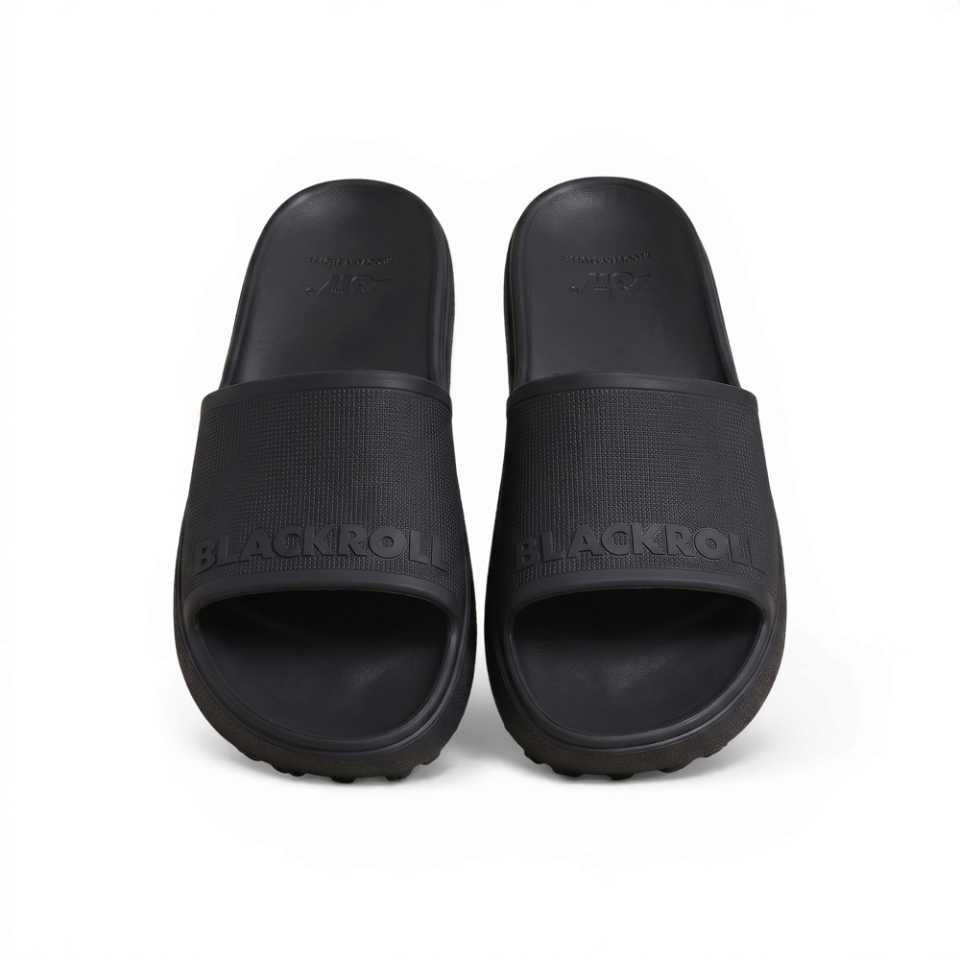
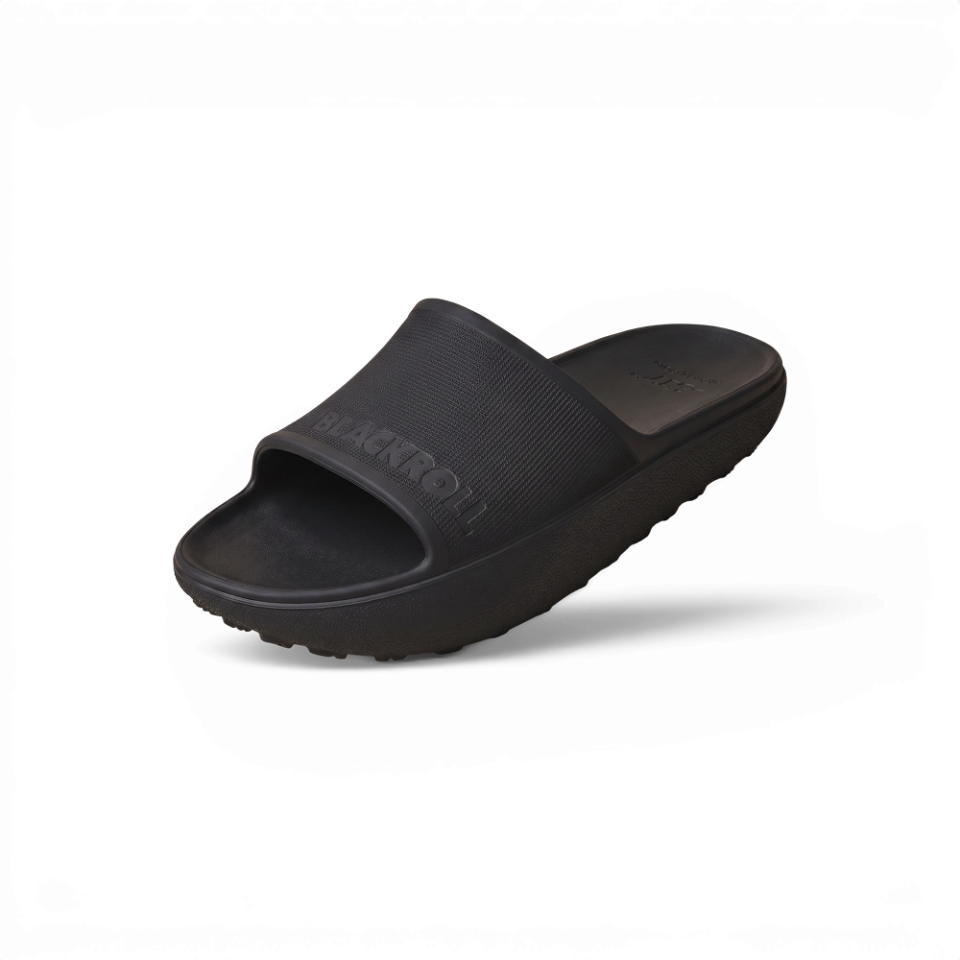
Recovery Slopes
Available in multiple variants
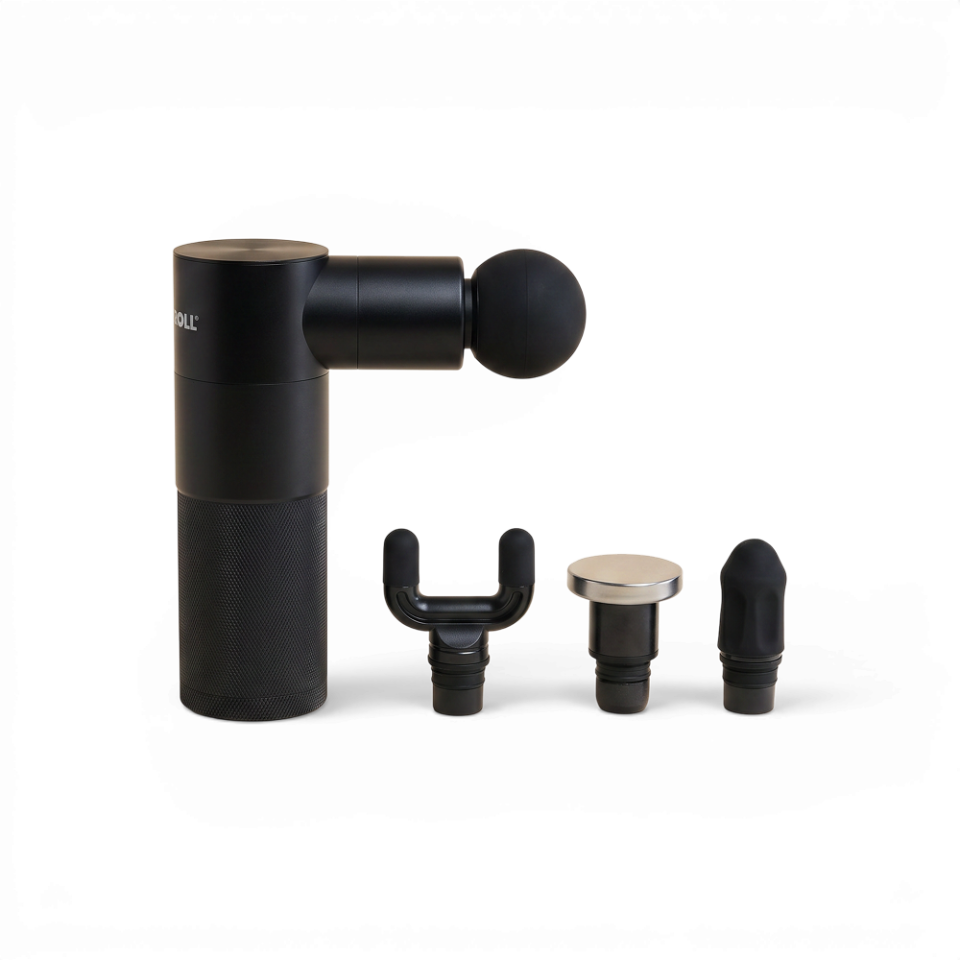
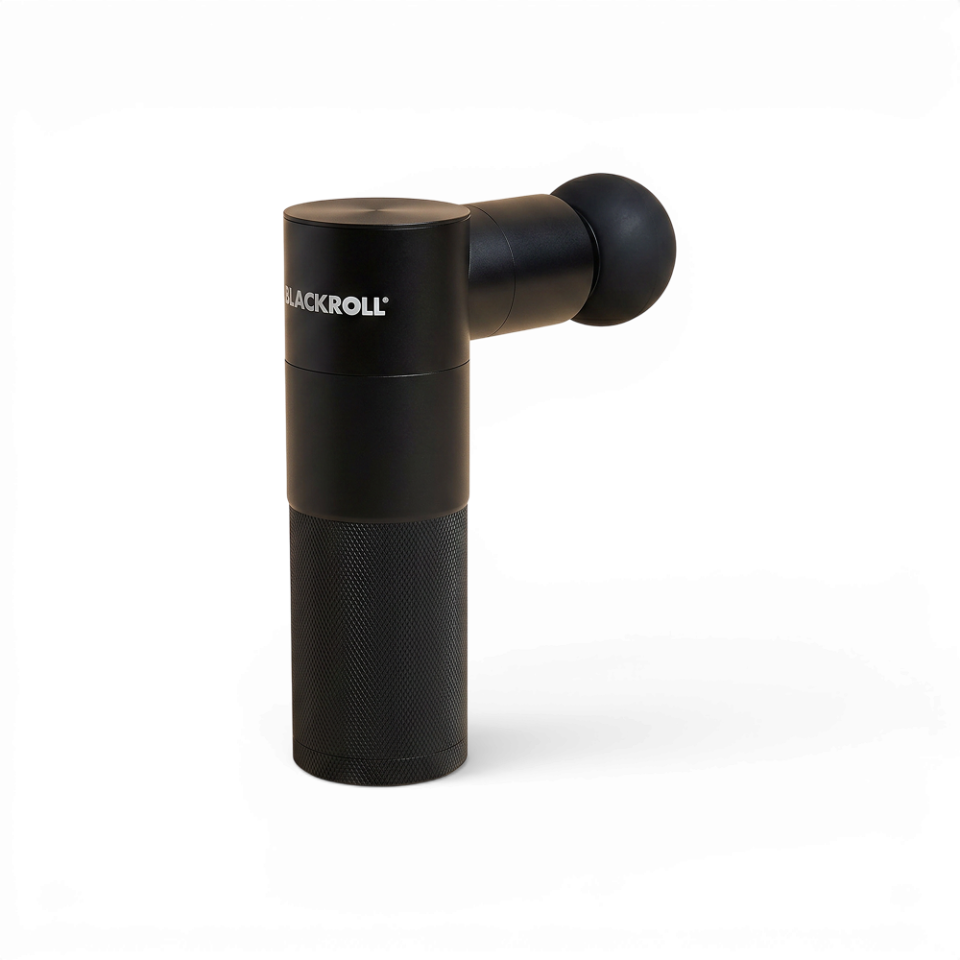
Exercises for Mouse Arm
Regular exercise is the most important step toward long-term relief from mouse arm pain. In our video , our Master Trainer Stefan shows you simple but effective exercises to help you get rid of your mouse arm as quickly as possible.
All you need is a BLACKROLL MINI, a BLACKROLL TRIGGER if needed, and a book.
These forearm exercises not only help with acute symptoms but also serve as a preventive measure.
The Best Exercises for the Office


Diagnosis & Treatment of Mouse Arm
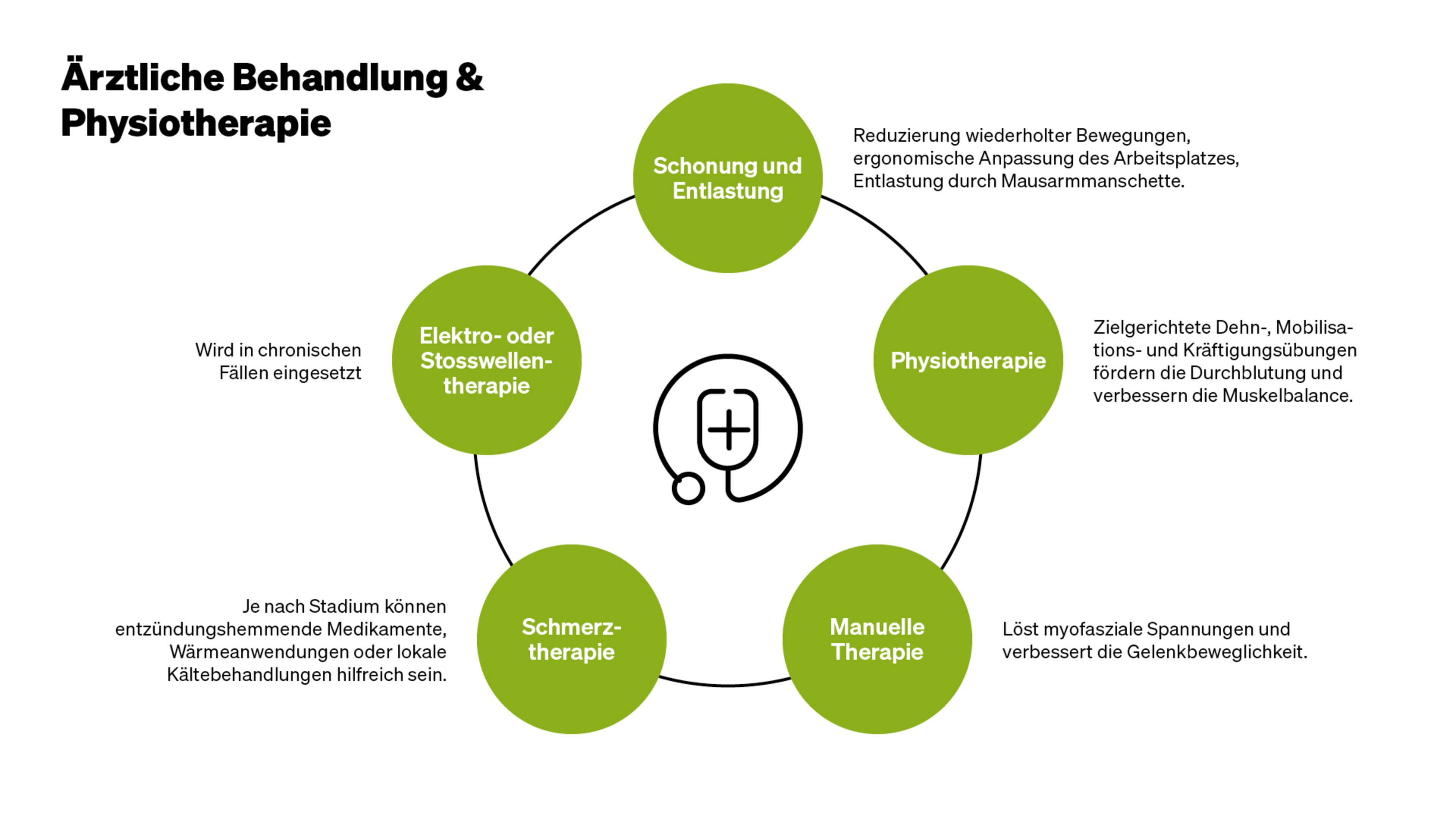
Mouse arm (RSI syndrome) is typically diagnosed based on typical symptoms and a thorough physical examination. Doctors or physical therapists assess range of motion, tender points, muscle tension, and, if necessary, nerve conduction. Procedures such as ultrasound or MRI are used only to rule out other conditions—such as tendon tears or inflammation.
Medical Treatment & Physical Therapy
Everyday Tips
Health & Ergonomics in the Workplace




Ergonomic Tips for the Workplace & Everyday Life
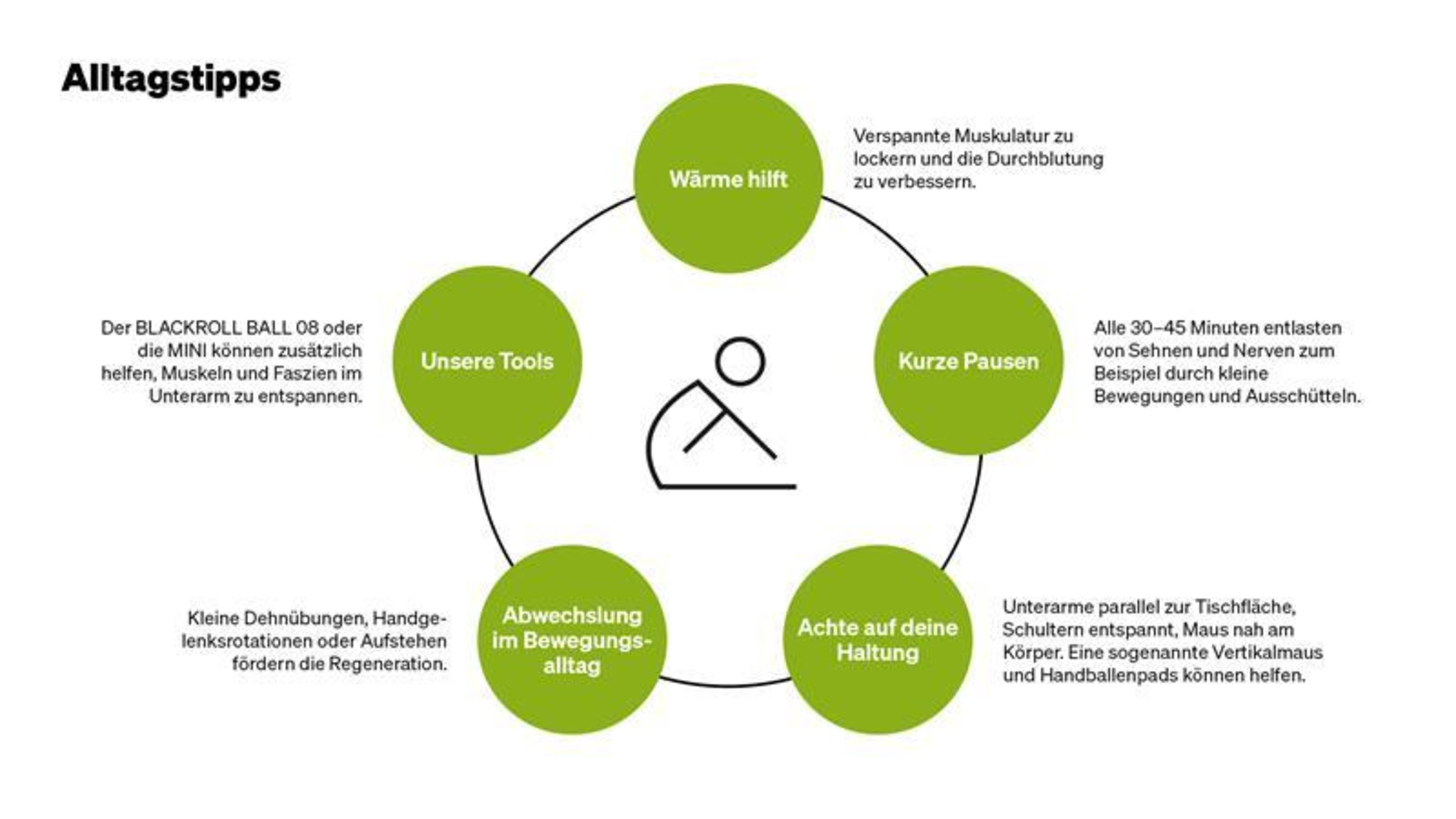
The best way to treat “mouse arm” is to prevent it. An ergonomic workstation setup can significantly reduce strain on muscles, tendons, and nerves. Make sure your chair, monitor, and hand position are optimally aligned:
- Seating position: Sit upright with relaxed shoulders and a 90° angle—or slightly greater—at the hips and knees.
- Mouse and keyboard position: Rest your forearms loosely on the desk, with your elbows parallel to or only slightly higher than the desk surface; keep your wrists straight—avoid bending them at a constant angle.
- Work environment: Place the mouse and keyboard close to your body and at the same height to avoid overextension.
Ergonomic aids such as a vertical mouse, palm rests, or height-adjustable desks can further reduce strain. If you combine all of this with regular movement breaks, you can effectively protect yourself from overexertion and prevent mouse arm.
Ergonomics in the Workplace: What You Should Keep in Mind
Studies have long shown that ergonomic prevention is the most effective protection against work-related muscle and tendon problems. Regularly changing your posture, proper workplace design, and intentional breaks can significantly reduce the frequency of musculoskeletal disorders.
Conclusion
"Mouse arm" illustrates just how sensitively our bodies react to an imbalance between tension and relaxation. It is less a disease than a signal reminding us of the limits of modern computer-based work. Pain in the arm or wrist arises where movement is lacking—and where routine has become more important than mindfulness.
Those who learn to understand these warning signs not as a problem but as an invitation can work more sustainably and live healthier lives. Ergonomics, breaks, and mindful movement are not “extras,” but part of a culture that combines performance with regeneration. Because true productivity does not come from constant strain, but from rhythmic alternation—between focus and relaxation, between tension and letting go.
FAQ: Frequently Asked Questions
Overuse of muscles, fascia, tendons, and nerves caused by repetitive movements—usually while working with a mouse or keyboard.
Typical symptoms include pain, tingling, stiffness, or loss of strength in the hand, forearm, or shoulder.
With physical therapy, rest, heat, and targeted exercises. Additionally, through ergonomic adjustments to the workspace. In severe cases, medical treatment can help.
Gentle stretching and mobility exercises for the hand, forearm, and shoulder—ideally several times a day.
By maintaining an ergonomic posture, taking breaks, and staying active. A vertical mouse or a height-adjustable desk can also help relieve strain.
Mild symptoms often improve after a few days or weeks; chronic cases require more patience and therapy.
If the pain does not subside after two to three weeks despite rest or exercises, or if it gets worse.
More Articles



Sources & Studies
Aggarwal, R., Singh, P., & Kumar, A. Work-related musculoskeletal disorders and repetitive strain injuries: A review of mechanisms and management strategies. ScienceDirect. https://www.sciencedirect.com/science/article/pii/S0003687024000619
Bongers, P. M., IJmker, S., Blatter, B. M., & van den Heuvel, S. G. Psychosocial work factors and musculoskeletal disorders: An updated systematic review . SAGE Journals. https://journals.sagepub.com/doi/10.1177/10519815251351849
Porges, S. W., & Johnson, K. Neuromuscular adaptation and sensory feedback in repetitive strain injury models. Journal of Neonatal Surgery. https://jneonatalsurg.com/index.php/jns/article/view/2841
Hagberg, M., Silverstein, B., Wells, R., Smith, M. J., Hendrick, H. W., Carayon, P., & Perusse, M.
Work-Related Musculoskeletal Disorders (WMSDs): A Reference Book for Prevention.
National Institute for Occupational Safety and Health (NIOSH).
https://pubmed.ncbi.nlm.nih.gov/12827995/